The eagerly awaited second volume of the ACO's sparkling performances of Mozart's violin concertos is already making waves. Such vivid and lively interpretations place this album at the top of the list for all music lovers, and is a worthy successor to their critically acclaimed and best-selling first volume.
{# optional: put hover video/second image here positioned absolute; inset:0 #}
BIS
Mozart: Violin Concertos Nos. 1, 2 & 4
The eagerly awaited second volume of the ACO's sparkling performances of Mozart's violin concertos is already making waves. Such vivid and lively...
A Swedish Pastorale / Wedin, Stockholm Sinfonietta
BIS
$21.99
January 01, 1988
Gold buried deep in the BIS back-catalog since 1980 (but readily available), this CD adds a couple of apt fillers from 1981 to the program of the original analog LP. Larsson’s Pastoral Suite is the best-known music here, and makes a fine overture in its most sprightly recorded chamber performance. The Romance has live intensity, helped by the sound, a classic piece of minimalist work by Bis proprietor, Robert von Bar: just a small Revox half-track reel-to-reel machine, and a couple of mikes above and in front of the conductor. The timbre of the winds is distinctive, thanks to the sound coming off the hard back wall, too, but the small string band has presence-and-a-half. Wedin’s direction is inspired here, and in the four gentle Winter’s Tale fragments. The tearful, moving Andante used to close out the LP, but on CD the spell is broken by the boisterous Alfvén Dance, then cast again for Blomdahl’s heartfelt Adagio.
The real highlights are the modest Atterberg Suite, and the Rosenberg cello miniature. The latter is sadness, packed ready to go, but the violin and viola in the Atterberg spin threads of Romantic ardor that float into the air, and resound in your consciousness forever, like it or not. As do the wonderful tunes. The slow middle movement, Pantomim, really lets Sparf’s artistry and phrasing shine, closely shadowed by Mansnerus. They should have done the Mozart Sinfonia concertante at the same sessions, but this is inspired playing, and arguably Atterberg’s finest 12 minutes. You’re the poorer, if you don’t know it yet. Roman’s 15-minute oboe d’amore concerto represents the Swedish 18th century at its considerable best: a warm contrast with the rest of the program, the soloist sounding rather close, but with memorable invention and interplay in the fast movements.
Fine notes, by the eminent Per Skans. There have been a few digital anthologies rather like this one in the intervening 20 years, but Wedin said it all in 1980. A CD of relaxing Swedish lighter classics might not be anywhere near the top of your Want List, just now. Hidebound Romantics should head straight for the Blomdahl Adagio, but I urge you all to sample the whole recital. BIS CD165 is certainly not one of the structural pillars of the Hall of Fame, but it makes a very attractive Swedish display case, for some little-known, meltingly beautiful music.
Paul Ingram, FANFARE
{# optional: put hover video/second image here positioned absolute; inset:0 #}
BIS
A Swedish Pastorale / Wedin, Stockholm Sinfonietta
Gold buried deep in the BIS back-catalog since 1980 (but readily available), this CD adds a couple of apt fillers from 1981...
An excellent balance of masterpieces, salon music of the very best quality and some unknown quantities. The playing is superb.
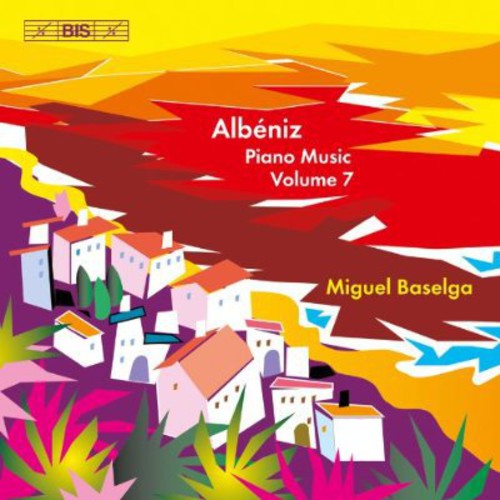
Isaac Albeniz needs little introduction to readers of these pages. However, one important fact must always be borne in mind when approaching his piano music. The oeuvre divides largely into two main stylistic entities. The first of these are those by which he has gained considerable fame – the Spanish works. These include the great masterpieces such as Iberia and España. However, there is a considerable body of music that owes its being to the late nineteenth century corpus of salon music. These early works often have little to do with Spanish folk music and are more likely to nod to Chopin and Liszt. Additionally there was a transitional phase when Albeniz began to make use of the Spanish idiom from a largely parochial standpoint. The present CD has examples of all three ‘periods’.
The earliest work on this disc is ‘Marcha Militar’ which dates from around 1869. It is also the earliest of the composer’s music to have survived. Albeniz was only nine years old when he wrote it. There is a good tale told about the origins of this work which the careful reader of the excellent liner-notes will enjoy. It is not a bad little piece really, however it hardly foretells what was to come from the composer’s pen.
Chronologically, the next work is Deseo - estudio de concierto which was dedicated to the composer’s wife. Franz Liszt and his Hungarian’s ‘Etudes de Concert’ and the Fantasia après un lecture du Dante are almost certainly the models for this highly virtuosic piece. Nevertheless, it is hardly one of Albeniz’s best efforts and is well summed up by the present pianist. He suggests that it is ‘a highly virtuosic pianistic trifle’. It is well worth having for completeness; however I doubt that it will gain a hold in the repertoire. Deseo is translated as ‘desire’.
I have always loved the Mazurkas de Salon which balances the commercial requirements of the salon and recital room with the need to provide quality ‘teaching’ pieces. These six numbers were written for the composer to use whilst teaching the daughters of the wealthy. The original piano score of these delightful numbers is reputed to have a cover picture showing visiting cards with the corner turned down and bearing the name of the dedicatees. The six young ladies were Isabel, Casilda, Aurora, Sofia, Christa and Maria. It is fair to suggest that each of these pieces was specially tailored to suit the personality and the technical ability of these young ladies. From a musical point of view, Chopin is never far away, however they are not pastiche. Albeniz imbues each dance with a beauty and poignancy that is entirely his own. They were composed around 1887.
Three years later, Albeniz presented the gorgeous L’Automne Waltz. It would be easy to define this piece simply as a reversion to ‘salon’ music, especially coming after some of his ‘Spanish’ influenced pieces such as Recuerdos de viaje and España. However there is nothing trivial about this music. This is a waltz of the highest sophistication and technical creativity. It is written in three sections, preceded by a lugubrious introduction, with each section written in a different key. The coda is impressive with lots of references back to earlier material. It is a perfect example of why a work of this type should be kept in the repertoire and not consigned to history.
Ever since hearing my school-friend Alan Kitchen playing Cordoba from the Chants d’Espagne, in 1971, I have wanted a complete recording of this fine work. Strangely no recording ever came my way. Nearly forty years on I have discovered a version that moves, impresses and fulfils all my expectations of the piece. I can battle my way through parts of this suite on my piano; however there is nothing to beat a superb professional recording.
The Cantos de España, to give the work its Spanish title was originally conceived as a suite of three movements – the Prelude, Orientale and Sous le Palmier. These were published in 1892. In 1898 two further movements were added Cordoba and Seguidillas. The liner-notes sum up the work’s musical style with a quotation from Walter Aaron Clark who wrote that ‘the suite represents the furthest advance in Albeniz’s Spanish style to date in its seriousness, harmonic richness, and formal variety’. The work has the sights, sounds and location of Andalusia as its inspiration.
The opening Prelude is full of exuberance and excitement. This is better-known in the version for guitar, however it sounds well on the piano and the predominantly Flamenco sound of the first and last sections mimics the guitar well. The Orientale, in spite of its name, is based on tunes from Andalusia. This is a moody piece in comparison to the preceding Prelude. Sous le Palmier is written with the rhythm of the habañera, which is a dance originating in Cuba. The piece balances good humour with a touch of melancholy. Cordoba, which I discovered all those years ago, is a little tone poem. It opens with the sound of the bells of the town churches. This is followed by a hymn. The spell is broken by an outburst of flamenco dancing and a big romantic tune. The work closes with a reminiscence of the hymn tune before concluding with a final dance. Seguidillas is once again pure Andalusian folk music with the dance rhythms being complemented by brief ‘coplas’.
Altogether a great work and a superb performance. I am glad to say that my school friend is still making music both on the piano and the organ. I am extremely grateful to him for introducing me to Albeniz’s music.
The Improvisation is an interesting little piece. Only published in 2009, it was transcribed by Milton Laufer from a wax cylinder recorded by the composer in 1903. The work is a short two-minute study of dance rhythms that the composer was planning to use. It is a lively, vibrant piece of work that explores syncopation, alternating rhythms and unison writing in the manner of a recitative. The music of España is called to mind. There were three improvisations recorded and this present one is the first. So there are good things to look forward to in subsequent volumes of Albeniz’s ‘complete’ piano music!
Yvonne en visite! is simply charming. It was composed the year before the composer’s death and forms part of a collection of pieces for ‘children young and old’ assembled by the professors of the Schola Cantorum in Paris. Albeniz’s contribution was a musical depiction of events in the life of Yvonne Guidé who was the daughter of Guillaume Guidé, co-director of the Théâtre de la Monnaie in Brussels. With a Satie-like commentary written into the piano score the composer describes the visit of the young pianist and her being made to perform in front of Albeniz. The poor child is nervous and makes a number of mistakes. Her mother becomes more and more annoyed with her and threatens her with ten days of Hanon – which was a terrifying book of piano exercises ‘popular’ at that time. The work is in two short movements – La révérence and Joyeuse rencontre et quelques pénibles événements (Joyful meeting and painful events!).
I enjoyed this CD and would recommend it to all enthusiasts of Isaac Albeniz’s piano music. It presents an excellent balance of masterpieces, salon music of the very best quality and some unknown quantities. The playing is superb. Miguel Baselga is always sympathetic to this music – whether it is technically difficult or within the grasp of Grade 6-ers like myself. He is never condescending towards the Mazurkas and the Waltz and plays them with attention and obvious love and enthusiasm. The liner-notes written by Jean-Pascal Vachon are informative and provide all the information required for a good understanding of each of these pieces. The sound quality is excellent as would be expected from BIS.
Finally, some of these pieces are recorded elsewhere, however as far as I am aware, the Marcha, the Improvisation and Deseo are not currently in the CD catalogues, apart from the present disc. The other works have precious few recordings available. This apparent lack of interest does not imply that any of this music lacks quality, interest or inspiration: many of these works are little masterpieces.
-- John France, MusicWeb International
{# optional: put hover video/second image here positioned absolute; inset:0 #}
BIS
Albeniz: Piano Music Vol 7 / Miguel Baselga
An excellent balance of masterpieces, salon music of the very best quality and some unknown quantities. The playing is superb. Isaac Albeniz...
Saeverud: Symphony No 5, Etc / Ruud, G. Hunt, Stavanger So
BIS
$21.99
September 01, 2003
Harald Sæverud (1897-1922) is a gigantic figure in his native country of Norway. (When he died he was given a televised state funeral!). Yet such has been the blinding radiance of Edvard Grieg that Sæverud's music made comparatively little impact outside this native county until BIS started its pioneering project of recording his orchestral music with the Stavanger Symphony Orchestra. The present disc represents the seventh volume in the series and contains the fifth symphony as well as his oboe concerto and some orchestral pieces for festive occasions.
{# optional: put hover video/second image here positioned absolute; inset:0 #}
BIS
Saeverud: Symphony No 5, Etc / Ruud, G. Hunt, Stavanger So
Harald Sæverud (1897-1922) is a gigantic figure in his native country of Norway. (When he died he was given a televised state...


 {# optional: put hover video/second image here positioned absolute; inset:0 #}
 {# optional: put hover video/second image here positioned absolute; inset:0 #}
 {# optional: put hover video/second image here positioned absolute; inset:0 #}
BIS
{# optional: put hover video/second image here positioned absolute; inset:0 #}
BIS {# optional: put hover video/second image here positioned absolute; inset:0 #}
 {# optional: put hover video/second image here positioned absolute; inset:0 #}
BIS
{# optional: put hover video/second image here positioned absolute; inset:0 #}
BIS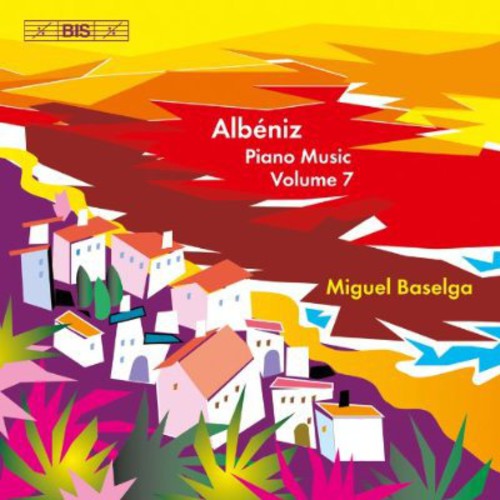 {# optional: put hover video/second image here positioned absolute; inset:0 #}
BIS
{# optional: put hover video/second image here positioned absolute; inset:0 #}
BIS {# optional: put hover video/second image here positioned absolute; inset:0 #}
 {# optional: put hover video/second image here positioned absolute; inset:0 #}
 {# optional: put hover video/second image here positioned absolute; inset:0 #}
 {# optional: put hover video/second image here positioned absolute; inset:0 #}
 {# optional: put hover video/second image here positioned absolute; inset:0 #}
 {# optional: put hover video/second image here positioned absolute; inset:0 #}
BIS
{# optional: put hover video/second image here positioned absolute; inset:0 #}
BIS {# optional: put hover video/second image here positioned absolute; inset:0 #}
 {# optional: put hover video/second image here positioned absolute; inset:0 #}
 {# optional: put hover video/second image here positioned absolute; inset:0 #}
BIS
{# optional: put hover video/second image here positioned absolute; inset:0 #}
BIS
 {# optional: put hover video/second image here positioned absolute; inset:0 #}

 {# optional: put hover video/second image here positioned absolute; inset:0 #}

 {# optional: put hover video/second image here positioned absolute; inset:0 #}

 {# optional: put hover video/second image here positioned absolute; inset:0 #}

 {# optional: put hover video/second image here positioned absolute; inset:0 #}
 {# optional: put hover video/second image here positioned absolute; inset:0 #}

 {# optional: put hover video/second image here positioned absolute; inset:0 #}

 {# optional: put hover video/second image here positioned absolute; inset:0 #}

 {# optional: put hover video/second image here positioned absolute; inset:0 #}

 {# optional: put hover video/second image here positioned absolute; inset:0 #}

 {# optional: put hover video/second image here positioned absolute; inset:0 #}

 {# optional: put hover video/second image here positioned absolute; inset:0 #}

 {# optional: put hover video/second image here positioned absolute; inset:0 #}

 {# optional: put hover video/second image here positioned absolute; inset:0 #}

 {# optional: put hover video/second image here positioned absolute; inset:0 #}