Over 300 titles featuring music by British composers are on sale now at ArkivMusic!
Discover a wide range of music by British composers from William Byrd to Edward Elgar, Benjamin Britten, and more. Featuring acclaimed artists including the London Mozart Players, the Sinfonia of London, and the Finnish Radio Symphony Orchestra.
Shop the sale now before it ends at 9:00am ET, Tuesday, November 4, 2025.
317 products
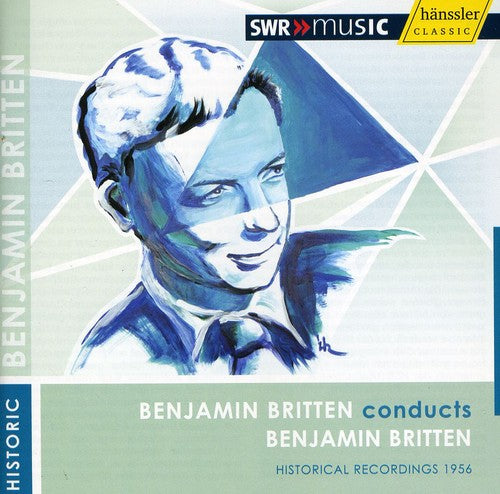
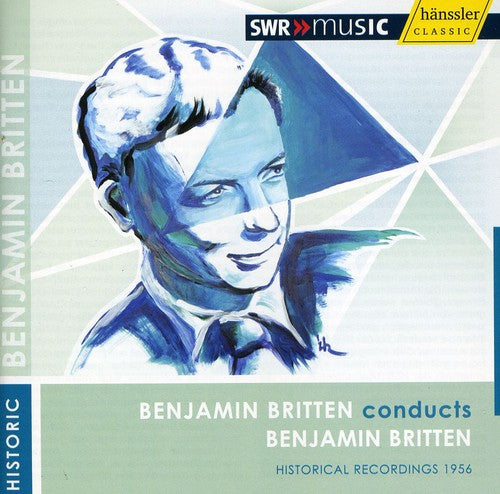
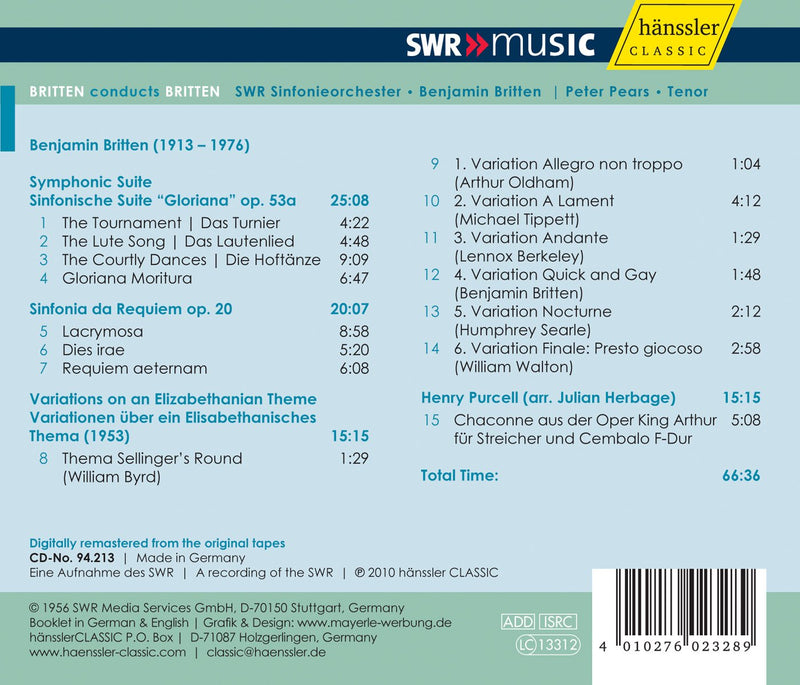
Britten Conducts Britten (1956)
SWR
$13.99
September 28, 2010
Classical Music
{# optional: put hover video/second image here positioned absolute; inset:0 #}
Britten: Beggar's Opera / Curnyn, Bickley, White, Jones, Randle
Chandos
$43.99
October 27, 2009
This Chandos production must now be first choice for this work.
Welcome to John Gay’s and Benjamin Britten’s romp through some seamy but also colourful and vibrant elements of 18 th century London. This work established the ballad opera in which spoken dialogue alternated with musical items. Gay’s satirical words were set to well-known traditional and popular tunes. Two hundred and twenty years later Britten added 20 th century accompaniments.
What’s entirely Britten here is the fresh caterwauling Overture (tr. 2) in which the various characters are given brief sound-portraits. There’s an oboe of sinuous sweetness for Polly (0:40), a cavorting clarinet for Macheath (1:29), suave strings and a jocular bassoon for the highwaymen (2:35) and a bantering circus-like master of ceremonies style for Mr Peachum (3:25). It’s all terrifically realized by the City of London Sinfonia who play marvellously throughout.
But what of the songs? Filch’s ‘’Tis woman that seduces all Mankind’ (tr. 5) is a good example of Britten allowing an original tune free rein while giving it modern dress with balmy woodwind and harp. The heroine Polly comes in (tr.12) to strains of her first song over which there are snatches of dialogue. This, like the melodrama which shortly follows (tr. 20), is Britten’s neat way of subverting the claim in the opening dialogue that this opera will have no “unnatural” recitative. Polly’s first song, ‘Virgins are like the fair flower in its lustre’ has as its tune Purcell’s ‘What shall I do to show how much I love him?’ from Dioclesian. Like its original, it is shown by Leah-Marian Jones to be at once wistful and coy. Her duet with Susan Bickley’s Mrs Peachum, ’O Polly, you might have toyed and kissed’ (tr. 15) catches well a cosy lullaby make-believe, aided by the gently rocking strings’ accompaniment. It’s lovely but only fleeting. Another notable accompaniment is the flutter-tonguing flute illustrating Polly’s ‘The Turtle thus with plaintive crying’ (tr. 19).
The highwayman hero Macheath enters and Tom Randle proves courteous enough to Jones’ simpering. The duet between Macheath and Polly, ’Were I laid on Greenland’s coast’ (tr. 22) is sweetly done but I felt the singers were over-conscious of the need to match the flowing orchestration and then the addition of chorus and drum. Some of the natural freshness is lost that’s present in the 1963 Aldeburgh Festival staging on DVD (Decca 074 3329). In this Chandos CD ‘The Miser thus a shilling sees’ (tr. 24) responds better to the typical careful attention of conductor Christian Curnyn’s approach. The disciplined emphasis of rhythm in its thorny progression matches the text’s poetic expression of loss. A pity, however, the second appearance of “Till home and friends are lost at last” (1:54) isn’t, as marked in the score ‘(in the distance)’ as the lovers go their separate ways. It’s an effect achieved in the BBC broadcast recording of the original 1948 production conducted by Britten (Pearl GEM 0225).
The highwaymen’s ’Fill ev’ry glass’ (tr. 26) is a drinking song of the sturdy, resolute variety in 2009 where a lustier abandon was shown in 1948. ‘Let us take the road’ (tr. 28) is infused with eagerness because of the excitement Britten and Curnyn convey in sketching the approach of the coach. Tom Randle’s Macheath has a too cultivated spoken voice but his singing is virile enough. You can hear this in ‘If the heart of a man is depressed with cares’ (tr. 29), marked as a caressing Andante backed by sweetly musing violin solo and rocking clarinet. Again I felt the line was held back a little in deference to the detail of the accompaniment. At this point Macheath is visited by a parade of prostitutes and what’s entertaining in the Decca DVD is rather curious here. With no sounds incorporated of women moving around, squealing and the like , you might think Macheath is imagining it all. I guess this is so as not to detract from Britten’s own variety parade of instruments, a kind of ‘Young Person’s Guide to Women’. There’s a superb tambourine to enliven the headiness of ‘Youth’s the season made for joys’. Randle sings with sunny freedom the ad libitum ‘Ah’s above the chorus repeat, though the top C final phrase is left to a soprano. Now betrayed by the women, his ‘At the Tree I shall suffer with pleasure’ has a disciplined testiness but less venom than Decca’s Kenneth McKellar.
Again more telling in this Chandos production is the more meditative material. The opening song of Act 2, ‘Man may escape from rope and gun’ (CD2, tr. 2), where Randle shows how transfixed Macheath is in his repetition of ‘woman’, savours past joys even while aware they’re the cause of present pain. Sarah Fox, as Lucy Lockit, is scarily efficient in her spite in ‘Thus when a good Housewife sees a rat’ (tr. 3). Polly’s response is the more sensitively elegiac ‘Thus when the Swallow seeking prey’ (tr. 10) and here Leah-Marian Jones is rich, smooth and eloquent. For me, however, Macheath’s ‘How happy could I be with either’ (tr. 11) is taken so fast it becomes too much a tongue-twister virtuoso piece losing some of its whimsy. In 1948 Peter Pears’ lighter touch was more effective. Polly has the easier task of rising above all this with ‘Cease your funning’ (tr.12), whose merging into the chorus and distancing of perspective are successfully achieved before we’re brought back to earth with a vengeance by Lucy’s crisp, snappy ‘Why how now, Madam Flirt!’ (tr. 13). The finale begins with Lucy and Polly showing great resolve. ‘No power on earth can e’er divide’ (tr. 14) is well progressed by Curnyn to an exciting ‘Horay’ trio response from Macheath, Lockit and Peachum. The there’s then increasing speed with a backing chorus in Sullivanesque abandon.
The opening song of Act 3, Lucy’s ‘When young at the bar’ (tr. 16) should be familiar as the tune is Purcell’s ‘If love’s a sweet passion’ from The Fairy Queen. Fox invests it with its original sad yearning while Curnyn points the claustrophobic cloying nature of Britten’s rich scoring of the wry accompaniment. Of a different order and part of the score’s kaleidoscopic variety is the relished archness of Frances McCafferty as Mrs Trapes delivering ‘In the days of my youth I could bill like a dove’ (tr. 21) with relished archness. To this is added the raucous carousing of Lockit and Peachum. Shortly there’s also the poignancy of Lucy and Polly’s ‘A curse attends a woman’s love’ (tr. 25). The paradox that these two candidates for Macheath’s affection can at one moment be united in their shared sense of rejection and understanding of the impossibility of their situation and at the next daggers drawn as rivals and eager still to court Macheath with warm affection at ‘Hither, dear husband, turn your eyes’ (tr. 28) is exploited dramatically. Fox’s pleading for Macheath’s life with ‘When he holds up his hand’ (tr. 31) ought to be the more persuasive, aided by Britten’s obbligato oboe accompaniment. ‘The Charge is prepared’ is a stock, formal chorus considerably pepped up by Mrs Peachum’s triumphant ‘Ah’s and glissando shrieks over its orchestral postlude.
Britten creates a closing scena (tr. 34) with Macheath in the condemned cell at first extolling the virtues of drink when about to die, then recalling pretty women. This gives way to the questioning protest ‘must I die?’. This is well sung by Randle but doesn’t quite have Pears’ grasp of the torment of ever-fluctuating contrasts of mood. Polly and Lucy offer a moving show of support, ‘Would I might be hanged’ to the heavily insistent backdrop of the funeral knell. In 1948 Britten’s knell is less weighty but more searing. Macheath realistically confesses ‘my courage is out’. The spoken dialogue wipes this all away. The highwaymen begin an address directly to the audience to demand the playwright provides a reprieve and all the players join in so the work can end with a dance. This bit of trickery and the rejection of the moral that vice must be punished works better in sound alone than the quicker and tamer removal of justice in the DVD. So you finish the Chandos sound recording remembering the company’s lusty tra-las and Fox’s top C.
This Chandos is the fullest version of the three currently available in the UK, playing at 117:52 in comparison with Decca’s 93:50 and Pearl’s 79:03. The differences are largely down to the Chandos including more of Gay’s spoken dialogue with alterations and additions by Tyrone Guthrie though even here I’d guess about a quarter of the dialogue published in the full and vocal scores has been cut. I don’t think this is a disadvantage because there’s a good deal of repetition in the text anyway. However, some musical numbers are also cut in the other recordings: Mrs Peachum’s ‘If Love the Virgin’s Heart invade’ (CD1 tr. 9) can only be heard here. To see the piece staged is a benefit. On the DVD the dialogue generally has a touch more pace and life, being less self-conscious in delivery. In the same vein the switch from dialogue to music flows more seamlessly and the folksong origins of many of the tunes are delivered with a more disarmingly innocent directness. The feeling between the characters is clearer in the ensemble numbers. The 1948 recording is striking for the verve of Britten’s direction, the charm of Pears’ light heroic manner and the lovely unforced upper register of Nancy Evans as Polly. Listen to her in ‘The Miser thus a shilling sees’. On the other hand it also at times adopts an over-romantic style, as in ‘O Polly, you might have toyed and kissed’ or is too patrician as in ‘Virgins are like the fair flower’.
To conclude, then, although sometimes more studied and deliberate than it might be, including careful points of emphasis within the dialogue, this Chandos production must now be first choice for this work. It also offers you in most luxuriant detail the colour and density of Britten’s orchestration.
-- Michael Greenhalgh, MusicWeb International
{# optional: put hover video/second image here positioned absolute; inset:0 #}
Chandos
Britten: Beggar's Opera / Curnyn, Bickley, White, Jones, Randle
This Chandos production must now be first choice for this work. Welcome to John Gay’s and Benjamin Britten’s romp through some seamy...
Take 2 - Elgar: Cello Concerto, Etc / Du Pre, Ormandy, Et Al
Sony Masterworks
$24.99
September 02, 2009
REVIEWS: BBC Music (3/98, p.74) - "Du Pré's...1977 Elgar Cello Concerto recording....is compelling and richly Romantic....Ormandy and the Philadelphia's 'Enigma' is warmhearted and virtuosic....Davis's 'Pomp and Circumstance' Marches are bold and beefy."
{# optional: put hover video/second image here positioned absolute; inset:0 #}
Sony Masterworks
Take 2 - Elgar: Cello Concerto, Etc / Du Pre, Ormandy, Et Al
REVIEWS:BBC Music (3/98, p.74) - "Du Pré's...1977 Elgar Cello Concerto recording....is compelling and richly Romantic....Ormandy and the Philadelphia's 'Enigma' is warmhearted and...
Wind Band Classics - Trendsetters - Music For Wind Band / Parker, Peabody Wind Ensemble
Naxos
$19.99
July 28, 2009
Core band repertoire, worth exploring.
The Naxos Wind Band Classics series seeks here to plug some pretty significant holes in its catalog. With nearly two dozen entries in the series, the works on this disc had yet to make an appearance. The Holst and Grainger, in particular, are the band world’s “Beethoven 5” and “Brahms 1,” or something like that, so this disc seems guaranteed to sell copies to both the curious listener who doesn’t usually listen to band music and to the devoted band fan who could use another copy of these works at the attractive Naxos price.
The Holst is an extremely well-crafted three movement work, with the opening motif unifying the whole piece. It has a special place in the band repertoire as one of the first substantial pieces of music written for wind band by an established composer. A good high school band can play the piece well, but a band of this caliber can also play it and not feel like they’re playing “easy music” - it’s got a quality of deceptive simplicity which makes it easy to enjoy for both performer and listener. The Grainger has a similar melodic appeal, at times, but is much more complex, and is regarded by many Grainger aficionados as his single finest work in any medium. It was also probably the first piece in the band repertoire to deserve being described as an unqualified masterpiece. Its six movements chart a very satisfying emotional journey, and if this disc helps bring it to a wider audience, it will have done much good.
The Hindemith and Schwantner are altogether different. Both reward repeated listens, the Hindemith in particular, as its contrapuntal ingenuity becomes clearer with time. As with the Grainger, any fan of the composer would find much to admire in this wonderful piece. The Schwantner is arguably the least essential of these four works, but that is largely because it is the most contemporary composition here and has not had as long to become a repertoire staple. The colors explored, though, are rich and affecting, and it points a way forward to the explosion in wind band repertoire of the past thirty years or so.
So, for those who don’t know these pieces, it’s a fine way to gather four cornerstones of the repertoire. There are stronger performances of these four works elsewhere - the Eastman Wind Ensemble’s superlative “Live in Osaka” disc, available at a similar price, includes three of them - but these are certainly excellent performances. The band sounds great, and the straightforward interpretations and recorded sound allow the listener to hear every detail.
-- Benn Martin, MusicWeb International
{# optional: put hover video/second image here positioned absolute; inset:0 #}
Naxos
Wind Band Classics - Trendsetters - Music For Wind Band / Parker, Peabody Wind Ensemble
Core band repertoire, worth exploring. The Naxos Wind Band Classics series seeks here to plug some pretty significant holes in its catalog....
Impressive throughout … an excellent way to explore his output.
This is a Naxos compilation of works by Thomas Tallis, originally recorded for a range of other discs, performed by the Oxford Camerata under the direction of Jeremy Summerly. The disc features a range of works, in both Latin and English texts, including shorter anthems and mass settings and more extended works. O Sacrum Convivium, written for Elizabeth 1st, features smooth flowing lines and gentle dissonances, and sets the scene for the rest of the disc, with the Oxford Camerata’s blended vocal tone full of expression and resonance. Audivi vocem features plainchant-style sections and choruses, while Discomfort them, O Lord is based on repeated sequences and has a complex monophonic style. Loquebantur variis linguis is a faster work, with imitative entries and rich polyphonic writing interspersed with unison chant settings.
The Sanctus from the Mass for Four Voices is a beautiful setting with strongly characterful word setting, including a bright, major key Gloria and Hosanna. I call and cry to thee, O Lord is an English setting of O Sacrum Convivium and it is interesting to hear the effect of a change of language. The Lamentations of Jeremiah are presented in two separate sets. Set I is well paced, with tempo changes well handled and clearly defined sections. Set II has a beautifully calm and expressive opening, with individual lines entering one by one to build up a stunning five part choral sound. This slow paced music gradually unfolds and provides one of the highlights of the disc.
Videte miraculum features some wonderfully dissonant harmonies, with tension and release an important element of the interaction between the parts. Another slow-moving work, this has a contemplative feel, using mostly simple rhythms and alternating between monophonic writing and polyphony.
The disc ends with the impressive forty-part motet Spem in alium, arguably one of Tallis’s most well-known and dazzling works, with eights choirs of five voices combining to create an elaborate tapestry of sound. Harmonic shifts come like waves, and the full force of all forty voices in the tutti sections has a sense of powerful expression. It is hard to hear definition in the individual parts in this recording (although some come through better than others) and it is difficult to capture the effect of this piece on a recording; this is one piece where a live performance holds an extra dimension, especially if the choirs can be separated around the audience. Nevertheless, the overall effect works well and this is an enjoyable recording.
The choir is impressive throughout this disc, although the blend of voices varies between tracks (presumably because the recordings were made at different times with slight alterations to personnel). Hearing this selection of works by one composer gives a fascinating insight into the range of Tallis’ music, both in terms of compositional style and textural use of the choir. His vocal writing has a sense of naturalness and paved the way for generations of composers after him, defining a style and creating a lineage of British choral music. This disc serves as an excellent way to explore his output, with some beautiful singing from the Oxford Camerata.
-- Carla Rees, MusicWeb International
{# optional: put hover video/second image here positioned absolute; inset:0 #}
Naxos
The Best Of Tallis / Summerly, Oxford Camerata
Impressive throughout … an excellent way to explore his output. This is a Naxos compilation of works by Thomas Tallis, originally recorded...
Beneath the shimmering surface of Delius�s little-known violin sonatas are the latent exuberance and nostalgic rapture which have made his orchestral music so popular. Across the decades separating the B major Violin Sonata of 1892 from the Third Violin Sonata of 1930, Delius developed a unique musical language which leavened the post-Romantic heritage of Wagner with French Impressionism and European and Afro-American folk idioms; an intoxicating mix that moved Sir Thomas Beecham to call him �the last great apostle in our time of beauty and romance in music�.
{# optional: put hover video/second image here positioned absolute; inset:0 #}
Naxos
Delius, F.: Violin Sonatas (Complete)
Beneath the shimmering surface of Delius�s little-known violin sonatas are the latent exuberance and nostalgic rapture which have made his orchestral music...
The Sixteen Edition - Bright Orb Of Harmony - Purcell, Macmillan
Coro
$20.99
March 30, 2009
2009 is a year of anniversaries - the three hundred and fiftieth anniversary of Henry Purcell's birth (1659), James MacMillan's fiftieth birthday (16 July 2009) and The Sixteen's thirtieth anniversary. To celebrate, the ensemble has recorded live a brand new disc of music dedicated to these most innovative of British composers. Purcell's extraordinary use of harmony sounds as modern today as it must have sounded in the seventeenth century. Putting his heartfelt Funeral Sentences alongside James MacMillan's powerfully emotive A Child's Prayer, written in memory of the Dunblane Tragedy, and his hauntingly beautiful O bone Jesu (a piece originally commissioned by The Sixteen) will give the listener the chance to experience the true power of this music. The Sixteen's national Choral Pilgrimage will take this wonderful programme to twenty venues throughout England, Scotland and Wales over the next nine months performing to thousands of people. "Christopher's choir, The Sixteen, is arguably the most visible professional choral ensemble in Britain" The Times (London)
{# optional: put hover video/second image here positioned absolute; inset:0 #}
Coro
The Sixteen Edition - Bright Orb Of Harmony - Purcell, Macmillan
2009 is a year of anniversaries - the three hundred and fiftieth anniversary of Henry Purcell's birth (1659), James MacMillan's fiftieth birthday...


 {# optional: put hover video/second image here positioned absolute; inset:0 #}
 {# optional: put hover video/second image here positioned absolute; inset:0 #}
On Sale
{# optional: put hover video/second image here positioned absolute; inset:0 #}
On Sale {# optional: put hover video/second image here positioned absolute; inset:0 #}
 {# optional: put hover video/second image here positioned absolute; inset:0 #}
On SaleSignum Classics
{# optional: put hover video/second image here positioned absolute; inset:0 #}
On SaleSignum Classics {# optional: put hover video/second image here positioned absolute; inset:0 #}
Signum Classics
{# optional: put hover video/second image here positioned absolute; inset:0 #}
Signum Classics {# optional: put hover video/second image here positioned absolute; inset:0 #}
Chandos
{# optional: put hover video/second image here positioned absolute; inset:0 #}
Chandos {# optional: put hover video/second image here positioned absolute; inset:0 #}
Sony Masterworks
{# optional: put hover video/second image here positioned absolute; inset:0 #}
Sony Masterworks {# optional: put hover video/second image here positioned absolute; inset:0 #}
Naxos
{# optional: put hover video/second image here positioned absolute; inset:0 #}
Naxos {# optional: put hover video/second image here positioned absolute; inset:0 #}
Naxos
{# optional: put hover video/second image here positioned absolute; inset:0 #}
Naxos {# optional: put hover video/second image here positioned absolute; inset:0 #}
Naxos
{# optional: put hover video/second image here positioned absolute; inset:0 #}
Naxos {# optional: put hover video/second image here positioned absolute; inset:0 #}
Coro
{# optional: put hover video/second image here positioned absolute; inset:0 #}
Coro {# optional: put hover video/second image here positioned absolute; inset:0 #}
On SaleSWR
{# optional: put hover video/second image here positioned absolute; inset:0 #}
On SaleSWR {# optional: put hover video/second image here positioned absolute; inset:0 #}
Diversions
{# optional: put hover video/second image here positioned absolute; inset:0 #}
Diversions {# optional: put hover video/second image here positioned absolute; inset:0 #}
 {# optional: put hover video/second image here positioned absolute; inset:0 #}


 {# optional: put hover video/second image here positioned absolute; inset:0 #}


 {# optional: put hover video/second image here positioned absolute; inset:0 #}


 {# optional: put hover video/second image here positioned absolute; inset:0 #}

 {# optional: put hover video/second image here positioned absolute; inset:0 #}

 {# optional: put hover video/second image here positioned absolute; inset:0 #}


 {# optional: put hover video/second image here positioned absolute; inset:0 #}

 {# optional: put hover video/second image here positioned absolute; inset:0 #}


 {# optional: put hover video/second image here positioned absolute; inset:0 #}


 {# optional: put hover video/second image here positioned absolute; inset:0 #}


 {# optional: put hover video/second image here positioned absolute; inset:0 #}


 {# optional: put hover video/second image here positioned absolute; inset:0 #}


 {# optional: put hover video/second image here positioned absolute; inset:0 #}
 {# optional: put hover video/second image here positioned absolute; inset:0 #}


 {# optional: put hover video/second image here positioned absolute; inset:0 #}

 {# optional: put hover video/second image here positioned absolute; inset:0 #}