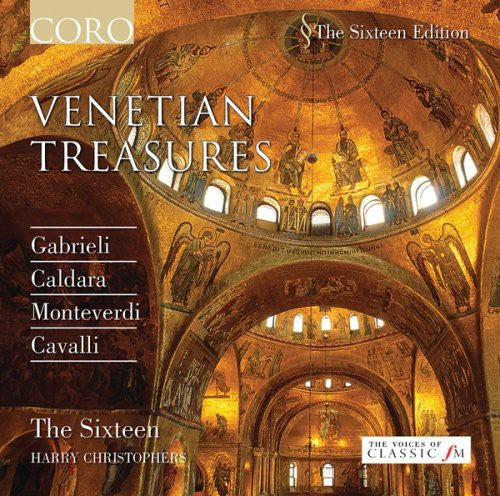
The sacred choral music of the sixteenth and seventeenth centuries from Venice, especially that written for the splendour of St Mark’s, has a unique style. From the rich and sonorous sound world of the Gabrielis to the airy zestfulness of Caldara’s contemporary Vivaldi, this was music which dazzled the rest of Europe.
Leifs: The Creation Of The World / Bäumer, Gudbjörnsson
BIS
SACD
$21.99
October 01, 2007
(World Première Recording) Few composers have been as consistently preoccupied with their national origins as Jón Leifs, who only found his calling as a composer when he encountered a collection of Icelandic folk music. From the very beginning, Iceland, its music and myths, its landscape and climate furnished him with the material for almost all of his compositions. And from the very beginning Leifs knew that he wanted to create a great oratorio using texts from the Edda, Iceland's national treasure. The scoring is among Leifs' most colourful and inspired, including the composer's signature Nordic lurs and an extended percussion section. This landmark in Icelandic music is performed by the Iceland Symphony Orchestra and the Schola Cantorum choir under the baton of Hermann Bäumer - a constellation that last came together on disc on the highly acclaimed Viking's Answer, the previous Leifs' release on BIS.
Leifs: The Creation Of The World / Bäumer, Gudbjörnsson
$21.99
SACD
BIS
October 01, 2007
BIS-SACD-1350
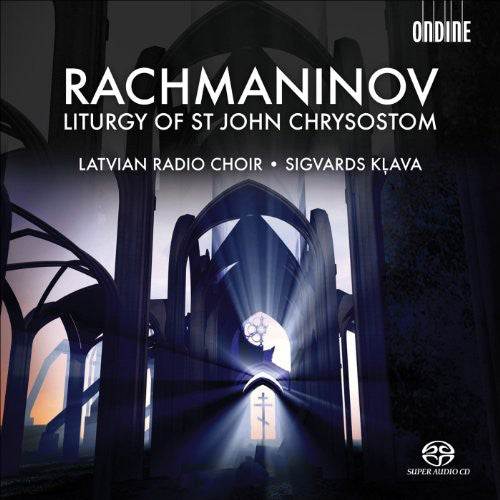
Rachmaninov: Liturgy Of St. John Chrysostom / Klava, Latvian Radio Choir
Ondine
SACD
$18.99
April 27, 2010
RACHMANINOFF Liturgy of St. John Chrysostom • Sigvards K?ava, cond; Kärlis Rütentäls (ten); Gundrars Dzi?ums (bs); Latvian R Ch • ONDINE 1151 (SACD: 59:06 Text and Translation)
Both of Rachmaninoff’s large-scale a cappella works, the All Night Vigil (Vespers) and The Divine Liturgy of St. John Chrysostom, had difficult beginnings. The Vespers (1915), suppressed with all religious music by the Bolshevik after the 1917 revolution, was not recorded until 1965 and then only for Western consumption. The earlier St. Chrysostom Liturgy nearly succumbed to the early controversy it created. Written by Rachmaninoff in July 1910 in a burst of nostalgic enthusiasm, it was inspired by memories of his youthful fascination with the sound of St. Petersburg’s Russian Orthodox choirs. Rachmaninoff captured that remembered sound wonderfully. However, the rich harmonic language of the Liturgy and the almost chromatic progressions in the final choruses were far removed from the approved archaic Church modes. The ecclesiastical authorities acknowledged the work’s serene beauty, but though his setting of the fifth-century liturgy was quite conservative for an early 20th-century composition, they banned the use of the work in Orthodox churches because of its “modernist spirit.” Sections of the work were performed in concert for a while, but Rachmaninoff seems to have done little to support the work and, after the Russian revolution, it, like the Vespers, disappeared.
Liturgy had to wait until 1977 for its first recording, a joint venture between EMI and Balkanton, performed by Mikhil Milkov and the Bulgarian Radio Chorus. Now, thanks to ready availability of parts and score, there are more than a dozen recordings of the work from which to choose, including a number of Russian recordings made after the dissolution of the USSR. Many of these are excellent; this latest may be the best in several ways. The Latvian Radio Choir’s singing is sensuously beautiful: the tone Slavic, but more refined and better blended than some of that provenance. The choir boasts rich-toned basses capable of sustaining the low B? in the Credo. The performance is both devotional and thrillingly dynamic. Pacing is subtly varied to underline the text, often creating, as at the beginning of “In Thy Kingdom,” a breath-catching sense of time suspended. The balances achieved by K?ava and his chorus of 25 are ideal; the exquisite rising of the pure-voiced soprano soloist from the chorus in “We Hymn Thee” is but one of many examples. The pitch and diction are exemplary, whether the voices have been tapered to a mere thread of tone or are ringing in the great dome of the Riga Cathedral. The two liturgical soloists are excellent in their truncated roles. The Latvian Radio recording is stunning, creating a palpable sense of the chorus in a large reverberant space with no loss of focus or clarity.
There will be one point of hesitation for some collectors; as with all single-disc releases of this work, there are cuts. Gone are the chanted litanies with their haunting choral refrains (most of “The Great Litany” and the two “Little Litanies” following sections 2 and 3) as well as two whole sections: No. 7, the “Augmented Litany,” and No. 15, “And to Your Spirit,” with its exultant concluding chorus, “Only One is Holy.” The similarly jubilant “Blessed Is He” is cut from No. 17, and, oddly, the “Glory to the Father” of the final section is cut, leaving the often eliminated “Many Years” to conclude the work. More than a third of the 95-minute Liturgy is gone, most of it the deacon’s and priest’s monodic singing. Those who prefer a concert-like presentation may well prefer the cuts. Those who insist on full versions should look to Milkov and his Bulgarian choir (OP but available from ArkivMusic) and the less authentically Slavic, though glorious, Bruffy/Kansas City Chorale on Nimbus. (The latter has the most potent basses of any recording mentioned.) Given its overall distinction, however, I will not part easily with this gorgeously sung and recorded new release.
How Russian does a choir have to be to pull off Rachmaninov’s choral music? Judging by the myriad versions in the catalogue, especially of his Vespers, the answer from the record labels appears to be that it doesn’t matter very much.
That is a shame in many respects, although part of the greatness of this music is its ability to communicate deeply, even when rendered in more Western idioms. However, the Latvian Radio Choir are as close to the source as you could wish for, and this is a reading that ticks all the boxes for authenticity, at least to my Western ears.
One particular problem with the work is its reliance on basses that can get down to, and then sustain, bottom Cs. Fortunately, the Latvian Radio Choir have the bass voices required. I could imagine the basses of a Russian choir dominating more when they hit those low pedals, but the effect here is of a more even balance across the astonishing range of the choir, and overall it is a more musical effect.
The recording is made in very fine SACD audio, although that raises some questions about the role of superior sound in this sort of repertoire. If you visit a cathedral in Russia, and the newly re-built Christ the Saviour Cathedral in Moscow is a great example, you’ll find all manner of arcades and side galleries convoluting the sound. You will often struggle to work out where the choir is, not just because they are obscured from view, but also because the sound comes from all directions, and with an uneven delay that rounds off all the corners.
What role then for superior audio in a choral tradition that values emulsified and imprecise acoustical environments? Well, this recording was made in a Protestant cathedral, the Dome Cathedral in Riga. It is a resonant environment, but the decay is clean. The microphones are set far enough back to give the acoustic an important role in the sound profile, but not so far back that the detail is lost. If I were being pedantic, I might suggest that this acoustic is inauthentic, but given the superior quality of the results, that whole issue fades into irrelevance. For this is a very fine recording indeed. I have only heard the stereo SACD mix, and I have to confess that this is one of the few occasions where I regret not having splashed out on a surround sound setup. But even in stereo, the sound is rich and enveloping.
There are one or two places where the ensemble of the choir is slightly loose. Rachmaninov’s homophonic textures require a very high degree of accuracy, especially at the starts of phrases, and some of those entries are slightly imprecise. On the other hand, there is an impressive variety of texture from the choir. This, perhaps, is a benefit of performance from a non-liturgical choir; many aspects of the recording emulate a liturgical context, but the priority for the performers is the music. And the limited range of textures that the music employs is exploited to the full. An impressive dynamic range too, with some wonderful swells over the course of some of the longer phrases.
Ondine has recently been bought out by Naxos, leading some to worry about the future of SACD on the label. The release of this disc augurs well in that respect, although the recording itself was made long before the takeover, so it may be too early to celebrate. Nevertheless, this is a fine recording, and demonstrates an important and under-appreciated facet of the technology, to create atmosphere and involvement in music where pinpoint precision is less of a concern.
-- Gavin Dixon, MusicWeb International
Rachmaninov: Liturgy Of St. John Chrysostom / Klava, Latvian Radio Choir
$18.99
SACD
Ondine
April 27, 2010
ODE 1151-5
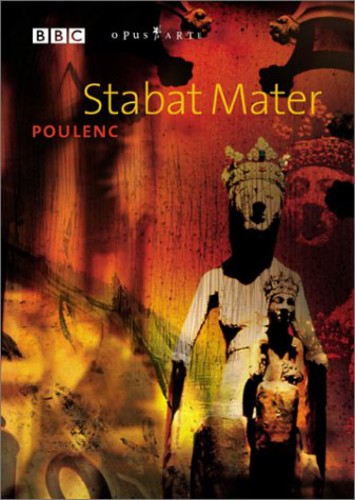
POULENC: Stabat Mater (PAL/NTSC)
Opus Arte
DVD
$32.99
$23.99
May 01, 2002
Poulenc wrote his "Stabat Mater," a hauntingly passionate work, after visiting the sacred shrine of the Black Madonna of Rocamadour. He made a pilgrimage to her remote chapel in the south of France after a good friend of his was hilled in a car accident.
On Sale
POULENC: Stabat Mater (PAL/NTSC)
$32.99
$23.99
DVD
Opus Arte
May 01, 2002
OA 0817D
Jommelli: Te Deum & Mass In D Major
Orfeo
CD
$20.99
March 15, 2001
Classical Music
Jommelli: Te Deum & Mass In D Major
$20.99
CD
Orfeo
March 15, 2001
ORF-C453001
Bach: St. John Passion
ReZound
CD
$18.99
January 01, 2009
Classical Music
Bach: St. John Passion
$18.99
CD
ReZound
January 01, 2009
RZCD-5017-18
Bush, G.: Christmas Cantata (A) / Gruber, F.X.: Silent Night
Saydisc
CD
$20.99
$15.99
October 01, 2006
Classical Music
On Sale
Bush, G.: Christmas Cantata (A) / Gruber, F.X.: Silent Night
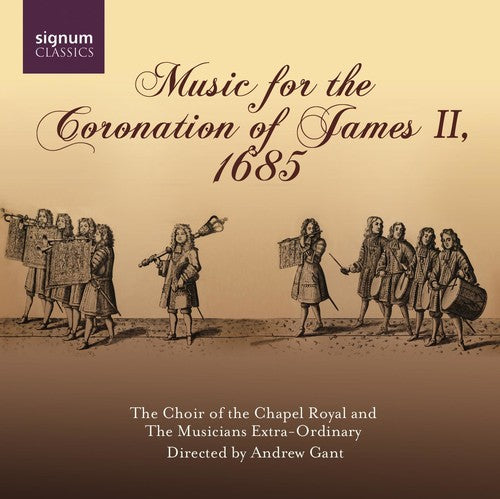
With a stunning selection of choral music that is truly fit for a King, Andrew Gant leads the Choir of the Chapel Royal& The Musicians Extra-Ordinary to re-create the music that accompanied the coronation of James II and Queen Mary in 1685.
REVIEWS:
The performances are very good, as is the 24-bit recording...The instrumental parts are no mere accompaniments: the ‘twenty-four violins’ of the royal orchestra were apparently used for some of these anthems and they often have the field to themselves, hence the title ‘symphony anthems’, but I would have liked a slightly more even balance.
That’s a small price to pay for hearing such fine music in such sympathetic performances. The notes in the booklet, too, are very informative, even making a case against the usual assumption that Blow was acting altruistically in yielding the post of organist to Purcell, perhaps more an act of convenience for a busy musician.
-- MusicWeb International
Music for the Coronation of James II, 1685
$19.99
CD
Signum Classics
January 01, 2007
SIGCD094
GUERRERO: Vespers for All Saints / Requiem Mass
Signum Classics
CD
$19.99
January 01, 2000
Classical Music
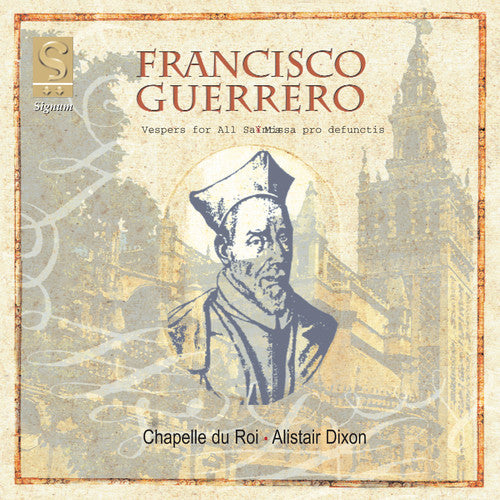
GUERRERO: Vespers for All Saints / Requiem Mass
$19.99
CD
Signum Classics
January 01, 2000
SIGCD017
Rihm, W.: Quid est Deus / Ungemaltes Bild / Frau/Stimme (Rih
SWR
CD
$20.99
October 20, 2009
Classical Music
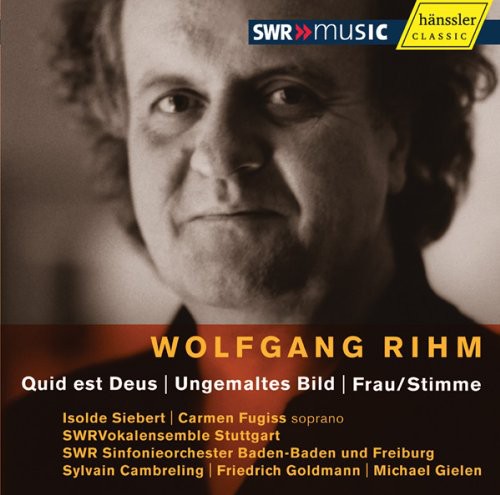
Rihm, W.: Quid est Deus / Ungemaltes Bild / Frau/Stimme (Rih
$20.99
CD
SWR
October 20, 2009
93236
Marcello: Psalms (Sung in English)
Signum Classics
CD
$19.99
September 11, 2015
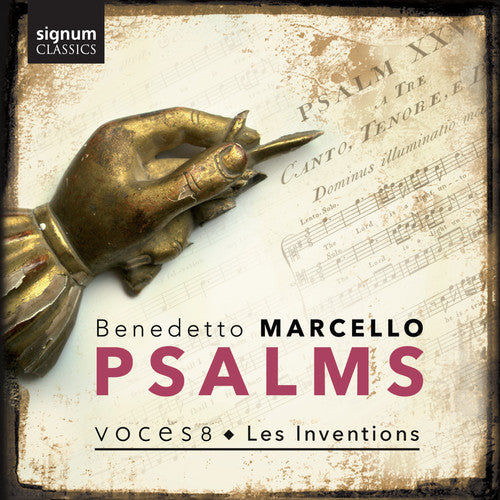
VOCES8 and Les Inventions shine a light on a hidden musical treasure in these world-premiere recordings of Charles Avison’s 1757 adaptation of Benedetto Marcello’s 1724-26 magnum opus Estro-poetico armonico, settings of the first fifty Psalms of David as paraphrased by the poet Girolamo Ascanio Giustiniani. In addition to the subtle deployment of vocal resources, and his imaginative use of musical techniques to illustrate the texts, Marcello brought to these psalms a peculiar quality of freshness and originality that unquestionably contributed to their becoming a major international success, so demonstrated by the work’s rapid translation into many other languages, as well as by the enthusiasm with which these settings were embraced by performers of a variety of religious traditions including Anglican, Lutheran and Jewish.
Marcello: Psalms (Sung in English)
$19.99
CD
Signum Classics
September 11, 2015
SIGCD391
Howells: Choral Music / Allwood, Rodolfus Choir
Signum Classics
CD
$19.99
January 01, 2010
HOWELLS The Summer Is Coming. Sweetest of Sweets. Sing Lullaby. One Thing Have I Desired. A Spotless Rose. Antiphon. Walking in the Snow. A Grace for 10 Downing Street. Here Is the Little Door. God Be in My Head. Long, Long Ago. Te Deum and Jubilate (Collegium Regale). Magnificat and Nunc Dimittis (Dallas Canticles). A Hymn for St Cecilia • Ralph Allwood, cond; Tom Wimpenny (org); Rodolphus Ch • SIGNUM SIGCD190 (69:02 Text and Translation)
Virtually all previous recordings of choral works by Herbert Howells have been exclusively devoted to his various sacred compositions—hardly surprising, given that Howells was arguably the greatest composer of liturgical music in the 20th century. This CD refreshingly adds to the mix a few of Howells’s secular choral pieces as well—specifically, The Summer Is Coming, Sweetest of Sweets, and Walking in the Snow, plus A Grace for 10 Downing Street, the non-liturgical invocation composed in 1972 for then prime minister and amateur conductor Edward Heath. Spanning some 56 of the composer’s 90 years, from 1918 to 1976, they present the full panoply of his compositional techniques, ranging from employment of church modes to the influences of French Impressionism, but are all recognizably the products of their maker, whose art became increasingly refined and complex over the years but remained thoroughly consistent in its fundamentals. Among the lesser-known works presented here, the most substantial are the Dallas Canticles. Whereas Howells wrote most of his service music for English cathedrals, this set from 1975 (the last of more than 20 settings by the composer) was provided instead for St. Luke’s Episcopal Church in Dallas, where a former Howells pupil was the organist and choir director, and a wealthy local philanthropist paid the commission fee. However, there is evidence suggesting that the works were originally intended for Durham Cathedral; such are the financial exigencies of musical composition.
The Rodolphus Choir is a polished ensemble of about 30 young singers, 16 to 25 years old, who are students and graduates of Eton. Its sonorities are bright and noticeably favor the treble end of the frequency spectrum over the somewhat subdued tenors and basses. Particularly noteworthy is its excellent diction, which makes it possible to follow most of the pieces without texts on hand; intelligibility is aided further by a well-considered recorded acoustic that is clear and not too reverberant. Texts are provided for all selections except Long, Long Ago and Walking in the Snow, omitted for copyright reasons. (The Naxos CD 8.554659 of music by Howells has the text of the former.) Rather frustratingly, only three of the four carol-anthems are recorded (Like as the Hart Desireth is omitted), and the others are interspersed throughout the set instead of presented en bloc. For the Howells completist this disc has, so far as I can find, the only recordings in print of God Be in My Head and Walking in the Snow; most of the other selections have only one other recording in print, though for several pieces that is the top-notch one of the Chandos two-CD budget set with the Finzi Singers under Paul Spicer, Howells’s pupil and biographer. Consequently, this disc will likely serve as a supplement for most Howells devotees; but as such it is a worthy one, as well as a welcome addition to any choral collection in general.
FANFARE: James A. Altena
From the very opening of this disc - a mixture of sacred and secular choral works - the Rodolfus Choir, under the astute directorship of Ralph Allwood, capture Howells’s idiom perfectly, and their understanding of this music is reflected in the high quality of their performances. They commence with The Summer is Coming, a brooding and complex work, written in memory of Arnold Bax, and the disc also features the much-loved Three Carol-Anthems – Sing Lullaby, A Spotless Rose and Here is the Little Door, here sung beautifully – although I found the soloist a little strained in A Spotless Rose. Howells composed his George Herbert settings Sweetest of Sweets and Antiphon very late on in life. Written for the Bach Choir at the suggestion of Sir David Willcocks, these are both brilliantly crafted works – harmonically adventurous and complicated, but one of my very few criticisms of this disc is that the male voices appear rather weak in Antiphon. The female voices are, in fact, stronger and more secure as a general rule throughout this recording, and they are particularly outstanding in One Thing Have I Desired, a work commissioned by St Matthew’s, Northampton. Other works presented include the Collegium Regale Te Deum and Jubilate, the Magnificat and Nunc Dimittis from the Dallas Service (commissioned by the director of music at St Luke’s Episcopal Church in Dallas – American Anglicans were great followers of Howells’s music at that time), and God be in my head. The latter was a composition demonstration that Howells gave to a pupil, written within the student’s hour-long lesson. The Rodolfus Choir here give a glowing account of this simple but incredibly effective piece. Another striking work on the disc is A Grace for 10 Downing Street. Edward Heath asked Howells to compose grace for a dinner to be held at 10 Downing Street in honour of William Walton - and at which the Queen Mother as well as other distinguished guests would be present. The performance here indicates how apt a start this Grace would have been to a truly impressive occasion. The disc concludes with A Hymn for St Cecilia, commissioned by the Worshipful Company of Musicians to celebrate Howells’s time as Master of the Company. It is a splendid conclusion to an excellent disc of exquisite and radiant singing. -- Em Marshall, MusicWeb International
Howells: Choral Music / Allwood, Rodolfus Choir
$19.99
CD
Signum Classics
January 01, 2010
SIGCD190
In the Midst of Life - Music from the Baldwin Partbooks / Rees, Contrapunctus
Signum Classics
CD
$19.99
$12.99
March 10, 2015
Their debut was shortlisted in last year’s Awards – their second release is just as accomplished; each of these powerfully contemplative works beautifully shaped and sung.
– Gramophone [5/2015]
On Sale
In the Midst of Life - Music from the Baldwin Partbooks / Rees, Contrapunctus


 On Sale
 On Sale
![Mendelssohn, Felix: St. Paul [Oratorio]](//arkivmusic.com/cdn/shop/files/1494685.jpg?v=1749293613&width=800) On Sale
On Sale



 On Sale

 On Sale

 On Sale
 On Sale


![Mendelssohn, Felix: St. Paul [Oratorio]](http://arkivmusic.com/cdn/shop/files/1494685.jpg?v=1749293613&width=800)


