

Collector's Corner
Find your next gift idea or addition to your music collection with Collector's Corner at ArkivMusic! We've hand selected our favorite box sets below!
206 products
-
![]()

-
![]()

-
 On Sale
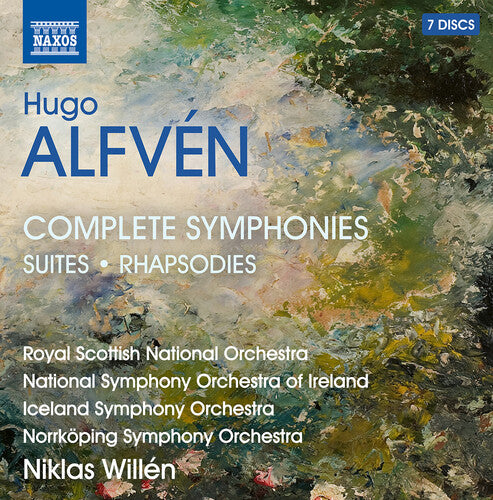
Alfvén: Complete Symphonies; Suites; Rhapsodies / Willén
CD$54.99$38.99Naxos
Nov 18, 20228507015 -
![]()

-
![]()

-
 On Sale
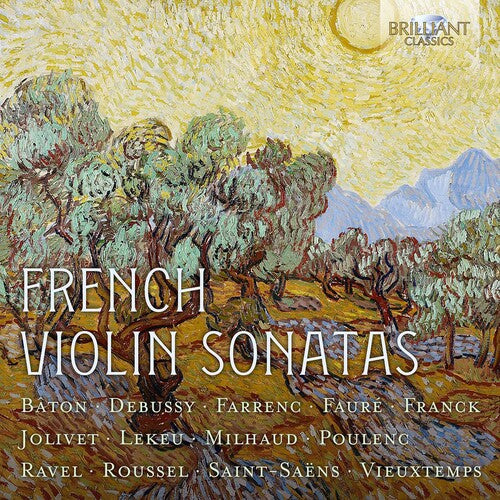
French Violin Sonatas
CD$37.99$28.99Brilliant Classics
Jan 21, 2022BRI96549 -
![]()

-
![]()

-
 On Sale
Itzhak Perlman - Concertos, Sonatas & more...
CD$28.98$21.99Sony Masterworks
Jan 01, 201488765438882 -
![]()

-
![]()

-
 On Sale
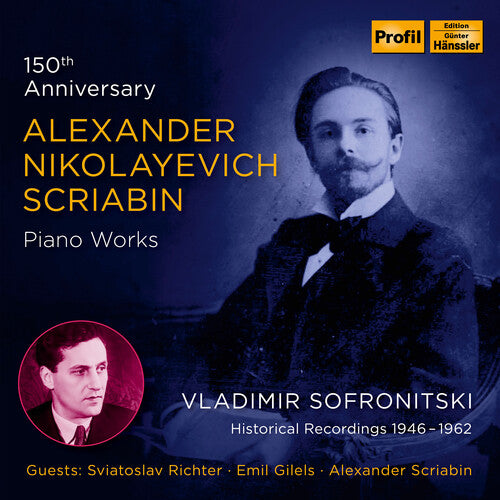
Scriabin: 150th Anniversary - Piano Works / Sofronitski
CD$37.99$28.99Profil
Apr 01, 2022PH22006 -
![]()

-
![]()

-
 On Sale
The Age of the Russian Avant-Garde - Futurists & Traditionalists
CD$56.99$39.99Grand Piano
Nov 11, 2022GP896X -
![]()

-
![]()

-
 On Sale
Three Centuries of Female Composers
CD$69.99$34.98Grand Piano
Mar 04, 2022GP897X -
![]()

-
![]()

-
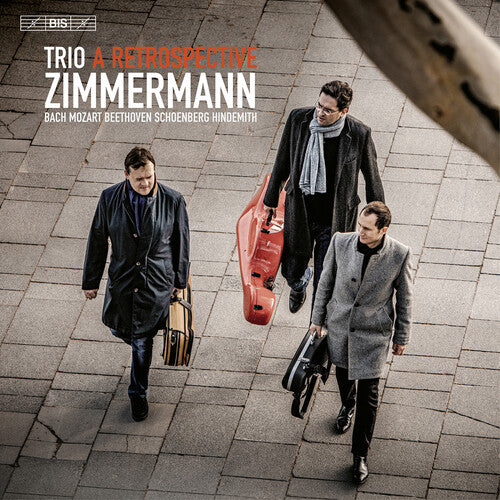 On Sale
A Retrospective / Trio Zimmermann
SACD$64.99$45.99BIS
May 06, 2022BIS-2677 -
![]()

-
![]()

-
 On Sale
Schumann: Alle Lieder / Christian Gerhaher, Gerold Huber
CD$79.98$59.99Sony Masterworks
Oct 08, 202119439780112 -
![]()

-
![]()

-
 On Sale
Sergei Leiferkus Sings Mussorgsky
CD$22.98$11.48Sony Masterworks
Oct 28, 201688985323342 -
![]()

-
![]()

- Balakirev: Piano Sonata in B flat minor
- Balakirev: Piano Sonata No. 1 in B flat minor, Op. 5
- Balakirev: Piano Sonata in B flat minor, Op. 3 'Grand Sonata'
- Balakirev: Waltz No. 1 in G - Valse di Bravura
- Balakirev: Nocturne No. 1 in B flat minor
- Balakirev: Waltz No. 2 in F minor
- Balakirev: Waltz No. 3 in D - Valse Impromptu
- Balakirev: Nocturne No. 2 in B minor
- Balakirev: Waltz No.4 in B flat
- Balakirev: Nocturne No. 3 in D minor
- Balakirev: Waltz No. 5 in D flat major
- Balakirev: Nocturne in G sharp minor (early version of Nocturne No. 1)
- Balakirev: Fantasiestuck
- Balakirev: Chant du pêcheur
- Balakirev: Waltz No. 7 in G sharp minor
- Balakirev: Mazurka No. 1 in A Flat
- Balakirev: Mazurka No. 2 in C sharp minor
- Balakirev: Sonatina (Esquisses) in G
- Balakirev: Berceuse
- Balakirev: Mazurka No. 3 in B minor
- Balakirev: Mazurka No. 4 in G flat minor
- Balakirev: Dumka
- Balakirev: Mazurka No. 5 in D
- Balakirev: Rêverie in F major
- Balakirev: Mazurka No. 6 in A Flat
- Balakirev: Piece in F sharp minor
- Balakirev: Mazurka No. 7 in E flat minor
- Balakirev: Capriccio
- Balakirev: Scherzo No. 1 in B minor
- Balakirev: Novelette
- Balakirev: Pustinya
- Balakirev: Scherzo No. 2 in B flat minor
- Balakirev: Fandango-Etude
- Balakirev: Spanish Serenade
- Balakirev: Caprice Brilliant Sur La Jota Aragonesa
- Berlioz: L'Enfance du Christ, Op. 25: La fuite en Egypte - Overture
- Balakirev: Scherzo No. 3 for Piano in F sharp major
- Balakirev: Spanish Melody
- Taneyev, S: Valse-Caprice No. 1 in A flat
- Taneyev, S: Valse-Caprice No. 2 in D flat major
- Glinka: Ivan Susanin (A Life for the Tsar): Overture
- Glinka: Ruslan and Lyudmila: Chernamor's March
- Chopin: Piano Concerto No. 1 - Romanza (transc Balakirev)
- Balakirev: Impromptu on the themes of two Preludes by Chopin
- Chopin: Scherzo No. 2 in B flat minor, Op. 31
- Liszt: Mazurka brillante, S221
- Beethoven: String Quartet No. 8 in E minor, Op. 59 No. 2: Allegretto
- Beethoven: String Quartet No. 13 in B flat major, Op. 130: Cavatina
- Balakirev: Gondellied
- Balakirev: Tarantelle in B
- Balakirev: Polonaise Brillante
- Balakirev: La fileuse
- Balakirev: Au Jardin
- Glinka: Kamarinskaya
- Balakirev: Symphonic Poem 'Tamara'
- Balakirev: Polka in F sharp minor
- Balakirev: Elegy on the Death of a Mosquito
- Balakirev: La Danse De Sorcières (Witches Dance)
- Glinka: Ne Govori: Lyubov' Proydyot (Do Not Say: Love Passes Away)
- Balakirev: Tyrolienne
- Zapol'sky: Reverie
- Balakirev: Toccata
- Balakirev: The Lark
- Balakirev: Islamey - Oriental Fantasy
-
 On Sale
Balakirev: Complete Works for Solo Piano / Walker
CD$51.99$36.99Grand Piano
Sep 10, 2021GP864X -
![]()

-
![]()

-
 On Sale
Christmas Oratorios & Concertos - Bach & Beyond
CD$32.99$24.99Haenssler Classic
Oct 07, 2022HC22034 -
![]()

-
![]()

-
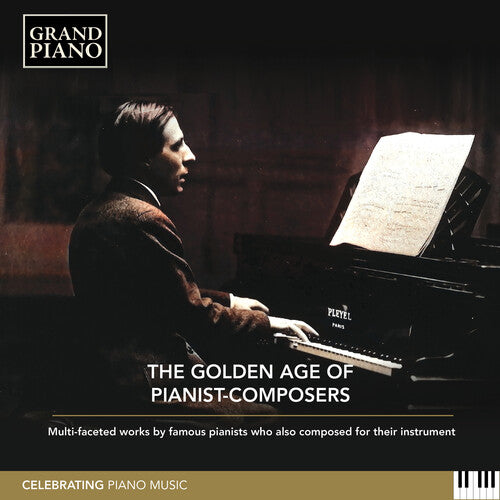 On Sale
The Golden Age of Pianist-Composers
CD$51.99$36.99Grand Piano
Apr 22, 2022GP899X -
![]()

-
![]()

-
 On Sale
Baroque Edition
CD$85.99$64.99Brilliant Classics
Mar 06, 2020BRI95886 -
![]()

-
![]()

-
 On Sale
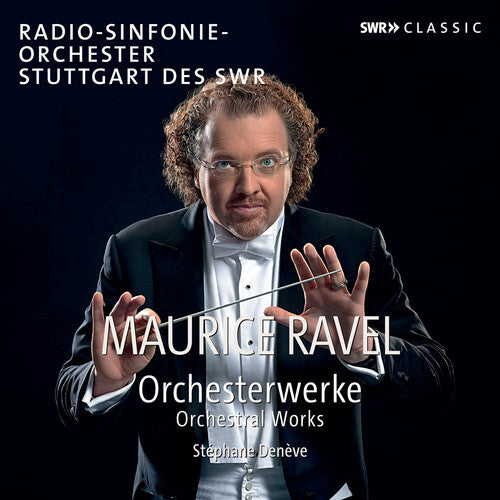
Ravel: Orchestral Works / Denève, SWR Radio Symphony Orchestra Stuttgart
CD$37.99$28.99SWR
May 13, 2022SWR19428CD -
![]()

-
![]()

-
 On Sale
French Impressions: A Potpourri of Piano Styles from the Romantics to a New Age
CD$51.99$36.99Grand Piano
Jun 10, 2022GP900X -
![]()

-
![]()

-
 On Sale
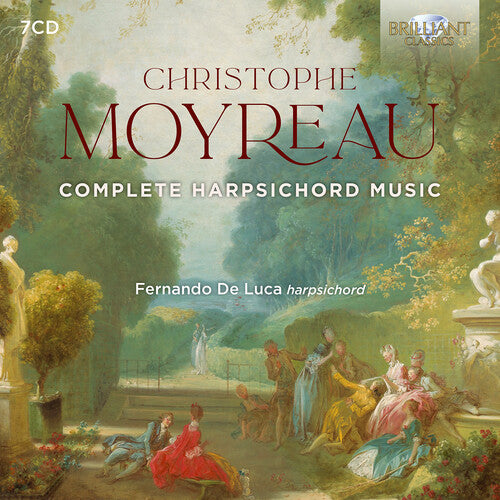
Moyreau: Complete Harpsichord Music / Luca
CD$37.99$28.99Brilliant Classics
Apr 22, 2022BRI96285 -
![]()

-
![]()

-
 On Sale
Mozart: Complete Piano Sonatas / Würtz
CD$28.99$21.99Brilliant Classics
Nov 01, 2019BRI96041 -
![]()

-
![]()

-
 On Sale
Perfect Moods: Contemplative, Contemporary Piano Miniatures
CD$51.99$25.98Grand Piano
Sep 09, 2022GP898X -
![]()

-
![]()

-
 On Sale
John Barbirolli: Complete RCA & Columbia Album Collection
CD$49.98$37.99Sony Masterworks
Feb 21, 202019075988382 -
![]()

-
![]()

-
 On Sale
Lehár: The Operetta Edition / Bibl, Maurer, Mörbisch Festival Choir and Orchestra
CD$31.99$23.99Oehms Classics
Jun 18, 2021OC1902 -
![]()

-
![]()

-
 On Sale
Prokofiev: Complete Symphonies / Alsop, Orquestra Sinfônica do Estado de São Paulo
CD$51.99$36.99Naxos
Apr 09, 20218506038 -
![]()

-
![]()

-
 On Sale
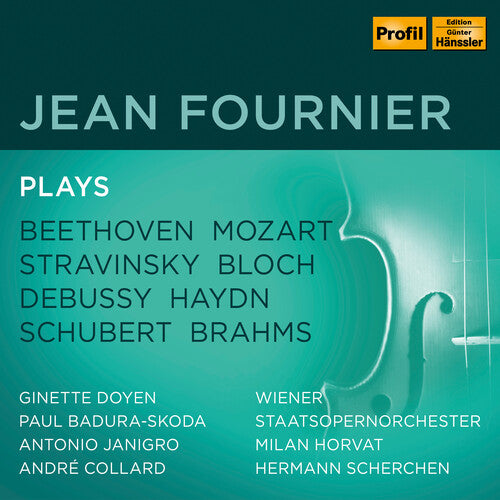
Jean Fournier Plays Chamber and Concerto Works
CD$37.99$28.99Profil
Mar 04, 2022PH22003 -
![]()

-
![]()

-
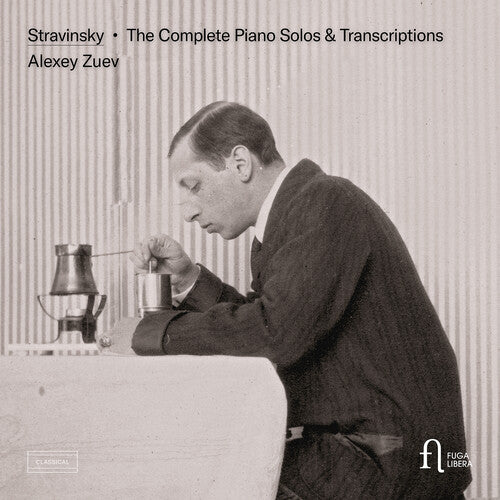 On Sale
Stravinsky: The Complete Piano Solos & Transcriptions / Zuev
CD$42.99$32.99Fuga Libera
May 13, 2022FUG777 -
![]()

-
![]()

-
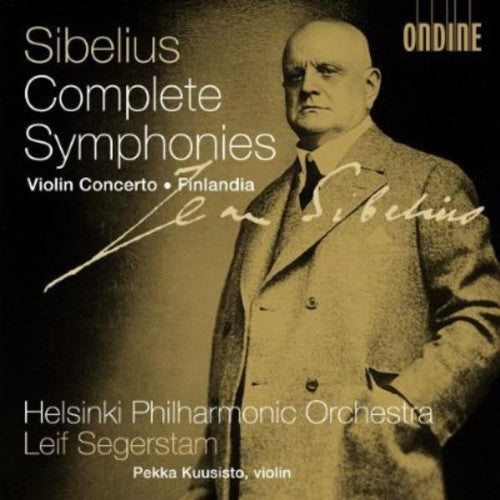 On Sale
Sibelius: Complete Symphonies & Violin Concerto / Segerstam, Kuusisto, Helsinki Philharmonic
CD$53.99$40.99Ondine
Nov 28, 2001ODE 1075-2Q -
![]()

-
![]()

-
 On Sale
Haydn: Great Choral Works / Rilling
CD$32.99$24.99Haenssler Classic
Nov 05, 2021HC21054


Alfvén: Complete Symphonies; Suites; Rhapsodies / Willén
Hugo Alfvén’s music has always been close to the hearts of the Swedish people, and ranks among some of the most significant and representative of the spirit of the country. Alfvén is known as a cheerful entertainer in compositions such as Den forlorade sonen (‘The Prodigal Son’), but his symphonies reveal a different, more elegiac and often more dramatic side. The success of Alfvén’s symphonies fundamentally changed Sweden’s musical climate and, with a substantial collection of further orchestral music representing his gloriously rich and varied style, these recordings sweep us into the remarkable world of Scandinavian landscape and culture.
Past praise for previously released volumes included in this set:
Symphony No. 5; Andante Religioso / Willén, Norrköping Symphony
The Norrköping Symphony plays with confidence and fervor. Alfvén was nothing if not expansive, and if his formal touch was never all that deft, he did know how to fill up time with arresting ideas, glowingly scored. A serenely lovely Andante religioso makes a perfect encore, one that puts the finale of the symphony’s straining for heroic effect in its proper perspective in the gentlest and most affecting way. Naxos’ sonics for this production are also excellent. Very enjoyable indeed.
-- ClassicsToday.com (David Hurwitz)
The Prodigal Son, Symphony No. 2 in D major, Op. 11 / Willén, Ireland NSO
Listen as Niklas Willén teases the skittish polka from “The Prodigal Son” ballet suite, or steers his players through the vehement fugue that rounds out his Symphony No. 2, and you’ll appreciate why this release commands unreserved praise. These works come to life in Willén’s hands.
Willén’s reading of the Symphony's Andante conjures a huge range of textures and sonorities, with the dark-hued horns and sombre lower winds particularly impressive. The players give all they have in music that’s probably new to them, and that extra effort is just one of the factors that makes these performances so compelling.
-- ClassicsToday.com (10/10; David Hurwitz)
Symphony No. 3; Skerries; Dalecarlien Rhapsody / Willén, RNSO
If you haven’t heard these charming, folk-music-inspired gems of late Romantic music, then here’s an excellent place to start. The Symphony also sounds consistently fresh and lively, though it’s hard to shake the impression that the composer was happier writing programmatic works in free form than in indulging the more intellectual rigors of symphonic development. In Willén’s sympathetic hands, however, none of its four movements outstays its welcome. In any event, the Royal Scottish National Orchestra plays with confidence and evident enjoyment, and the recorded sound is very good.
-- ClassicsToday.com


French Violin Sonatas
The works in this collection emerged from the genre of duo concertant initially conceived as showcases for the virtuosity of Nicolò Paganini and his successors in the Franco-Belgian school of violin playing, notably Henry Vieuxtemps. He and Louise Farrenc remain attractive outliers in the chronology of French violin sonatas, which began proper in 1877 with the first performance of Fauré’s First Sonata, followed in short order by comparably significant works by Saint-Saëns and Franck. These three works considered together form a trinity linked by features which came to define the character of the French violin sonata as a genre over the next few decades: recitative-like sections, cyclical form, modal techniques and organ-like pedal points, especially in the piano part – all three composers having spent a good part of their career as titular organists at landmark churches in Paris.
A further spur to the flood of of violin sonatas from Paris during the first decades of the 20th century was the abundance of superb performers who had made Paris their home: foremost among them Pablo Sarasate, Eugène Ysaÿe, Georges Enescu, and Jacques Thibaut. The Wagnerian shadow falling over works by Roussel and Lekeu is decisively dispelled by Debussy’s late and sinuous masterpiece, and then more radically by Ravel in the lazy, seductive Blues of his Sonata. The collection evolves further with a bold Sonata of 1932 by André Jolivet, whose movement titles advertise his rejection of the classical forms honored by previous rarities – not only Louise Farrenc but also Rhené-Emmanuel Bâton, who composed in a richly mystical but traditional idiom as an outlet for the creative urges accumulated and repressed like Mahler during his occupation as a conductor.
REVIEW:
A sure-fire bet for collectors of unusual repertoire is Brilliant Classics’ set of French Violin Sonatas, which is headed, interpretatively, by the Debussy, Ravel (Second), and Franck sonatas, superbly played by violinist Kristóf Baráti and pianist Klára Würtz. All of these excellent recordings date from between 1987 and 2020.
-- Gramophone


Itzhak Perlman - Concertos, Sonatas & more...
R E V I E W S of some of the recordings that make up this set:
It's always fascinating to go back to the early recordings of artists who are firmly ensconced in the classical music pantheon. Such is the case with this recording of the Tchaikovsky and Sibelius concertos made by Itzhak Perlman in the late 1960s.
The Tchaikovsky concerto was written for virtuoso violinist Leopold Auer who actually thought the work unplayable. The young Perlman brings passion and flash to the concerto; his playing is suitably poetic in its sentimental moments and fiery in its finale. Sibelius's concerto was written about the same time that he wrote his second symphony. Perlman grasps the concerto's romantic soul while standing up to its demanding modernist technical challenges. As an added bonus the recording includes Dvorák's Romance, a gentle idyll that displays Perlman's lovely legato playing. -- MUZE [review of RCA 63591]
This album continues the tribute to classic film music from John Williams and Itzhak Perlman's CINEMA SERENADE disc. It is an undeniably old-fashioned and romantic album, befitting the era the music is drawn from. On "As Time Goes By" from CASABLANCA, Perlman proves that he's still one of the world's premier concert violinists, playing the theme with palpable ache. Most of these compositions are by the classic film composers--Alfred Newman, Miklós Rózsa, Max Steiner--with one notable exception. William Walton's theme for HENRY V gets a suitably regal, yet restrained, treatment. Perlman sounds as if he's having a good time with the sprightly Irish motifs of "The Quiet Man." The orchestrations are rich and dramatic, and the recording quality is superb. This album is highly recommended to anyone who remembers when a soundtrack was more than just a bunch of flavor-of-the-month pop tunes. -- MUZE [review of SONY 60773]
Prokofiev's F minor Sonata—surely his greatest chamber work—opens bleakly, then flowers to harmonic richness before switching to a sharp-edged Allegro brusco, a deeply introspective Andante and a closing Allegrissimo that recalls (or anticipates, depending on its precise chronology in Prokofiev's thinking) the finale of the great Eighth Piano Sonata... Perlman's is an immensely assured, sweet-centred reading, delicate where needs be (the ''wind in a graveyard'' passages of the first movement, for example) and yet with a Heifetzian resilience that both sonatas willingly respond to... When it comes to the delightful Second Sonata—of rather less import, and a second-hand utterance (the original was for flute and piano)—Perlman and Ashkenazy play with astonishing virtuosity and here their visceral virtues win hands down, especially in the Scherzo... the playing has real class, the recording is clean and there's a substantial bonus in Perlman's accomplished 1966 version of the Second Violin Concerto, where Leinsdorf and the Boston Symphony trace and characterize the score's every subtle detail—especially among the woodwind. That, for me, is the disc's most indelible interpretative feature. -- Gramophone [review of RCA 61454]


Scriabin: 150th Anniversary - Piano Works / Sofronitski
As pianist Andrei Hoteev puts it, Vladimir Sofronitzki's interpretations included an "improvisatory style", which corresponds with what musicologist Sigfried Schibli has noted as a characteristic of Scriabin's own playing, going on to say Scriabin "developed his own style of playing the piano" with "alertly varied rhythms and dynamics...combined with a delicate touch and spontaneous agogics." Indeed, Sofronitzki's Scriabin performances have often been praised for their idiomatic, "poetic" rubato together with a flair for musical architecture and rhythmic precision. In his desire for fidelity to the original, Sofronitzki's highly sensitive use of the pedal reflects his striving to abide by the composer's expressive markings as closely as possible. His affinity with Scriabin's oeuvre may derive from the fact that both the composer and the pianist himself were influenced by the music of Frédéric Chopin. Having spent his childhood in Warsaw, where his family had settled when he was two years old, Sofronitzki came to be regarded as setting new standards for Chopin interpretation - an artistic focus that goes back to his first piano tuition in the Polish capital. In 1949, the centenary of Chopin's death, Sofronitzki performed all his piano works on five successive days at the great hall of the Tchaikovsky Conservatory in Moscow.
REVIEWS:
The flow of melody and the highest transparency of musical events were top priorities for Vladimir Sofronitzky, whom Emil Gilels called the greatest piano player in the world and of whom the famous Heinrich Neuhaus said, « He plays like a god and looks like a god. » Let’s look closely at these two statements: Gilels speaks of the piano player not of the pianist. Consciously or unconsciously? And Neuhaus speaks of the god. God, is that power? Mightiness? Because Sofronitzky’s playing is powerful. It is dramatic and sonorous. This is Sofronitzky’s individualism: his feelings are those of sovereignty, of control. Poetry and tenderness are not his thing. And so the recordings of this edition impress me more than they touch me.
However, those who are intoxicated by consummate piano technique will be happy with this. In addition to the Etudes, Mazurkas, Preludes, Impromptus, Nocturnes and Poèmes, this box includes the legendary near-complete recording of the piano sonatas with Vladimir Sofronitzky. Only the first three movements of the 1st Sonata and the 9th Sonata, which the pianist never recorded out of respect for Scriabin, are missing and replaced by recordings by other pianists. Sofronitzky’s interpretations are phenomenal: he literally chisels the music into sculptures, relentless, accented, yet often very restrained and labored for nuance. Nevertheless, it is the enormously powerful playing that dominates and captivates the listener[.]
-- Pizzicato
These are historical recordings from 1946 to 1962, played primarily by Sofronitski; all the others are listed as guests. Profil celebrates Scriabin’s 150th birthday with a nearly complete collection of his solo piano works. This remastered collection has cleaned things up to today’s standards.
"Historical Recordings 1946-1962" is correct for all the recordings here except Scriabin’s tracks. There is not a bad performance in this collection. A few choices were made that I didn’t agree with, but, by and large, this is spectacular Scriabin...I was amazed at the musical concentration Sofronitsky summoned to play such beautifully shaped phrases on such an instrument. Anyone who enjoys Scriabin’s piano music will find exceptional performances on each disc here.
-- American Record Guide


The Age of the Russian Avant-Garde - Futurists & Traditionalists
Modernity in Russian music emerged despite its struggles with the Soviet regime in the early 20th century, with the mystical vision of Scriabin’s musical legacy providing a foundation on which to build. In these acclaimed albums we discover Medtner’s life affirming Sonatas, and hear Lourié’s journey from Impressionism to pioneering Cubist conceptions. Mosolov’s works are bold and complex, while Roslavets new tonal system brings ‘fi re and ice’, and Stanchinsky’s sophisticated virtuosity anticipates many aspects of 20th-century style. These remarkable works represent a time of profound change in Russian culture that is still being discovered and assessed today.
Past praise for previously released volumes included in this set:
Mosolov: Complete Works for Solo Piano / Andryushchenko
These are outstanding performances of works that deserve to be heard. The sonatas, in particular, are impressive and, though Scriabin’s spirit runs through much of these compositions they are fine works in their own right.
-- The Classical Reviewer
Louriè: Complete Piano Works, Vol. 1 / Koukl
Arthur Lourie turns out to be a pretty darn good composer—too good to have been left in the attic trunk all these years. The Five Fragile Preludes, Op. 1, have a natural flow to them, and an inevitability that is both rhythmically and harmonically arresting in an impressionism somewhat redolent of Debussy mixed with early Scriabin. While exceedingly brief, they are lovely, perfect jewels. All of this is well described in Anthony Short’s notes, a recording of demonstration quality, and a pianist totally in tune with the music.
-- American Record Guide
Medtner: Complete Piano Sonatas, Vol. 2 / Stewart
Paul Stewart’s love and admiration for Medtner’s music come through strongly in these performances, which require a great range of treatment from the gentlest of touches, sometimes merely brushing the keys, whilst at others displaying a towering emotional intensity. His ability to bring out the poetry in Medtner is impressive and the recording is crisp, which combination makes for a hugely satisfying experience.
-- MusicWeb International
Roslavets: Complete Piano Works / Andryushchenko
For those listeners yet to encounter this fascinating figure, please fear not—Roslavets’ work is appealing on a number of levels and you will find much to enjoy on this terrific pair of discs.
-- MusicWeb International
Louriè: Complete Piano Works, Vol. 2 / Koukl
I am glad to have had the opportunity to hear so much of Lourié’s music which is so interesting and so tuneful and so varied it seems he was a chameleon in more than just his assumed persona but in his music as well and it’s all the better for it; variety is the spice of music as well as of life itself. Giorgio Koukl is nothing if not a consistently impressive advocate of whichever composer’s music he takes it upon himself to focus on and I thoroughly recommend this disc to all lovers of solo piano music.
-- MusicWeb International
Stanchinsky: Complete Piano Works, Vol. 1 / Solovieva
The short-lived Alexey Stanchinsky (1888-1914) has shown up on my Want Lists before, but despite devoted advocacy by a few pianists, his Scriabin-inspired music hasn’t caught on. It’s not clear why: His works are wildly inventive in their treatment of rhythm, harmony, and counterpoint—and while he died before he got to solidify his style, the dizzying sense of adventure in even his earliest works is palpable. May this new release by Olga Solovieva (the first volume of a complete cycle) be the one that turns the tide.
-- Fanfare


Three Centuries of Female Composers
Ranging from the 18th century to the music of our time, this collection of critically acclaimed recordings explores the significant contribution to solo piano repertoire made by a wide variety of women composers. These rare and important pieces include the works of the celebrated pianist Anne-Louise Brillon de Jouy and of Hélène de Montgeroult, whose sonatas are distinctive additions to the Classical and early Romantic periods. Maria Szymanowska’s deft dances contrast with the fearsome demands of Teresa Carreño, herself a great virtuoso. Vítězslava Kaprálová was the most important female Czech composer of the 20th century, while Agathe Backer Grøndahl was one of Norway’s most respected composer-pianists. Tanya Ekanayaka continues the lineage in her own diverse and hybrid pieces.
Volumes included:
Carreño: Rêverie & Selected Music for Piano
Szymanowska: Complete Dances for Solo Piano
Kaprálová: Complete Piano Music
Pioneers: Piano Works by Female Composers
Brillon de Jouy: The Piano Sonatas Rediscovered
Ekanayaka: The Planets & Humanity - Piano ReflectionsMontgeroult: Complete Piano Sonatas
Backer Grøndahl: Piano Works
REVIEWS:
French pianist Nicolas Horvath reveals more of the music of Hélène de Montgeroult, the pianist, composer, and teacher whose background influence on such seminal figures as Chopin and Schumann – and quite possibly Brahms – is only now being acknowledged. Horvath makes appealingly light work of her nine keyboard sonatas, several recorded for the first time.
-- BBC Music Magazine
Nicolas Horvath clearly enjoys de Jouy’s work, and delivers readings which are spirited and lyrical, playful and reflective, easing into the minor mode (in which most of the sonatas were composed) as though at the daybreak of Romanticism. In this particular recording, I was struck by the clarity of sound, which made it easier to hear the evenness and responsiveness of Horvath’s touch.
-- Fanfare
Venezuelan pianist-composer Teresa Carreño had a dramatic, colorful career that is hard to believe. Of the works presented in this fascinating recording, all but one are world premieres. This music has a gentle melancholy. Several of these miniatures have Chopinesque harmonies and perfumes. The album ends on an upbeat note, the composer’s Opus 1, a highly accomplished waltz full of scintillating episodes written for Gottschalk. The latter must have been knocked out by this charmer.
Alexandra Oehler plays with sensitive phrasing and skillful voicing. Her refined musical sensibility is just right for this repertory. The recording, like the music, is warm and inviting.
-- American Record Guide


A Retrospective / Trio Zimmermann
There is no better recordings of the strio trio repertoire than those you will find here. - David Hurwitz (ClassicsToday.com)
In 2007 Frank Peter Zimmermann was able to realize his long-cherished dream to establish a string trio, together with Antoine Tamestit and Christian Poltéra. Three individually superb string players do not necessarily add up to a top-flight trio – even if they all play on instruments by Stradivarius, as here – but Trio Zimmermann immediately made a name for itself at international festivals and prestigious concert venues.
In 2010 the trio released its first album – with Mozart's seminal Divertimento – to critical acclaim. (More than 10 years later, that recording was the top recommendation in the Record Review series Building a Library on BBC Radio 3.) On following offerings, the ensemble explored the later repertoire for string trio: two discs with Beethoven's contributions to the genre, and a third with works by Hindemith and Schoenberg which have garnered distinctions such as Diapason de l’Année, the Chamber Award from BBC Music Magazine and a ‘Jahrespreis’ from the German Record Critics’ Award association. For their fifth disc to date the trio went back in time, however, as the three members together prepared a performing version of Bach's Goldberg Variations, described as ‘a triumph of combined technical ingenuity and musical insight’ in The Strad. These five discs have now been collected into a boxed-set retrospective, offering lovers of chamber music more than 5 hours of glorious music-making, in top-notch sound and including the original booklets with full documentation.
Past praise for previously released albums included in this set:
Bach: Goldberg Variations
The expertise and fluency of the Zimmermann's playing is evident. Their approach to dynamics is refreshingly flexible, and all three players bring a graceful approach to ornamentation.
-- BBC Music Magazine
Beethoven: String Trios, Op. 9, Nos. 1-3
These musicians are in command of the meticulously written extremes in expression, sforzandos not indiscriminately stabbed at but gauged according to the contexts in which they appear. Tempi are gauged to a nicety too. In sum, they do Beethoven proud throughout this exceptionally fine disc.
-- Gramophone
Hindemith & Schoenberg: String Trios
The Trio Zimmermann play them both Hindemith works with such energy, panache, and attention to the minutest detail that they are totally convincing and make a perfect foil to the rigors of the Schoenberg that follows.
-- The Guardian
Trio Zimmermann play Mozart & Schubert
The Zimmerman Trio plays with remarkably accurate intonation and a ravishing tone that’s also mindful of the Classical style. In other words, they don’t lay it on too thick, but they aren’t afraid to let the melodic lines sing. Schubert’s single-movement trio makes the perfect coupling.
-- ClassicsToday.com (10/10; David Hurwitz)
Beethoven: String Trios, Op. 3; Serenade, Op. 8
The Zimmermann Trio offers what must be the finest recording of Beethoven's Op. 3 since the classic mono Heifetz/Primrose/Piatigorsky version. They bring out all of the first movement’s requisite brio, paying heed to the syncopated rhythmic underpinnings that support the scampering triplet passages. The ensemble lightens its sonority for the Andante without sacrificing body and definition, while they articulate the Menuetto’s two-note phrase groups and subito dynamics in strict tempo yet in a way that’s oblivious to the bar lines. While the Finale is a model of controlled ferocity, the musicians are not afraid to let the lyrical sections sing out sweetly (never cloyingly).
Power and delicacy effortlessly coexist in the Serenade’s opening March, while subtle dynamic gradations distinguish the Menuetto’s loud arpeggiatted tuttis. The Adagio’s long unison lines offer cogent proof that one can employ minimum vibrato and still retain a focused and alive sonority. The March returns da capo at the end of the piece, with slightly more emphatic fortes and lighter pianos this time around. The warmth, clarity, and ambient realism of BIS’s surround-sound engineering holds equal appeal when experienced in conventional stereo playback mode. This release is not just a worthy follow-up to the Zimmermann Trio’s magnificent Mozart K. 563 and Beethoven Op. 9 Trio traversals, but a reference disc in its own right. Bravo!
-- ClassicsToday.com (10/10; Jed Distler)


Schumann: Alle Lieder / Christian Gerhaher, Gerold Huber
Robert Schumann’s songs are not only one of the high points of musical Romanticism, they also represent a unique marriage of words and music. Not since Dietrich Fischer-Dieskau’s pioneering recording in the 1970s has there been a singer who has explored Schumann’s entire lieder output in such detail. As one of the foremost lieder singers of our day, Christian Gerhaher has gone even further than Fischer-Dieskau and together with his brilliant pianist Gerold Huber has realized one of his dearest wishes after more than three decades of intensive engagement with Schumann’s music.
Their 11-CD edition of Robert Schumann: The Complete Songs will be released on September 3, 2021 and will be available digitally as well. A co-production between Sony Classical and BR-KLASSIK, with the support of the International Song Centre Heidelberg, initiated by the Heidelberger Frühling music festival, this set features 299 songs – almost the whole of the composer’s lieder output. The approach adopted by Christian Gerhaher and Gerold Huber is artistic and biographical rather than encyclopaedic. Schumann famously focused on lieder composition during two periods in his life: 1840–41 and 1849–53. By analogy with this focus, the first six CDs are devoted to the earlier period, the remaining five to the later years. Within this arrangement, Gerhaher and Huber have consciously eschewed a purely chronological or purely thematic approach, their aim being to preserve what for Schumann himself was the essential unity of his song cycles and to embed the individual songs within a chronological and thematic inner context. The songs that Schumann wrote during his youth and that were not published during his lifetime have not been included in this project. Also omitted are the melodramas and the works that deviate from classical song form or that are a part of much longer works. In the wake of these recordings, Gerhaher has also subjected his earlier Schumann releases to a critical overhaul. The bulk of the songs that appeared in his earlier albums Dichterliebe and Melancholie in 2004 and 2007 respectively have been re-recorded (among these songs are Dichterliebe op. 48 and the Sechs Gedichte und Requiem op. 90); conversely, other earlier recordings, including the Eichendorff Liederkreis op. 39, have been taken over into the present set. This unique project acquires an extra appeal as a result of new recordings of the cycles for female voice, the rarely heard duets and trios and works for several voices such as the Spanisches Liederspiel op. 74, in which Schumann raised the medium to a whole new artistic level. Among the other eminent artists featured in this edition are Sibylla Rubens, Camilla Tilling, Julia Kleiter, Wiebke Lehmkuhl, Martin Mitterrutzner, Christina Landshamer and Anett Frisch.
The extensive booklet includes all the song texts together with an introduction by the German musicologist Laurenz Lütteken, while Gerhaher himself has set down his personal thoughts on the individual songs. A detailed index completes the documentation. These recordings were supported by the Robert Schumann Research Centre in Düsseldorf.
REVIEWS:
A wonderful achievement and a marvel of sustained artistry: subtle, intelligent performances, impeccably prepared and movingly executed.
– Gramophone (Editor's Choice, October 2021)
It’s undoubtedly a fine, constantly rewarding set, with every song delivered with the fastidious attention to detail and to the individual coloring of each phrase that has always been a feature of Gerhaher’s lieder singing.
– Guardian (UK)


Sergei Leiferkus Sings Mussorgsky
4 CDs of award-winning performances, the great Russian baritone Sergei Leiferkus sings the songs of his compatriot Mussorgsky. “Absolutely riveting,” wrote Gramophone’s reviewer, praising the singer’s “amazing variety of tone colour and textual inflexion” and pianist Semion Skigin “a wonderfully responsive partner.”
REVIEW:
Although Sergei Leiferkus does not have the most powerful baritone in the world, his insight, intelligence, intuition, authority, and soulfulness more than compensate. And in the Russian art song repertoire, he hardly has any competitors. His recordings of Glinka and Tchaikovsky are flat out magnificent. But decades from now, when art song aficionados speak of Leiferkus, it will be his recordings of the songs of Mussorgsky that are mentioned in hushed whispers and reverential tones.
Not since Boris Chirstoff's sublime survey of the complete Mussorgsky songs has another singer of comparable stature scaled the heights Leiferkus reaches in the first volume of the songs. His The Songs and Dances of Death are among the most terrifying, moving, and truthful ever recorded. His The Puppet-Show is dreadfully, nastily witty and his Forgotten is heartbreaking. His Darling Savishna is drop-dead funny. And his concluding Mephistopheles' Song of the Flea is grotesquely hilarious. In all ways, this is one of the best art song recitals in years. Except for one thing. There is not much good to say about his recording of The Nursery. Sung throughout in his head voice, as Mussorgsky requires, Leiferkus' interpretation of the songs through his tone is frankly agonizing to hear. He minces, he mutters, he mumbles, he does everything except chew the scenery. This is still a highly recommend recording, but just skip Leiferkus' The Nursery.
-- AllMusic.com (James Leonard)


Balakirev: Complete Works for Solo Piano / Walker
These recordings of Balakirev’s complete solo piano works by the much-lauded pianist Nicholas Walker have been hailed as ‘the reference set’ by the American Record Guide. Originally released between 2013 and 2020, these critically acclaimed performances are now collected together for the first time in a 6 album box set. Includes world premiere recordings. Hailed by the London Evening Standard as a 'prodigy, of awesome technical fluency backed by exceptional artistry', Nicholas Walker possesses a rare combination of talents combining sensitivity with 'the flair of a full scale virtuoso and a sparkling intelligence' (BBC Music Magazine). Nicholas Walker teaches at the Royal Academy of Music in London, where he devised the celebrated keyboard skills course, the advanced level of which not only helps students to be proficient in all aspects of practical musicianship, but offers them the chance to learn how to improvise in various forms, such as minuets, variations, sonatinas and Mozart-type cadenzas, in addition to devising and performing a virtuoso transcription of their own.
CONTENTS:
Past praise of previously released volumes included in this set:
Balakirev: Complete Piano Works Vol 1
Walker presents the works in reverse chronological order, thereby giving us the best and best-known work first. It is a masterly performance, fully on a par with or exceeding ones I have reviewed in recent years: Hinrose (Mirare 181, Nov/Dec 2012), Driver (Hyperion 67806, July/Aug 2011), and Hellaby (Cameo 2081, Sept/Oct 2009). Besides Kentner’s great recording (Naxos 111223, not available in US), I also enjoy Earl Wild’s (Ivory 73005, May/June 2004). Walker finds inner voices and emphasizes some different aspects of the harmony and form, making for a new and well thought out interpretation. He has the full technical capability to handle all of the demands of this score
– American Record Guide
Balakirev: Complete Piano Works Vol 3
This third volume of Balakirev’s complete piano works is built around his seven Mazurkas, joyous and colourful pieces with an unmistakable Slavic tone. This series continues to establish Walker as the new reference for Balakirev’s music.
– Musiq3
Balakirev: Complete Piano Works Vol 5
This one is particularly fascinating for transcription junkies, beginning with the spectacular (and spectacularly difficult) Reminiscences on Glinka’s A Life for the Czar, famous from Earl Wild’s 1969 recording. Walker is quite his equal—and that is saying something—and is also beautifully recorded in a realistic, sympathetic acoustic. Indeed, Walker’s playing throughout this absorbing disc is a pleasure to hear, with a sophisticated tonal palette and eschewing any superficial virtuosity: ‘bravura with integrity’ is how I would describe it. Why don’t we hear more of him?
–Gramophone


Christmas Oratorios & Concertos - Bach & Beyond
The importance of Christmas inspired many composers to write music for the occasion, some designed to be performed in church services, others for concert or secular celebration. This 6 album set combines oratorios and concertos by Schütz, Telemann, Bach, Corelli, Rinck, Saint-Saëns, Herzogenberg, Clarke, Nicolai. Some of the finest artists and ensembles in the Hanssler catalog are showcased on these recordings, including Iona Brown, Joachim Held, Hannoversche Hofkapelle, Collegium vocale Siegen, Monteverdi-Orchester Munchen, Oregon Bach Festival Chamber Orchestra, and many more.
REVIEWS:
Christmas has inspired many composers to compose magnificent music, on the one hand for church services and on the other hand for festive concerts outside the church. This masterful box with 6 CDs contains oratorios and concertos by Schütz, Telemann, Bach, Corelli, Rinck, Saint-Saëns, Herzogenberg and Clarke, performed by some of the best artists and ensembles in the Hänssler catalogue, including Iona Brown, Joachim Held, Hannoversche Hofkapelle, Collegium vocale Siegen, Monteverdi-Orchester Munchen, and the Oregon Bach Festival Chamber Orchestra.
-- Stretto
As Christmas approaches, an avalanche of familiar Christmas tunes rumbles in the distance. Even in the case of large-scale Christmas compositions, the same works seem to be repeated too often, but Hänssler's six-disc box set reminds us that the repertoire is much wider.
The greatest work is Heinrich von Herzogenberg's (1842–1900) idyllic oratorio "The Birth of Christ" (1894), which spreads the event into a spectacle borrowing familiar and lesser-known Christmas carols based on the Old Testament and the Gospel of Luke. Herzogenberg, who was one of Brahms's supporters, represents full Romanticism at its tenderest, sometimes generously sweet. Schütz's "A Christmas Story" is more familiar and would work better as a period-style performance. Arnold Bruckhorst's (c. 1675–c. 1725) twenty-minute "Christmas History" is, on the other hand, a new acquaintance, as is Christian Heinrich Rinck's (1770–1846) even shorter classic Romantic Christmas Cantata. All performances are homely and competent, without causing great artistic tremors. Saint-Saëns' Christmas Oratorio can be found in more sophisticated recordings, but why, for example, Otto Nicolai's charming Christmas Overture is never heard in concerts?
Telemann's big and handsome oratorio Heilig, heilig, Heilig ist Gott (1747) is useless to look for elsewhere. The documentation only includes lists of works and performance information.
-- Rondo Classic


The Golden Age of Pianist-Composers
This collection spotlights six legendary pianist-composers from the 19th and 20th centuries. Adolf von Henselt’s ferocious technical studies and Romantic salon pieces led Schumann to dub him ‘the Chopin of the North’. Polish virtuoso Ignaz Friedman’s works offer delightful melodic beauty and harmonic inventiveness set alongside works by his countryman, Józef Hofmann, renowned as a poet of the keyboard. The French master musician Alfred Cortot is represented here with a selection of stylish piano arrangements of works by great composers. As one of Finland’s most respected musicians during the early 20th century, Selim Palmgren displays a wide variety of technical and stylistic challenges with music that is both traditional and visionary; while music by the exiled Russian composer Nikolay Medtner is highly Romantic and spiritually charged. These six towering superstars represent the summit of the piano’s Romantic golden age, heard here in critically acclaimed performances by award-winning pianists.
REVIEWS:
Sergio Gallo's playing of the pleasantly melodic, cantabile salon pieces by the 19th century German-born piano virtuoso, composer, and pedagogue Adolph Henselt (1814-1889) is lively and attractive. He planned this program intelligently to present the listener with variety and contrast as well as the flavor of this composer’s lovely music.
-- American Record Guide
The legendary Swiss pianist Alfred Cortot's (1877-1962) arrangement for solo piano of César Franck’s Violin Sonata, the centerpiece of this program, is a finger-buster, but He Yue doesn’t make a big deal out of it. His reading is very effective, and even exciting. Given the unusual nature of this program, whose contents are much more than adequately presented by the pianist, I’d rate this CD as of more than average interest.
-- Fanfare
Paul Stewart, a long-time champion of Medtner’s music, plays a restored period Steinway actually performed on by the composer himself in 1929 in Montreal. Its tone is well worth hearing, especially in the fine audio on offer here, and Stewart’s even more so: he gives an authoritative, expressive and thoroughly listener-friendly reading of the Medtner works presented here.
-- MusicWeb International
The second CD is dedicated to Ignaz Friedman. Joseph Banowetz plays the original, often somewhat melancholy miniatures with great charm. He succeeds in fine changes of mood and a pleasant depth of feeling.
The third CD contains original compositions by the Pole Jozef Kasimierz Hofmann (1876-1957), whom Rachmaninoff considered the best pianist next to him. His compositions are more characteristic than Henselt’s and technically challenging. Artem Yasynskyy plays them with great commitment and technically at a high level.
Selim Palmgren (1878-1951) was a Finnish concert pianist and conductor of international standing. He was a student of Busoni and composed extensively. Jouni Somero has put together a beautiful program of small pieces that show Palmgren’s art in all its range very well. Somero plays sensitively and with beautiful clarity.
-- Pizzicato


Baroque Edition
The 17th and 18th centuries marked the era of Enlightenment, overseas exploration, unprecedented European economic expansion and a flourishing of art and culture, not to mention the birth of the greatest composers in history. From concertos to fantasias, suites to sonatas, Brilliant Classics presents a comprehensive and concise overview of this innovative and groundbreaking period in musical history, the Baroque era. The set opens with Venetian composer Tomaso Albinoni and his famous Concerti a5, in which he was the first Italian composer to use the oboe as the solo instrument in a concerto. He influenced J.S. Bach, who is fittingly the next composer to feature. Bach pioneered the Concerto Grosso form, with several soloists plus accompaniment, as opposed to just one. There is no better example of this than the famous Brandenburg Concertos, where solos are shared between a group of instruments and the various timbres of the different instruments make for varied and interesting pieces. In the first concerto, Bach employs horns, then mainly used as open-air hunting instruments, a twist on the refined concert piece performed in an elegant chamber setting. Bach also admired the work of Alessandro Marcello. Although Marcello’s work is lesser known, his music is notable for its forward-looking nature. Far from copying the styles and structures of his contemporaries, Marcello’s music is unique in its emotional impact; it’s dark and tempestuous, inflicted with a romantic streak. Passing via selected works by Purcell, Corelli and Telemann, Alessandro Stradella’s string sinfonias are found towards the end of the set. Stradella lived only to the age of 38 and yet he wrote over 300 works. He also found time to conduct a string of love affairs leading to his untimely demise at the hands of an assassin hired by a rival.


Ravel: Orchestral Works / Denève, SWR Radio Symphony Orchestra Stuttgart
Stéphane Denève, triple winner of the Diapason d’Or of the Year, produced many outstanding recordings as chief conductor of the SWR Radio Symphony Orchestra, Stuttgart from 2011 until 2016 when the orchestra merged with its sister orchestra from Baden-Baden and Freiburg to form the SWR Symphony Orchestra. They are now reissued as a five album boxed set including the ballet Daphnis et Chloé, Ravel's longest work, written for Sergei Diaghilev’s Ballets Russes, and the operas L'Heure espagnole and L'Enfant et les sortileges. Although the two operas cannot be strictly considered orchestral works, they are essential to understanding the œuvre of a composer who had a great predilection for fantasy worlds and the exotic. As a student Ravel composed the Ouverture de Shéhérazade and, several years leter, three poems for voice and orchestra on the same topic – both works form part of this set. Throughout his entire career, from Une barque sur l'ocean to Ma mère L'Oye Ravel created magical soundscapes in a highly original manner and with great stylistic freedom. A big inspiration for him was American operetta but also jazz and fairy tales. The formal structure of his works has the clarity of crystal and the elegance of mathematics. The SWR Radio Symphony Orchestra, Stuttgart and the cast of young singers selected by Denève give thrilling interpretations.
REVIEWS:
Denève was the final Chief Conductor of this orchestra, from 2011-2016, after which they merged with the South West German Radio Orchestra for budgetary reasons. Their timbre is mellow and warm, akin to that of the Boston Symphony, but their ensemble playing and attack are tight.
The set is a highly worthwhile investment if you want a single collection of Ravel’s orchestral music. The sound is warm, clear, and spacious. Highly recommended.
-- Limelight (Australia)
Denève is very consistent in his meticulously prepared if slightly detached style. The playing and engineering is consistently very good indeed. The price of this box set is attractive. The song cycle and the two operas engaged me the most.
-- MusicWeb International


French Impressions: A Potpourri of Piano Styles from the Romantics to a New Age
The range and variety of French piano music in the 19th and 20th centuries is exemplified in these critically acclaimed albums bringing together rarely encountered pieces, a number of which are performed on period instruments. Théodore Gouvy’s little-known sonatas and Benjamin Godard’s fragrant lyricism are part of a lineage that includes the masterful large-scale Piano Sonata of Vincent d’Indy, the virtuosic rarities – many in première recordings – of Saint-Saëns, Satie’s tenderness and wit, and unknown piano versions of some of Debussy’s greatest orchestral masterpieces.
Review excerpts of previously released volumes included in this set:
Gouvy: Sonatas for Piano 4 Hands / Naoumoff, Yau Cheng
Their ensemble and musicality allow these works to be heard in their best light. The sound is excellent and the booklet notes are quite well written.
-- American Record Guide
Saint-Saëns: Complete Piano Works, Vol. 5 / Burleson
Burleson proves to be a fine advocate for this music: He balances just the right amount of elegance and grace with the fieriness that this music requires. And he is a virtuoso par excellence, easily handling the numerous difficulties one finds in this music.
-- Fanfare
Godard: Piano Works, Vol. 2 / Reyes
Reyes’s second volume of Godard’s piano works is as well played and brimming with new discoveries as her first volume. Here we get four nocturnes, two of which look back to Chopin, One (Op 139) looks forward to Poulenc, and the last (Op. 150) looks towards Fauré. The opening work, ‘Reve Vecu’ (Living a Dream) could easily be classified as a nocturne as well. All give Reyes the opportunity to make use of her wonderful legato touch.
-- American Record Guide


Moyreau: Complete Harpsichord Music / Luca
Christophe Moyreau (1700-1774) was born and spent most of his life in Orléans. He became organist at Orléans Collégiale Saint-Aignan in February 1719 and at Orléans Cathedral in January 1738 and occupied this position until around 1772. In French music of his era (secular and also religious), an important place was reserved for the rhythms and structures of the dance. In 1753 Moyreau published his “Pièces de clavecin”, 124 pieces grouped in 6 books. The dances Allemande, Courante, Sarabande, Gigue, Rigaudon, Menuet are part of Suites, while these books also include concertos and sonatas. Some of the pieces bear titles (in the style of Couperin and Rameau) like La Flotante, Le Baccante, Le Jaloux, La Coquette, Le Preludant, L'Euridice, La Comique, L'Orphée and Le Caprice. Book 6, uniquely for French harpsichord music, consists of several three-movement keyboard simphonies written in Italian style.
Played by Fernando De Luca, one of Italy’s foremost harpsichord players, who recorded to great critical acclaim the complete keyboard works by Graupner, published by Brilliant Classics. The first-ever survey on record of the complete surviving output by a significant contemporary of Rameau: a missing piece in the jigsaw of the French Baroque.


Mozart: Complete Piano Sonatas / Würtz
Brilliant Classics proudly presents the 5-album sets series: QUINTESSENCE, attractively priced compact box sets containing essential core classical repertoire in outstanding performances. Aimed at attracting both the discerning classical connoisseur and the classical newcomer it presents the pillars of classical music freshly packaged with eye-catching colorful and booklets containing liner notes in English. A new series at an unbeatable price!
The present installment features Mozart’s complete piano sonatas, performed by pianist Klara Würtz.
Excerpt from a review of a previously released edition of this set:
The Hungarian pianist Klára Würtz's Mozart performances here are, in a word, miraculous. Listening to this set left me almost speechless. By the time I finished auditioning just the first six sonatas, I knew that Würtz’s Mozart was something special. Highest recommendation.
-- Jeffrey J. Lipscomb, FANFARE


Perfect Moods: Contemplative, Contemporary Piano Miniatures
This six album boxed set comprises Tanya Ekanayaka’s Twelve Piano Prisms performed by the composer (GP785); works by Valentin Silvestrov performed by Elisaveta Blumina (GP639); Philip Glass’ piano music played by Nicholas Horvath (GP692); and Haro Stepanian’s Preludes (GP760) and Baal HaSulam’s Melodies of the Upper Worlds (GP808) performed by Mikael Ayrapetyan, alongside the pianist’s own A Whole in 12 (GP809). These contemplative contemporary piano miniatures have been expertly curated from the Grand Piano discography, and are sure to leave listeners and critics alike extremely satisfied.
Past praise for previously released volumes included in this set:
Stepanian: 26 Preludes for Piano / Ayrapetyan
Haro Stepanian was a fellow student of Aram Khachaturian. Stepanian himself was certainly a fine composer, based on this collection of preludes written between 1947 and 1965. There are three sets of eight here, completed in 1947, 1948, and 1956, plus two individual preludes written near the end of his life. His style is consistently folk derived, nothing one could call revelatory, but simply well-crafted work across a broad spectrum of emotional expression. The young Armenian pianist Mikael Ayrapetyan is a very fine advocate for this decidedly obscure music.
-- Fanfare
Ekanayaka: 12 Piano Prisms
Tanya Ekanayaka certainly hits her musical mark with these piano pieces. At times contemplative, sometimes raucous, these works have been injected generously with beauty and Rachmaninoff-like technique and drama. These works are certainly recommended to pianists to program for recitals: not only do they take the audience on a lovely, dark journey through the music of different cultures via the lens of a classically-trained pianist, but they sound enjoyable to play.
-- American Record Guide
Silvestrov: Piano Works / Blumina
Silvestrov seems well served by pianist Elisaveta Blumina. All is played and recorded with close and calmingly fervent engagement. Silvestrov’s surprising but pleasing commitment is to a vocabulary chronologically distant from the predominance of the twentieth century, let alone the twenty-first. If he occasionally sounds briefly like Einaudi it is only to remind us that once we listen for more than a couple of minutes Silvestrov is not a minimalist. In this context he is just a composer, one strand of whose creativity is inextricably in thrall to a style that, while familiar, serves his expressive needs better than any other. It is one dimension of the man.
-- MusicWeb International


John Barbirolli: Complete RCA & Columbia Album Collection
The young John Barbirolli was hardly known in America when the New York Philharmonic-Symphony Orchestra chose him to be Arturo Toscanini’s successor starting in 1937. The 36-year-old Londoner’s first season was a triumph with both players and audiences, and although his years in New York would be increasingly marred by unfair rivalry with Toscanini – lured back to lead a specially created NBC Symphony – and by partisan hostility from two influential critics, Barbirolli’s tenure can now be looked back on as a real success.
From 1938 until 1943, when he returned to the UK to take over Manchester’s Hallé Orchestra, Sir John made a series of recordings in New York for American Columbia and RCA Victor which are still essential for a full appreciation of this revered conductor’s career, “performances that are as competitive today as they were when initially released” (Fanfare). Sony Classical is pleased to reissue them in a newly remastered six-CD set.
Among the treasures here are Debussy’s Iberia and Tchaikovsky’s Francesca da Rimini (both recorded in 1938) and the first-ever recording of Schubert’s Fourth (“Tragic”) Symphony (from 1939), together cited by Gramophone as “a demonstration that the Philharmonic-Symphony had few rivals in the world at the time as a recording orchestra … A forceful, high-powered reading [of the symphony] which yet has a Schubertian smile … The crisp attack in the Tchaikovsky, even tauter than in Barbirolli’s superb 1969 HMV New Philharmonia version, is thrillingly caught. The Debussy brings the most vivid sound of all, weighty and full of presence, with castanets and brass leaping out from the speakers. This is a white-hot performance, every bit as exciting as those of Toscanini, and with a moving vein of tenderness in the slow second movement.”
There are several works by Mozart, among them the Clarinet Concerto with Benny Goodman (from 1940) and the Symphony No. 25 and Piano Concerto No. 27 with Robert Casadesus (both from 1941). The Piano Concerto’s opening Allegro “is beautifully shaped with an almost palpable sense of wonder in the music and the pianist is definitely having a ball of time,” said Classical Net. “The final Allegro is also very commendable for its grand sense of pomp and majesty … The exquisite symphony also receives wonderful attention and care from Barbirolli and the NYPSO. Here one can sense the conductor's love for Mozart’s inspired melodies … Benny Goodman is a characterful interpreter of the Clarinet Concerto.”
“The generous flavor of Barbirolli’s Brahms comes through in the Academic Festival Overture and the Second Symphony [both from 1940],” wrote Audiophile Audition’s reviewer. “The Overture is rife with ceremonial grandeur and jolly spirits. The D major Symphony has a debonair airiness and bucolic relaxation about it.” And Sibelius’s First Symphony (from 1942) “should delight fans of Barbirolli’s 1960s complete traversal of the symphonies … The conductor’s warmth, vision, and emotional urgency has lost none of its appeal in the more than half century that has passed” (Fanfare).
Also from 1942 is Nathan Milstein playing the Bruch Concerto with “the Philharmonic-Symphony in tremendous form,” exclaimed MusicWeb International’s critic. “Barbirolli opens powerfully and Milstein responds in kind; not over emoted and with vibrato perfectly scaled to the demands of the music. He is really quite withdrawn and introspective in the Adagio, powerfully so indeed, and Barbirolli brings out the horn harmonies in a way that seems to reveal them for the first time. There is romantic fervour but also passagework clarity and digital cleanliness in the finale … a model of concerto accompaniment and creative collaboration.”
CONTENTS
DISC 1:
Purcell (arr. Barbirolli): Suite for Strings, Woodwind and Horns (Remastered)
Debussy: Images pour orchestre, L. 122: No. 2, Iberia (Remastered)
Tchaikovsky: Francesca da Rimini, Op. 32 (Remastered)
Respighi: Antiche danze et arie per liuto, Suite No.3 (Remastered)
Respighi: Fontane di Roma (Remastered)
DISC 2:
Schubert: Symphony No. 4 in C Minor, D. 417, "Tragic" (Remastered)
Schubert: 5 German Dances, D. 89 (Remastered)
Brahms: Symphony No. 2 in D Major, Op. 73 (Remastered)
DISC 3:
Sibelius: Symphony No. 1 in E Minor, Op. 39 (Remastered)
Sibelius: Symphony No. 2 in D Major, Op. 43 (Remastered)
DISC 4:
Smetana: The Bartered Bride, JB 1:100: Overture (Remastered)
Rimsky-Korsakov: Capriccio espagnol, Op. 34 (Remastered) with Mishel Piastro, violin & Joseph Schuster, cello
Ravel: La valse, M. 72 (Remastered)
Berlioz: Roman Carnival Overture, Op. 9 (Remastered)
Brahms: Academic Festival Overture, Op. 80 (Remastered)
Debussy: Petite Suite, L. 65, No. 4 "Ballet" (Remastered)
Debussy: Première rhapsodie, L. 116 (Remastered) with Benny Goodman, clarinet
Bach, J.S. (arr. Barbirolli): Sheep May Safely Graze, BWV 208, No. 9 (Remastered)
DISC 5:
Mozart: Clarinet Concerto in A Major, K. 622 with Benny Goodman, clarinet
Mozart: Piano Concerto No. 27 in B-Flat Major, K. 595 (Remastered) with Robert Casadesus, piano
Mozart: Symphony No. 25 in G Minor, K. 183 (Remastered)
DISC 6:
Bruch: Violin Concerto No. 1 in G Minor, Op. 26 (Remastered) with Nathan Milstein, violin
Tchaikovsky: Suite No. 3 in G Major, Op. 55: IV. Tema con variazioni. Andante con moto (Remastered)
Various (arr. Barbirolli): An Elizabethan Suite (Remastered)
-----
REVIEW:
It is surely no coincidence that this retrospective set is released in the 50th anniversary year of Sir John Barbirolli’s death. It focuses on almost all – but not quite all – of Barbirolli’s recordings with his Philharmonic-Symphony Orchestra of New York, here updated to ‘New York Philharmonic’. The missing item is the Schumann Violin Concerto with Menuhin, the rights of which now lie with Warner. The inclusion of Bach's Sheep May Safely Graze is very welcome here, and as Leonard Slatkin showed in his Bach ‘Conductors’ Transcriptions’ album, it’s a most effective and affecting piece of work.
The first of the six well-filled discs disinters Barbirolli’s arrangements of Purcell. The six-movement Suite proves memorably sonorous and full bloodied with highlights being Fairest Isle and When I am Laid in Earth. This is followed by a splendidly recorded and vividly played Iberia with the Victor engineers on top form, and Francesca da Rimini. Respighi’s The Fountains of Rome and the Arie di corte from the Ancient Airs and Dances are similarly charged.
The Schubert Fourth on Disc 2 - the first recording of the work ever made - is tremendously impressive: powerful, lyrical, excellently controlled. Brahms’ Second Symphony however is exceptionally fast – not a criticism that could ever be levelled at the older JB – and if one thinks that Monteux in San Francisco in 1945 was fleetness itself that would be to reckon without Barbirolli. The Allegretto is uncomfortable to listen to and in fact the whole performance is unconvincing on a number of levels.
Sibelius comes to the rescue in disc three where there are memorable recordings of the First Symphony (1942) and the Second (1940). Sibelius was a known Barbirolli strength but his tempi in the 1950s with the Hallé are predictably more driven than those he took in the following decade. If sound quality is king then the Hallé recordings from the 60s are preferable but interpretively the 1957 First and the 1952 Second – along with the famous RPO Second – are indispensable, along with these two New York recordings.
The fourth CD is a bits-and-pieces affair. There’s lusty Smetana, a brightly recorded but idiomatically played Rimsky Capriccio espagnole, and La Valse which faced predictably strong competition on disc from Munch and Monteux. If the string tone in Le Carnaval romain is a touch acidic, the Academic Festival Overture is more rounded, and the performance a strong B plus. Benny Goodman joins for a timbrally distinctive Debussy First Rhapsody. There’s more Goodman in the penultimate disc where he plays Mozart’s Clarinet Concerto. Casadesus and Barbirolli make a fine team in Mozart’s Concerto No. 27. Symphony No.25 completes this all-Mozart disc; athletic, youthful and vibrant.
Nathan Milstein’s excellent Bruch G minor heads the final disc and whilst the recording is not top-drawer, Milstein’s playing is. Tchaikovsky’s Tema con variazioni from the Orchestral Suite No.3 is slightly cut. Finally, we end with Barbirolli’s An Elizabethan Suite, his arrangements of Byrd, Farnaby, and Bull, a synchronous way to end given that the first piece of the first disc was his Purcell arrangement.
Each disc is housed in a retro, 78rpm album sleeve and the booklet is filled with 78 and subsequent LP sleeves – very colourful and tactile – as well as job and recording sheets from the sessions and black and white photographs of Barbirolli.
This box is a finely produced and concentrated focus on Barbirolli’s New York shellac years and comes with a fair-minded, level-headed booklet note from James H North.
– MusicWeb International (Jonathan Woolf)


Lehár: The Operetta Edition / Bibl, Maurer, Mörbisch Festival Choir and Orchestra
‘Arguably one of the strongest recordings in the whole Mörbisch operetta series, this is strongly recommended, and not just to die-hard operetta fans.’ (Fanfare on Der Graf von Luxemburg). This Operetta Edition presents popular works by Franz Lehár that were recorded at the Mörbisch Festival and feature the Mörbisch Festival Choir and Orchestra under the direction of Rudolf Bibl and Wolfdieter Maurer (Der Zarewitsch). The edition comprises Das Land des Lächelns, Giuditta, Die lustige Witwe, Der Graf von Luxemburg and Der Zarewitsch.
REVIEW:
At the helm of the Mörbisch Festival Orchestra is Austrian conductor and pianist Rudolf Bibl (1929-2017), except for Der Zarewitsch under Wolfdieter Maurer. The cast of artists in each of these delightful operettas is far too extensive to identify individually but be assured, each production is echt Lehár and, of course, unmistakably Viennese. The librettos are sung in German.
-- The Whole Note (CA)


Prokofiev: Complete Symphonies / Alsop, Orquestra Sinfônica do Estado de São Paulo
Sergey Prokofiev’s seven symphonies are acknowledged as one of the major cycles of the 20th century, and these recordings with Marin Alsop and the Sao Paulo Symphony Orchestra have received widespread critical acclaim. From the crisp vitality of the youthful ‘Classical’ Symphony to the viscerally exciting Third, the Fifth Symphony which for Prokofiev represented ‘the grandeur of the human spirit’ and the deeply moving and heartfelt Sixth Symphony, this is an unforgettable collection crowned by the bittersweet Seventh Symphony, the composer’s final significant work.
Past praise of previously released volumes included in this set:
Prokofiev: Symphonies No 1 "Classical" & 2 / Alsop
Without minimizing the Second’s violent energy, Alsop plays the piece with a vivid sense of its long melodic lines. The first movement, in particular, has plenty of excitement but also a certain lyrical emphasis that gives the music something to be excited about. It’s very convincing.
As for the Classical Symphony, well, just about everyone does it well, and while I can imagine a first movement with a touch more snap to its rhythms, the performance picks up steam as it goes, culminating in a delightfully crisp account of the finale. The early tone poem “Dreams” drifts about prettily for ten minutes, sounding like Debussy or Scriabin or basically anyone but Prokofiev. Does it deserve greater exposure? Perhaps not, but this lovely performance makes as strong a case for it as you might imagine possible. Vivid sonics make this the best release in this series so far.
– David Hurwitz, ClassicsToday.com
Prokofiev: Symphony No. 7 & Other Orchestral Works / Alsop
Alsop captures the lyrical aspects of the Seventh work really well. She also has the advantage of a superior recording in the acoustically friendlier Sala São Paulo. The orchestra is superb throughout, but special mention should be made of the woodwinds that have notable solos in the work.
– MusicWeb International


Jean Fournier Plays Chamber and Concerto Works


Stravinsky: The Complete Piano Solos & Transcriptions / Zuev


Sibelius: Complete Symphonies & Violin Concerto / Segerstam, Kuusisto, Helsinki Philharmonic

This is as fine a Sibelius cycle as any available, and the performances of Symphonies Nos. 1, 3, 4, 5, and 7, as well as the Violin Concerto, are uniformly top recommendations. All of the individual discs have been previously reviewed, and my only reservations (incidentally not shared by my colleague Victor Carr Jr, who covered the original release) concern Symphonies Nos. 2 and 6, particularly the latter, which strikes me as just a touch lacking in energy and directness. That doesn't mean the playing isn't very beautiful: indeed, it may be excessively so, and that takes some of the Sibelian edge off of the performance. Still, for the most part these are wonderful interpretations, and if you want a complete Sibelius cycle from top Finnish performers, then this set represents an obvious first choice, alongside Vänskä's very different and equally fine Lahti series on BIS. You simply can't go wrong either way.
--David Hurwitz, ClassicsToday.com


Haydn: Great Choral Works / Rilling
Joseph Haydn is regarded as the "father of the symphony" and the "father of the string quartet" for his more than 100 symphonies and almost 70 string quartets. Haydn also produced numerous operas, masses, concertos, piano sonatas and other compositions. His oratorios The Creation and The Seasons, both composed in the last decade of Haydn’s active compositional life, are his most widely known and admired choral compositions today, just as they were in his lifetime. Recordings from some of Haydn’s most formidable interpreters are showcased on this extensive release, including the Bach Collegium Stuttgart, Kammerchor Stuttgart, Helmuth Rilling, and more.
REVIEW:
For this set Hänssler have grouped together three major choral works of Haydn from their back catalogue of the many recordings made by the noted German choral conductor Helmuth Rilling. Rilling was the founder of The Oregon Bach Festival, and such musical ensembles as the Gächinger Kantorei and the Bach-Collegium Stuttgart, both of whom appear on these recordings. As filler, some works recorded by the lesser-known Frieder Bernius have also been included.
The first two discs contain Rilling’s 1993 Die Schöpfung. With Rilling this great work proceeds naturally with no hint of forcing the music to wring more drama out of it. He provides tempi that are very solicitous towards his singers. His approach presents the work with a more smiling aspect than one usually encounters. In this aspect Rilling comes closer than anyone else to Leonard Bernstein’s earlier recording of the work with the New York Philharmonic. Rilling’s soloists are a fine team topped by Christiane Schäfer’s exquisitely shapely tones. She makes a lively Gabriel, molding the lines of her recitatives with grace. She provides a heavenly account of “Nun beut die flur” and manages to avoid sounding tweety in the process. Michael Schade is a sunny-sounding Uriel, as he was in the John Eliot Gardiner recording two years later. He is especially good at enunciating his text and producing his sound to evolve from the words, a rare achievement these days. His coloratura is perfectly executed, which makes me place him among the most successful portrayals of Uriel in the catalogue. Andreas Schmidt is a fine Rapaehel. His voice sounds warm and pleasing, yet he suffuses his music with sufficient gravitas for an ideal balance. He manages the awkward intervals of “Rollend in schäumenden” with ease. The choir and orchestra play splendidly and there is a decent sense of ambience to the recording.
The fifth disc brings the oratorio version of The Seven Last Words of Christ on the Cross. Maestro Rilling is definitely back on best form here and he leads a really good team of soloists. The disc is rounded off by two shorter items as filler, which proved to be among the real highlights of the set. Both the Responsoria de Venerabili and the Ave Regina Coelorum are bright and fresh-sounding, led by the sure hand of the accomplished Frieder Bernius. The Württemberg ensemble is wonderfully responsive to his lead with a standout solo by Inga Nielsen in the Ave Regina. Nielsen was still in the coloratura phase of her career when this was recorded and her voice exhibits a glow that would lessen as she started heading into more dramatic roles a few years later. This is a superb example of her voice at its zenith. Hearing it makes me want to search out a copy of the Nelson Mass which accompanied these two works on its original release.
--MusicWeb International
