Composer: Charles Gounod
76 products
Belcanto - The Tenors of the 78 Era [Blu-ray]
Also available on standard DVD
This new release is a documentary series about the great tenors and bel canto singing in the first half of the 20th century by Jan Schmidt-Garre. With the development of sound film in the 1920s and 30s, the great tenors, such as Beniamino Gigli, Richard Tauber and Lauritz Melchior, became movie stars. Countless “singer movies” were made, but great vocal performances were also captured in documentaries and privately made movies. Using a wealth of rare restored material, this thirteen-part documentary series presents the great tenors from Enrico Caruso to Jussi Bjorling, and together with comprehensive essays, offers a deep and inspiring insight into the art of bel canto. Bel Canto – The Tenors of the 78 Era series was broadcast in thirty countries and awarded at the Columbus International Film Festival and at Classique en Images at the Louvre.
DETAILS:
Picture format: 1080i NTSC 16:9 NTSC 4:3
Sound format: PCM Stereo
Subtitles: EN, FR, DE, IT, ES, JP, KR
Region code: A, B, C
No. of disc/s: 2 BD50, 1 DVD5, 2 CDs
Bach For Meditation
Includes work(s) by Johann Sebastian Bach.
Paysage / Gens, Niquet, Munich Radio Orchestra
In this recital, Véronique Gens and Hervé Niquet bring back to life a neglected aspect of France’s Romantic heritage: songs with orchestral accompaniment. Aside from a few pieces by Debussy and Duparc, and Berlioz’s famous Nuits d’été, orchestral mélodies form a virtually forgotten continent. In collaboration with the specialists of the Palazzetto Bru Zane, Alpha now revisits these musical landscapes, taking us from Brittany (Hahn) to Persia, whose beauties Fauré and Saint-Saëns exalt in very different ways. Mélodies by Chausson, Gounod and Dubois and rarely heard instrumental pieces by Massenet, Fauré and Fernand de La Tombelle round out the journey with their musical reveries.
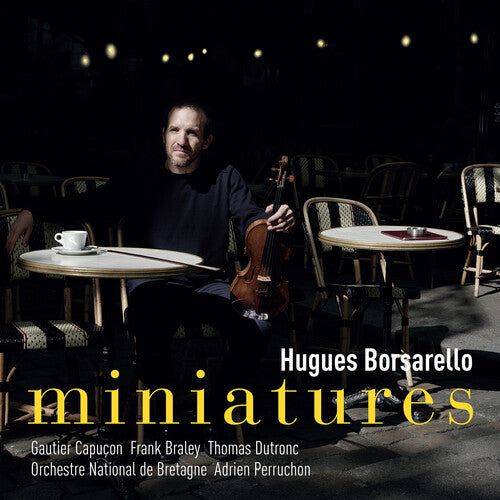
Miniatures - French Music for Violin & Orchestra / Borsarello, Perruchon, Breton National Orchestra
The French violinist Hugues Borsarello draws this programme of miniatures from the repertory of his instrument and from the great operatic arias, transcribed for violin and orchestra: ‘My idea was to relate a French history of music over the course of three centuries, in the form of short pieces.’ Lully’s Marche pour la cérémonie des Turcs rubs shoulders with arias by Bizet, Saint-Saëns and Offenbach, Satie’s Gymnopédie no.3 and Gounod’s Ave Maria. All these universally known pieces ‘are perfectly suited to the soul of the violin’, says Borsarello, who is joined by prestigious guests: cellist Gautier Capuçon for Vieuxtemps’s Duo Brillant, guitarist Thomas Dutronc for Django Reinhardt’s celebrated Nuages, pianist Frank Braley.
And this programme doesn’t neglect the classics of the violin, including Ysaÿe’s magnificent Berceuse de l'enfant pauvre. Vieuxtemps’s famous set of variations on Yankee Doodle is here performed for the first time in its version with orchestra.
Lily Pons - Coloratura Assoluta
Pons produces notes that seem to come from the heavens, heard most remarkably in her "Caro nome" from 'Rigoletto' and Olympia's aria from 'Les Contes d'Hoffmann.' Never sounding like a robot or a mere technician, she brings her effervescent personality to each work in these recordings.
In addition to arias from the operas Pons regularly performed in repertory at the Met, the set includes other composer's works (Milhaud, Rimsky-Korsakov, and Bishop), all artfully executed. Pons lived during a time when opera singers were viewed as movie stars with great voices to boot. Her star-quality shines through on these discs, and one hopes that such a presence will emerge again in modern times.
Le Nouveau Salon - Paris Salon / Cologne Salon Orchestra
Includes work(s) by various composers. Ensemble: Salon Orchestra.
French Opera Arias / Von Stade, Pritchard, London Po
A case in point is Offenbach's "Ah! quel diner je viens de faire" from 'La Perichole.' Often referred to as the "drunk" aria, it is one of von Stade's signatures, and she slyly portrays the plastered dinner guest trying to hide the extent of her intoxication. In dramatic contrast, von Stade passionately sings of desperate love in "Dieu! Que viens-je d'entendre?" from 'Beatrice et Benedict.' She seems to thrive on the intricate orchestration of Berlioz, and her flawless French diction is a delight to the ear. This is an important disc for those interested specifically in this repertoire, and von Stade sings it better than anyone else.
Crossing The Stone / Catrin Finch
This selection was recorded at Mustache Studios, London, England and Smecky Studios, Prague, Czech Republic.
Choral Moods / Marlow, Choir Of Trinity College Cambridge
CHORAL MOODS is a well-filled two-disk compilation which offers an excellent survey of sacred choral music, though one might have hoped for a little more J. S. Bach. What is here, above all, is beautiful music, well sung and recorded. There are some substantial pieces, such as the Gregorio Allegri "Miserere," Felix Mendelssohn's anthem "Hear My Prayer" and the complete "Messe Basse" (Low Mass) of Gabriel Fauré, as well as some less frequently encountered works such as Henry Balfour Gardiner's "Evening Hymn" and Camille Saint-Saëns "O Salutaris Hostia." It adds up to make a highly commendable anthology.
A Sunday in Paris / Verdin, Kennedy, Christ Church Schola Cantorum
This album shows the listener what a Parisian would have heard on a Sunday in the 19th century, with these recordings of harmonium works. It was common practice for the harmonium toaccompany the choir during morning Mass, then Benediction of the Blessed Sacraments in the afternoon. This two disc set includes a disc of music from the church, and a disc of a salon concert. Joris Verdin is the harmonium performer on this recording. For the sacred works he is joined by the Christ Church Schola Cantorum.
Toon Time - Classical Music From Classic Cartoons
The Prima Voce Treasury Of Opera Vol 1
The Golden Age Of Singing Vol 2 - 1910-1920
Sunday Evenings With Pierre Monteux - California 1941-52
SUNDAY EVENINGS WITH PIERRE MONTEUX • Pierre Monteux, cond; San Francisco SO; Solomon (pn); 1 William Kapell (pn); 2 Lili Kraus (pn); 3 Shura Cherkassky (pn); 4 Naoum Blinder (vn); 5 Boris Blinder (vc); 5 Dorothy Warenskjold (sop) 6 • MUSIC & ARTS 1192, mono (13 CDs: 946:53) Broadcasts: 1941–52
BEETHOVEN Consecration of the House Overture . Symphony No. 5. Prometheus: Adagio. Egmont: Overture. Fidelio: Overture. Leonore Overture No. 3. Piano Concerto No. 3: Mvt. 1. 1 MOZART Don Giovanni: Overture. Symphony No. 35, “Haffner.” Piano Concerto in A, K 414: Mvts. 2 & 3. 2 Die Zauberflöte: Overture. Die Entführung aus der Serail: Overture. Symphony No. 41, “Jupiter.” GLUCK Iphigénie en Aulide: Overture. HAYDN Symphony No. 88. R. STRAUSS Don Juan. Death and Transfiguration. Till Eulenspiegel. Der Rosenkavalier: Suite. WAGNER Parsifal: Prelude and Good Friday Music. Die Meistersinger: Preludes to Acts 1 and 3; Dance of the Apprentices; Procession of the Masters. Der fliegende Holländer: Overture. Tristan und Isolde: Prelude and Liebestod. Die Walküre: Wotan’s Farewell and Magic Fire Music. Siegfried: Forest Murmurs. Götterdämmerung: Siegfried’s Rhine Journey. Rienzi: Overture. Tannhäuser: Overture. LISZT Les préludes. Hungarian Rhapsody No. 2. BERLIOZ Roman Carnival Overture. Les Troyens à Carthage: Prelude. L’enfance du Christ: The Flight into Egypt; Trio of the Young Ishmaelites. La damnation de Faust: Minuet des follets; Ballet des Sylphes; Marche Hongroise. Romeo and Juliet: Excerpts. Corsair Overture. MENDELSSOHN Hebrides Overture. Symphony No. 4, “Italian.” Ruy Blas Overture. TCHAIKOVSKY: Romeo and Juliet. Piano Concerto No. 1: Mvt. 1. 4 BRAHMS 5 Waltzes, op. 39 (arr. Hertz). Symphony No. 1: Mvt. 2. Concerto for Violin and Cello: Mvt. 1. 5 Tragic Overture. ROSSINI L’italiana in Algeri: Overture. William Tell: Overture. THOMAS Mignon: Overture. DUKAS L’appprenti sorcier. MESSIAEN L’ascencion: 3 Meditations. SIBELIUS Kuolema: Valse triste. Pohjola’s Daughter. WEBER Euryanthe: Overture. SOUSA The Stars and Stripes Forever. BORODIN Prince Igor: Polovetsian Dances. RIMSKY-KORSAKOV Christmas Eve: Suite. Russian Easter Overture. Capriccio espagnol. GLAZUNOV: Scènes de ballet. RACHMANINOFF Symphony No. 2: Mvts. 2 and 3. FRANCK Symphony in d. Prelude, Chorale, and Fugue (arr. Pierné). Rédemption: Symphonic Interlude. Psyché: Suite. GRÉTRY Céphale et Procris: Suite. NICOLAI The Merry Wives of Windsor: Overture. MASSENET Phèdre: Overture. FALLA The Three-Cornered Hat: Suite. RESPIGHI The Fountains of Rome. SCHUBERT-LISZT Wanderer Fantasy. 3 WALTON Façade: Suite. SCHUMANN Symphony No. 4. ALFANO Resurrection: Dieu de grace. 6 CHADWICK Jubilee
This is the third large Monteux collection I’ve had the opportunity to review for Fanfare over the last two years; the others were another Music & Arts set of live performances with the French National Orchestra (30: 3) and the Decca “Original Masters” set of studio recordings from his astonishing final decade (31:1). Each offers its share of treasures, along with a few items that might just as well have been left alone.
Although it’s hard—and, ultimately, unnecessary—to choose, I suggest a strong argument can be made that the present set is the most indispensable of the three. The French set mostly duplicates studio recordings Monteux made with better orchestras, and in better sound; the Decca set consists of reissued studio recordings that, while most of them are wonderful, will probably already be in the collections of serious Monteux fans. The current set, however—an expanded reissue of a 10-disc set originally published in 1997—comprises a total of 75 items, no fewer of 54 of which, according to my count, Monteux never recorded commercially. The original issue was reviewed in Fanfare 21:2 by James Miller; because of the scope of the collection and the authoritative character of his comments, I will avoid duplicating discussion of all the items reissued here; I will, however, supplement and complement some of his observations with some of my own.
First of all, the good news: the original 10-CD set sold for the price of eight; the present issue adds three discs of new material, and features new remasterings of all the original recordings by Maggi Payne, still for the price of eight discs. If you own the older set, this one is worth buying more for the additional items than for the spruced-up sound. Although I haven’t by any means checked every item, the main differences seem to be a bit more presence and a lower noise floor from the original transcription discs; the difference is noticeable but not dramatic.
A few comments for those unfamiliar with the original issue: these recordings were made for weekly broadcast concerts sponsored by the Standard Oil Co. of California; officially, therefore, the orchestra is named “The Standard Symphony Orchestra.” In reality, the San Francisco Symphony alternated weeks with the Los Angeles Philharmonic. The broadcasts were an hour long; for some reason, however, the sponsor placed a 20-minute limit on the duration of any single composition. This meant that few full-length symphonic compositions were programmed, and those that were either were represented by one or two movements, or cut in order to make it under the time limit. In actuality, I count six pieces—in addition to the complete Franck Symphony, evidently a birthday present to Monteux—that exceed the maximum, most of them only by two or three minutes. The longest is the Mendelssohn “Italian” Symphony, at 27:32, with the crucial first-movement exposition repeat; some of the tempos are, shall we say, sprightly. A more extreme treatment is given the Schumann Fourth (on Disc 13; this is one choice I question, especially since Monteux made a complete commercial recording the same year—1952—and, a live 1961 performance has recently been issued by BBC Legends): rather than the c. 27-minute duration of those recordings, this version comes in at 22:26! All four movements are shorn of all repeats, and the tempos are, in places, almost cartoonish; it’s as if Monteux told the sponsor, “You want the complete Schumann Fourth in 20 minutes? Here’s what you’ll get!”
The contents of the set are notable for several other reasons. Not a note by Debussy, Ravel, or Stravinsky is to be found—a dramatic and refreshing change from just about every other Monteux collection ever issued. Five composers each get an entire disc devoted to their music: Beethoven, Strauss, Wagner, Franck, and Berlioz. Of course, three of these composers figure prominently in Monteux’s commercial discography; but he recorded little Strauss and Wagner. Of his beloved Brahms there are several items spread throughout the set, but unfortunately only one symphony movement. Monteux recorded only the Second commercially—and that no fewer than four times—but at least broadcast versions exist of the First and Third with the Concertgebouw Orchestra (on Tahra, possibly still obtainable). It’s surprising, though, to find that he did record quite a bit of Brahms, especially considering the composer’s fairly small number of orchestral works: both overtures, the Haydn Variations , the D-Minor Piano Concerto and the Violin Concerto, the Alto Rhapsody (with Marian Anderson), and the Schicksalslied . The first movement of the “Double” Concerto, published here for the first time, is a powerful reading; more’s the pity that it was not recorded complete. Violinist Blinder was a first-rate concertmaster (and, no less, the teacher of the young Isaac Stern); his brother Boris was a good cellist, but not as consummate a musician.
In his review of the original issue, colleague Miller observes that Monteux, despite his easy-going image and famously engaging personality, was a podium dynamo. I find that this is often true, but that Monteux’s tempos depended much on the repertoire. The Franck Symphony offered here—another item that is more redundant than most—is of almost exactly the same duration as the two San Francisco studio recordings; virtually all the compositions RCA had Monteux redo after the advent of the LP differ from the 78s, made six or eight years earlier, by mere seconds. Many works performed here, including the Mendelssohn overtures, most of the “light” music such as the Rossini overtures and The Sorcerer’s Apprentice , as well as longer works including Tod und Verklärung and Romeo and Juliet , are paced beautifully. I agree with Miller that much of the Classical repertoire, including Beethoven, is on the brisk side, and likewise that most of the Wagner comes off as rather light-weight—a consequence, no doubt, of the orchestra’s sound as much as of Monteux’s tempos.
I took pages of notes on individual performances, but must select only a few to mention here: the booklet lists simply Parsifal , but of course Monteux plays not the entire opera, but the standard “Prelude and Good Friday Music.” In this music especially I miss the more expansive mysticism of Furtwängler and Stokowski. On the other hand, the Flying Dutchman Overture is as stormy as one could wish! Strauss’s Till Eulenspiegel too suffers from an insufficiently weighty approach; at 13:47, this performance is among the fastest I know. Don Juan , on the other hand, is both dashing and passionate, and at 16:32 is conventionally paced. The second movement of the Brahms First (placed, unfortunately, right after the L’italiana Overture) is gorgeous—lovingly phrased and expansively paced; at almost exactly 9:00, it’s close to a full minute longer than the 1963 Concertgebouw version, and slower than Bruno Walter’s Vienna Philharmonic and Columbia Symphony versions! The two movements from Rachmaninoff’s Second likewise make one long for a complete version. Try playing some of this for a fellow collector, and I doubt anyone would guess who the conductor was, or that the recording was made during the composer’s lifetime!
Last, some discussion of the items that are on the three new discs here: Arthur Bloomfield, who selected the contents of the set and provided the extensive notes, dubs Disc 11 “Lollipops”; it includes the Grétry, Nicolai, Massenet, Falla, the William Tell and Tannhäuser Overtures, and The Fountains of Rome . These items were probably omitted from the original set because their sound quality is rather dull, but just about everything here is right up Monteux’s alley; I would only have liked a more expansive climax in Respighi’s “Fountain of Trevi.” Disc 12 is “Monteux as Accompanist”: Solomon brings his usual technical mastery and perfect touch to the Beethoven C-Minor first movement, with Clara Schumann’s cadenza, which he used throughout his career. Lili Kraus is colorful in the Wanderer Fantasy , and Cherkassky is typically individual and occasionally sloppy in the Tchaikovsky; the disc concludes with the Brahms Double. Disc 13 includes the Schumann Fourth already discussed, and a hellaciously fast Mozart “Jupiter” as well, plus the exhilarating Façade excerpts, the Alfano aria, Pohjola’s Daughter (Bloomfield doesn’t mention it, but those who know the piece will be in for quite a shock at the end), and the Chadwick Jubilee , which, along with the Stars and Stripes , is the only American music in the set.
The sound is variable but mostly superior to contemporary commercial recordings. Bloomfield’s notes, an updating of his 1997 originals, are breezy and anecdotal but informative—and how many people still remember Rachmaninoff’s appearance at San Francisco’s two-week festival of his music? He does err in stating that Monteux never recorded the Tragic Overture in the studio; he recorded it with the London Symphony in 1962 along with the Second Symphony and the Academic Festival Overture , but it was not issued until it appeared with the other two works on a 1994 Philips CD. Finally, the discs are in the now-standard envelopes inside a hinged cardboard box; the entire set takes up less than half the shelf space of the original three double jewel cases. If you’re an admirer of Monteux’s art, you’ll want this set. If you’re not, it might very well convert you. Highly recommended.
FANFARE: Richard A. Kaplan
Soprano Songs And Arias / Ana María Martínez
Includes work(s) by various composers. Ensemble: Prague Philharmonia. Conductor: Steven Mercurio. Soloist: Ana Maria Martinez.
Sempre Libera / Miah Persson
To the audiences of many of the world’s leading opera houses – the Metropolitan, Covent Garden, Wiener Staatsoper – Miah Persson will be well-known as an infinitely charming Susanna, a beguiling Sophie and a coquettish Fiordiligi. On her latest recording for BIS she takes up a set of different roles, however, as she ventures into the fields of bel canto, opéra lyrique and verismo in the company of Daniel Harding and the Swedish Radio Symphony Orchestra. The range of characters is wide, from a teenage Juliet, eager to live life to the full in Gounod’s Je veux vivre, to Verdi’s Violetta, a courtesan at the height of her powers, who in her scene and aria È strano…tries to convince herself that her freedom is more valuable than love. The programme includes some of the emotional high points in the opera literature (Bellini’s Oh! quante volte, Puccini’s O mio babbino caro), as well as light relief (Norina’s cavatina So anch’io la virtù magica) and moments of pure, unadulterated beauty, such as the Flower Duet from Lakmé and Offenbach’s Barcarolle. In the two latter pieces, Miah Persson is joined by her Swedish colleague, the mezzo-soprano Katarina Karnéus, while the tenor Andrew Staples makes a cameo appearance in Sempre libera, as Alfredo, singing of his love for Violetta below her window.
Prima Voce - The Spirit Of Christmas Past
Includes a star was his candle. Soloists: Lawrence Tibbett, Stewart Wille.
Prima Voce - Opera Arias / Adelina Patti
Prima Voce - Nicolai Gedda
CD 1
Georges BIZET (1838 – 1875)
Les Pêcheurs de Perles
1. Je crois entendre encore [3:35]
Charles GOUNOD (1818 – 1893)
Mireille
2. Le ciel rayonne … est-elle jeune et belle? [8:17]
3. Mon Coeur est plein … ah! La voici! C’est elle! [13:33]
Roméo et Juliette
4. L’amour! L’amour! … Ah! Lève-toi, soleil! [4:41]
Faust
5. Salut! Demeure chaste et pure [5:40]
6. Il était temps … Il se fait tard [15:09]
7. Va-t-en! … Mon Coeur est pénétré … Alerte! [13:34]
Jules MASSENET (1842 – 1912)
Manon
8. Instant charmant … En ferment les yeux [3:21]
Werther
9. Pourquoi me réveiller [2:54]
François AUBER (1782 – 1871)
La muette de Portici
10. Du pauvre seul ami fidèle [4:32]
CD 2
Modest MUSSORGSKY (1839 – 1881)
Boris Godunov
1. Polish scene, duet Dmitri and Marina [17:53]
Mikhail GLINKA (1804 – 1857)
Ruslan I Lyudmila
2. Excerpt from Introduction Act I [4:39]
Pyotr TCHAIKOVSKY (1840 – 1893)
Eugene Onegin
3. Faint echo of my youth [6:21]
Friedrich von FLOTOW (1812 – 1883)
Martha
4. Ach, so fromm [3:26]
Gaetano DONIZETTI (1797 – 1848)
5. Una furtiva lagrima [4:03]
La favorita
6. Favorita del Re! … Spirto gentil [5:22]
Giuseppe VERDI (1813 – 1901)
Rigoletto
7. Ella mi fu rapita! … Parmi veder le lagrime [5:03]
Amilcare PONCHIELLI (1834 – 1886)
La Gioconda
8. Cielo e mar! [4:40]
Francesco CILEA (1866 – 1950)
L’Arlesiana
9. E la solita storia [4:24]
Franz LEHÁR (1870 – 1948)
Die lustige Witwe
10. Mein Freund, Vernuft … Wie eine Rosenknospe [6:17]
Das Land des Lächelns
11. Immer nur lächeln [4:31]
12. Dein ist mein ganzes Herz [3:34]
Nicolai Gedda (tenor)
Janette Vivalda (soprano)(CD 1 trs. 2, 3); Madeleine Ignal (mezzo), André Vessieres (baritone)(CD 1 tr 3); Victoria de los Angeles (soprano), Boris Christoff (bass)(CD 1 trs. 6, 7); Eugenia Zareska (mezzo)(CD 2 tr. 1); Janine Micheau (soprano), Rita Gorr (mezzo), Pierre Fromenty (baritone), Xavier Depraz (bass)(CD 2 tr 2); Emmy Loose (soprano) (CD 2 tr. 10); Philharmonia Orchestra/Alceo Galliera (CD 1 tr. 1, 4, 8-10, CD 2 tr. 3-9), Otto Ackermann (CD 2 tr. 10-12); Orchestre de la Societé des Concerts du Conservatoire/André Cluytens (CD 1 tr. 2, 3); Orchestre du Thêatre National de l’Opera/André Cluytens (CD 1 tr. 5-7), Louis Fourestier (CD 2 tr. 2); Orchestre National de la Radiodiffusion Française/Issay Dobrowen (CD 2 tr. 1) rec. CD 1: tr. 1, 4, 8-10 April 1953, tr. 2-3 July 1954; CD 2: tr. 1 July 1952, tr. 2 June 1957, tr. 3-9 April 1953, tr. 10-12 November 1952
On 6 June 1992, the Swedish National Day, Nicolai Gedda gave an opera recital at the Royal Opera with the Royal Orchestra conducted by Sixten Ehrling. The purpose was to celebrate his debut in the house forty years earlier. That debut, on 8 May 1952, caused a sensation. Here a tall, handsome young singer displays not only one of the most beautiful tenor voices imaginable but he was also capable of letting rip an effortless high D natural, which is required in Adam’s Le postillon de Lonjumeau. Rumour spread, Walter Legge of EMI came, listened, was won over and contracted him for the recording of Boris Godunov, which took place in Paris in July. Listening to the Polish scene from that recording (CD 2 tr. 1) one is stunned: what beauty, what brilliance, what confidence, what intensity! No wonder the opera houses queued up to engage the young Swede. Not only did he sing like a god, but he was also intelligent, had an almost infallible sense of style and he was an accomplished linguist, being fluent in Swedish, English, German (the family lived for several years in Germany during his formative years), Italian, Spanish and Russian (his stepfather Michail Ustinoff was Russian).
The Boris recording wasn’t even his first recording. He recorded the aria from Le postillon de Lonjumeau with the Swedish Radio Orchestra and Choir under Stig Rybrant, unclear when but supposedly quite soon after the premiere. There is however a live recording from the Royal Opera, made on 10 April 1952, two days after the premiere with Kurt Bendix conducting. It is available on CD on "Famous Swedish Opera Singers at the Royal Opera House in Stockholm" (Gala GL 333) and it is easy to understand the sensation. On every track on this 2 CD set all the attributes I expressed in the first paragraph are in full evidence, most of all perhaps his delectable half voice and his superb phrasing.
Why did I mention the recital in 1992? Because there he sang several of the arias he recorded at the beginning of his career and miraculously there were few signs of ageing. A little more effort once or twice, a slight hardening of tone at forte but he sang the Pearl Fishers aria with the same impeccable legato, the same delectable mezza voce, Una furtiva lagrima was as youthful and beautiful as here and Lenski’s aria was as heartrending and lovely as ever. The recital was seen as a celebration but also a retrospect on a truly successful career. Towards the end Gedda gave a speech to a standing audience that was charged with emotion and he ended the evening in the same way this set ends, with Dein ist mein ganzes Herz from The Land of Smiles. This operetta was very close to his heart and he sang in it and other operettas as well from 1959 to 1985, not least in many productions at the Vienna Volksoper. But his career was not over with this retrospect. He continued to sing – and record – and here I have to make an adjustment to Alan Bilgora’s liner-notes where he says that he was still recording in 1993. In fact he recorded well into the new millennium. In May 2001 he was the Emperor in Turandot and in June 2003 he was the High Priest in Idomeneo – both operas recorded by Chandos in their ‘Opera in English’ series. Today, at the age of 83 he lives in Switzerland.
The first disc is devoted entirely to French repertoire, where he was supreme during the 1950s and 1960s, even well into the 1970s. Leopold Simoneau and Alain Vanzo were not too far behind and Alfredo Kraus was also a French stylist but none of them had the brilliance and the dramatic power of Gedda. He was primarily a lyric tenor but his volume could be overpowering. Just listen to his ardent as well as mellifluous singing as Vincent in the two excerpts from Mireille, where the brilliance in the upper regions is stunning, unforced and never merely strong. The best known piece from the opera, Anges du Paradis, at the beginning of track 3, is exquisite, as always with great attention to nuance. His Mireille, Janette Vivalda, has a typical light and bright French soprano voice with a quick attractive vibrato.
As Roméo he is brilliant and vigorous and it is good to have more than half an hour of music from his first Faust recording, if I remember correctly set down in 1954. The booklet gives no year for these excerpts. Half a decade later EMI re-recorded the opera in stereo with the same conductor and the same trio of lead singers and that version has always been regarded as a top contender. To my mind Victoria de los Angeles is even lovelier here and her top notes have hardly ever rung out so freely and effortlessly. In the finale (CD1 tr. 7) she is truly ethereal. Boris Christoff’s larger-than-life Mephistofeles is certainly expressive and he is truly fiendish but his throaty delivery and execrable French make him less than idiomatic. Gedda shines in his aria (CD 1 tr. 5). Cluytens allows him finely judged rubatos where he caresses the sweet melody. The brilliant high C is integrated into the long drawn phrases and doesn’t stick out like a sore thumb as is often the case with less accomplished singers.
Gedda’s honeyed mezza voce singing of En ferment les yeux is subtle and the aria from Werther impassioned and intense. In a radio interview many years ago he rated Werther as one of his absolute favourite roles and opera-lovers obviously shared his affection. When Rudolf Bing chose Corelli instead of Gedda for the 1971 MET revival of the opera there were demonstrations: ‘Gedda for Werther!’
In the final French number, the aria from La muette de Portici, half voice is again employed to superb effect. His scrupulous attention to nuance includes a heavenly pianissimo on the final note.
Issay Dobrowen’s inspired and alert conducting is a big asset for the long scene from Boris Godunov, where Eugenia Zareska is an eminent Marina. The scene from Ruslan and Ludmila is another valuable example of Gedda’s excellence in Russian repertoire. The weak Lensky was another of his favourite roles that he continued to sing until very late and eventually recorded complete when he was well past 60. He sings it here softly and inwardly as an interior monologue.
Lyonel’s aria from Martha is sung in the original German, whereas most famous tenors have preferred the Italian text M’appari. Gedda sings it intimately and lovingly with no big gestures and saves his fortissimo for the brilliant end. In Una furtiva lagrima he challenges even the legendary Tito Schipa in style and caressing beauty and surpasses him in ardency and glorious tone. Spirto gentil is sung in Italian, as was common fifty years ago, and though Gedda’s voice character isn’t specifically Italianate this is one of the most thrilling and lyrical readings I know. He sang relatively few Verdi roles – he was an excellent Gustavus in Un ballo in maschera, and besides the Duke of Mantua he also appeared in La traviata. The latter two roles were recorded complete. Of Rigoletto there is even a live recording from the Stockholm opera – on BIS – with Sixten Ehrling conducting at white heat. On that set Hugo Hasslo is one of the noblest of Rigolettos and Margareta Hallin surpasses every other Gilda in the world, while Gedda is arguably too vivacious at times but certainly more spirited than most competitors. His amorous Duke from 1953 is seductive and virile and the aria proper Parmi veder le lagrime is honeyed and noble. An aristocrat knows how to behave – no bawling here.
The role of Enzo Grimaldo in La Gioconda was probably too heavy for Gedda to sing complete but he has no difficulties with the aria Cielo e mar – lyrical and beautiful, but there is no lack of vitality and he ends on a ravishing pianissimo. Few have sung E la solita storia so beautifully.
The three operetta bonbons are delicious and the duet from Die lustige Witwe, where he is partnered by the delectable Emmy Loose, has probably never been surpassed and challenged only by himself in the stereo remake from roughly ten years later.
Gedda was a splendid Mozart singer, especially during the first twenty years or so of his career, and I would have liked something from that repertoire. He recorded an LP of Mozart arias with Cluytens conducting in June 1957, and it is out of copyright by now so let’s hope for a volume 2 with Gedda. There is material aplenty, Gedda presumably being the most recorded tenor ever.
Alan Bilgora’s notes are well researched and interesting to read but I must take him to task for the first sentence: ‘Although not blessed with a highly individual, and therefore instantly recognisable vocal timbre like …’ and then follows a list of great tenors. To my mind Gedda is just as individual and instantly recognisable and he was certainly one of the most musical and most versatile tenors of the 20th century. For those who only know him from his prime in the 1960s and 1970s, these ‘early prime’ recordings should be essential listening. Even though much of this material has been available from time to time it is good to have it again – and in splendid transfers.
-- Göran Forsling, MusicWeb International
Prima Voce - Maria Barrientos (1884-1946)
Includes work(s) by Heinrich Proch, various composers. Ensemble: Orchestra. Soloists: Maria Barrientos, Riccardo Stracciari.
Prima Voce - Galli-Curci
Prima Voce - Frieda Hempel
Prima Voce - Farrar In French Opera
Includes work(s) by various composers. Soloist: Geraldine Farrar.
Prima Voce - Ezio Pinza
Prima Voce - Chaliapin
Includes work(s) by various composers. Soloist: Feodor Chaliapin.
Prima Voce - Amelita Galli-Curci Vol 2
Patrie! Duets From French Romantic Operas / Talpain, Kosice Philharmonic
Opera was performed in Paris’s major theatres (the Opera, Opera-Comique, Theatre- Lyrique and Theatre-Italien) and divided into two varieties – serious works on heroic themes and lighter works based on the lives of ordinary people or events. This divide developed into two fully defined styles: opera comiques and drama lyrique.
The programme of this new recording is shaped around rarities of the French operatic repertoire. Among these are the duet between Adam and Eve from Massenet’s Eve, a fascinating number with remarkable scoring for soprano saxophone, harp, woodwind, horns and cellos, giving the music a profoundly poetic and supremely lyrical quality. Also included is a duet from the second act of Gounod’s Polyeucte, a work that failed to gain widespread popularity due to its combination of opera and oratorio as well as its musical quality.
The title of this disc – Patrie! – is taken from an opera of the same name by the now-forgotten composer Émile Paladilhe. Cast in 5 acts and performed on a huge scale, this tale of the Flemish uprising against Spain was one of the Paris Opera’s most successful works, which continued to be staged until the 1920s, when it rapidly sank into obscurity. Heard on this disc is the supremely intense duet from the first scene of act two.
This recording features further duets by Halévy, Massenet, Gounod and Thomas, shedding light on a number of forgotten gems from French romantic opera.
OTHER INFORMATION:
• New recordings made in 2010.
• Fascinating and rare repertoire, a must-have disc for opera enthusiasts.
• Comprehensive booklet notes.
• Sung texts and biographies available at www.brilliantclassics.com.
No Limits / Francisco Araiza
NO LIMITS: LEGENDARY LIVE RECORDINGS FROM MOZART TO WAGNER • Francisco Araiza (t); various cond & O • SOLO MUSICA 194 (67: 02) Live: 1978-2007
MOZART Don Giovanni: Dalla sua pace; Il mio tesoro. ROSSINI Il barbiere di Siviglia: Ecco ridente in cielo. BIZET Les pêcheurs de perles: Je crois entendre encore. GOUNOD Faust: Salut, demeure chaste et pure. MASSENET Le Cid: O souverain, ô juge, ô père. VERDI Rigoletto: La donna è mobile. PUCCINI La Bohème: Che gelida manina. GIORDANO Andrea Chenier: Un di all’azzurro spazio. TCHAIKOVSKY Evgeny Onegin: Kuda, kuda. WAGNER Lohengrin: In fernem Land. Die Walküre: Ein Schwert verhieß mir der Vater
Tenor Francisco Araiza wants you, the listener, to know that he is very proud of this CD because of his evolution “from lyric prince to dramatic knight.” Well, that is certainly well and good, and this recital does indeed run the gamut from light music to heavy, but where is anything modern? Not a single opera represented here was composed later than the 1910s, and those in a retro Romantic style. That being said, this is far from being an average tenor recital.
Truthfully, I hadn’t realized that Araiza was still singing as late as 2007, and certainly did not know that he had graduated to Wagner. I recall him as one of the finest of all light tenors of the late 1970s and early 1980s, and still value his recording of Mozart’s Idomeneo under Colin Davis. More interestingly, considering that Araiza sang his first Lohengrin in 1990, the two Don Giovanni arias date from 1987 (“Dalla sua pace”) and 1994 (“Il mio tesoro”). It’s true that Araiza was always a lyric tenor with a dark sound, and this is indeed evident even in his Mozart singing, but there is, to my ears, a bit less focus in the opening phrases of the latter aria, the vibrato just a bit looser here than in the first aria, and Araiza sounds as if he is forcing the voice more. (I had the same impression hearing his studio recording of Faust from those years.) He manages the long run on “tornar” in one breath, but is forced to slow the music down in order to sing all the notes cleanly, and there is a brief sagging in pitch. To turn from this to his 1978 reading of “Ecco ridente” with the Munich Radio Orchestra directed by Heinz Wallberg is to suddenly put into sharp relief how much easier his early voice was produced and how well he could sail through this type of music in those years, reminding me of his superb Almaviva on the Philips recording of Il barbiere with Agnes Baltsa and Thomas Allen.
Although many of these tracks have different conductors most of them come from Munich, and no less than five are conducted by Ralf Weikert in 1987 (“Dalla sua pace” and the arias from Pearl Fishers, Faust, Bohème, and Evgeny Onegin ). This was simply a phenomenal night for Araiza: The voice poured forth with melting lyricism and an excellent ring on top, all of it superbly controlled. To some extent, I contest the tenor’s claim that “he has personalized the original composition by placing his own stamp on it.” The stamp Araiza put on the arias he sang pre-1987 was mostly vocal, in the recognizable timbre of his voice and the unfailingly musical treatment of each aria. In most of them there isn’t much that emerges in terms of a character. His was a great, all-purpose voice singing excellent performances of virtually everything he touched in those years, but seldom portraying a character.
All of this changed later on, however; witness his unique 1997 reading of “Ô souverain, ô juge, ô père” from Massenet’s Le Cid (again Munich, this time conducted by Mark Elder). A finer reading I’ve not heard since the legendary old recording by Vilhelm Herold, who later trained Lauritz Melchior to be a tenor. I always wonder why tenors include “La donna è mobile” on recital discs, although Araiza does add some delicate touches to it that most singers don’t, and in his final cadenza he climbs “up the ladder” by lightly separating each note. And what a fabulous “Che gelida manina” he sings! I haven’t heard its like since José Carreras in 1974. It has everything: poetic feeling, romantic passion, superbly controlled dynamics, and a high C that honestly sounds as if it came from the middle of his voice.
Araiza also gives a surprisingly dramatic reading of Andrea Chenier’s “Improvviso”—the best, in fact, I’ve heard since Beniamino Gigli—and he fully captures the spirit of Lensky as he is facing almost certain death in the Evgeny Onegin aria (sung in Russian). Whatever his Wagnerian experience in Lohengrin did for him, it somehow transformed him from an excellent singer into an operatic actor, thus many of these later performances do indeed have the extra dimension that Araiza claims for all of them. When we finally do reach Lohengrin, a 1990 performance from Teatro La Fenice in Venice conducted by Christian Thielemann, it is a revelation, in part due to the superbly resonant acoustic, oddly similar to the famed Bayreuth sound. Araiza’s voice floats down to us almost like something out of the ether, an otherworldly character slowly alighting down to earth. Voice and character have indeed become one. The “Ein schwert verhieß” from 2007, taken from a performance with the “Festspielorchester Erl” conducted by Gustav Kuhn, is recorded more distantly than anything else on the disc. Araiza is pushing the voice fairly hard in the climaxes, perhaps more than is prudent for him, but by and large he sings it well and again tries to project a real character. He is certainly much better than some of the horrors we’ve heard on latter-day CD and DVD performances of Die Walküre; I wonder that he hasn’t been signed to sing some of those performances.
This is a recital that kind of creeps up on you. With the exception of the “Il mio tesoro,” nothing on this recital shows any forcing of the voice beyond reasonable means, and you can’t dispute the fact that his voice held up at least 30 years. Araiza has become, to me at least, the modern-day Gösta Winbergh, a tenor who moved gradually and easily from light repertoire to heavy and has done so with taste, elegance, good voice control, and a growing dramatic sense.
FANFARE: Lynn René Bayley
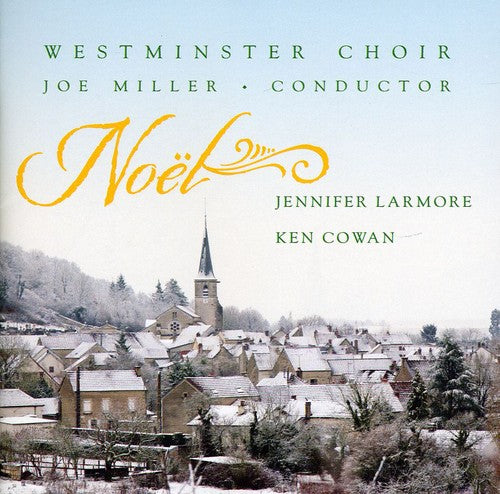
Noel / Miller, Larmore, Cowan, Westminster Choir College Of Rider University
Mysteries Beyond - Songs And Chants In Praise Of Mary
This release was previously available under the title "Ave Maria".