Albert Roussel
14 products
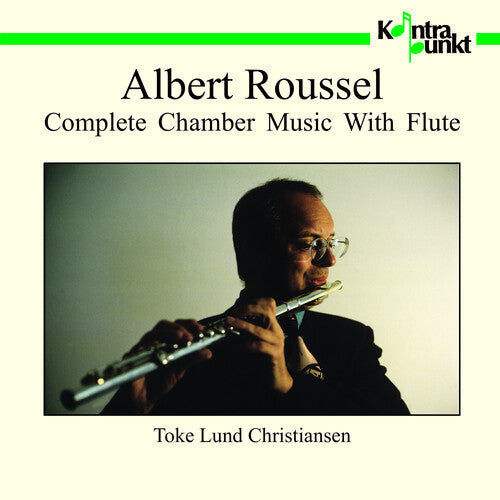
Complete Chamber Music With Fl
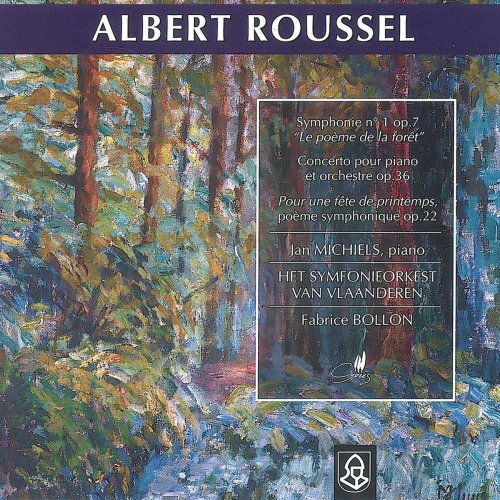
SYMPHONY NO. 1 PIANO CONCERTO
Roussel: Chamber Music with Flute
Flute Recital: Tast, Werner - IBERT, J. / ROUSSEL, A. / DEBU
Roussel: Symphony No. 4
Roussel, A.: Symphony No. 2 / Pour Une Fete De Printemps / S
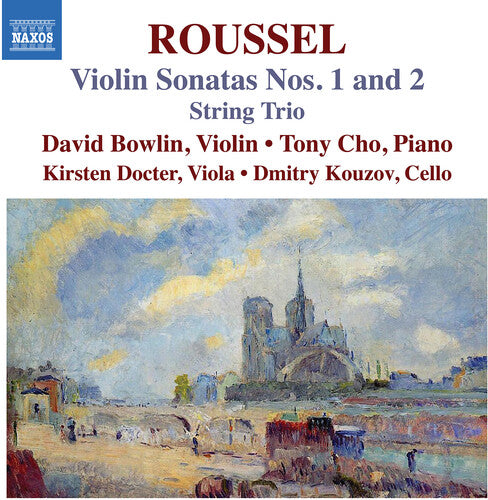
Roussel: Violin Sonatas Nos. 1 & 2; String Trio / Bowlin, Docter, Kouzov, Tony Cho
Albert Roussel’s chamber works are relatively unknown, yet he composed a significant body of masterful works. The majestic Violin Sonata No. 1 and the dynamic neo-Classical Violin Sonata No. 2 are coupled with the String Trio, Roussel’s last completed work. Violinist David Bowlin and pianist Tony Cho are both highly regarded soloists and faculty members of Oberlin Conservatory of Music in Ohio, where the album was recorded.
REVIEW:
All three chamber music works are characterized by skillful craftsmanship. The First Sonata is the most extensive of all Roussel's chamber music works and is markedly serious. The Second Violin Sonata is only about half as long, but just as determined. The String Trio, his last completed work, is a striking example of his late style.
The musicians offer the works with an extremely positive commitment that immediately engages the listener. Each of the three pieces has its own character that makes it unmistakable and the performers bring this out skillfully. They form lively narratives in tones that breathe life into the largely unknown in a delightful way. In terms of design, they explore the music in all directions and know how to integrate the details into the overall picture, creating a cohesive form from the first to the last note. We can be grateful that they have taken on the works in such a convincing way.
-- Pizzicato
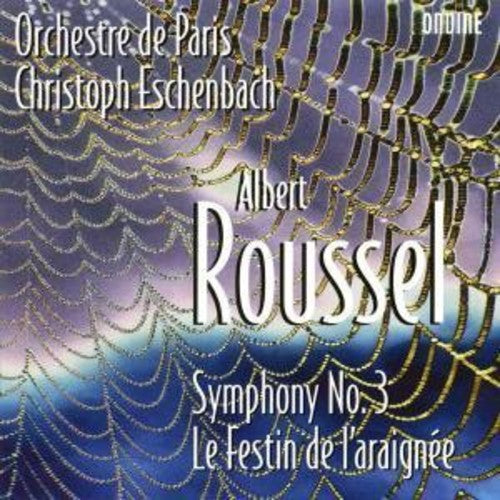
Roussel: Symphony No. 3 / Eschenbach, Orchestre de Paris
REVIEWS:
The Third Symphony was...favored by Karajan in the 1950s. It was the product of a composer in his sixties writing in his Normandy home at Vasterival. It was premiered by the Boston SO and Koussevitsky on 24 October 1930. The thud and thunder of the first movement contrasts with the pastoral melancholy meditation of the Adagio. This is followed by the fairground pleasantry of the Vivace and the massive fountains of exultation of the last movement. No wonder the audience - whose applause forms part of the track - greeted this performance with such warmth.
Le Festin is here given complete across 21 tracks. You are likely to enjoy this music - if you do already know it - if you already number Ravel's Ma Mère l'Oye and Debussy's Prélude a l'après midi d'un faune among your favorites. It has the magical elegance of the Ravel and the sultriness of the Debussy. Add to this the motorized thunder of Roussel's last two symphonies. It is superbly recorded - listen to the whispering distant gold of the violins in The Ants Dance in a Circle (tr. 16). The instrumental howls in the Funeral of the Gadfly (tr. 24) are memorable. Also in the same movement how similar some of the writing is to Ravel's dawn rustlings in Rapsodie espagnole. Those gentle rustles from the tam-tam suggest Ma Mère l'Oye. Eschenbach heartbreakingly captures the valedictory melancholy of Night falling on the deserted garden but brings out the solace too. This makes for an easy full price choice - poetically done in every aspect.
– Rob Barnett, MusicWeb International
The liner notes for this release make the argument that French modernist Albert Roussel was the greatest composer of his time. It is an argument Christoph Eschenbach and the Orchestre de Paris do much to advance in these live performances. Coupling Le Festin de l'araignée from 1912 and the Symphony No. 3 from 1930, Eschenbach and the Parisian orchestra give Roussel's music the kind of clear-eyed, strong-willed performances that make the most of the composer's best features. Though distinctly of its prewar time, Le Festin de l'araignée nevertheless sounds brightly colorful, lightly ironic, and surprisingly inventive in this smoothly polished and vigorously rhythmic performance. The postwar Third Symphony sounds both of and above its time here, its angular themes, gleaming colors, and muscular rhythms brilliantly brought out by the German conductor and the French orchestra. If Eschenbach and the Parisian musicians' racing finale for the symphony, with its relentless polyrhythms, doesn't get your heart pumping, consult a doctor immediately. Recorded in vibrant live sound complete with appreciative applause, these performances may well convince the listener that Roussel is indeed underrated.
– James Leonard, All Music Guide
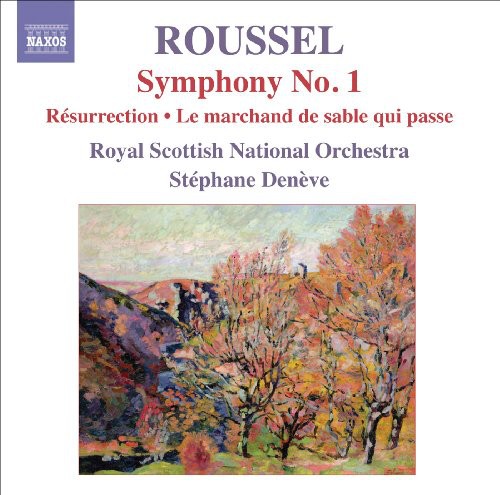
Roussel: Symphony No 1, Resurrection / Deneve

Stéphane Denève's Roussel cycle is shaping up to be the finest available--not that there's a lot of compelling competition. All of the symphonies are shockingly neglected, but the First might be the least-familiar of them all, God only knows why. It's a gorgeous, impressionistic piece with evocative titles (Forest in Winter, Renewal, Summer evening, Fauns and Dryads) and shimmering, atmospheric music that lives up to its expectations. Denève leads a thoroughly committed, even inspired performance, sensitive to Roussel's detailed scoring but also fluent, lively, and attentive to each movement's symphonic architecture. It's a wonderful performance, excellently played and recorded.
There's very little "minor" Roussel. Even his short works have a certain seriousness and substance. This is certainly true of Résurrection, a symphonic prelude after Tolstoy, while the four-movement suite from Le marchand de sable qui passe reveals Roussel's expert scoring for small ensemble (flute, horn, clarinet, harp, and strings). Really this is an essential acquisition for anyone who loves French music and the late Romantic school in general. Don't pass it up.
--David Hurwitz, ClassicsToday.com
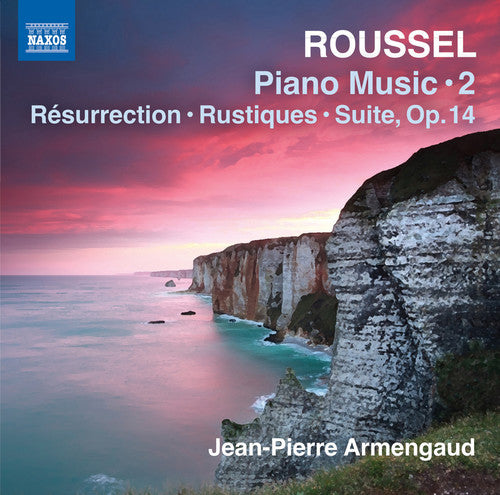
Roussel: Piano Music, Vol. 2 / Jean-Pierre Armengaud
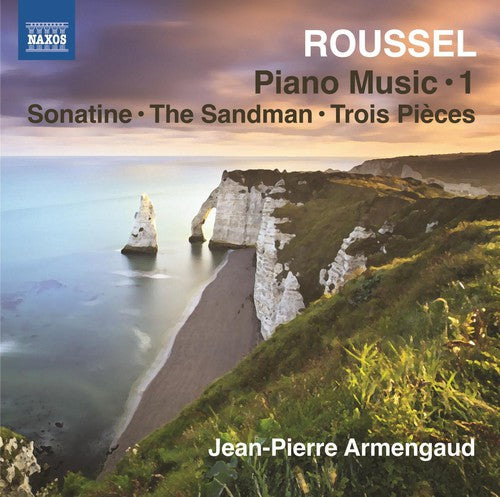
Roussel: Piano Music Vol 1 / Jean-Pierre Armengaud
Albert Roussel forged a unique musical identity in his music and remains one of the most intriguing and influential of French composers. In this first of three volumes of his complete piano music one can hear his originality as early as the Sonatine, Op 16, composed in 1912 where fantasy and atmospheric colour are prominent. Le Marchand de sable qui passe, Op 13 (The Sandman) is incidental music written for a verse play where the influence of Debussy and Wagner can sometimes be felt. Roussel’s last creative phase, represented by Trois Pièces, Op 49, reveals his incisive wit, concern for rhythmic vitality, and even jazzy turns of phrase.
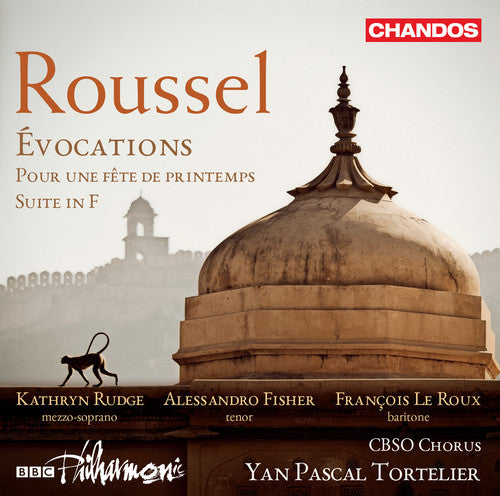
Roussel: Evocations, Pour une fete de printemps & Suite in F / Tortelier, BBC Philharmonic
Maestro Yan Pascal Tortelier celebrates his twenty-five-year recording career and seventy-album discography on Chandos with this album of three of Roussel’s most remarkable compositions. It follows a highly praised Birmingham concert with the same forces, namely the exceptional BBCPO and CBSO Chorus, and three revelatory soloists: Kathryn Rudge, 2017 BBC New Generation Artist, the young tenor Alessandro Fisher, joint first prize winner at the 2016 Kathleen Ferrier Awards, and François Le Roux, famous for his award-winning performances of French operas. Although very rarely recorded, Évocations stands as a monument in the compositional life of Roussel, depicting scenes, sounds, and colors from his experiences of India. Also featured are the audacious Pour une fête de printemps, originally composed as a Scherzo for his controversial Second Symphony, and the later Suite in F, which was performed in Paris several times after its Boston premiere, to critical acclaim.
Roussel: Le Festin de l'Araignee, Padmavati / Deneve, Royal Scottish
One of Roussel’s most performed orchestral works, The Spider’s Web was composed during his earlier impressionistic period, and depicts the beauty and violence of insect life in a garden. Roussel’s experiences as a lieutenant in the French Navy first introduced him to Eastern influences, and the ‘opera-ballet’ Padmâvatî was inspired by his later visit to the ancient city of Chittor in Rajasthan state of western India. It uses aspects of Indian music to evoke this city’s legendary siege by the Mongols. This is the fifth and final volume in Stéphane Denève and the RSNO’s acclaimed survey of Roussel’s orchestral works. “An excellent disc, splendidly and idiomatically performed and a superb advertisement for composer, conductor and orchestra. Highly recommended.” (Gramophone on Vol. 4 / 8.572135)