Alexander Zemlinsky
25 products
Zemlinsky: Posthumous Songs / Ziesak, Blochwitz, Vermillion, Schmidt
A few years ago Blochwitz, Schmidt and Garben, together with Barbara Bonney as soprano and Anne Sofie von Otter as mezzo, recorded all of Zemlinsky's published songs (DG, 10/89). These are the ones he didn't publish; why not? When sung as they are here in chronological order the reason for a while seems obvious: a good many of the earlier ones are competent but rather ordinary. Apart from a charming hint of Schumann in the very first of them (and an almost literal quotation from him in the second) they have little individuality until about a third of the way through the collection. Then, in "Orientalisches Sonett" (Vier Lieder), there is an appropriately languishing touch of fin de siecle exoticism, as well as a deft reflection of the form of a sonnet, and, on "Süsse, süsse Sommernacht" (from the same set) a long and beautiful lullaby melody, finely poised over an arpeggiated accompaniment. From then on things get much more interesting.
In his notes, Anthony Beaumont suggests that in some cases it wasn't dissatisfaction that deterred Zemlinsky from publication; the austere, searching "Es war ein alter König (Drei Lieder), for example, may have been a private reflection on Mahler's marriage to Alma Schindler, with whom Zemlinsky himself was in love. Similarly three settings of Richard Dehmel, obviously designed as a set, are perhaps about the love affair Zemlinsky's sister (Schoenberg's first wife) was having with the painter Richard Gerstl. The relationship and Schoenberg's reaction to it led to a cooling of Zemlinsky's close friendship with his brother-in-law; Gerstl later killed himself. The songs have a concentrated, poignant intensity so impressive that one is tempted to speculate about other hidden reasons for Zemlinsky's reticence. "Jane Grey" (from Zwei Balladen), for example, was entered for a competition to which Schoenberg submitted a setting of exactly the same text. Is that why it almost out-Schoenbergs Schoenberg in its tenuous hold on tonality, its curiously gripping bare angularity? But in "Der verlorene Haufen" (Zwei Balladen), also set by Schoenberg for the same competition, Zemlinsky seems to be outMahlering Mahler in the fearsome march-toccata that accompanies this grim tale of a front-line regiment contemplating death each morning.
The manner of the Dehmel songs is recaptured in a haunting group of settings of Hofmannsthal (Vier Lieder); there are also two curious comic ballads (the Brettl-Lieder, one quite funny, the other—about a man who eats so much that he bursts-rather disgusting), a most beautiful cradle song over a dead child ("Uber eine Wiege", Drei Lieder) and a much later, nobly stoic contemplation of old age (Und einmal gehst du) that are in no way inferior to the best of Zemlinsky's published songs. Blochwitz, Schmidt and Garben are as reliable as they were in the earlier set, Vermillion matches them admirably and Ziesak, if a little hard and bright at times, can fine her voice down to an effective intimacy. The recordings are excellent.
-- Gramophone [6/1995]
Includes notes in English, German, and French. Song texts in German and English.
CHAMBER MUSIC & LIEDER
Cello Recital: Wallfisch, Raphael - ZEMLINSKY, A. von / GOLD
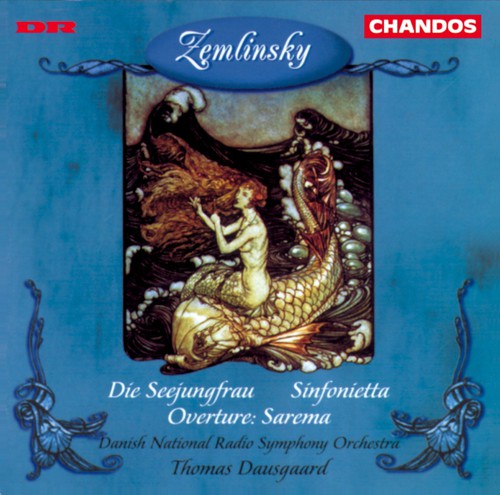
Zemlinsky: Die Seejungfrau, Etc / Dausgaard, Danish Nrso
Recorded in: Danish Radio Concert Hall, Copenhagen 21-22 February 1997, 28-30 April 1997 and 1 May 1997 Producer(s) Brian Couzens Claus Due Sound Engineer(s) Lars S. Christensen Jørn Jacobsen
Zemlinsky, A. Von: Lyric Symphony
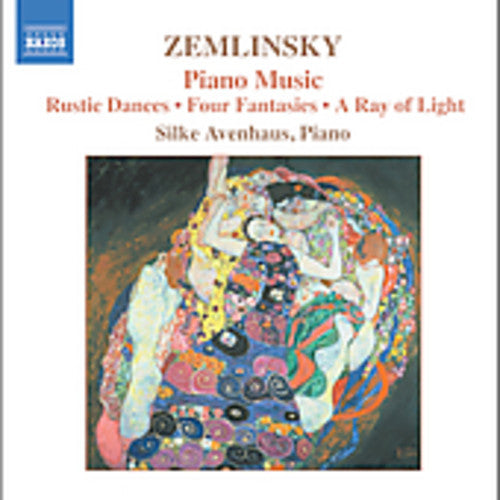
Zemlinsky: Piano Music / Avenhaus
Includes work(s) by Alexander von Zemlinsky. Soloist: Silke Avenhaus.
Zemlinsky: Die Seejungfrau, Sinfonietta / Storgards, Helsinki Philharmonic
The work itself remains problematic. Thematically it owes quite a bit to Tchaikovsky–Francesca da Rimini in its “motto” theme, and the slow movement of the Fifth Symphony elsewhere. Its three movements can very easily come off as relatively undifferentiated sonic blobs due to Zemlinsky’s habit of immediately resorting to lyrical noodling just as things start to get moving. Each part seems to end five or six times before it actually stops, with the loud closing bars of Part Two sounding especially gratuitous. But the music is so beautiful from moment to moment, and so brilliantly scored, that in a performance like this one the defects hardly matter. If you’re a fan of Seejungfrau, this is now the version to own, and if you aren’t a fan, this one might make you one.
As to the coupling, well, here’s a story. At least two other very good recordings of Seejungfrau come in tandem with the Sinfonietta–Dausgaard’s and Conlon’s. This version, though, is the premiere recording of a recent rescoring for chamber orchestra by one Roland Freisitzer. I am not going to accuse Freisitzer of parasitically attaching himself to the coattails of the great (like Anthony Paine, for example, with his abominable Elgar Third Symphony), because no one is making a living creating alternate versions of works by Zemlinsky. On the other hand, the justification offered for disfiguring a late masterpiece by claiming to make it more playable by chamber orchestras just won’t wash, for several reasons.
First of all, there’s plenty of great music already written for chamber orchestra. No one needs Zemlinsky’s Sinfonietta any more than we need the recent silly, pint-sized arrangement of Mahler’s Second Symphony and other such curiosities–especially on recordings. Second, Zemlinsky’s Sinfonietta is scored for a fairly modest ensemble as it is–basically only double winds and standard brass, with no tuba. Freisitzer eliminates the three percussion parts, but adds a piano, pointlessly. His choices beg the question of just what constitutes a “chamber orchestra.” After all, if the Tapiola Sinfonietta under Mario Venzago can play Bruckner’s Fifth Symphony, then Zemlinsky’s Sinfonietta certainly stands squarely within the realm of possibility. Finally, it seems singularly strange, not to say conceptually confused, to couple a carefully prepared critical edition of Seejungfrau with a mongrel deconstruction of the Sinfonietta. Do Zemlinsky’s own ideas matter or not? The scoring of the Sinfonietta, even more than with Seejungrau, constitutes one of the most telling and original aspects of the work. This was a bad idea, despite the fact that the arrangement is excellently played by Storgards and members of the Helsinki Phil.
So because the recording of Seejungrau is so terrific, and perfectly fine recordings of the Sinfonietta are not that hard to find (including Beaumont’s, differently coupled), I am going to base the rating for this release mostly on the former, and largely ignore the latter. Seejungfrau really is that good.
-- ClassicsToday.com
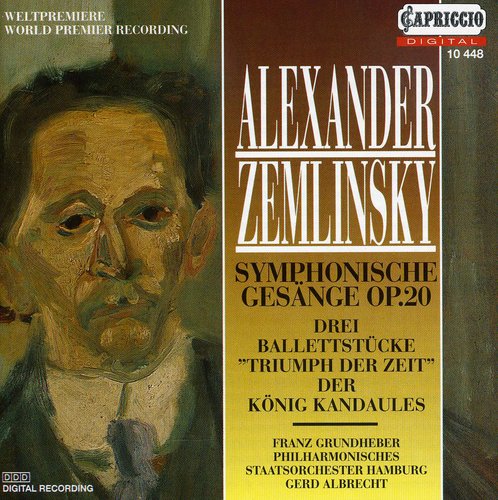
Zemlinsky: Symphonische Gesange, Etc / Albrecht, Grundheber
Zemlinsky: Die Seejungfrau; Symphony in D minor
Zemlinsky: A Florentine Tragedy / Hahn, Munich Radio Orchestra
Guido Bardi, the son of the Duke of Florence, kneels before Bianca, the wife of the rich merchant Simone, and holds her hands. Simone, who has returned early from a business trip, then enters the room. The very beginning of Alexander Zemlinsky's one-act opera "A Florentine Tragedy", based on Oscar Wilde's play of the same name in the German translation by Max Meyerfeld, presents the conflict from which the tragedy arises. This stage work by the Austrian composer, who was forgotten for many decades, had its world premiere on January 30, 1917, in Stuttgart and was not performed again until 1977. This CD from BR-KLASSIK documents the Munich premiere on November 27, 2022, with the Münchner Rundfunkorchester conducted by Patrick Hahn, recorded live at the city’s Prinzregententheater.
With the "Florentine Tragedy", albeit rather belatedly, Zemlinsky followed the fashion for Renaissance and one-act works at the turn of the century. Richard Strauss had made his mark in that genre with "Salome" and "Elektra" – and the literary basis for the former had also been provided by Oscar Wilde. In the very first notes, seemingly aware of this similarity with Strauss’s work, Zemlinsky goes on the offensive with an "upbeat fanfare" – as the prelude to an orchestral introduction that can easily be interpreted as a musical representation of the main romantic relationship. At the transition to the actual stage action, however, Zemlinsky switches to a somber minor-key atmosphere. When Simone appears, the music already makes it clear that the plot cannot end otherwise than tragically. For whom, we do not yet know…
In the Munich premiere of Zemlinsky's "A Florentine Tragedy", Rachael Wilson (mezzo-soprano) sang the part of Bianca, Benjamin Bruns (tenor) was Prince Guido Bardi, and Christopher Maltman (baritone) portrayed the merchant Simone. The Münchner Rundfunkorchester performed under the young conductor Patrick Hahn. Last year, the 27-year-old Austrian – who since 2021 in Wuppertal has been the youngest Generalmusikdirektor in the German-speaking world – was engaged as the Münchner Rundfunkorchester’s Principal Guest Conductor.
Zemlinsky: Die Seejungfrau / Meister, ORF Radio-Symphonieorchester Wien
The ORF Radio-Symphonieorchester Wien, headed by Cornelius Meister, presents Alexander Zemlinsky's "The Mermaid". Zemlinsky's "The Mermaid" is a rougher orchestral painting, created in the spirit of Jugendstil, according to the romantic fairy tale of Hans Christian Andersen. Teresa Vogl and orchestral director Christoph Becher listen carefully: the glittering colors of the waves, the longing of the enchanted mermaid after a solid ground under her feet, the perfidious suggestion of the water witch, the splendid wedding at the court. It is true that the marriage of the prince and the mermaid is of limited duration, but Zemlinsky gives the listeners a harmonious finale - just as it is for a fairy tale.
Zemlinsky: Es war einmal / Johansson, Wahlgren, Westi, Graf
By the 1890s Zemlinsky had already acquired a reputation as a promising young composer and pianist. In October 1897 Gustav Mahler had become director of the Vienna Hofoper and was determined to do what he could to help Zemlinsky. With characteristic energy Mahler worked his way through the opera with Zemlinsky, advising on and making changes in the music and the libretto. The resulting score provides a fascinating and little-explored document for both Zemlinsky and Mahler studies. Es war einmal received its first performance under Mahler on the 22 January 1900. For the Zemlinsky 150th Birthday Anniversary, Capriccio presents a new remastered edition of this legendary first recording from 1987.
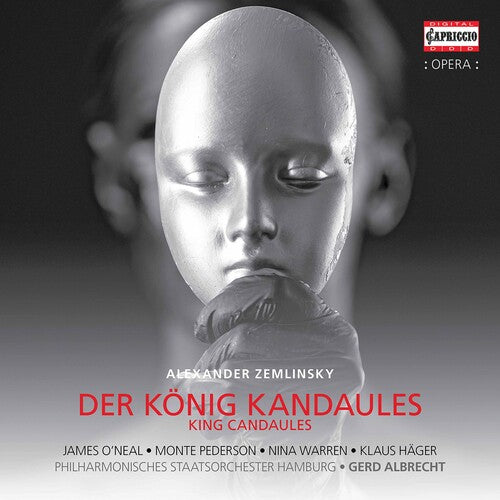
Zemlinsky: Der König Kandaules / Albrecht, Hamburg Philharmonic State Orchestra
When the German troops occupied Austria in 1938, Alexander Zemlinsky fled with his wife Louise via Prague to New York, with the short score of Canduales in his luggage. Zemlinsky attached great hopes of producing the piece at the Met but on account of the somewhat delicate bed scene in the 2nd act they dismissed the production. Building a new existence once more remained denied to Zemlinsky. Only half a year after his arrival he suffered a stroke from which he was never fully to recover. For Zemlinsky’s 150th Birthday Anniversary, Capriccio presents a new remastered edition of this legendary first recording from 1996.
Zemlinsky: Sinfonietta, 6 Maeterlinck Songs & Excerpts from Konig Kandaules / Albrecht, Malkki
“Just heard your wonderful Sinfonietta: hope it is the beginning of your American success,” wrote Arnold Schönberg to Zemlinsky. But Zemlinsky suffered a stroke and died some days later on, lonely in New York. In his Sinfonietta op. 24 (1934) he used again a short theme from the last song of his Maeterlinck-Songs, Op. 13 (1913): “Wohin gehst Du?” (Where are you going?) It’s a theme of ‘self-doubts‘ and ‘Farewell’ when Zemlinsky noticed very carefully the more and more stronger restrictions against the Judaism in Vienna. The Maeterlinck-Songs are “the center of his productivity” (Adorno), and abduct the listeners in a mystic world about life, evanescence and death.
Zemlinsky: Der Traumgörge / Albrecht, RSO Frankfurt
“He was too modern for the conservatives, and he did not manage to catch up with the 'New Music', despite his close personal relationship to Schönberg" - This brief characterization of Zemlinsky’s compositional style shows that the composer 'feil between two stools' even while he was alive. The opera was written at the suggestion of Gustav Mahler between 1903 and 1906. In 1907 he was engaged by Mahler as director of music at the Court Opera; at the same time, his third opera "Der Traumgörge" (Görge the Dreamer) was accepted for its first performance. Following Mahler's resignation, however, the opera was dropped by Mahler's successor, even though it had already been rehearsed, and it stayed untouched till the 1970s when the scores and parts have been found in the archive of Vienna State Opera. It's time that this recording - who was the first complete recordings - as well as Zemlinsky's masterpiece turn back to the awareness of the musical life.
Zemlinsky: Eine Florentinische Tragodie / Koch, De Billy, ORF Vienna Radio Symphony
Oscar Wilde’s A Florentine Tragedy was written in 1893, but remained a fragment when the author was arrested. But the material was in the air, so to speak, and Alexander von Zemlinsky, who may have had Richard Strauss’ recourse to Wilde’s Salome in mind and hoped for a similar success with A Florentine Tragedy, finally converted the play into a one-act opera. Puccini had also been interested in the material, but the publisher Tito Ricordi advised him against it. Other potential takers also included Ferruccio Busoni who also found the ending too hackneyed. However, such alleged triviality did not deter his colleague Alexander von Zemlinsky, who celebrated success with his opera. Alban Berg admired the work so much that musical parallels to the Florentine Tragedy can be found in his Wozzeck, premiered eight years later.
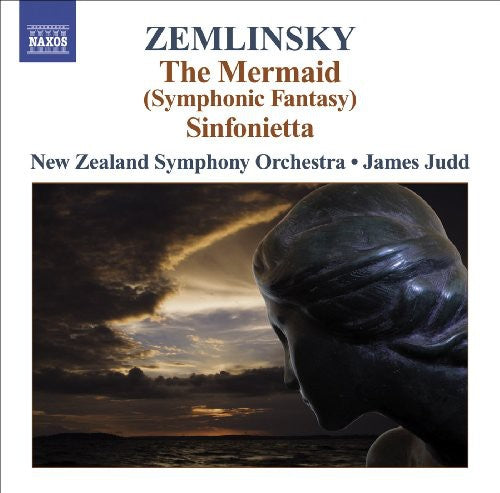
Zemlinsky: The Mermaid, Sinfonietta / Judd, New Zealand SO
--David Hurwitz, ClassicsToday.com
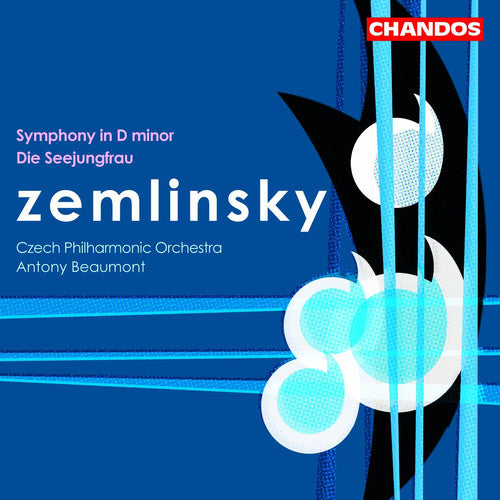
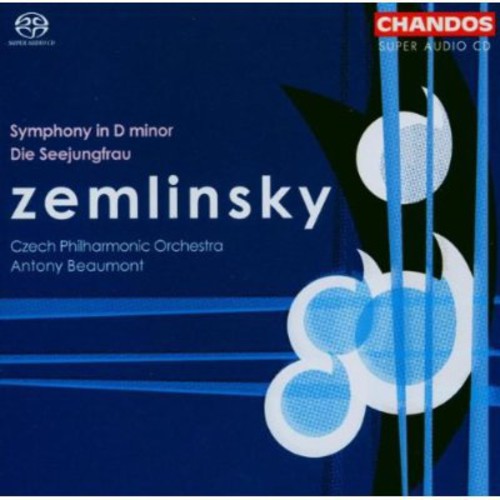
Zemlinsky: Symphony In D Minor, Die Seejungfrau / Beaumont
This is the second disc in Antony Beaumont's Zemlinsky survey. The first was released to excellent critical accaim. Beaumont is a world authority on Zemlinsky, whose previous interpretations of the composer's works have been universally admired for their authenticity and sheer musicality. Gramophone noted: 'No one has studied these scores with more sympathy thant Antony Beaumont..' Recorded in: Dvorák Hall, Rudolfinum, Prague 12-14 and 22 & 23 March 2003 Producer(s) Ralph Couzens Sound Engineer(s) Oldrich Slezák
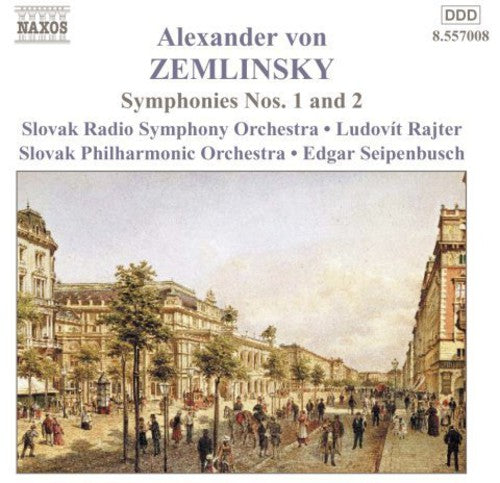
Zemlinsky: Symphonies No 1 And 2 /Seipenbusch, Rajter, Et Al
Zemlinsky: String Quartets Vol 2 / Escher Quartet
"The first instalment of the Escher Quartet's survey of Zemlinsky appeared last year. This second disc is as impressive, and includes a superb performance of the Second Quartet, one of Zemlinsky's greatest and most radical achievements. The Eschers sustain the huge span of music magnificently, while making sure that every tiny detail of Zemlinksy's meticulous string writing is heard."
-- Andrew Clements, The Guardian [6/12//14]
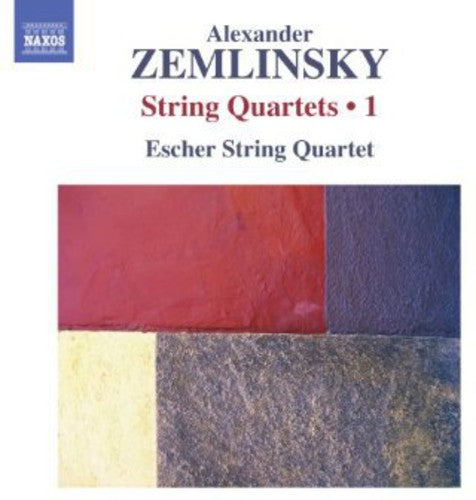
Zemlinsky: String Quartets Vol 1 / Escher String Quartet
Alexander Zemlinsky’s four numbered string quartets span some four decades, moving from the conservatism of his Brahms-inspired youth to the experimental works of his mature years. Written just after the Lyric Symphony (Naxos 8.572048), the Third Quartet is constructed in a cool, austere language far removed from the emotional, expressionistic atmosphere of the Second Quartet. The Fourth Quartet, written in memory of Alban Berg, is a fitting conclusion to an important body of work bridging the Romantic world of the nineteenth century to the modern age of the twentieth. Quartets Nos 1 and 2 will follow on Naxos 8.573088.
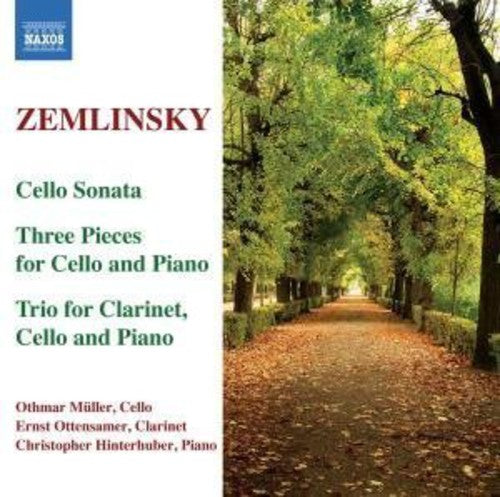
Zemlinsky: Cello Sonata, Trio/ Müller, Ottensamer, Hinterhuber
The Three Pieces for Cello and Piano are among the earliest works we have from Zemlinsky. At the same time they are almost new as they were lost for over a century, along with the Cello Sonata, until rediscovered by the cellist Raphael Wallfisch in his father’s effects. All three are still heavily Brahmsian, but the Lied shows some individuality and an ability for development that would continue in the later works. The Humoreske is not quite as important, but is very winning and shows good thematic contrast. I found the Tarentell less interesting.
The Cello Sonata dates from three years later (1894) and like the Three Pieces was prepared by Zemlinsky authority Antony Beaumont. It is quite substantial, even weighty, and shows a good deal of progress over the 1891 work. The opening allegro has an expression marking of mit liedenshaft, but there is also a more modern undercurrent of agitation. The second theme is calmer and again Zemlinsky shows his ability to provide thematic contrast. The andante movement starts out in a more poetic fashion, but turbulence returns with the middle section, which at the same time contains some beautiful writing for the cello. The theme of the first section returns for something of a fusion of the moods of what has gone before. The concluding allegretto is cheerful and witty and was the first time I was reminded of some aspects of the mature Zemlinsky. Again the composer’s ability at thematic contrast is to the fore but there is also more distinction in the development itself. As in the second movement, the last part is ruminative, even a little sad.
Later in 1894 Zemlinsky actually met Brahms and the senior composer voiced some criticism of the younger’s “modernity” as evidenced in the Cello Sonata and other works. Zemlinsky seemed to accept the criticisms and produced the Clarinet Trio in 1896. However, except for the Brahmsian forces it shows no going back in Zemlinsky’s progress; yet at the same time it was approved of by Brahms. In the Trio the harmony in the first movement is quite distinctive and there is a lovely weaving around the clarinet by the two other players. Contrapuntal interest grows throughout the movement and so does the emotional intensity towards the end. The andante reminds one of the Cello Sonata in its alternation of lyricism and agitation. The final allegro is quite compact. The first theme pays tribute to Brahms in a way we haven’t seen up to now; it sounds like one of the Hungarian Dances. More relaxed ideas follow and again there is some harmonic experimentation, and some fine writing for the clarinet, before a slightly surprising ending.
For me the real star on this disc is Ernst Ottensamer. He shows himself to be a fine technician as well as being able to handle all the harmonic subtleties of the well-known Trio. Christopher Hinterhuber is also to be commended for his ability to both blend in with and stand out from the others. Othmar Müller impressed me less than the others though he was able to get a great variety of emotions from the Cello Sonata. Part of the blame may be due to the Raiding Hall which I felt greatly interfered with the cello’s projection and added dryness to the sound of all the instruments.
-- William Kreindler, MusicWeb International
Zemlinsky: 7 Songs & Chamber Symphony / Storgards, Lapland Chamber Orchestra
Ondine is proud to release these world premiere recordings of two new Zemlinsky arrangements by Richard Dünser with Lapland Chamber Orchestra conducted by John Storgårds. The works of Austrian composer Alexander Zemlinsky – much admired by composers such as Mahler, Schoenberg and Berg – have gained more attention during the last decades. He wrote only 27 works with an opus number, but several of them can be considered among 20th century masterpieces. In 2013 composer Richard Dünser, pupil of Francis Burt and Hans Werner Henze, made two new rich arrangements of works by Zemlinsky. Seven Songs of Night and Dream (Sieben Lieder von Nacht und Traum) is an orchestration of songs from opp. 2, 5, 6, 8 and 10 based on the themes of night and dream. In this recording the songs are sung by mezzo-soprano Jenny Carlstedt. Chamber Symphony is a 40-minute orchestration of Zemlinsky’s String Quartet No. 2. In this orchestration the limitations of a string quartet is set free by using a larger ensemble. Zemlinsky’s String Quartet contains references to the works of his most famous pupil, Arnold Schoenberg.
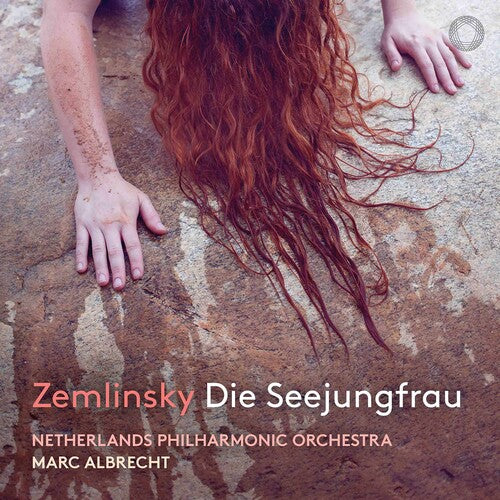
Zemlinsky: Die Seejungfrau / Albrecht, Netherlands Philharmonic
-----
REVIEWS:
Albrecht inspires his orchestra in this late-Romantic score, intoxicated with the chromatic ecstasy of Schoenberg’s Transfigured Night.
– Sunday Times (UK)
For sheer tonal allure Albrecht’s performance can’t quite match the two available from Riccardo Chailly and Royal Concertgebouw Orchestra (on Decca and the orchestra’s own label), but it’s still powerful enough to convince any sceptics that this is a score that deserves much more than the occasional dutiful revival.
– Guardian (UK)
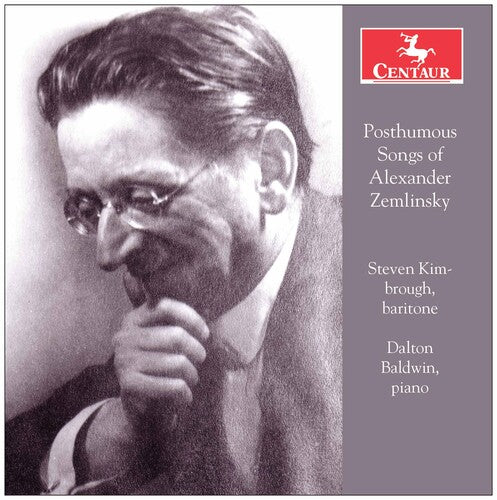
Posthumous Songs of Alexander Zemlinsky / Kimbrough, Baldwin
This selection of Posthumous Songs covers the period 1889-1909, with one song from 1933. Here one senses Zemlinsky's earliest development and years of musical study, as he tests his skills on some of the finest German poets. That he was fully up to the task is immediately evident upon listening. The American baritone, Steven Kimbrough, studied at the University of Birmingham, Alabama, and at Princeton Theological Seminary (graduated in 1962). He had further studies in Italy. Kimbrough is well known as a recital and concert singer through many appearances at New York's Carnegie Hall and Lincoln Center, and with symphonies in the USA and abroad. He is the foremost interpreter of the "turn-of-the-century" school of Viennese composers (most of whom were effaced by Hitler's Third Reich), as is demonstrated by his many highly praised recordings. He has presented in the Weill Recital Hall at Carnegie Hall and elsewhere a recital of their songs under the title "Forbidden Composers."