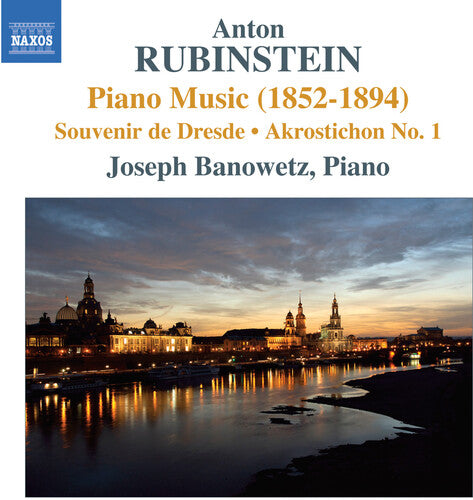
Anton Rubinstein: Piano Music, Vol. 2 / Joseph Banowetz
Naxos
$19.99
$9.99
July 27, 2010
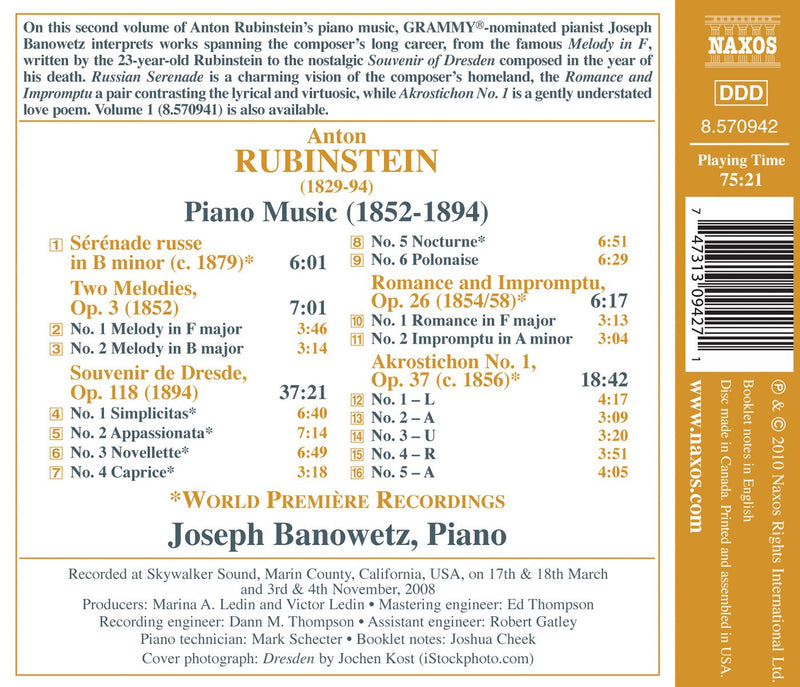
A. RUBINSTEIN Sérénade russe. 2 Melodies, op. 2. Souvenir de Dresde, op. 118. Romance and Impromptu, op. 26. Akrostikon No. 1, op. 37 • Joseph Banowetz (pn) • NAXOS 8.570942 (75:21)
Recently, I reviewed Joseph Banowetz’s first volume of music by Anton Rubinstein, declaring myself ripe for more at the end of it. Well, here is Volume 2, a mix of the new (five of the six movements of Souvenir de Dresde are world premiere recordings—No. 6 was recorded by Leo Sirota and is available on the Arbiter label—as are the Romance and Impromptu, the Sérénade russe, and the Akrostichon No. 1). Volume 1 contained music from 1871–90; this presents works written 1852–94. I also mentioned in my earlier review that only the Melody in F has gained the favor of the catalog, and here in fact it is, played with unaffected simplicity by Banowetz and bringing in tow its lesser-known companion, a Melody in B, a work of supreme delicacy. Rubinstein uses single-line melody to great effect, and Banowetz plays with supreme dignity and maturity.
The disc begins with a work minus opus number. The Sérénade russe was written around 1852, and was composed for a publication named L’Album Bellini. The melancholy feel of the work seems entirely Russian. Banowetz ensures that the lightenings of texture and mood register to maximum effect, and that the Lisztian arabesques contain hints of improvisation.
The sublime sweetness of the first movement of Souvenir de Dresde (1894) draws one into the work. This movement’s title is, in fact, “Simplicitus.” The music opens out into sequences of roulades (dispatched with remarkable ease by Banowetz). In contrast, the second movement, marked “Appassionata,” uses Brahmsian sonorities to bring a contrastive disquiet. Annotator Joshua Creek suggests that the opening of the third movement, “Novelette,” is pastiche Rameau, and it is easy to hear what he means. The movement is a delight. A light, almost Mendelssohnian Caprice leads to an extended Nocturne where the shadow of Chopin can be clearly felt. Drama is the characteristic of the final Polonaise. Banowitz does not quite project the full sweep of the piece, perhaps.
Dripping, slow descending lines that one might expect to encounter in late Brahms begin the Romance from op. 26. Rubinstein’s offering turns out to be a simple but expressive song without words, its melody exquisitely shaped by Banowetz. The Impromptu makes for effective contrast in its playful, busy nature. Finally, Akrostikon No. 1 (written around 1856). Each movement is headed by a letter, which when put together spell “LAURA” (Laura Shveykovskaya, a young lady evidently admired by the composer). All five movements are remarkably stress-free, liquid outpourings. Any hints of disquiet in the fifth movement (Con moto) are dismissed in the quasi-improvised final movement, a clear Lied ohne Worte.
Once again, Banowetz has succeeded in alerting the record buying public of the importance of Anton Rubsinstein’s music while simultaneously providing playing of the utmost clarity and beauty.
FANFARE: Colin Clarke
{# optional: put hover video/second image here positioned absolute; inset:0 #}
On Sale
Naxos
Anton Rubinstein: Piano Music, Vol. 2 / Joseph Banowetz
A. RUBINSTEIN Sérénade russe. 2 Melodies, op. 2. Souvenir de Dresde, op. 118. Romance and Impromptu, op. 26. Akrostikon No. 1, op....
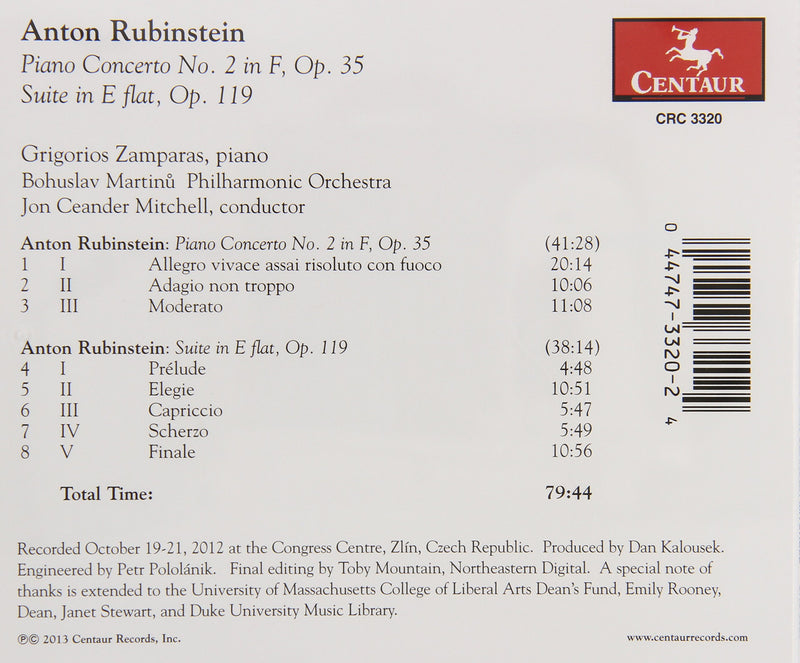
This album is the third installment in Centaur’s cycle of the complete piano concertos of Anton Rubinstein (1829-94). +One of the great piano virtuosos of his day and a prolific composer, much of Rubinstein's musical output has long fallen out of public consciousness, only in recent decades receiving renewed performer and audience interest. +The Greece-born pianist Grigorios Zamparas is currently Associate Professor of Music, Piano, University of Tampa, FL., and an active international recitalist.
{# optional: put hover video/second image here positioned absolute; inset:0 #}
Centaur Records
Anton Rubinstein: Piano Concerto No. 2; Suite
This album is the third installment in Centaur’s cycle of the complete piano concertos of Anton Rubinstein (1829-94). +One of the great...
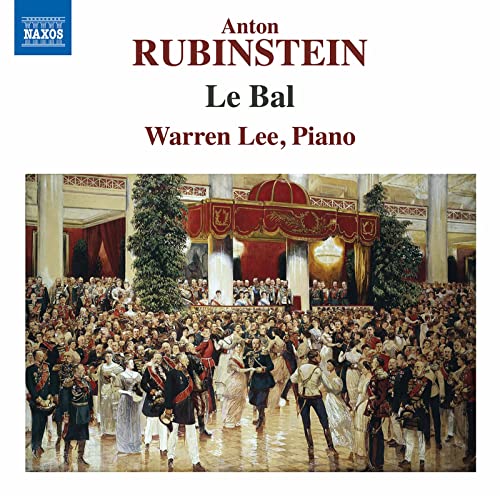
During his lifetime Anton Rubinstein gained a considerable reputation as a piano virtuoso the equal of Liszt, and for a stream of distinctive compositions, among them symphonies and operas. He was also responsible for revolutionising standards in Russian teaching and performance – yet despite his eminence many of his works have been overlooked. Le Bal, Op. 14 presents a characteristic ballroom scene in ten sections full of energy and rich sentiment. This miniature drama charts the anticipation of the dancer, a series of eventful dances and a final reflection on what has been. Warren Lee made his debut with the Hong Kong Philharmonic Orchestra at the age of six. A graduate of the Royal Academy of Music in London and the Yale School of Music, he was the First Prize winner of the Stravinsky Awards International Piano Competition and the Grand Prix Ivo Pogorelich in 1995. He has performed on four continents, often in collaboration with international artists and leading orchestras. His recordings for Universal Music (Hong Kong) and Naxos have garnered favourable reviews worldwide. A Steinway Artist as well as an awardwinning composer, Warren Lee received the Ten Outstanding Young Persons Award in Hong Kong in 2012 and was elected an Associate of the Royal Academy of Music in 2015 for his contribution to the music profession. In 2017 he received the Ian Mininberg Distinguished Alumni Award from the Yale School of Music.
-----
REVIEW:
The playing is stunning and imaginative. Warren Lee gives a performance which sparkles in the lively numbers and is suitably thoughtful in the quieter and more reflective moments.
– MusicWeb International
{# optional: put hover video/second image here positioned absolute; inset:0 #}
Naxos
Rubinstein: Le Bal / Warren Lee
During his lifetime Anton Rubinstein gained a considerable reputation as a piano virtuoso the equal of Liszt, and for a stream of...
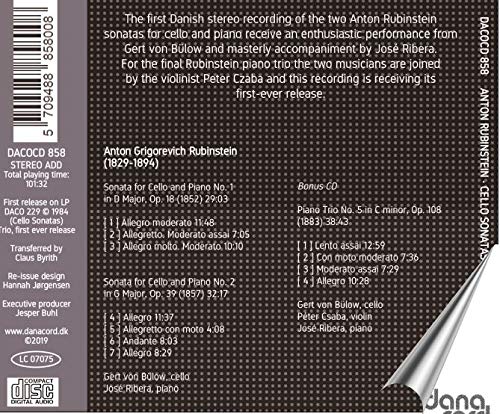
These are the first recordings of the two sonatas for cello and piano and of the last trio for violin, cello and piano by the Russian romantic composer Anton Rubinstein. The works are performed by three fine musicians often playing together and giving a fully convincing performance of these rare works. On the re-issue of the original album a bonus album is included with the first release of the original master tape of the last Rubinstein trio, a large-scale work showing deep understanding of the chamber music combination from this big Russian.
{# optional: put hover video/second image here positioned absolute; inset:0 #}


 {# optional: put hover video/second image here positioned absolute; inset:0 #}
On SaleNaxos
{# optional: put hover video/second image here positioned absolute; inset:0 #}
On SaleNaxos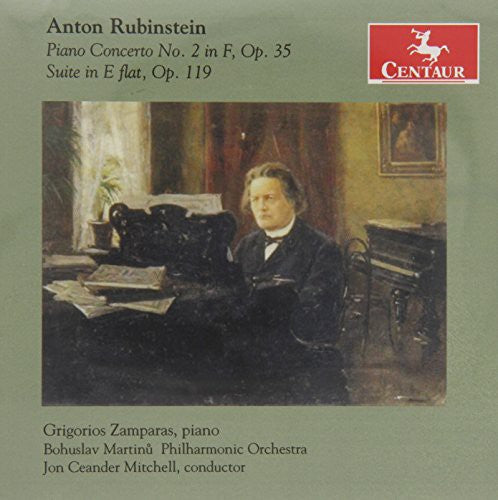 {# optional: put hover video/second image here positioned absolute; inset:0 #}
Centaur Records
{# optional: put hover video/second image here positioned absolute; inset:0 #}
Centaur Records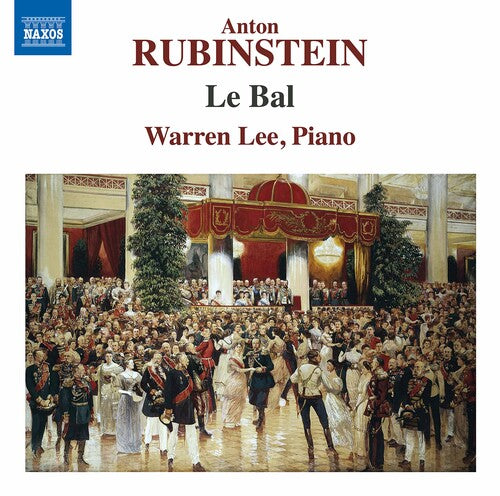 {# optional: put hover video/second image here positioned absolute; inset:0 #}
Naxos
{# optional: put hover video/second image here positioned absolute; inset:0 #}
Naxos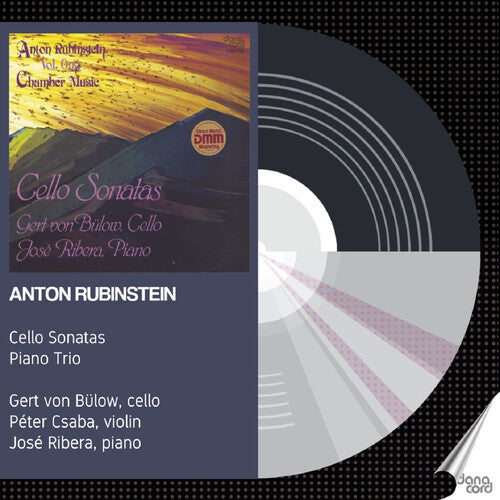 {# optional: put hover video/second image here positioned absolute; inset:0 #}
Danacord
{# optional: put hover video/second image here positioned absolute; inset:0 #}
Danacord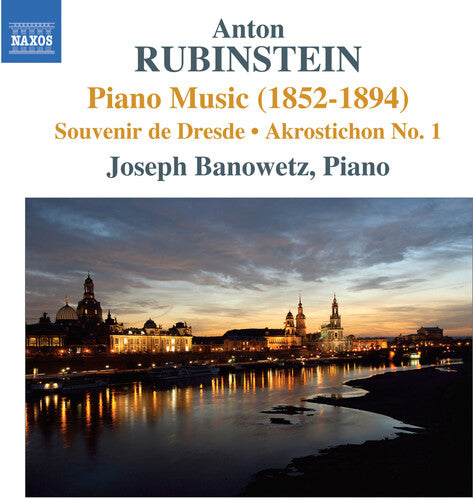


 {# optional: put hover video/second image here positioned absolute; inset:0 #}



 {# optional: put hover video/second image here positioned absolute; inset:0 #}



 {# optional: put hover video/second image here positioned absolute; inset:0 #}



 {# optional: put hover video/second image here positioned absolute; inset:0 #}