Antonio Vivaldi
360 products
Scarlatti, Vivaldi: Stabat Mater / Poole, Malgoire
Vivaldi: Violin Concertos From L'estro Armonico / Josef Suk
Baroque In Italy / Malgoire, Scimone
Vivaldi: Concertos Op 10; Sammartini / Michala Petri
Vivaldi: Four Seasons, Concerto In C / Michala Petri
Those likely to be attracted by the idea of Petri as soloist are not going to be worried overmuch about any scholarly justification, and though the recorder might be counted a period instrument, it remains alone in this ensemble, with, the talented young string-players (originally assembled at Guildhall School in London) adopting their usual modern performance technique. The hand of another highly individual artist lies behind this too, George Malcolm, who springs rhythms in his continuo to match his soloist, and adds his own little harpsichord cadenza before the first movement coda of ''Autumn''.
The problem for Petri in making her transcription for recorder has been largely one of pitch, far more critical than with Galway's flute. In the opening tutti, you hear the bright silvery sound of the soloist from the start, and then the great shrieks on high B confirm the arrival of the sopranino recorder, never a discreet instrument. Though Petri does wonders in making it more expressive than I have ever known it, the relentlessly penetrating quality of sopranino tone is wearing, and the very end of ''Winter'', shrieking away up an octave gets near to being painful. Even so, the bird-song imitations are made the more naturalistic by the brightness of timbre, and unlike such a baroque flautist as Frans Bruggen in his accounts of Vivaldi's Flute Concerto, Il gardellino (RCA GL70951; CD RD70951, 2/87), Petri steers a relatively discreet line between naturalism and the notes in the score, when it comes to bird-song. In fast movements her articulation is a marvel, as in the Danza pastorale of ''Spring'', while understandably she opts out in favour of the violin in some of the last movement tuttis of the Storm in the second concerto.
Where in the slow movements of the first two concertos the relatively low pitching of the melody allows for the more comfortable timbre of the ordinary descant recorder, the slow movements of ''Autumn'' and ''Winter'' are made the more edgy by sopranino tone, and it is the same instrument which is used in the concerto which comes as makeweight on Side 2, the delightful Concerto in C, RV443, with its haunting minor-key slow movement and a finale which brightly uses horn-pipe rhythm. Compared with Petri's earlier version for Philips with Iiona Brown and the St Martin's Academy (9500 714, 11/80; CD 400 075-2PH, 7/83), this one is even fresher and clearer, largely a question of recorded sound.
The recording is bright and fresh to match the performances, with the solo instruments grabbing prominence naturally without too much spotlighting."
-- Edward Greenfield, Gramophone [12/1987]
Vivaldi: Four Seasons, Etc / Spivakov, Moscow Virtuosi
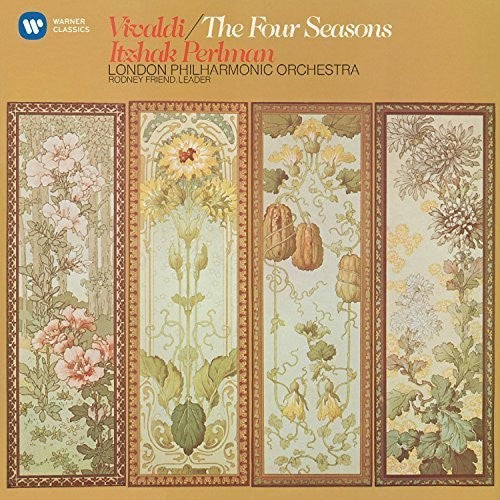
THE FOUR SEASONS
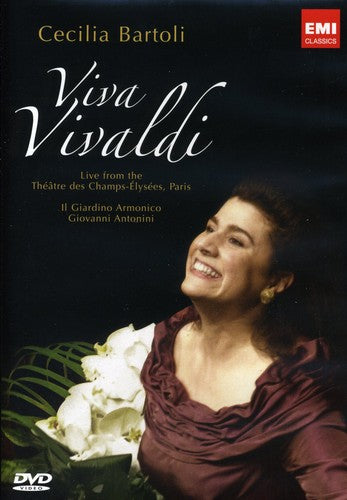
VIVA VIVALDI
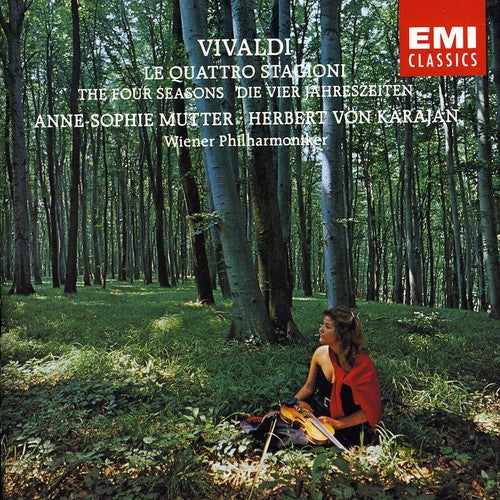
VIVALDI: FOUR SEASONS
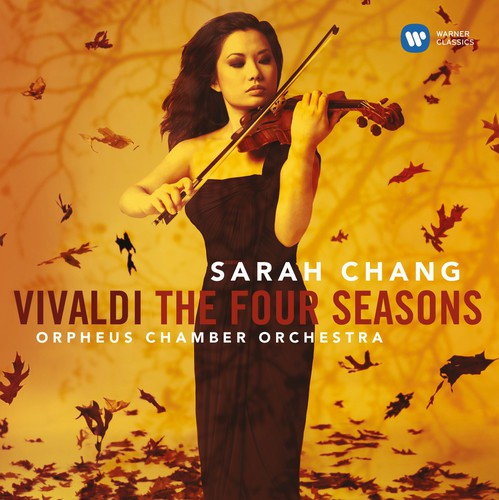
4 SEASONS
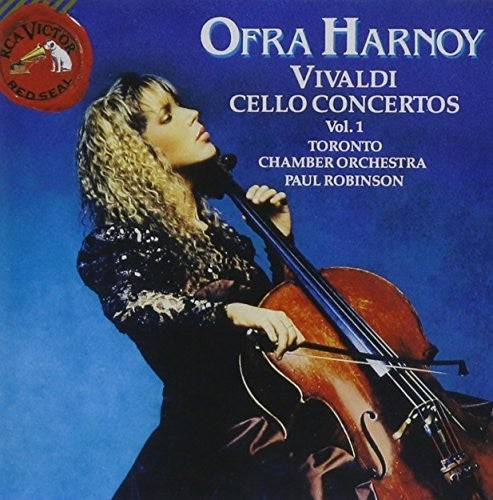
Vivaldi: Cello Concertos Vol 1 / Harnoy, Robinson, Toronto CO
"Vivaldi is greatly over-rated - a dull fellow who would compose the same form over many times." Such is the opinion of one of the great composers on the music of another great composer. Given the evidence of the present newly re-released complete Vivaldi cello concertos incredulity can be the only response to this assessment. But then Stravinsky was a man who voiced strong, often acerbic and sometimes outrageous opinions on virtually anything suggested to him. He had probably heard few, if any, of these cello concertos and irrespective would it have made any difference?
...This is wonderfully inventive music, which reflects the creative genius of its composer. Contrary to Stravinsky’s comments, the structure is highly varied. It is interesting to compare the infectious good-humoured opening of the B flat concerto RV 423 with the C minor RV 401 and its feeling of lamentation and contrapuntal texture. The solo cello part of the C major concerto RV 399 is so very different to the solo parts of all the other concertos.
Vivaldi must have had in mind a particularly virtuosic student when he wrote the demanding passages in the final movement of the D minor concerto RV 405. In the concerto for cello and bassoon, RV 409, the first movement alternates soft sustained passages for the soloist with fast outbursts for the orchestra. Then in the second movement Vivaldi reverses the roles; only in the final movement do the soloist and orchestra play in the same mood.
...The playing by Ofra Harnoy is very musical and evinces beautiful intonation. It is difficult to restrain one’s foot from tapping, a sure sign that good things are happening in the music... This set is enthusiastically recommended for what it is - a record of marvellously inventive music, beautifully played by a superb cellist.
-- Zane Turner, MusicWEb International [reviewing these performances reissued as part of the box set, RCA 67886]
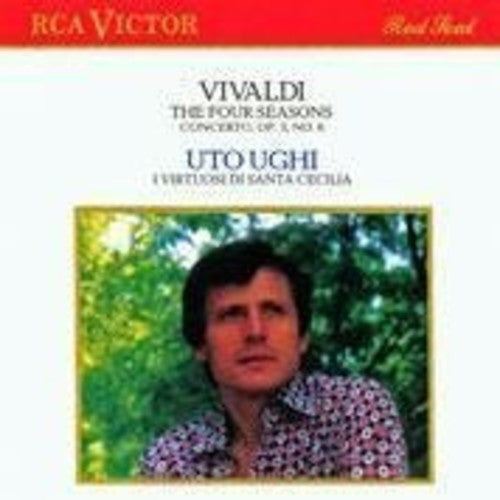
Vivaldi: Four Seasons, Concerto Op 3 No 6 / Uto Ughi
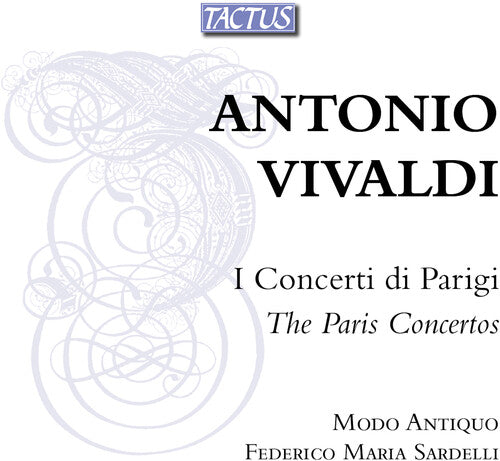
Vivaldi: The Paris Concertos / Sardelli, Modo Antiquo
The German patrician von Uffenbach, during a visit to Venice for the carnival of 1715, at long last managed to meet with Vivaldi and order from him “10 concerti grossi”. Three days later, the composer reappeared with all of the requested music, assuring his patron that it had been expressly composed for him. Vivaldi was unquestionably a very quick composer, but he was also a barefaced and extremely capable promoter of his own talents. The collection of twelve concertos for strings, now preserved in Paris, also has all the earmarks of having been a rapidly and cleverly assembled series of previously composed works, with very little new music added. This same modus operandi would mark the genesis of op. 10 and many other collections by Vivaldi. But Vivaldi is an excellent composer, and like a great actor, he succeeds in taking on the appearance of a character by merely donning a hat or imitating a gesture. Thus he manages to outline with a few brushstrokes all of the force of a French entree in the opening of Concerto n. 5, or to fall suddenly into the most moving melancholy when his unusual Ciaccona modulates into the minor key. Even the last movement of Concerto n. 2, despite appearances, is a rare example of a menuet en rondeau camouflaged as an Italian allegro. The beginning of Concerto n. 1, although belonging to the older works, must have been chosen by Vivaldi to open the collection because it resembles a chaconne in binary meter. These, then, are the distinctive elements, obvious and yet quite effective, which render the idea of a well recognizable taste or style—the same style which informed the “Domine Fili” from the Gloria RV 589, the aria “Tornar voglio” from Arsilda, and the final chorus of Il Giustino. Federico Maria Sardelli conducts the famous baroque ensemble Modo Antiquo, in this amazing historical recording.
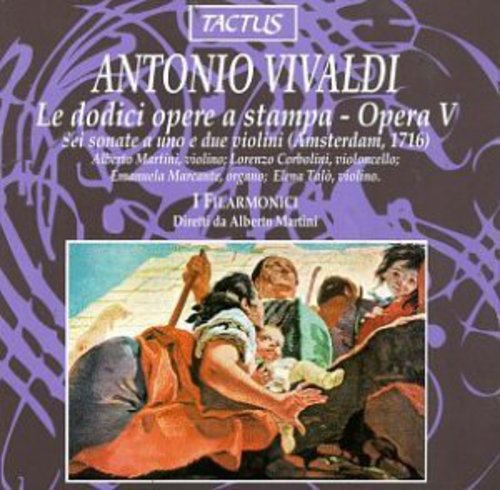
Vivaldi: Opera V - Sonate a uno e due violini
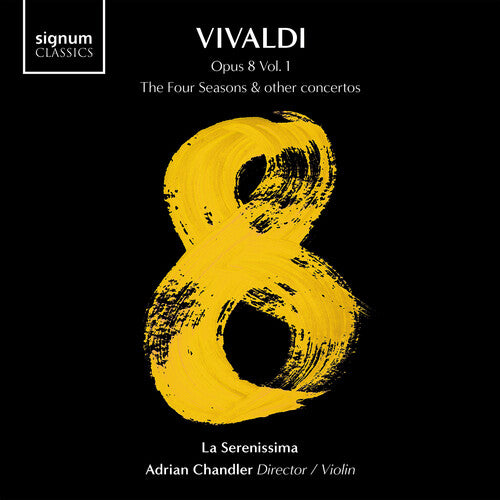
Vivaldi: The Four Seasons & other concertos, Vol. 1 / Chandler, La Serenissima
Baroque giants La Serenissima return with their new recording of Vivaldi's Four Seasons, among other concerti for ensemble by Antonio Vivaldi. Recognized for 'whipping up a storm with Vivaldi,' La Serenissima is 'one of Britain's best-loved chamber orchestras' (The Telegraph) known for championing a host of neglected Italian baroque composers and its outstanding performances. Uniquely, the group's entire repertoire is edited from source material by founder and violinist Adrian Chandler. Praise for Vivaldi recordings by La Serenissima on Signum Classics: "After being obsessed by the composer and his music world for more than 30 years, Chandler by now is Vivaldi incarnate" - The Times
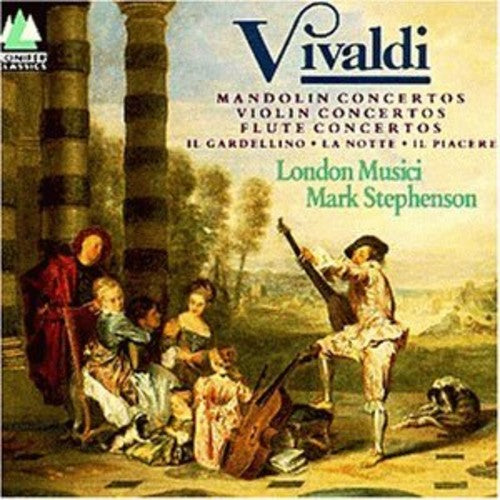
Vivaldi: Mandolin, Violin, Flute Concertos / London Musici
"This well-balanced programme of Vivaldi concertos should have a wide appeal. . . . Nigel Woodhouse and Sue Mossop bring as much expression to the music as their instruments allow. . . . Smith plays a modern flute and possesses a pleasing warm, rounded tone. He gives a lyrical account of the lovely Siciliano of Il gardellino tastefully ornamenting the repeated halves of this binary movement. . . . The two violin concertos are drawn from Vivaldi's Op. 8, the set which contains the Four Seasons. . . . The soloist is Lyn Fletcher who brings detail and plenty of light and shade to Vivaldi's often virtuosic writing. . . . [A]n entertaining programme affectionately played and well constructed. Clear and effective recorded sound." -- Nicholas Anderson, Gramophone
Vivaldi: 6 Double Concertos / Stern, Rampal, Rolla
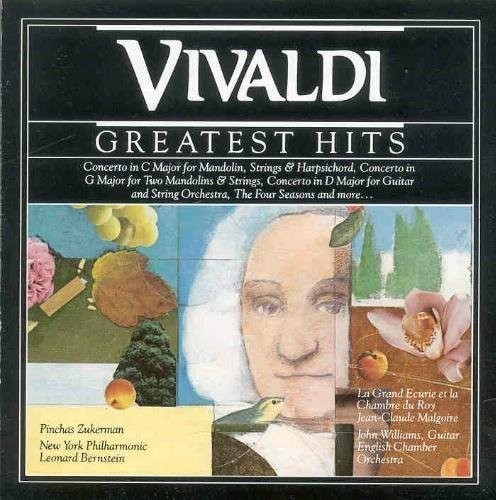
Vivaldi's Greatest Hits / Bernstein, Ny Phil, Et Al
Includes work(s) for orchestra by various composers.
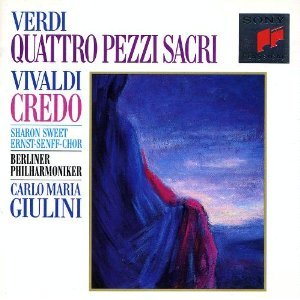
Verdi: Quattro Pezzi Sacri; Vivaldi: Credo / Sweet, Giulini
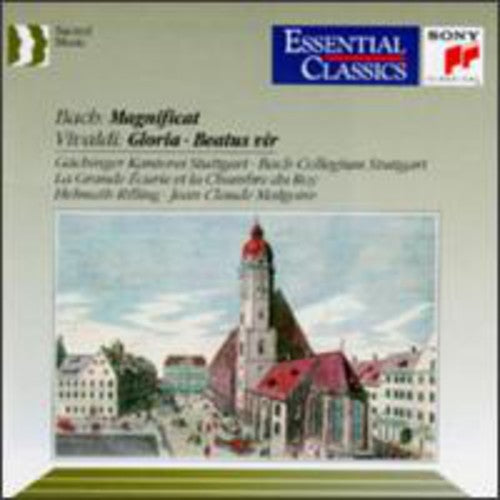
Bach: Magnificat; Vivaldi: Gloria, Beatus Vir / Rilling, Malgoire
Vivaldi: Violin Concertos Op 8 Nos 5-12 / Zukerman
Vivaldi: The Four Seasons / Jeanne Lamon, Tafelmusik
Recordings of Vivaldi’s Four Seasons tend to fall into one of two catagories. There are the star soloist versions, which spotlight the virtuosic, and highly marketable, talents of the big name violinists. And then there are the period instrument versions, in which greater emphasis is put on unusual textures and more authentic performance practice.
This new disc from the Canadian group Tafelmusik is an excellent example of the latter, and a distinctive feature of their recording is their adoption of a pitch roughly a semitone higher than usual with period groups in line with recent research into common practice in 18th-century Venice. They also make use of an archlute to add variety to the continuo, and the result is a bright, distinctive sound which brings freshness, clarity and variety of texture to the music.
The playing itself is incisive but free of the hard-driven tempi which sometimes mar authentic performances, and is imaginatively allied to the seasonal pictures painted in the sonnets on which the concertos are based (which are included in the CD booklet).
Lamon’s relatively small tone means that her instrument blends in with the ensemble rather than dominating it, highlighting the concerto grosso aspects of the works. Her playing puts expressiveness before virtuosity and is quite beautiful in the slow movements, which she ornaments freely adding a refreshing touch of spontaneity to music which is after all very familiar. In a hugely overcrowded field, Tafelmusik has come up with a winner in these highly satisfying and well-recorded performances, and the Sinfonia and Concerto for Four Violins are pleasing bonuses.
Performance: 5 (out of 5), Sound: 5 (out of 5)
-- David Michaels, BBC Music Magazine
Vivaldi, Villa-Lobos: Guitar Concertos / Marcos Tsessos, Vladimir Altschuler
Vivaldi: Complete Bassoon Concertos, Vol. 2