Arcangelo Corelli
34 products
-
Corelli: Concerti grossi, Op. 6, 1-6
$17.99CDPENTATONE
Jun 20, 2025PTC5187234 -
Corelli & Handel: Sonatas - Michaela Koudelkova
$29.99CDSupraphon
Jul 04, 2025SU4356-2 -
-
-
-
-
-
-
-
-
-
-
-
-
-
-
-
-
-
-
-
L’apotheose de Corelli - Triosonatas
Kaleidosonic
Corelli: Concerti grossi, Op. 6, 1-6
Corelli & Handel: Sonatas - Michaela Koudelkova
FOLIA 1490-1701
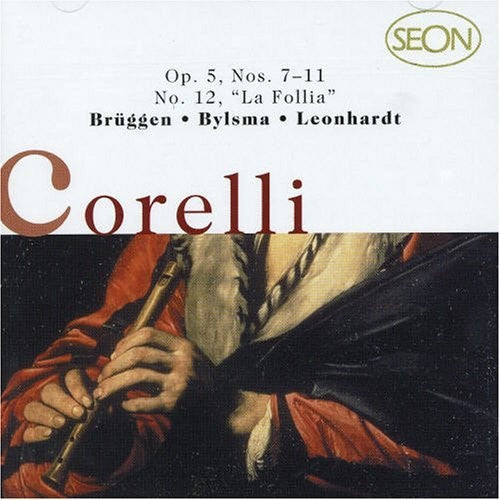
Corelli: Sonatas Op. 5 No 7 - 12 / Brüggen, Bylsma, Leonhardt
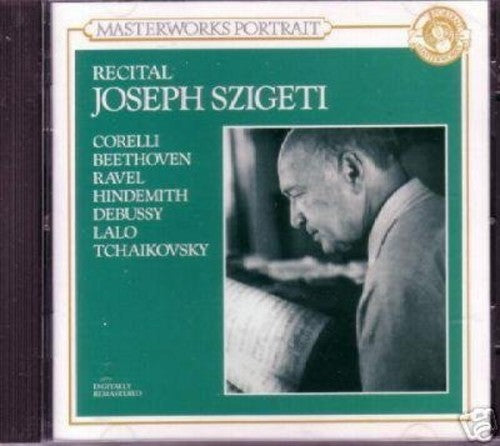
Recital / Joseph Szigeti
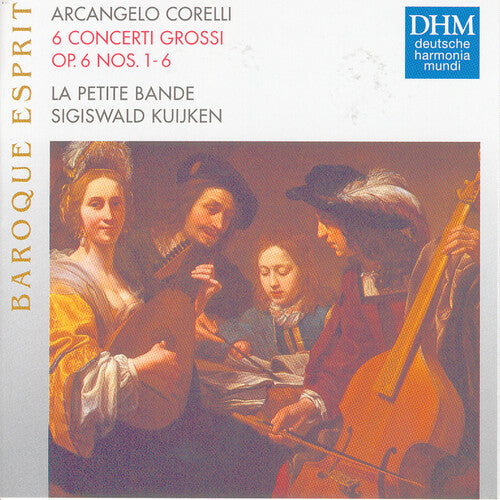
Corelli: 6 Concerti Grossi Op 6 No 1-6 / Kuijken, Et Al
-- Nicholas Anderson, Gramophone [9/1990]
CORELLI: Sonatas for Strings
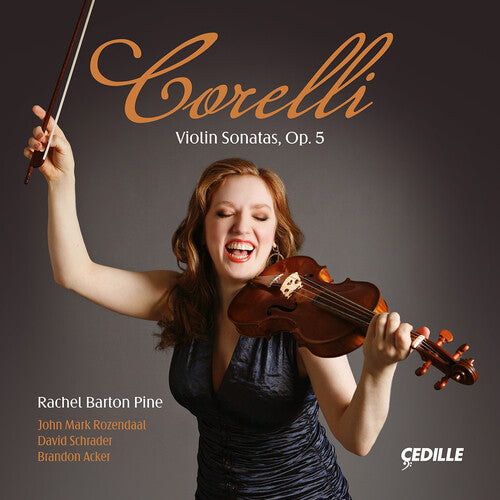
Corelli: Violin Sonatas, Op. 5 / Rachel Barton Pine
Corelli: Sonate a tre da chiesa e da camera
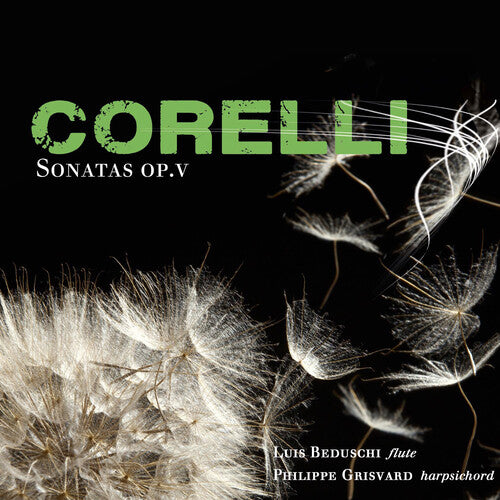
Corelli: Sonatas, Op. V
Corelli in London
Corelli: Sonate, ciacona e follia
L'IMMAGINE DI CORELLI
Corelli: Opera II: Sonate da camera
Corelli: Opere I e III
Corelli: Solos and Concertos Fitted for the Flutes / Scorticati, Cromatico
In early 18th-century England, the recorder was a popular instrument among music lovers, therefore- since the eminent Italian composer Arcangelo Corelli’s works made an enormous impression in the country- it was only a matter of time before numerous virtuoso recorder arrangements of his string works began to appear.Estro Cromatico leader Marco Scorticati and his longstanding partner Davide Pozzi join forces with Evangelina Mascardi, Sara Campobasso, Michela Gardini, and Pietro Pasquini to deliver a new rendition of this well-loved music, including two premiere recordings. Improvised ornamentation, as well as the multifaceted texture provided by diversified combinations of the continuo instruments, play a central role in the present interpretation, thus bringing Corelli’s extraordinary music back to life; as Roger North wrote in 1710 “if music can be immortal, Corelli’s consorts will be so.”
Corelli: Concerti Grossi, Op. 6, Nos. 1-6
Baroque Instrumental and Orchestral Music - CORELLI, A. / D'
London Calling - Handel / Semmingsen, Eike, Barokksolistene
As the hub of a fledgling British Empire, London around 1710 was burgeoning with new wealth and offered the perfect setting for operatic entrepreneurs eager to spread the latest Italian fashions. It was thus a city of opportunity for Handel, fresh from spending five years in Italy, but also for many other touring musicians including Arcangelo Corelli, Francesco Maria Veracini and Francesco Geminiani. This recording unveils a portrait of the chameleon Handel, emerging in the panache of his early Italian-styled Amadigi, reaching maturity in the 'English operatic' Hercules and arriving finally in the perennial melodic grace of Theodora, his penultimate oratorio. Extracts from these works, in which the young Norwegian mezzo-soprano Tuva Semmingsen displays both vocal agility and a wide-ranging emotional palette, are interspersed with instrumental works by Handel's Italian contemporaries. Corelli's Concerto grosso in D major, from the celebrated Opus 6, and Geminiani's 'La Follia' in D minor - incidentally a reworking of Corelli's famous violin sonata - both illustrate Italian instrumental music at its most sumptuous, in colourful and dynamic performances by the Norwegian period band Barokksolistene. For further variety, the leader and artistic director of the ensemble, Bjarte Eike, also performs a chamber work by Veracini, who visited London regularly during some three decades in the early 18th century. The Sonata in A major was published in England in 1744, and it would be quite tempting to interpret the use in it of a Scottish tune, Tweed's side, as merely a clever marketing device to charm a local audience, were it not that the tune, and the composition itself, was so attractive.
Corelli: Concerti grossi, Op. 6
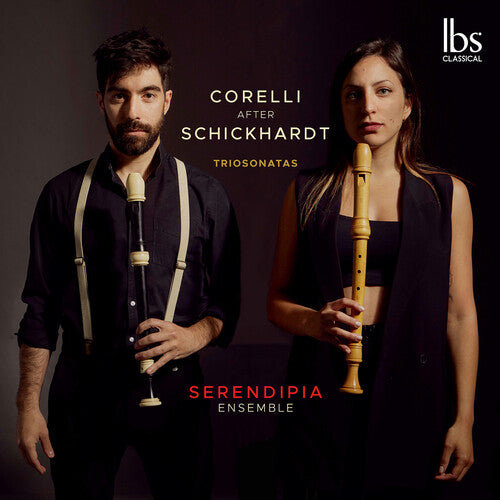
Corelli after Schickhardt - Triosonatas
Serendipia Ensemble, Rita Rógar, and Moisés Maroto, together with their ensemble of musicians—Darío Tamayo on the harpsichord, Calia Álvarez on the viola da gamba, José Arsenio Rueda on the baroque bassoon, and Jon Wasserman exchanging his plucked string instruments (theorbo and baroque guitar)—have recorded the complete sonatas. Premiering worldwide with the record label IBS Classical.
With this large continuo group, Serendipia Ensemble seeks a unique musical approach to the concept of the triosonata, finding the common ground between the concerto form conceived by Corelli and the sonata form arranged by Schickhardt. We are now able to hear, with layering of different instruments, the triosonatas approach the concerti in sections such as the tutti-soli that we appreciate in the Corellian originals.
Corelli: Recorder Sonatas, Op. 5
Corelli & Quentin: Flute Sonatas / Besson, Rignol, Rondeau
In 1700, Corelli published his 12 violin sonatas, Opus 5, in Rome. A veritable revolution in violin technique, they won the admiration of eminent composers (Bach, Dandrieu, Couperin) and greatly influenced the French (Francoeur, Leclair, Senaillé, Quentin), who were to try their hand at this virtuoso and brilliant Italian style. At the end of the 1730s, the first six sonatas of opus 5 were"adapted to the transverse flute with the bass" by a Parisian publisher. The level of virtuosity they demanded was quite innovative at the time. This display of virtuosity is also to be found in the compositions of Jean-Baptiste Quentin, known as Le Jeune. We have very little biographical information on Quentin himself, but all his work is greatly inspired by Italian music and is heavily influenced by Corelli. Anna Besson has made the world's first recording of his sonatas, with the help of two other eminent performers of the new Baroque generation, Myriam Rignol on viola da gamba and Jean Rondeau on harpsichord…