Arnold Bax
34 products
-
Arnold Bax: Spring Fire - Complete Music for Cello & Piano
$18.99CDSOMM Recordings
Jul 04, 2025SOMMCD 0704 -
-
-
-
-
-
-
-
-
-
-
-
-
-
-
-
-
-
-
-
-
-
Arnold Bax: Spring Fire - Complete Music for Cello & Piano
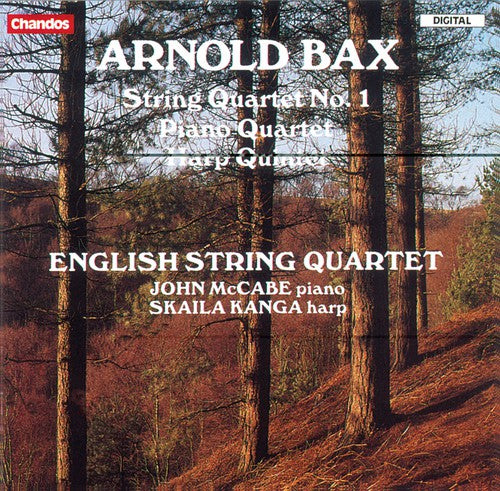
Bax: String Quartet No 1, Etc / English Qt, Mccabe, Kanga
-- Gramophone [4/1987]
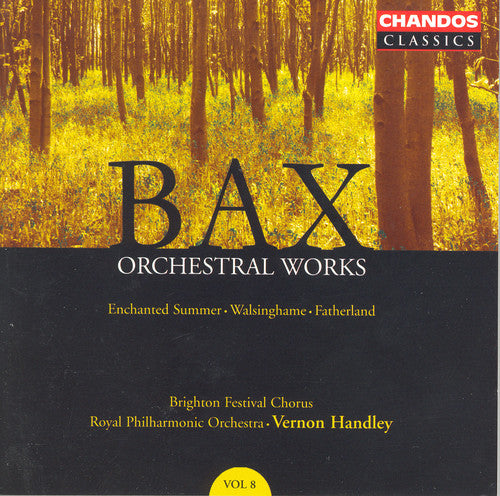
BAX: Orchestral Works, Vol. 8
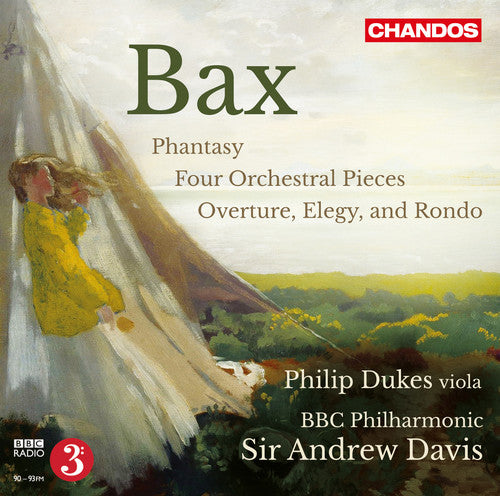
Bax: Orchestral Works / Davis, BBC Philharmonic
Born in 1883 into a wealthy family in London, Arnold Bax began a love affair with Ireland as a young man. He moved there in 1911 and his Four Orchestral Pieces from 1912 – 13 are deeply influenced by the landscape of the countryside near his Dublin home. The first three are better known in revised versions, from 1928, as Three Pieces for Small Orchestra. Here ‘The Dance of Wild Irravel’ joins the other three movements for the premiere recording of the four Pieces as Bax originally conceived and orchestrated them.
The Phantasy for Viola and Orchestra from 1920 was inspired by the strong feelings with which Bax responded to the Irish political turmoil at the time, underlined by his use of the Sinn Fein Marching Song (later the Irish national anthem) at its climax. Bax is celebrated for his melodic invention and this passionately lyrical score must be one of the finest examples of his gift. Here the soloist is Philip Dukes, described by The Times as ‘Great Britain’s most outstanding viola player’.
By 1927 Bax’s style was changing and the opening of the Overture, Elegy and Rondo is reminiscent of a classical concerto, suggesting a leaning towards then-fashionable neoclassicism. The long, dreamy melody of the middle section and brilliant, colourful orchestration, however, are unmistakable hallmarks of Bax’s individual voice. - Chandos
Reviews
“… Dukes is a sterling advocate of this unjustly neglected work [Phantasy] – the haunting cor anglais solo recalls the shepherd’s lament in Wagner’s Tristan – while Davis proves passionate in the impressionistic Four Orchestral Pieces and the powerful, dark Overture, Elegy and Rondo.” - Hugh Canning, The Sunday Times, Culture magazine, London – [September 14, 2014]
“All three of these rarely heard works come from the first half of Bax’s career as a composer. The earliest is the lightweight but charming set of Four orchestral Pieces from 1914, recorded here for the first time … The latest is the far more substantial Overture, Elegy and Rondo … Through stylistically the two works have their differences … both works reveal the same sure-footed handling of the orchestra, which these carefully manicured performances under conductor Andrew Davis show off beautifully…” - Andrew Clements, The Guardian, [August 29, 2014]
Bax: The Symphonies / Handley, BBC Philharmonic
This special edition box set includes a bonus CD of interviews between Vernon Handley and Andrew McGregor about Bax's symphonies.
Bax: Tone Poems / Handley, Bbc Philharmonic
BAX In the Faery Hills . November Woods . The Garden of Fand. Sinfonietta ? Vernon Handley, cond; BBC PO ? CHANDOS CHAN 10362 (75:44)
Sir Arnold Bax is an important late Romantic composer whose music is essentially neglected at a time when fresh and imaginative orchestral programming is desperately needed. Think of the many times you have attended a concert when a totally faceless and mediocre piece of modern music is played in an attempt to placate critical demand for new music. Then imagine how a world-class orchestra would sound playing Bax?s dramatically compelling, highly melodic, and brilliantly orchestrated music. Yet it almost never appears in concerts outside of England.
Vernon Handley has long been a champion of late Romantic and modern English music in general, and Bax in particular. His widely acclaimed album of the complete Bax Symphonies appeared on many Want Lists recently. Handley consistently stresses the importance of existing underlying form, even in Bax?s most floridly Romantic and seemingly rhapsodic, as opposed to symphonic music. In the symphonies, he moves the music along and refuses to pause and luxuriate in the sumptuous orchestration. This approach generally works well, but is potentially problematic in that it de-emphasizes the ravishing beauty of the critical epilogues of the Third and Sixth Symphonies that may well represent the very essence of Bax. This approach would seem to be even less applicable to the colorfully orchestrated tone poems. Not to worry. This recording is a knockout. Handley takes November Woods at a basically slow tempo that gives plenty of time to emphasize the lush orchestration but does not permit the underlying tension to slacken. The Garden of Fand is simply gorgeous. Handley?s expansive reading manages to find the structural backbone and emphasize forward momentum without sacrificing the poetry and innate beauty in the melodies and rich but transparent orchestration. He even outdoes Sir Adrian Boult here. In the Faery Hills is an orchestral Scherzo in the form of a tone poem. Handley maintains interest throughout the lightly orchestrated piece, but it would benefit from more nimble woodwinds. The rarely heard Sinfonietta (also known as the Symphonic Phantasy) is a unique three-movement piece that pretty much sounds like everything else that Bax wrote, but is not quite as richly Romantic as the large tone poems or as structurally grand as the symphonies. It is an abstract work without a specific program, but never seems stylistically very far from Bax?s seascapes or nature pieces.
This CD has some of the best sound I have ever heard from Chandos. It is luxuriant in texture, and has plenty of fine instrumental detail with none of the hyper-reverberant harshness that characterizes many Chandos recordings. The warm and deep bass drum is heard to great effect in The Garden of Fand and November Woods . This is highly recommended in every conceivable way. One hopes Handley will continue to record the rest of Bax?s tone poems and orchestral music for Chandos.
FANFARE: Arthur Lintgen
Bax: Tone Poems Vol 2 / Handley, BBC PO
Handley's command of this unfamiliar music is wonderfully assured; the BBC Philharmonic play superbly for him, and it is hard to imagine anyone else doing it better or with more commitment. -- The Guardian (U.K.)
Bax: Symphony No 3, Etc / Thomson, London Philharmonic
"It is not difficult to appreciate from this performance why the Third Symphony, dedicated to Sir Henry Wood, became so popular in the 1930s. From the very beginning Bryden Thomson has just the right approach: restrained until the music bursts into life, then tender and meditative as the energy recedes. The climax at the end of the first movement is especially well handled. Many have been tempted to construct a program – no doubt there is a connection with the sea, akin to the references in the Fourth Symphony, Tintagel, of which there are undeniable echoes in the second movement, or The Garden of Fand – but Thomson is content to let the music speak for itself. Bax prefaced the short score with a quotation from Nietzsche – “My wisdom became pregnant on lonely mountains; upon barren stones she brought forth her young” – and Morar, where the work was composed is twixt the mountains and the sea, but he seems to have thought better of this quotation and suppressed it from the full score. The seascape on the Chandos cover offers just the right hint for the music, though the Naxos cover is the more tasteful.
The horn and trumpet calls at the beginning of the second movement are certainly evocative, but of what? Trumpets calling from sad shires, perhaps, like those in Vaughan Williams’s Pastoral Symphony – but now I’m getting involved in the game of finding the programme. Michael Oliver found himself doing something similar in his 1986 review, though along different lines. He attributed his yielding to the temptation to the eloquence and richness of Thomson’s performance, a sentiment with which I thoroughly agree.
A lento second movement immediately after a lento moderato opening movement could easily sound like too much of a good thing, but Bax makes it otherwise, with Bryden Thomson’s help. The jaunty opening of the finale could easily be overdone but Thomson resists the temptation: here, as elsewhere, his tempi seem to fit the music like a glove. As a result, the Epilogue still sounds ethereal and beautiful, but no longer seems disjoined from the rest of the movement. No doubt Vernon Handley is even more successful in this respect in his more recent version, available on CD with the complete symphonies or as a download, coupled with the First Symphony, over 74 minutes in total...
Most Baxians will already have a version of The Happy Forest – coupled, for example, on a very recommendable and attractively priced Bryden Thomson CD, with Tintagel, The Garden of Fand, etc., CHAN10156X; the two Chandos fillers here are much less well-known, though both are well worth hearing. With some good PR work, either could easily become really popular – who would have thought that Vaughan Williams’ Lark Ascending would have become so popular had it not been plugged on Classic FM?
Wild Irravel, the last of a set of Four Orchestral Sketches, lay forgotten until revived by Bryden Thomson for this recording. Like Pæan, originally conceived as a piano piece and orchestrated for the Henry Wood Jubilee, it employs large forces, including bells and organ. Both works are well performed here.
It is right and proper that these shorter works should be placed first, since the moody opening of the symphony’s first movement is all the more effective for following such boisterous works. Of course, it is possible – but a nuisance – to program the order of the tracks whether playing the music from hard drive, mp3 player or from CD, the latter being my preferred option – simplicity itself to burn with Windows Media Player or, better still, a dedicated programme such as Roxio Disc Creator."
- Brian Wilson, MusicWeb International, [Excerpted review]
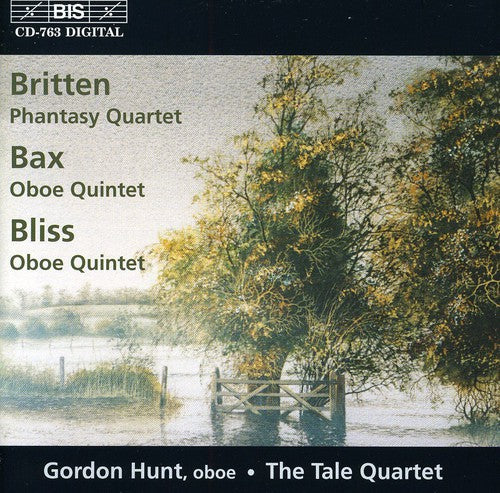
Bax / Bliss: Oboe Quintets / Britten: Phantasy Quartet
BAX: Violin Sonatas, Vol. 1 (Nos. 1, 3)
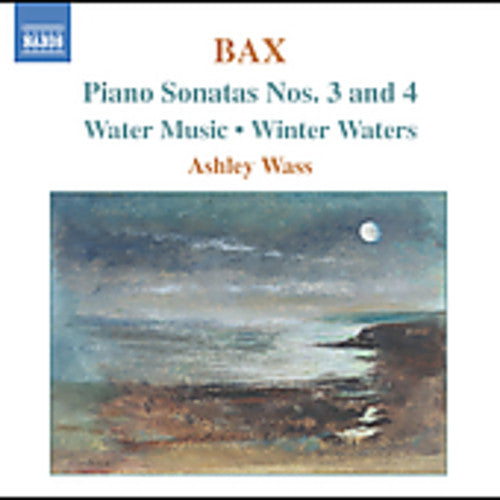
Bax: Piano Sonatas No 3 & 4, Etc / Ashley Wass
Consider the Third Piano Sonata: completed in 1926, it was written between the Second and Third Symphonies. It is a richly emotive work in Bax’s typically paradoxical manner that intimately confides the most theatrically extravagant of feelings. With a stormily affective first movement, a lyrical lento moderato, and a passionate finale, the sonata gives us the composer at inspirational floodtide. It lacks the steel grimness that extends its powerful reach across the Piano Sonata No. 2, but is otherwise its equal, and well worth hearing. I’m not as convinced by the opening allegro giusto of the Fourth Piano Sonata, lighter in texture but flawed by an annoyingly bumptious first theme. Still, the second movement is a bewitching piece that has Bax clasping hands with Borodin; not all that surprising, given the British composer’s predilection for Russian classical music. Much the same criticism as I had for the first movement applies to the last, except that the darkly reflective second theme and its subsequent development is again Bax at his best.
The two sonatas are balanced on this release by a series of four short works presenting far more than the usual chip off the compositional workbench. Winter Waters is a somber miniature tone poem written during WW I and subtitled “Tragic Landscape.” Bax keeps the violence churning beneath a murky, active surface, in a piece that would have made a very effective orchestral work if it were only less pianistic in development. Water Music is actually a selection from Bax’s ballet, The Truth about the Russian Dancers, and easily the most memorable thing in a score more notable for its ability to change mood and direction in a candle’s flicker than sustain any musical idea. It is a very good tune, worked out to great advantage.
The main theme in Country-Tune is English, to be sure, but it’s given a few harmonic and melodic twists that again recall the Russian Nationalists, before being sent home to the Land of Constant but Temperate Rain. O Dame Get Up and Bake Your Pies is late Bax: 1945, with an air of Butterworth about it, an impression of leisurely variation drawing upon a creative spring without visible terminus. It flowed more slowly for the composer in his later years, but in short pieces like this and the Oliver Twist music, and longer works such as his Wind Concertante, Bax proved he had more to say, and with eloquence, too.
This is the second volume of an expected complete series of Bax’s piano music featuring Ashley Wass, the first British pianist to win first prize at the World Piano Competition (1997). It’s something of a coup for Naxos to acquire the services of this young, extremely talented musician in music for which he possesses both an obvious affinity and commitment. He displays an excellent technique, great self-confidence, a sense of showmanship, and a clear set of ideas about how these works should be performed. The allegro quasi Andante middle movement of the Fourth sonata (marked “very delicate throughout”) finds Wass delicate indeed, offering a refined dynamic palette matched to judicious tempos and a transparent tone. Yet, as the finale to the Piano Sonata No. 3 demonstrates, he’s equally capable of indulging Bax’s pleasure in a broad canvas, awash in more colors than I’ve heard from any new pianist in some time...
Barry Brenesal, FANFARE
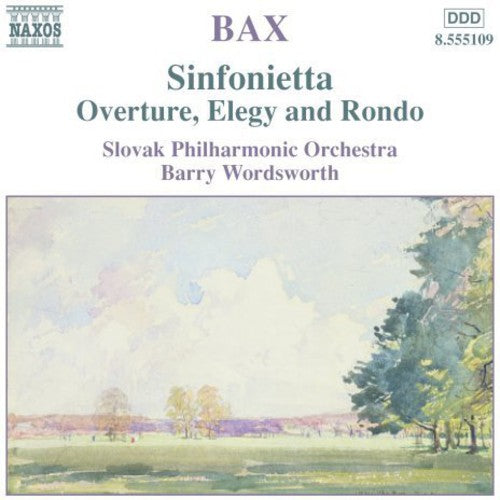
BAX: Sinfonietta / Overture, Elegy and Rondo
Big Sky / Hat Trick
Bax: Complete Symphonies; Orchestral Works / Lloyd-Jones, RSNO
Sir Arnold Bax wrote his seven symphonies between 1921 and 1939, embracing a prolific period that drew inspiration from a variety of sources. From the dramatic impact of the Second Symphony through to the seascapes of the Fourth and hints of Sibelius in the later works, Bax’s powerful symphonic world is one of surprising and at times stormy vigor contrasting with the most intense lyrical expressiveness and serenity. The selection of additional orchestral works evoking nature and atmospheric landscapes fascinates and rewards in equal measure, providing an essential overview of Bax’s music in critically acclaimed recordings.
REVIEW:
Listeners should come away mightily impressed by David Lloyd-Jones's clear-headed conducting of this intoxicating repertoire.
-- Gramophone
Past praise of previously released individual volumes included in this set:
Symphony No. 1 - In the Faery Hills - Garden of Fand
This first disc in the Naxos Bax series offers warmly idiomatic readings of two early symphonic poems, as well as the First Symphony…finely detailed. In the two symphonic poems, more specifically inspired by Irish themes, Lloyd-Jones draws equally warm and sympathetic performances from the Scottish Orchestra, bringing inner clarity to the heaviest scoring. First-rate sound...
-- Penguin Guide
Symphony No. 4, Nympholept, Picaresque Comedy Overture
The RSNO handle the difficulties of these scores well, with some wonderful solo playing from oboes and horns. The conductor David Lloyd-Jones allows those refulgent textures time to breathe, without letting the music sprawl.
-- Times of London
Symphony No. 5 - The Tale the Pine-Trees Knew
Lloyd-Jones's intelligent, meticulously observant and purposeful direction pays handsome dividends, and that a well-drilled RSNO in turn responds with sensitivity and enthusiasm. In short, another terrific coupling within what is turning out to be one mightily rewarding enterprise.
-- Gramophone
Intercourse of Fire & Water / Shyti
Cellist Idlir Shyti presents this new release of solo works, which takes its name from the first track on the album, Tan Dun’s Intercourse of Fire and Water. The work was written for and dedicated to Anssi Karttunen, who premiered the work in 1995 alongside the Finnish Radio Symphony Orchestra. Shyti pairs this work alongside pieces by Arnold Bax, Ernest Bloch, and Pascal Dusapin.
Idlir Shyti is an Albanian cellist based in London. He has been awarded the ‘Diplôme Supérieur de Concertiste’ under the tutelage of Anssi Karttunen at the École Normale de Musique de Paris. Preceding, he studied with Richard Lester at the Royal College of Music London and at the Conservatorio di Santa Cecilia Rome with Maurizio Gambini. In his journey of learning, he has come across and played for many renown musicians such as Yo-Yo Ma, Gary Hoffman and Johannes Goritzki.
Bax: Violin Sonatas Vol 2 / Jackson, Wass
Includes work(s) by Arnold Bax. Soloist: Laurence Jackson.
Bax: Viola Sonata, Legend, Etc / Outram, Jackson, Rolton
Therefore it is good to find these viola pieces coupled in an appealing budget release from Naxos, pleasingly recorded by a particular talented player and his colleagues. Bax enjoyed an enduring friendship with the great Lionel Tertis (subject of a recently published biography by John White), and the substantial Sonata of 1922 is one of his finest compositions in any genre. The opening makes an arresting impression, at once atmospheric and expressive, while the scherzo is particularly exciting rhythmically. Martin Outram plays with warm expressiveness and a suitably rich tone, while Julian Rolton on the piano is recorded in just the right balance of perspective.
There is no question that the Viola Sonata ranks as the most significant composition among those collected here, and it is worth the price of the disc on its own. Alternative recordings are not numerous, and the most interesting is probably from Biddulph (LAB 148, mono) by the legendary William Primrose, accompanied by Harriet Cohen, famous for her relationship with the composer. However, the historical interest needs to be offset against the distinct lack of bloom of the pre-war recording. Earlier still, the composer and Lionel Tertis recorded the piece in 1929, though their version has remained out of the catalogue for several years.
That same year of 1929 Bax composed the Legend for viola and piano, music of serious and nostalgic character which finds him at his most darkly expressive. The other items, the Concert Piece for viola and piano, and the Trio for violin, viola and piano, are both early works, written well before the First World War. The latter is the more substantial of the two, and must rate as one of the strongest compositions from this phase of Bax’s creative life.
-- Terry Barfoot, MusicWeb International
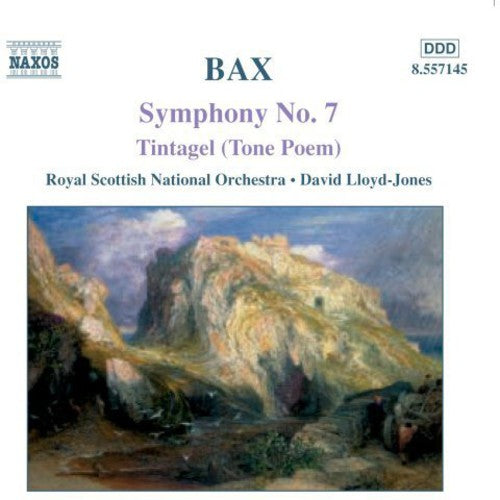
Bax: Symphony No 7, Tintagel / Lloyd-jones, Royal Scottish
This album was nominated for the 2005 Grammy Award for "Best Orchestral Performance."
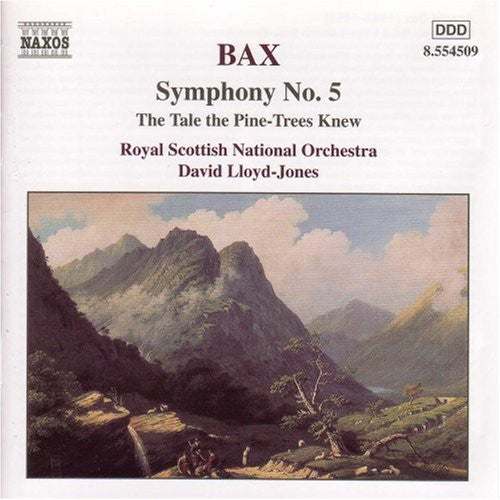
Bax: Symphony No 5, Etc / David Lloyd-jones, Et Al

Naxos' ongoing Bax symphony cycle goes from strength to strength with the release of this sumptuous performance of the darkly militant Fifth Symphony. The composer dedicated the work to Sibelius, and the very opening makes the source of Bax's inspiration quite clear. The piece begins with a sort of chromatic, glum paraphrase of the slow movement of Sibelius' Fifth--the music toys with exactly the same five-note rhythm, though of course the melodic material is quite different. The symphony's turbulent outer movements contain some of Bax's most exciting music (as well as his most dissonant and intractable), and he launches the central Poco lento with an unforgettable Romantic orchestral gesture: trumpet fanfares backed by high string tremolos and glittering harp arpeggios. Once again David Lloyd-Jones eclipses the competition on Chandos, offering a performance that's tightly wound, vividly played, and excellently recorded. The tone poem, another of Bax's nature portraits in the manner of November Woods, finds everyone involved in equally fine form. A winner. [5/22/2000]--David Hurwitz, ClassicsToday.com
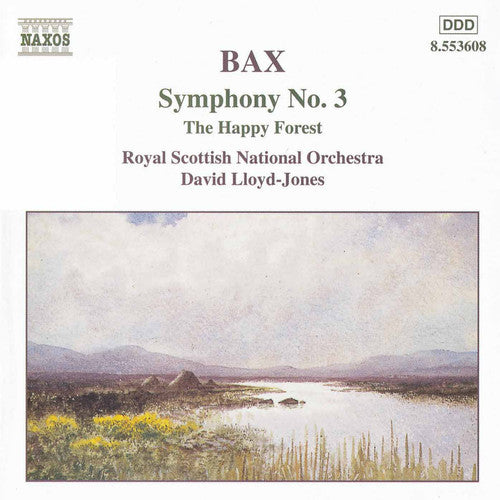
Bax: Symphony No 3, The Happy Forest / Lloyd-jones, Et Al

In the golden age of vinyl, the English label Lyrita produced a series of Bax symphony recordings conducted by Myer Fredman, Raymond Leppard, Vernon Hanley, and Norman Del Mar that gave most their first exposure to the evocative, romantic symphonic music of Sir Arnold Bax (1883-1953). It was one of the most distinguished series of audiophile recordings every chronicled. Lyrita only released two of the symphonies on CD (Symphonies 1 & 7) but that is probably out of print at the moment. There was an even better recording of the third symphony from the London Symphony and Edward Downes, also long gone. Chandos took a stab at the series during the dawn of the DDD era, but its conductor, Bryden Thomson, using slow tempos, took a loose and meandering view of these episodic works that caused them to seem disjointed. Naxos has now entered the ring with just the right conductor and orchestra and produced a series that is every bit the equal of that on Lyrita, but with a welcome twist, it is available to the public at less than half the cost. In this current installement, David Lloyd-Jones once again leads the excellent Scottish orchestra in a reading that is radiant and lyrical, and paced exacly right. The sounds of nature have seldom been so successfully translated into musical expression, and the superb engineering partners the performance hand in glove. If you like Vaughan Williams, especially his Pastoral Symphony, you will no doubt love this music. Start with this, the most popular of the composer's symphonies, backtrack to symphonies 1 & 2, already available on Naxos CD; then, along with me, keenly anticipate further releases in this magical series.--Rad Bennett, ClassicsToday.com
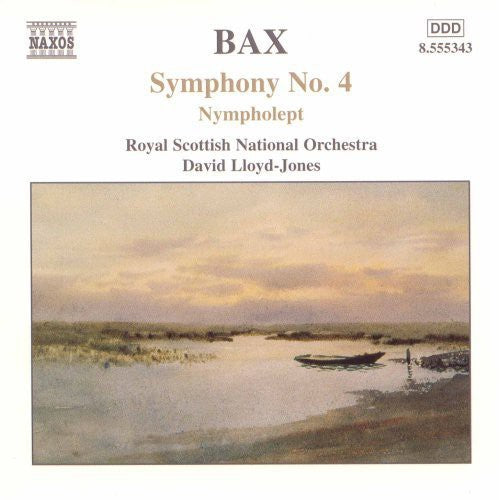
Bax: Symphony No 4, Nympholept / Lloyd-jones
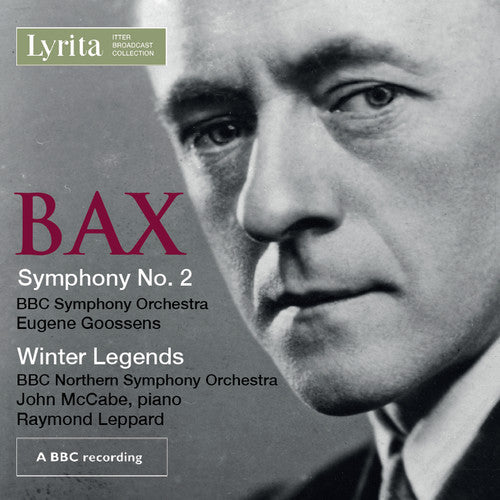
Bax: Symphony No. 2 & Winter Legends / Various
English composer Arnold Bax was born in the late nineteenth century but had his maturity and came to prominence in the first half of the twentieth. His was an affluent and literate London-based family and Bax was able to pursue a dazzling career undistracted by worldly necessities. He had no need to earn a living, teach, give concerts, court the great and good or chase commissions. In this sense he was like his ultimately more popular contemporary Vaughan Williams. No stranger to writing songs, chamber music and piano solos, Bax seemed most fluently at ease with the orchestra. The Second Symphony, written in London and Geneva, carries a dedication to Serge Koussevitsky who directed the premiere with his Boston Symphony Orchestra on 13 December 1929. Eugene Goossens gave the United Kingdom premiere on 30 May 1930. Bax who had not been able to travel to Boston, wrote: “I feel very grateful to Eugene for his brilliant performance … which lifted it at last for me into a purely abstract world. So for the moment I feel unduly tender towards its grim features.”
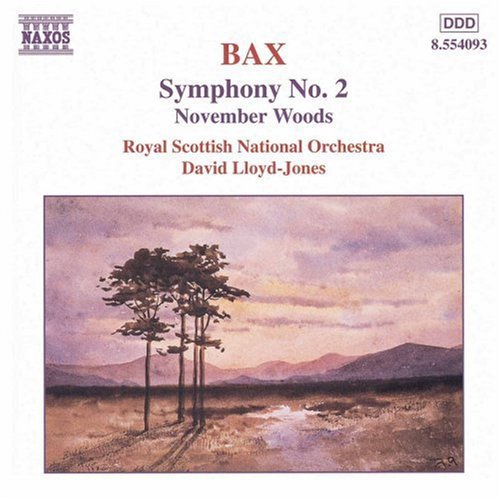
Bax: Symphony No 2, Etc / Lloyd-jones, Royal Scottish Orchestra

Naxos is going head to head with Chandos in English repertoire, and while British critics no doubt will circle the wagons in defense of their home-grown product, the fact is that this newcomer beats the Brits at their own game. Not only do we have a British conductor with evident sympathy for the music (which is Bax at his opulent best), but one with an orchestra that Chandos, in its own innumerable releases, demonstrated was clearly superior to the London Philharmonic (led by the late Bryden Thomson in the case of Bax's symphonies). In addition, we also get a recording of excellent technical quality. In fact, Chandos' recording of this piece was cavernous in the extreme, and Thomson's sometimes slack way with the music was anything but ideal. (There's a superb version of this symphony on Lyrita conducted by Meyer Fredman which has never appeared on CD). In short, this recording offers top quality in both performance and sonics irrespective of price, and makes the perfect starting point for anyone interested in sampling the work of this lusciously Romantic composer. [10/3/1999]--David Hurwitz, ClassicsToday.com
Bax: Symphony No 1, In The Faery Hills, Etc / Lloyd-jones
Bax: Symphonic Poems / Lloyd-Jones, Et Al

Drawn from David Lloyd-Jones' excellent set of Bax symphony recordings, this collection competes in four out of five works with Bryden Thomson and the Ulster Orchestra on Chandos. Whereas Thomson has Summer Music, Lloyd-Jones offers The Tale the Pine Trees Knew, a more interesting and substantial work. In general this Naxos issue offers tauter, livelier performances than does Thomson, and this prevents the music from degenerating into a typically shapeless Baxian blob, as it has a tendency to do, particularly November Woods and The Garden of Fand. Lloyd-Jones also has the finer orchestra and a leaner basic sonority, less atmospheric than Thomson to be sure, but with a rhythmic crispness that puts a bit more muscle and sinew on Bax's opulent textures (check out Tintagel, which delivers a real rush of excitement in its central section). The engineering complements the performances, having fine clarity and impact. If you're in the market for a single disc of Bax tone poems, or even a single disc of Bax, then this one certainly fills the bill. [7/25/2005]--David Hurwitz, ClassicsToday.com