

Charles Ives
54 products
-

Ives: Piano Sonata No. 2 "Concord, Mass"
$20.99CDWergo
Mar 01, 1988WER60080-50 -
![]()

-
![]()

-
 On Sale
IVES, C.: Songs, Vol. 3
CD$19.99$13.99Naxos
Aug 26, 20088559271 -
![]()

-
![]()

-
 On Sale
IVES, C.: Songs, Vol. 6
CD$19.99$13.99Naxos
Nov 18, 20088559274 -
![]()

-
![]()

-
 On Sale
IVES, C.: Songs, Vol. 5
CD$19.99$13.99Naxos
Oct 28, 20088559273 -
![]()

-
![]()

-
 On Sale
IVES, C.: Songs, Vol. 2
CD$19.99$13.99Naxos
Jul 29, 20088559270 -
 On Sale
Ives: Piano Sonata No. 2 "Concord" / Berman
CD$19.99$14.99Avie Records
May 03, 2024AV2678 -
![]()

-
![]()

-
 On Sale
Ives: Piano Sonata No. 2 & Violin Sonata No. 4 / Ahonen, Kuusisto
SACD$21.99$15.99BIS
Sep 01, 2017BIS-2249 -
![]()

-
![]()

-

Ives: Complete Sets for Chamber Orchestra / Sinclair, Orchestra New England
$19.99CDNaxos
Jun 09, 20238559917 -
![]()

-
![]()

-
 On Sale
Veni – Songs of Christmas, Vol. 2 / Pedersen, Norwegian Soloists' Choir
SACD$21.99$10.99BIS
Oct 07, 2022BIS-2511 -
![]()

-
![]()

-

Varied Air - Ives: The Piano Music / Philip Mead
$27.99CDMetier
Jun 01, 2002MSVCD92037 -
![]()

-
![]()

-
 On Sale
Ives: Symphonies No 1 & 2 / Järvi, Detroit SO
CD$13.99$10.99Chandos
Oct 01, 2002CHAN 10031 X -
![]()

-
![]()

-
 On Sale
Charles Ives: Hallowe'en, Quarter-Tone Pieces & More / Seltzer, Sachs, Continuum
CD$19.99$13.99Naxos
Mar 22, 20058559194 -

American Classics - Ives: Symphony No 2 / Schermerhorn, Etc
$19.99CDNaxos
Sep 01, 20008559076 -
![]()

-
![]()

-
 On Sale
American Classics - Ives: Songs Vol 1
CD$19.99$13.99Naxos
Jun 24, 20088559269 -
![]()

-
![]()

-
 On Sale
Ives: Requiem / Pinel, Jesus College Choir Cambridge, Britten Sinfonia
CD$19.99$9.99Signum Classics
Jul 16, 2021SIGCD682 -
![]()

-
![]()

-

Universe, Incomplete | The Unanswered Ives
$37.99DVDAccentus Music
Jan 10, 2020ACC20434 -
Ives: String Quartets No 1 & 2 / Juilliard String Quartet
$17.99CDSony Masterworks
Sep 01, 2010SONY77117 -
Ives: Holidays Symphony / Ormandy, Philadelphia Orchestra
$17.99CDRCA
Apr 22, 2009RCA38202 -
Ives: The Concord Sonata / John Kirkpatrick
$17.99CDSony Masterworks
Oct 01, 2013SONY74932 -
![]()

-
![]()

-
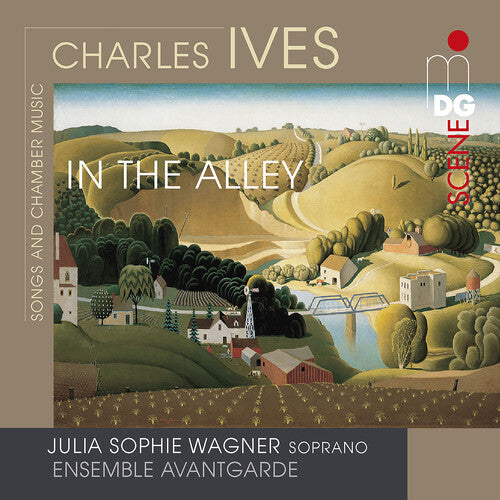
Ives: In the Alley / Wagner, Ensemble Avantgarde
$23.99CDMDG
Jul 17, 20206132178-2 -
![]()

-
![]()

-
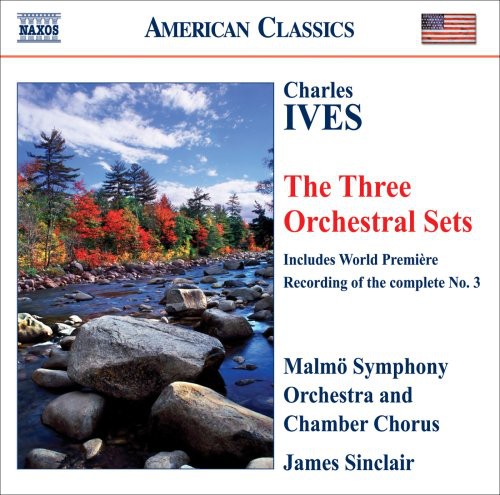 On Sale
Ives: The Three Orchestral Sets / Sinclair, Malmö Symphony
CD$19.99$13.99Naxos
May 27, 20088559353 -
![]()

-
![]()

-

Ives: Symphonies Nos. 3 & 4 / Morlot, Seattle Symphony
$18.99CDSeattle Symphony Media
Jan 08, 2016SSM1009 -
 On Sale
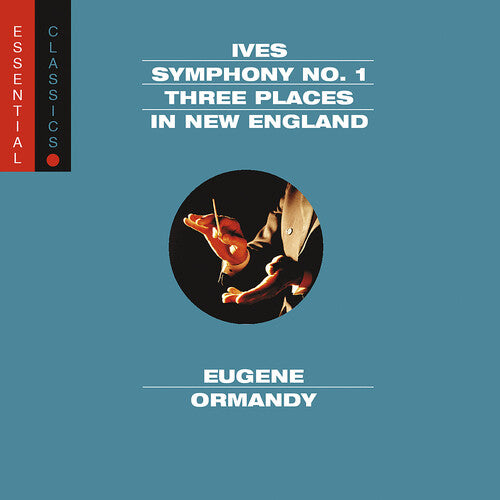
Ives: Symphony No 1, Three Places In New England / Ormandy
CD$11.98$6.99Sony Masterworks
Jan 29, 2002SBK89851 -
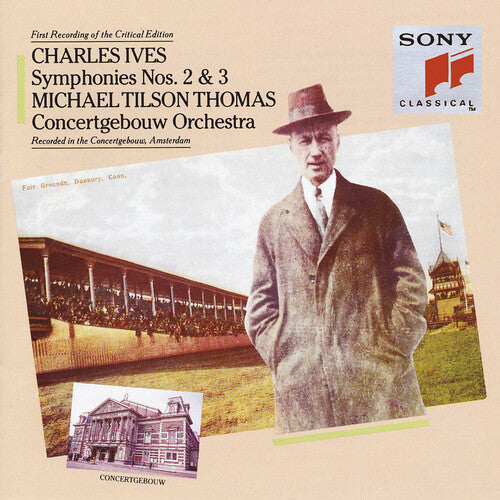
Ives: Symphonies Nos 2 & 3 / Tilson Thomas, Concertgebouw
$11.99CDSony Masterworks
Jan 15, 1991SK46440 -
![]()

-
![]()

-
 On Sale
Ives: Music for Orchestra / Morlot, Seattle Symphony
CD$18.99$14.99Seattle Symphony Media
Jun 09, 2017SSM1015

Ives: Piano Sonata No. 2 "Concord, Mass"


IVES, C.: Songs, Vol. 3


IVES, C.: Songs, Vol. 6


IVES, C.: Songs, Vol. 5


IVES, C.: Songs, Vol. 2


Ives: Piano Sonata No. 2 "Concord" / Berman
Celebrating the sesquicentenary of Charles Ives’ birth, New England-based pianist and Ives scholar nonpareil Donald Berman releases a recording of the composer’s “Concord Sonata” using his own newly prepared edition which reveals fresh insights into the iconic work. Berman’s immersion into Ives’ sound world began under the tutelage of pianist John Kirkpatrick who gave the New York premiere of the “Concord Sonata” in 1939. Throughout many years of study and reflection, Berman discovered numerous notes and alterations that Ives made within the Concord’s manuscript pages, each one “a step toward realising his vision for a three-dimensional auditory experience.” Berman concluded that the first movement of the Concord, as Ives imagined it, is quite different than today’s commonly accepted version; his new edition includes two pages worth of material, masterfully recorded here for the first time.
The album opens with the elegiac “The St. Gaudens (Black March)”, referring to the eponymous sculpture in the Boston Common that depicts the Massachusetts 54th, the first Union army regiment of African American soldiers, that is known widely in its orchestral version as the first movement of Ives’ Three Places in New England.


Ives: Piano Sonata No. 2 & Violin Sonata No. 4 / Ahonen, Kuusisto
Charles Ives’s ‘Concord Sonata’ is often described as one of the greatest of American piano works. Published in 1920, at the composer’s own expense, it contains radical experiments in harmony and rhythm and would have to wait until 1939 for its first public performance. In the course of its four movements, Ives depicts some of the famous inhabitants of the small town of Concord in Massachusetts, a centre of the mid-19th century transcendentalism movement. Luminaries of the movement such as Ralph Waldo Emerson and Henry David Thoreau are alluded to in various ways in music that includes references to Beethoven, religious and patriotic hymns and circus marches, as well as brief ‘guest appearances’ by a viola and a flute. Lasting 47 minutes on the present recording, it is a massive work of a staggering complexity, and a true challenge for any performer – a challenge more than readily accepted by the young Finnish pianist Joonas Ahonen, who has previously recorded Ligeti’s piano concerto for BIS.
For the opening work on the disc, the much shorter Violin Sonata No.4, Ahonen is joined by his compatriot, the celebrated violinist Pekka Kuusisto. Composed during the same period as the Concord Sonata, this piece also has an extra-musical background, namely the composer’s memories as a child of the so-called camp meetings held during the Christian revivalism of the late 19th century.


Ives: Complete Sets for Chamber Orchestra / Sinclair, Orchestra New England
Ives’ Sets for Chamber Orchestra are largely based on his songs, and display a panoply of style and technique. Set 9 includes The Unanswered Question in its original form, and this recording contains world premiere recordings of new realisations and editions, as well as being the first recording of the complete edition of the Sets. The three Orchestral Sets conducted by James Sinclair can be heard on 8.559370.
REVIEW:
The Sets for Chamber Orchestra by Charles Ives (1874–1954) are, in a sense, songs without words, based on songs whose texts are printed in the booklet. Although some sets do not have descriptive titles as others do (Three Poets and human Nature, From the Side Hill, Water Colors) most parts of the sets do have a name that describes their character. Set 9 includes The Unanswered Question in its original form.
For this recording, James Sinclair, Kenneth Singleton, and David Porter have thoroughly revised the scores and weeded out errors.
The interpretations are refined, clearly structured, and expressive. Unlike other conductors, Sinclair does not play to the fullest the aggressiveness of the compositions, but strives for a fine portrayal of the grotesque, the ironic, and the nostalgic.
-- Pizzicato (Norbert Tischer)


Veni – Songs of Christmas, Vol. 2 / Pedersen, Norwegian Soloists' Choir
December is a time of anticipation. We wait and we hope – veni, come! The songs on this album encompass many nuances and moods – from joy and jubilant celebration to deep melancholy and longing. They move between folk tunes, English carols and traditional Christmas songs from different times and parts of the world, between Bach and Ives, Bulgaria and Norway. Several of the songs refer to the passing of the year, the cycle of nature and rhythms of daily life: lullabies for peace of mind and comfort, and songs about surrendering ourselves to the unfathomable and unknowable in the midst of our everyday concerns: the stars will always shine in the sky – and dawn will come. In others, we meet the little child born in a stable – vulnerable and yet immensely powerful.
In the nine years following the release of ‘Rós – Songs of Christmas’ [BIS-2029], the Norwegian Soloists’ Choir’s annual Christmas concerts under the leadership of Grete Pedersen have become a cherished tradition in their native country. They are joined on this recording by folk musicians Sondre Meisfjord and Marco Ambrosini and by their long-standing collaborator, the fiddler and composer Gjermund Larsen, who also appeared on the choir’s previous Christmas album.


Varied Air - Ives: The Piano Music / Philip Mead


Ives: Symphonies No 1 & 2 / Järvi, Detroit SO
Recorded in: Detroit Symphony Orchestra Hall 8 & 9 November 1991 (Symphony No. 1) 29 April & 1 May 1995 (Symphony No. 2) Producer(s) Ralph Couzens (Executive) Charles Greenwell (Recording) Leslie B. Dunner (Associate) Sound Engineer(s) Dan Dene Robert Shafer


Charles Ives: Hallowe'en, Quarter-Tone Pieces & More / Seltzer, Sachs, Continuum
Hallowe’en (about 1914) ‘is but a take-off of a Halloween party and bonfire - the elfishness of the little boys throwing wood on the fire, etc. etc...’ To illustrate the growing bonfire, the strings enter progressively, in different keys, with oddly-placed accents. The ending is a take-off of ‘a regular coda from a proper opera, heard down the street from the bandstand’. From the technical point of view, Ives considered Hallowe’en one of his best compositions.
The vocal selections convey something of the wealth of his 175-odd songs, for which Ives wrote many of the texts. Joel Sachs and Cheryl Seltzer direct performances in this thrilling chamber program, also including Five Take-Offs, Three Quarter-tone Pieces, and Sunrise.
REVIEW:
The opening song-group, very well sung, begins lyrically with The Housatonic at Stockbridge, but at its climax the piano accompaniment goes wild; the following Soliloquy explodes similarly, and the dissonant, untamed accompaniment continues its conflict to underline On the Antipodes. Sunrise (Ives’s final song) initially brings relative peace and an Elysian violin solo but still has an agitated climax. In the brief Remembrance (of the composer’s father), the cello enters too, to create a simple eulogy in which the violin persists. In Aeschylus and Sophocles the wildness erupts into frenzy at the words ‘Accursed be the race’, but the anger subsides for the final ‘Farewell’, and the last word is with the cello.
The first of the instrumental pieces, The Gong on the Hook and Ladder, pictures the annual parade of the neighbourhood Fire Company. Hallowe’en is a busy, dissonant Scherzo (the strings playing in different keys), suggesting the growing flames of the bonfire, with children running round it. In Re Con Moto et al. brings the most ferocious dissonance of all ‘to stretch ear muscles’, as Ives suggested. The piano pieces, Five Take-offs (implying improvisatory freedom, but in fact highly organized), were published as recently as 1991, and would make a stimulating centrepiece for any modern piano recital. The untamed, feral Jumping Frog has an underlying boldly controlled cantus firmus. Then, astonishingly, Song without (Good) Words is quite beautiful—very romantic, but with wrong notes—and Scene Episode begins in much the same mood of emotional serenity, which is not quite sustained. Bad Resolutions and Good WAN! Opens with a hymn but once more, characteristically, the peace is boldly interrupted.
The Three Quarter-Tone Pieces are aurally the most fascinating of all, more remarkably so as they are very listenable. Originally written in 1924 for a double keyboard microtonal piano, they are now usually played as a simultaneous piano duo, using two pianos, tuned a microtone apart. They really do ‘tweak the ear muscles’, the first bell-like, the second in wild ragtime, and the third boldly fantasizing on America ’tis of thee or God save the Queen (according to your nationality).
All in all, this makes a fine, characteristic anthology, splendidly realized...In many of the pieces Ives’s habit of including a phrase or two of deliberate banality amid the wildness adds piquancy, well caught in these performances from the New York-based group, Continuum. The instrumental piece Hallowe’en has a bass drum entry that takes you terrifyingly by surprise, helped by the vivid recording. The Take-offs (an expression Ives used as meaning improvisation) are simpler but just as original.
-- Penguin Guide


American Classics - Ives: Symphony No 2 / Schermerhorn, Etc

This recording represents, in effect, a second premiere of Charles Ives' Symphony No. 2, some four decades after Leonard Bernstein's path-breaking recording for Sony Classical, recently reissued in the "Bernstein Century" series. Why premiere? Because Kenneth Schermerhorn and his excellent Nashville band play Jonathan Elkus' critical edition, prepared on behalf of the Ives Society. This new score supplants the previous "critical edition" edited by Malcolm Goldstein for inclusion in Michael Tilson Thomas' complete symphony cycle. The Society's president (and future conductor of several volumes in this ongoing series), James B. Sinclair explained to me recently that Goldstein's score represented an interim version of the work created in response to a practical need for a comparatively clean score and performance materials. The real musicological job of eliminating thousands of errors, collating and evaluating sources, and deciphering Ives' text has only just been completed, with impressive results that you can hear for yourself.
How then does this version differ from previous incarnations of the symphony? The principal corrections not surprisingly concern tempo, but also pertain to dynamics and orchestration. In the second movement, the second subject (based on the tune "Where Oh Where are the Pea-green Freshmen?") now trips along in tempo, and the exposition repeat has been restored. Not having both scores available for comparison, it also seems that a lot of woodwind detail has been clarified and rhythmic definition sharpened, though this may to some extent stem from Schermerhorn's superb conducting and the orchestra's really outstanding playing. The finale also benefits from a longer, slower build to the final wacky appearance of "Columbia the Gem of the Ocean", and it has acquired a triangle part alongside some other modifications in instrumentation. In general, the entire score sounds cleaner and clearer, closer to the Ives of the Third Symphony--more continuous, and therefore funnier because its discontinuities appear more purposeful. I mean, who else would create a principal theme, as Ives does in his second movement, out of the tune "Wake Nicodemus" married to a chromatic sequence straight out of Wagner's Tristan and Isolde (check out Act II, Scene 2, Tristan's speech beginning with the words "Was dich umgliss...")?
The Robert Browning Overture, one of Ives' most intractable pieces, also comes off sounding fresher and more coherent than ever before. Its dissonant, densely scored march sections grind along with a purposeful tread that almost brings to mind Carl Ruggles' similarly Browning-inspired masterpiece Sun-treader. Again, much of the credit must go to orchestra and conductor. They play both works with complete confidence and unflinching directness. In the symphony, it's obvious that they have their tongues firmly in their cheeks, and the results couldn't possibly be more enjoyable. Coming hot on the heels of their sensational Hanson CD, this partnership looks to be the American music happening of the new millennium. Bravo!
--David Hurwitz, ClassicsToday.com


American Classics - Ives: Songs Vol 1
The programming scheme is to present the songs alphabetically--not only is this handy if you want to find a particular song, but it also happens to create a very satisfying recital with an entertaining mix of styles, texts, and themes. This volume begins perfectly with "1, 2, 3" and ends (also appropriately!) with "Cradle Song", and in between we get such gems as "Aeschylus and Sophocles" (1922), "At Sea" (1921), "At the River" (1916), "Autumn" (1907), "The Cage" (1906), "The Camp Meeting" (1912), "Charlie Rutlage" (1920), "The Circus Band" (1894), and the lovely parlor-songs "Because of You" (1898) and "Because Thou Art" (1901).
Some singers are better than others at articulating the words--particularly important here since the texts are provided only online--and naturally, with this variety of voices, timbres, and techniques, some will appeal more than others to a given listener. For instance, I found Lielle Berman just a bit too "church-soprano-ish" in "The Collection", likewise baritone Patrick Carfizzi's southern accent for "Charlie Rutlage" is somewhat forced and inauthentic, and while it's well sung, to me, countertenor Ian Howell's "A Christmas Carol" is just too precious for its own good. But these are minor, personal quibbles in what overall is an extraordinarily satisfying, consummately entertaining, and consistently thoughtful collaboration that's always respectful of both the serious and humorous, the simple and the complex, the overtly melodious and abstract aspects of these often challenging songs.
Highlights are many, but include all four of bass David Pittsinger's songs, mezzo Leah Wool's "Ann Street", tenor Kenneth Tarver's "At Parting", baritone Robert Gardner's "The Cage" and "The Circus Band", soprano Sara Jakubiak's "Abide with Me" and "At the River"--and I could go on. You might think that listening to 29 Ives songs at one sitting would be a bit much, but thanks to these terrific singers, their fine accompanists, and to Ives' wildly, wonderfully varied, expert songwriting, it's just a pure pleasure--and you'll even find yourself smiling many times throughout.
There have been several excellent, highly recommended Ives song compilations issued on disc, including a complete edition from the early-1990s on Albany, a single-disc program on Decca (type Q3671 in Search Reviews), and two first-rate collections (61 songs all together) from Gerald Finley on Hyperion (for reviews, type Q9249 and Q11530), and this one promises to join them as an essential addition to every Ives and American song listening library. On to Volume 2!
--David Vernier, ClassicsToday.com


Ives: Requiem / Pinel, Jesus College Choir Cambridge, Britten Sinfonia
Bill Ives has enjoyed a rich and varied career as both performer and composer (Grayston Ives). These experiences, culminating in nearly two decades as Informator Choristarum (Director of Music) at Magdalen College, Oxford, are reflected in a compositional style which is complex yet accessible, rich and colourful. His choral music comes from the heart, and this deeply personal reaction to the texts enables the performer or listener to engage with and enjoy the music to its full extent. This recording represents two ‘firsts’ for the choirs of Jesus College, Cambridge: The first time the choir have collaborated on a recording with the Britten Sinfonia, as well as is the first time both chapel and college choirs they have joined forces for an entire album. Bill (Grayston) Ives writes: “In the Requiem many influences are thrown into the musical melting pot and will be apparent to the discerning listener. Ultimately, the piece is firmly rooted in the Anglican choral tradition (written specifically for liturgical performance), the distillation of a lifetime in music ... The delicate, sweet sound of a pair of tiny hand-held cymbals is heard at the opening and at intervals throughout. They were bought at Snape Maltings from a group of Tibetan monks who were resident there during the summer of 2008 when ideas for the piece were forming.”


Universe, Incomplete | The Unanswered Ives
Charles Ives 150 (1874-1954)
“In case I don’t get to finishing this, somebody might like to try to work out the idea, and the sketch that I’ve already done would make more sense to anybody looking at it with this explanation.” (Charles Ives)
Inspired by these enticing words, director Christoph Marthaler, conductor Titus Engel, and stage designer Anna Viebrock developed their own highly individual take on an unfinished project by the American composer Charles Ives: the Universe Symphony, one of the great utopian works of the 20th century. Based on the musical work initially intended for 4250 musicians, the stage production Universe, Incomplete, mounted at the Ruhrtriennale 2018, incorporates elements and music from Charles Ives’ entire oeuvre. The production is complemented by the documentary film The Unanswered Ives, which takes the viewer back to the composer’s hometown in Danbury, Connecticut and retraces Ives’ New England heritage. Presented like a collage, the film reveals a man who was far ahead of his time – a solitary radical in music and pioneer in polytonal harmony and multiple rhythms who was able to draw from the rich tradition of American music.
REVIEW:
A performance from the Ruhrtriennale 2018 on the one and a film about the composer Charles Ives on the other DVD present the incomplete universe of the unanswered Ives. The performance is based on fragments of the Universe Symphony. Ives planned a happening in a mountainous landscape with more than 4,000 participants, to which the audience would wander during the performance. From these fragments, the two longest parts were combined with other early works by Ives into a two-hour event. The quite spacious Jahrhunderthalle in Bochum virtually replaces the mountains. The result is a performance that is at first glance as inexplicable as it is fascinating. The performers move back and forth between reality and dream and tell a compelling story that shows both the complicated and the deterrent as well as the folk-related aspect of the composer Ives.
In the almost one-hour film The Unanswered Ives musical recordings as well as statements from musicians and residents from Ives’ birthplace in Danbury, Connecticut, give in brief sketches a friendly but not exaggerated look at this enfant terrible of the US American music scene.
– Pizzicato

Ives: String Quartets No 1 & 2 / Juilliard String Quartet
The String Quartet No. 1 was the composer’s first major work. Although he wrote it as early as 1896, it did not receive its first public performance until 1957, three years after Ives’ death. This is listener-friendly Ives, filled with snatches of hymns and other familiar tunes and not knotty as his later works, including the String Quartet No. 2, were to become. Although it is unmistakably Ives, it also sounds at times like Brahms and Dvo?ák. The work’s fugal first movement has an interesting history. Apparently Ives decided to detach it from the quartet and use it as the third movement of his Symphony No. 4, where it remains today. However, when the quartet was first published in1961 the first movement returned to its proper place. The quartet has been performed in this four-movement form ever since. According to David Johnson, who wrote the original liner notes, Ives gave the four movements of the quartet, often subtitled, “A Revival Service,” the following “churchly titles”: Fugue,Prelude,Offertory and Postlude. The printed score, though, eliminates these and gives only the tempo markings.
The Quartet No. 2 shows an entirely different side of Charles Ives. Whereas the earlier work was highly melodic and Romantic, the Second Quartet is more aggressively modern-dissonant and largely atonal. It also contains snatches of songs, such as Dixie and Columbia the Gem of the Ocean, and no little humor. Near the end of the second movement, the quartet stops to tune up before closing with two crashing chords. At one point in this movement there is a brief quotation from the Ode to Joy from Beethoven’s Ninth Symphony. Ives retained titles for the three movements: I-Discussions (Andante moderato), II-Arguments (Allegro con spirito), and III-The Call of the Mountains (Adagio). The quartet is also programmatic. Ives wrote the following after the work’s title: “…four men-who converse, discuss, argue, fight, shake hands, shut up-then walk up to the mountain side to view the firmament!”
These being two of Ives’ most important chamber works, it is strange that they have not been recorded more often-especially compared to the songs and symphonies. Of more modern recordings, the one that most closely approaches the benchmark the Juilliard has provided is that by what many consider today’s leading American quartet, the Emersons. Their recording on DG also contains a very brief Scherzo, called “Holding Your Own,” that Ives composed in 1903-04, and Samuel Barber’s String Quartet, Op. 11 containing the original version of his famous Adagio. Those performances are perfectly fine as a whole, even if they do not quite possess the dramatic edge or the nuances of the Juilliard. The main advantage of the Emerson disc is that it contains over an hour of music very well played and recorded. That said, the re-mastering for CD of the Juilliard recording is very successful and the sound is as good as that for the Emerson. I have not heard the accounts by the Blair Quartet on Naxos, but they have received positive reviews as well, including Dominy Clements' review on this website. You pays your money and takes your choice! The notes for the Juilliard CD are from the original LP and the presentation is first class in every way.
-- Leslie Wright, MusicWeb International
------------------------------------------------------------------------------
There are several other fine recordings of these two remarkable quartets--not nearly as many as there should be--and they all include additional works that may entice some listeners to choose their fuller programs over this 49-minute recital. But that would be a mistake, for these performances by the Juilliard Quartet are exceptional in their refinement and detail, their vibrant ensemble character, and, especially in the First quartet, their respectful attention to Ives' thematic material, never artificially punching up the spontaneous hymn-tune bits nor overworking the more integrated developmental passages.
The very articulate playing allows unusual but essential clarity among the four parts, and the group's Ivesian sensibility appreciates the background programmatic concept of "A Revival Service" (First quartet) and the underlying "story" of the Second quartet's four men "who converse, discuss, argue, fight, shake hands, shut up--then walk up the mountainside to view the firmament!", but always celebrates each work's most compelling musical attributes.
Although the First quartet was written in 1896, not untypically for Ives' music its premiere wasn't until many decades later--in 1957. The Juilliard's recording followed only nine years after, in 1966--the Second quartet was recorded the following year. But there's a dynamism and freshness in the playing--complemented by sound that's just slightly dry enough to give the strings a nice vibrant edge--that surpasses all subsequent readings on disc.
The Emerson Quartet renditions (DG) are not only often faster, but the interpretations have an overtly academic character in the all-too-conspicuous articulation and phrasing. The Lydian Quartet's (Centaur) fine enough performances are dulled just a bit by the acoustic; the Blair Quartet's (Naxos) readings are very good, the best of the modern recordings of these two unique--and extremely different quartets. But whether you already have or eventually want more than one version, the Juilliard's Ives should not be missed.
--David Vernier, ClassicsToday.com

Ives: Holidays Symphony / Ormandy, Philadelphia Orchestra

Ives: The Concord Sonata / John Kirkpatrick
The lean, slightly astringent sonority I remember from my well-worn LP copy gains color and tonal heft via digital remastering, with no compromise in regard to the composer’s considerable dynamic range. Kirkpatrick shapes the first two movements’ gnarly, restless keyboard writing with bracing energy and a near-infallible sense of the music’s quirky ebb and flow. The dissonant outbursts, lyrical asides, and wacky popular song quotations emerge with such idiomatic rightness and effortless transitions that it almost seems as if Kirkpatrick is making up the sonata on the spot. He is not, of course, but astute listeners will notice small textual variants based on source material that appeared only after the composer’s death, and the absence of the optional viola and flute parts.
A selection of Ives’ own private piano recordings fills out the disc, and features the composer improvising variants and new material based on the Emerson and Hawthorne movements, along with a straighter yet no less fervent reading of the complete Alcotts movement. While it’s instructive to sample Ives’ “Concord”-based piano recordings as an adjunct to Kirkpatrick’s performance, you also can find them in CRI/New World’s collection of the complete recordings of Ives at the piano. Had I produced this reissue, I would have gone so far as to add Kirkpatrick’s earlier and even more incisive 1945 “Concord”, together with the never-before-reissued “In the Inn” from the First Sonata that filled out Side 10 of the original five-disc 78 rpm album. Still, Sony/BMG and Arkivmusic.com deserve thanks for restoring Kirkpatrick’s stereo “Concord”, a performance that fully deserves its iconic reputation.
-- Jed Distler, ClassicsToday.com


Ives: In the Alley / Wagner, Ensemble Avantgarde


Ives: The Three Orchestral Sets / Sinclair, Malmö Symphony
Charles Ives 150 (1874-1954)
REVIEW:
Of all the composers on whom modern musicology is inflicting its current "completion mania", the cause of Ives makes more sense than most. His manuscripts were a mess, his decision-making random, and much of his music consists of "works in progress". He was working on a Third Set for orchestra in the late 1920s when he gave up composing, and with the exception of the last movement--that at 12 minutes lasts way too long--this collaboration between David Gray Porter and Nors Josephson comes across as pretty convincing. Certainly this is true of Porter's reconstruction of the first two movements (of three).
James Sinclair conducts Ives with unflagging confidence and expertise. He uses the first version (1914) of Three Places in New England--less angular than the chamber orchestral revision, with its prominent piano part--and the result sounds markedly less radical, more "late Romantic", and that's a refreshing change. Now that the shock value of Ives has largely worn off, we need to be able to experience his works simply as good music, and Sinclair makes that case here, as he also does in the Second Set. This neglected piece is every bit as fine as the more popular Three Places, and it deserves as much attention. Warmly detailed engineering keeps the often dense textures clear, and the Malmö orchestra plays with an easy naturalness that goes hand in hand with Sinclair's sure guidance.
--David Hurwitz, ClassicsToday.com


Ives: Symphonies Nos. 3 & 4 / Morlot, Seattle Symphony
A momentous release, as Morlot and the Seattle Symphony follow their acclaimed recording of Ives’ Symphony No. 2 with the next installment that includes four of the composer’s greatest works. The rarely recorded Symphony No. 4 is a haunting summation of American musical styles, and one of the masterpieces of American music. It receives here a live performance of staggering authority and eloquence that brings Ives’ multi-layered sonic canvas to new life. Recorded alongside Symphony No. 3 and Ives’ two most beloved short orchestral works, this release is engineered to audiophile standards and set to be an authoritative voice among recordings of Ives’ discography.
REVIEW:
These live performances are outstanding, and the coupling gives you what is basically “the essential Ives” orchestral music. The Fourth Symphony is a tricky piece, particularly in its second and fourth movements, whose chaotic climaxes need to ride that border between riotous, tuneful abundance and mere noise. Morlot gets it, and the orchestra provides a lean, clear sonority that convinces you that something meaningful is happening down there underneath the welter of sound. Only the “simple” third movement might raise an eyebrow, with it’s extremely quick tempo, but the phrasing helps to make the approach more convincing than you might at first believe.
The two short pieces, The Unanswered Question and Central Park in the Dark, belong together, but seldom get presented that way. It’s great to have the opportunity to hear them in their proper sequence. Finally, Morlot offers a very attractive, flowing account of the Third Symphony, with textures keenly observed in order to provide this gentle music with the maximum amount of color. It’s all very well recorded before a quiet and attentive audience. The sonics do lack the richness of, say, Litton on Hyperion, my versions of reference, but this is by any standard awfully good.
-- ClassicsToday.com (David Hurwitz)

Ives: Symphony No 1, Three Places In New England / Ormandy
Zubin Mehta conducts with similar enthusiasm, but his Los Angeles recording is spoiled by disfiguring cuts in the finale, and despite heftily sonorous playing from the Chicago Symphony, Michael Tilson Thomas' earnest reading sounds surprisingly stiff after Ormandy's free-flowing, almost impetuous rendition. Ormandy further earns his Ives stripes (and proves the lie to the claim that he was a bland interpreter) with his intense and atmospheric reading of Three Places in New England. Rounding out the program is a bracing performance of the Robert Browning Overture by a very animated Leopold Stokowski, stunningly played by the American Symphony. The remastered sound for the Philadelphia sessions is pleasingly warm and full for its period (late 1950s), while the Stokowski recording is less open and a bit hard-edged. [3/6/2002]
--Victor Carr Jr., ClassicsToday.com

Ives: Symphonies Nos 2 & 3 / Tilson Thomas, Concertgebouw


Ives: Music for Orchestra / Morlot, Seattle Symphony
Charles Ives 150 (1874-1954)
Ludovic Morlot and the Seattle Symphony release here their third disc featuring the music of Charles Ives. One of his most beloved works, Three Places in New England, is meticulously mastered to capture the nuances of Ives’ intricate musical language. Recorded alongside his Orchestral Set No. 2 and New England Holidays, this release takes you on a haunting journey through Ives’ nostalgic visions of America at the turn of the century. With naturalistic imaging, depth of field and dynamic range, all Seattle Symphony Media recordings have been engineered to audiophile standards and aim to capture as realistically as possible the sound of the orchestra performing on the Benaroya Hall stage.
The Seattle Symphony is one of America’s leading symphony orchestras and is internationally acclaimed for its innovative programming and extensive recording history. Under the leadership of Music Director Ludovic Morlot since September 2011, the Symphony is heard from September through July by more than 500,000 people through live performances and radio broadcasts. It performs in one of the finest modern concert halls in the world in downtown Seattle. Its extensive education and community engagement programs reach over 65,000 children and adults each year.
REVIEW:
Ives’s mature works are always a challenge, and the Seattle Symphony rises to the occasion. This is their third Ives program, a daunting and brave undertaking. Ives’s hyper-complex skein of sound is impossible to fully sort out, but the Seattle players clarify much of it, from the eerily quiet piano solos to the massive multi-ensemble explosions.
I am particularly taken with the quiet sections, and there are many in this program. Morlot brings out the surreal poetry with loving care. The spooky, ecstatic atmosphere in Housatonic at Stockbridge is beguiling; listen to those swirling strings and burnished brass. The fade-out after the shattering climax is pure goosebumps.
So is all of Elegy to Our Forefathers, where the many layers emerge clearly from an Ivesian mist. The bells and harp envelop the listener, thanks to the intimate recording, which puts us in the middle of the orchestra. From Hanover Square North, with its ethereal chorus and mellow horn, has a ghost-like richness—a paradox that makes this recording stand out.
Ives’s big epiphany was the converging marching bands he heard on a sports field, depicted with Proustian nostalgia in Decoration Day; here the effect is natural and musical, not merely raucous. The distant trumpet is elegant and poised, and the clashing marching bands sound as if they are having a good time. This is a gentler version than the dramatic one by Michael Tilson Thomas, another outstanding Ivesian. Morlot emphasizes warmth rather than brilliance—a welcome approach in the pile-ups where all hell breaks loose on a dozen levels. Like his idols, Emerson and Thoreau, Ives could be contemplative as well as contentious, a quality Morlot obviously appreciates.
-- American Record Guide
