Cécile Chaminade
9 products
-
Frisson: Music for Woodwind Orchestra
$18.99CDDivine Art
Jan 09, 2026DDX21146 -
Throwback to Dance
$19.99CDSignum Classics
Nov 21, 2025SIGCD947 -
-
-
-
-
-
In Her Hands
Frisson: Music for Woodwind Orchestra
Throwback to Dance
Cecile Chaminade & Her Contemporaries Play Chaminade
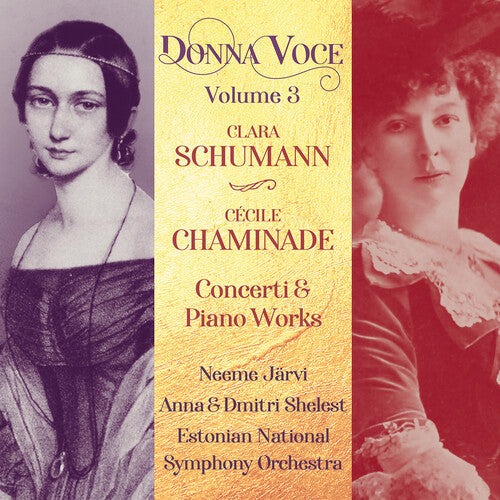
C. Schumann & Chaminade: Concerti & Piano Works - Donna Voce
Après un rêve - Belle epoque: Nights at the Piano / Emmanuel Despax
“Après un rêve” is an ode to the French Belle Époque repertoire, depicting the beauty of dreams and the night. The album is an opportunity to hear and perhaps discover rarely played / rarely recorded wonderful works (Chaminade Nocturne, Duparc Aux étoiles, Poulenc Les soirées de Nazelles), alongside central pillars of the repertoire, and includes a world premiere of Despax’s arrangement of Après un rêve. The album is attributed to his grandfather, Jacques Charpentreau, a French poet who adored this repertoire and frequently drew inspiration from the night in his works. Despax has curated some of his poetry, as well as works by other poets he admired to complement this music, taking the listener on an immersive poetic and musical journey through this noctur- nal landscape.
REVIEW:
Despax has recorded Bach, Brahms, Chopin, but the works here particularly suit his sensibility. In Maurice Ravel’s haunting masterpiece Gaspard de la Nuit, he masters the ferocious challenges with ease, delicacy, strength.
-- The Guardian (UK)
Chaminade: Piano Music, Vol. 2 - Concert Etudes & More / Viner
Cécile Chaminade (1857-1944) was a highly successful female pianist and composer. As a pianist she toured the European countries, in 1892 making her debut in England, making acquaintance with one of her biggest fans, Queen Victoria. In 1908 she made her American debut, gaining instant and immense popularity. The reason for Chaminade’s popularity is the charm, tunefulness and general accessibility of her music. It touches a ready chord with every music lover, and the fancy titles and not overly virtuosic piano writing made that her works became drawing room favorites of the epoch.
For his second Chaminade album British pianist Mark Viner chose the Six Concert Studies, substantial and demanding works, Six Pièces humoristiques Op. 87, and some engaging and attractive character pieces: L’Ondine, Danse Créole and the favorite Lolita, Caprice Espagnol, all played with Viner’s unerring feeling for the witty and charming style, pouring out sentiment without being sentimental. Gramophone wrote about Viner’s first Chaminade album: “This new survey must count among the finest yet, showing the range and ambition of Chaminade in short works, played with an innate charm and understanding of the genre. In addition, it is most beautifully recorded. Mark Viner is recognized as one of the foremost British pianists, a strong advocate of lesser-known romantic piano music. One of his most ambitious and successful enterprises is the recording of the complete piano music by Charles-Valentin Alkan, now at volume 5, several of which issues received the highest praise in the press (5 star review, Gramophone Editor’s Choice).
REVIEW:
Cécile Chaminade’s well crafted, idiomatic, communicative, and utterly charming solo piano works are more and more finding their way to disc. I’m not certain if Mark Viner’s second Piano Classics release devoted to this composer signifies a complete cycle in the works, yet his robust virtuosity and overall dynamism vibrantly elevate this repertoire from the salon to the stage.
L’Ondine’s pearly runs, for example, tellingly contrast to the full-bodied chordal climaxes, while Viner makes more of Au pays dévasté’s brooding countenance than others. He brings a probing deliberation and almost tragic spin to the familiar Autrefois from the 6 Pièces humoristiques Op. 87 in a reading that radically differs from Joanne Polk’s fleeting, cameo-like treatment. Viner’s quickly flickering left-hand arpeggios in Guitare lilt in a manner that evokes Chaminade’s piano roll interpretation. If Polk’s Etude romantique Op. 132 is crisper and more incisively articulated than Viner’s, his Etude symphonique Op. 28 conveys greater textural depth, while the Etude scholastique Op. 139’s tarantella-like figurations effortlessly click their heels. Viner’s detailed and insightful annotations flesh out this most welcome release.
-- ClassicsToday.com (Jed Distler)
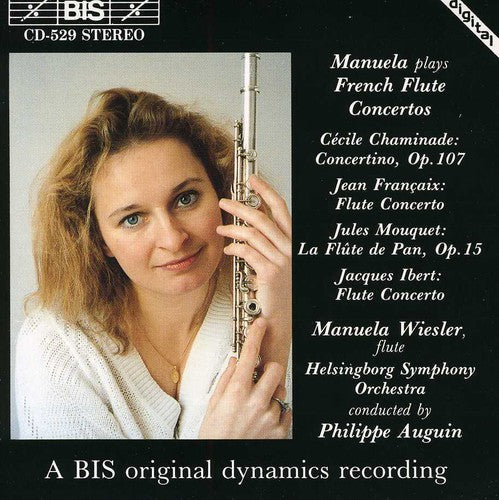
Manuela Wiesler Plays French Flute Concertos
Ombres: Women Composers of La Belle Époque / Grimaldi, Bushakevitz
Devised by Laetitia Grimaldi and Ammiel Bushakevitz, Ombres brings together songs by nine women composers whose lives span the years 1821–1964. Many of the songs were written during the so-called Belle Époque, at a time when women might be accepted as performers – especially in domestic settings – but struggled to be recognised as composers. And even in the cases when their music was heard – for instance in the fashionable salons of Paris – or published, it soon fell into oblivion. Several of the songs included here were discovered by Grimaldi and Bushakevitz in libraries and archives, having gone out of print long ago. With Ombres, the performers liberate the nine composers from their shadowy existence, and demonstrate the wide range of their music, from Cécile Chaminade’s bustling Villanelle to Pauline Viardot’s nocturnal Les étoiles or the ghostly Les lavandières by Augusta Holmès, about the Midnight Washerwomen from Celtic mythology.
REVIEW:
What is beyond question is that some of the songs by the two most well-known of these composers, Pauline Viardot and Cécile Chaminade, are quite wonderful. Viardot wrote some real gems. The melody of “Les ombres de minuit” (The shadows of midnight) is haunting, the atmosphere of “Les deux roses” (The two roses) truly perfumed, the refrain of “Haï luli” folk-like and unforgettable, and the unquestionable beauty of “Les étoiles” (The stars) a gift to savor.
Chaminade's three songs, all characteristically La Belle Époque, include a lovely “Villanelle” which shines best when sung in a voice filled with youth and sunlight. “L’anneau d’argent” (The silver ring) is meant to elicit smiles, and “Nice-la-belle” (Beautiful Nice) is the French equivalent of the romance of the New York skyline as viewed from the Staten Island Ferry in a black-and-white movie from the ’30s or ’40s.
Be sure to listen to de Polignac’s hauntingly beautiful, far from ordinary “Jardin du roi” (The king’s garden). There are plenty of surprise turns in her songs to engage on multiple levels. And enjoy how Holmès, the daughter of an Irish major who was educated at Versailles, set her own poetry.
-- San Francisco Classical Voice (Jason Victor Serinus)