Mark Wigglesworth's cycle of the symphonies of Dmitri Shostakovich has been evolving gradually since its beginnings in 1997. First out was No. 7, the 'Leningrad Symphony', which Classic CD Magazine described as 'a magnificent release in all respects'. Since then, Wigglesworth has offered us a Ninth, Twelfth and Fourteenth all designated 'Benchmark Recordings' by BBC Music Magazine at the time of their respective releases, a 'Babi Yar' (No. 13) described as 'probably the most convincing Thirteenth to have appeared in the West' in International Record Review, an account of the Fourth in which the conductor, according to the DSCH Journal, proved himself to be 'unquestionably outstanding'... The list could go on, with the general verdict being that the cycle has offered constantly interesting and often thought-provoking interpretations and striking performances. Wigglesworth started his traversal with the BBC National Orchestra of Wales, recording Symphonies Nos 5, 6, 7, 10 and 14 with that orchestra, and in 2005 moved across the English Channel to continue the project with the Netherlands Radio Philharmonic Orchestra. It is the Dutch ensemble that on this last instalment of the series perform the First and the Fifteenth, the alpha and omega of a symphonic production that spans almost 50 years of the composer's life and more than perhaps any other body of musical works reflects world events - the Communist revolution, World War II, Stalinist oppression - and their creator's reactions to them.
{# optional: put hover video/second image here positioned absolute; inset:0 #}
Shostakovich: Symphony no 13 "Babi Yar" / Wigglesworth
BIS
$21.99
July 01, 2006
'The majority of my symphonies are tombstones' - these words by Shostakovich are quoted by conductor Mark Wigglesworth in the liner notes to his fifth disc of Shostakovich's Symphonies on BIS. Symphony No. 13, subtitled 'Babi Yar', is a case in point. Shostakovich explicitly stated that he wanted the Symphony - and in particular it's first movement - to be a monument over the 100.000 Jews slaughtered at a ravine called Babi Yar outside of Kiev in 1941. Not just a monument, however: the Symphony was also intended as an indictment against the anti-Semitism that had been brought to its height during the Nazi era, but which also flourished in post-war Soviet Union, with the result that Babi Yar and other atrocities were kept secret by the authorities. This silence was deeply upsetting to Shostakovich, and when he read Yevgeny Yevtushenko's poem Babi Yar, he decided to set it to music. 'I cannot not write it!', he said to a friend. Shostakovich had originally only intended to set this one poem by Yevtushenko, but deciding to create a larger-scaled work he chose four more texts for what was to become a symphony in five movements. As Mark Wigglesworth writes, these poems 'reveal a huge kaleidoscope of Russian events, emotions and ideas.' In the realization of this kaleidoscope, Wigglesworth has the support of bass soloist Jan-Hendrik Rootering, the men of the Netherlands Radio Choir, and - of course - the Netherlands Radio Philharmonic Orchestra, with which the previous instalment in this series, Symphony No. 8 (BIS-SACD-1483), was recorded, to critical acclaim. The reviewer of BBC Music Magazine put it in the following way: 'Mark Wigglesworth ... stretches the playing of the Netherlands Radio Philharmonic to its very impressive limits and remains the finest Shostakovich interpreter of his generation', describing the result as 'a performance which always gives us the full measure of this traumatic masterpiece.'
{# optional: put hover video/second image here positioned absolute; inset:0 #}
BIS
Shostakovich: Symphony no 13 "Babi Yar" / Wigglesworth
'The majority of my symphonies are tombstones' - these words by Shostakovich are quoted by conductor Mark Wigglesworth in the liner notes...
Shostakovich: Symphony No 14 / Wigglesworth, Rodgers, Et Al
BIS
$21.99
June 01, 2001
This is one red-hot Shostakovich Fourteenth. Mark Wigglesworth holds nothing in reserve as he leads a blazing account of the score, with the BBC Wales Orchestra providing some wonderfully gutsy string playing (the frenzied leaping in Malaguena and the brutal slashing of the Zaporozhian Cossacks' Answer), and driven, searingly precise percussion. The tubular bells evoke dread whenever they are struck, and the rude prominence given the woodblock enhances its chilling effect. Both singers skirt the edge, going all out in their portrayals. Joan Rogers projects palpable desperation in Loreley, near-hysteria in Malaguena, and resigned gloom in The Suicide. John Tomlinson sings with a miraculous combination of suavity, depravity, and grit that makes his De profundis, Zaporozhian Cossacks' Answer, and O Delvig especially enthralling. Of course, you'll still have to seek out Rostropovich's pioneering recording to feel the full lacerating impact of the work (when it was still new), and to experience the exquisite, benumbed horror embodied by Galina Vishnevskaya. But, with demonstration quality sound from BIS (watch that extremely wide dynamic range!), Wigglesworth's rendition belongs in the top rank among modern versions. --Victor Carr Jr., ClassicsToday.com
{# optional: put hover video/second image here positioned absolute; inset:0 #}
BIS
Shostakovich: Symphony No 14 / Wigglesworth, Rodgers, Et Al
This is one red-hot Shostakovich Fourteenth. Mark Wigglesworth holds nothing in reserve as he leads a blazing account of the score, with...
With this fourth volume, the Pacifica Quartet brings its survey of Shostakovich’s 15 string quartets to a close. As with the each of the earlier two-disc sets, a bonus is offered in the form of a string quartet by one of Shostakovich’s contemporaries, this time the String Quartet No. 3 by Alfred Schnittke. Previous discmates were Myaskovsky, Prokofiev, and Weinberg.
Between two hospitalizations in 1970, Shostakovich managed to complete his 13th Quartet in August of that year. Alone among the composer’s 15 quartets, this Bb-Minor work is in a single movement and exhibits a palindromic form—ABCBA. Like the 12th Quartet before it, this one, too, is based on a tone row encompassing all 12 semitones of the chromatic scale. Shostakovich’s endgame, however, is to confirm tonality rather than to deny it.
Much of the composer’s music seems to dwell in dark, brooding, baleful places—that’s nothing new—but this 13th Quartet arguably surpasses in mood and atmosphere even the spectral chill and ghoulish humor of his earlier works. It unmasks the face of death, and it’s a visage so hideous to behold that gazing upon it will freeze your eyeballs in their sockets. I can only describe the Pacifica Quartet’s reading of the score by saying it achieves a sub-zero degree of cold that can penetrate and shatter your bones. Never have I heard such a graphic representation in music of the daemon Thanatos, not by the Fitzwilliam, Emerson, St. Petersburg, Brodsky, or Alexander String Quartets. This is scary stuff.
Shostakovich’s next quartet, No. 14 in F# Minor, reverts back to a key more convenient for string players, three sharps, allowing for the use of some open strings, and being a lot easier to finger than the five flats of the previous quartet. The composer began work on the piece in 1972, but took time off for a trip to Ireland and England, where he visited his friend, Benjamin Britten, in Aldeburgh. That delayed completion of the Quartet until the following spring, after Shostakovich had returned to Moscow.
The score is dedicated to Sergei Shirinsky, the original cellist of the Beethoven Quartet, and contains a cryptogram in the third movement on “Seryozha,” a familiar or affectionate form of address for Sergei. However, the pitches—D#-E-D-E-G-A—make no sense unless transliterated into their Cyrillic equivalents. The “E,” for example, represents the Cyrillic letter “ë,” which I’m given to understand is pronounced “yo,” thereby denoting the second syllable in “Seryozha.”
Compared to the 13th Quartet, No. 14 is positively playful. Still, being by Shostakovich, the music does have its bleak and menacing moments, but also one passage in particular in the third movement, beginning at 4:49 in this performance that’s of utterly aching beauty. Unfortunately, I don’t have access to the score, but if my ears don’t deceive me, it sounds like the viola playing in double stops for a number of bars, accompanied by gentle pizzicatos in the violins. If I’m right, and it is the viola, then Masumi Per Rostad’s playing at this point is simply breathtaking; which is not to take anything away from Simin Ganatra, Sibbi Bernhardsson, and Brandon Vamos, whose playing throughout this entire series has been nothing but phenomenal.
Shostakovich’s last quartet, No. 15, is clearly a valedictory work in much the same way that Beethoven’s final quartets are. Completed in May 1974, a year and three months before his death, Shostakovich chose for this score what Stephen Harris calls “the mysterious but traditionally morbid key of Eb Minor.” “Morbid” may be one word for it, but with a key signature of six flats most string players would call it by a word or words not to be spoken in polite company. Had Shostakovich lived to write a 16th quartet, one can only wonder if he’d have upped the ante to seven flats with a score in Ab Minor or Cb Major.
In six movements, the 15th Quartet is the composer’s longest, playing for some 36 minutes in the Pacifica’s performance. Moreover, each of the six movements is in the same Eb-Minor key and in one degree or another of Adagio. As quoted by Elizabeth Wilson in Shostakovich: A Life Remembered, the composer himself gave this performance instruction: “Play the first movement so that flies drop dead in mid-air and the audience leaves the hall out of sheer boredom.”
The music obviously speaks of facing death, but it’s not macabre and malignant like the 13th Quartet; rather, it’s mostly melancholy, sorrowful, and resigned, with the occasional defiant outburst. If I singled out violist Rostad for his playing in the 14th Quartet, I have to note first violinist Simin Ganatra’s superb execution of the third-movement cadenza in the 15th Quartet.
Shostakovich’s string quartets have been extremely fortunate from the very beginning to have received quite a few outstanding recordings. A number of them are cited above, but there are earlier ones by the Beethoven and Borodin Quartets that have historical significance, as well as more recent ones by the Sorrel and Mandelring Quartets (the last two of which I’ve not heard). But of those I have heard—and that would include all the others named in this review—I believe I’m prepared to say that this cycle by the Pacifica Quartet is the top contender. Whether you already have one or more Shostakovich quartet cycles in your collection, or you have none, the Pacifica’s is a must-have for anyone of the conviction that these are the most profound musical utterances in the realm of the string quartet since Beethoven.
Disc two closes with a performance of Alfred Schnittke’s String Quartet No. 3, composed in 1983. Seth Brodsky, assistant professor of music and the humanities at the University of Chicago (no connection to the Brodsky Quartet), notes Schnittke’s “anti-classical” or “polystylistic” approach, which “depends on shattering classical norms of balance, purity, and wholeness for a multiplicity of styles.” “Schnittke’s Third Quartet,” Brodsky continues, “shatters all three within its first minute. We hear only broken pieces from other times and other works—first from Orlando de Lassus’s Stabat Mater (later 1500s), then from Beethoven‘s Grosse Fuge (1825), and finally from Shostakovich‘s famous ‘musical signature,’ ‘D-S-C-H,’ first used in his Fifth String Quartet of 1952. Schnittke takes these three musical modules, from disparate traditions traversing half a millennium, and puts them directly after one another, only to have the whole thread snap and fall to the ground.”
As works by Schnittke go—at least among those I can claim to have heard—this Third Quartet is fairly accessible, an impression borne out by its relative popularity. Not counting the present version by the Pacifica Quartet, the work has received six recordings, one of which, with the Borodin Quartet on a Virgin Classics CD, to my surprise, I found on the shelf and dusted off for comparison. Once again, for playing of arresting graphic detail, the Pacifica wins hands-down.
This is a Shostakovich cycle for the ages.
FANFARE: Jerry Dubins
{# optional: put hover video/second image here positioned absolute; inset:0 #}
Cedille
The Soviet Experience Vol 4 - String Quartets by Shostakovich & His Contemporaries
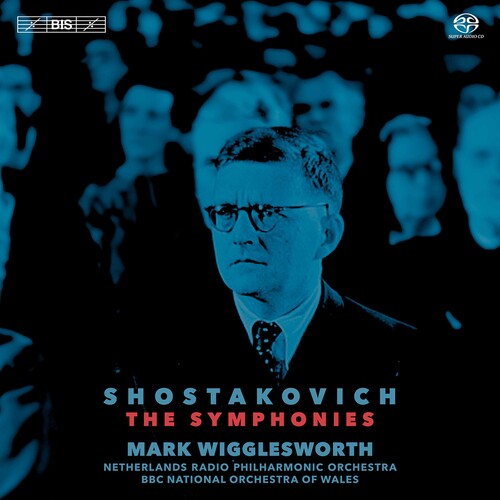
Mark Wigglesworth recorded his cycle of Shostakovich’s symphonies between 1996 and 2010, collaborating with two different orchestras, the Netherlands Radio Philharmonic Orchestra and BBC National Orchestra of Wales. In spite of the long gestation and the change of orchestra midway, the cycle was described as one never ‘compromising its particular characteristics of high seriousness, fine detailing and a certain fierceness of articulation’ (Gramophone). Already the first instalment – Symphony No. 7, ‘Leningrad’ – raised expectations, for instance with the reviewer in The Sunday Telegraph: ‘There is plenty of competition among Shostakovich cycles, but this one will deserve serious consideration.’ And 17 years later, on the release of the final album, The Guardian could report that ‘Wigglesworth's cycle emerges as one of the finest of recent time’. What particularly impressed reviewers was Mark Wigglesworth’s faithfulness to the score and sharp ear for detail, and the structural clarity he achieved even with the most complex works – without sacrificing any of their impact and emotional power.
Excerpts from reviews ofpreviously released volumes included in this set:
Shostakovich: Symphony No. 13, "Babi Yar"
This is outstanding in every way. You only have to hear the violins’ slashing accents at figure 4 in the first movement, where the soloist sings “and fine ladies with their lacey frills shriek and poke their parasols in my face,” to know that Wigglesworth & Co. are fully attuned to the music’s expressive world. The menacing second subject, with its description of a pogrom, erupts with an impressive sense of menace, while the big climaxes in the first, third, and fourth movements are as powerful and intense as anyone could ask. Bass soloist Jan-Hendrik Rootering has the range for the part and an evenness of tone unmatched by most Russian singers, while the men of the Netherlands Radio Chorus sing as though their lives depended on it, with a genuine understanding of the words.
– ClassicsToday.com (10/10; David Hurw1tz)
Shostakovich: Symphony No. 11
Shostakovich’s Eleventh Symphony has fared well on disc, even on SACD. It doesn’t ask for much more than great playing and sound, and an interpretation that keeps the music flowing and lets the climaxes achieve the necessary intensity. Mark Wigglesworth certainly delivers in this respect. If you’ve been collecting this series, which has developed handsomely over the years, you can purchase this release with complete confidence.
– ClassicsToday.com (David Hurwitz)
Shostakovich: Symphonies Nos. 1 & 15
The performance of the First Symphony gets better as it goes. The first movement, crisp and clear though it undoubtedly is, lacks that element of exaggerated humor that it ideally needs—it’s a function perhaps of less than characterful woodwind solos combined with a slightly low-level recording. The scherzo, swift and pointed, also could do with more devilry, but the Lento movement and finale remain impressive on re-hearing.
The Fifteenth Symphony features an interesting interpretation, deliberate and deadly serious even in the lighter moments, rather like Sanderling’s for those of you who know it. The performance makes an imposing conclusion to a cycle that, quietly and without much fanfare, ranks among the best.
– ClassicsToday.com (David Hurwitz)
{# optional: put hover video/second image here positioned absolute; inset:0 #}
On Sale
BIS
Shostakovich: The Symphonies / Mark Wigglesworth
Mark Wigglesworth recorded his cycle of Shostakovich’s symphonies between 1996 and 2010, collaborating with two different orchestras, the Netherlands Radio Philharmonic Orchestra...


 {# optional: put hover video/second image here positioned absolute; inset:0 #}
 {# optional: put hover video/second image here positioned absolute; inset:0 #}
Naxos
{# optional: put hover video/second image here positioned absolute; inset:0 #}
Naxos {# optional: put hover video/second image here positioned absolute; inset:0 #}
Naxos
{# optional: put hover video/second image here positioned absolute; inset:0 #}
Naxos {# optional: put hover video/second image here positioned absolute; inset:0 #}
 {# optional: put hover video/second image here positioned absolute; inset:0 #}
BIS
{# optional: put hover video/second image here positioned absolute; inset:0 #}
BIS {# optional: put hover video/second image here positioned absolute; inset:0 #}
 {# optional: put hover video/second image here positioned absolute; inset:0 #}
BIS
{# optional: put hover video/second image here positioned absolute; inset:0 #}
BIS {# optional: put hover video/second image here positioned absolute; inset:0 #}
 {# optional: put hover video/second image here positioned absolute; inset:0 #}
 {# optional: put hover video/second image here positioned absolute; inset:0 #}
BIS
{# optional: put hover video/second image here positioned absolute; inset:0 #}
BIS {# optional: put hover video/second image here positioned absolute; inset:0 #}
 {# optional: put hover video/second image here positioned absolute; inset:0 #}
Cedille
{# optional: put hover video/second image here positioned absolute; inset:0 #}
Cedille {# optional: put hover video/second image here positioned absolute; inset:0 #}
Swedish Society
{# optional: put hover video/second image here positioned absolute; inset:0 #}
Swedish Society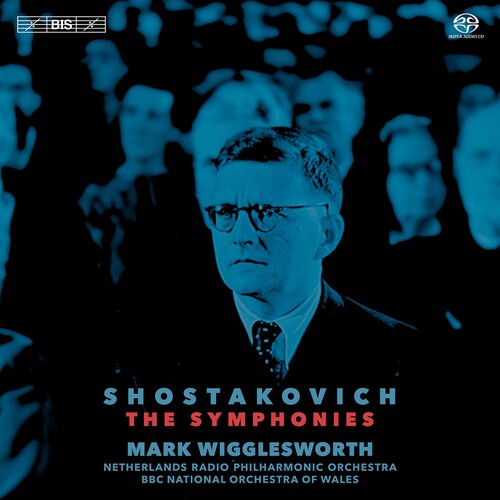 {# optional: put hover video/second image here positioned absolute; inset:0 #}
On SaleBIS
{# optional: put hover video/second image here positioned absolute; inset:0 #}
On SaleBIS {# optional: put hover video/second image here positioned absolute; inset:0 #}


 {# optional: put hover video/second image here positioned absolute; inset:0 #}

 {# optional: put hover video/second image here positioned absolute; inset:0 #}

 {# optional: put hover video/second image here positioned absolute; inset:0 #}

 {# optional: put hover video/second image here positioned absolute; inset:0 #}

 {# optional: put hover video/second image here positioned absolute; inset:0 #}

 {# optional: put hover video/second image here positioned absolute; inset:0 #}

 {# optional: put hover video/second image here positioned absolute; inset:0 #}

 {# optional: put hover video/second image here positioned absolute; inset:0 #}

 {# optional: put hover video/second image here positioned absolute; inset:0 #}

 {# optional: put hover video/second image here positioned absolute; inset:0 #}

 {# optional: put hover video/second image here positioned absolute; inset:0 #}

 {# optional: put hover video/second image here positioned absolute; inset:0 #}


 {# optional: put hover video/second image here positioned absolute; inset:0 #}


 {# optional: put hover video/second image here positioned absolute; inset:0 #}


 {# optional: put hover video/second image here positioned absolute; inset:0 #}