Shostakovich: Execution Of Stepan Razin / Schwarz, Et Al
Naxos
$19.99
March 21, 2006
The Execution of Stepan Razin is a sort of sequel to the 13th Symphony, in that it sets a poem by Yevtushenko and even shares some thematic elements. It really is a magnificent work, and at half an hour, a major statement. Shostakovich put all of his considerable skill as a composer of film music into making the accompaniments as colorful as possible, while the choral writing and passages for bass solo are thrilling. Why it's not better known remains a mystery: it deserves to be as popular as Prokofiev's Alexander Nevsky or Rachmaninov's The Bells.
This is a very exciting performance, with fine work from the chorus and a terrific orchestral contribution making for climaxes of terrifying impact. Bass soloist Charles Robert Austin lacks the last degree of Russian depth to his tone, and he has a tendency to shout in order to compensate for the lack of weight, but he gets through the part with his honor intact. If you don't know this spectacular piece, here at last is an easy and inexpensive way to hear it.
I enjoyed the couplings too, though they are not significant Shostakovich. October is a typical piece of Socialist Realism close in tone to the 12th Symphony, but it's very exciting and effectively written, and only the obligatory triumphant ending, which Shostakovich makes no attempt to reconcile with the tone of the rest of the piece, lets it down a bit. Once again, the performance has the necessary grit and drive.
The Four Fragments bear a slight relationship to the music of the Fourth Symphony (the goofy waltz in the finale, especially), but are so, well, fragmentary that I wonder why they are played at all. In last analysis, they remain a curiosity and little more, but I can't argue with including them to round out a program nicely organized as "sequels and prequels" to various symphonies. Very fine sound, with a big, rich bass response that suits the music well, seals the deal. Essential for Shostakovich fans. [3/22/2006] --David Hurwitz, ClassicsToday.com
{# optional: put hover video/second image here positioned absolute; inset:0 #}
Naxos
Shostakovich: Execution Of Stepan Razin / Schwarz, Et Al
The Execution of Stepan Razin is a sort of sequel to the 13th Symphony, in that it sets a poem by Yevtushenko...
Shostakovich: Complete Songs Vol 1 / Buryukova, Serov, Et Al
Delos
$18.99
January 01, 2002
Of all the genres of Russian music, song seems the slowest to take hold in the West. And of all the major Russian composers, Shostakovich's output is surely the most underestimated. This first volume in Delos's survey of his complete songs, dedicated to the works of the 1950s, is full of riches and Contains several first recordings. The four Russian soloists make the most of these often beguiling settings - and the project's guiding spirit, Yury Serov, is a strong accompanist.
-- Gramophone [Awards Issue, 2002]
{# optional: put hover video/second image here positioned absolute; inset:0 #}
Delos
Shostakovich: Complete Songs Vol 1 / Buryukova, Serov, Et Al
Of all the genres of Russian music, song seems the slowest to take hold in the West. And of all the major...
Shostakovich: Complete Music for Piano Duo and Duet, Vol. 2 / Kim, Moon
Toccata
$20.99
November 11, 2016
Much of Shostakovich’s orchestral music was first heard in versions he prepared for piano four hands or two pianos – but most of these transcriptions have languished unheard since those early performances, usually given for friends and colleagues or for Party officials. This series, which uncovers all the transcriptions prepared by Shostakovich himself, continues with the first recordings of his two-piano versions of the Second Piano Concerto and the Fifteenth Symphony. This release continues the collaboration between Toccata Classics and the graduates of Joseph Banowetz's piano studio at the University of North Texas. Min Kyung Kim, born in Seoul, moved to the United States in 2008, earning her master's degree in 2011. She is currently a student researcher at the Texas Center for Performing Arts. Hyung Jin Moon is an active performer in South Korea and the United States. As a music educator, he has served as staff pianist at Lansing Music School in Michigan and currently is an adjunct faculty member at the Korea National University of Transport.
{# optional: put hover video/second image here positioned absolute; inset:0 #}
Toccata
Shostakovich: Complete Music for Piano Duo and Duet, Vol. 2 / Kim, Moon
Much of Shostakovich’s orchestral music was first heard in versions he prepared for piano four hands or two pianos – but most...
Shostakovich: Complete Music For Piano Duo And Duet, Vol. 1
Toccata
$20.99
October 11, 2011
Terrific stuff.
Shostakovich’s work for piano duet and duo may be of lower profile than his symphonies, string quartets and solo piano repertoire, but still contains some of his finest music. Recordings have emerged from the Northern Flowers label and elsewhere, but this Toccata Classics set seeks to go a considerable step further. Shostakovich’s routine habit for his orchestral works was to make a transcription for piano four hands, so that the music could be ‘tried out’, not only for his own use, but so that Communist Party officials could hear for themselves and decide if a new work was suited to the ideals of the party and therefore appropriate for public performance. This version of the Symphony No.9 was therefore almost certainly written alongside the orchestral score. The work was famously supposed to be a massive celebration of victory over the Nazis in 1945, but turned out to have an entirely different character. The piano duet version of this piece is a highlight of this disc as you might expect, and with an excellent performance and recording the work takes on an entirely new life in this setting. In short, it ‘works’ as a piano piece, with only a few passages during the slower movements and the extended build-up towards the end of the final movement where the sustaining quality and colourful impact of orchestral instruments are missed to a certain extent. Right from the moment where Vicky Yannoula and Jakob Fichert hammer out the accompaniment and bring out that witty theme at 0:48 into the first movement we know we’re in for a treat. Much of the music has been described as ‘Haydnesque’ or indeed light and bouncy in nature, at times bringing the nervy rhythms of Prokofiev to mind, and this is something which makes it sound as if written for the piano. The clarity of the bass lines, the variety of ‘oom-pah’ rhythms driving on terrifically and the exposed nature of the harmonies all work in excellent fashion, and the whole thing is a discovery and a feast for Shostakovich fans.
Lighter works and arrangements are of course part of the Shostakovich piano canon, and the waltz and polka numbers here are ‘pop’ pieces which entertain but needn’t delay us too long. Malcolm MacDonald’s booklet notes go into the origins of these pieces in some detail. That Polka from the Ballet Suite No. 2 is perhaps the most familiar, and as a litmus test shows how much fun the Yannoula and Fichert duo can make of these minor works. ‘The Chase’ from the film score to Korzikana’s Adventures is a magnificently daft romp.
For the works with two pianos we get a still very good but slightly different recorded perspective, and there are one or two minor tuning issues – a twangy effect in one of the upper notes with the piano already used for the duet pieces, and between the two instruments on occasion. Have a listen at 1:47 on the opening movement of the Suite and you’ll hopefully hear what I mean. These are actually quite minor issues, but can’t be left unmentioned. The Suite Op.6 is Shostakovich’s earliest surviving two-piano work, and pregnant with the emotions surrounding the sudden death of Dmitri’s father in February 1922. The chiming bells and romantic overtones are very nicely played here, placed effectively in Shostakovich’s early idiom, performed with warm sonority and without too much stretching of the phrases in the beautiful Nocturne, and conveying all of the rhythmic verve of the swifter movements.
The Concertino is a later work, written for Shostakovich’s son Maxim and having some of the character of his second Piano Concerto which was to come a few years later. This work has if anything the most orchestral character of all the pieces here, and the duo builds up huge volumes of sound in a highly effective performance.
With some fascinating piano duet versions of Shostakovich’s symphonies to look forward to this promises to be a series to collect. None of the performances here disappoint, the recording standard is high, and Vicky Yannoula and Jakob Fichert have the measure and spirit of all of this music very much at their fingertips.
-- Dominy Clements, MusicWeb International
{# optional: put hover video/second image here positioned absolute; inset:0 #}
Toccata
Shostakovich: Complete Music For Piano Duo And Duet, Vol. 1
Terrific stuff. Shostakovich’s work for piano duet and duo may be of lower profile than his symphonies, string quartets and solo piano...
Raphael Wallfisch recorded the First Cello Concerto for Chandos, one of the very first CD releases on that label, coupled with the Barber Concerto. It was a good performance, but it pales in comparison with his remake here. This set offers what is, hands down, the finest pairing of the two Shostakovich Cello Concertos since Heinrich Schiff and the composer's son--with all due respect to Rostropovich--set the modern standard in this music (on Philips). The First Concerto comes across with positively frightening intensity, a product not just of Wallfisch's strong projection of the solo, but also owing much to the take-no-prisoners accompaniments of Martyn Brabbins and the BBC Symphony. Just listen to the interplay between Wallfisch and the sneering, threatening woodwind section--it's what this music is all about.
At the opening of the second movement, Wallfisch adopts a dusky, gamba-like sonority: think of Dowland's Lachrymae. The instrument truly seems to weep through the music, while the finale acquires an extra degree of bitter edge by being played very rhythmically, but not too quickly. Wallfisch really comes into his own in the cadenza, holding the entire movement together through perfect timing and a wide range of tone colors and dynamics. It's a great performance, as is that of the comparatively neglected Second Concerto.
Again we find soloist, conductor, and orchestra keenly attuned to the music's overt emotionalism. In the first movement, Wallfisch and Brabbins subtly characterize both the first and second subjects, preventing any hint of monotonous sameness in the exposition section. The development rises to a splendidly impassioned climax, followed by a ghostly coda that never drags.
In the central scherzo, once again a comparatively deliberate tempo combines with punchy rhythms to the music's expressive advantage, while the lengthy half-sweet, half-grotesque variation-finale never has been so colorfully projected. This is such a beautiful work; only the fact that it ends quietly and mysteriously conspires to keep it in the shadow of the First Concerto. In some ways it's even more melodically appealing, and this is a performance that captures its wide-ranging expression as well or better than any other.
The inclusion of the Cello Sonata and the cello arrangement of the late Viola Sonata, along with two miscellaneous short pieces, completes a package offering all of Shostakovich's music featuring solo cello. In the chamber works, John York is the sensitive piano accompanist, and both he and Wallfisch offer excellent interpretations of both large works. The finale of the Viola/Cello Sonata is particularly well held-together, with the youthful freshness of the earlier "true" Cello Sonata enthusiastically captured.
The engineering in the concertos is absolutely outstanding: balances between cello and orchestra are perfectly judged, but the microphones still capture a tremendous amount of ear-catching detail. Obviously a great deal of credit for this has to go to Brabbins and the orchestra, who offer none of that generic, lazy professionalism so common today. These performances display an idiomatic style of a kind that you seldom find even inside Russia today (witness Pletnev's often bland Russian National Orchestra, or Gergiev's mediocre Kirov band). The result is an absolutely irresistible set that no fan of Shostakovich will want to miss.
--David Hurwitz, ClassicsToday.com
{# optional: put hover video/second image here positioned absolute; inset:0 #}
Nimbus
Shostakovich: Complete Cello Works / Wallfisch
Raphael Wallfisch recorded the First Cello Concerto for Chandos, one of the very first CD releases on that label, coupled with the...
So many cello concerti, so little time. With dozens of competing versions of these two interpretively rich, emotionally ripe scores—the majority of them first-class accounts that come critically recommended, if with some reservations—it’s cost- and time-prohibitive to be familiar with them all. Mørk? Maslennikov? Müller-Schott? What’s a conscientious reviewer to do? Well, yours truly is tempted to fall back on the tried-and-true, which, after all, is tried and true for good reason. That means Mstislav Rostropovich. Of his several recordings, I opt for the mid-’60s performances powerfully conducted by David Oistrakh, not easy to find but most recently sighted on the Yedang Classics label. The sound is a little rough, but no one matches Rostropovich’s passion and profundity in this music.
Nevertheless, that said, there’s always room for a convincing alternative approach, and Enrico Dindo’s is some distance from that of Rostropovich. Though he’s apparently recorded programs of Beethoven and Bach, only a 1998 release of the Brahms cello sonatas is currently listed in the Fanfare Archive. Michael Jameson called it “satisfying” (Fanfare 21: 6), and tellingly described Dindo’s point of view as one of “letting the music (rather than any gesture intended to propel a subjective vision of the text) speak for itself.” I find that to be an accurate characterization of his approach to Shostakovich as well. Dindo’s tone is silky and sinewy, and he definitely has the chops to respond to everything Shostakovich asks for—from the buoyant rhythms of the First Concerto to the sustained introspection of the Second. He favors fast, clean lines in the First Concerto, which emphasize its satiric edge in ways reminiscent of the composer’s earlier, youthful impulsiveness (despite the fact that it was written in his 53rd year), though neither slighting, nor exaggerating, the second movement’s elegiac lyricism. In the darker Second Concerto, he adopts an appropriately serious demeanor, providing a consistent, fluid line that lacks Rostropovich’s bite, but allows the music to sing its own eloquent, if dolorous, song. In this his resembles Heinrich Schiff’s attentive, persuasive 1984 performance (Philips), although Schiff benefited from Maxim Shostakovich’s strong, emphatically pointed accompaniment, whereby Gianandrea Noseda, following Dindo’s lead, particularly in the Second Concerto provides ever-so-slightly less dramatic, albeit scrupulously detailed, support.
I suspect these are performances that will retain their interest over time. Add Enrico Dindo’s name to the list of recommended cellists in this significant repertoire.
FANFARE: Art Lange
---------
These two concertos form a pairing which is logical and convenient but by no means ubiquitous. The Cello Concerto No. 1 is the more widely recorded of the two, with impressive accounts from the likes of Han-Na Chang, and the more enduring dedicatee’s version, Mstislav Rostropovich with Eugene Ormandy in 1959 and now available on Sony Classical. One of the best discs of these two works is with Rafa? Kwiatkowski on the Dux label. Aside from Peter Wispelwey’s recording of the Cello Concerto No. 2 along with Britten’s Third Suite on Challenge Classics, there doesn’t seem to be much choice in this repertoire when it comes to SACD recordings, so this Chandos release enters the market with a useful USP.
Enrico Dindo won the Rostropovich Cello Competition in 1997 and has been performing widely since, also making recordings which have included Bach’s Suites and Vivaldi Concertos on Italian Decca. His playing here is remarkably rich, obtaining deep and richly expressive tones from a Rogeri instrument from 1717. The cello sound is forward, bordering on the surrealist as with so many concerto recordings these days, but not intolerably massive in relation to the orchestra. In fact this is one of the genuine strengths of this recording, with masses of colour and detail from a very powerful sounding Danish National Symphony Orchestra. The opening of the Cello Concerto No. 1 throws down the gauntlet in this regard, the double-bassoon sounding like you’ve never heard it in any other recording; dug into with such gusto that you’d expect the floor to shake and the keys to be shaken off by the vibrations. The excitement in the playing is in its shaping and development, building stirring structures rather than hitting us constantly with masses of relentless intensity. The horn-calls are also marvellous in this first Allegretto, woodwinds competing with the soloist through grating dissonance and dramatic release. Perhaps the strings could have had more presence to make the whole thing a tad more credible. They should come into their own in that most gorgeous and moving of Shostakovich statements, the central Moderato. Even here though, the first horn entry far outweighs the texture of the entire body of strings. Behind the soloist they do seem to be rather at a disadvantage in the balance. Just taking one comparison, that with Thorleif Thedéen and James DePreist on the BIS label, the balance brings the strings that much more into the picture. This allows a more equal interaction which can carry greater emotional heft. Thedéen is a little more heart-on-sleeve than Dindo, with a tighter vibrato and a more vocal way of expressing the melodic lines. I wouldn’t swap this BIS disc for the Chandos one now, but still find it has a good deal to offer.
Whether or not you find the recorded balance a problem, Enrico Dindo’s solo lines carry so much emotional strength that you will find yourself gripped from beginning to end. One of my old favourites for these pieces is from Truls Mørk with the London Philharmonic and Mariss Jansons on the Virgin Classics label. Certain aspects of Noseda’s approach do remind me of the Jansons recording, but I have to admit that Dindo gets as much and more out of the music than almost any rival I can name. Like the texture in the inky lines of a Ralph Steadman drawing, Dindo delights in thickening and thinning sustained notes so that we are constantly in a state of awe and expectation, even when Shostakovich is in passages of transition. Listen in the Moderato to the general sonic picture at about 7:00 and on though: the intensity of the upper strings in the orchestra is almost entirely absent, which undermines at least some of that good work. Dindo’s expressive playing gives the impression of space, but Noseda’s tempi are generally a tad more brisk and compact than many. Jansons takes 12:32 with this Moderato for instance, compared to Noseda’s 10:50.
The rough peasant feel in the final movement of this first concerto is something to relish; the aural glue not quite holding together as the winds advance in the balance and give us a kick from time to time. It has an undeniable grip and snatch flowing from Noseda’s treatment, an uncompromising approach which drags us along mercilessly and never lets go.
Shostakovich’s Cello Concerto No. 2 is dark from the outset, the mood superbly set through the solo cello and lower strings in the opening bars. The imagination is teased by fragmentary moments of brooding beauty, such as the repeated double-stop gesture at around 4 minutes in. This is a bleak landscape and the kind of inner journey which can lead you to places both moving and disturbing. Dindo speaks emotively, the sighing downward gestures weighed with tears, the parlando moments confiding and gruff by turns. Shostakovich’s score in the first movement is as hard as nails, and the players nail it firmly. The bass drum thwacks from around 9:20 are an audiophile treat as well.
The acoustic space is emphasised in the open textures of the opening to the central Allegretto, and the sense of volume in the 5.0 SACD surround mix is very tactile indeed. Listen to the laughing winds from about 2:30: the playing is not only needle sharp, but is also filled with personality and character throughout. The theatricality of the opening to the final Allegretto has rarely been so sharply observed, and you expect an announcement from a melodramatic actor as much as you do the entry of the cello. Those ‘nice’ tunes as they arrive are all the more earth-shatteringly emotive for these extremes of contrast. Little operatic touches and that late-Shostakovich sense of a fatefully ticking time-bomb make the whole thing as touching and filled with narrative import as I can ever remember hearing.
Chandos easily replaces its earlier release of this repertoire with Frans Helmerson and the Russian State Symphony Orchestra on CHAN 10040. This has some lovely playing and a decent concert hall balance, but with somewhat rough-and-ready qualities from the orchestra in some of the more technically demanding passages. Fans of these two concertos simply must have this recording from Dindo/Noseda. The cover photo of Red Square is strikingly atmospheric, and there are good booklet notes and pictures inside as well. Despite my reservations about the string balance which admittedly affects the scoring of the first concerto more than the second, this is a must-have and a life-changer for Shostakovich fans.
-- Dominy Clements, MusicWeb International
{# optional: put hover video/second image here positioned absolute; inset:0 #}
This album contains works by Russian composer Dmitri Shostakovich , transcribed by Rudolf Barshai. Barshai’s professional relationship with Shostakovich lasted until the composer’s passing in 1975. His transcriptions of Shostakovich’s works were ambitious, and served as a catalyst for many future re-workings from string ensemble to full orchestra. This album was recorded at the Concert Hall of the National Radio of Ukraine, Kiev, in October of 2014, the Kiev Soloists with Dmitry Yablonsky performing.
{# optional: put hover video/second image here positioned absolute; inset:0 #}
This album contains works by Russian composer Dmitri Shostakovich , transcribed by Rudolf Barshai. Barshai’s professional relationship with Shostakovich lasted until the...
Shostakovich: 24 Preludes And Fugues Op 87 / Scherbakov
Naxos
$29.99
February 01, 2001
Konstantin Scherbakov's 24 Shostakovich Preludes and Fugues leapfrog to the head of a small yet distinguished class on disc, whose valedictorians include Tatiana Nikolaeva and Vladimir Ashkenazy. Time and again I am struck by expressive and textural novelties that inevitably result from Scherbakov's fastidious adherence to Shostakovich's markings. The pianist connects the A minor Prelude's scurrying 16th-notes with a seamless legato that still manages to allow each one to speak softly. He treats the D major Prelude's right-hand arpeggiated chords in a slightly detached manner in order to offset the left hand's cello-like legato line. In the F-sharp minor Fugue Scherbakov takes special care to differentiate the levels of soft dynamics. He maintains Fugue No. 15's marcatissimo directive with unyielding vehemence, while effortlessly clarifying the difficult-to-disentangle voices.
Those familiar with Nikolaeva's freer treatment of the 16th fugue's elaborate subject will be surprised at the profile and contrast it acquires when played in strict time, as Scherbakov does. As a result, the uneven duplets truly stand out from the even ones. On the other hand, the 14th Prelude's tremolos sometimes threaten to cover the melodic material. Here both Nikolaeva and the composer relegate these tremolos to a spooky background murmur, and make more of the motto theme's tenutos. And Scherbakov sometimes plays down Shostakovich's edgy humor. Yet these quibbles are about aesthetic choices, not interpretive faults, and really don't matter in the larger context of Scherbakov's achievement. His interpretations are thought out, deeply pondered, prepared to the nth degree, and played with a perfect fusion of technique and soul. Even listeners who consider these works arid and somewhat pedantic will change their minds after hearing Scherbakov. A triumph. --Jed Distler, ClassicsToday.com
{# optional: put hover video/second image here positioned absolute; inset:0 #}
Naxos
Shostakovich: 24 Preludes And Fugues Op 87 / Scherbakov
Konstantin Scherbakov's 24 Shostakovich Preludes and Fugues leapfrog to the head of a small yet distinguished class on disc, whose valedictorians include...
Shostakovch: Execution of Stepan Razin; Zoya Suite / Ashkenazy, Helsinki Phiharmonic
Ondine
$18.99
$14.99
August 27, 2013
• With this release Ondine presents two dramatic works by Dmitri Shostakovich, The Execution of Stepan Razin and the Zoya Suite, coupled with his Suite on Finnish Themes. • The Execution of Stepan Razin, premiered in Moscow in 1964, got a mixed reception. The execution scene and the final, tragic vision is simply spine-chilling: Stepan Razin’s bloody head rolls to the ground and bursts out laughing at the Tsar. Capturing rich intonations and melodies of the text, the bass soloist and the chorus engage in a multi-layered dialogue of this very theatrical work.
{# optional: put hover video/second image here positioned absolute; inset:0 #}
On Sale
Ondine
Shostakovch: Execution of Stepan Razin; Zoya Suite / Ashkenazy, Helsinki Phiharmonic
• With this release Ondine presents two dramatic works by Dmitri Shostakovich, The Execution of Stepan Razin and the Zoya Suite, coupled...
Mstislav Rostropovich, one of the greatest 20th-century cellists, studied composition with Dmitri Shostakovich. Their mutual respect soon grew into a close friendship and in 1959 Shostakovich dedicated his Cello Concerto No. 1 to Rostropovich, thus making the cellist’s long-time wish come true. Rostropovich learned the piece within a mere four days and duly played it by heart to the astonished composer. Two days after the premiere (4 October 1959 in Leningrad), Rostropovich performed the work in Moscow to an enthusiastic audience response. Our CD contains this version, the concerto’s oldest known recording. In 1960, the celebrated cellist and the Czech Philharmonic, under Kirill Kondrashin, presented the piece at the Prague Spring festival. Back in 1959, Rostropovich and Shostakovich recorded for Moscow Radio the Sonata for Cello and Piano in D minor, written by Shostakovich when he was twenty-eight years of age. The recording is a precious example of Shostakovich’s continuing piano skills at the time when he no longer gave public performances. The fruitful collaboration between the two artists and friends culminated seven years later in Cello Concerto No. 2, which was premiered by Rostropovich in Moscow on the day of Shostakovich’s 60th birthday. A Prague audience first heard the piece about a year later. These Supraphon discs feature the CD debut of the two Prague recordings.
{# optional: put hover video/second image here positioned absolute; inset:0 #}
On Sale
Supraphon
Rostropovich Plays Shostakovich
Mstislav Rostropovich, one of the greatest 20th-century cellists, studied composition with Dmitri Shostakovich. Their mutual respect soon grew into a close friendship...
Fragments Vol 2 - Shostakovich / Alexander String Quartet
Foghorn Classics
$37.99
January 01, 2007
These fabled works dating from 1960–1975 represent some of Shostakovich’s most bitterly frank, occasionally transcendental essays for the string quartet. At times poignant yet occasionally ribald, these performances have been called utterly compelling. Unique in this stunning survey is a fine performance of his “Unfinished” quartet, the first recording of what was originally to have been Shostakovich’s 9th Quartet, discovered and published in 2003. Additionally, listeners will find two more of Zakarias Grafilo’s extraordinary transcriptions of the 1950/51 Preludes and Fugues for Piano Op. 87.
Alexander String Quartet: Zakarias Grafilo, Frederick Lifsitz: violins Paul Yarbrough: viola Sandy Wilson: cello
{# optional: put hover video/second image here positioned absolute; inset:0 #}
Foghorn Classics
Fragments Vol 2 - Shostakovich / Alexander String Quartet
These fabled works dating from 1960–1975 represent some of Shostakovich’s most bitterly frank, occasionally transcendental essays for the string quartet. At times...
Fragments Vol 1 - Shostakovich / Alexander String Quartet
Foghorn Classics
$37.99
January 01, 2006
Captured here, on three discs, is the first half of the Alexander String Quartet’s complete Shostakovich cycle. Superbly recorded at the American Academy of Arts and Letters in 2005–06, this exquisite collection contains the first seven quartets, the Piano Quintet with legendary Australian pianist Roger Woodward, and two exceptional transcriptions for string quartet by ASQ’s first violinist of a pair of the piano Preludes and Fugues from Op. 87 (1950–51). Spanning roughly the period from 1937–1960, this beautiful collection is accompanied by superb liner notes from musicologist Eric Bromberger.
Alexander String Quartet: Zakarias Grafilo, Frederick Lifsitz: violins Paul Yarbrough: viola Sandy Wilson: cello Roger Woodward: piano
R E V I E W:
"There’s an irony about writing reviews, and I am sure there are colleagues who would agree, that it is relatively easy to write a critical commentary of a performance or recording which has plenty of faults, or which is just plain beige. One can get down to work, pointing out weaknesses while balancing these against the positive aspects of a production and that of the competition, and before you know it the job is complete. Listening to these new Shostakovich recordings from the start, my immediate impression was that the playing lacked some of that intense grittiness I’m more used to hearing from my principal reference, that of the Fitzwilliam Quartet on Decca. I have spent a lot of time with the Alexander Quartet recordings however, partially thanks to a botched hernia operation which kept me off work for longer than necessary. As a result of this extra listening, I’ve come to appreciate how, as with their survey of the Beethoven Quartets, this ensemble clearly approaches the music with a view to its place in the composer’s timeline as well as purely on musical/aesthetic grounds. Both they and the Fitzwilliam Quartet allow the sunnier aspects of the music to sing through in the Quartet No.1, with those shades of angst held well in proportion. The dramatic extremes of the Quartet No.2 are, I think, more open to wider interpretation – is it dark or light, secretive or intimate? The Fitzwilliam Quartet’s view is I feel more on the dark side, bringing out the sense of mortality that the composer’s wartime experiences introduced. The Alexander Quartet introduces some more of the dancing qualities in the opening, perhaps emphasising more of the celebrations of heroism in the air at the time. Zakarias Grafilo has been the Alexander’s 1 st violin for a while now, having replaced Ge-Fang Yang in 2000. His fine, deep tone gives the second movement’s Recitative a strong character, lightening like the opening of a stained-glass window into the faux-naive Romance which follows. Their third movement Waltz for me conjures the atmosphere of a smoky, dark wood-panelled interior, with this music coming to us on the soundtrack of a black and white film – the 78 rpm player’s horn introducing an element of sculpture into the picture. The muted strings repress the ebullience of the second section, maintaining that hazy image and introducing Shostakovich’s signature neurotic turbulence of conflict and struggle. The final Adagio Theme with Variations begins with less of a symphonic scale than with the Fitzwilliam, but this more gentle opening allows the music to develop and grow, the full impact of the final bars providing a true climax.
For the Quartet No.3 I can offer a comparison with that lovely DG recording with the Hagen Quartett. The greater transparency this 2006 recording offers over the Fitzwilliam’s is punctuated with needle-sharp articulation and wide contrasts of tone and character. With equal technical panache and some subtle twists the Alexander Quartet create their own view on this seminal work. The opening is a little less jaunty than with the Hagens, more of a swaggering walk than a quasi-jolly dance. As a result, their sound in the following counterpoint is less urgent but no less characterful – it certainly avoids becoming laboured and static. Rather than go all-out with the pesante viola triad in the opening of the second movement, this becomes more of an accompaniment, allowing the flow of the upper instruments their full expression. On balance, the Alexanders for some reason sound slower almost through the entirety of this quartet, though the timings don’t always bear this out. They somehow convey the feeling of creating space around the notes even where the textures in the music would seem to make this as good as impossible. There is certainly no lack of urgency in the Allegro non troppo, and the subsequent Adagio refuses to ramble and lose shape, in this case shaving almost half a minute off the Hagen’s timing. I’m torn between these two recordings of this quartet, which has to be a good thing. I suppose a smidge more forward momentum might have given the Alexander Quartet the edge in the final Moderato, and a tad greater sense of involvement in the in-between tracts of this arguably over-long movement. I do however admire their sense of apocalyptic passion where the music demands, and their elegance of tone in the relatively high-pitched tessitura in this quartet. Come back to me in a year’s time and I’ll probably still be humming and hawing. The Hagen Quartett is lively and filled with contrast, but there are one or two moments of fast gear-change where I ‘notice’ them, not really a faltering, but having a moment of marginal discomfort where the Alexanders sail on regardless.
Quartet No.4 is muted in more ways than one, with two of its movements being played with mutes, giving the instruments that hazy, secretive feeling. The rest of the piece is also very subdued in atmosphere, though the Alexander Quartet are sensitive to the changes of internal colour in each section, including the dance-like feel of the penultimate Allegretto and ultimately protesting final movement. The final blast of a foghorn is unfortunate. Once is a novelty, more than that is disrespectful to all concerned, and I’ll leave it at that. Coming back to this piece from the Fitzwilliam Quartet, and I find their silvery tone has a more chilling effect – less warmly intimate and more intense. It’s not that the Alexanders are cosily fireside cheerful, but by degrees one does sense something more of a connection with the Russian character from the Fitzwilliam Quartet. It’s as if the Alexander players take the work as the private statement it became, hidden from the public until the death of Stalin in 1953. From the Fitzwilliam Quartet it’s Shostakovich’s view on the Russian people through the wrong end of a telescope, dancing like puppets, or, awaiting the thaw; suppressed celebrations going on merely in their minds. These are two views with equal validity – and at least the Alexander Quartet is a clear winner in terms of intonation.
Like its predecessor, the Quartet No.5 was held back from public performance until 1953, and with its dissonant complexities it’s not really hard to hear why this was the case. Eric Bromberger in his excellent booklet notes points out that this is one of the darkest in the entire cycle, and at over 30 minutes is a serious proposition for both players and audience. I won’t say the Alexander Quartet make it sound easy, but neither do they seem fazed by the extremes in the first movements. It is in this magisterial mastery of such technical obstacles that they win out over many other recordings, the tonalities remaining clear even when everyone seems to be trying to play as high as possible all at once. The jaunty character of the Quartet No.6 always comes as something of a surprise after all that almost silent intensity at the end of the fifth. Shostakovich had re-married, somewhat impulsively it has to be said, but the sunny nature of the music reflects some of the optimism he must have felt at the time. The Alexander players stroke the softer phrases with appropriate affection, but don’t hold back on some of the passages of conflict and strange passion in the opening Allegretto. The contrasting lyrical and rhythmic characters in the second movement are highly attractive, just the right amount of symbolism – if that’s what you are looking for: like two opposites which somehow attract and harmonise.
Taking a break from the quartets, and I was delighted to see some of the Op.87 Preludes and Fugues, originally for piano, and arranged here for string quartet by Zakarias Grafilo. The effect with these arrangements is quite different to that of the same music on piano, but Shostakovich’s idiom in these pieces works extremely well for strings. The Alexander Quartet balance the voicing with easy expertise, which is essential for any kind of comprehension in this kind of contrapuntal music, but I was surprised to hear a moment or two of dodgy intonation in the Prelude & Fugue in C minor. The famous Prelude & Fugue in D-flat major opens almost inevitably rather heavier with strings, but the ear soon accepts the music on its own terms, and the textures are relieved by some gorgeously witty and well-executed pizzicati. The fugue itself becomes a new Shostakovich animal in its own right, with even more of the neuroses than you have with the piano version. The darkness of the Quartet No.13 is lightened in the final disc of this set, as it concludes with the sprightly Op.87 No.17. The parallel movements in the prelude create some interesting sonorities, and the fugue comes across with an almost naive sense of simplicity. Op.87 No.1 could possibly have used a little more space in the famous opening C major prelude – the strings could have sustained those chords so nicely, but at least they prevent the music turning into a church chorale. The fugue is one of Shostakovich’s most noble statements, and works well with strings. As ever with such transparent music, it is the intonation which proves more problematic than one might expect, and this fugue is full of niggly augmented and diminished intervals which do create some minor problems. My hat goes off to Zakarias Grafilo for his excellent arrangements however, and these pieces certainly make for equally, if no more effective string quartet music than some of those Bach Fugues.
Another substantial extra is the Piano Quintet in G minor Op.57. Joined by the powerful piano playing of Roger Woodward, the quartet seems to shrink in size a little, and I would personally have had a little less presence in the piano sound. It’s partly sheer balance, but also that the piano is a fraction too far forward, which meant I felt a bit bludgeoned when those repeated high notes come in. The performance is very good however. I compared it with one of my favourites, that with the Nash Ensemble on Virgin Classics, and in terms of tempi and timings there is little to choose. Ian Brown’s piano is equally powerful here, but as a listener one feels at a marginally more respectful and realistic distance. The Nash Ensemble strings are a little more nasal, the Alexander ‘sound’ richer and warmer in general. As with the differences in character with the Fitzwilliam Quartet, this gives the Nash Ensemble an impression of greater intensity. Taken in isolation the Alexander performance is fine, with its own forceful sense of communication. It doesn’t however quite take your soul to the same pain barrier as some performances. I was interested to see that the 1950 recording made by Shostakovich himself with the Borodin Quartet differs from these interpretations, with significantly longer Fugue and Intermezzo movements, adding around two minutes to each. The sustained emotion created in these movements does take you to different worlds, especially in the Fugue. It is intriguing to make such comparisons and as a historical document this recording is priceless, but I have to admit the transfer on my 1991 Vogue CD is pretty atrocious in parts.
Returning to the quartets, and we’re up to No.7. Remarkably compact at around 13 minutes, the striking pizzicato feature in the first movement is taken toothsomely by the Alexander players, with plenty of resonance and a fearless attack. Absolute rhythmic security is also an essential aspect of this piece, not only in the fast ostinati of the opening and final movements, but also in the wandering legato lines of the second. The Hagen Quartett undercut the Alexander by over a minute in this piece, a result of a brisker Lento and wilder finale. The Hagens have a lighter, more skittish view of the complex final movement, and it’s a question of whether you prefer this over the Alexander’s greater heft. There’s no doubt that the Hagen Quartett is extremely exciting, but you almost feel you have to look the other way in the presence of such almost indecently showy virtuosity. I do appreciate Paul Yarbrough’s rough viola entries in this movement, and find the overall impression to have more than enough grit and spirit. The final pages are indeed ‘haunting and moving’."
-- Dominy Clements, MusicWeb International
{# optional: put hover video/second image here positioned absolute; inset:0 #}
Foghorn Classics
Fragments Vol 1 - Shostakovich / Alexander String Quartet
Captured here, on three discs, is the first half of the Alexander String Quartet’s complete Shostakovich cycle. Superbly recorded at the American...


 {# optional: put hover video/second image here positioned absolute; inset:0 #}
Naxos
{# optional: put hover video/second image here positioned absolute; inset:0 #}
Naxos {# optional: put hover video/second image here positioned absolute; inset:0 #}
Delos
{# optional: put hover video/second image here positioned absolute; inset:0 #}
Delos {# optional: put hover video/second image here positioned absolute; inset:0 #}
Toccata
{# optional: put hover video/second image here positioned absolute; inset:0 #}
Toccata {# optional: put hover video/second image here positioned absolute; inset:0 #}
Toccata
{# optional: put hover video/second image here positioned absolute; inset:0 #}
Toccata {# optional: put hover video/second image here positioned absolute; inset:0 #}
Nimbus
{# optional: put hover video/second image here positioned absolute; inset:0 #}
Nimbus {# optional: put hover video/second image here positioned absolute; inset:0 #}
Naxos
{# optional: put hover video/second image here positioned absolute; inset:0 #}
Naxos {# optional: put hover video/second image here positioned absolute; inset:0 #}
On SaleChandos
{# optional: put hover video/second image here positioned absolute; inset:0 #}
On SaleChandos {# optional: put hover video/second image here positioned absolute; inset:0 #}
Naxos
{# optional: put hover video/second image here positioned absolute; inset:0 #}
Naxos {# optional: put hover video/second image here positioned absolute; inset:0 #}
BelAir Classiques
{# optional: put hover video/second image here positioned absolute; inset:0 #}
BelAir Classiques {# optional: put hover video/second image here positioned absolute; inset:0 #}
On SaleNaxos
{# optional: put hover video/second image here positioned absolute; inset:0 #}
On SaleNaxos {# optional: put hover video/second image here positioned absolute; inset:0 #}
Naxos
{# optional: put hover video/second image here positioned absolute; inset:0 #}
Naxos {# optional: put hover video/second image here positioned absolute; inset:0 #}
On SaleOndine
{# optional: put hover video/second image here positioned absolute; inset:0 #}
On SaleOndine {# optional: put hover video/second image here positioned absolute; inset:0 #}
On SaleSupraphon
{# optional: put hover video/second image here positioned absolute; inset:0 #}
On SaleSupraphon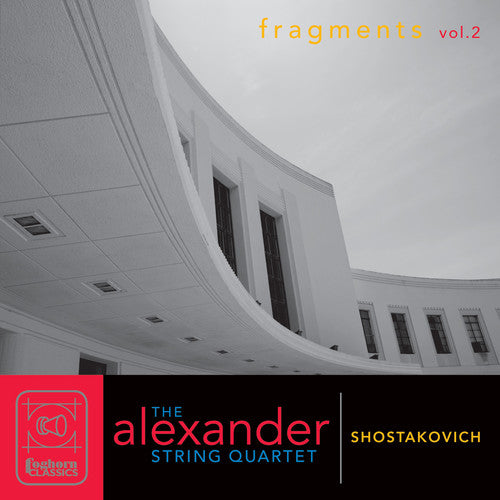 {# optional: put hover video/second image here positioned absolute; inset:0 #}
Foghorn Classics
{# optional: put hover video/second image here positioned absolute; inset:0 #}
Foghorn Classics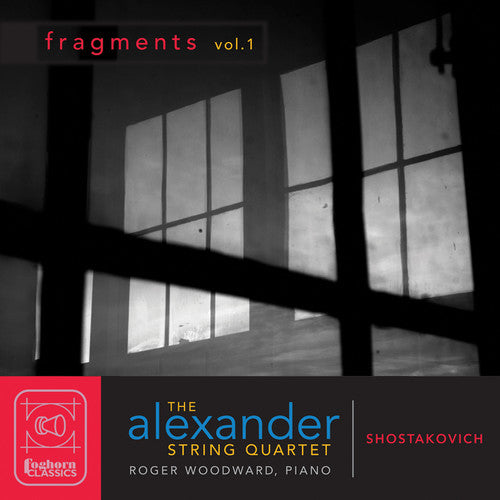 {# optional: put hover video/second image here positioned absolute; inset:0 #}
Foghorn Classics
{# optional: put hover video/second image here positioned absolute; inset:0 #}
Foghorn Classics


 {# optional: put hover video/second image here positioned absolute; inset:0 #}


 {# optional: put hover video/second image here positioned absolute; inset:0 #}


 {# optional: put hover video/second image here positioned absolute; inset:0 #}


 {# optional: put hover video/second image here positioned absolute; inset:0 #}


 {# optional: put hover video/second image here positioned absolute; inset:0 #}

 {# optional: put hover video/second image here positioned absolute; inset:0 #}


 {# optional: put hover video/second image here positioned absolute; inset:0 #}

 {# optional: put hover video/second image here positioned absolute; inset:0 #}


 {# optional: put hover video/second image here positioned absolute; inset:0 #}


 {# optional: put hover video/second image here positioned absolute; inset:0 #}

 {# optional: put hover video/second image here positioned absolute; inset:0 #}


 {# optional: put hover video/second image here positioned absolute; inset:0 #}


 {# optional: put hover video/second image here positioned absolute; inset:0 #}
 {# optional: put hover video/second image here positioned absolute; inset:0 #}
 {# optional: put hover video/second image here positioned absolute; inset:0 #}