Duke Ellington
22 products
-
Stratus
$14.99CDDouble Moon Records
Oct 31, 2025DMCHR71463 -
Awaking – Jazz Thing Next Generation, Vol. 109
$14.99CDDouble Moon Records
Oct 03, 2025DMCHR71465 -
-
-
-
-
-
-
-
-
-
-
-
-
-
-
-
Stratus
Awaking – Jazz Thing Next Generation, Vol. 109
THE ORIGINAL RECORDINGS THAT I
Falling In Love With Duke Ellington
1. In a Sentimental Mood
2. I Didn't Know About You
3. Every Hour on the Hour
4. Lotus Blossom
5. Ghost of a Chance (With You), (I Don't Stand A)
6. Pretty Woman
7. Lover Man
8. Solitude
9. Wonder of You, The
10. Mood Indigo
11. My Heart Sings, (All of a Sudden)
12. I've Got It Bad and That Ain't Good
13. Tell Ya What I'm Gonna Do
14. Creole Love Call
15. I Let a Song Go Out of My Heart
16. You Don't Love Me No More
Personnel includes: Duke Ellington (arranger, piano); Joya Sherrill, Al Hibbler, Ida Cox (vocals); Johnny Hodges (alto saxophone); Duke Ellington & His Famous Orchestra.
Tracks recorded in New York, New York and Hollywood, California between 1944 and 1967. Includes liner notes by Joshua Sherman.
Digitally remastered by James Nichols (BMG Studios, New York, New York).
This is part of RCA Victor's Falling In Love With series.
The smoothly seductive, low-key, sophisticated sounds of the multi-faceted Duke Ellington at his most romantic provide an intimate listening experience on this entry in RCA's FALLING IN LOVE series. In a well-chosen set, Ellington favorites like "Mood Indigo" accompany less well-known tunes like "My Heart Sings (All of a Sudden)" and gorgeous melodies like "Solitude" and "Creole Love Call." The mood couldn't be more relaxed, and the music is provided by one of the 20th century's most celebrated jazz composers: the rest is up to you.
Sophisticated Lady / Duke Ellington
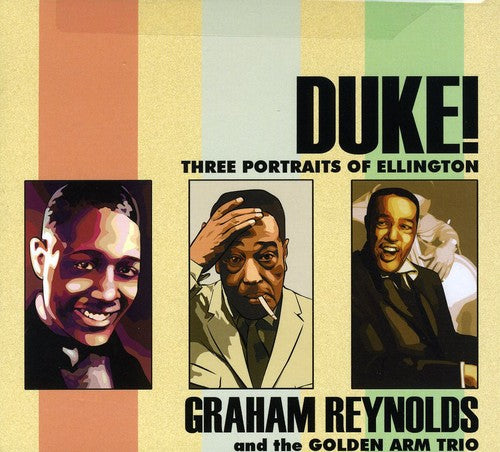
Duke!: Three Portraits of Ellington
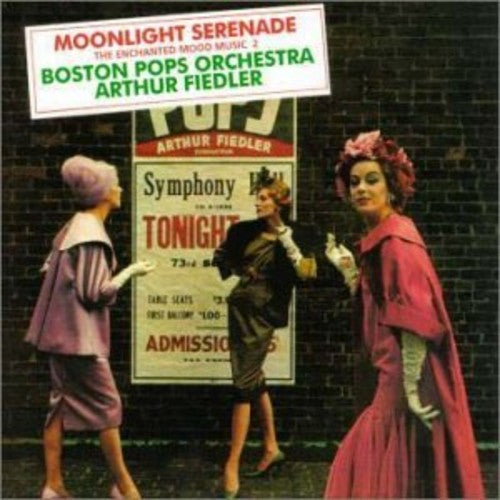
Moonlight Serenade / Fiedler, Boston Pops
Ellington, Duke: Tootin' Through the Roof (1939-1940)
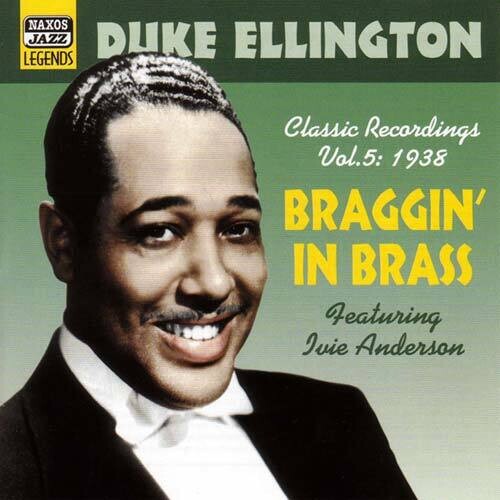
Ellington, Duke: Braggin' In Brass (1938)
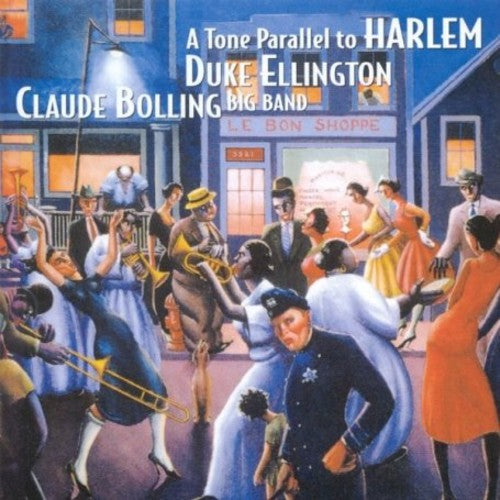
TONE PARALLEL TO HARLEM
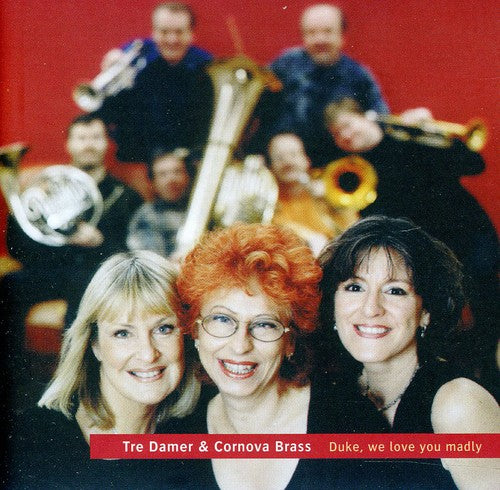
Duke, We Love You Madly
Duke Ellington: Piano Works
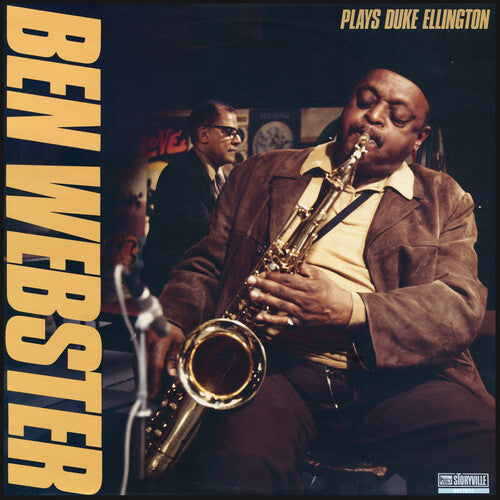
Ben Webster Plays Duke Ellington
This album is a collection of classic melodies from the repertoire of Ben Webster’s famous employer of many years, Duke Ellington. The album is comprised of three live radio sessions with the Danish Radio Big Band in 1969 and 1971, plus live concert sessions with two different backing trios (Finland in 1967 and Denmark in 1969). Aside from one tune, all the performances with the Danish Radio Big Band are based on Ellington’s original scores. The quartet sessions are also great - one with Ben’s boss from the early 1930’s, Teddy Wilson, and the other with Kenny Drew. That Ben Webster was one of the undisputed jazz greats on the tenor saxophone - both in a big band and small group context - is amply illustrated on this fine album.
ELLINGTON, Duke: From His Treasure Chest (1965-1972)
BLACK BROWN & BEIGE
A DRUM IS A WOMAN
Ellington: four-handed piano
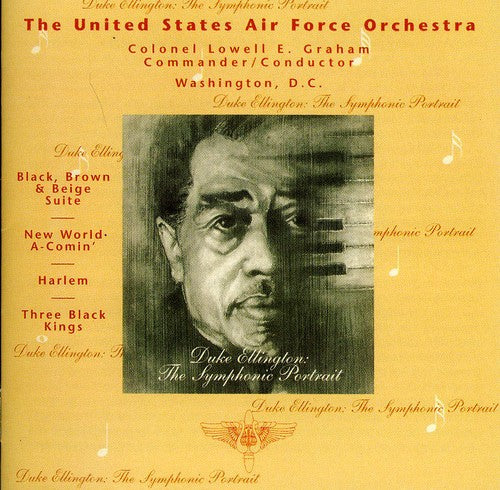
Duke Ellington (The Symphonic Portrait)
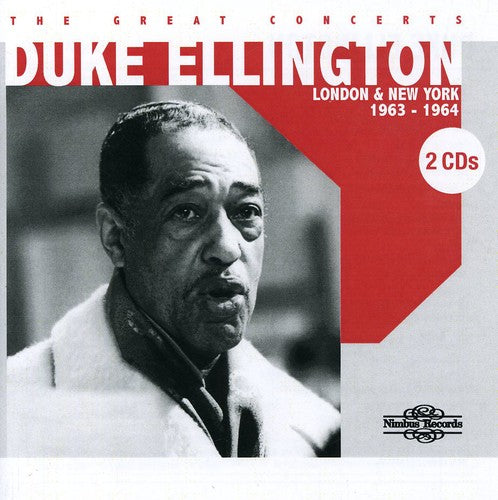
Great Concerts - Duke Ellington, London & New York 1963/64
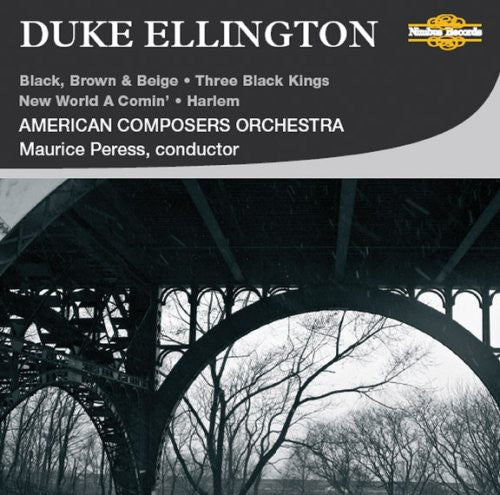
Ellington: 4 Symphonic Works / Peress, American Composers Orchestra
Nimbus has been picking up MusicMasters’ catalogue and restoring some highly diverting things to the catalogue. This one is a case in point. Maurice Peresss and the American Composers Orchestra are joined by some elite soloists to set down estimable recordings of four of Duke Ellington’s suites - two well known and two markedly less so.
The best known of the quartet, Black, Brown and Beige, has been orchestrated by Peress. We can hear what has to be the baritone saxophone of Joe Temperley in this one, whose evocation of Harry Carney is appropriate yet manages to retain total tonal independence of the illustrious model. Temperley – and Eugene Moye, the cello principal of the orchestra and Walt Weiskopf, the alto player in the orchestra – are not mentioned on the jewel box credits but they are noted in the booklet. Richard Chamberlain cleaves closer to Tricky Sam Nanton in his role and altoist Frank Wess, very much his own man, takes the Johnny Hodges role. It’s true that the orchestral garb can somewhat blunt the pungency of the Ellington scoring but this alternative look at one of Ellington’s most impressive, albeit most contentious, scores is splendidly realised on its own terms.
Three Black Kings was once written off by James Lincoln Collier – himself no stranger to controversy – as "movie music." What I think got to Collier was the rather generic, piecemeal quality of this ballet suite. Ellington’s three songs here were King of the Magi, King Solomon and Martin Luther King and the soloist is Jimmy Heath on tenor and soprano saxophones. There are some feints toward the exotic East and everything – not least Heath’s articulate playing – is exceptionally pleasant. But I’m with Collier here – the music lacks real distinction; it’s fluent but melodically uninvolving and strangely naïve for Ellington. It’s no great surprise to realise that it was left incomplete on Ellington’s death.
New World A-Comin’ is like Black, Brown and Beige another wartime work, again heard here in Peress’ revision. Roland Hanna takes the Ellingtonian piano part, which has been transcribed from the 1943 concert performance; Hanna though improvises the final cadenza. There’s also an excellent solo from clarinettist Stephen Hart. Finally there is Harlem – for Jazz Band and Orchestra perhaps the most impressive, because the most sheerly integrated, of all. There is a stellar quartet of soloists to attend this one and they play with tremendous awareness and control. The seamless quality of Harlem is certainly apparent in this tremendous performance – the variety of moods and textures; the stylistic variety; and that drum solo, played with verve by Butch Miles. And to have alongside you, Jon Faddis, Ron Carter and clarinettist Bill Easley is no bad thing.
The recording quality back in 1989 was – and remains – first class and we also have the advantage of Peress’s own sleeve notes. Symphonic Ellington strides confidently in this re-release.
-- Jonathan Woolf, MusicWeb International
Duke Ellington: Live at the Berlin Jazz Festival 1969-1973
Since its inception in 1964, the Berlin Jazz Fest had been thought of as a festival that, if not avant-garde, welcomed the most progressive and experimental forms of music of a period rich in all types of modernistic trends, from radical free jazz to a multitude of fusions of pop, rock, soul and jazz. But in 1969, as if swimming against the tide of the revolutions that swept the West, the organizers took an audacious stand: it was Duke Ellington’s 70th birthday and not only did they welcome him at the head of his big band for the first time, but part of the program focused on his heritage; as a bonus and birthday gift, Ellington was featured on the publicity poster of the festival’s sixth edition.
The Berlin concert of 8 November 1969 is magnificent testimony to the extraordinary freshness of tone that Ellington’s big band still displayed on stage, when the sheer pleasure of playing took over from the routine of performance. The concert of 2 November 1973, on the stage of the Philharmonie, turned out to be Ellington’s last concert at the Berlin Jazztage.
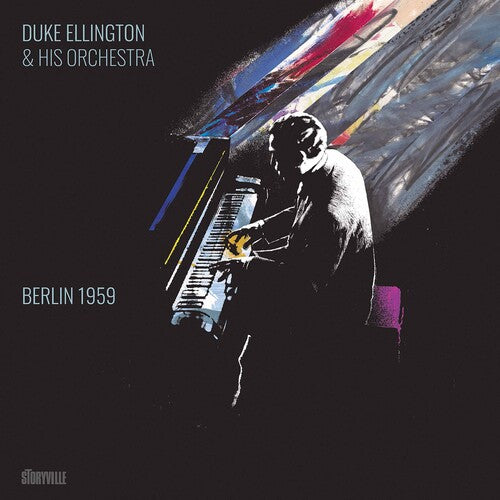
Berlin 1959 / Duke Ellington & His Orchestra
What we have here is the welcome memento of the Duke Ellington’s 1959 European tour. Berlin’s Sportpalast is not a concert hall and during the cursed Nazi reign often was the site of speeches by Hitler and his fellow criminals, but the hall can perhaps be said to have been purified by sounds of jazz by the time of this concert. The music starts with the Ellington Medley, by then a standard concert opener in varied embodiments. Critics often chided Duke for (in their opinion) overdoing this staple, but in fact it was not only a clever way of dealing with what undoubtedly would have been audience requests for beloved Ducal standards, but also a way of celebrating the continued life of his musical heritage. The concert has been remastered to modern standards, and is a must own for any Ellington fan.
REVIEWS:
Storyville Records has released Duke Ellington & His Orchestra: Berlin 1959, a terrific live album with great sound and luxurious music. Partially released in past years on shabby bootlegs, this album gives us this concert with pristine sound. Don't cherry-pick songs when listening. The only way to enjoy this album is by listening from start to finish. Only then can you absorb the depth of the Ellington band's full spectrum of moods and the Duke's piano. Be aware that tracks 17 to 27 are part of an Ellington medley and aren't full songs. As a result, each song is short.
--AllAboutJazz.com (Marc Myers)
There can never be too many Duke Ellington albums. Heard here is Storyville’s recently released two-CD set titled Berlin 1959, a previously unreleased concert. The Duke Ellington Orchestra was well documented in the late 1950s following their major success at the 1956 Newport Jazz Festival, and the live concerts that have been released from this period can be a little predictable. Just as with the Louis Armstrong All-Stars, there are some routines that do not differ that much from month to month although they eventually evolved. But, as with Armstrong, there are occasional surprises that make each concert well worth hearing.
Overall, everything works well during this fine concert. There may not have been an excess of surprises, but the results are fun.
--The Syncopated Times (Scott Yanow)