Engelbert Humperdinck
19 products
-
Engelbert Humperdinck: The Miracle (Complete)
CD$29.99$26.99Capriccio
Dec 05, 2025C5543 -
-
-
-
-
-
-
-
-
-
-
-
-
-
-
-
-
-
-
-
-
-
-
-
-
-
-
-
Engelbert Humperdinck: The Miracle (Complete)
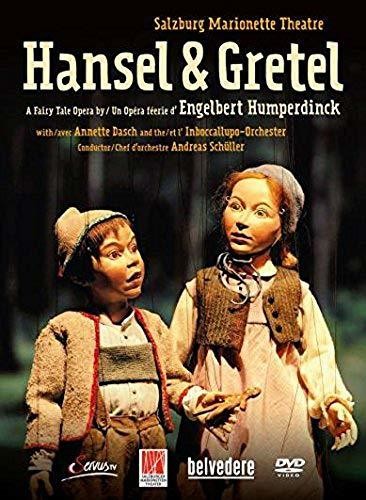
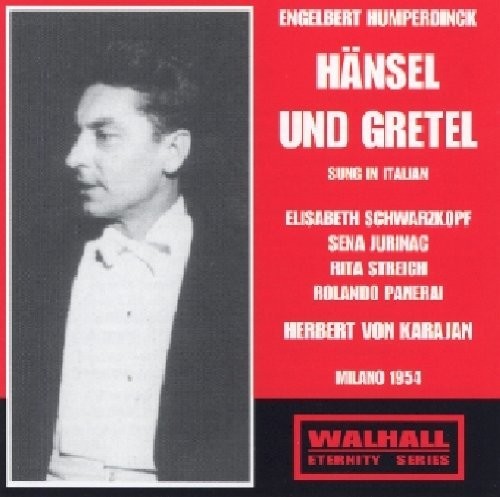
Humperdinck: Hänsel und Gretel
HANSEL & GRETEL
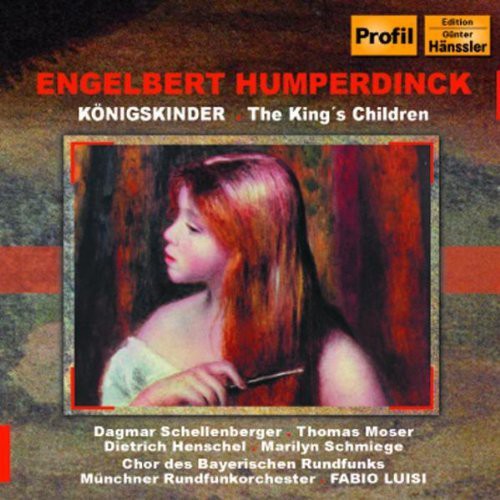
HUMPERDINCK: Konigskinder
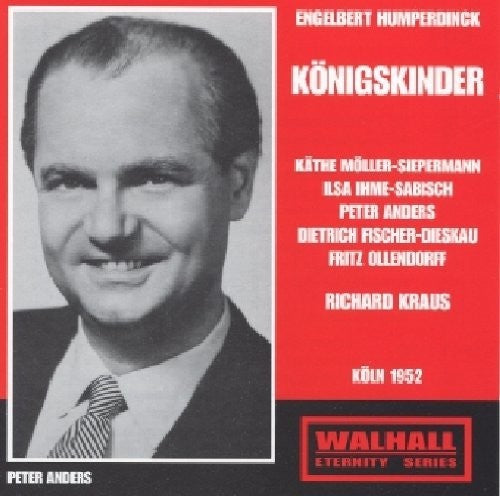
KÖNIGSKINDER: SIPERMANN-SABISC
HÄNSEL & GRETEL (IT. GESUNGEN)
Humperdinck: Hänsel und Gretel
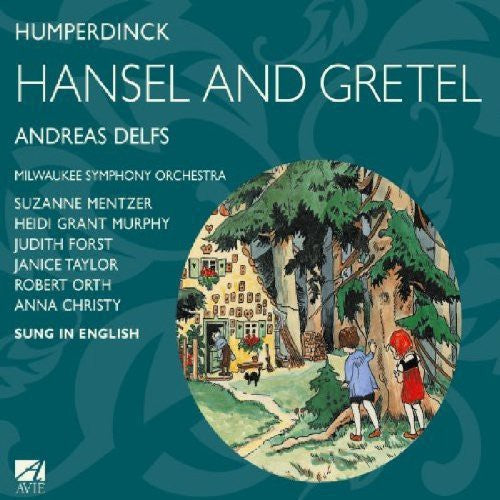
Humperdinck: Hansel And Gretel / Delfs, Mentzer, Et Al
If it's Hansel-in-English you're looking for, this set clearly is your choice...Here we get a lovely pair of kids in Suzanne Mentzer and Heidi Grant Murphy, their voices so utterly un-alike that the listening experience is vivid for that alone--but besides that, their interplay is credible and they both make wonderful sounds. Mentzer's dark-hued mezzo is suitably boyish, while Murphy's little-girl tone is charming. Judith Forst, hardly in the first bloom of her career, is a vicious Witch, smacking her lips and exuding spite and malice--and her diction is quite good too, unlike Murphy's, just to offer one comparison. Janice Taylor's portrayal of the mother is very fine, but her tone is wobbly; Robert Orth is a sympathetic, burly father; and Anna Christy's double-duty as Sandman and Dew Fairy is impressive. Conductor Andreas Delfs favors slowish tempos, bringing out the rich, symphonic aspects of the score and always making clear that Humperdinck was heavily influenced by Wagner. The Milwaukee Orchestra is excellent, with playing both atmospheric and grand from the brass section in this live performance (no audience is discernible). I guess it's nice to hear the opera in English even if much of it can't be understood, but--not to pick nits--why would a child say toil" when he can say "work"? The sound is better than good--rich and colorful." --Robert Levine, ClassicsToday.com
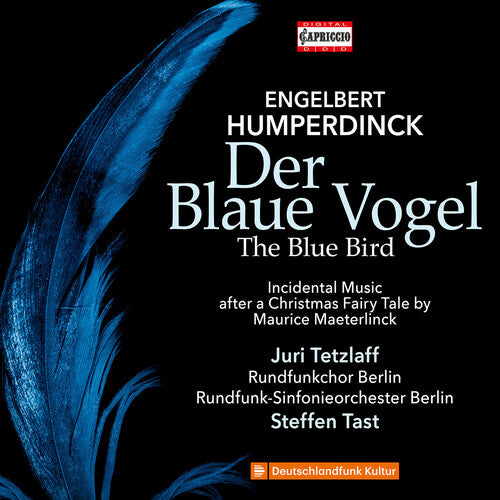
Humperdinck: The Blue Bird / J. Tetzlaff, Tast, Berlin RSO
In 1908, Maurice Maeterlinck wrote his play The Blue Bird (L’Oiseau bleu). Having proved a good source of operatic subjects before (Pelléas et Mélisande, Ariane et Barbe-Bleue), it is no surprise that composers jumped at the opportunity to write music to this latest. The French composer Albert Wolff made an opera of it that, though premiered at the MET, has since been forgotten. But even before that, in 1912, Max Reinhardt put it on as an adapted Christmas play in Berlin and he had none less than Engelbert Humperdinck write the incidental music to it. The music was never published until Steffen Tast found the score and salvaged it for us to hear. A sweet story and sweeter still music by Humperdinck newly discovered? Why, that’s in and of itself as though it was Christmas!
REVIEW:
Steffen Tast really deserves credit for restoring this work to the repertoire and for giving such a fine and dedicated traversal of the music. One only has to listen to the stately but regretful theme as the children take leave of their grandparents in the land of memories to get a sense of Mr Tast’s rapport with the Rundfunk-Sinfonieorchester Berlin. This music bears a strong resemblance to Mahler, but just until the solo violin takes over with a sentimental theme that is lusciously played by the un-named concertmaster. Tast elegantly shapes the beautifully sketched musical themes for Bread, Fire, Water, and Milk, who all become characters in the play. The Rundfunkchor Berlin gets to briefly display their talents in a Christmas carol arranged in two parts, and then later in a wordless chorus for the expectant mothers welcoming their unborn children. Overall Tast skillfully reveals the richness of Humperdinck’s orchestration in an carefully judged reading of this important score.
-- MusicWeb International
Humperdinck: Konigskinder
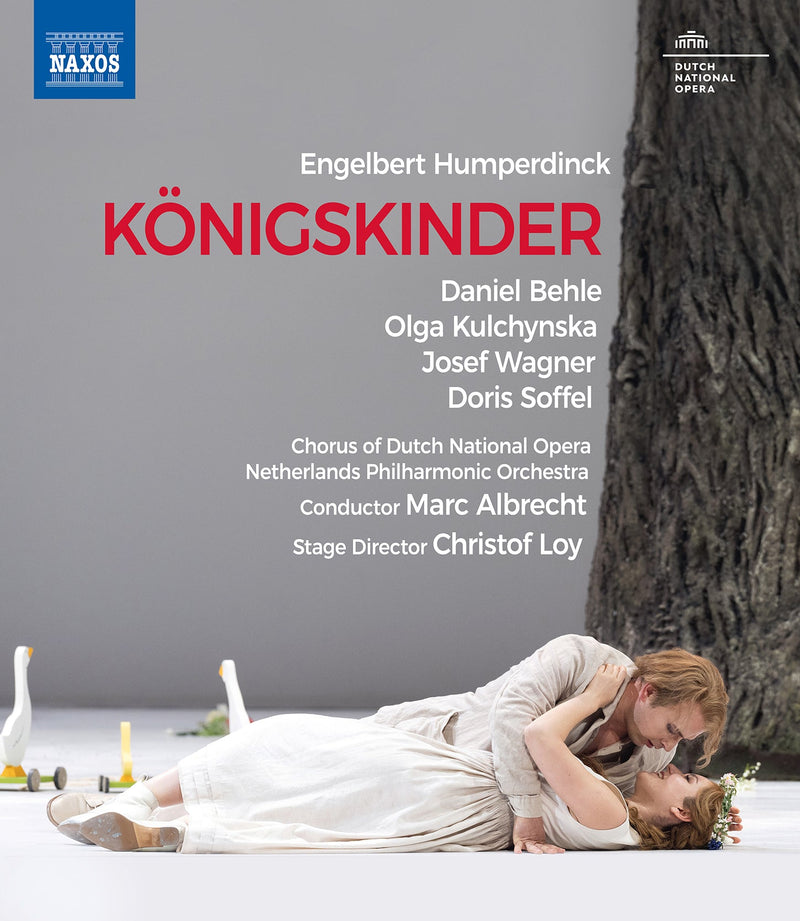
Hänsel und Gretel brought Humperdinck worldwide fame but his tragic fairy story "Königskinder" (‘The King’s Children’) offers a stark contrast to it and has only begun to be revived in recent years. The doomed love of a goose girl and a prince – as they battle prejudice and are obstructed by magic – ends in their loving deaths, and with it a rebuke to the villagers who rejected them. This acclaimed production by the renowned German director Christof Loy features the award-winning singers – tenor Daniel Behle and Ukrainian soprano Olga Kulchynska.
Humperdinck: Konigskinder / Weigle, Frankfurter Opern- Und Museumsorchester
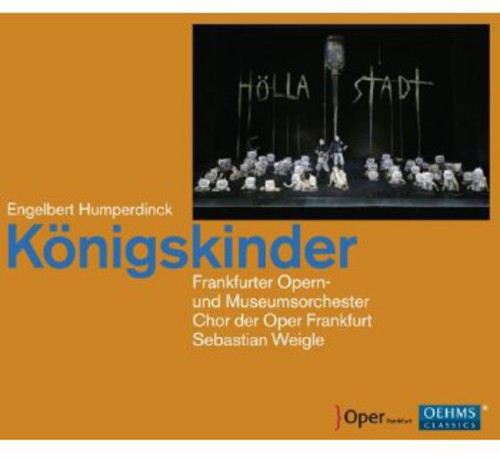
HUMPERDINCK Königskinder • Sebastian Weigle, cond; Daniel Behle ( The King’s Son ); Amanda Majeski ( The Goose Girl ); Nikolay Borchev ( The Musician ); Julia Juon ( Witch ); Magnus Baldvinsson ( Woodchopper ); Martin Mitterutzner ( Broom-maker ); Franz Mayer ( Councillor ); Dietrich Volle ( Innkeeper ); Chiara Bäumi ( Innkeeper’s Daughter ); Frankfurt Op Ch; Frankfurt Op & Museum O • OEHMS 943 (3 CDs: 166:00 & German only) Live: Frankfurt 9–10/2012
Engelbert Humperdinck’s Königskinder, like Auber’s Muette de Portici and Weber’s Euryanthe, was one of those operas on my “bucket list”—works I had heard about, and perhaps knew one or two excerpts from, but had never heard complete. As it turned out, I loved the Auber opera but found the Weber interminably dull except for the famous Overture, the latter an opinion (I learned) shared by legendary opera critic Herman Klein. As for Königskinder, which despite its translation as King’s Children is better known as “The Goose Girl” (anyone who has seen them will never forget the photos of Geraldine Farrar leading her geese across the Metropolitan Opera stage), it has often been described as dull music or, at the very best, not half as good as Hänsel und Gretel. I beg to differ. The music is entirely different—more fully developed, at some points almost symphonically, longer of course, and a bit darker as the opera progresses since, unlike Hänsel, it doesn’t have a happy ending—but I found it a work of excellent quality. To my non-child-like mind, in fact, I found it superior as a musical and dramatic experience to Hänsel und Gretel.
But I am only discussing the music here. Reading the booklet, and looking at the photos of this production, given in Frankfurt during September and October 2012, one is horrified by what one sees. The plot, for those who don’t know it, is this: The goose girl is really a princess under the spell of a witch, with whom she lives. The witch forces the goose girl to bake cursed, deadly bread daily, but the latter puts a blessing on it so that whoever eats it will not die but see beautiful visions. A king’s son (a prince) suddenly appears: he has left his father’s castle to learn about people and the world. The pair meet and fall in love, but after he leaves the witch, sensing that a man has been in her house, locks the goose girl up. She escapes. There is a sub-plot in which a minstrel, a woodchopper and a broom-maker ask the witch to help them find a king, but that need not concern us. The goose girl enters the town square at noon with a crown on her head; when the prince arrives, she puts the crown on his head; but the people, thinking they have been made fools of, angrily chase them out of town (and accidentally break the minstrel’s leg). Later, it is winter; the prince and goose girl, cold and hungry, eventually arrive at the witch’s hut. They discover that the witch was burned at the stake and the minstrel lives there now. The prince gives the woodchopper his crown in return for some old bread to eat. They don’t realize that this is one of the pieces of cursed bread; they eat it, and die in the snow.
Well, so far, so good. But if you flip the booklet back a few pages, you’ll see pictures of a threadbare stage with young people, dressed almost in rags, either starving or on the verge of death. In one picture, the word “Hellawald” is written in large chalk letters across the front of the stage; in another, decapitated, angry pigs’ heads surround two men in black uniforms with the words “Hölle Stadt” (Hell City) painted on the backdrop. This isn’t a fairy tale any more. Flip back a few more pages, and they explain this to you. Fairy tales are for saps, and the non-happy ending of this one indicates, to the director of this production, a dark, surreal quality based on Freud’s references to “the world of imagination of the fairytale” which “framed the agony of the genre.” Some people “even said that the fairytale died long ago … buried somewhere, perhaps in a mass grave.” Further reference is made to Brundibár, Hans Krása’s fairytale-children’s opera, “performed over 50 times by Jewish children in the Theresienstadt concentration camp,” thus becoming the memorial work for “all children who died in the Holocaust….The children were deported to the east after the performance and gassed; so was the composer.” Thus we now have poor Humperdinck’s opera made an example of the horrors of the Holocaust he never lived to witness (he died in 1921). Say goodbye to Gerry Farrar’s jolly little goose girl costume. This is now pretty gritty stuff.
I’m not sure if a DVD of this production has been released—at least, I haven’t seen one yet—but personally, I’d recommend getting this audio-only recording, ripping out the photos in the booklet referencing the harshness and gritty reality of gassed children, and take it on its own merits. Because this is an absolutely splendid performance of the music, and that, in essence, is what carries the story, not storm trooper-directed pigs’ heads or starving children in “Hell City.” Sebastian Weigle is quite obviously a master conductor; he moves things at a splendid pace, shaping and enlivening the music with so much pointing, and a tremendous range of orchestral colors that alternately lighten and darken the mood of the music, that in the end I found it as miraculous a conducting job as that of Rudolf Kempe in his 1956 recording of Meistersinger. Moreover, he has an absolutely splendid cast to work with. Soprano Majewski as the goose girl has a splendidly youthful, bright-sounding voice, almost like Geraldine Farrar but with a piquant flicker-vibrato that I found to be extremely attractive. Tenor Behle has one of those light tenor voices that one hears as extremely fine but quintessentially German, like the similar voices of Georg Maikl or Peter Schreier. One might not ideally want to hear Behle sing Italian opera, regardless of the suitability to his vocal size, but in anything German he sounds ideal. Borschev, as the musician, has an equally lovely baritone voice, sounding a bit like a younger, lighter-voiced Bernd Weikl.
Another point in this recording’s favor is the excellent vocal acting if the principals. I, like a few other critics at Fanfare, have complained of the modern tendency of singers to sing everything correctly as per the score but give almost nothing in terms of characterization. This tendency, by the way, is not accidental; it is often bred into singers as a way of making them more versatile for whatever kind of production a crackpot director can come up with; but here, despite our Pigs ‘n’ Nazis Holocaust stage settings, the singers all act out their music with wonderful attention to the words. I only wish that Oehms Classics had provided an English translation of the libretto; but nowadays we should be happy they give us any words at all.
But best of all is the way the music simply tumbles out of your speakers. It is as if no effort whatsoever went into the rehearsals, as if everyone—principal singers, secondary singers, the orchestra, even the children’s chorus—had simply learned this music so well that they could play and sing it in their sleep. The flow of the opera is continuous; you are never bored for so much as one minute. It all keeps moving, and flowing, and changing in mood and color, and you as a listener are completely swept away by it. Yes, Virginia, there are good fairy-tale operas!
The only other recording of this work I’ve heard, at least in part, is the 2008 one with Juliane Banse as the goose girl, Klaus Florian Vogt as the prince, and Ingo Metzmacher conducting. Vogt has one of the most remarkably beautiful voices of our time, but is not much of an interpreter. Banse has a very nice voice, but one with just a touch of dryness in her tone which Majewski avoids; more to the point, conductor Ingo Metzmacher is merely routine, whereas Weigle is spectacular in his range of colors and moods. There is also a 2005 recording conducted by Fabio Luisi on Profil, with soprano Dagmar Schellenberger and tenor Thomas Moser, and a 1952 radio broadcast on Gala 530 with a young Fischer-Dieskau as the musician, Peter Anders as the prince, Käthe Möller-Siepermann as the goose girl, and the excellent conductor Richard Kraus, but I haven’t heard them. (A 1976 Helen Donath-Adolf Dallapozza-Hermann Prey-Heinz Wallberg recording was also available once on EMI CDs, but I couldn’t find it still listed as available online.) The great tenor Jonas Kaufman also has a DVD performance available on Decca 1744909, but even though he still has Tamino in his repertoire, both roles are too light for his present-day voice (he started out in lighter roles, but by the mid-2000s had moved into Florestan and other bigger parts), and Metzmacher is again the conductor.
You can’t go wrong with this recording; it is, quite simply, one of the greatest I’ve ever heard of any opera, regardless of genre. Another point in its favor: perhaps because the singers were generally motionless onstage, either dying or being tortured by concentration camp guards (and their pigs), there is almost no stage noise to be heard in this performance. Forget the dreary photos of Hellawald and Hölle Stadt—just put the CDs on and enjoy!
FANFARE: Lynn René Bayley
Humperdinck: Hansel & Gretel / Davis, Damrau, Allen, Silja
Hansel: Angelika Kirchschlager
Gretel: Diana Damrau
Gertrud: Elizabeth Connell
Peter: Thomas Allen
Witch: Anja Silja
Sand man: Pumeza Matshikiza
Dew Fairy: Anita Watson
Tiffin Boys’ Choir and Children’s Chorus
The Orchestra of the Royal Opera House
Conductor: Colin Davis
Stage Directors: Moshe Leiser & Patrice Caurier
Recorded live at the Royal Opera House, Covent Garden, London, on 12th and 16th December 2008.
Plus
Illustrated synopsis & animated cast gallery.
Interview with Colin Davis.
Fairytales feature.
Cinema trailer.
Reviews
‘Angelika Kirchschlager’s tousled, boyish Hänsel and Diana Damrau’s Gretel are dramatically convincing and vocally superb, while their parents, excellently sung and played by Elizabeth Connell and Thomas Allen, earn our sympathy as well as our censure. Pumeza Matshikiza’s goblin-like Sandman is truly magical and Anita Watson’s feather-dusting Dew Fairy another amusing creation. Colin Davis, unafraid to relish the icing on the cake, draws a warm, effulgent sound from the orchestra.’ Evening Standard
REGIONS: All Regions
LENGTH: 138 Minutes
FORMAT: PCM 2.0 PCM 5.1
LANGUAGE: German
SUBTITLES: English, French, German, Spanish, Italian
Humperdinck: Hansel und Gretel / Hoff, Staatskapelle Weimar
– MusicWeb International
Humperdinck: Hansel & Gretel / Davis, Damrau, Allen, Silja
Hansel: Angelika Kirchschlager
Gretel: Diana Damrau
Gertrud: Elizabeth Connell
Peter: Thomas Allen
Witch: Anja Silja
Sand man: Pumeza Matshikiza
Dew Fairy: Anita Watson
Tiffin Boys’ Choir and Children’s Chorus
The Orchestra of the Royal Opera House
Conductor: Colin Davis
Stage Directors: Moshe Leiser & Patrice Caurier
Recorded live at the Royal Opera House, Covent Garden, London, on 12th and 16th December 2008.
Plus
Illustrated synopsis & animated cast gallery.
Interview with Colin Davis.
Fairytales feature.
Cinema trailer.
Reviews
‘Angelika Kirchschlager’s tousled, boyish Hänsel and Diana Damrau’s Gretel are dramatically convincing and vocally superb, while their parents, excellently sung and played by Elizabeth Connell and Thomas Allen, earn our sympathy as well as our censure. Pumeza Matshikiza’s goblin-like Sandman is truly magical and Anita Watson’s feather-dusting Dew Fairy another amusing creation. Colin Davis, unafraid to relish the icing on the cake, draws a warm, effulgent sound from the orchestra.’ Evening Standard
REGIONS: All Regions
PICTURE FORMAT: 16:9
LENGTH: 138 Mins
SOUND: 5.1 DTS SURROUND / PCM STEREO
SUBTITLES: ENGLISH/FRENCH/GERMAN/SPANIS/ITALIAN
LANGUAGE: German
NO OF DISCS: 2
Humperdinck: Hansel und Gretel / Janowski, Rundfunk-Sinfonieorchester Berlin
Is it possible to administer at too early an age the intoxicating and gloriously sweet poison of opera, especially in an era of constant muzak? The clear answer is “No!”. In a splendidly moving new recording of Engelbert Humperdinck’s one-hit wonder Hansel and Gretel, Maestro Marek Janowski now introduces the perfect “gateway drug” to opera. The fairy-tale opera Hansel and Gretel is a perfect choice as the first joint trip to the opera for parents and children to enjoy. The story of the two children who lose their way in the forest and are ensnared by the evil witch is well-known. The plot reflects the age-old conflict between good and evil, and has a happy ending. Add to this Humperdinck’s magical music: poetically childlike and powerfully dramatic at the same time. In the score, Humperdinck’s close connection to Richard Wagner is always discernible. The composition oscillates between childlike simplicity and adult monumentality. To this day, Hansel and Gretel remains one of the most popular pieces in the German opera repertoire. One of the main reasons for this is certainly the seriousness with which Humperdinck approached the simple story. All emotions are truly felt: and this is obvious not only to a child, but also to any adult who has retained a childlike view of the world. Who better than Marek Janowski here as conductor? Not only does he clearly feel completely at home in this late-Romantic German repertoire, he has also already given benchmark-setting interpretations of these works in both the major concert halls and the most important opera-houses. At the head of “his” Radio Symphony Orchestra Berlin – which he previously led for 14 years, raising it to an outstanding level of playing – he takes the listeners into the forest-bird sound-world of this fairy-tale opera, at all times accompanied by a well-coordinated ensemble of singers.
Humperdinck: Hansel und Gretel - Excerpts / Malagamba, Bankovic, Dinic, Staatsorchester Braunschweig
| If there is such a thing as a classic Christmas opera, then it is Hansel and Gretel. Like hardly anyone else, Humperdinck succeeded here in combining folk melodies with the technical sophistication of mature compositional art. Even before the opera, he published a shorter version as a fairy tale play, which, like an essence of the opera, exposes its essential design principles. The opera’s libretto was written by Humperdinck’s sister, Adelheid Wette, and the story is based on the classic fairy tale. In this production, the title roles are sung by Isabel Stuber Malagamba and Jelena Bankovic. |
Humperdinck: Music for the Stage / Salvi, Malmo Opera Orchestra
-----
REVIEWS:
These incidental scores are a real find. They show that Humperdinck was far more than a one work wonder and is surely overlooked among the large number of turn-of-the-century composers who were able to turn out such highly melodic scores. The one real rarity here is the suite arranged from Das Wunder – the first full-colour silent film, made in 1912.
– Lark Reviews
Think of Humperdinck and Hänsel und Gretel immediately springs to mind, and if you dig a little bit deeper, Königskinder. Of course, he was far more prolific than that, and clearly had a rare talent for melody, vocal setting and orchestration. He is regarded as being a disciple of Wagner rather than a composer who forged a unique path, although I was interested to discover that he was the first composer to use Sprechgesang - a vocal technique halfway between singing and speaking, in Königskinder.
This most welcome, well-filled CD gives us a broad cross-section of his music for the stage. It starts with the prelude to Act II of the unknown opera Die Heirat wider Willen (The Forced Marriage), which opens with huge Wagnerian chords leading to more complex passages which quieten to harp chords then return to the opening. It is highly effective, and is probably the most instantly impactive music on the disc.
It is followed by his incidental music to the play Der Kaufman von Venedig (The Merchant of Venice). There are seven sections, the longest being the accompaniment to Act V Scene 1, “The moon shines bright: in such a night as this, When the sweet wind did gently kiss the trees”.
At over ten minutes, it is as long as the previous six episodes put together, and, perhaps unsurprisingly given the word painting to inspire him, Humperdinck produces some magical orchestral effects, employing the harp lavishly to illustrate the moon (with a gentle horn accompanying the harp); the same combination is used at the outset, as the lovers begin their conversation. It is the sort of luscious orchestral sound which lulls one into floating along with it. There are vocal parts in the earlier sections, nicely sung by the tenor, soprano and contralto. The next longest scene at just under four minutes is the masked procession. Once again, the composer uses the harp quite prominently when the music quietens. As with all such incidental music, very short sections (three of the seven are each under one minute) can lead to a rather bitty impression, but Humperdinck manages to keep one’s interest - for example, the Casket Song (soprano, chorus, orchestra and harp again) is a 2:45 highlight.
Das Wunder (The Wonder), is music he composed for a British silent film from 1912 made in colour(!). It was presented at the Royal Opera House in 1912, the film being projected on to a screen with the full orchestra and chorus accompanying. The suite here begins with a prelude for solo organ, leading into a Procession and Children’s Dance, which begins with grand pageantry then quietens down for a rustic dance. The longest sections are the last two, the March of the Army and the Death Motif and the Christmas Scene and Finale. The first is quite memorable with flutes, piccolos, fifes and drums, leading to portentous brass chords for the Death Motif. The Christmas music and finale form a much more serene, ten-minute affair, with the orchestra producing a chiming effect for Christmas bells without orchestral bells being employed. I don’t think that the whole piece shows Humperdinck at his most memorable, but it is enjoyable, nonetheless.
Die Wallfahrt nach Kevlaar – Ballade (The Pilgrimage to Kevlaar) is a setting of three poems by Heinrich Heine, and Humperdinck uses soprano, tenor and chorus with orchestra. The songs tell of a journey made by a mother and her sick son to the shrine of The Virgin Mary at Kevelaer. The first song – At the Window stands the Mother - is a 3’30” narrative between soprano and tenor with the chorus commenting leading to an impressive, very Wagnerian crescendo, followed by the soloists combining with the chorus in a long, sustained note at the end. The second song, at just over seven minutes, depicts the visit to the shrine with a processional quality which slowly gathers strength. The tenor sings some very passionate music, somewhat reminiscent of Tanhauser’s Rome Narration, in which the boy and his mother are described. The last section at 4’33” – The Sick Son and the Mother – describes the death of the child, and, as one might expect, is duly solemn. The horn accompanies the soprano in dramatic declamation as the boy dies, and the chorus provide a swelling epilogue, with the soprano and harp softening things in a brief threnody at the very end. The work is set in a most sympathetic manner by Humperdinck.
The CD ends with his incidental music to Aristophanes’ Lysistrata. The composer tries to capture the antique nature of the play through his instrumentation, but even so we can hear Tristan during an extended cor-anglais solo. It is an attractive short suite.
As I mentioned at the outset, I have found this CD to be a welcome issue, and the last three items are all world premiere recordings. The booklet is informative about the composer and the music, and although texts to the sung parts are not provided, they are available from the Naxos website.
The performances are excellent in every respect, as we have come to expect from Malmö, and the recording is well balanced and natural.
– MusicWeb International (Jim Westhead)
Humperdinck: More than a Myth - Chamber Music & Songs by Engelbert Humperdinck / Various
| Engelbert Humperdinck (1854–1921) was a student at the Conservatory in Cologne from the spring of 1872; it was at this time that he got to know the Siegburg district judge and arbitrator Johannes Degen (1826–1902), an excellent singer and violinist, who gave regular chamber concerts in Siegburg at which he played in his own string quartet. Humperdinck, whose talent he had astutely spotted, was the pianist and composer he had been looking for. For his part, the young music student saw his admission to Degen’s chamber-music circle as an opportunity for regular performance; in return, he wrote whatever Degen requested. Humperdinck’s tally of 13 chamber compositions represents a relatively small part of his oeuvre (beside his six operas and about 80 Lieder, along with stage music and choral works). Brief album-leaves for violin or cello and piano contrast with works for the major Classical genres of string quartet, piano quintet, piano trio, sonata and sonatina – most of which were never finished and sometimes survive only in the form of short sketches. His finished pieces include two major works, an early piano quintet (1875) and a late string quartet (1920); the other completed movements include some tailored to Degen’s domestic music-making. |