Ernest Chausson
24 products
-
French Impressions
$19.99CDCedille
Sep 05, 2025CDR 238 -
-
-
-
-
-
-
-
-
-
-
-
-
-
-
-
-
-
-
-
-
-
-
-
-
-
-
-
Alfred Cortot - The Warner Classics Edition
His exceptional touch and sense of phrasing, his deep and personal understanding of the most varied repertoires, or even the legendary trio he formed together with Jacques Thibaud and Pablo Casals, made Alfred Cortot the greatest pianist of his time. Master of many disciples, notably the brilliant Dinu Lipatti, Samson François and Clara Haskil, Cortot also had a lasting influence on the Russian piano school through Samuil Feinberg and Heinrich Neuhaus, the latter himself being the revered teacher of Sviatoslav Richter.
All of the recordings in this set had undergone careful sound restoration in 2012, in order to respect as closely as possible the original sound. The remastering was carried out under the expert control of Mr. Guthrie Luke, a former disciple of Alfred Cortot who attended many recording sessions by Cortot. These recordings do not represent a "complete" edition: the many rolls engraved by the artist for Duo-Art, Aeolian and Pleyela labels have not been reproduced here, most of them doubling the 78-RPM repertoire. The first recordings are acoustic; and the ones with an electric microphone appeared as early as 1926.
Symphonie No. 1 - Chansons
French Impressions
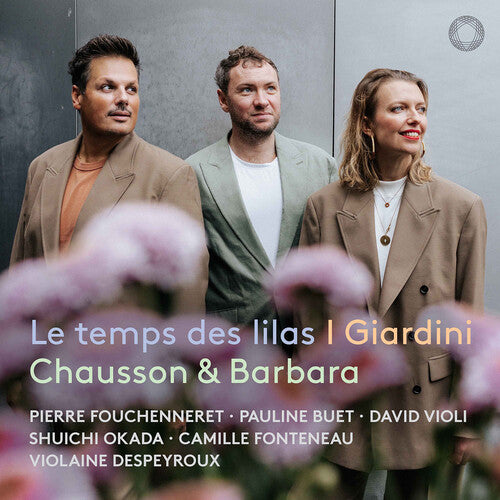
Chausson & Barbara: Le temps des lilas
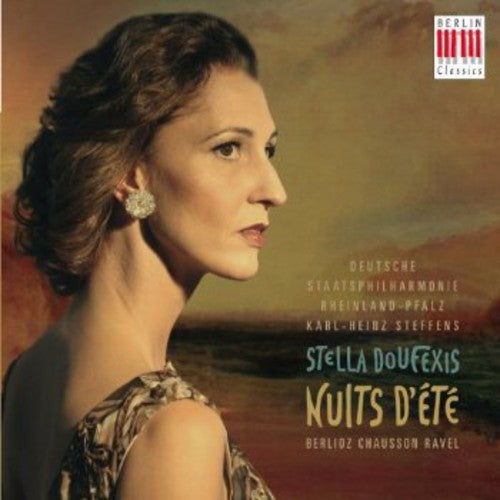
NUITS D'ETE
Chausson: Symphony Op. 20, Soir de fête & The Tempest / Serebrier, RTF SO
Poème
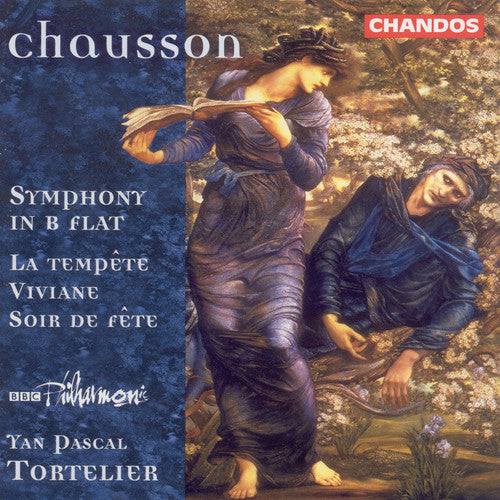
Chausson: Symphony in B-Flat Major / Viviane / Soir De Fete
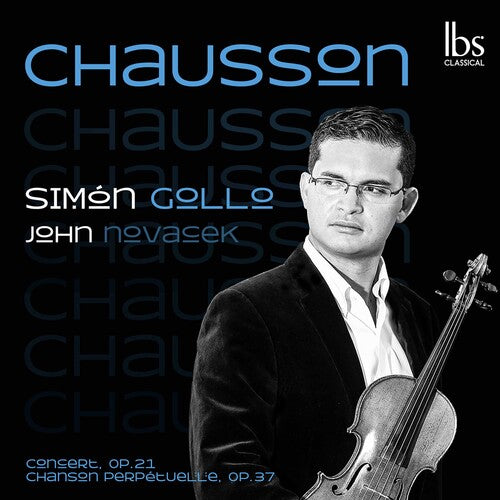
Chausson: Concerto, Op. 21 & Chanson Perpetuelle, Op. 37 / Gollo, Novacek
Chausson: Concerto for Violin, Piano & String Quartet in D m
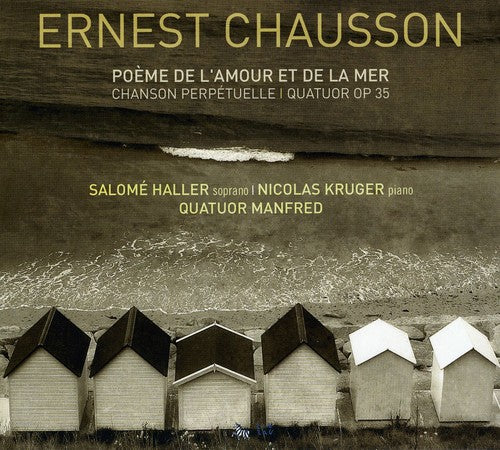
POÊME DE L'AMOUR OP19+QUATUOR
Vocal Recital: Dawson, Lynne - Poulenc, F. / Hahn, R. / Chau
Chausson, Debussy, Franck & Ysaye: Ode to Lost Time
This new large-scale setting of the Magnificat has been written as a companion piece to J.S. Bach’s famous setting (BWV 243). Although making use of a more contemporary musical language, it uses similar instrumentation, follows the same framework of chorus and solo movements, and makes use of a number of features that are typical of Bach’s music.
Paysage / Gens, Niquet, Munich Radio Orchestra
In this recital, Véronique Gens and Hervé Niquet bring back to life a neglected aspect of France’s Romantic heritage: songs with orchestral accompaniment. Aside from a few pieces by Debussy and Duparc, and Berlioz’s famous Nuits d’été, orchestral mélodies form a virtually forgotten continent. In collaboration with the specialists of the Palazzetto Bru Zane, Alpha now revisits these musical landscapes, taking us from Brittany (Hahn) to Persia, whose beauties Fauré and Saint-Saëns exalt in very different ways. Mélodies by Chausson, Gounod and Dubois and rarely heard instrumental pieces by Massenet, Fauré and Fernand de La Tombelle round out the journey with their musical reveries.
Franck & Chausson: Symphonies / Tingaud, Radio-Symphonie-Orchester Berlin
César Franck's only symphony came at a time when the French music world was seeking to rival the great Austro-German tradition. The 'darkness-to-light' narrative of the Symphony in D minor owes a debt to Beethoven and there is a unique power within its distinctive themes, innovative cyclic form, and general gravitas. Franck's student Ernest Chausson was no doubt inspired by his teachers thematic metamorphoses, but the anguished influence of the ever-present Wagner is also ever present.
The published score of Chausson's Symphony in B-flat includes many errors which conductor Jean-Luc Tingaud meticulously corrected after careful study of the composer's autograph manuscripts.
Hymne a l‘amour
With their new CD "Hymne à l'amour"; the Duo Minerva once again shows how exciting and multifaceted classical music can sound. Their arrangements; woven with great artistry; their virtuosity and their exceptionally emotional style of music-making breathe fresh life into often-heard works. With a great deal of playfulness; the well-rehearsed duo moves between the most diverse genres and combines classical masterpieces with contemporary avant-garde; folk music and a pinch of the as yet unheard on the subject of love - entirely in Duo Minerva style.
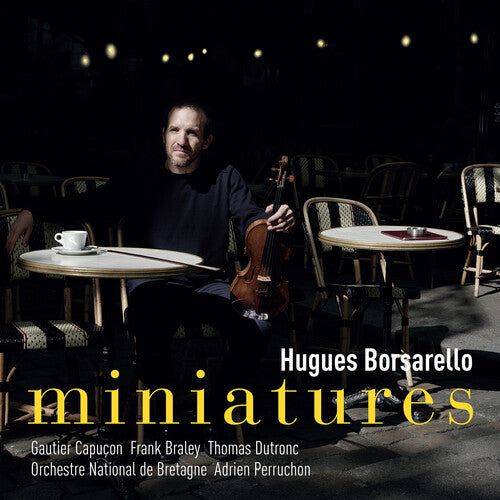
Miniatures - French Music for Violin & Orchestra / Borsarello, Perruchon, Breton National Orchestra
The French violinist Hugues Borsarello draws this programme of miniatures from the repertory of his instrument and from the great operatic arias, transcribed for violin and orchestra: ‘My idea was to relate a French history of music over the course of three centuries, in the form of short pieces.’ Lully’s Marche pour la cérémonie des Turcs rubs shoulders with arias by Bizet, Saint-Saëns and Offenbach, Satie’s Gymnopédie no.3 and Gounod’s Ave Maria. All these universally known pieces ‘are perfectly suited to the soul of the violin’, says Borsarello, who is joined by prestigious guests: cellist Gautier Capuçon for Vieuxtemps’s Duo Brillant, guitarist Thomas Dutronc for Django Reinhardt’s celebrated Nuages, pianist Frank Braley.
And this programme doesn’t neglect the classics of the violin, including Ysaÿe’s magnificent Berceuse de l'enfant pauvre. Vieuxtemps’s famous set of variations on Yankee Doodle is here performed for the first time in its version with orchestra.
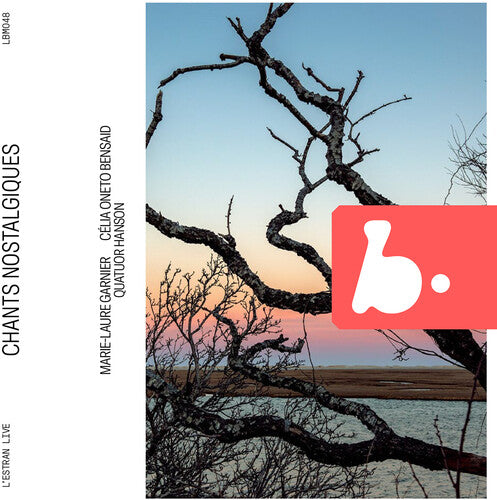
Chausson, Faure & Sohy: Chants nostalgiques / Garnier, Bensaid, Hanson Quartet
Marie-Laure Garnier, Célia Oneto Bensaid and the Hanson Quartet have imagined a program based on the theme of nostalgic love. Starting with Ernest Chausson’s Poème de l’amour et de la mer arranged for voice, string quartet and piano, they draw the thread of passion both joyful and melancholic in Gabriel Fauré’s La Bonne Chanson and Charlotte Sohy’s Les Chants nostalgiques, recorded for the first time in this formation. They give their name to this new b•records album placed under the sign of symbolism, grace and emotion.
Violin Concerto Op 53 / Poeme Op 25
Chausson: Symphony In B Flat, Etc / Kaltenbach, Korcia, Etc
Chausson: Concert, Piano Trio / Meadowmount Trio, Wihan Quartet
Chausson did not commit himself to a musical career until he was twenty-six years old. The first fruits of that resolution were the fine songs of Op.2 and the Piano Trio Op.3. While the latter work possesses definite structural immaturities and is occasionally melodramatic, it also shows that the composer’s melodic gift and surpassing sense of thematic development were in evidence right from the beginning.
The introduction to Chausson’s Piano Trio is based on two themes that reappear throughout the work, generating other themes and insuring thematic unity. The stormy, almost morose, first movement proper demonstrates the composer’s already distinctive voice, especially in the development. The scherzo second movement has none of the drama of the first, being a rollicking and affectionate parody of the styles of some of the composer’s contemporaries. The massive slow movement starts out in a mood similar to that of the first, but becomes even more elegiac and wistful. The emotional level occasionally becomes strident, but the composer’s sincerity is unquestionable. The animé last movement starts off cheerfully, but themes from the first and third movements keep popping up, increasing the level of seriousness, and the movement ends quite austerely.
By 1889, almost a decade after the Piano Trio, Chausson had reached full artistic maturity. This is evident in the Concert, his best-known chamber work. The piece is not a concerto in the usual sense, but a sort of update of the concerto grosso, with the six instruments combining in different ways as well as playing all together. The first movement’s motto theme undergoes wonderful transformations in combination with a more lyrical second theme. The Sicilienne forms a gentle interlude between the weightier first and third movements, with the latter being something of a lament. The final movement continues the seriousness of its predecessor, but the overall feeling gr adually becomes one of tremendous vitality.
The Meadowmount Trio - their name derives from long-term residence at the music camp of that name - shows a of lot energy in their performance and Eric Larsen is especially to be commended for keeping things moving, although even he flags in the last movement. Larsen and the Meadowmount’s Stephen Shipps join the esteemed Wihan Quartet in the Concert and overall the six players form a cohesive unit, achieving quite a distinctive performance. Recording quality is fairly sumptuous by Naxos standards, although the violins are somewhat shrill. Altogether, a pair of moving and exciting performances.
-- William Kreindler, MusicWeb International
Henryk Szeryng: Live in USA
Gary Lemco writes: “My own beguilement with Szeryng came with his performance in 1987 Atlanta with Louis Lane, of the North American premiere of the 1927 Concerto by Reynaldo Hahn, the French master of the Belle Epoch. “Ah, yes”, asserts Szeryng, “Reynaldo Hahn, the most Parisian of all Parisians, even though he was born in Caracas of German parents. There is even a street in Caracas named for him. I remember meeting him; and even though he was trained as a pianist, he had a natural sense of the violin. Some favor his Violin Sonata. The Concerto is published, but for some reason nobody plays it. The first movement for me is the best and most compact and makes a natural display piece. The second movement is based on a song from Tunis — absolutely genuine— and the finale sings in a typical operetta style. It starts like an extension of the second movement and has tremendous wit and charm. And, to be sure, it is a challenge.”
REVIEW:
Szeryng was a class act. His tone pure yet full-bodied, his phrasing the product of a rounded and cultivated mind.
-- Gramophone (Reissue/Archive Issue of the Month, December 2021)
Chausson: Poeme de l'amour et de la mer & Symphony / Gens, Bloch, Orchestre National de Lille

Ernest Chausson is a most unusual figure in French music, positioned at the crossroads where the romanticism of Berlioz and Franck meet the language of Wagner and the symbolism of the young Debussy. His Poème de l’amour et de la mer is a unique score for the period and certainly his greatest work; simultaneously a profane, naturistic cantata, a monologue, and a song cycle, it was composed between 1882 and 1892 to poetry by Maurice Bouchor, a longstanding friend of Chausson. Véronique Gens is recording this cycle for the first time, although she has already issued ‘Le temps des lilas’ with Susan Manoff at the piano for her album Néère, about which Ernst Van Bek wrote in Classiquenews: ‘Chausson’s “Le temps des lilas” mesmerises with the nuancing of its colors, the allusive precision of every sung word: this ecstatic, depressive prayer represents another peak of French post-Wagnerianism. The song uninterruptedly expresses the profound, accursed languor of overcharged spirits. The tact and sense of style that Gens displays, is proof of her remarkably acute understanding of the veiled references.’ Clément Taillia, in Forum Opera, spoke of ‘all the art of a song that desires to express itself…’ Véronique Gens’ talent is equally on display in this recording too, with the Orchestre National de Lille – an orchestra she already knows well – under Alexandre Bloch, its new chief conductor, whose appointment and first concerts and recordings have already caused a sensation. We can confidently predict that these two artists will be collaborating again in the near future… The Symphony in B flat major completes this programme: a summit of French symphonic writing, for some a milestone as important as the Symphony in D of Chausson’s teacher César Franck!
-----
REVIEWS:
A performance that ranks, unquestionably, among the finest to date. Superbly sung, and wonderfully well conducted and played by Alexandre Bloch and his Lille orchestra, this is an interpretation of great beauty and insight. Gens’s dark tone and her ability to fuse sound with sense allow her both to encompass the work’s rapturous lyricism and to map out the psychological subtlety of its depiction of the painful end of an affair.
– Gramophone
Lovers of French Romantic music will be in their element with this Chausson album. Eminent soprano Véronique Gens gives a quite stunning performance of the beautiful Poème de l’amour et de la mer and Alexandre Bloch and his players are in impressive form with the Symphonie.
– MusicWeb International