Florence Price
8 products
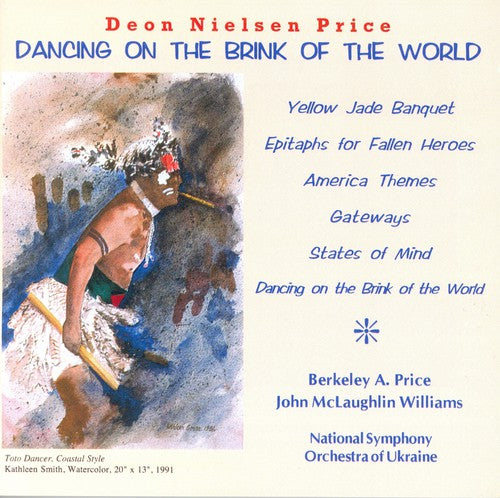
Price: Dancing On The Brink Of The World, Etc / Price, Williams, National SO Of Ukraine
The American composer Deon Nielsen Price studied with Leslie Bassett and Samuel Adler. She has been active in various academic bodies in West Coast universities. She has written extensively and with distinction in relation to her instrument, the piano. Her catalogue of compositions is substantial.
The pieces featured here are recorded at a higher level than usual and every detail emerges close-up and vivid.
Yellow Jade Banquet sports super-clear textures and lines. Impressions flood in: an excited squeal, an enchanting undulation, an Oriental swerve, a hint of chant and seductively inspirational pulses suggestive of minimalism - which this writing is not. Hovhaness, McPhee, Cowell and Lou Harrison are perhaps influences on this composer.
The macabre Epitaphs for Fallen Heroes induces awe. There is something of the ceremony in this piece with its stonily resonant and hieratically assertive piano part. The Dies Irae and angular dissonance are confidently mixed. Take this as a sort of Bergian-surreal successor to Liszt’s Totentanz.
America Themes is a phantasmagoria of American traditional tunes with Johnny comes marching home melting into Taps and thence to Copland and so on. The composer affectionately continues a tradition made resilient by Ives and keeps the ear constantly beguiled by each transition.
Gateways is a gritty, rhetorical and tough work for wind band. It is inspired by life’s paths that step off the way or onward through gateways. It is as much about the paths as the gateways themselves, we are told.
States of Mind is a work in four movements: Meditation, Troubled Thoughts, Mysterious Dream, Transformation. The first is a tender essay redolent of Barber at his most gentle. Troubled Thoughts thrusts thorny angles into the pottage and its stinging poignancy sears and scars in a way suggestive of Schnittke. Mysterious Dream moves from dank meditation to free-wheeling surreal visions. Transformation has a serrated Shostakovich-like determination and some stunning headlong pizzicato passages. The fugal flavour of some of the writing was irritating - a very personal prejudice.
Dancing on the Brink of the World is much in the same exotic vein - a sort of time-travelling fantasy from the Yelamu autochthons of Crissy Field to Hispanic incursion and onwards from the internment of Japanese Americans to a tribute in retrospect to the ancient cultures. It’s a rich brew of whooping energy, bristling and chirruping, ratchet and rattle, groaning brass redolent of Hovhaness and dancing vitality. A smoochy soft shoe dance is made the more intriguing by a high and anxiously buzzing repeated figure from the violins. Fragments and musical units are in constant motion like an inspirational kaleidoscope of the emotions and of inventive imagery. The effect in this work’s dazzle of consciousness is something like a pellucid version of Grainger’s Warriors. The work ends with the foghorn in the Bay.
This disc is a successor to Cambria’s first Deon Nielsen Price CD (CD-1170) which included To the Children of War, song-cycle for voice and piano; Diversions; Crossroads for trio; L'Alma Jubilo (The Jubilant Soul), for solo guitar; Big Sur Triptych, for soprano saxophone and piano: (Sea Otters; Redwoods; Crags); Hexachord: View from Malibu; and Three Faces of Kim, the Napalm Girl, for alto and soprano saxophones and piano.
The notes are quite full but fail to tell me things like the composer’s year of birth and exactly where Crissy Field is.
This music is intriguing - rich and strange indeed. Very Californian in the freewheeling accommodation it strikes with the Pacific Rim and with history.
-- Rob Barnett, MusicWeb International
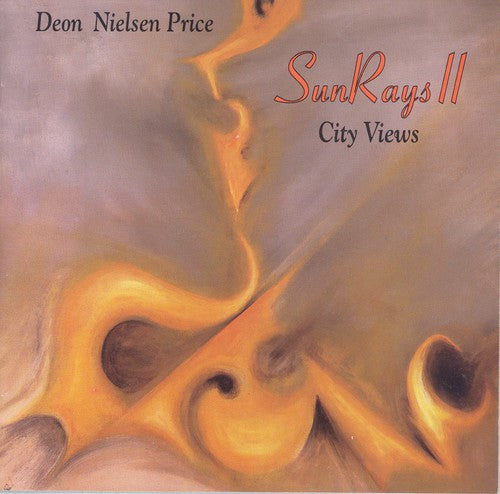
Sun Rays Ii - City Views - Deon Nielsen Price
Here we have a musical remembrance of life in Los Angeles as experienced by composer Deon Nielsen Price during a 35 year residency. Like electricity created by the impact of the sun's rays as they dance and intersect in the city, this music is meant to be at times graceful and at times energetic; it is also reflective of the cultural diversity of the City of Angels at the beginning of the new century. Deon Nielsen Price studied at Brigham Young University, the University of Michigan and the University of Southern California. She has made her career as a music educator in various colleges and schools in and around Los Angeles.
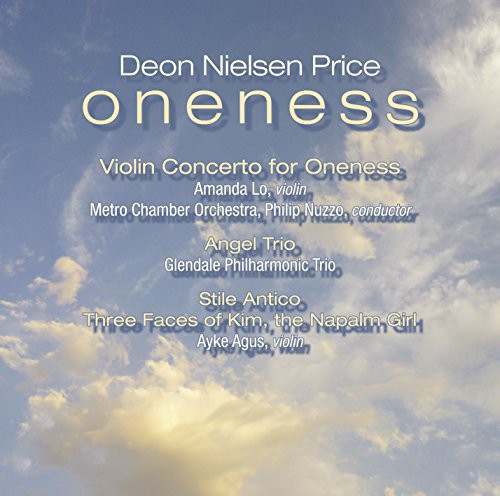
Deon Nielsen Price: Oneness
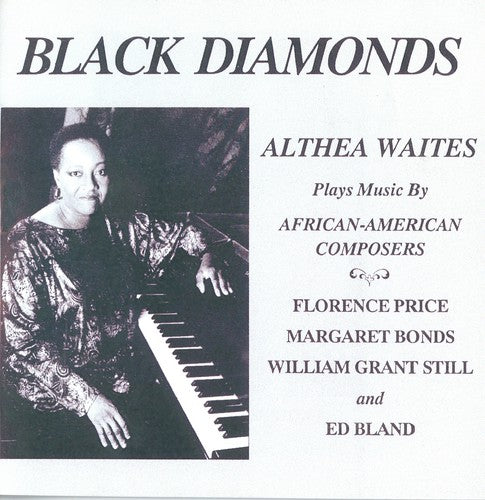
Piano Recital: Waites, Althea - PRICE, F.B. / STILL, W.G. /
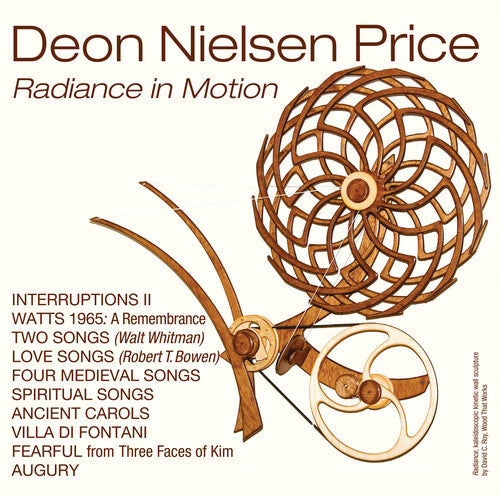
Deon Nielsen Price: Radiance In Motion / Various
Cambria Master Recordings is pleased to announce Radiance In Motion – the title of a new album by Deon Nielsen Price. The album takes its name from David C. Roy’s kaleidoscopic kinetic wooden wall sculpture, Radiance, whose image is featured in the album artwork. Following a devastating fire that destroyed the original manuscripts, several of the works on this recording are renditions from copies that fortunately surfaced in private libraries throughout the United States and Europe. Like that piece of mechanical art, the music propels us to experience splendorous musical sounds with varied colors and timbre. The musical works invite our thoughts and feelings to past, present and future events. Earlier Cambria albums featuring music by Deon Nielsen Price include Oneness, (Violin Concerto for Oneness and Angel Trio); New Friends, Old Friends, (folk ballet: Toads and Diamonds); Dancing on the Brink of the World (orchestral, National Symphony Orchestra of Ukraine); Clariphonia: Music of the 20th Century on Clarinet; SunRays II (chamber music); and SunRays (To the Children of War, poetry by Maya Angelou).
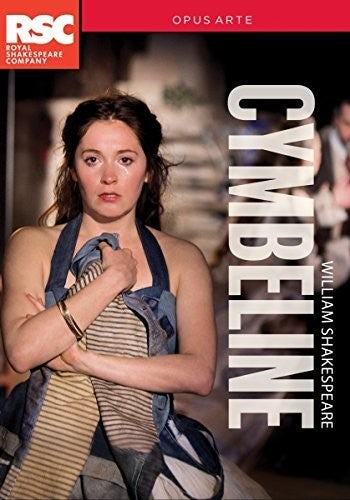
Shakespeare: Cymbeline
Shakespeare: Cymbeline [Blu-ray]
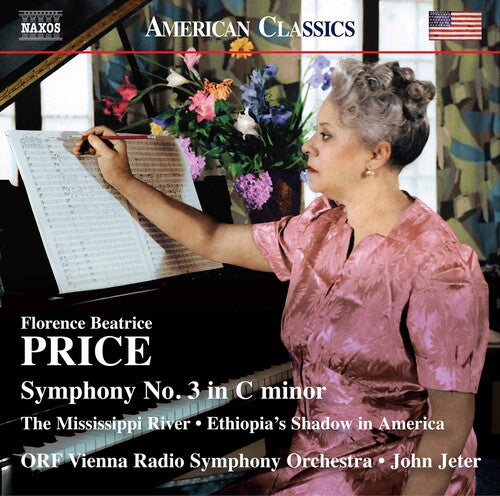
Price: Symphony No. 3 - The Mississippi River - Ethiopia's Shadow in America / Jeter, ORF VRSO
Naxos continues its exploration of Florence Price’s unjustly neglected orchestral works with this latest album, which includes Symphony No. 3. The ORF Vienna Radio Symphony Orchestra is conducted by Price advocate, John Jeter, who received widespread praise for his album of Symphonies Nos. 1 and 4 (8.559827), released in January 2019.
REVIEW:
Florence Price’s Symphony No. 3 (1940) may be her finest. Written in four well-proportioned movements, it begins with music of high seriousness—a slow introduction that sounds like the Adagio of Bruckner’s Seventh meets the Blues—and never looks back. The ensuring Andante is extremely beautiful, and in place of the usual scherzo Price gives us her customary “Juba,” a dance-like fantasy full of captivating sonorities, sultry melodies, and gently offbeat rhythms. As in the Fourth Symphony, Price calls the finale the actual Scherzo, offering her own imaginative slant on traditional symphonic form. It’s worth pointing out that as a graguate (with honors) from the New England Conservatory, Price was about as well trained as any American composer of her day, and entirely apart from the music’s characteristically personal expressive elements, her technical sophistication as a writer for the orchestra really shows. This is good stuff.
The Mississippi River, sometimes called a “suite,” is actually a tone poem containing nearly half an hour of continuous music. Price quotes American folk tunes and Negro spirituals (Get Along Little Doggies, Deep River, etc) as the river wends its way from north to south, but what impresses most is how well sustained the musical argument is, and how effectively this lengthy and colorful piece cheats the clock. Really, there’s no excuse for this music not being programmed regularly in American orchestra concerts. Finally, Ethiopia’s Shadow in America is a brief triptych tracing the arrival of the Black man to American as a slave, his resignation and faith, and finally, hopefully, his ultimate assimilation into American society in a fusion of African and “acquired impulses.” The work offers a useful commentary on the role of the individual in society in these racially polarized times.
John Jeter has already turned in very good performances of Price’s First and Fourth Symphonies with his own orchestra in Arkansas, but these recordings with the full-time ORF Vienna Radio Symphony Orchestra are both better played and better recorded. Price was an important and worthy voice in American classical music, quite apart from the challenges she faced as an African-American woman. Getting to know her is a genuine treat.
-- ClassicsToday.com (David Hurwitz)