Florent Schmitt
18 products
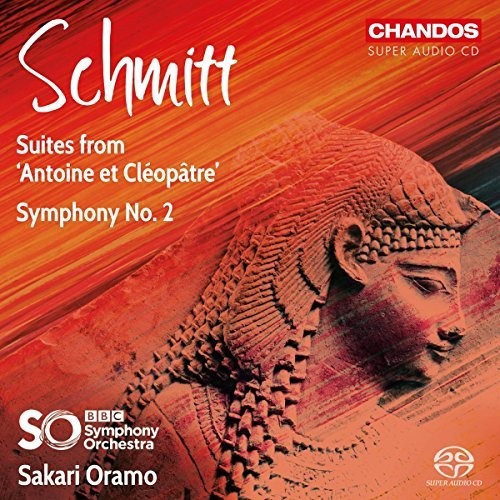
Schmitt: Suites from Antoine et Cleopatre & Symphony No. 2 / Oramo, BBC Symphony
Making his debut on Chandos, Sakari Oramo, who with the BBC Symphony Orchestra this year has championed new and rarely performed works, presents in surround sound the extravagant musical world of Florent Schmitt. The recording follows two exceptional Barbican performances with the same forces, a ‘sensuous and exotic’ Antoine et Cleopatre, according to the Financial Times (2016), and the first performance for nearly a dozen years of Symphony No. 2 (2017). The Second Symphony, the last major work by Schmitt, has nothing valedictory about it: as lavish and rhythmically sophisticated as his earlier music, emphatically bounding in fast passages and supple in slow, it also encompasses all the different musical expressions and styles that he had used over almost eight decades of composing. On the other hand, it is far from being an ‘old man’s piece.’ ‘It is really exuberant- very, very inventive, and incredibly busy for everyone,’ as Sakari Oramo explained in a BBC Radio 3 interview. The symphony is paired with the two orchestral suites from Antoine et Cleopatre, music written for Shakespeare’s play, premiered in 1920 at the Paris Opera, and very rarely recorded since then.
Schmitt: Complete Original Works for Piano Duet & Duo, Vol.
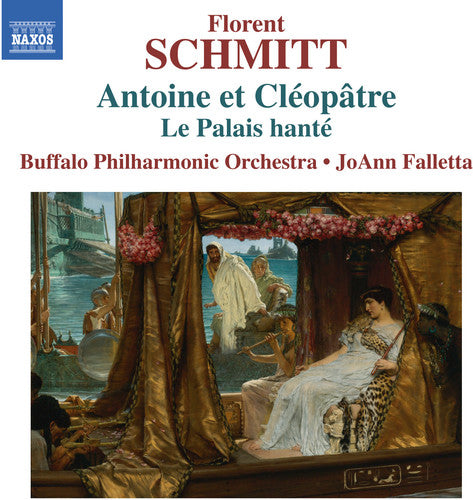
Schmitt: Anthony & Cleopatra… / Falletta, Buffalo Philharmonic
-----
Review:
The performances are admirably stylish, while the Buffalo Philharmonic boast nicely dexterous strings and woodwind.
– Gramophone
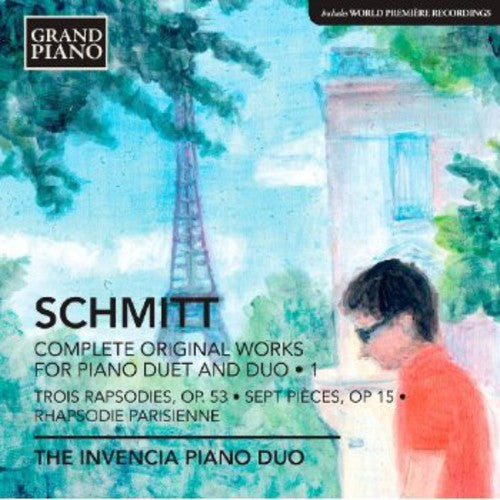
Schmitt: Complete Works for Piano Duet & Duo, Vol. 1
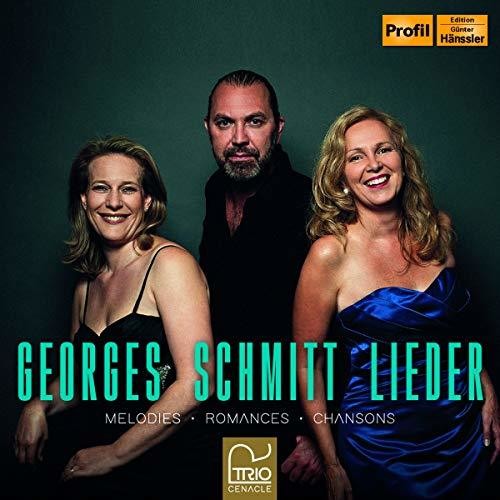
Georges Schmitt: Lieder
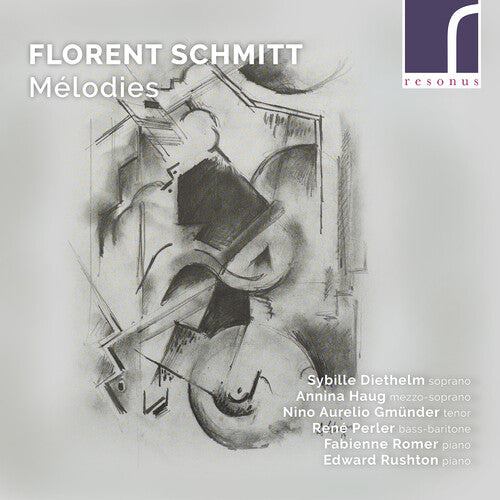
Schmitt: Melodies
Rarely heard on recording, the songs of Florent Schmitt receive fresh exposure in this significant new survey of these neglected works including a number of world premiere recordings. The qualities that appeal in many of Schmitt’s larger works are found in abundance in this selection that spans his entire creative life: his music’s gorgeous sensuality, biting wit, laconic charm, and unleashed savagery. Pianists Fabienne Romer and Edward Rushton along with an outstanding lineup of soloists, explore this rich seam of complex compositional techniques, revealing a composer of extraordinary individuality along with a fascinating affinity with the darker side of human existence.
CRAZY SOUND
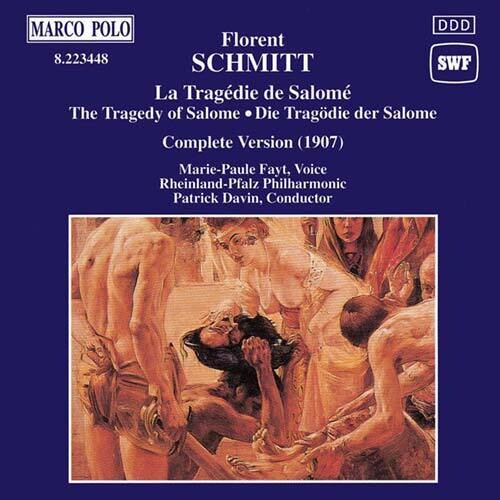
Schmitt: La Tragédie De Salomé / Davin, Fayt
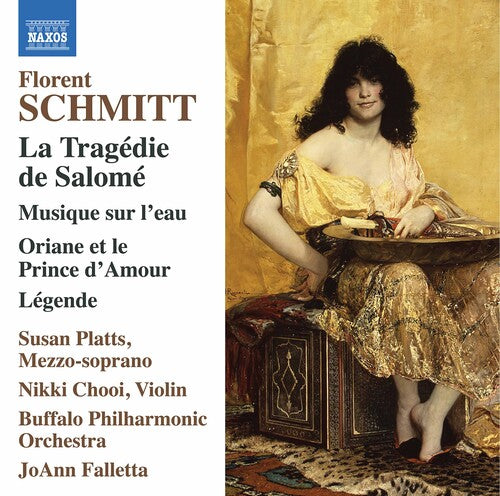
Schmitt: La Tragedie de Salome, Musique sur l'eau, & more / Falletta, Buffalo Philharmonic
-----
REVIEW:
Although Florent Schmitt lived until 1958 and took an interest in musical trends of the day, his fundamental style never really changed. It tightened up a bit under the influence of Stravinsky but remained essentially late Romantic. JoAnn Falletta has been an unfailingly successful advocate of Schmitt's on disc. There are quite a few versions of La tragédie de Salomé available, but none more refined and silky than this one. The Buffalo Philharmonic is a polished orchestra and has a wonderful satin feel for French music. The smooth acoustic of Kleinhans Hall and Naxos’s customary transparency do the rest.
All told, this is a winning release. In the vanishing wake of dodecaphonic music, where process was everything, we seem to be rediscovering beauty and meaning in composers who were, so to speak, left behind. More power, then, to Florent Schmitt!
– Fanfare
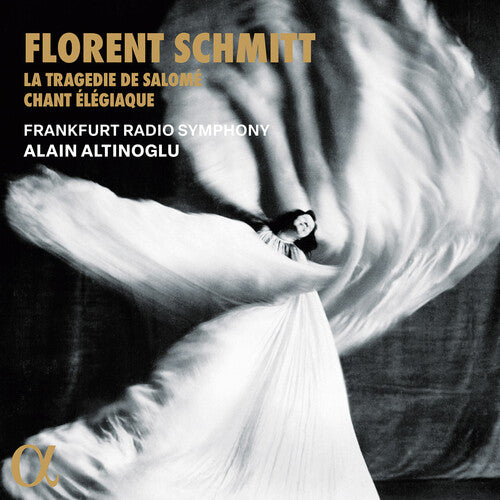
Schmitt: La Tragedie de Salome & Chant elegiaque
In 1907, Florent Schmitt composed music to accompany a ‘mimodrame’ danced by Loïe Fuller, La Tragédie de Salomé. His score is bursting with colour, energy, and voluptuousness – and also with oriental influences stemming from his travels to Morocco and Constantinople, where he discovered the howling dervishes. The final scene features the heart-rending ‘Chant d’Aïça’, an oriental melody sung by a soprano. This music, though bold and modern for the listeners of 1907, nonetheless aroused the admiration of another composer, Igor Stravinsky, to whom Schmitt dedicated the Symphonic Suite he subsequently derived from the work. However, Alain Altinoglu, at the helm of the Frankfurt Radio Symphony Orchestra of which he has been Music Director since 2021, has chosen to record the original version of this landmark of early twentieth-century French music. The beautiful Chant élégiaque, in its 1911 version for cello and large orchestra, completes this programme.
Schmitt & Touchard: La Tragédie de Salome / Masmondet, Les Apaches
Julien Masmondet and Les Apaches present Florent Schmitt's La Tragédie de Salomé in a new light by revisiting its original 1907 version, augmented by Fabien Touchard’s creations in homage to Loïe Fuller, the artist who then embodied the modernity of Salomé. At the crossroads of dance, poetry and music, they pay tribute to this masterpiece of orchestration by elaborating together a new type of show, captured by b•records at the Théatre de l'Athénée Louis-Jouvet.
Schmitt: Sonate Libre
Florent Schmitt was one of the most original French composers of his generation, and his chamber music shows him at his most personal. The Quatre Pièces, Op. 25 are evocatively lyrical while the Scherzo vif brims with intricate but fiery virtuosity. The Sonate libre, Op. 68 remains one of his most admired works, a bold diptych with lyric rhapsody at its core but one that also evokes the tragedies of the First World War. The late masterpiece Habeyssé, Op. 110 reveals the explosive power and subtle poetry of Schmitt’s imagination.
Schmitt: La Tragedie De Salome, Ombres, Mirages / Vincent Larderet
Cosmopolitan by nature, independently minded and prolific, Florent Schmitt sought inspiration from many sources for his highly original compositions. His Ombres, Op. 64 (Shadows) has been compared with Ravel’s Gaspard de la nuit, and Mirages, Op. 70 pays tribute to Debussy and Liszt. The Tragedy of Salome, originally a ballet score in seven scenes, was praised by Igor Stravinsky as ‘one of the greatest masterpieces in modern music’. The composer’s version for piano retains the dramatic impetus of the original and here receives its world première recording. Vincent Larderet is a prize-winner in several international piano competitions and performs in major concert halls and at renowned international festivals.
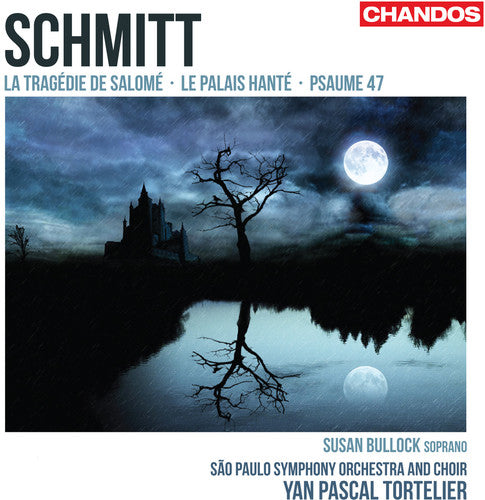
Schmitt: La Tragedie De Salome, Le Palais Hante, Psaume 47 / Tortelier, Bullock, São Paulo Symphony
An auspicious and impressive debut for this new performing team. Any new Schmitt disc from this source will be eagerly awaited.
This is a disc to welcome in every respect. Yan Pascal Tortelier was a stalwart of the Chandos catalogue not so many years back so it is a pleasure to welcome him back into ‘active service’ particularly when at the helm of the orchestra with which he has recently started as principal conductor, The São Paulo Symphony Orchestra. This ensemble have proved to be an absolute revelation in recent years with a series of sensational discs - mainly on the BIS label - of primarily Latin-American repertoire. It is a particular delight to hear all the good opinions of them formed there carried over into unfamiliar repertoire. Chandos have matched BIS on the sonics front producing a disc of excellent range, detail and sonic impact – elements all vital in conveying the richness and power of these three hedonistically romantic scores.
Composer Florent Schmitt seems doomed to the periphery of the popular Classical Music repertoire certainly outside his native France. The issue, as it is with so many similar composers, is one of achieving a kind of critical mass of familiarity which allows him to become recognisably his own man as opposed to being simply an amalgam of influences. Curiously, this disc both serves and hinders that cause. As a first port of call for the collector new to his music this is pretty much ideal bringing together as it does his three most famous (relatively) scores in solidly fine performances. If Chandos are going to do for Schmitt what they are currently doing for Halvorsen or D’Indy it is vital that this represents simply volume 1 in a developing series. None of the works presented here are new to the catalogue so converts to the Schmitt cause will have to decide whether duplication of repertoire is affordable.
La Tragédie de Salomé turned up on a blind listening disc a year or so back and is a perfect embodiment of that peculiarly Gallic obsession with what might be termed ‘erotic exotica’. Schmitt wrote an hour long ballet score in 1907 scored for chamber orchestra. Subsequently he extracted a suite of about half the score scored for a much larger orchestra and that is what is presented here. The sequence of the music in the suite follows the broad arc of the drama from a quiet yet sensuous dawn through ever more obsessive and charged dances to the climactic tragedy as Salome and the palace are overwhelmed by a storm. It is graphically seductive stuff and impossible not to respond to if you have any taste for cinematic excess in music. Likewise it is meat and drink to a virtuoso orchestra and a recording company with a reputation for demonstration quality recordings. Throughout the entire disc the playing of the orchestra is simply first rate. The strings are a model of sensuous sonority, the woodwind full of character and the brass perfectly blended; brazen or full-voiced as the music requires. Additionally, the trumpets just give their tone a little edge of vibrato which is ideal in this repertoire. Chandos have produced this as a SA-CD. Unfortunately I do not have the facilities to listen to it in this format but even the ‘standard’ CD is pretty sensational. The liner notes by Roger Nichols are good and include a useful synopsis for the ballet suite. The information about the individual works is good but I do think it would have benefited from a more extended biographical note and one that placed these works in context both as part of the composer’s oeuvre and more importantly their significance in the greater scheme of French music of the period.
The second work on the disc reflect another French fin-de-siecle obsession; namely the works of Edgar Alan Poe. Here Schmitt writes a compact thirteen minute tone-poem called Le Palais hanté based on the story The Fall of the House of Usher. In recording terms this is the rarest item offered. I can think of only one other recording – on French EMI with the Monte Carlo Opera Orchestra coupled with Caplet and Debussy. My cassette copy languishes unloved and unlistened to somewhere in the attic so I have not been able to make a direct comparison but memory tells me it had nothing of the colour or fluency of the current version. In a not wholly relevant but interesting diversion it is interesting to see how that other great Poe-acolyte Josef Holbrooke treated similarly nightmarish narratives at almost exactly the same time (1903/4) – I have to say I prefer Schmitt who manages to reign in the temptation to go fully over the top. The problem that Schmitt does have in this work is that it is far stronger on atmosphere and orchestration than melodic memorability. It is certainly worth hearing but is not the work to convince one that Schmitt is a great composer.
More convincing on that front is the final work which seems to tap yet another abiding French fascination – this time with what I might term the ‘militant psalm’. The orchestra is joined by their own – very fine – choir and soprano soloist Susan Bullock. The immediate impression of the singing is of great discipline and care over the balancing of the voices. The men’s voices are strong and extremely well focused whilst the sopranos have no apparent difficulties at all with Schmitt’s high-lying tessitura. The chorus to orchestra balance is very good with soloist Bullock set believably in front. For my personal taste I find her voice a fraction too fruity for this type of music. The booklet provides full texts in the original French as well as English and German translations but the choir sing with such excellent diction that it is easy to follow the text by ear alone.
After all of the superlatives above it might seem strange not to give the disc an unqualified recommendation which indeed I probably would have done right up to the point I made a comparison with another version in my collection. This is the 1990 Erato recording from Marek Janowski and the Choir and Orchestra of Radio France. The two main works are here but by omitting Le Palais hanté it makes for a disc of relatively short measure. Add to that that the current disc is better played and engineered and you will wonder why I hesitate. It is simply because somehow when making the direct comparison the new disc has a fraction of controlled calculation the older disc doesn’t. In its rather wild and woolly way the ecstasy – be it of a lascivious Salome or of a religious fervour comes across better. For example, in the psalm setting Schmitt repeats the lines “frappez les mains”. The French chorus, strained by the tessitura and not nearly as tight an ensemble do sound as though they are caught up in some revelatory moment. The São Paulo chorus in contrast sound a tad too drilled - perhaps worth noting too Janowski is a good two minutes quicker than Tortelier overall which does convert into extra urgency of expression. Likewise in the ballet suite, the final conflagration and destruction of the palace strains the French players and engineering but in doing so the mental picture they create is excitingly vivid, conversely the Brazilian players are able to take it all in their stride – objective reportage rather than breathless eye-witness. But this is really a matter of tiny degree and no-one buying this new disc would be anything but thrilled particularly if you have a sound-system up to the task. One last thought – again in direct comparison I think Janowski is slightly more skilful at handling the transitions between sections in both main works. This is less of an issue in the suite which are linked dances but in the Psalm his more fluent approach allows the work to flow as an organic whole. And just to add to your purchasing conundrum – the Janowski Erato disc has been re-released on the Warner Apex label at a tempting bargain price of under £5.00 as opposed to the Chandos full price. Well nobody ever said collecting was straightforward!
I’m none the wiser as to whether Schmitt is a great composer or not – my listening notes are dotted with references to other works but then I realized that often the Schmitt pre-dates them so in effect he was very much a composer of his time. The fact that he rarely seems to get to a “volume 2” is emphasized by the fact that there is a recent (2007) Hyperion disc I have not heard which again duplicates the two main works as well as HDTT’s revival of the classic EMI Martinon recordings. These are also relatively early pieces – Schmitt lived through to 1958 so I do hope that this same team return to his later catalogue. In any event, this is as auspicious and impressive a debut for this new performing team as I hoped it would be – any new disc will be eagerly awaited.
-- Nick Barnard, MusicWeb International
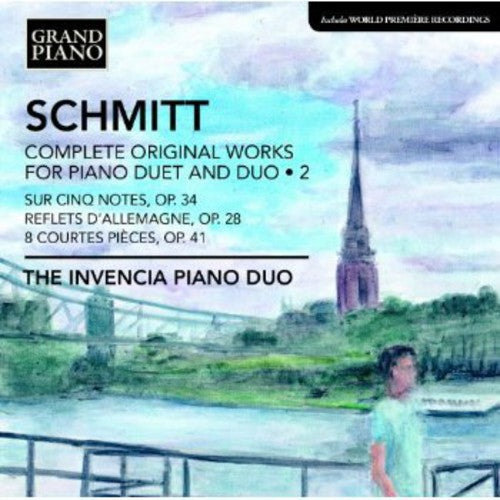
Schmitt: Complete Original Works For Piano Duet & Duo Vol 2 / Invencia Piano Duo
Florent Schmitt was one of the most original and influential French composers of his time. His music shimmers with luxuriant melodies, good humour and a fearless harmonic vocabulary. This second of four volumes is filled with innovation and stylistic bravura, from the remarkable variety to be found in Sur cinq notes to the balletic poetry of Reflets d’Allemagne.
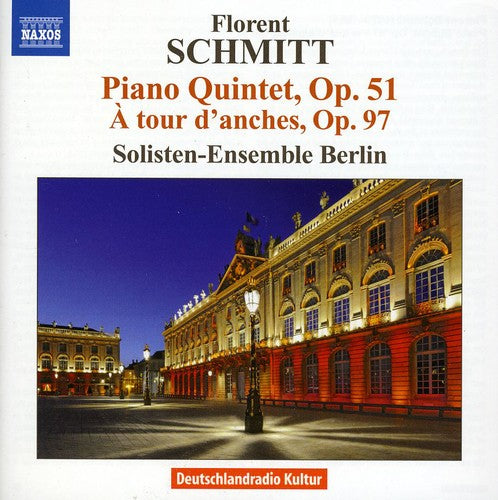
Florent Schmitt: Piano Quintet, A Tour D'anches / Berlin Soloists
Compared by contemporaries to Ravel and Debussy, French composer Florent Schmitt is being rediscovered today. Following his death, one critic mourned that “French music has just lost a smile and a master”. The whimsical and sparkling À tour d’anches for oboe, clarinet, bassoon and piano and the dramatically beautiful Piano Quintet reveal a powerful and distinctive personality. By turns lyrical, humorous and fiery, these two chamber works span a period of almost forty years, from the beginning of Schmitt’s mature period to his late style.
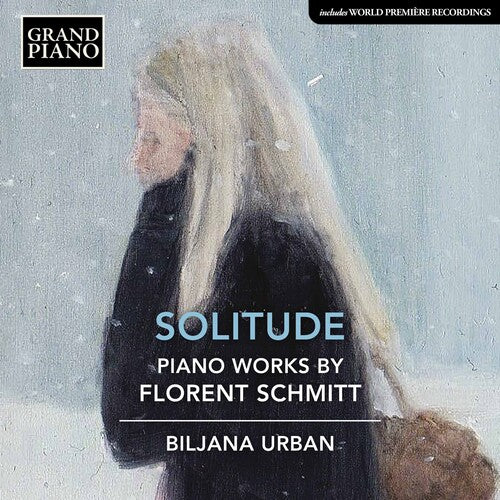
Solitude - Piano Works by Florent Schmitt / Urban
Florent Schmitt was a strikingly original composer whose influences were as varied as his own restless and imaginative music. A number of his solo piano works are little known and offer an important insight into his compositional development. Neuf Pièces, Op. 27, which includes a Spanish-infused Gitanella movement, was composed during his first period of travel. The expressive and vivid elements of Crépuscules, Op. 56 are infused with harmonic richness and quiet melancholy, while Ritournelle, Op. 2 No. IIbis displays an airiness and wit characteristic of French music of the Roaring Twenties. Internationally renowned pianist, Biljana Urban, presents a selection of neglected gems of French piano literature including many world première recordings.