Francesco Cavalli
30 products
-
Francesco Cavalli: Missa a 8 voci concertata con Istromenti,
$16.99CDDynamic
Sep 19, 2025DYN-CDS8074 -
-
-
-
-
-
-
-
-
-
-
-
-
-
-
-
-
-
-
-
-
-
-
-
-
-
-
-
-
-
-
-
-
-
-
-
Francesco Cavalli: Missa a 8 voci concertata con Istromenti,
L'ORMINDO (AUS)
Cavalli: Il Giasone
Cavalli: 5 Magnificat and Other Sacred Works
Cavalli: Vespero della B.V. Maria & Vespero delli cinque lau
Cavalli: Didone
Cavalli: Vespero delle domeniche
Cavalli: Il novello Giasone (Live)
Cavalli: Vespero della Beata Vergina Maria a 8 voci
Cavalli: Missa 1660 (Grande messe vénitienne pour la paix fr
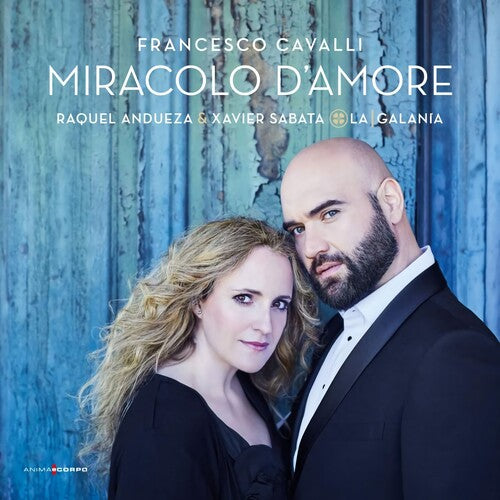
Cavalli: Miracolo d'amore
Cavalli: La virtù de' strali d'Amore
Cavalli: Hymns, Psalms, & Song / Gini, Monteverdi Ensemble
Francesco Cavalli, a central figure in the development of 17th-century Italian music, was as popular in his time as Verdi was in his. Though Cavalli was immensely successful as an operatic composer he wrote important sacred works in the grandiose tradition of the chapel of St Mark’s in Venice as well as shorter, more intense or spiritual pieces. These proved to be revolutionary in their individualism and Cavalli’s stylistic and expressive creativity can be heard in this selection which includes the world premiere recording of Confitebor. All come from a single collection published in 1656.
Cavalli: Il Xerse / Sardelli, Orchestra Barocca Modo Antiquo
Early music specialist Federico Maria Sardelli conducts his Modo Antiquo ensemble in this live performance of Cavalli’s Il Xerse – a highly innovative dramma per musica premiered in 1655. Recorded during the the 48th Festival della Valle d’Itria in Martina Franca, Italy, the cast includes the countertenor Carlo Vistoli and soprano Ekaterina Protsenko. A Blu-ray and DVD of this performance were released in June this year on the Dynamic label (DYN-57983 & DYN-37983).
REVIEW:
Francesco Cavalli’s Il Xerxe was first performed in Venice in 1655. The plot essentially consists of the efforts of the Persian Xerxes to win over the beautiful vassal Romilda, who is, however, in love with the king’s brother, Arsamene. The other main characters are also involved in the intrigues: Amastre, the woman already promised to the Persian king, and Adelanta, Romilda’s sister, who would love to see herself on the Thorn.
Countertenor Carlo Vistoli sings the title role with a warm and round, well-managed voice, which also convincingly conveys the character of the fickle figure. With her powerful voice, Gaia Petrone succeeds in interpreting Arsamene in a vocally worthy and credible manner. Ekaterina Protsenko sings a very attractive Amastre, and Caterina Lippo is also convincing as Romilda. The other roles are satisfactorily cast as well. Frederico Maria Sardelli leads the excellent Orchestra Barocca Modo Antiquo in a spirited, flowing and energetic performance.
-- Pizzicato
Cavalli & Minato: Il Xerse / Vistoli, Protsenko, Sardelli, Orchestra Barocca Modo Antiquo
Francesco Cavalli succeeded Monteverdi as the most influential composer of the new genre of opera that emerged in mid-17th-century Venice. Il Xerse is a fictitious dramma per musica that tells of Persian King Xerxes’ love for Romilda, who in turn is in love with his brother Arsamene. The plot is an entertaining and extremely intricate human comedy of crossed loves, court intrigues and disguises – the work’s popularity saw it staged in Paris at the wedding of Louis XIV and Maria Theresa of Spain. Since overshadowed by Handel’s later Xerxes, this Martina Franca production is the first in modern times.
Nuit a Venise
Venice was surely the capital of music and the arts in the sixteenth and seventeenth centuries, and one of the most coveted positions in the city was that of maestro di cappella at St. Mark’s Basilica. A few lucky chosen candidates succeeded one another in bringing to life the musical splendour of the basilica, all of them fabulous musicians and composers prolonging the legacy of the great Claudio Monteverdi. For its third recording on Alpha, the ensemble Les Surprises has chosen to sail towards Venetian waters and mix with these geniuses of affect, word-setting and theatre, exploring music that ranges from grandiose double choruses to intimate duets or trios combining sacred and profane.
Cavalli: L'Egisto / Dumestre, Le Poème Harmonique
In 1643 in Venice, Cavalli’s new opera caused a sensation among the audience of the Teatro San Cassiano. L’Egisto takes its name from the piece’s main character, an Arcadian shepherd who is misled by an ambiguous inscription into believing his love is lost. A succession of misunderstandings ensues, along with spectacular pieces of music, a scene of madness and a descent into the Underworld for this would-be Orpheus searching for his Eurydice. The sumptuousness of the music, which masterfully illustrates the emotions involved in a love quadrangle, offers Vincent Dumestre and his cast the opportunity to paint with dazzling colours and virtuoso strokes for this first great labyrinth of Baroque sentiment.
Francesco Cavalli: Heroines Of The Venetian Baroque
Cavalli: Vespero della Beata Vergine, Antifone mariane & Sonate / Gini, La Pifarescha
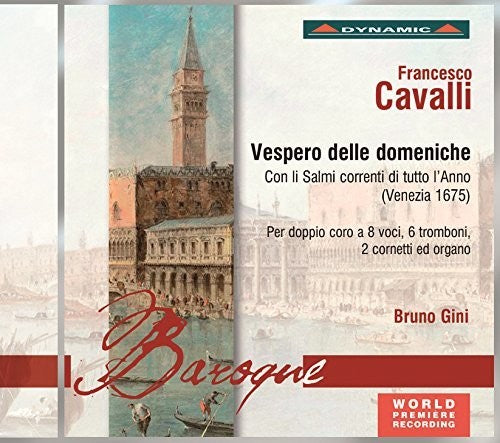
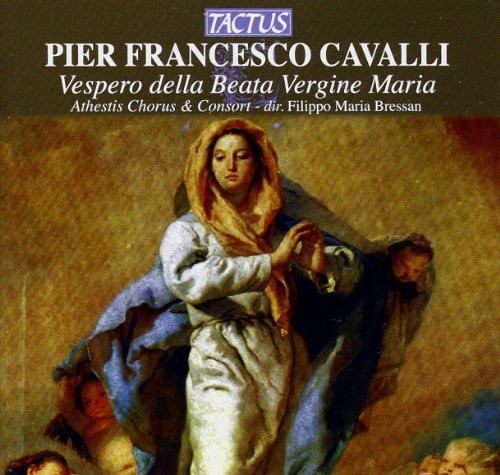
The Vespero dellal Beata Vergine completes the recording of the works contained in the collection of eight-voice Vespers published in 1675, which includes the Vespero delli 5 Laudate and the Vespero delle Domeniche. It is the first complete recording of this trilogy, a masterpiece by Francesco Cavalli: the three Vespers will later be combined in a box-set. A worthy heir of Claudio Monteverdi, Francesco Cavalli uses, in the Vespero della Beata Vergine, musical brush strokes of extraordinary impact, under the aegis of an intense, Counter-Feformist spirituality where the deepest religious feeling goes hand in hand with a musical splendor of clear Venetian imprint. The interpretation is entrusted to the "Coro Monteverdi di Cream" and the "La Pifarescha" ensemble conducted by Bruno Gini, one of Italy's greatest specialists in Cavalli's sacred music.
Cavalli: La Didone / Bonitatibus, Spicer, Sabata, Christie
One of the first operas deserving of the name, Didone is our first surviving musical version of the famous episode in Virgil's Aeneid where the Trojan hero loves and then cruelly leaves the noble Dido. Cavalli learnt at the feet of Monteverdi, and his dramatic transformation of the story is all the more expressive for its intimacy, worthy of the examples set by his master. At the centre of this bold and simple staging – the first opera production by comic actor Clément Hervieu-Léger – is the Queen of Carthage herself, sung with uncompromising intensity by Anna Bonitatibus. William Christie and his singers and players show themselves entirely attuned to the world of Cavalli, where meaning and music fuse.
Didone – Anna Bonitatibus
Enea – Kresimir Spicer
Iarba – Xavier Sabata
Ecuba – Maria Streijffert
Cassandra – Katherine Watson
Les Arts Florissants
William Christie, conductor
Clément Hervieu-Léger, stage director
Recorded live at the Théâtre de Caen, October 2011
Picture format: NTSC 16:9
Sound format: LPCM 2.0 / DTS 5.1
Region code: 0 (worldwide)
Subtitles: English, French, German
Running time: 176 mins
No. of DVDs: 1
R E V I E W:
This is the Cavalli DVD to own; it should also appeal to Monteverdi fans.
The recording companies have been doing well by Cavalli; Opus Arte have also given us a good recording of Ercole Amante on DVD and blu-ray (OA1020D/OABD7050D) and Dynamic have recently released CD and DVD/blu-ray recordings of Il Giasone. I enjoyed this new recording of La Didone at least as much as that of Ercole and much more than Il Giasone, where a good set of performances is vitiated for me by an over-busy production - see September Roundup. Fortunately the subject matter of La Didone mostly precludes the foolery which spoiled Il Giasone; even the temporary madness of Iarbas is sensitively handled.
The title might lead you to believe that La Didone covers only the same ground as Purcell’s Dido and Æneas, the fourth book of Virgil’s Æneid, but you’ll see from the inclusion of characters such as Cassandra and Anchises that it begins with the fall of Troy, as narrated in the earlier books of that work. The Prologue and Act 1 are set amid the ruins of Troy, vaguely suggested by the background.
Nor does the work end as you might expect with the death of Dido - instead she marries her long-time suitor Iarbas. There is some small justification for that in that Iarbas is at least mentioned by Virgil as having sought to marry Dido ( Æneid 4.195-218) and by Ovid, though the latter makes him invade Carthage after the death of Dido. Cavalli’s librettist took up the rage which possessed Iarbas on hearing of Dido’s love for Æneas: “protinus ad regem cursus detorquet Iarban/incenditque animum dictis atque aggerat iras.” (soon [the rumour] made its way round to King Iarbas, inflamed his mind with what was being said and stirred up his anger.) In this production the happy ending is sensitively handled, with Dido urged to suicide by the ghost of her husband but saved at the last moment by the fidelity of Iarbas who has been divinely saved from his madness. In this production, though Dido agrees to marry Iarbas, the mood remains sombre, as if she has in fact died spiritually, a neat solution, though one that is somewhat at odds with the words and music of rejoicing at that point:
Godiam dunque godiamo
sereni i dì, e ridenti,
né pur pronunciamo
il nome de’ tormenti.
If that makes it seem as if the librettist had been playing around unduly with Virgil, it’s worth remembering that Purcell’s took equally great liberties in introducing the witches and making Mercury into a creature of theirs. Mercury is in fact a very serious messenger indeed in Virgil, as he is in Cavalli where the use of the epithet pio echoes Virgil’s oft-used epithet pius Æneas, with a stern message from Jupiter to stop womanising and get on with the job of founding the Roman Empire. In another departure from Virgil in la Didone, Æneas’ father Anchises is still alive when they arrive in Carthage.
What Cavalli has taken on in dealing with the fall of Troy and the loves of Dido and Æneas in one opera is certainly daunting; Purcell limited himself to the second half of the story. Berlioz originally had to split the action across two operas, as Colin Davis also did with the Chelsea Opera Group production with which he made his name as a Berlioz interpreter and which was my own introduction to Les Troyens. At almost three hours, La Didone is certainly a work of heavenly length, as, indeed is Ercole Amante, but neither outstays its welcome. It’s a fine work in the tradition of his teacher Monteverdi. The blurb describes it as ‘one of the earliest operas deserving of the name’, which begs the question what the others were, but it certainly fits.
There is an earlier recording, edited and conducted by Fabio Biondi on Dynamic DVD 33537 and CD, CDS537. Like the present recording it was recorded live; with both you have to ignore a certain amount of stage shuffle. We don’t seem to have reviewed it on MusicWeb International but it received a mixed reception elsewhere, largely because of some vocal shortcomings. Try the audio version for yourself if you can from the Naxos Music Library.
There need be no serious reservations about any of the performances on this Opus Arte recording. You can judge for yourself because large chunks of this performance, one of just under an hour - and one of almost two hours - are available on YouTube. Anna Bonitatibus’ performance of Dido’s lament, with French subtitles, is here; neither sound nor picture is much to write home about by comparison with the finished product on DVD and blu-ray but these generous extracts will give you a good idea of the merits not only of her singing but also of the quality of that lament - a serious challenge to Purcell’s When I am laid in earth and even to Monteverdi’s Lamento d’Arianna.
Let me say at the outset that one major recommendation for this production is the lack of gimmicks in the production. All too often recent productions of opera have been spoiled by tomfoolery, such as the shift of the action of the Glyndebourne Rinaldo to a boarding school, thereby diminishing the value of some very good singing. There’s very little of that here, though I’m not sure why Venus has to depart from Troy and arrive in Carthage lugging a modern suitcase, or why Dido from the outset is not wearing the dark mourning clothes which Anna begs her to put aside. Worst of all, though mild by comparison with that Rinaldo, why does the same dead stag grace the stage in Troy and in Carthage? Why a dead stag when the hunters have been exclaiming about catching a boar? It’s handily placed to provide the blood which Dido smears on herself - and, apparently on the conductor during the curtain call.
Anna Bonitatibus as Dido is first-class; her powerful mezzo voice is as resplendent as her wonderful name and Krešimir špicer’s Æneas is hardly far behind - just occasionally I thought that he pushed the tone a little too hard as he was warming up at the start of Act 1. In quieter moments he sounds mellifluous right from the beginning, especially when he bids farewell to Dido. I’d encountered Ms Bonitatibus before as Juno in Ercole Amante and Krešimir špicer as an effective Ulysses in the Virgin Classics DVD of Monteverdi’s Il Ritorno d’Ulisse (4906129). They lead a strong cast here and I hope to hear both again.
There are absolutely no weak spots in the singing; the only time I had even the slightest concern was when Francesco Javier Borda as Jupiter failed to be quite convincing with the cruelly deep notes which Cavalli has given him. Otherwise he manages the very different roles of Jupiter and Sinon extremely well, exulting in the wicked deception which he has wrought in the latter role. Cavalli’s audience would be classically savvy enough to recall that he was the inventor of the Trojan horse.
Of the other dual roles, Ascanius and Cupid are required to double by the plot and Terry Wey, boyish in appearance and tone of voice, carries off both excellently. Only the combination of Creusa and Juno is problematic - no sooner have we got used to seeing Tehila Nini Goldstein as the first than she has to change gear considerably as the exulting goddess. Claire Debono doubles Iris in the Prologue and Venus. Having played the former pretty straight, I thought her just a little too coquettish as Venus. That does at least mirror her reputation in the renaissance, as depicted in Boticelli’s Venus and Mars.
One other small reservation concerns Anchises; he’s frequently referred to as decrepit - in Virgil Æneas has to carry him on his back and in Cavalli’s libretto he calls himself decrepito - yet he looks rather too sprightly here. We wouldn’t want him to sing in a comic old-man’s voice - this is La Didone not La Calisto, where Hugues Cuénod had such a field day - so it’s just a convention that we have to respond to with willing disbelief. Similarly, the abruptness of Creusa’s death, her dying exclamation, subsequent ghostly reappearance, and the expiration of Coroebus must be thought of as theatrical conventions just like similar abrupt deaths and reappearances in Jacobean Revenge Plays and Victorian melodrama. By and large, there’s nothing here that has to be taken as convention that we are not likely to find in a Handel opera. There is some scope for comic relief in the form of Iarbas’s madness, but it’s hardly slapstick; it’s less emotive than Vivaldi and Handel were to make the madness of Orlando, and it’s certainly not overdone here. Nor is the brief scene where Neptune grapples with Jupiter for interfering in his domain over-played.
That death of Corœbus gives Cavalli the opportunity to write a lament for Cassandra of a kind beloved of audiences of the day. It provides a foretaste of Dido’s lament later; it was the popularity of Il Lamento d’Arianna that not only saved it when the rest of Monteverdi’s L’Arianna was lost but also led its composer to rejig it as a lament for the Virgin Mary.
William Christie’s direction can almost be taken to guarantee a fine performance and that’s the case here. We see him standing at the outset before quite a large orchestra, in front of a harpsichord. I don’t know how often he plays it, but there seems to be another keyboard in the continuo - it and the other continuo instruments can (just) be heard where it matters and that’s a pleasant change from some modern recordings where the harpsichord might just as well not be there.
The recording sounds well enough as played on television but much better via my audio system. I haven’t seen or heard the blu-ray version, which doubtless improves on the sound and picture of the DVD, but you certainly wouldn’t be in any way disappointed with the latter. The camera-work is mostly unobtrusive; in the brighter lighting of Acts 2 and 3, the chitarrone sticking up into the picture is a little distracting, but it probably could not have been avoided. Just occasionally individual voices catch the microphone less than ideally as the actor moves across the stage; this particularly when heard on headphones. Slightly more often the stage noises are a little distracting, especially when heard in audio only.
The notes are far too minimal - a two-page essay in three languages on the Cavalli revival, but no libretto or even synopsis, just a brief plot outline, which is a serious problem. The subtitles, though good, are no substitute. There’s an online Italian libretto and another with English translation. There are subtitles in English, French and German only; could we not also have had them in the original Italian? The English translation is mainly accurate, though there’s the odd inevitably typo and an occasional questionable translation - why call Giove and Mercurio, the Latin deities, by their Greek names, Zeus and Hermes in the subtitles? When Dido describes herself in the final scene as Iarbas’ ancella e sposa, the first word signifies handmaid or slave, not friend as it’s translated.
As I was tidying up this review I noticed that one music magazine has made this the thoroughly deserved DVD/Blu-ray Recording of the Month, a title which I was also tempted to bestow. If you wish to have only one Cavalli recording in your collection, this would vie strongly for that honour, ahead of Ercole Amante and alongside the inauthentic but hugely enjoyable Raymond Leppard recording of La Calisto (no longer available on CD). You may even find yourself preferring La Didone to Monteverdi.
-- Brian Wilson , MusicWeb International
Cavalli: Il Giasone / Sardelli, Dumaux, Wagner, Johannsen [blu-ray]
Also available on standard DVD
Francesco Cavalli was the most successful Venetian opera composer of the mid-seventeenth century. In the wake of Monteverdi, opera was enjoying a real boom, and this spread to the rest of Europe because the ruling classes often met up at the Venice carnival. Giasone displays Cavalli’s sense of drama and musical lightness, as well as a grotesque humour typical of the great Italian baroque operas.
This new production is orchestrated and conducted by the internationally reputed baroque specialist Federico Maria Sardelli. It is directed by the young Frenchwoman Mariame Clément, who is currently making a name for herself with her infectious directing in German and French opera houses. The title role is sung by the promising countertenor Christophe Dumaux.
Francesco Cavalli
IL GIASONE
Federico Maria Sardelli, conductor
Symfonisch Orkest van de Vlaamse Opera
Mariame Clément, stage director
Julia Hansen, scenes & costume designer
Giasone: Christophe Dumaux
Medea: Katarina Bradic
Isifile: Robin Johannsen
Giove/Besso: Josef Wagner
Demo: Filippo Adami
Delfa/Eolo: Yaniv d’Or
Amore/Alinda: Angélique Noldus
Ercole/Oreste: Andrew Ashwin
Vlaamse Opera, Antwerpen, 2010
Sound Format: LPCM 2.0, Dolby digital 5.1
Picture Format: 16:9
Running Time: 198 minutes & 5 minutes (interview)
Language: Italian
Subtitles: English, German, French, Italian, Spanish, Korean
Booklet Notes: English, German, French, Italian
Cavalli: Ercole Amante / Pisaroni, Cangemi [Blu-ray]
Also available on standard DVD
CAVALLI, F.: Ercole amante (DNO, 2009) (Blu-ray, HD)
Francesco Cavalli
ERCOLE AMANTE
(Blu-ray Disc Version)
Ercole – Luca Pisaroni
Iole – Veronica Cangemi
Giunone – Anna Bonitatibus
Illo – Jeremy Ovenden
Deianira – Anna Maria Panzarella
Licco – Marlin Miller
Nettuno / Tevere / Spirit of Eutyro – Umberto Chiummo
Bellezza / Venere – Wilke te Brummelstroete
Cinzia / Pasitea / Spirit of Clerica – Johannette Zomer
Mercurio / Spirit of Laomedonte – Mark Tucker
A Page / Spirit of Bussiride – Tim Mead
Netherlands Opera Chorus
Concerto Köln
Ivor Bolton, conductor
David Alden, stage director
Recorded live from the Het Muziektheater, 2009.
Bonus:
- Illustrated synopsis.
- Cast gallery.
- Behind the scenes with Johanette Zomer.
- Behind the scenes with Luca Pisaroni.
- The making of Ercole Amante.
Picture format: 1080i High Definition
Sound format: PCM Stereo / DTS Surround 5.0
Region code: 0 (worldwide)
Subtitles: English, French, German, Spanish, Italian, Dutch
No. of Discs: 1 (BD 50)
--------------------------------------------------
CAVALLI Ercole amante • Ivor Bolton, cond; Luca Pisaroni ( Ercole ); Veronica Cangemi ( Iole ); Jeremy Ovenden ( Hyllo ); Tim Mead ( Paggio/Bussiride ); Anna Maria Panzarella ( Deianira ); Anna Bonitatibus ( Giunone ); Marlin Miller ( Licco ); Concerto Köln; Netherlands Op Ch • OPUS ARTE OA1020D (2 DVDs: 261:00); OA BD7050D (2 Blu-rays: 261:00) Live: Amsterdam 1/2009
Francesco Cavalli lives pretty much in the shadow of his teacher, Monteverdi, whose three operas are frequently performed. Not so with most of Cavalli’s extant works. When you watch the Netherlands Opera production of Ercole amante it becomes clear why performances of this very large work are few and far between. It is a long opera that requires a large cast of singers and dancers. The Netherlands Opera production is truly a labor of love and daring venture.
The basic plot is simple: Hercules wants to bed his son’s girlfriend. His wife, their son, and the girlfriend are not pleased by this. For three hours an assortment of deities and the girlfriend’s deceased father are outraged and conspire against Hercules. Only a few of these ancillary characters support Hercules in his amorous endeavor.
Ercole amante was written to celebrate the marriage of King Louis XIV of France to Marie-Thérèse of Spain. The opera was intended to be a lavish court entertainment; a new theater was built for the occasion. Unfortunately the theater was not completed on time, so the premiere was delayed a year and Cavalli’s opera Xerse was performed instead. The French composer Lully composed dances that were inserted into both of these Cavalli operas. King Louis danced in the opera to the great delight of the audience (did they have a choice?). It is unknown if Louis was aware that the opera was about the abuse of power and that Hercules was a thinly disguised depiction of the King.
The Netherlands Ercole amante is a big-budget production. It employs a large cast, magnificent costuming that is colorful and often whimsical, elaborate scenic effects, and some ingenious motorized props. The staging is very imaginative and cleverly gives the feeling of Baroque opera even when modern elements are incongruously added to the mix. I wasn’t quite as smitten with the scenery. The stage appears to be quite large, a huge expanse to fill. A few of the set pieces are brilliantly colorful with large bold patterns like wallpaper patterns blown up to gigantic proportions. On video they often overwhelm and detract from the performers. This perhaps was caused by the lighting, which I find harsh and too white. Huge shadows are cast on the scenery and occasionally over the performers. This might have been effective in the theater, but with the tight focus of home video it is distracting and sometimes annoying.
Don’t let these quibbles dissuade you from watching this video. The performance is three hours 18 minutes long (plus five minutes of curtain calls) and is never boring. David Aldin’s creative direction and the talented cast bring this very old opera to life with vivid characterizations and ingenious business. There is not a weak or second-rate voice in the cast; everyone (chorus included) is consistently engaged in the drama. A few performers play multiple roles and create individual characterizations for each. Luca Pisaroni is outstanding as King Louis/Hercules. Pisaroni is a slender man who transforms himself into a muscle-bound Hercules by donning a plastic costume piece by piece. Perhaps aided by the limitations of the costume, he struts and swaggers as a bully, but is strangely likable.
Bonus material is available on both discs. On disc 1 is a synopsis of the plot and “cast gallery.” The synopsis runs for 10 minutes; a voice-over narrator tells the story while pictures from the production are shown. It is well worth your time to watch this before watching the opera.
There are three bonus features on the second disc. Singers Johannette Zomer, who plays three comprimario roles, and bass Luca Pisaroni are the subject of bio-pics that run about 10 minutes each. Much longer, and perhaps more interesting, is the 30-minute feature The Making of Ercole amante.
The opera spans both discs: acts I through III on disc 1, acts IV and V on the second. The picture is 16:9 widescreen. There are two sound formats: LPCM stereo and digital surround. Subtitles are available in English, French, German, Spanish, Italian, and Dutch. The subtitles (at least in English) alternate between the top and bottom of the screen. The lack of punctuation and splitting sentences into phrases occasionally makes making sense of what is being sung tricky.
If you like Baroque opera, or are looking for an introduction to Cavalli’s under-appreciated works, or just want to see a classy and imaginative opera production, this Netherlands Ercole amante is recommended.
FANFARE: David L. Kirk
Cavalli: Ercole Amante / Bolton, Pisaroni, Cangemi
ERCOLE AMANTE
Ercole – Luca Pisaroni
Iole – Veronica Cangemi
Giunone – Anna Bonitatibus
Illo – Jeremy Ovenden
Deianira – Anna Maria Panzarella
Licco – Marlin Miller
Nettuno / Tevere / Spirit of Eutyro – Umberto Chiummo
Bellezza / Venere – Wilke te Brummelstroete
Cinzia / Pasitea / Spirit of Clerica – Johannette Zomer
Mercurio / Spirit of Laomedonte – Mark Tucker
A Page / Spirit of Bussiride – Tim Mead
Netherlands Opera Chorus
Concerto Köln
Ivor Bolton, conductor
David Alden, stage director
Recorded live from the Het Muziektheater, 2009.
Bonus:
- Illustrated synopsis.
- Cast gallery.
- Behind the scenes with Johanette Zomer.
- Behind the scenes with Luca Pisaroni.
- The making of Ercole Amante.
Picture format: NTSC 16:9
Sound format: PCM Stereo and 5.0
Region code: 0 (worldwide)
Subtitles: English, French, German, Spanish, Italian, Dutch
No. of DVDs: 2
Cavalli: Arias & Duets From Didone, Egisto, Etc
Cavalli: Ercole Amante / Pichon, Pygmalion
Also available on Blu-ray
Francesco Cavalli, a natural successor to Monteverdi, was the most famous and influential Italian opera composer during the mid-17th century. Cardinal Mazarin, chief minister to the king, commissioned Cavalli to create a Parisian spectacle to celebrate the wedding of the ‘Sun King’ Louis XIV and the Infanta of Spain. Ercole amante (‘Hercules in Love’) was the flattering subject chosen for this regal extravaganza combining larger-than-life characters with mythology, and genuine human emotions with natural and cosmic phenomena. The result is a sumptuous Baroque spectacle, conceived on a vast scale in this lavish production by directors Valerie Lesort and Christian Hecq.