Francesco Geminiani
21 products
-
Geminiani: Concerti Grossi, Op. 2 & 3
$14.99CDBrilliant Classics
Jan 16, 2026BRI97383 -
Geminiani: Good Taste in the Art of Musick, Music for Violin
$12.99CDBrilliant Classics
Oct 10, 2025BRI97587 -
-
-
-
-
-
-
-
-
-
-
-
-
-
-
-
-
-
Geminiani: Concerti Grossi, Op. 2 & 3
Geminiani: Good Taste in the Art of Musick, Music for Violin
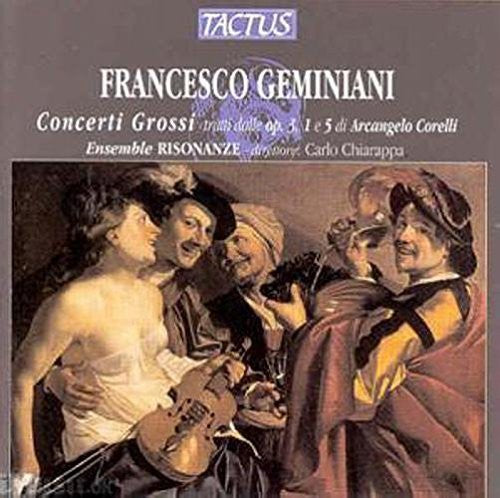
Geminiani: Concerti Grossi tratti dalle Op. 3, 1 e 5 di Arca
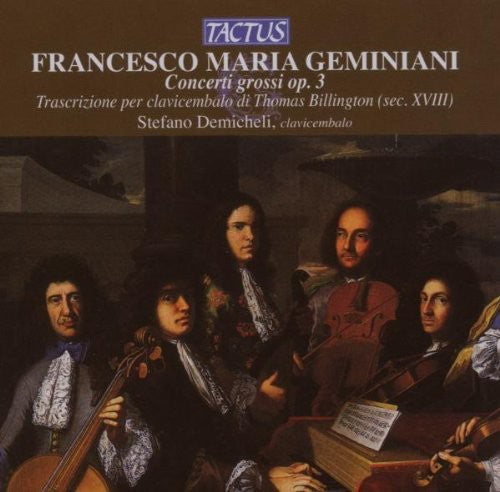
Geminiani: Concerti Grossi, Op. 3
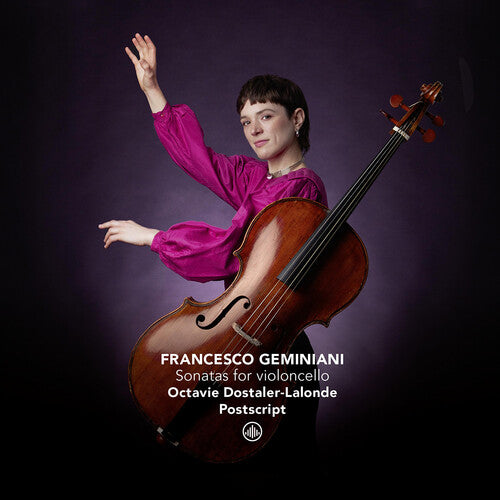
Geminiani: Sonatas for violoncello
TRUE TASTE IN THE ART OF MUSIC
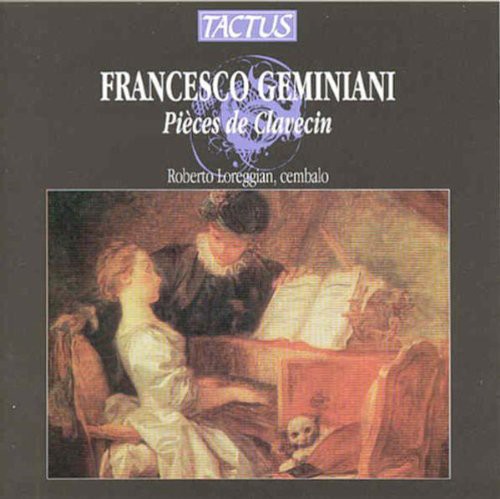
Geminiani: Pieces de clavecin
Geminiani: Sonates pour violoncelle avec la basse continue
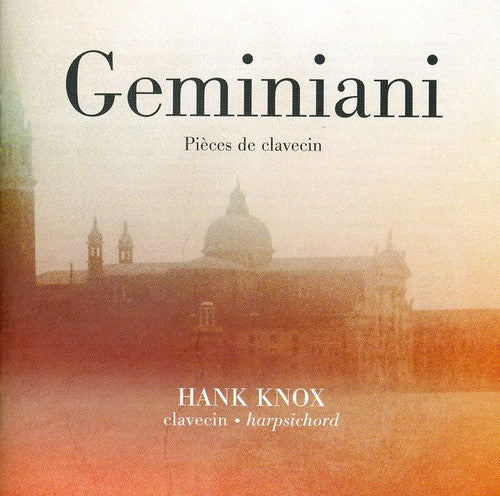
Geminiani: Pieces De Clavecin / Hank Knox
GEMINIANI Selected harpsichord works • Hank Knox (hpd) • EARLY-MUSIC.COM 7772 (62:46)
When we think of Baroque composers for the harpsichord, certain names spring to mind: Rameau, François Couperin, Domenico Scarlatti, Bach, and Handel; perhaps Duphly, Seixas, Louis Couperin, a few others. Geminiani is not among these. He was celebrated during his lifetime as a composer, a theorist, a violinist with an unusually sweet and beguiling tone that served him well, according to one account, in his final concert, two years before his death at the age of 74. But what this album presents is harpsichord music by Geminiani.
These are arrangements of movements drawn from sonatas originally written for violin and accompaniment. The op. 1 collection that supplies two of the pieces on this album was first published in 1716, and the op. 2 collection that furnishes one cut was transcribed from concerti grossi published in 1732. All but one of the remaining 10 selections (a minuet, described in the liner notes as deriving from an unknown source, presumably part of the group of minuets by the composer published in various 18th-century anthologies) come from Geminiani’s op. 4 of 1739. The keyboard arrangements appeared in 1743, both in Paris and London, as Pièces de clavecin tirées des diffrens ouvrages de Mr. F. Geminiani adaptées par luy même . These would prove popular, especially in conservative England, where some were reprinted as late as 1778. Indeed, Geminiani was to remain a name to conjure with in British musical circles long after his star faded elsewhere. As late as 1792, the brilliant amateur composer John Marsh mentions in his diaries a public concert in which a talented friend included Marsh’s own organ transcription of a Geminiani “violin concerto.”
The arrangements are densely idiomatic, surprisingly so when one considers both their origins for violin and continuo, as well as the composer’s lack of known expertise on the instrument. Knox speculates that it was in 1742, while arranging for the publication of his music in Paris “drawn partly by the superiority of French music engravers” (though not mentioning how the composer no doubt wished as well to secure some financial restitution before the notorious Parisian publishers pirated his new publications) that Geminiani heard Duphly, Daquin, and Rameau in the salon of Madame Duhalley and her daughter. He might have learned something from these recitals, but it’s equally likely that he kept abreast of French developments through these same composers’ publications. In any case, the result is a fluently professional manner that moves easily between the styles of the French and Italian schools, as in the sonata movements marked tendrement and vivement of op. 4/5 (the latter with overtones of Domenico Scarlatti, who also puts in an appearance in the gigue marked vivement of op. 4/4). This is imaginative, at times fanciful music that displays a gift to charm, while neglecting nothing in the way of technical or structural finesse.
Hank Knox manages the dual legacy of the French and Italian schools with ease. He is flexible where flexibility is clearly called for, as in the op. 4/8 movement marked amoureusement , and just as solidly rhythmic as required in the modérément from op. 4/6, or the gayment from op. 4/1. The fugato movement from op. 1/6 finds something between the two, both regular enough to maintain forward motion while phrasing elastically to highlight the harmonic underpinnings of each important entry. Technically there are no problems, tempos are well selected, and an understanding of each piece’s salient musical points is apparent. Knox’s sympathetic treatment of the tendrement from op. 4/5 gives me hope we’ll at some point hear his Rameau.
In the manner of ornamentation, Geminiani, like François Couperin, was explicit in defining appropriate ornamentation of “good taste,” that he stated in one of his treatises was a matter of “expressing with Strength and Delicacy the Intention of the Composer.” He described 14 ornaments, as well as acciaccature , a dissonant note in a chord that is rolled upward or played simultaneously. He wrote out ornamented changes in repeated passages as well, supplying figurations or variations to the treble. Knox wisely chooses to follow Geminiani, or where no ornamentation is provided to proceed along similar lines.
Sound is good, with close miking of a sweet but bright instrument created by Jacob and Abraham Kirckmann in 1772, the earliest surviving harpsichord by the uncle-and-nephew builders. It includes an innovative “machine stop” that instantly changes between one and all registers. (Jacob Kirckmann was to prove less amenable to innovation when it came to installing Adam Walker’s so-called “Celestina stop” in a new harpsichord ordered by Thomas Jefferson 14 years later, because he felt the resin used on the silk thread ultimately destroyed the instrument’s entire tone. But the amiable Jefferson, as usual, knew his own mind, and the Celestina stop was installed.)
I’ve only one minor quibble. In his liner notes to this release, Knox offers the fact that Geminiani refused the post of Master of State Music in Ireland in evidence that the composer avoided permanent institutional positions. Knox may not have been aware that it was made conditional upon Geminiani converting from Roman Catholicism to Church of England. In any case, Geminiani never lacked for patrons in his adopted land, and seemed to have an instinctive gift for getting along with others that several of his other Italian violinist colleagues (including Veracini and Vivaldi) lacked.
Recommended? But of course. This is fine, highly characterized music, excellently played. More, if you please.
FANFARE: Barry Brenesal
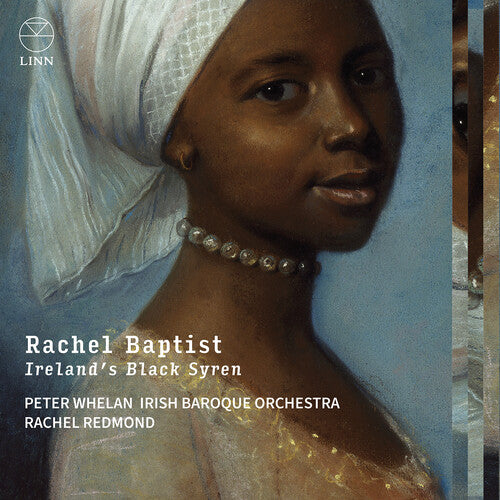
Rachel Baptist - Ireland’s Black Syren / Redmond, Whelan, Irish Baroque Orchestra
As champion of music from Ireland, Peter Whelan and his Irish Baroque Orchestra give a rare glimpse into a fascinating figure of the eighteenth-century Dublin music scene. Who was Rachel Baptist? Not much is known of the ‘Celebrated Black Syren’, other than she was a soprano of African descent and born in Ireland, sang regularly in Dublin, London, Liverpool, and other cities, and performed alongside famed castrato Giusto Ferdinando Tenducci. The program includes works that Baptist might have performed at the ‘Grand Concert of Vocal and Instrumental Musick’ held in 1752, including arias by Handel, Pasquali (a couple of premiere recordings), Purcell, and some additional instrumental pieces. The ‘resplendent’ Rachel Redmond (The New York Times) is the soprano.
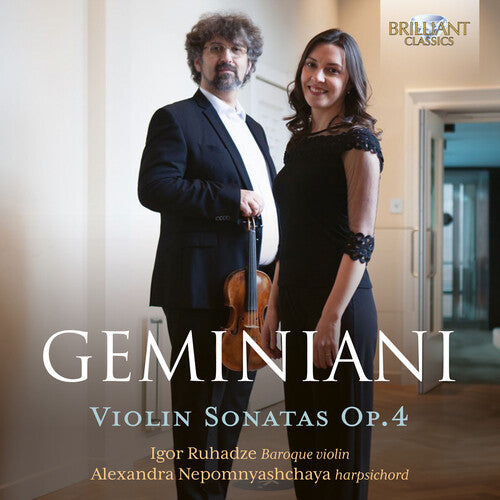
Geminiani: Violin Sonatas, Op. 4 / Ruhadze, Nepomnyashchaya
Ruhadze plays Geminiani: the latest volume in a revelatory project breathing new life into the founding figures of the Italian violin school of the 18th century.
While Geminiani's Op. 1 collection dates from 1714, just two years after he'd settled in London, Op. 4 was published in 1739, alongside a revision of Op. 1. In the meanwhile he had become known, not only in England but across Europe, for the brilliance and imagination of his playing, which transfers itself so readily on to the pages of these sonatas. They posed the stiffest challenge to violinists of their time – perhaps only Geminiani himself could have done them full justice – and yet now they come alive under the fingers of Ruhadze with new energy in which flamboyance is balanced with grace and elegance.
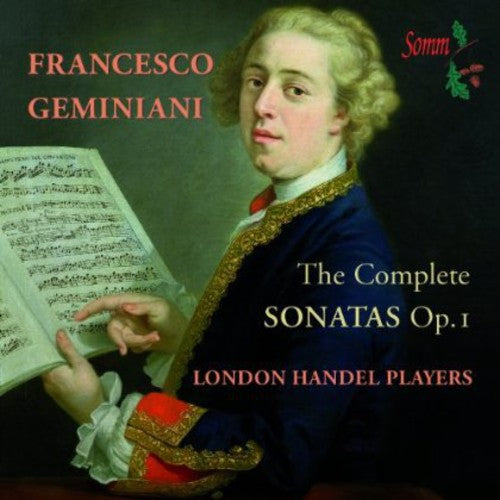
Geminiani: The Complete Sonatas / London Handel Players
Regarding Geminiani’s habit of revising his music and reissuing it, Adrian Butterfield remarks in his liner notes to this release, “Reworking musical material of one’s own or another one’s composition was, in any case, practiced by many greater composers, Bach, Handel and Mozart in the first place.” This is true, though Geminiani appears to have taken matters much further than they, relative to the quantity of work itself. There are two points in his defense. The first is pragmatic: the consumption of published music being as frantic as it was by the 18th century, new music quickly became old and forgotten. A composer did well to keep his name and compositions before the eye of the public. The second is personal. Geminiani was an extremely astute observer of the international musical scene, who adapted to the changing tastes of the times. There is a long developmental path between the Corellian passages and structures in the original edition of his Sonatas, op. 1 (1716), and his Rebel-like ballet, The Inchanted Forest (1756). He also adapted many of his works to suit those changes, and nowhere is that more evident, as this recording shows, than in the three editions (and a half; some movements he recast for harpsichord) of those same sonatas.
With each of his three editions (1716, 1739, 1757), Geminiani made some alternations that reflect a change of approach. The 1739 version adds numerous written ornaments (often French in style) as well as providing fingerings, where the 1716 version left much more room for the soloist to embellish on their own. The 1757 version turns the works into trio sonatas by the addition of a second violin. More importantly, in each subsequent edition Geminiani effectively refashioned at least some of the sonatas. The Ninth demonstrates how thoroughly this was achieved between the 1737 and 1757 editions. The deliberate thematic simplicity of the Andante movement in 1737 is touching, but by 1757 it has nearly doubled its length, with the second violin sometimes providing the melody in thirds, or supplying counterpoint, along with a few fine moments of passing dissonance. What was charming before is now impressive.
This brings up one matter of regret I have about this recording: that the London Handel Players didn’t offer up two editions side-by-side in more than just the Ninth Sonata (if we exclude the Sixth Sonata, and a movement of the Fourth in which one version features Geminiani’s own harpsichord arrangements.) And why are we given two versions of the 10th and one each of the Seventh and 11th by other hands, but not by Geminiani? Granted, the Seventh and 10th allow us to hear transcriptions respectively for treble recorder and flute that demonstrate Rachel Brown’s facility, stylishness, and breath support to excellent advantage. But with almost 20 minutes free on one disc and nearly 15 on the other, surely we could have had all of the originals, and a few in multiple editions of the composer’s that would have illustrated the points Butterfield makes so tellingly based on the Ninth alone.
It is my only musical criticism, though, given the lack of easily available competition on disc, a significant one. Of the performances, I have nothing but praise to offer. Paul Butterfield’s tone is light and mellifluous throughout. His technique is clean and even, notable for its application of discreet accenting around cadences, and its sweetness in legato passages. Vibrato is used properly as an infrequent coloring device on longer notes, and to excellent effect. Oliver Webber balances perfectly with him in the 1757 trio sonata versions (the Second, Fifth, Sixth, and Ninth), while Laurence Cummings adds a welcome touch of style brisé to the pieces drawn from Geminiani’s two published collections of harpsichord music in 1743 and 1762. Unlike some other groups, the London Handel Players aren’t inclined to push slow tempos, but strive for internal contrast. In short, these are very fine performances indeed.
The engineering is excellent, with just enough roominess to give a bloom to the instruments without obscuring individual lines. The solo harpsichord cuts should have been recorded at a higher volume level, though. I found it necessary to turn my receiver’s volume up for Cummings, and down again once the ensemble began playing.
With reservations noted, then, strongly recommended. Geminiani has been a personal favorite of mine among Italian Baroque composers ever since I first heard his The Inchanted Forest roughly 40 years ago, followed later by the Concerti Grossi, op. 3, and the Sonatas, op. 5. In his music something of the fancy of the Elizabethan consort composers sticks long beyond its time; or perhaps this is because he observed how the English of his day still enjoyed the whimsical touch, through the Scarlatti enthusiasts (Avision, most prominently), not to mention Handel’s own Concerti Grossi. The London Handel Players do him right.
FANFARE: Barry Brenesal
Geminiani: Sonatas Vol 1 / Mosca, Pianca, Paronuzzi
GEMINIANI Violin sonatas, op. 4/1, 3, 6, 7, 10, 12 • Liana Mosca (vn); Antonio Mosca (vc); Luca Pianca (archlute); Giorgio Paronuzzi (hpd) (period instruments) • STRADIVARIUS 33853 (67:41)
William S. Newman, in his massive study of the Baroque sonata, listed Francesco Geminiani’s sonatas for violin and continuo (op. 1 from 1716 and op. 4 from two decades later) and for violin and cello (op. 5) and judged Geminiani’s knowledge of the violin to equal that of Giuseppe Tartini or Pietro Locatelli (the latter of whom, like Geminiani, had been a pupil of Arcangelo Corelli, though a more technically adventurous one), but considered his style to be more conservative. Of the six sonatas presented by Liana Mosca, Antonio Mosca (her father), Luca Pianca, and Georgio Paronuzzi, all but two consist of four movements (the others numbering three); none of the movements’ titles give a hint of their dance-like elements or rondo forms. Almost all the sonatas have been cast in major keys. Geminiani would later rework six of the 12 sonatas of op. 4 (including No. 1 and No. 7 from Stradivarius’s collection) as concerti grossi. While Mosca remarks in a personal note in the booklet that Geminani’s sonatas from op. 4 haven’t received a great deal of attention, Rüdiger Lotter included the First, Eighth, Ninth, and 10th (two from Mosca’s selection) in a program released on Oehms 356 that also included several sonatas from Antonio Maria Veracini’s op. 1 ( Fanfare 29:1).
Geminiani revised the sonatas of his op. 1 at about the same time as he published op. 4 and included in the new edition of op. 1 the kinds of ornaments that make so striking an impression in Mosca’s performance of op. 4, as in the First Sonata’s Adagio (and also that of the Third Sonata). In that movement, she also displays a rhythmic and dynamic flexibility to create a capricious expressive sensibility that apparently suits not only the works themselves but Geminiani’s reputation as an expressive performer (among some: Tartini called him il furibondo , while John Hawkins thought he lacked the fire of the later violinists of his era). The sonata’s second movement isn’t fugal; it depends for its effect on the piquancy of its homophonic lines, of which Mosca gives a tangy account. The continuo provides an ingratiating strumming accompaniment in the Largo, a backdrop against which Mosca makes at times startling adjustments to the solo’s dynamic level; the finale includes surprises after dramatic pauses, and Mosca times them with the acute sensibility of a persuasive rhetorician. In general, she produces a twangy though by no means sharp-edged tone from her violin (and a perhaps surprisingly full one from its lower registers), described as a Venetian instrument from about 1750.
Mosca and the ensemble bring vivacious wit to the second movement of the Seventh Sonata and its jaunty subject (do these suggest the stolidity for which Geminiani has sometimes been condemned?) and spice to the ornamentation of the sonata’s third movement, Moderato. The Adagio of the Third Sonata showcases, as well as the encrustations of ornamentation mentioned earlier, the sudden gestures that make the sonatas sound inventive, at least from an expressive point of view (that sense of invention, continues, reaching almost to the level of improvisation, in the ensuing Allegro). The Sixth Sonata, again in D Major, at first seems almost somber compared to the three that precede it on the program, until Mosca dispels whatever gloom might have enshrouded it with her bright gaiety in the second movement; similarly, she shifts from the almost romantic sensibility of the sonata’s Andante to crisp Gallic sprightliness (Geminiani spent time in Paris) in the final movement, recalling a similar vein in the works of Jean-Marie Leclair (also a musical descendent of Corelli, this time through Giovanni Battista Somis). The two three-movement sonatas omit the slow movement; what they lose in affetuoso they gain in starchiness (although the last Allegro of the 10th Sonata includes a slow episode that almost replaces the missing movement). A multisectional fantasy serves as the first movement of the 12th Sonata’s three.
Lotter deploys a more astringent tone in his recording but he hardly stints on ornamental or expressive detail. Still, Mosca’s unaffected geniality, dramatic Luftpausen , and rhetorical sensibility breathe extra life into her performances.
With its clean recorded sound, its imaginative performances, and its ingratiating literature, Mosca’s selection of Geminiani’s sonatas might serve either as a favorable introduction to the works of the composer for those who aren’t familiar with him or an enjoyable reminder for those who know him that he brought more than Corelli’s teachings to London. Strongly recommended to all types of listeners.
FANFARE: Robert Maxham
Geminiani: Concerti Grossi, Op. 7 / Cafe Zimmermann
The musicians featured on this new release write: “For some years now we have been interested in the experiments of composers on the frontiers of Baroque musical language. The music of the sons of Bach and especially of Carl Philipp Emanuel has already come to fascinate us, and we had the same urge to discover and let ourselves be surprised when we decided to tackle Geminiani. To immerse ourselves in his op.7 was an exciting process, questioning our experience of Baroque music and rousing the enthusiasm of all the musicians of Café Zimmermann.” (Celine Frisch, harpsichord) “WHAT?!” was the first stunned reaction of the musicians after reading through Geminiani’s Concertos op.7. A composition that is invariably controversial, at once surprising and familiar. Then it was a new discovery with each concerto, with different textures and styles from one movement to the other. This music led us along unexpected paths from the church to the theatre, from Italy to France, from the seventeenth century to the eighteenth.” (Pablo Valetti, violin) “Geminiani’s music reflects my state of mind, one foot in the seventeenth century and the other in the eighteenth. The rhetoric and architecture it employs are still compatible with the Baroque. But the choice and exploration of emotions are already very new, similar to the way we feel today. This state of inner contradiction was probably not always understood by Geminiani’s contemporaries, but it is exactly what we look for and admire nowadays.” (Petr Skalka, cello)
Francesco Germiniani: Concerti Grossi & La Follia
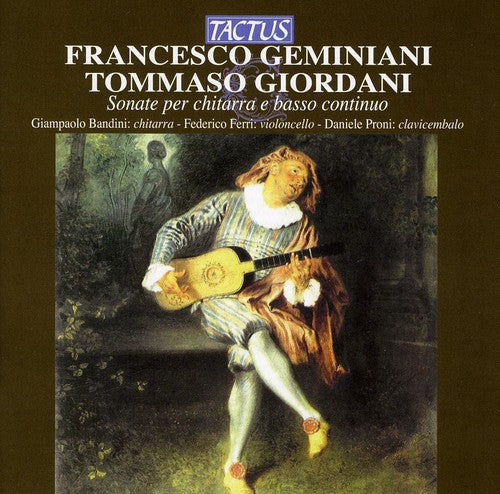
Francesco Geminiani, Tomasso Giordani: Sonate Per Chitarra E Basso Continuo
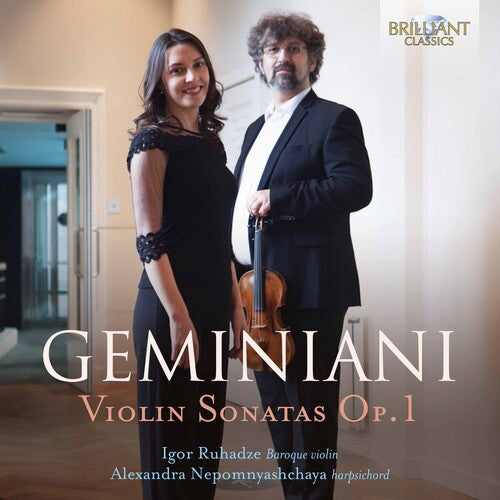
Geminiani: Violin Sonatas, Op. 1 / Ruhadze, Nepomnyashchaya
Igor Ruhadze’s Brilliant Classics recording of sonatas by Locatelli (94736) won warm praise from Gramophone. ‘The playing is elegantly supple, the string tone warm, and the architecture of individual movements thoughtfully worked out. All this makes for a pleasant mood and enjoyable listening. The more exuberant pieces are brilliantly and at times breathtakingly performed.’ With his latest Brilliant Classics album, the Russian Baroque-specialist violinist and director turns to another pivotal figure in Baroque-era violin culture, Francesco Geminiani.
Taught first by his violinist father and then by both Corelli and Alessandro Scarlatti in Rome, Geminiani was already a leading figure in north Italian courts in his 20s, before he undertook the move to London that made his name and fortune. Geminiani dedicated the Op.1 Sonatas (1716) to Baron Johann Adolf Kielmansegge, his first London patron. According to Hawkins, Kielmansegge favored the composer by arranging a performance before the king in which Geminiani was accompanied on the harpsichord by Handel. With these sonatas, which clearly stem from Corelli, Geminiani presented himself to the public as Corelli's pupil. Many imitation editions followed the first printing, but the commentator Charles Burney maintained that only the composer himself could do them full justice. Apparently designed as a calling card for Geminiani’s talents as a violinist-composer, the Op.1 Sonatas still make strenuous technical but also expressive demands on any interpreter. Their genteel surface and polished dialogue between parts conceals an array of sophisticated contrasts between moods and demonstration of a violinist’s credentials as an artist as well as a technician.
For this new recording, Igor Ruhadze is joined not by his colleagues in the Violini Capricciosi ensemble but the Russian-born harpsichordist Alexandra Nepomnyashchaya. Having pursued graduate studies with early-music luminaries such as Richard Egarr and Menno van Delft, she too evinces intense sympathy with Geminiani’s idiom.
Geminiani: Concerti Grossi / Lamon, Tafelmusik
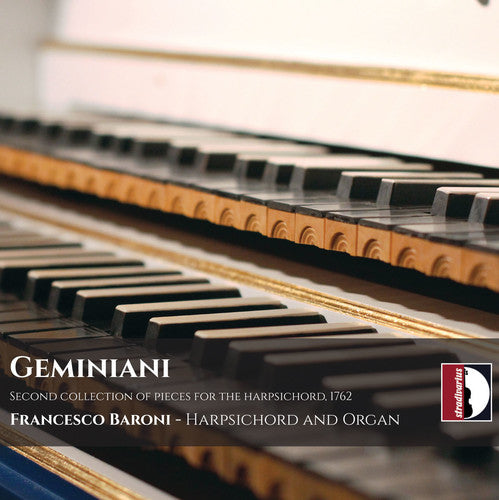
Geminiani: Second Collection of Pieces for the Harpsichord / Baroni
Among the numerous musical works by Francesco Geminiani, renowned virtuoso, theorist and versatile composer, the transcriptions for harpsichord are practically unknown. They were transcribed from his own instrumental compositions: Concerti Grossi, Sonatas for Violin and Bass, Sonatas for Cello and Bass as well as Metodi for Violin and for Guitar. This harpsichord production usually escapes the musical writers and critics who deal with this musicial but always in a fragmentary form. Geminiani is rarely mentioned and if so, it's hurried and superficial. The 1762 compositions here are collected into short suites formed of sonata movements originally intended for strings or guitar, they are characterized by a great variety of forms and facets, they range from serious compositions to movements typical of the Baroque sonata.