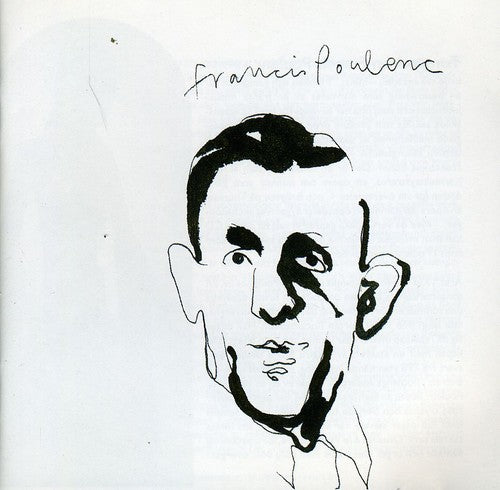
Francis Poulenc
78 products
-
-
-
Poulenc Plays Poulenc and Satie
$18.99CDSOMM Recordings
Jul 18, 2025ARIADNE 5041 -
Mass & Gloria
$19.99CDBerlin Classics
Jun 27, 20250303770BC -
-
-
-
-
-
-
-
-
-
-
-
-
-
-
-
-
-
INTEGRALE - EDITION
Four Hands - Alexandre Tharaud & Friends
This was something I'd had in mind for a long time..." says pianist Alexandre Tharaud, "to put together an album for the sheer pleasure of it, in collaboration with dear friends and paying tribute to the wonders of the piano duet repertoire." The aptly named 4 Hands offers 18 tracks, each just a few minutes in length, each featuring Tharaud sharing a piano keyboard with a different partner. The repertoire ranges wide - from Bach to Glass by way of such composers as Schubert, Tchaikovsky, Grieg, Fauré, Satie, Debussy, Ravel, Rachmaninoff, Ravel, and Piazzolla. 15 of Tharaud's fellow performers are celebrated pianists - among them the late Nicholas Angelich, Mariam Batsashvili, Bertrand Chamayou, David Fray, Víkingur Ólafsson, and Beatrice Rana. The other three, all stars in their musical fields, are shown in a new, pianistic light: cellist Gautier Capuçon, countertenor Philippe Jaroussky and singer-songwriter Juliette. "The piano duet is one of life's miracles," continues Tharaud. "First and foremost, it is the most intimate way of playing chamber music... It was a joy to record this album... If hearing these pieces prompts people to buy some sheet music and enjoy playing duets together - just as we did in the recording studio - then I will have achieved my aim.
Poulenc Plays Poulenc and Satie
Mass & Gloria
REQUIEM
Poulenc: The Sacred Music For Unaccompanied Choir / Marlow
...John Rutter and Richard Marlow with their Cambridge choirs here cover all Poulenc's sacred choral music except the Stabat mater... Both sets of performances are very good, with fine balance, expressive dynamic shadings, pure intonation, intelligent phrasing and excellent enunciation—so good that it seems a pity their programmes should overlap for the Penitential and Christmas motets and the three others. The main difference between them is that the acoustics of Trinity College chapel are more resonant than that of University College School hall, used by Rutter (though this has certainly no lack of warmth): as a result, the College choir, already splendidly firm of voice, produces a notably rich sonority... The Regent Chamber Choir...snatches off ends of phrases too abruptly. This habit is very marked in Poulenc's angular and Stravinskyan Mass, in which weight and fullness of tone are lacking in the men (e.g. at the start of the "Gloria"), as becomes very obvious when compared with Marlow's assured and impressive performance (with a very sweet-toned soprano in the "Agnus Dei").
-- Gramophone [10/1988, comparing this CD with Collegium 506 and Regent/Target 101]
Poulenc: Piano Concertos; Aubade / Gardner, Lortie, Mercier
The French-Canadian pianists draw a persuasive portrait of the melancholic Parisian that Poulenc was: playful and depressed, like his tutor, Erik Satie. There is always a sense of palpable anxiety in these pieces, be it the sarcastic joie de vivre of the 'choreographic concerto' Aubade or the ironic melancholy of the explosive Concerto for Two Pianos – Mozartean and Stravinskyan at the same time. Further examples are the contrasting pair of works for two pianos, in which the evocation of the sound of accordion and smell of fried potatoes in L'Embarquement pour Cythère complement the Élégie which, as Poulenc indicated, should be played with 'a cigar in your mouth and a glass of cognac on the piano'.
Similarly, the dazzling and dissonant Sonata for Piano Duet alternates between passages of charme and others that are féroce and strident. 'Inventing his own folk tunes', as Ravel noted, Poulenc took a decisive step in his musical emancipation with this very 'dissident' work.
Louis Lortie also plays the Piano Concerto, in which the traditional concerto virtues are more obvious: memorable tunes, sparkling orchestration, and a wide range of textures in the piano part.
Review:
The distinct attraction of this performance by Lortie with the BBC Philharmonic under Edward Gardner is the way in which orchestral color, as well as piano texture, is so clearly defined and zestfully articulated. Lortie is joined by Helene Mercier for cracking performances of the Two-Piano Concerto and the Sonata for four hands, their distinctive acerbities given whiplash emphasis by both pianists, yet with their more lyrical leanings tenderly voiced.
– Gramophone
Stravinsky, Poulenc, Satie & Septets: 3x7
STOCKHOLMS POULENCENSEMBLE
Poulenc: Wind Music / Ensemble Confoederatio
The incomparable combination of breathtaking virtuosity and playful lightness as well as songlike melos and deep emotion long ago qualified this anti-Romantic rebel of the 1920s as a modern classic. Already the opening Sextet for Piano and Wind Quintet emancipates itself from the chains of convention. Not a one of the movements designed in classical form adheres to a fixed metrical pattern. Shifts of meter and tempo again and again relax the structure. The resultant extremely entertaining impression pervades the entire program, from the early Trio for Piano, Oboe, and Bassoon to the later Duo Sonatas. Poulenc’s preference for wind instruments may perhaps be explained by his French origins and his predilection for song – since it is not without reason that he ranks as one of the most important song composers of the twentieth century. Even without texts his chamber music is highly expressive and dynamic.
This brand-new Super Audio album offers high-resolution sound and three-dimensional imaging, transports audiences deep into the music, and makes us forget the highest degree of technical difficulty involved in the scores. A disc for mirthful entertainment on the very highest level!
-----
REVIEW:
The Ensemble Confoederatio players evidently have fun in the Sextet. Bassoonist Axel Benoit phrases nicely in the first-movement bridge which heralds the slow section. There isn’t quite the sense of Gallic humour summoned up by Rogé and friends, but it’s a close call. Portuguese flautist Rute Fernandes plays her sonata suavely, especially the jocular finale. Maria Sournatcheva captures the tragic introspection of the Oboe Sonata well. Sérgio Pires delivers a rollicking Clarinet Sonata, fuller and rounder in tone than Michel Portal's. Overall, individual performances stand up well and this disc should provide a lot of pleasurable listening.
– Gramophone
SONGS AFTER PAUL ELUARD
MELODIES SUR DES POEMES DES PO
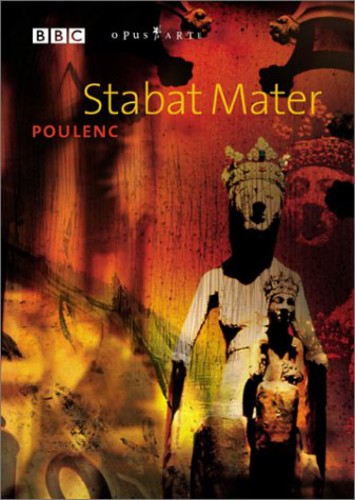
POULENC: Stabat Mater (PAL/NTSC)
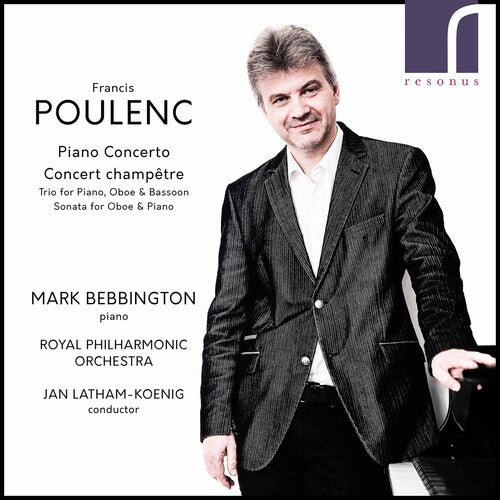
Poulenc: Piano Concerto, Concerto Champetre & Other Works / Rebbington, Latham-koenig, Royal Philharmonic

The acclaimed pianist Mark Bebbington marks his Resonus Classics debut, and the start of a new French music series, with a major new recording of works by Francis Poulenc. Joined by conductor Jan Latham-Koenig, and the Royal Philharmonic Orchestra, this varied programme of works for piano features the Piano Concerto (the last of his five concertos) and the rarely-recorded piano version of the Concert champêtre so often performed by Poulenc himself. Bebbington is also joined by oboist John Roberts and bassoonist Jonathan Davies for the Trio for Piano, Oboe & Bassoon, and the Sonata for Oboe & Piano.
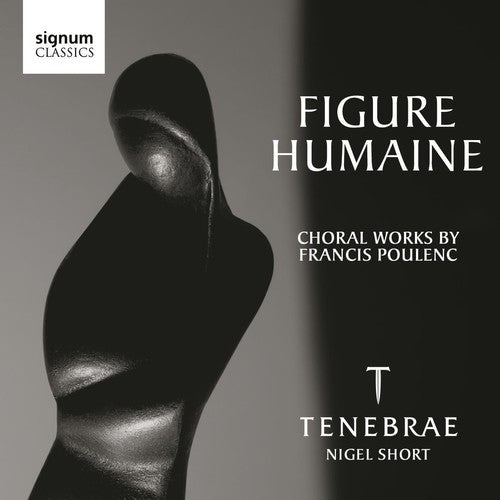
Figure Humaine - Choral Works By Francis Poulenc / Tenebrae
FRANCIS POULENC. TENEBRAE; NIGEL SHORT, CONDUCTOR. MASS IN G; LITANIES A LA VIERGE NOIR; SALVE REGINA; UN SOIR DE NEIGE; FIGURE HUMAINE; QUATRE PETITES PRIERES DE SAINT FRANCOIS D'ASSISE.
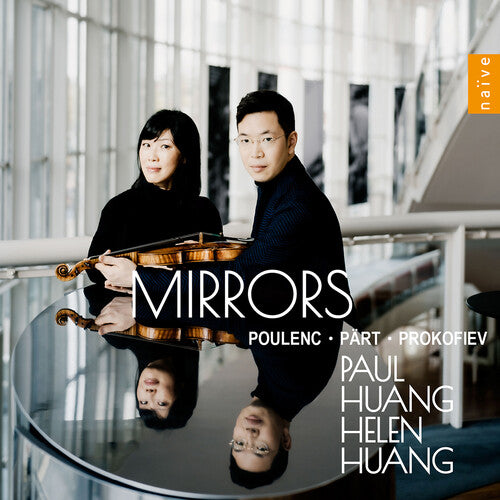
Poulenc & Prokofiev: Mirrors
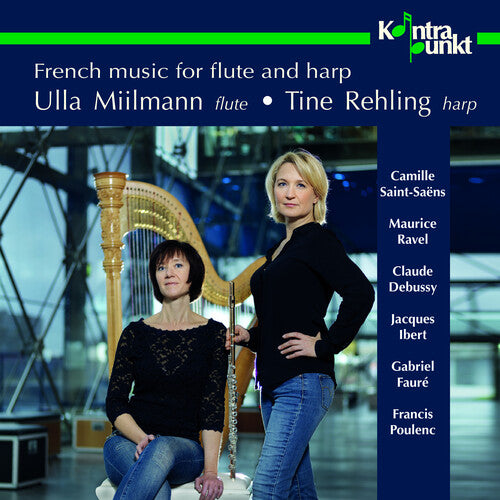
Frensh Music For Flute And Har
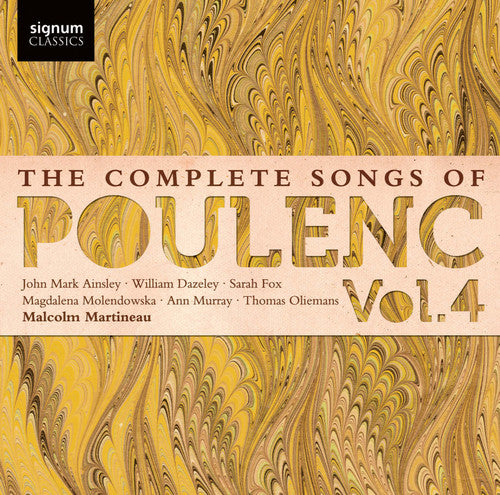
The Complete Songs of Poulenc Vol. 4
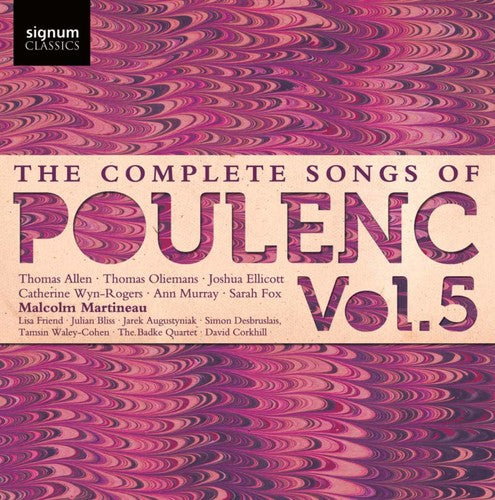
Poulenc: The Complete Songs, Vol. 5
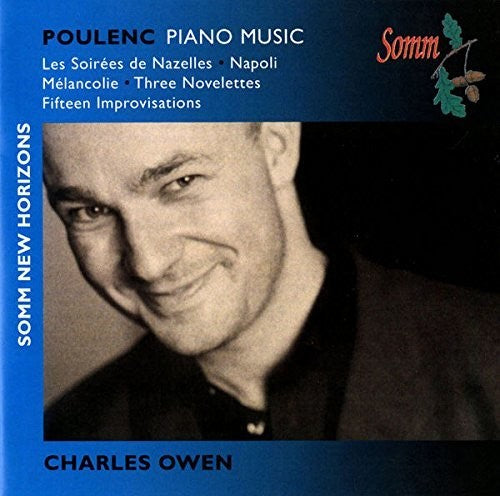
Poulenc: Piano Music
The Complete Songs of Poulenc, Vol. 2
The Complete Songs of Poulenc, Vol. 1