Franco Alfano
18 products
-
Alfano: Concerto for Violin, Cello & Piano, Piano Quintet
$14.99CDBrilliant Classics
Oct 10, 2025BRI97310 -
-
-
-
-
-
-
-
-
-
-
-
-
-
-
-
-
-
-
-
-
-
-
Alfano: Concerto for Violin, Cello & Piano, Piano Quintet
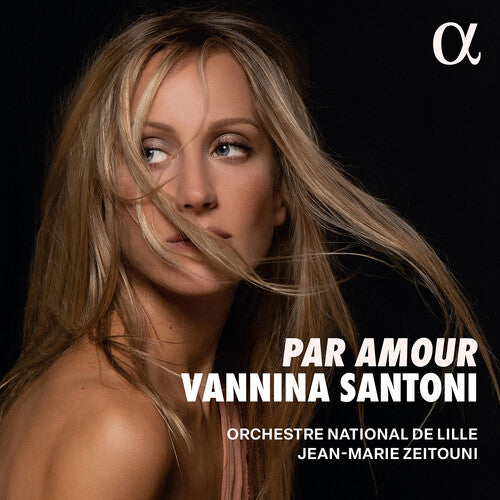
Par amour
Italian Songs by Opera Composers
Opera Arias (Tenor): Gigli, Beniamino - CILEA, F. / GIORDANO
SAKUNTALA
Alfano: Violin Sonata - Piano Quintet
Alfano: Piano Works
Alfano: Suite romantica; Una danza / Grazioli, Milan Symphony
Franco Alfano possessed an innate melodic facility combined with a talent for unexpected timbres. From the neo-Classical Divertimento to the noirish post-war Nenia, the lightness of touch of Amour… Amour… to the impressionistic Una danza and luxuriously orchestrated Suite romantica, each work reveals a different aspect of this multifaceted composer. This release of world premiere recordings features the Orchestra Sinfonica di Milano conducted by Giuseppe Grazioli who makes his Naxos début.
REVIEW:
Franco Alfano (1875–1954) remains a marginal figure in musical life despite a fair degree of coverage in record catalogs. Yet he is a thoroughly original composer, one who possessed an innate melodic gift combined with a talent for unexpected timbres, as can be heard in the lavishly orchestrated Suite romantica. The half-hour work is heard on this album in a very colorful and expressive, excellently performed interpretation.
With Una danza, completely different colors are expressed and one may hear an influence of Debussy. This is followed by Nenia, a somewhat melancholy solo piece for accordion, sensitively played by Davide Vendramin, which finds its counterpart in the Aria of the Divertimento, even if the outer movements are very lively and playful.
The program, pleasing and excellently played, ends with the Waltz Amour… Amour…, originally composed for piano in 1901 and orchestrated in 1928.
-- Pizzicato
Alfano: Songs / Pirozzi, Abbate
Franco Alfano was a major musician and teacher who enjoyed considerable success with his operas during his lifetime, but who has been overlooked for decades. Generally regarded as the regenerator of the Italian art song, the works featured in this album offer a generous overview of Alfano’s vocal output, from his Opus 1 Cinq mélodies, written in 1896 when he was a twenty-one-year-old student at Leipzig, to Due liriche per canto, violoncello e pianoforte from 1949, five years before his death. Anna Pirozzi has established herself as the leading Italian dramatic soprano of today, performing on the most prestigious international opera stages. She is joined here by the acclaimed pianist Emma Abbate and renowned cellist Bozidar Vukotic.
Alfano: Complete String Quartets
Known more widely as a composer of operas, Franco Alfano also composed a body of chamber music including the three string quartets heard here in world premiere recordings.
String Quartet No. 1 in D major was composed during the First World War between 1914 and 1918. The String Quartet No. 2 in C major In Tre Tempi Collegati, composed in 1925–26, is a smaller scale work than the first, and mostly much more tonal in harmonic structure. The String Quartet No. 3 in G minor was written in 1945 and premiered in Rome on 28 November 1947.
The Quartet comprises violinists Elmira Darvarova and Mary Ann Mumm, violist Craig Mumm and cellist Samuel Magill. The same ensemble can also be heard on the acclaimed Naxos album of Alfano’s Violin Sonata and Piano Quintet (8.572753). Alfano's Cello Sonata and Concerto for Violin, Cello and Piano can be heard on 8.570928.
REVIEW:
The first two quartets date from a period that reached from the Great War to the mid-1920s. The opening of the String Quartet No. 1 is a Vivacissimo but the word stands feebly in the face of the torrid, angular tumult that is the first movement. An implacably melodious and fluently flowing Calmo was written as a memorial to his son who died while serving in the Italian military. It is followed by a Largo-Allegro Deciso. The first particle of this movement is a short extension of the mood of its predecessor but soon says a dry-eyed farewell with writing that is, at first, long on a tungsten determination. This is clearly relished by these four players. The music ends with a noble determination that seems to speak of a will to hold it together.
The tonality of the String Quartet No. 2 is placed under less stress than the First Quartet although it is by no means facile listening. It feels inventive. The second movement is marked ‘like a children’s song’. It is a delicate Thumbelina dance of a blossom. The final ‘danse villageoise’ accelerates all the way through.
The 1940s dealt blows to Alfano: much of his music was destroyed in the bombing of Turin and his wife died in 1943. It comes as little surprise that the writing of the first movement of the Third Quartet pierces a path into melancholy. Misty-eyed happiness is recalled but clearly it is not to be experienced again. Joy of a sort is grasped in the next movement, tipping over into the melodic complexity of the powerful Allegro finale. Alfano’s final String Quartet had a Rome premiere in 1947.
The CD’s notes could hardly be more needful – and incidentally meeting that need – when the music is otherwise unknown to all but a few. They are by the disc’s cellist, Samuel Magill. The performances are wondrously fervent, hot-house products. The sound is at your throat, heated and upon you with tiger-like ferocity.
-- MusicWeb International (Rob Barnett)
Matthey: Organ Transcriptions / Caporali
This discographic work completes the previous Tactus album (TC871380) dedicated to the complete organ works by Ulysses Matthey, famous concert artist and teacher of the Italian historical twentieth century. After the original works, the organist Fausto Caporali - on period instruments - in this double album tackles the complete transcriptions for organ by Matthey. The album is including pages of virtuosity and meditation, from the famous Chaconne in D minor by Bach for solo violin (a fascinating 'lighthouse' for many composers) to the symphonic pages of Liszt, Berlioz, Debussy, Grieg and Wagner, passing through Geminiani and Paganini.
Matthey's compositional refinement finds fertile ground in the organ adaptation of sublime pages of musical history, thanks to his experience as instrument tester and over two thousand concerts held throughout Europe during his incredible career.
Alfano: Madonna Imperia / Gavazzeni, Ushiroda, Valerio, Carraro, Italian Philharmonic
As soon as he had finished the finale of Turandot [1925-6], Alfano began working with political journalist and man of letters Arturo Rossato, [Vicenza 1882-1942]. He offered Alfano a libretto in one act, Madonna Imperia, based on La belle Impéria, by Honoré de Balzac. The fair lady of high society Imperia enjoys the protection of the chancellor of Ragusa and lives a life of pleasure in Constance among prelates and nobles and bewitches one of the bishop of Bordeaux’s young choristers, Filippo Mala, who declares his love for her and has to sing her a song as though he were a troubadour. This love arouses the jealousy of Ragusa, who makes Filippo go away and leave Imperia to him, but the passion between Imperia and Filippo wins out and the opera ends with an erotic encounter between the two offstage.
Sakuntala
Alfano: Cyrano De Bergerac / Fournillier, Domingo, Radvanovsky [blu-ray]
Also available on standard DVD
Picture Format: 1080i High Definition
Sound Format: PCM Stereo / DTS-HD Master Audio 5.1
Region Code: 0 (All Region)
Duration: 141 minutes
Language: French
Subtitles: English French, Spanish
Filmed: at the Palau de les Arts Reina Sofia Valencia February, 2007
Cyrano – Plácido Domingo
Roxane – Sondra Radvanovsky
Christian – Arturo Chacón-Cruz
De Guiche – Rod Gilfry
Ragueneau – Corrado Carmelo Caruso
De Valvert – Roberto Accurso
Carbon – Javier Franco
La Duègne / Sister Marthe – Itxaro Mentxaka
Le Bret – Nahuel di Pierro
Lise / A Nun – Silvia Vázquez
Lignière – Miguel Sola
The Musketeer – Juan José Navarro
Valencia Regional Government Choir (Cor de la Generalitat Valenciana) Valencian Community Orchestra (Orquestra de la Comunitat Valenciana)
Patrick Fournillier, conductor
Michal Znaniecki, stage director and stage designer
Isabelle Comte, costume design
R E V I E W:
A rare post-verismo Italian opera gets an excellent performance in convincing sets and costumes.
Alfano? I hear you ask, yet with a slight wrinkle of the brow as if somewhere in the distant memory bank there is a file. Rightly so, at least for any opera enthusiast. Alfano is mainly remembered as the man eventually chosen by the publisher, Ricordi, and Toscanini, the resident conductor at La Scala, to complete Puccini’s Turandot. It will be remembered that at the composer’s death part of the last act remained unscored.
Born near Naples, Alfano completed his first opera, still unpublished, in 1896. He had difficulty in getting later works performed in Italy, finding more success abroad. Ricordi supported his opera Risurrezione, based on Tolstoy; it was successful in Turin in 1905. It was very much in the Puccinian style and reached over one thousand performances. Later operas were only modestly received. He took up teaching at the Liceo Musicale in Bologna becoming director in 1916. It was from the Liceo that he presented his successful Sakuntala. This was an opera in a completely different idiom the orientalism of which must have been influential in Ricordi’s decision that Alfano was the man to complete Turandot. The completed Turandot, was presented at La Scala in April 1926. Alfano’s completion was abbreviated by Toscanini and in its shortened form involves around fifteen minutes of music.
Alfano wrote several orchestral works. His opera Madonna Imperia reached the Metropolitan Opera, New York in 1928, a year after its premiere. By this time his work was more influenced by the likes of Richard Strauss and Debussy rather than having its own particular distinctive patina.
Alfano took up the story of Cyrano de Bergerac as the basis for an opera in 1933. Founded on the novel by Edmond Rostand the opera was premiered in Rome in January 1936 under the baton of Tulio Serafin. It was performed in Paris in May that year in the French translation that is used in this performance. Like other artists in Italy in that inter-war period, Alfano was forced to become associated with the Fascist regime. This has tended to sully his reputation somewhat.
Cyrano de Bergerac tells the story of the proboscally challenged Cyrano. He is infatuated with Roxanne, who is also loved by Christian. Cyrano has the heroic skills as a swordsman and fighter denied to his rival. More importantly, he is also a skilful poet, well able to express his love for a woman. After various battles and duels Cyrano meets Roxanne only to discover she is in love with the young and handsome Christian. Resigned to the fact that his own disfigurement makes him unacceptable to Roxanne, Cyrano realises his own inspirational eloquence and poetry are what Christian needs and determines to help him become Roxanne’s perfect suitor. He reads with ardour his own poetry below her balcony as Christian stands by, giving the impression that it is his. Cyrano agonizes as she declares her love for the young man who climbs to the balcony and embraces her (Chs. 13-15).
Unbeknown to Christian, Cyrano writes other ardent letters in his name that are smuggled across the lines during the battle of Arras where Christian is killed. For many years Cyrano keeps this information secret so as not to sully Christian’s name. He then meets Roxanne, now in a convent. Cyrano has been mortally wounded as Roxanne asks him to read what she believes to be Christian’s last letter. Cyrano does so and she at last realises the truth. Cyrano dies as Roxanne declared her love for him despite his nose (Ch. 26).
After languishing in neglect for many years, Alfano’s Cyrano was seen in a production at Montpellier in 2003 with Roberto Alagna in the title role. This has appeared on DVD. Plàcido Domingo took up the role, as his one hundred and twenty first, and a production was mounted at the Metropolitan Opera, New York in May 2005, by Francesca Zambello with designs by Peter J Davidson. This production has since transferred to Covent Garden where it was seen in May 2006 and onwards to La Scala. It should have been the basis of these performances celebrating the new theatre Reina Sofia, in Valencia whose impressive, futuristic, exterior is seen in the introduction (Ch. 1). It seems there were problems with a collapse of part of the theatre stage-machinery required for the sets. The upshot was a new, simpler but affective staging by Michail Zananiecki. Its main focus is a central rotunda with steps and openings through which entrances and activities take place. His staging may not be as spectacular as reports of the Zambello production indicate, but like his direction, aided by drapes and lighting, it is effective. My only question is as to the relevance of what appear to be acrobats descending on ropes and drapes from time to time. The costumes are in period.
Above anything else what Cyrano de Bergerac needs beyond even an accomplished production and sets, are two committed and affecting singing actors in the title role and that of Roxanne. As far as the eponymous role is concerned it has an outstanding protagonist in Plàcido Domingo. His acting is fully integrated into his singing to add a further histrionic portrayal to his many others. The tessitura of the music suits his now baritonal tenor perfectly, with no demanding high Cs or the like and plenty of opportunity for dramatic involvement. His portrayal of the death of Cyrano, after hearing Roxanne’s true thoughts (Ch. 26), is as powerfully sung as his well known reading of the death of Otello in act four of Verdi’s opera. In this histrionic tour de force Domingo is aided, as in the Verdi, by the composer’s music. This ending, in the manner of its portrayal and its poignancy, reminded me also of the death of Boris in Mussorgsky’s opera. As Roxanne, Sondra Radvanovsky matches Domingo in dramatic involvement - no mean feat. Her lustrous soprano is warm and vibrant and allied to her vocal and dramatic capacity it is an instrument to savour. Radvanovsky lacks some clarity of diction to convince me that she is a major force in the operatic firmament. Her outburst of love to Christian (Ch. 20) is delivered via powerful and committed singing of a high order.
Cyrano de Bergerac also depends on a cluster of lesser parts the most important of which, along with Christian, is De Guiche. This vital role is sung with strong even tones and dramatic involvement (Ch. 17) by North American baritone Rodney Gilfry; not ‘Rod’ as the booklet refers to him, I must note. In the cameo role of Ragueneau, Corrado Carmelo Caruso’s well tuned bass is a virtue. The Christian of Arturo Chacón Cruz lacks the qualities of persona and vitality that could be seen as appropriate to that of the role. I rather doubt that Cruz had anything better to offer being unpoetic not only in his acting and inflections but also in his singing.
-- Robert J Farr, MusicWeb International Reviewing DVD version
Alfano: Concerto, Cello Sonata / Magill, Dunn, Darvarova
ALFANO Concerto for Violin, Cello, and Piano. Cello Sonata • Samuel Magill (vc); Scott Dunn (pn); Elmira Darvarova (vn) • NAXOS 8.570928 (60: 06)
These days Franco Alfano (1875–1954) is remembered more for his controversial and much maligned 1926 completion of Puccini’s Turandot than for his own well-crafted and often quite striking music. His career started promisingly. In 1904, his opera Risurrezione , based on Tolstoy’s last full-length novel, made him internationally famous (see Henry Fogel’s review in Fanfare 28:4). In 1918, he rose to the directorship of Liceo Musicale, Bologna, and two years later helped to found the society Musica Nova. His career remained on the ascendancy until 1926, when Toscanini’s de facto damnation of his completion of Turandot made him an odd man out in Italian music. Add to this that two of his contemporaries, Malipiero and Respighi, were changing the focus of Italian music from opera to purely instrumental, while Alfano continued doggedly in the operatic realm with Madonna imperia (1927), Cyrano de Bergerac (1936), Don Juan de Manara (1941), Il dottor Antonia (1949), Vesuvius (1950), and Sakùntala (1952). Then further add that Alfano was on favorable terms with Mussolini’s fascist government and one has a pretty good recipe for his subsequent obscurity.
Then there is the music itself, as illustrated by these two chamber works—soft edged, introspective, and quietly luminous in a most Debussian manner. Cellist Samuel Magill, in his liner notes to this release, points out that Alfano was half French (on his maternal side), and spent the years from 1899 until about 1905 in Paris, where he composed light music for the Folies Bergère. It is plain from these two pieces that he soaked up the atmosphere and found it most congenial. The earlier of these two works, the Cello Sonata, was commissioned in 1928 by Elizabeth Sprague Coolidge. It is a tour de force in its exploitation of the cello’s full compass and coloristic possibilities. The high A-string writing makes it seem a super violin, and the use of harmonics in combination with quiet sustaining pedaled piano figurations creates moments that would have made both Ravel and Debussy proud. It is a long and discursive work that opens serenely, as if to say “I will reveal a great mystery,” and then travels from the elementally abstract toward the more and more intelligible; unfathomable mystery gives way to unbridled passion, and then to a moment of sublime peace.
The Concerto for Violin, Cello, and Piano of 1932 is similar to the Cello Sonata, but given the third instrument, the violin, it is richer in tonal possibilities. Its opening revealing a kinship with Renaissance polyphony, indeed farther back than that, shows how easily those languages can dovetail into that of the French Impressionists. Alfano, like Bruckner and Brahms, was an antiquarian. In both of these works, Debussy’s idea that pure sonority should be an element of music equal with melody, harmony, and rhythm, is writ large.
All three performers are excellent and play with razor-edged accuracy, passion, and insight in these two world-premiere recordings. The recording, alas, is harsh in its upper register, requiring treble cut on my system, but, on the other hand, it reveals everything, as if under a microscope. The piano, however, is splendidly registered throughout.
FANFARE: William Zagorski
Alfano: Risurrezione / Duprels, Vickers, Lanzillotta, Orchestra Del Maggio Musicale Fiorentino
Also available on standard DVD
Franco Alfano’s opera Risurrezione draws its inspiration from Tolstoy’s novel Resurrection and was the work that ensured Alfano’s considerable success as a composer. The plot narrates the story of Katiusha and her tragic love for prince Dimitri who seduces and abandons her, condemning her to a life of sacrifice and desperation. Seen here in Fancesco Lanzillotta’s acclaimed Florence production, Risurrezione recalls Richard Strauss and Puccini – the drama evolving in an uninterrupted flow with moments of soaring lyricism alongside striking and evocative orchestration. The work gives voice to an idea that Alfano left in his memoirs: ‘Recoiling from catastrophes, I believed and still believe in the renovation, regeneration, and final purification of human passions from evil to goodness.’
Alfano: Risurrezione / Duprels, Vickers, Lanzillotta, Orchestra Del Maggio Musicale Fiorentino
Franco Alfano’s opera Risurrezione draws its inspiration from Tolstoy’s novel Resurrection and was the work that ensured Alfano’s considerable success as a composer. The plot narrates the story of Katiusha and her tragic love for prince Dimitri who seduces and abandons her, condemning her to a life of sacrifice and desperation. Seen here in Fancesco Lanzillotta’s acclaimed Florence production, Risurrezione recalls Richard Strauss and Puccini – the drama evolving in an uninterrupted flow with moments of soaring lyricism alongside striking and evocative orchestration. The work gives voice to an idea that Alfano left in his memoirs: ‘Recoiling from catastrophes, I believed and still believe in the renovation, regeneration, and final purification of human passions from evil to goodness.’
Alfano: Risurrezione / Duprels, Vickers, Lanzillotta, Orchestra Del Maggio Musicale Fiorentino
Franco Alfano’s opera Risurrezione draws its inspiration from Tolstoy’s novel Resurrection and was the work that ensured Alfano’s considerable success as a composer. The plot narrates the story of Katiusha and her tragic love for prince Dimitri who seduces and abandons her, condemning her to a life of sacrifice and desperation. Seen here in Fancesco Lanzillotta’s acclaimed Florence production, Risurrezione recalls Richard Strauss and Puccini – the drama evolving in an uninterrupted flow with moments of soaring lyricism alongside striking and evocative orchestration. The work gives voice to an idea that Alfano left in his memoirs: ‘Recoiling from catastrophes, I believed and still believe in the renovation, regeneration, and final purification of human passions from evil to goodness.’