Giovanni Battista Bononcini
18 products
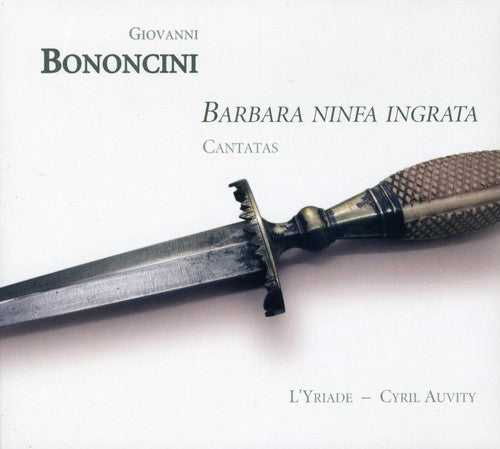
Barbara ninfa ingrata
Scarlatti & Bononcini: Cantate da Camera
Andate, o miei sospiri
SONO AMANTE KANTATEN & KAMMERM
Bononcini: Stabat Mater & Dio e la Vergine
Bononcini: Cantate da Camera
Bononcini: Divertimento da camera
Bononcini, A.M.: Sonatas / Cantatas
STABAT MATER, ARIAS
The Trio Sonata In 17th-century Italy / London Baroque
Giovanni paolo cima;Francesco Turini; G.B. Buonamente; Dario Cast London Baroque The Trio Sonata in 17th Century Italy.
Sarro / Gasparini / Bononcini: Italian Intermezzi
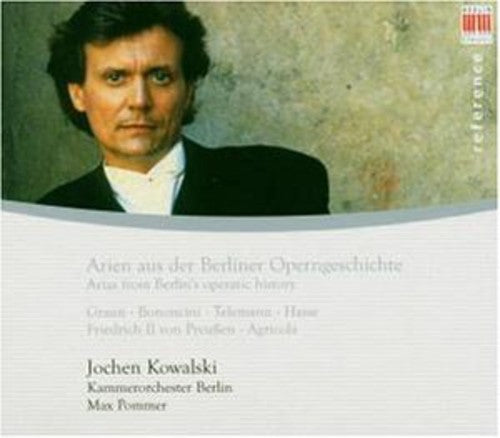
Opera Arias (Counter-Tenor): Kowalski, Jochen - GRAUN, C.H.
Bononcini: Cantate e Sonate da Camera
Bononcini: Polifemo / Dermota, Alsen, Funk, Poell, Schonherr
Bononcini: Divermenti da camera, Transcription for Harpsichord / Paganelli
The light and airy chamber-scaled divertimenti on this recording were composed in London in the early 1720s. They must have been among the first works with which Giovanni Bononcini (1670-1747) sought to make an impression on the discerning audiences and business-minded entrepreneurs who, at the time, were instrumental to a music-rich environment that made the city one of the main centers of European culture. It is perhaps to the detriment of his posthumous reputation that Bononcini became known as Handel’s direct rival for the favor of London’s musical public: the rivalry between the two men was even immortalized in a piece of satirical doggerel which popularized the English expression ‘Tweedledum and Tweedledee’. In fact these divertimenti scored a popular success as soon as they were published; so much so that these harpsichord transcriptions were quickly produced – and then republished two decades later, when they appeared as Suites de Pièces pour le Clavecin, placing them in direct competition with the collection of works under the same name by Handel. The divertimenti are three- and four-movement works designed not to place any great strain upon the listener’s attention: the longest movement here lasts barely three minutes. Even the slow movements are simple arias, originally conceived with a high melody instrument in mind – violin or transverse flute – and conforming to a serene and courtly character. By and large, however, they are filled with lively, dance-like quick movements, cheerful in temperament even when the tonality is minor, as it is in half the divertimenti. This is the debut album on Brilliant Classics for the harpsichordist Giovanni Paganelli.
Bononcini: La nemica d’amore fatta amante / Banchini, Ensemble 415
| Ensemble 415 and Chiara Banchini revive the serenata a tre La nemica d’amore fatta amante by Giovanni Bononcini, a prodigious composer who was Handel’s ‘rival’ in London and just as prolific as Alessandro Scarlatti in producing cantatas in the early eighteenth century. The singers are the soprano Adriana Fernández, the countertenor Martín Oro and the baritone Furio Zanasi. After the success of the Red, Yellow, Blue, Pink and White collections (a total of sixty reissues) which gave a new lease of life to the pearls of the Baroque catalogues from our house labels, here are fourteen new titles which offer a chance to discover other treasures, whether Baroque or dating from an earlier or later era. Like the most recent series, this sixth instalment opens out onto the Classical repertory (Mozart by Ensemble 415 and Chiara Banchini) and the Renaissance (Févin by Doulce Mémoire and Denis Raisin Dadre); recordings that are an integral part of Alpha’s identity and history. Fourteen reissues performed by the leading musicians in the field, most of which received one or more awards on their original release. Proper booklets accompany the discs, with notes in three languages (French, English, German). Photographers from all over the world have been selected to illustrate the covers, this time with the guiding thread of the color green, a symbol of nature, fertility . . . and hope! |
Bononcini: Stabat Mater / Velardi, Alessandro Stradella Consort
Pergolesi is the author of the most famously affecting setting of the 12th-century hymn by Jacopone di Todi in which Mary is depicted at the foot of the cross, mourning the death of her son in graphically detailed poetry which has been a gift to musicians ever since. In fact Brilliant Classics has collected up all the versions of Stabat mater by composers of any renown from the last 600 years and issued them in a brand-new all-inclusive release. Within that release is a new recording of the Stabat mater by Antonio Maria Bononcini, who died just a decade before Pergolesi. Their settings are on a roughly similar scale, though Bononcini’s is slightly grander, using four singers to Pergolesi’s two, and dividing the text into even more sections. Bononcini himself should not be confused with his father Giovanni Maria (composer and violinist) or indeed his brother Giovanni, all three of them outstanding composers of the Modenese school. Antonio made his name in Vienna, where he was appointed composer to the court of Emperor Joseph I in 1710, and one may hear why from the restrained pathos of this Stabat mater, with its slowly-modulating grand choruses of great tension and its arias which suspend time with contemplation of a particular aspect of Christ’s agony on the Cross. The Stabat mater is complemented here by a much less-familiar sacred cantata, Dio e la vergine: an anonymous six-movement text in which Mary stands before her Lord and proclaims her love for him, and He for her; a surprisingly common trope of 18th-century oratorios where God himself was given a part. The only other recording of this cantata is considerably older in style; this new one is made by the stylish Alessandro Stradella Consort, who produced for Brilliant the well-received recording of an oratorio by Alessandro Scarlatti, San Filippo Neri (BC94037).
Bononcini: Cantate e Sonate / Montanari, Aurata Fonte
Giovanni Bononcini was born in Modena on 18 July 1670, the eldest and best-known son of the composer, violinist and theoretician Giovanni Maria (1642-1678), one of the main exponents of the musical school of Modena in the second half of the seventeenth century. His talent was extremely precocious: in 1685 he published Trattenimenti da camera op. 1, Concerti da camera op. 2 and Sinfonie op. 3. Giovanni Bononcini is known above all for his dramatic and vocal chamber music, whose simple, refined intensity of expression was acknowledged by his contemporaries. The cantatas are formed of the prescribed succession of arias (or duets) and recitativos, and show Bononcini’s outstanding expressive skill and his ability in finely crafting the close relationship between words and music that was required by this genre of chamber music because of the need to “further the feeling of that divine poetry by means of the expression of the harmonious melodies” (as he wrote in a letter to Benedetto Marcello from London on 6 April 1725). This ability of his made it possible for him, through his perfect knowledge of counterpoint, to tastefully adjust “the exact observation of the different moods produced in the soul by the different modulations of the sound, so as to be able to adapt them suitably to the needs of the words”. Within this world premiere recording the Aurata Fonte ensemble is performing the manuscripts of a composer whose talent was recognized and affirmed by a great career throughout Europe.