Giovanni Pierluigi da Palestrina
29 products
Palestrina: Stabat mater, Canticles & Motets
Palestrina: Aeterna Christi munera - Missa L'homme arme a 5
Palestrina: Lamentations, Book 4
PALESTRINA: Music for Holy Saturday
Palestrina, G.P. Da: Choral Music (O Magnum Mysterium)
Palestrina, G.P.: Missa O Sacrum Convivium
Palestrina, G.P. Da: Missa, "Ecce Ego Joannes" / Missa, "Pat
Con gratia et maniera
Palestrina: Cantica Salomonis
HOW FAIR THOU ART
Messe mantovane, Vol. 2
Messe Mantovane, Vol. 3
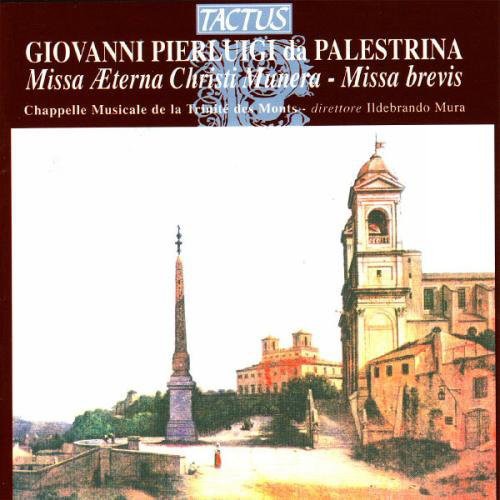
Palestrina: Missa Aeterna Christi munera - Missa Brevis
Palestrina: Lamentazioni per la Settimana Santa
Palestrina, Vol. 8 / Christophers, The Sixteen
Palestrina had a vast impact on the development of music. Hugely famous in his day, his reputation and influence grew even more following his death and his work can be seen as a summation of Renaissance polyphony. His musical legacy is prodigious even by the standards of the time—he wrote over 100 masses—and he was the first Renaissance composer to have a complete edition of almost his whole output published in modern notation. The eighth recording in The Sixteen’s celebrated series focuses on the Last Supper and the sacrifice of Christ on the Cross at the first Easter and includes the Missa Fratres ego enim accepi. Three settings from the Song of Songs also feature.
PALESTRINA: Music for Good Friday
PALESTRINA: Music for Maundy Thursday
Palestrina: Great Choral Classics
PALESTRINA: Missa L'homme arme / CAVAZZONI: Ricercari
PALESTRINA: Missa 'Ut, Re, Mi, Fa, Sol, La' / VICTORIA: Salv
Choral Music (Sacred) - PALESTRINA, G.P. da / JOSQUIN DES PR
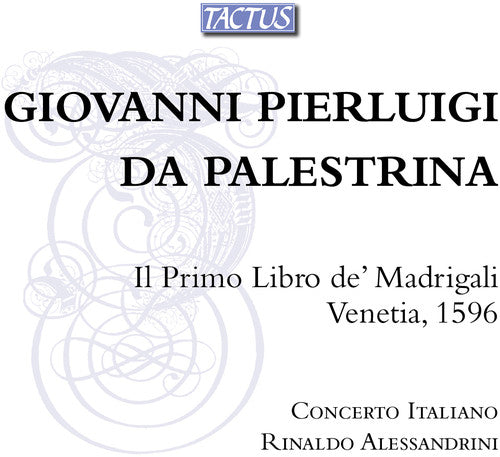
Palestrina: Il primo libro di madrigali
The Primo Libro di Madrigali a quatro voci was, chronologically speaking, the second work published by Giovanni Pierluigi da Palestrina. On the publication’s title page the composer refers to himself as «Cantore nella Cappella di N[ostro] S[ignore]», a title which in Rome at that time represented the highest position to which a musician might aspire. The highly regarded Concerto Italiano and their founder-director Rinaldo Alessandrini perform these light, lovely and expressive secular songs from the Renaissance’s greatest sacred music composer.
Palestrina: Vol. 9 / Christophers, The Sixteen
Palestrina’s music is exquisite and sumptuous — characterised by a richness of texture and purity of sound. From his sacred Masses to settings of the secular Song of Songs, The Sixteen brings this serene and delicate soundworld to sparkling life.
Palestrina was a towering figure in Renaissance polyphony and arguably the greatest composer of liturgical music of all time. For nearly half a millennium his legacy and impact on sacred music worldwide has been second to none. The Sixteen continues its acclaimed series exploring a selection of his massive output, with this volume featuring the richly sonorous Missa Ut re mi fa sol la at its heart. The Sixteen also shines a spotlight on some of the glorious music Palestrina wrote for St John the Baptist and St John the Evangelist.
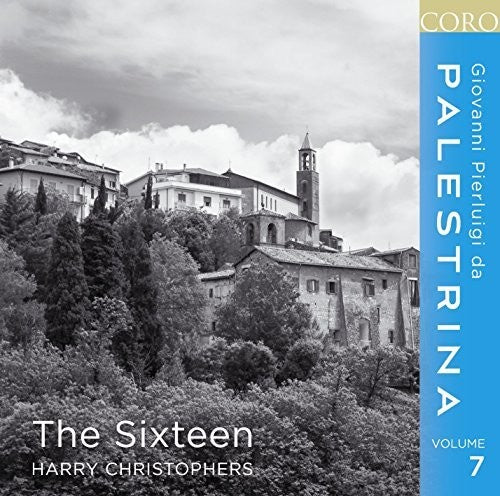
Palestrina, Vol. 7 / Christophers, The Sixteen
With this new release, The Sixteen continues its exploration of Palestrina’s great art with the eagerly anticipated seventh album in the series which includes the Missa Ave Regina caelorum. Palestrina is perhaps the most famous of all Renaissance composers, certainly by name. By the time of his death his reputation outshone all others. His musical legacy is prodigious even by the standards of the time- he wrote over 100 masses- and he was the first Renaissance composer to have a complete edition of almost his whole output published in modern notation. Today some pieces are quite familiar, others less so and much of his superb music is almost unknown. The seventh recording in The Sixteen’s celebrated series focuses on some of the pivotal women in Christian history- Mary the Mother of Jesus, Mary Magdalene, St. Barbara, and Susannah.
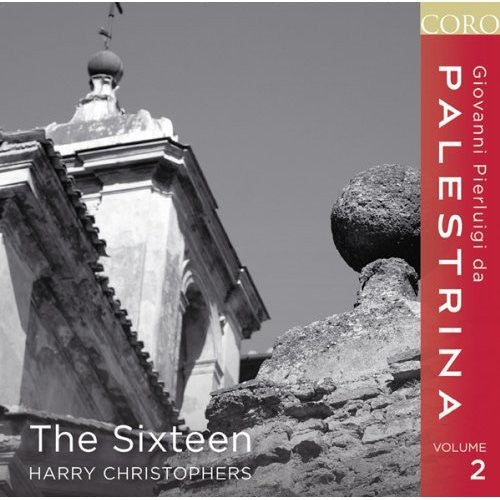
Palestrina, Vol. 2 / The Sixteen
PALESTRINA Missa Hodie Christus natus est. Hodie Christus natus est. Christe Redemptor omnium Ex Patre. Magnificat 5 toni. Tui sunt caeli. Reges Tharsis. O magnum mysterium. Song of Songs: Excerpts • Harry Christophers, cond; The Sixteen • CORO COR 16105 (67:34 Text and Translation)
This is the second issue in the recently announced series of Palestrina works ( Fanfare 35:2). In what is clearly a pattern, this disc also offers a Mass with its related motet, additional motets related to the theme of the Mass, and three more sections of the Song of Songs. Just as the first disc added Marian motets to the Mass for the feast of the Assumption, this Mass is filled out with Christmas motets. The hymn Christe Redemptor omnium is an alternatim setting, as is the Magnificat. The Mass is one of four double-choir Masses first published together in 1601, the only such settings among the composer’s 105 Masses. This is at least the seventh recording of the Mass but the first in almost two decades. The most recent were directed by Jeremy Summerly with a large choir (18:1) and by Paul McCreesh with a vocal ensemble (not reviewed in the States); earlier examples were mostly choral renditions. Christophers’s tempos fall midway between those two versions. The most notable difference among the three versions comes in the Agnus Dei, which I presume was set once by the composer; McCreesh surrounds the single invocation with chant from Mass XVII for the first and last invocations, Summerly renders the music twice, supplying the altered text for the final invocation, as I would expect a Renaissance-era choir to do, and Christophers simply provides the single invocation as printed.
The promise of the first disc is fulfilled here with an exquisite rendition of the Mass and a fine collection of related motets. While many will appreciate the warmth of Summerly’s larger choir, the broad tempos, and the attractive price of a disc that couples it with a much-duplicated Lassus Mass for double choir, there is much to be said for the new disc in addition to its intelligent programming. Christophers explains in the notes that hymns composed as alternatim settings can be difficult to sing because the chant found in modern editions does not correspond to the melody used in the polyphonic verses. But the chant of this Christe Redemptor omnium can be deduced from the polyphony and confirmed from Victoria’s setting, which was published with the same chant printed out completely. He also notes how singers may have added unwritten accidentals to the chant in the same way the accidentals were written in the polyphony. He cites the superb volume of 68 offertories for the liturgical year that Palestrina published at the end of his life (Lassus published a similar set), for two of them are included here for Christmas and Epiphany. These two sets were the first to offer something to replace the chants that had always been sung at this place in the Mass. Richard Marlow (31:1) gave us one of the most extensive collections of these pieces. I look forward to the continuation of this series, impatient with the prospect of one disc per year. How long will this go on?
FANFARE: J. F. Weber