Giuseppe Verdi
560 products
RIGOLETTO (1955)
WARNER CLASSICS
Available as
CD
$35.56
Oct 13, 2020
2014 Maria Callas re-mastered series reissue. With this Abbey Road 24-bit 96kHz re-master, engineers returned to the original master tapes, bringing new clarity & brilliance to her legendary studio recordings. Callas only sang Gilda in Rigoletto in one run of performances, in Mexico City in 1952, and she recorded the role three years later. She moves beyond the girlish tone and sparkling coloratura of the character's first scenes to create a figure of tragic stature as events unfold. 'Once heard, this rendering is never likely to be forgotten, ' was Gramophone's judgment on her interpretation, and the same could apply to Tito Gobbi's, embodying every aspect of the accursed court jester.
Rosa Ponselle - Verdi, Meyerbeer, Bellini, Ponchielli
RCA
Available as
CD
$17.99
May 13, 2010
Such moments as the legato of the prayer in La vestale and the beauty and control of the soft major-key phrases in La Gioconda proclaim the truth of the general verdict that at her best Ponselle stood supreme among the sopranos as Caruso did among tenors.
RCA's return to the historical field is as welcome as it is timely; timely, that is, in showing a renewed interest in their own priceless archives and, particularly with this Ponselle recital, in providing the listener with a choice. Ponselle was one of the three singers honoured by Nimbus with a complete recital devoted to her recordings in the launch of their highly publicized Prima Voce series. This (0 NI7805, 10/89) includes six items that are also to be heard on the RCA disc (seven with the Ernani aria, of which Nimbus have the pre-electrical version and RCA the better-known remake of 1928). The choice, then, lies between contents as far as the rest of the programme is concerned, and between quality of transfer throughout.
To take repertoire first; both concentrate on opera but add a few songs. The Nimbus disc scores with two charming Italian ones by De Curtis and Di Capua from 1924, rare in their original form and sung with the incomparable beauty of the young voice. RCA have two fascinating items from the series made at the singer's home in 1954, 17 years after her retirement: they are well chosen, both of them showing how much of the rich, powerful tones had survived and how vividly communicative her art had become. Among early operatic recordings Nimbus have the magnificent Nile duet from Aida with Martinelli, while RCA select the solo from L'Africaine, a glorious piece of singing and all that survives of one of Ponselle's most accomplished performances at the Metropolitan. From the later and more famous series comes the excellent "Ritorna vincitor" on RCA, so much more expressive than one tends to remember, and on Nimbus there is the Norma duet with Marion Telva. With the rival merits balanced so evenly a deciding factor might be RCA's inclusion of the final trio from La forza del destino, but Nimbus also have a place for that on their Martinelli recital (0 NI7804, 10/89), which has its own attractions as yet without competition from the American company.
What, then, of the transfers? RCA's are certainly better at picking up the consonants and at bringing the singer into sharp focus in a face-toface relationship. The Nimbus disc takes her away from us to the extent of placing her in a hall or opera house resonance—which, one could argue, is where she belongs. One of the complaints about her recordings always used to be that they are too confined and boxy: listening to the RCA transfers I see, very clearly, and in the 1939 song recordings with uncomfortable closeness, a singer in a studio, whereas with Nimbus I see a figure on the stage. Both have their advantages, and both, it should be added, very successfully lift the voice out and free from all the gubbins of the old 78rpm surfaces.
Ponselle, of course, was one of the great singers of the century, and acquisition of either of the recitals is quite likely to lead to that of the other. This will be in spite of some frustrations, for not everything in the singing is as the heart desires and she was always considered difficult to catch adequately under recording conditions. Yet the first note of "Pace, pace, mio Dio", with its long steady swell and retraction, the trill and magically light staccatos of Ernani, the legato of the prayer in La vestale, the beauty and control of the soft major-key phrases in La Gioconda: all of these moments and so many others proclaim the truth of the general verdict that at her best Ponselle stood supreme among the sopranos as Caruso did among tenors.
-- Gramophone [1/1990]
RCA's return to the historical field is as welcome as it is timely; timely, that is, in showing a renewed interest in their own priceless archives and, particularly with this Ponselle recital, in providing the listener with a choice. Ponselle was one of the three singers honoured by Nimbus with a complete recital devoted to her recordings in the launch of their highly publicized Prima Voce series. This (0 NI7805, 10/89) includes six items that are also to be heard on the RCA disc (seven with the Ernani aria, of which Nimbus have the pre-electrical version and RCA the better-known remake of 1928). The choice, then, lies between contents as far as the rest of the programme is concerned, and between quality of transfer throughout.
To take repertoire first; both concentrate on opera but add a few songs. The Nimbus disc scores with two charming Italian ones by De Curtis and Di Capua from 1924, rare in their original form and sung with the incomparable beauty of the young voice. RCA have two fascinating items from the series made at the singer's home in 1954, 17 years after her retirement: they are well chosen, both of them showing how much of the rich, powerful tones had survived and how vividly communicative her art had become. Among early operatic recordings Nimbus have the magnificent Nile duet from Aida with Martinelli, while RCA select the solo from L'Africaine, a glorious piece of singing and all that survives of one of Ponselle's most accomplished performances at the Metropolitan. From the later and more famous series comes the excellent "Ritorna vincitor" on RCA, so much more expressive than one tends to remember, and on Nimbus there is the Norma duet with Marion Telva. With the rival merits balanced so evenly a deciding factor might be RCA's inclusion of the final trio from La forza del destino, but Nimbus also have a place for that on their Martinelli recital (0 NI7804, 10/89), which has its own attractions as yet without competition from the American company.
What, then, of the transfers? RCA's are certainly better at picking up the consonants and at bringing the singer into sharp focus in a face-toface relationship. The Nimbus disc takes her away from us to the extent of placing her in a hall or opera house resonance—which, one could argue, is where she belongs. One of the complaints about her recordings always used to be that they are too confined and boxy: listening to the RCA transfers I see, very clearly, and in the 1939 song recordings with uncomfortable closeness, a singer in a studio, whereas with Nimbus I see a figure on the stage. Both have their advantages, and both, it should be added, very successfully lift the voice out and free from all the gubbins of the old 78rpm surfaces.
Ponselle, of course, was one of the great singers of the century, and acquisition of either of the recitals is quite likely to lead to that of the other. This will be in spite of some frustrations, for not everything in the singing is as the heart desires and she was always considered difficult to catch adequately under recording conditions. Yet the first note of "Pace, pace, mio Dio", with its long steady swell and retraction, the trill and magically light staccatos of Ernani, the legato of the prayer in La vestale, the beauty and control of the soft major-key phrases in La Gioconda: all of these moments and so many others proclaim the truth of the general verdict that at her best Ponselle stood supreme among the sopranos as Caruso did among tenors.
-- Gramophone [1/1990]
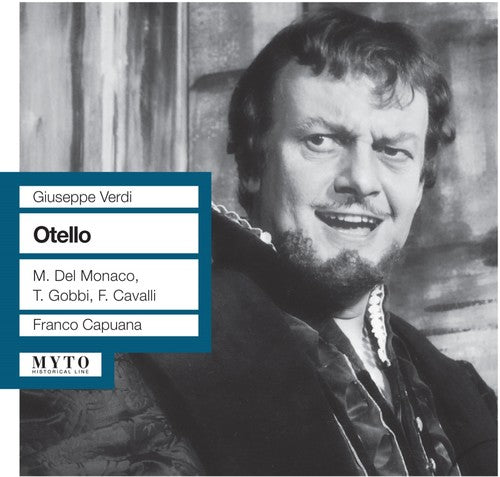
Otello
MYTO Historical
Available as
CD
$10.99
Nov 13, 2015
From a live 1960 performance at the Teatro Roma and featuring Mario Del Monaco as Otello, a role he would record over a dozen times in his career and Tito Gobbi as perhaps the quintessential Iago along with Floriana Cavalli as Desdemona. Verdi’s Shakespearean tale once again comes to life in a production that includes the Teatro della Roma Orchestra and Choir led by Franco Capuana. Released to commemorate the 100th birthday of Del Monaco this live recording has been long out of print.
Aida - Told by Leontyne Price with Selections from the Opera
Sony Masterworks
Available as
CD
$11.98
Feb 08, 2000
This selection features Leontyne Price reading the story of 'Aida' along with highlights from the opera.
REVIEWS:
Opera News (5/00, p.82) - "...The narrative itself is completely successful. The plot has been reduced for clarity, but the characters maintain individuality....Most importantly, the directness, warmth and drama of Price's storytelling involve the listener irresistibly..."
REVIEWS:
Opera News (5/00, p.82) - "...The narrative itself is completely successful. The plot has been reduced for clarity, but the characters maintain individuality....Most importantly, the directness, warmth and drama of Price's storytelling involve the listener irresistibly..."
Verdi: La Traviata (Live)
MYTO Historical
Available as
CD
$10.99
Oct 03, 2008
Verdi: La Traviata (Live)
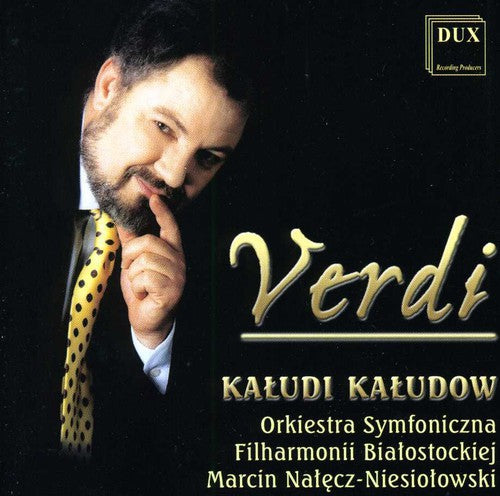
VERDI - KALUDI KALUDOW - TENOR
DUX
Available as
CD
$21.99
Jan 01, 2000
VERDI - KALUDI KALUDOW - TENOR
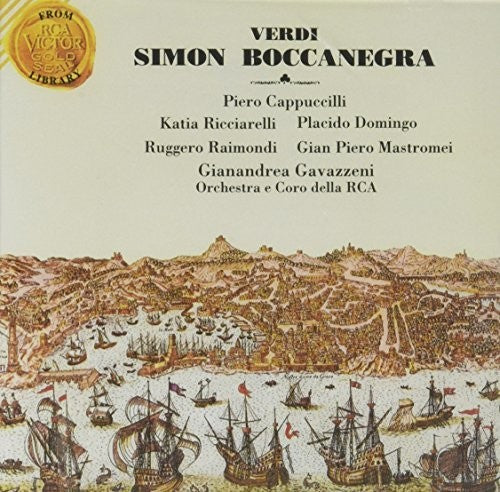
Verdi: Simon Boccanegra /Gavazzeni, Cappuccilli, Domingo, Ricciarelli
RCA
Available as
CD
$24.99
Mar 16, 2009
When this set was new, Andrew Porter, in one of his last assignments for this magazine, wrote a long and appreciative review, describing it as "an arresting, powerful and beautiful performance". He was writing before the appearance of the Abbado/DG version which has, ever since, put the Gavazzeni somewhat in the shadows. On rehearing it, I concur with Porter's original judgement and am not sure there is that much to choose between the two. Gavazzeni's direction is certainly not so assertive as Abbado's; he doesn't make the score quite so grand and histrionic, but, as with his near-contemporary, Serafin, Gavazzeni does much by unobtrusive means that his successors tend to make more manifest. I found his conducting here convincing throughout, both as regards pacing and inner tension - to quote AP again, he is "at once fiery and wise" and he obtains playing of character and bite from his orchestra, only a shade less impressive than the La Scala contribution to the DG set.
Cappuccilli's Boccanegra is already an imposing Simone here, long in phrase and well-detailed in characterization wanting only the extra light and shade Abbado persuaded him to bring to his singing. The improvement can be judged by listening to the great appeal to the Genovese in the Council Chamber scene, which is more refined and delicately shaded with Abbado, but in the tragic finale to the whole work Cappuccilli is here greatly moving: listen to the plangent accents at "Gran Dio, Ii benedici". Porter was disappointed by Ricciarelli, in one of her earliest recordings, but I find her Amelia still more touching than Freni's for Abbado though not so securely sung. She is the very image of the put-upon heroine, her tone gentle and appealing. She is also superbly partnered by the young Domingo's heroic Gabriele, his Second Act scena sung with taut passion and the earlier scene with Fiesco given the chivalrous declamation it should have. Fiesco himself is taken by Raimondi, too soft-grained and illdefined in articulation for my taste, no match for Abbado's Ghiaurov. Mastromei, whose career seems to have faded, here shows as Paolo just what an exciting singer he seemed back in the mid 1970s.
I wouldn't say there was that much to choose in the matters of choral contributions, atmosphere and recording. By a small margin the more recent set probably has the edge, but I would hate to be without this RCA and so make them a joint recommendation.
-- Gramophone [9/1987]
Review of RCA 70729
Cappuccilli's Boccanegra is already an imposing Simone here, long in phrase and well-detailed in characterization wanting only the extra light and shade Abbado persuaded him to bring to his singing. The improvement can be judged by listening to the great appeal to the Genovese in the Council Chamber scene, which is more refined and delicately shaded with Abbado, but in the tragic finale to the whole work Cappuccilli is here greatly moving: listen to the plangent accents at "Gran Dio, Ii benedici". Porter was disappointed by Ricciarelli, in one of her earliest recordings, but I find her Amelia still more touching than Freni's for Abbado though not so securely sung. She is the very image of the put-upon heroine, her tone gentle and appealing. She is also superbly partnered by the young Domingo's heroic Gabriele, his Second Act scena sung with taut passion and the earlier scene with Fiesco given the chivalrous declamation it should have. Fiesco himself is taken by Raimondi, too soft-grained and illdefined in articulation for my taste, no match for Abbado's Ghiaurov. Mastromei, whose career seems to have faded, here shows as Paolo just what an exciting singer he seemed back in the mid 1970s.
I wouldn't say there was that much to choose in the matters of choral contributions, atmosphere and recording. By a small margin the more recent set probably has the edge, but I would hate to be without this RCA and so make them a joint recommendation.
-- Gramophone [9/1987]
Review of RCA 70729
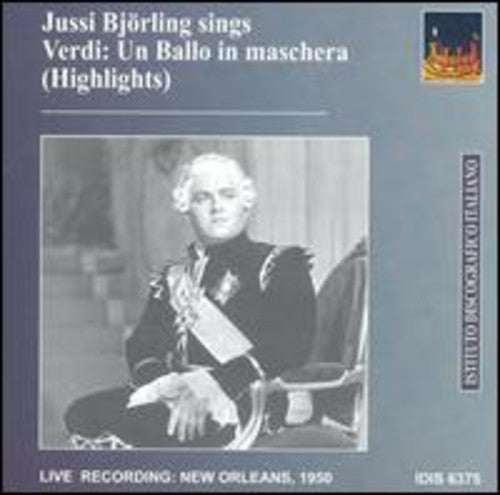
VERDI, G.: Un ballo in maschera (Highlights) (Bjorling) (195
IDIS
Available as
CD
$16.99
Jun 06, 2002
Classical Music
Verdi: Rigoletto (Recorded Live 1951)
MYTO Historical
Available as
CD
$10.99
Apr 01, 2009
Verdi: Rigoletto (Recorded Live 1951)
VERDI, G.: Otello [Opera] (Vinay) (1958)
IDIS
Available as
CD
Classical Music
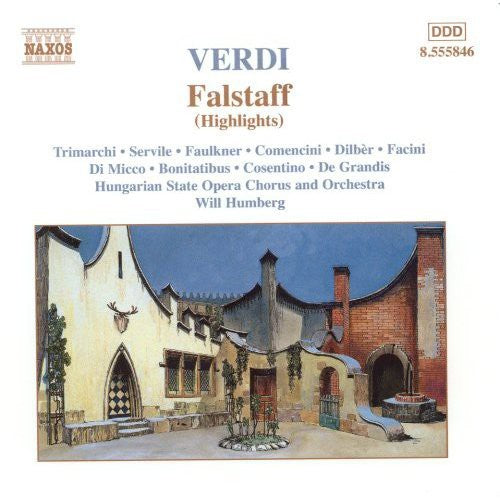
VERDI: Falstaff (Highlights)
Naxos
Available as
CD
$19.99
Jun 01, 2002
VERDI: Falstaff (Highlights)
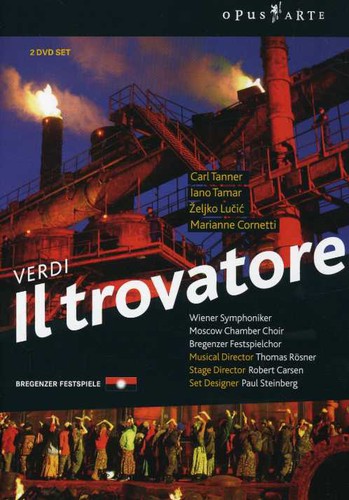
Verdi: Il trovatore
Opus Arte
Available as
DVD
$39.99
Sep 25, 2007
Carl Tanner, Iano Tamar, Zeljko Lucic, and Marianne Cornetti star in this Bregenzer Festspiele production of the Verdi opera on 2 DVDs with Thomas Rosner conducting the Vienna Symphony, Moscow Chamber Choir, and Bregenzer Festspielchor.
Verdi: Aïda (Recorded Live 1960)
MYTO Historical
Available as
CD
$10.99
Jun 04, 2011
Verdi: Aïda (Recorded Live 1960)
VERDI, G.: Aroldo [Opera] (Basile) (1951)
IDIS
Available as
CD
$32.99
Sep 01, 2001
Classical Music
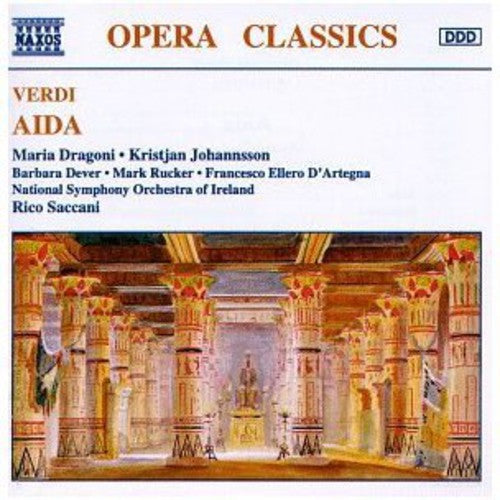
Verdi: Aida
Naxos
Available as
CD
$29.99
Jun 08, 1995
Verdi: Aida
Verdi: Rigoletto (Recorded Live 1961)
MYTO Historical
Available as
CD
$10.99
May 03, 2012
Verdi: Rigoletto (Recorded Live 1961)
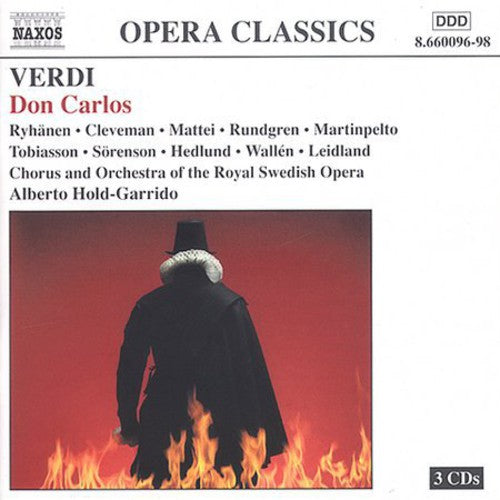
VERDI: Don Carlos
Naxos
Available as
CD
Today Don Carlos is performed in French as it is in Italian. Different productions and recordings vary considerably, however, as regards the choice of scenes and music. The extent of the original material is such that directors, drama tourists and conductors tend to stage the work in a highly individualistic manner.
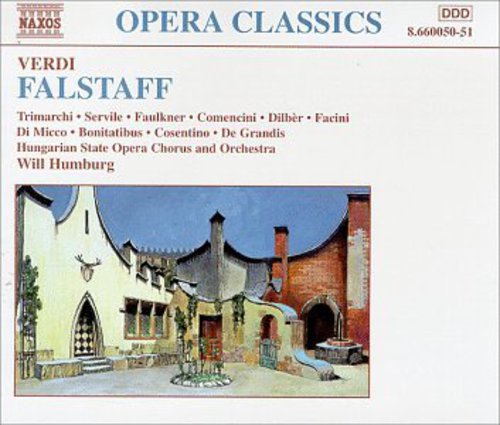
Verdi: Falstaff
Naxos
Available as
CD
$29.99
Sep 24, 1998
Verdi's, Falstaff performed by the Chorus and Orchestra of Hungarian State Opera, Chorus Master Aniko Katona, leads under the direction of Will Humbrug.
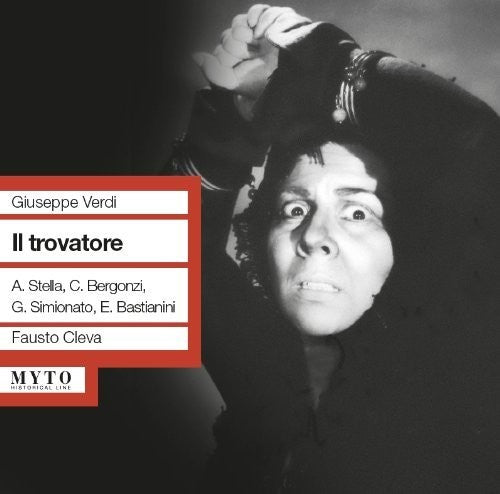
Verdi: Il trovatore (Live)
MYTO Historical
Available as
CD
$10.99
May 06, 2011
Verdi: Il trovatore (Live)
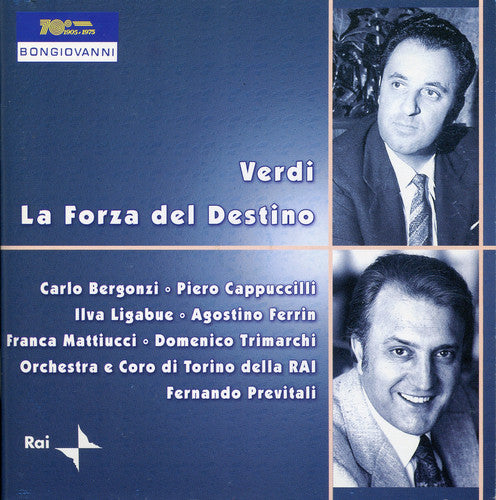
Verdi: La forza del destino (Live)
Bongiovanni
Available as
CD
$42.99
Jan 01, 2004
Classical Music
IL TROVATORE
DUX
Available as
CD
$37.99
Jan 01, 2000
IL TROVATORE
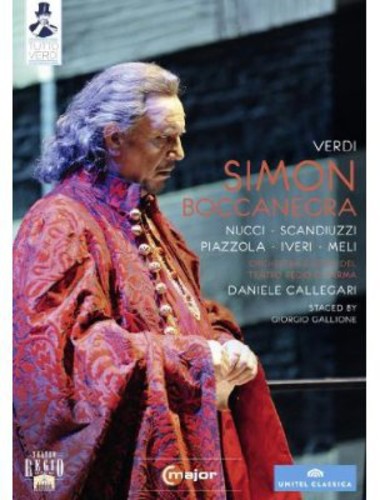
Verdi: Simon Boccanegra
C Major Entertainment
Available as
DVD
$26.99
Apr 30, 2013
Verdi: Simon Boccanegra
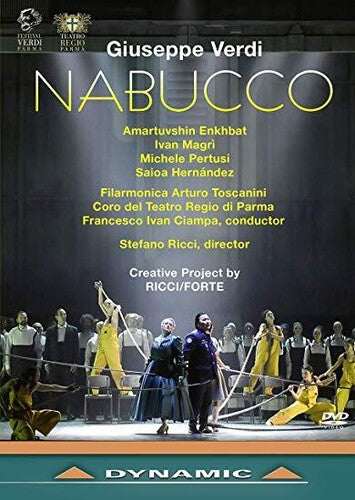
Verdi: Nabucco / Ciampa, Teatro Regio di Parma
Dynamic
Available as
DVD
Also available on Blu-ray
Before starting to work at Nabucodonosor, which will later become his iconic Nabucco, Giuseppe Verdi was on the verge of abandoning music, discouraged as he was by the flop of his second opera. He then received a libretto by Temistocle Solera almost by chance, as it was destined to another composer. Verdi was very reluctant to put himself to work, but later he referred that one night he “threw the manuscript on the table […]. the booklet opened: unwillingly, my eyes were drawn to the page that was before them and on these verses: ‘Va, pensiero, sull’ali dorate’”. So he started focusing on the task and “one day one verse, the next day another verse, a note and a phrase at a time, […] little by little the opera was composed”. The rest is history. Nabucodonosor was a triumph, the public of La Scala, on the night of 9th March 1842, repaid him with an unprecedented success hailing all the numbers of the opera with warm ovations and paying a special tribute to the chorus Va’, pensiero, sull’ali dorate, which in Italy has since become a sort of second national anthem. The reasons of such a success were that the opera possessed such force in itself, such simplicity and smoothness of style that made it the perfect example of tragic opera. This production has been filmed at the 2019 Festival Verdi in Parma. It’s a very powerful and engaging creative project by 2018 Abbiati prize winner duo Ricci/Forte. The most striking feature of this staging is that the action takes place in 2046 on a military ship, which reminds us of an Ark. This performance portrays a dystopic society where we can find many references to real contemporary events. Nabucco is turned into an oppressive dictator who is obsessed with his own image. The Hebrew slaves are portrayed as refugees wearing life vests, while on the ship deck various screens are used to display the regime’s propaganda.
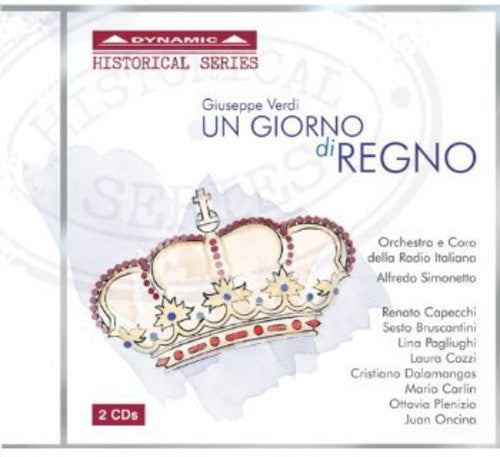
Verdi: Un giorno di regno (1951)
Dynamic
Available as
CD
$18.99
Nov 13, 2012
This historic recording is presently one of the very few CDs available on the market of Verdi's forgotten work. "Un Giorno di Regno" is a comic opera represents Verdi's first challenge in this genre before Falstaff's composition. The cast is made up of Italian artists and the performance has been recorded in 1951 to celebrate the 50th anniversary of composer's death.
Verdi: Il trovatore (Live)
MYTO Historical
Available as
CD
$10.99
Apr 01, 2009
Verdi: Il trovatore (Live)