György Ligeti
26 products
THE LIGETI PROJECT
Artemis Quartett - The Complete Recordings 1996-2018
Intense, passionate, and impeccable in its musical disciplines, the Berlin-based Artemis Quartet "consistently finds a balance between projecting musical structure and conveying immediacy." Confirming that verdict from the New York Times is this 23CD collection, encompassing all the recordings the ensemble made between 1996 and 2018.
The Artemis Quartet began life in 1989 and developed a particular reputation in the central Austro-German repertoire. If Beethoven justly asserts a powerful presence, the scope of this collection extends as far as Eastern Europe and South America and well into the 20th century. Over the period of nearly a quarter of a century documented in this box, there were changes in the Artemis Quartet's lineup, but as founding cellist Eckart Runge explains, this "brought new inspiration - an opportunity to broaden horizons and introduce fresh ideas."
The ensemble suffered a tragic loss with the untimely death of violist Friedemann Weigle in 2015. Just days earlier, the Artemis had completed a recording of Dvořák's lyrical and poignant 'American' Quartet; it is now released for the very first time. This landmark box is completed by a comprehensive booklet which includes reminiscences from members of the Artemis Quartet and from sound engineers who collaborated with them.
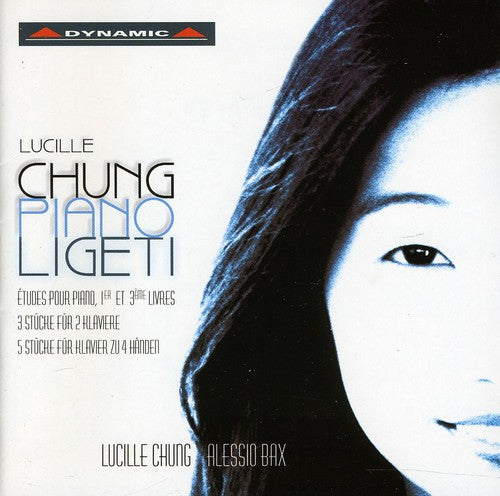
LIGETI: Works for Piano, 2 Pianos, and Piano 4-Hands
Ligeti: Complete Etudes / Takumi
Ligeti: Cello Concerto, Piano Concerto, Chamber Concerto
Pattern Time
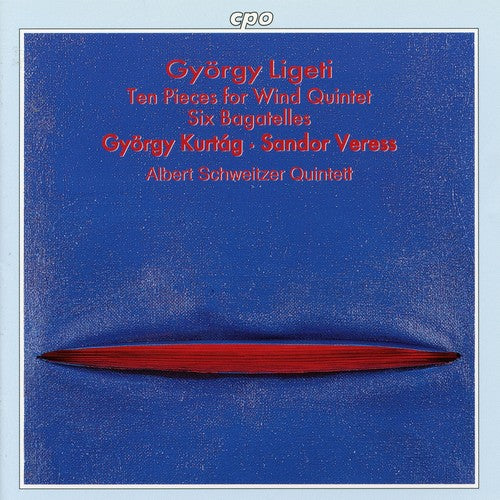
Ligeti: 10 Pieces, Wind Quintet & 6 Bagatelles
KONZERT F. VIOLONCELLO U. ORCH
MUSICA RICERCATA CAPRICCIO 1
Ligeti: Sonate pour alto
Ligeti: Complete Piano Music, Vol. 2
1948–2001: A Ligeti Odyssey
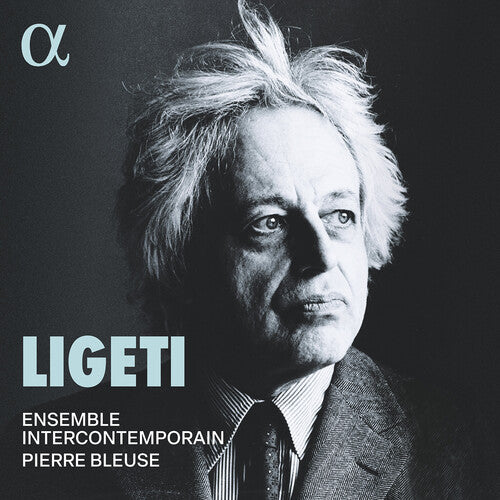
Ligeti / Bleuse, Ensemble Intercontemporain
The Ensemble Intercontemporain and its new music director Pierre Bleuse pay homage to György Ligeti, whose centenary we celebrated in 2023: ‘Ligeti is one of the greatest composers of the twentieth century and certainly one of those who first made a powerful aesthetic impact on me personally!... This recording, which combines concertos and chamber music, highlights the EIC’s qualities as soloists and chamber musicians. And I’m not forgetting that Ligeti is an integral part of the repertoire of the Ensemble, which has performed his works extensively… So this is an ideal way of beginning my own story with the EIC’, says Pierre Bleuse, who brings his personal conception to these works and seeks to approach each score like ‘a virgin forest’. A noteworthy feature here is the new cadenza composed by Philippe Maunoury for the Violin Concerto, with Hae-Sun Kang as soloist. Renaud Déjardin (cello) and Dimitri Vassilakis (piano) perform the other concertos of this tribute program.
REVIEW:
The Paris ensemble’s new music director Bleuse sets out his stall with a wonderful all-Ligeti disc that honors a composer it has long been associated with. The violin concerto and the concerto for piano and orchestra are among the works on this beautifully realized recording. Utterly engrossing.
-- The Sunday Times (U.K.)
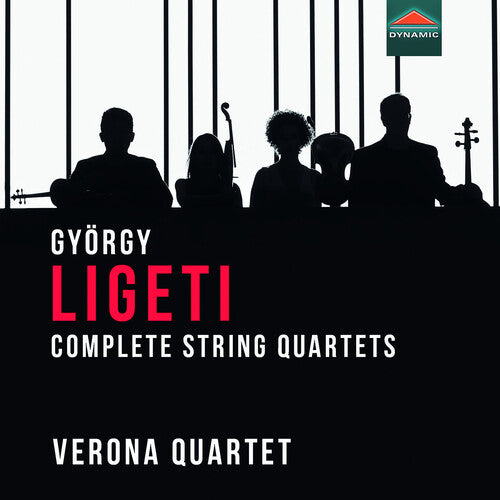
Ligeti: Complete String Quartets / Verona Quartet
This album presents the complete works Ligeti composed for string quartet between 1950 and 1968. The two numbered string quartets are predated by a lyrical early Andante and Allegretto, the folk-music inflections of which pre-echo the hints of Bartók in the first quartet, Métamorphoses nocturnes. The calculated anarchy, dynamic extremes and sublime atmospheres of the Second Quartet present Ligeti at his most distinctive. These spectacular works are performed here by the Verona Quartet, firmly established as one of the most distinguished ensembles on the chamber music scene today.
REVIEW:
This album, celebrating Ligeti’s 2023 centennial, presents his complete works for string quartet composed between 1950-1968. The two numbered string quartets are predated by a lyrical early Andante and Allegretto, the folk-music inflections of which foreshadow the hints of Bartók in the first quartet, Métamorphoses nocturnes. The calculated anarchy, dynamic extremes and sublime atmospheres of the Second Quartet present Ligeti at his most distinctive. These spectacular works are performed here by the Verona Quartet, winner of the Cleveland Quartet Award and currently serving as Quartet-in-Residence at Oberlin College and Conservatory.
-- TheViolinist.com
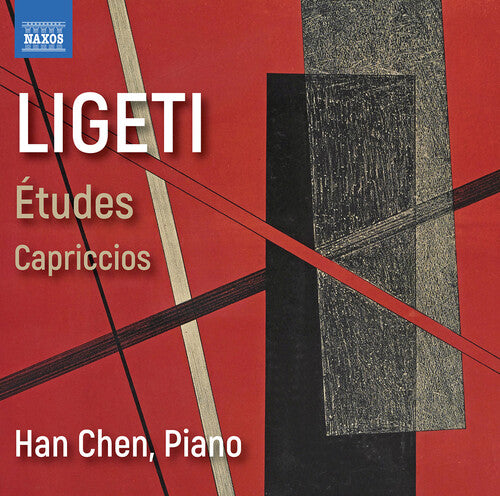
Ligeti: Complete Piano Etudes / Han Chen
György Ligeti’s Études redefined the piano’s tonal possibilities and are considered one of his major creative achievements, as well as being one of the most significant sets of piano studies of the 20th century. They inevitably draw on influences from the past such as Chopin and Debussy, but avoid any sense of eclecticism. Ligeti’s often spectacularly virtuoso use of complex rhythms and geometric patterns proceeds from simple core ideas to create music that is ‘neither “avant-garde” nor “traditional”, neither tonal nor atonal’, and always backed by that glint of humour in the composer’s eye.
Ligeti: Complete Works for a Cappella Choir / Weinberg, SWR Vocal Ensemble
In addition to his popular compositions such as orchestral works and chamber music, György Ligeti also wrote vocal music, among them numerous and demanding a cappella choral works. These, just like his canonically treated instrumental works, reflect his changes of style. With the exception of the Latin 'Lux aeterna' (1966) and 'Three Fantasias' based on Friedrich Hölderlin (1982) Ligeti exclusively set Hungarian poetry to music, showing a marked preference for texts by Balint Balassa (1554-1594) and Sándor Weöres (1913-1989). Ligeti wanted to set the respective contents to music programmatically but focussed especially on particular phonetic sound sequences, rhythms, intonations and accentuations of the Hungarian language. Translations of this speech music are nigh on impossible and even dispensable as you do not have to understand the words in order to experience the choral works as music that is rich in tone colours, rhythmically concise and extremely expressive. The radio choir of SWR is one of the international top ensembles on the professional choir scene. Ever since the ensemble was founded almost 75 years ago it has devoted its passion and extraordinary vocal competence to exemplary performances and the further development of vocal music. Award-winning Yuval Weinberg has been the chief conductor of the SWR Vokalensemble since the beginning of the season 2020/2021.
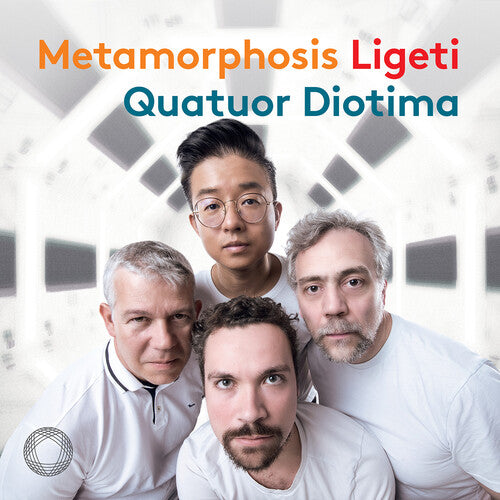
Ligeti: Metamorphosis / Quatuor Diotima
Quatuor Diotima makes its Pentatone debut with a recording of Györgi Ligeti’s string quartets. While the second quartet from 1968 is an avant-garde classic, the first from 1953-54, “Metamorphoses nocturnes”, is often nicknamed Bartók’s seventh quartet, pointing out the continuity between these two Hungarian master composers. Despite moments of nostalgia, it already possesses the ferocious, adventurous nature of the later quartet. In-between these two iconoclast works, the Andante and Allegretto from 1950 offers an intimate moment of repose. The members of Diotima long postponed recording Ligeti’s string quartets, intimidated by their significance in music history and the demands they place on the players, but now the time has come to pursue this fascinating project and share it with the world. The quartet is fascinated by the cinematic qualities of Ligeti’s music and its use in films, including Stanley Kubrick’s 2001 A Space Odyssey. The album cover pays homage to that iconic movie. Quatuor Diotima is one the most in-demand chamber ensembles in the world today, and has worked in close collaboration with several of the greatest composers of the late twentieth century. Reflected in the mirror of today’s music, the quartet projects a new light onto the masterpieces of the 19th and 20th centuries.
REVIEW:
These two works, the 2nd following 15 years on from the 1st, are not so far apart as a casual listen might indicate, and the edgy performances of the Quatuor Diotima emphasize the continuity. The String Quartet No. 1 consists of a dozen short movements that, in their economy, suggest that something other than semi-traditional melodic material is happening here, and the Quatuor Diotima gives sharp, clipped performances that bring out the modernity of the work. The Second Quartet requires hair-trigger concentration from the players and the ability to make extremely quiet sounds at the top of the instruments’ registers. The Quatuor Diotima’s performance in the various insect-like sounds in the work is nonpareil. A truly excellent Ligeti recording that penetrates deeply into the composer’s essence.
-- AllMusic.com (James Manheim)
Ligeti: Violin Concerto; Lontano; Atmospheres / Schmid, Lintu, Finnish RSO
Ligeti's works on this disc provide an excellent cross-section of the metamorphosis in his compositional technique over a period of 30 years. The Violin Concerto incorporates influences from Medieval and Renaissance music, from late Romantic music and various contemporary styles.
REVIEWS:
Lintu’s Lontano shimmers with ever-shifting colours, he highlights the awe-inspiring grandeur of Atmosphères, and his gorgeously shaped San Francisco Polyphony is vibrant and lyrical—all matched by Ondine’s rich, warm, detailed recording. And Lintu’s vision has the ideal Violin Concerto soloist in Benjamin Schmid, who manages to make Ligeti’s strange, mischievous writing sound sweetly expressive, even touching. His clear sense of line leads the ear effortlessly through the second movement’s eerie microtonal textures, complete with natural horns and ocarinas, and he has superb articulation and rhythmic bite in the tricksy opening movement.
-- The Strad
The selections on this disc are as good a place as any for the newcomer to this composer to get an appreciation for what is so exciting about Ligeti’s way of expressing himself in music. Schmid[’s]…is a committed performance…Lintu and a reduced Finnish Radio Symphony accompany very well and the sound allows much wonderful detail to come through. The performances…are all worthy in their own right. The programme on this CD would seem to be an ideal place to obtain a good sampling of Ligeti’s music.
-- MusicWeb International
Ligeti: String Quartets Nos. 1 & 2 / Parker Quartet
Listening to these quartets makes one regret all the more that Ligeti did not fulfill his plan to compose a third quartet, as Richard Whitehouse noted in his accompanying detailed essay. Nonetheless, one can be thankful for the two outstanding works on this disc. They give ample evidence of a real successor to Béla Bartók in the genre. These quartets have been recorded a number of times, but the Parker approach these works as if newly discovered. My first exposure to them came via the Arditti Quartet in Sony’s Ligeti Edition, an invaluable compendium (later taken over by Warner as the Ligeti Project) of the vast majority of the composer’s oeuvre. I still value the Arditti’s accounts highly, as I do those of the younger Artemis Quartet on Virgin. Now we have the first “bargain” set by another young group that I had not heard of before. Right off, I will state that the Parker Quartet has nothing whatsoever to fear from its illustrious predecessors. It was also good to include the early Andante and Allegretto, even if it shows little in the way of hallmarks of the mature Ligeti. The quartets belong to two distinct stages in the composer’s life: the first from his “Hungarian” period before he left for the West, and the second from his more experimental years spent in Germany. How fortunate it would have been if Ligeti had given us an example late in his life when his compositions became a synthesis of the experimental and the more folk-oriented music of the earlier period. Alas, it was not to be.
The Quartet No. 1, while owing no small debt to Bartók, has Ligeti’s identity firmly stamped on it from the beginning. As Whitehouse points out, it is in one continuous movement that can be divided into anywhere from four to eight sections. The Artemis Quartet’s recording has twelve tracks for the quartet and the Arditti eight, while the present one divides the work into four sections. I can think of no better introduction to Ligeti than this work, unless it be his Musica ricercata for piano or the Six Bagatelles for Wind Quintet, an adaptation of six of the piano pieces from the former work, both written in the period of the quartet. Indeed, Ligeti quotes the Vivace energico from the Musica ricercata or the Presto ruvido movement from the Bagatelles, the wind version of that movement, just before the “one minute mark” on the third track, following a delightfully humorous waltz. There is much comedy typical of this composer throughout the quartet, and the Parkers relish the humour without overdoing it. Their many slides are more pronounced than those by the Arditti, their pizzicati more vehement, and their pauses longer. They are obviously having a great deal of fun with the work, whereas the Arditti and to a lesser extent the Artemis project greater experience with the work, not to say that either quartet is bored with it. Having heard this quartet many times in the past, I was struck by their sheer energy and at the same time the utter stillness of the work’s quiet sections. They really bring out the contrasts in the quartet better than I recall hearing before, and their virtuosity is staggering. This may now be my favourite account of this amazing quartet.
The Quartet No. 2 is a much tougher work to get to know. Written in 1968 for the LaSalle Quartet, who incidentally made a famous recording of these quartets for DG, it is in five movements and structurally recalls Bartók. In every other way, though, this is as representative a composition of Ligeti’s middle period, as the Quartet No. 1 was of his first period. It begins with loud unison pizzicato that, as Whitehouse writes, sets the work in motion. Richard Steinitz in the definitive study on the composer in English, György Ligeti: Music of the Imagination, describes the quartet as “a wild zigzag trajectory catapulted out of furious energy into a state of graceful stasis, choreographed in five movements.” I have had the pleasure of attending a performance of the work and can say that the visual element is important in getting to really appreciate it. The most memorable movement for me is the third, one of those “mechanistic” pieces for which Ligeti is famous. It is quite similar to the third movement, Movimento preciso e mecannico of his Chamber Concerto. It is played mostly pizzicato, run amok, and is microtonal and rhythmically complex. The fourth movement juxtaposes loud, jagged chords with very quiet moments. The quartet ends by vaporizing into nothingness, but not before a fleeting episode of melancholy, something that would be more prevalent in Ligeti’s late compositions. As in the earlier work, the Parkers are superb and fully the equal of the Arditti and Artemis recordings. Their sheer virtuosity is evident throughout this demanding work.
After the second quartet, the Andante and Allegretto comes as quite a shock. We are now back in a much earlier period - not only Bartókian, but Romantic even. Yet, it is genuine Ligeti with his own brand of Hungarian folk melody. In a way it is a nice to end the disc with music that is simple and beautiful. One can sit back and enjoy the warm sound of this young ensemble. They treat the work with as much respect as the later and greater quartets.
To have these three works in such outstanding performances, recorded in sound that is both rich and clear, and at bargain price, is a real treat.
-- Leslie Wright, MusicWeb International
Ligeti: Kammerkonzert, Ramifications & Other Works
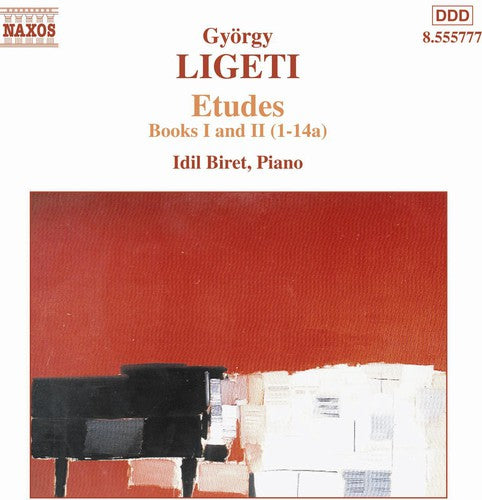
Ligeti: Etudes Books 1 And 2 (1-14a) / Idil Biret
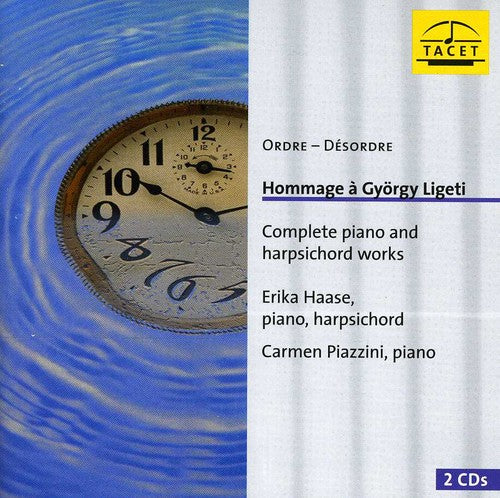
Hommage A Gyorgy Ligeti
Gyorgy Ligeti: Volumina - Orgelwerke
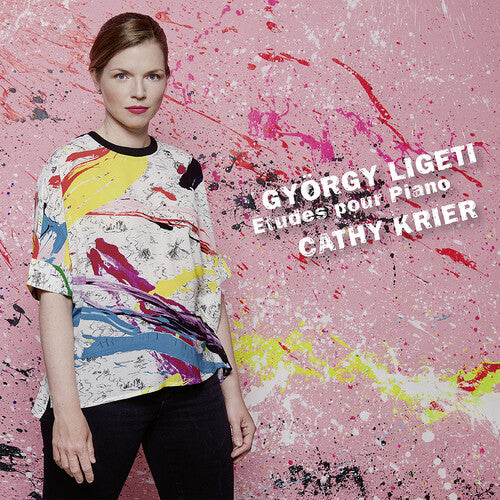
Ligeti: Piano Etudes / Krier
"After a period of less involvement with keyboard instruments since the 1950s, the first book of Études pour piano confirmed Ligeti's return to writing for the piano. The Trois pièces pour deux pianos composed in 1976 stand as a central work in the composer's oeuvre and compositional development. The importance of rhythm is omnipresent, and his interest in this parameter would increase in the early 1980s with the discovery of the polyrhythms of African musicians and the vast complexity of Conlon Nancarrow's Studies for Player Piano, as revealed by his Études.
György Ligeti composed his eighteen Études pour piano over a period of more than seventeen years. His first book of six Études was published in 1985. From the outset, the composer planned to compose a second volume, also comprising six Études. The reference to the piano tradition and the collections of six and twelve études by Chopin, Liszt, or Debussy is obvious. The second book, composed between 1988 and 1994, finally contained eight études. His third and last book includes four more Études composed between 1995 and 2001." -Cathy Krier
Gyorgy Ligeti: Etudes Pour Piano
In 1985 György Ligeti produced an entire volume of piano etudes, to which he added two further volumes in the following sixteen years. Quite a few people in New Music circles then reacted with a lack of appreciation and understanding: Whereas the lively piano etude tradition of the 19th century - inextricably linked with Czerny, Chopin or Liszt - was continued by Bartók, Debussy or Stravinsky at the beginning of the 20th century, this tradition no longer existed by the end of the 20th century. The etude appeared to be a relic from another time. Ligeti had various reasons for these compositions: He was concerned to revive a great musical tradition and to explore its potential in a contemporary form. Furthermore he liked to play the piano himself, although with "inadequate pianistic technique", as he once remarked. Apparently, it was sufficient to create some of the most difficult works for piano in the entire piano repertoire: "The anatomical situation of my hands and the configuration of the piano keyboard determined the products of my imagination." His piano etudes have also to be seen in the context of his admiration for the great piano literature from Bach to Debussy. Furthermore they are exercises in polyphonic writing and playing technique, with polyphony here having to be understood in a considerably expanded sense. For Ligeti's piano writing is not only polyphonic in the customary sense, but also polyrhythmic, poly-temporal, and even poly-ethnic (he uses material from very different European and non-European musical cultures - from the Balkans via Africa to Asia). In the end, his piano etudes are considerably more than mere technical exercises. Each piece is at the same time a poetic miracle, transcending its given musical and technical tasks.