Heitor Villa-Lobos
68 products
-
Villa-Lobos: Complete Works for Solo Guitar
$21.99SACDBIS
Apr 18, 2025BIS-2735 -
-
-
-
-
-
-
-
-
-
-
-
-
-
-
-
-
-
BACHIANAS BRASILE
WARNER CLASSICS
Available as
CD
$35.56
Oct 13, 2020
Classical Music
HEITOR VILLA-LOBOS
WARNER CLASSICS
Available as
CD
$12.99
Oct 13, 2020
Classical Music
Villa-Lobos: Complete Works for Solo Guitar
BIS
Available as
SACD
$21.99
Apr 18, 2025
Following his exploration of Spain with the music of Federico Moreno Torroba (BIS-2725), Franz Halasz now takes us to Brazil with the complete works for solo guitar by Heitor Villa-Lobos. The music of this extremely prolific composer often combines the influences of European classical music with the popular and traditional music of his homeland, which he played from an early age. The twelve etudes, thoroughly modern, are to the guitar what Chopin's etudes are to the piano. Andres Segovia put it perfectly: 'They present, at the same time, formulas of an amazing efficiency for the development of two-handed technique, and disinterested musical beauty.' In contrast, the Suite populaire bresilienne and Choros No. 1 reflect the composer's youthful experiences as a 'choro' musician playing Brazilian street music, and offer a fusion of the characteristics of traditional music. Finally, the five Preludes return to Brazilian folklore, of which they offer a synthesis in the form of five tableaux inspired by the popular repertoire. This recording also features two rarities: the recently discovered Valse-Choro and the unfinished Valsa Concerto No. 2, completed by Debora Halasz. An evocative blend of syncopated rhythms, exotic harmonies, sensual melodies... and guitaristic flamboyance!
BACCHIANAS BRASILEIRAS
WARNER CLASSICS
Available as
CD
$12.99
Oct 13, 2020
Classical Music
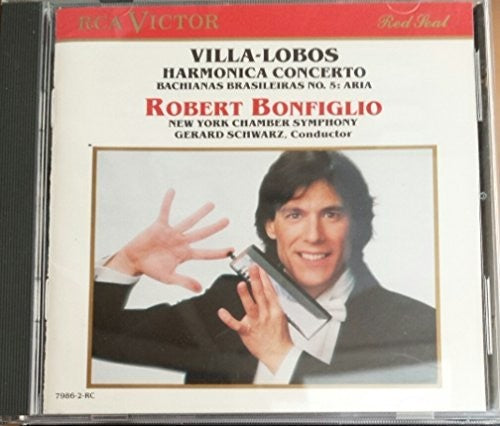
Villa-Lobos: Harmonica Concerto, etc / Bonfiglio, Schwarz
RCA
Available as
CD
$17.99
Dec 21, 2007
Villa-Lobos seemed to have a bottomless well of simple, predominantly diatonic, yet affecting tunes, to which his harmonic eclecticism lent an exotic air; there is not one on this recording which is not capable of staying in the memory. Robert Bonfiglio is a most accomplished soloist in every respect... a most enjoyable programme...
-- John Duarte, Gramophone [4/1990]
Villa-Lobos: Magdalena / Kaile, Kaye, Rose, Esham, Gray
CBS Masterworks
Available as
CD
$17.99
Oct 02, 2008
This recording features the cast of the 1988 Lincoln Center production of this operetta.
Villa-Lobos, H.: Voice of Brazil
Divine Art
Available as
CD
$27.99
Feb 13, 2007
Tuneful, exotic, brilliant - the vocal music of Heitor Villa-Lobos encaptures the spirit of Brazil. This recital was recorded in 1972/3 and issued on 3 LP's, one of which, including the Bachiana Brasileira, won the Grand Prix du Disque in 1973, and was also highly praised by the composer's widow.
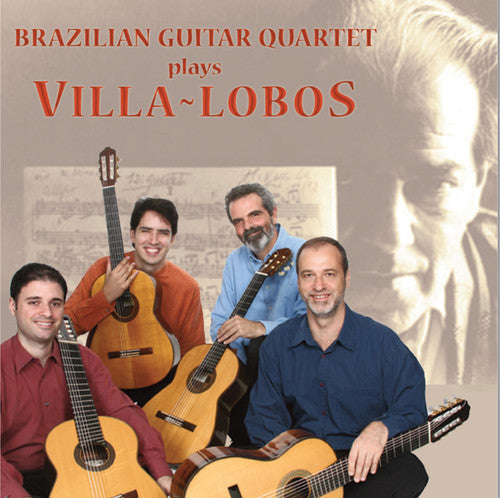
Brazilian Guitar Quartet Plays Villa-Lobos
Delos
Available as
CD
$18.99
Jan 25, 2011
Brazilian Guitar Quartet Plays Villa-Lobos
Brasil / Richard Stoltzman & Friends
RCA
Available as
CD
$17.99
Oct 01, 2013
Complete Track List:
1. Tempo Feliz
2. Anima
3. Song Of The Black Swan
4. Orixa
5. Nacao
6. Tristeza
7. Modinha
8. Urubamba
9. It's Here!
10. Primeira Luz
11. Ana Maria
12. Pavane
13. Nos Padre (The Lord's Prayer)
14. Dawn
Personnel: Richard Stoltzman (clarinet); Gary Burton (vibraphone, marimba); Jeremy Wall, Bill Douglas (keyboards); Chuck Loeb (guitar); Eddie Gomez (bass); Danny Gottlieb (drums); Cafe (percussion).
1. Tempo Feliz
2. Anima
3. Song Of The Black Swan
4. Orixa
5. Nacao
6. Tristeza
7. Modinha
8. Urubamba
9. It's Here!
10. Primeira Luz
11. Ana Maria
12. Pavane
13. Nos Padre (The Lord's Prayer)
14. Dawn
Personnel: Richard Stoltzman (clarinet); Gary Burton (vibraphone, marimba); Jeremy Wall, Bill Douglas (keyboards); Chuck Loeb (guitar); Eddie Gomez (bass); Danny Gottlieb (drums); Cafe (percussion).
Villa-Lobos: Symphony No. 4, Piano Concerto No. 5, Momopréco
Urania Records
Available as
CD
Villa-Lobos: Symphony No. 4, Piano Concerto No. 5, Momopréco
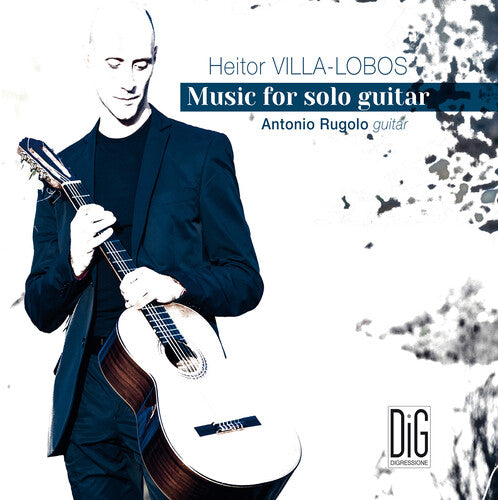
MUSIC FOR SOLO GUITAR
Digressione Music
Available as
CD
$19.99
Jul 03, 2020
Antonio Rugolo, after winning two Golden Guitars in 2014 and 2018 at the International Guitar Conference of Alessandria with his two latest releases dedicated to two Apulian composers, Mauro Giuliani (1781-1829) and Guido Sant�rsola (1904-1994), he presents a new monographic work dedicated to solo guitar music by the Brazilian composer Heitor Villa-Lobos (1887-1959). With his creativity and skill Villa-Lobos has revolutionized the way of conceiving and handling the guitar, reaching very high levels of poetry and technical development never before achieved. A reason of particular interest in this album is certainly the listening (for the first time) of how in '28 Villa-Lobos delivered the Suite Popularie Brasilienne to the publisher Max Eschig, which twenty years later was forced to be rewritten because it was lost; in the same year he wrote for Miguel Llobet and Regino Sanz de la Maza, a version enriched in various details, of Choros n. 1 that here you can listen to it together with the Cinq Preludes and the Douze Etudes.
Wind Chamber Music 3
Kontrapunkt
Available as
CD
$22.99
Jan 01, 1993
Wind Chamber Music 3
Villa-Lobos: Symphonies / St. Clair, Stuttgart Radio Symphony
CPO
Available as
CD
$67.99
Nov 17, 2009
Brazilian writers on Villa-Lobos tend to minimize the value of his symphonies for little reason beyond the fact that for the most part they are not nationalistic in outward intent. But in truth they sound just like everything else he wrote for orchestra: lush, exotic, busy in texture, melodically lavish, and perhaps a bit formally amorphous. Still, if you like Villa-Lobos' sound, then you will like his symphonies. It's really that simple. And if you've enjoyed the other issues in this excellent series, then you'll certainly enjoy this one just as much.
The Second Symphony, for some reason subtitled "Ascension", is 50 minutes of gorgeous texture, with an unusually definable shape (at least in its inner movements). The opening, with its splashing fountains of harp and chirping woodwinds, tells us exactly who the composer must be. Even for Villa-Lobos this work is unusually generous in melody, and not just the obviously Brazilian kind. The second movement, a sort of scherzo, features a memorable slow waltz--decorated by rapid figurations in the winds and strings--that may well stay with you long after the symphony ends. The work does have a bit of a "finale problem", to the extent that the ending seems a bit unmotivated--but really, so does Brahms' First.
New York Skyline Melody is just what the title implies: a shy three minutes of a tune created by taking an outline of the skyline in question and transcribing its shape as notes on music paper. Villa-Lobos designed his entire Sixth Symphony in such a fashion, and the result is about what you might expect: a curiosity. The performances, as with other issues in this series, are excellent, the strings really doing themselves proud in what are some very difficult parts. German radio engineers remain among the best in the business, and the only remaining question is why we had to wait so long for this 1998 recording (of the symphony) to see the light of day.
--David Hurwitz, ClassicsToday.com
-------
Symphonies Nos. 3-5 constitute a "war trilogy" and respectively symbolize war, victory, and peace. As might be expected, the "war" symphony (1919) has its share of noise and hysteria, all of it very exciting and refreshingly brief. The heart of the work, though, is its extraordinary funeral march (subtitled "suffering"), which is as long as that in Beethoven's "Eroica" and certainly one of the most moving pieces that the composer ever wrote. This is a remarkable piece, and one that Carl St. Clair and his SWR forces play with tremendous enthusiasm and conviction.
The brief (19-minute), four-movement Symphony No. 9 comes from the opposite end of the composer's career, offering a playful neo-classicism of form even while exploiting those lavish textures and arresting uses of color that make Villa-Lobos' work so appealing. It's a charmer from start to finish, with an especially delightful scherzo--but the real treat lies in the disc's final item, the very bizarre Overture de l'Homme Tel dating from the same year.
If Honegger had written Rossini's William Tell overture, this might have been the result. It has exactly the same form: slow introduction, agitated allegro, pastoral interlude, and a final gallop, except that the harmony is uniformly astringent and, given the gloomy general character, it's a little hard to tell if the composer is kidding or not. It's major fun all the same, and as the performances of these two later works match that of the Third Symphony in expertise, and the engineering maintains the high standards of the house, anyone collecting this series should snap this disc up without delay.
--David Hurwitz, ClassicsToday.com
-------

It's big. It's loud. It's lush. It's exotic. It's our old friend, Heitor Villa-Lobos back to regale us with his own special brand of extravagantly expressive, orchestrally brilliant, melodically captivating Brazilian musical magic. This second installment in CPO's ongoing traversal of the complete symphonies (pray that they finish the series!) includes the only one (No. 4) actually recorded by the composer himself--pretty dismally, as it turns out. What certainly isn't dismal, though, is Dorian's competing version with the Orquesta Sinfonica Simón Bolívar of Venezuela, a performance featuring almost identical tempos, richer string playing, but slightly less rhythmic acuity than this one. The couplings are different: Dorian offers a fine Second Cello Concerto and the tone poem Amazonas, while CPO gives us the CD premiere of Symphony No. 12. Only 23 minutes long and containing three bubbly movements plus a soulful adagio, this late work has an almost neo-classical pithiness, inasmuch as anything this composer wrote can be termed "pithy". Villa-Lobos has received nothing like the recognition he deserves as a symphonist, largely because much of his music in this medium appears to avoid conventional forms--or any form at all, for that matter. But let's face it, when you can write with this kind of fluency and spontaneity, who cares about form? Lie back, and let conductor Carl St. Clair and his marvelously recorded Stuttgart orchestra inundate your senses with this festive orgy of symphonic exuberance.
--David Hurwitz, ClassicsToday.com
---------
The Sixth Symphony was one of the composer's favorites. Its first movement contains thematic material derived from a topographical map of Brazil, the rise and fall of its mountains dictating the range of its principal melodies. The result, not surprisingly, sounds just like Villa-Lobos; it also recalls the composer's days in Paris, and particularly the elegantly sculpted symphonies of Roussel. It's common to point to the lush colors and extravagant orchestral sonorities that make Villa-Lobos' music so distinctive, but it's also worth noting these works' neat proportions and formal concision, something for which he rarely receives the credit he deserves.
At 25 minutes each, neither symphony makes outrageous demands on the listener's attention, and both feature enticingly evocative slow movements (that of Symphony No. 6 is particularly appealing) surrounded by three short, rhythmically dense, eventful quick ones. The Eighth Symphony, dating from 1950, shows the composer paring down his polyrhythmic orchestral thickets with no loss of imagination or excitement. If anything, it's even more obviously tuneful than the Sixth. Both works are beautiful, engaging, and very well performed and conducted, as with previous discs in this series.
The Suite for Strings is an early work, typically luxuriant and attractive, not especially "Brazilian" melodically, and a bit long for its material, a problem perhaps emphasized by its "slow, less slow, moderate" three-movement structure. Still, it's well worth having, especially in such a lovely performance. Symphony No. 6 also is available in a fine performance on Marco Polo, not quite as well recorded or incisively played as this one, but with highly desirable couplings in its own right. Fans of the composer will want both versions, for sure. CPO's Villa-Lobos symphony cycle is one of the great "happenings" in classical music today. Don't miss it. [6/23/2002]
--David Hurwitz, ClassicsToday.com
-----
This excellent disc continues CPO's marvelous and important ongoing survey of Villa-Lobos' complete symphonies. It's a mystery to me why anyone would claim that Villa-Lobos was not a natural-born symphony composer, not just because he wrote 12 of them, but also because they sound just like everything else he wrote--busy, exotic, and wholly characteristic of his inimitable style. Symphony No. 7 begins like one of his Amazonian tone poems, with "bird call" glissandos, glittering percussion, celesta, harp, and piano, and loony string writing that has to be heard to be believed. The ensuing lento must be accounted one of the most beautiful slow movements in all of the symphonies, attractive of melody and gorgeously scored.
The busy scherzo and finale (with its abrupt and surprising ending) make short and entertaining work of the piece's 36-minute total time. It's actually one of the longer symphonies, and it's so packed with incident that it could have been much lengthier without the slightest suspicion of tedium. As with previous issues in this series, Carl St. Clair and the Stuttgart orchestra do a sensational job with what sounds like horrendously difficult music to play well. The violins in particular should be proud of their death-defying willingness to boldly go where few string sections have gone before.
Sinfonietta No. 1 dates from 1916 (the symphony from 1945), making it one of the composer's earliest orchestral works. It lacks the ethnic elements that give the later pieces their special character, but it's very well written for a small orchestra, tuneful and appealing. It's also much easier to play, and we might expect St. Clair and his band to relax into this sunny music with casual expertise. CPO's sonics uphold the high standards of the house (the SWR engineers always do excellent work). Anyone collecting this series will find this release self-recommending, but the curious also will be well rewarded by starting here.
--David Hurwitz, ClassicsToday.com
-----
Villa Lobos’s massive 10th takes the form of a symphonic oratorio. It was composed in 1952 for the celebrations of the fourth centenary of the city of São Paulo (in 1954) and lasts over an hour. In five movements, the work depicts the history of Brazil—as indeed do several other works by the composer—from the untamed jungle (in the instrumental movement 1), through the civilization of the Tupi Indians (movements 2 and 3) to the arrival of Christianity in the 16th century (movements 4 and 5). Poems set include a translation from a Tupi epic and sections of a long poem in Latin by the Jesuit José de Anchieta, one of the founders of the city.
Interestingly, the thrust of the Tupi poem is, “We must build ourselves a home and become Lords of Brazil, but we’ll do it tomorrow; first let’s get something to eat.” The inference is that the Brazilian natives didn’t get their act together until the Portuguese invaded and pulled them into line. Certainly, that’s how our Jesuit poet sees it. (Personally, I think a life of lotus eating beats one of guilt and atonement hands down.) Anyway, if you share the opinion that religion brings in its wake pomp and long-windedness, you’ll discover that Villa Lobos gets it right. His lengthy fourth movement, which sets Anchieta (over 30 minutes in this performance), hangs fire after what has gone before, in spite of its snatches of tenderness and calm. (In this respect, the choral writing reminded me at times of Duruflé and Honegger.)
The Villa Lobos we know and love—he of the rampant figuration, lush orchestration, and memorable sequential themes—hits his stride in the early movements, particularly the second, which introduces a wordless melisma from the soprano choir. Here we are in the hothouse world of his great film score "Forest of the Amazon" and the "Choros No. 11" for Piano and Orchestra. (Monumental works poured from the composer’s pen in the 1950s; he must have done nothing but write music.)
In spite of the enormous forces and rehearsal time required, this symphony has been recorded twice previously that I know of. I would advise anyone interested in the work to read the reviews of these recordings, conducted respectively by Gisèle Ben Dor for Koch and Victor Pablo Pérez for Harmonia Mundi. I don’t have the earlier discs at hand, but a close comparison would be fascinating if only because of timing discrepancies: Ben Dor gets through the symphony in 57: 20, Pablo Pérez in 66:48 and, as you can see, St Clair takes 73:30: a difference of over 16 minutes! It could be that St Clair takes his time in the earlier movements in order to give the whole work a broad sweep, but surely Ben Dor’s performance involves cuts? I have no answer to this; perhaps one of our readers can shed some light on the matter.
Although his performance may be the slowest, St. Clair doesn’t seem lethargic. His tempos never force the busy violin lines to become a scramble; everything sits, as it were. All sections of the orchestra and the mellifluous soloists come through in this recording as clear as a bell. The choirs are equally present, and the balance of the sound picture is wide-ranging and impressive. St. Clair and the Stuttgart Orchestra are old hands at separating the tendrils of Villa Lobos’s orchestral texture, as they leisurely set down their complete edition of his symphonies. For those collecting the set, this will be a primary acquisition.
-- Phillip Scott, Fanfare Magazine
The Second Symphony, for some reason subtitled "Ascension", is 50 minutes of gorgeous texture, with an unusually definable shape (at least in its inner movements). The opening, with its splashing fountains of harp and chirping woodwinds, tells us exactly who the composer must be. Even for Villa-Lobos this work is unusually generous in melody, and not just the obviously Brazilian kind. The second movement, a sort of scherzo, features a memorable slow waltz--decorated by rapid figurations in the winds and strings--that may well stay with you long after the symphony ends. The work does have a bit of a "finale problem", to the extent that the ending seems a bit unmotivated--but really, so does Brahms' First.
New York Skyline Melody is just what the title implies: a shy three minutes of a tune created by taking an outline of the skyline in question and transcribing its shape as notes on music paper. Villa-Lobos designed his entire Sixth Symphony in such a fashion, and the result is about what you might expect: a curiosity. The performances, as with other issues in this series, are excellent, the strings really doing themselves proud in what are some very difficult parts. German radio engineers remain among the best in the business, and the only remaining question is why we had to wait so long for this 1998 recording (of the symphony) to see the light of day.
--David Hurwitz, ClassicsToday.com
-------
Symphonies Nos. 3-5 constitute a "war trilogy" and respectively symbolize war, victory, and peace. As might be expected, the "war" symphony (1919) has its share of noise and hysteria, all of it very exciting and refreshingly brief. The heart of the work, though, is its extraordinary funeral march (subtitled "suffering"), which is as long as that in Beethoven's "Eroica" and certainly one of the most moving pieces that the composer ever wrote. This is a remarkable piece, and one that Carl St. Clair and his SWR forces play with tremendous enthusiasm and conviction.
The brief (19-minute), four-movement Symphony No. 9 comes from the opposite end of the composer's career, offering a playful neo-classicism of form even while exploiting those lavish textures and arresting uses of color that make Villa-Lobos' work so appealing. It's a charmer from start to finish, with an especially delightful scherzo--but the real treat lies in the disc's final item, the very bizarre Overture de l'Homme Tel dating from the same year.
If Honegger had written Rossini's William Tell overture, this might have been the result. It has exactly the same form: slow introduction, agitated allegro, pastoral interlude, and a final gallop, except that the harmony is uniformly astringent and, given the gloomy general character, it's a little hard to tell if the composer is kidding or not. It's major fun all the same, and as the performances of these two later works match that of the Third Symphony in expertise, and the engineering maintains the high standards of the house, anyone collecting this series should snap this disc up without delay.
--David Hurwitz, ClassicsToday.com
-------

It's big. It's loud. It's lush. It's exotic. It's our old friend, Heitor Villa-Lobos back to regale us with his own special brand of extravagantly expressive, orchestrally brilliant, melodically captivating Brazilian musical magic. This second installment in CPO's ongoing traversal of the complete symphonies (pray that they finish the series!) includes the only one (No. 4) actually recorded by the composer himself--pretty dismally, as it turns out. What certainly isn't dismal, though, is Dorian's competing version with the Orquesta Sinfonica Simón Bolívar of Venezuela, a performance featuring almost identical tempos, richer string playing, but slightly less rhythmic acuity than this one. The couplings are different: Dorian offers a fine Second Cello Concerto and the tone poem Amazonas, while CPO gives us the CD premiere of Symphony No. 12. Only 23 minutes long and containing three bubbly movements plus a soulful adagio, this late work has an almost neo-classical pithiness, inasmuch as anything this composer wrote can be termed "pithy". Villa-Lobos has received nothing like the recognition he deserves as a symphonist, largely because much of his music in this medium appears to avoid conventional forms--or any form at all, for that matter. But let's face it, when you can write with this kind of fluency and spontaneity, who cares about form? Lie back, and let conductor Carl St. Clair and his marvelously recorded Stuttgart orchestra inundate your senses with this festive orgy of symphonic exuberance.
--David Hurwitz, ClassicsToday.com
---------
The Sixth Symphony was one of the composer's favorites. Its first movement contains thematic material derived from a topographical map of Brazil, the rise and fall of its mountains dictating the range of its principal melodies. The result, not surprisingly, sounds just like Villa-Lobos; it also recalls the composer's days in Paris, and particularly the elegantly sculpted symphonies of Roussel. It's common to point to the lush colors and extravagant orchestral sonorities that make Villa-Lobos' music so distinctive, but it's also worth noting these works' neat proportions and formal concision, something for which he rarely receives the credit he deserves.
At 25 minutes each, neither symphony makes outrageous demands on the listener's attention, and both feature enticingly evocative slow movements (that of Symphony No. 6 is particularly appealing) surrounded by three short, rhythmically dense, eventful quick ones. The Eighth Symphony, dating from 1950, shows the composer paring down his polyrhythmic orchestral thickets with no loss of imagination or excitement. If anything, it's even more obviously tuneful than the Sixth. Both works are beautiful, engaging, and very well performed and conducted, as with previous discs in this series.
The Suite for Strings is an early work, typically luxuriant and attractive, not especially "Brazilian" melodically, and a bit long for its material, a problem perhaps emphasized by its "slow, less slow, moderate" three-movement structure. Still, it's well worth having, especially in such a lovely performance. Symphony No. 6 also is available in a fine performance on Marco Polo, not quite as well recorded or incisively played as this one, but with highly desirable couplings in its own right. Fans of the composer will want both versions, for sure. CPO's Villa-Lobos symphony cycle is one of the great "happenings" in classical music today. Don't miss it. [6/23/2002]
--David Hurwitz, ClassicsToday.com
-----
This excellent disc continues CPO's marvelous and important ongoing survey of Villa-Lobos' complete symphonies. It's a mystery to me why anyone would claim that Villa-Lobos was not a natural-born symphony composer, not just because he wrote 12 of them, but also because they sound just like everything else he wrote--busy, exotic, and wholly characteristic of his inimitable style. Symphony No. 7 begins like one of his Amazonian tone poems, with "bird call" glissandos, glittering percussion, celesta, harp, and piano, and loony string writing that has to be heard to be believed. The ensuing lento must be accounted one of the most beautiful slow movements in all of the symphonies, attractive of melody and gorgeously scored.
The busy scherzo and finale (with its abrupt and surprising ending) make short and entertaining work of the piece's 36-minute total time. It's actually one of the longer symphonies, and it's so packed with incident that it could have been much lengthier without the slightest suspicion of tedium. As with previous issues in this series, Carl St. Clair and the Stuttgart orchestra do a sensational job with what sounds like horrendously difficult music to play well. The violins in particular should be proud of their death-defying willingness to boldly go where few string sections have gone before.
Sinfonietta No. 1 dates from 1916 (the symphony from 1945), making it one of the composer's earliest orchestral works. It lacks the ethnic elements that give the later pieces their special character, but it's very well written for a small orchestra, tuneful and appealing. It's also much easier to play, and we might expect St. Clair and his band to relax into this sunny music with casual expertise. CPO's sonics uphold the high standards of the house (the SWR engineers always do excellent work). Anyone collecting this series will find this release self-recommending, but the curious also will be well rewarded by starting here.
--David Hurwitz, ClassicsToday.com
-----
Villa Lobos’s massive 10th takes the form of a symphonic oratorio. It was composed in 1952 for the celebrations of the fourth centenary of the city of São Paulo (in 1954) and lasts over an hour. In five movements, the work depicts the history of Brazil—as indeed do several other works by the composer—from the untamed jungle (in the instrumental movement 1), through the civilization of the Tupi Indians (movements 2 and 3) to the arrival of Christianity in the 16th century (movements 4 and 5). Poems set include a translation from a Tupi epic and sections of a long poem in Latin by the Jesuit José de Anchieta, one of the founders of the city.
Interestingly, the thrust of the Tupi poem is, “We must build ourselves a home and become Lords of Brazil, but we’ll do it tomorrow; first let’s get something to eat.” The inference is that the Brazilian natives didn’t get their act together until the Portuguese invaded and pulled them into line. Certainly, that’s how our Jesuit poet sees it. (Personally, I think a life of lotus eating beats one of guilt and atonement hands down.) Anyway, if you share the opinion that religion brings in its wake pomp and long-windedness, you’ll discover that Villa Lobos gets it right. His lengthy fourth movement, which sets Anchieta (over 30 minutes in this performance), hangs fire after what has gone before, in spite of its snatches of tenderness and calm. (In this respect, the choral writing reminded me at times of Duruflé and Honegger.)
The Villa Lobos we know and love—he of the rampant figuration, lush orchestration, and memorable sequential themes—hits his stride in the early movements, particularly the second, which introduces a wordless melisma from the soprano choir. Here we are in the hothouse world of his great film score "Forest of the Amazon" and the "Choros No. 11" for Piano and Orchestra. (Monumental works poured from the composer’s pen in the 1950s; he must have done nothing but write music.)
In spite of the enormous forces and rehearsal time required, this symphony has been recorded twice previously that I know of. I would advise anyone interested in the work to read the reviews of these recordings, conducted respectively by Gisèle Ben Dor for Koch and Victor Pablo Pérez for Harmonia Mundi. I don’t have the earlier discs at hand, but a close comparison would be fascinating if only because of timing discrepancies: Ben Dor gets through the symphony in 57: 20, Pablo Pérez in 66:48 and, as you can see, St Clair takes 73:30: a difference of over 16 minutes! It could be that St Clair takes his time in the earlier movements in order to give the whole work a broad sweep, but surely Ben Dor’s performance involves cuts? I have no answer to this; perhaps one of our readers can shed some light on the matter.
Although his performance may be the slowest, St. Clair doesn’t seem lethargic. His tempos never force the busy violin lines to become a scramble; everything sits, as it were. All sections of the orchestra and the mellifluous soloists come through in this recording as clear as a bell. The choirs are equally present, and the balance of the sound picture is wide-ranging and impressive. St. Clair and the Stuttgart Orchestra are old hands at separating the tendrils of Villa Lobos’s orchestral texture, as they leisurely set down their complete edition of his symphonies. For those collecting the set, this will be a primary acquisition.
-- Phillip Scott, Fanfare Magazine
The Piano Music of Villa-Lobos / Rubinsky
Naxos
Available as
CD
$85.99
Feb 23, 2010
We're sorry, but due to demand we have temporarily sold out of our stock on this title. We expect more stock to arrive by Wednesday of next week.
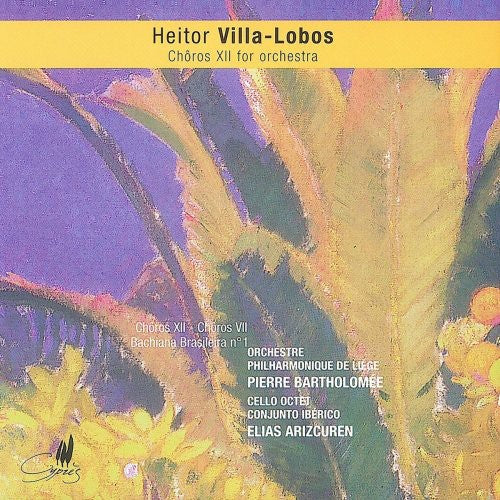
CHOROS XII & VII
Cyprés Records
Available as
CD
$20.99
Jan 01, 1900
Classical Music
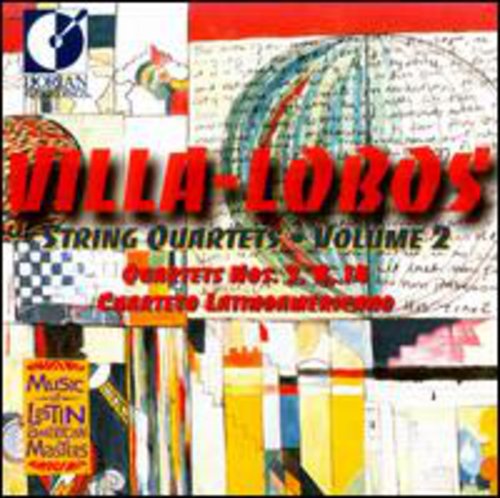
VILLA-LOBOS, H.: String Quartets, Vol. 2 - Nos. 3, 8, 14 (Qu
Sono Luminus
Available as
CD
$18.99
Mar 12, 1996
Classical Music
Villa-Lobos: Complete Music for Solo Guitar / Kraft
Naxos
Available as
CD
$19.99
Nov 01, 2000
On the whole, this recording ranks as one of the best available interpretations of this music. I can recommend it to anyone wanting the complete solo guitar works of Villa-Lobos on one disc.
– Andy Daly, MusicWeb International
Villa-Lobos: Integrales Bachianas Brasileiras (1987)
Frémeaux
Available as
CD
$32.99
Nov 24, 2023
Brazilian Heitor Villa-Lobos was one of the greatest composers of the 20th century, and his music was often written in a style that was a mix of European influences (Bach in particular), and traditional Brazilian music, especially the choro. This exceptional recording made in Rio de Janeiro in 1897 was produced by Jo�l Leibovitz, and the three CDs here contain the 9 complete suites of the Bachianas Brasileiras performed by the Orquesta Sinf�nica Brasileira.
Villa-Lobos, H.: 5 Preludes / 12 Etudes / Suite Popular Bras
Thorofon
Available as
CD
$24.99
Dec 01, 1988
Classical Music
Villa-Lobos, H.: Piano Music, Vol. 2 - A Prole Do Bebe, No.
Naxos
Available as
CD
Classical Music
Villa-Lobos, H.: Piano Music, Vol. 4 - Bachianas Brasileiras
Naxos
Available as
CD
The hugely prolific Brazilian composer Heitor Villa-Lobos was fiercely independent of any one compositional style or influence, yet his work is unified by a unique synthesis of Brazilian and Western cultures.
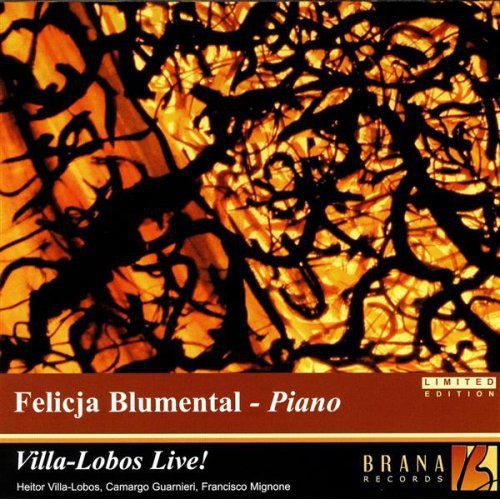
VILLA-LOBOS: Piano Concerto No. 5 (Live) / Bachianas Brasile
Brana Records
Available as
CD
Classical Music
Villa-Lobos, H.: Piano Music, Vol. 7 - Amazonas / Historias
Naxos
Available as
CD
Villa-Lobos was one of the most prolific of all 20th-century composers. The works on this seventh volume of the complete piano works show the multilayered nature of Villa-Lobos' idiom, which is as exuberant as the Brazilian landscape that inspired hi.
Villa-Lobos: Choral Works
SWR
Available as
CD
Classical Music
VILLA-LOBOS, H.: Piano Music, Vol. 8 (Rubinsky) - Guia prati
Naxos
Available as
CD
This eighth and final volume of Villa-Lobos' complete solo piano music features Albums 10 and 11 from his Guia PrAtico, the composer' own piano arrangements of works from the related Guia PrAtico Volume 1: 137 Traditional Children' Songs as Sung by.