Ignacy Jan Paderewski
17 products
-
Ignacy Jan Paderewski: Piano Concerto in A minor, Op. 17, Po
$19.99CDDUX
May 16, 2025DUX2133 -
-
-
-
-
-
-
-
-
-
-
-
-
-
-
-
-
-
-
-
-
-
-
-
Ignacy Jan Paderewski: Piano Concerto in A minor, Op. 17, Po
Paderewski, I.J.: Piano Music
Paderewsky: All Violin & Piano Works / Tomasik, Morawski
SYMPHONIA IN B, POLONIA
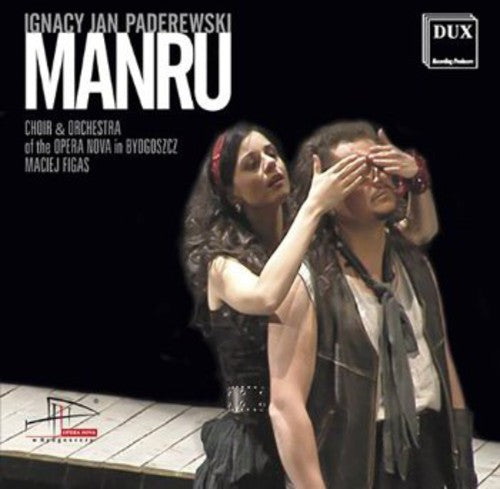
MANRU
Paderewski: Violin & Piano Works
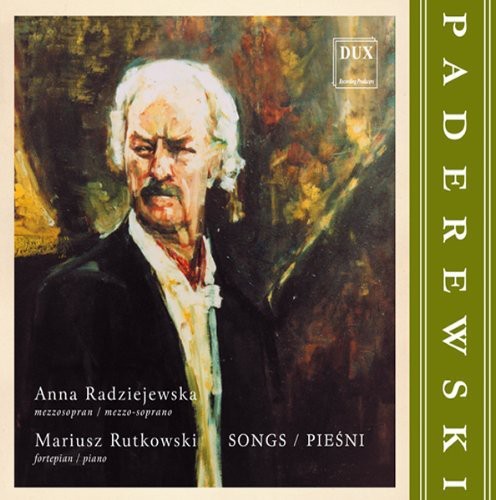
SONGS
PIESNI SONGS
Paderewski: Manru
BEST OF PADEREWSKI
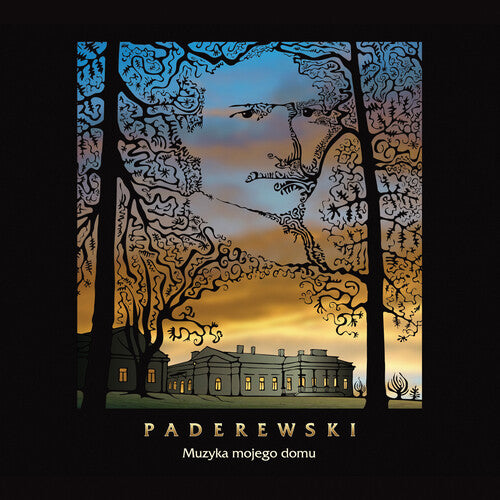
Paderewski: Music of My Home
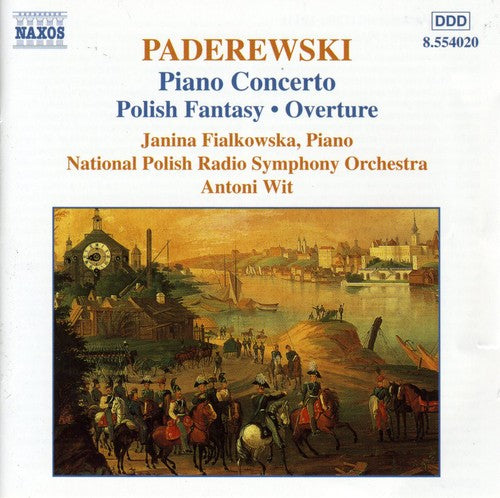
Paderewski: Piano Concerto, Polish Fantasy, Etc / Wit, Et Al
International Record Review (3/00, p.54) - "...Fialkowska brings us the first budget-price version [of Paderewski's concerto] and lavishes her considerable resources on both the concerto and the lively, attractive 'Polish Fantasy'..."
Paderewski: Piano Concerto, Polish Fantasy / Kenner, Niesiolowski, Podlasie Opera Orchestra
PADEREWSKI Piano Concerto. Polish Fantasy • Kevin Kenner (pn); Marcin Na??cz-Niesio?owski, cond; Podlasie Op O • DUX 733 (55:40)
Well, I’ve certainly been immersed in Paderewski lately … at least, Paderewski at one or two removes, which is not the same thing as the real deal. First, there was the Homage to Paderewski set on Hyperion 67903, which I reviewed in Fanfare 35:4, and now this new recording of his concerto and Polish Fantasy. As I expected, the concerto is very much in the big, late-Romantic mold of Brahms, Rubinstein, and other composers, but it’s a solid piece built around native Polish rhythms and with an interesting and exciting development section in the first movement. (In fact, at one point a solo piano passage sounds a little bit like a Russian folk song.) Although it is said that the second theme is an evocation of Chopin, it is an original melody and not one borrowed from that composer. The slow movement is even more delicate than Chopin’s andantes , almost Debussyan in its sparse use of the piano in the beginning and actually built around a three-part tune. Eventually, this delicate melody becomes more energetic, but never so much that the initial impression is forgotten. The lively rondo finale, based on a krakowiak, is likewise contrasted with a stately chorale that eventually caps the piece.
I find the Polish Fantasy an even more interesting work, having a more melancholy cast and somewhat related to Liszt’s Hungarian fantasies. It can be divided into four sections, each with its own character, though they are bound together by a mazurka-like motif. It is very nearly a concerto in itself, running over 21 minutes. I suspect that the composer refrained from calling it one simply because the four sections are played without a break, and such works in his day were almost always relegated to the “fantasy” category.
Kevin Kenner, despite his American origins, proves himself to be fully up to the task of interpreting this Eastern European music. Like all modern pianists, he eschews the slightly out-of-synch coordination of hands favored by Paderewski and many other pianists of his generation, preferring to play in a clean, rhythmically consistent manner, but he certainly gets the feel of Polish music very well. Of course, having a Polish orchestra and conductor helps, and I am more than a little amused to see that the orchestra hails from Bia?ystok (known as the “Jerusalem of Poland” because of its heavy Jewish population and the birthplace of Dr. Albert Sabin, immortalized by Mel Brooks with the name of his principal character—Max Bialystock—in his zany comedy The Producers ). All concerned play beautifully on this CD, giving us about as convincing a reading of these works as can be imagined. One can find more visceral and exciting readings from Janina Fialkowska, supported by the great Antoni Wit, on Naxos 8554020, and by the late, great Earl Wild (the concerto on Elán 2266 with Arthur Fiedler and the London Symphony, the Fantasy on Ivory 72010 with conductor Massimo Freccia), but this recording meets the demands of the music with a more convincing nationalistic flavor than Wild and less clattery sound than we get from Fialkowska’s piano. Recommended without hesitation for both the unusual repertoire and its presentation.
FANFARE: Lynn René Bayley
Paderewski: W hołdzie mistrzowi tonów / Biegas, Malorny et al.
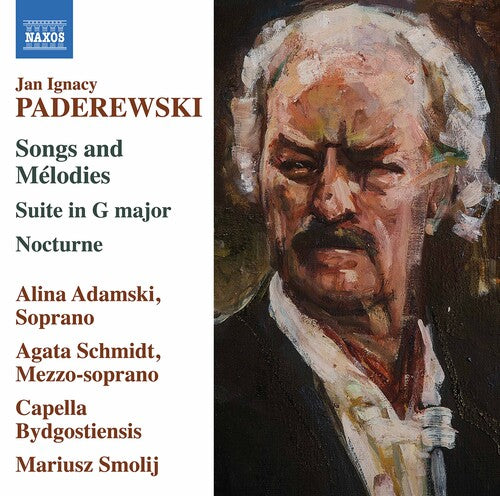
Paderewski: Songs and Mélodies - Suite in G Major / Smolij, Adamski, Schmidt, Capella Bydgostiensis
Although Paderewski is more readily associated with his career as a legendary virtuoso pianist, his modest output of 70 orchestral, instrumental and vocal works deserves to be more widely known. Prominent among his vocal output is a series of early songs that reveal natural flowing patterns while exploring both melancholy and folk idioms. The Douze Mélodies, written at the end of his compositional career, is the most original and striking Polish set of songs of the period, notable for dissonance, chromaticism and a palette of rich and unusual musical colors, to which this orchestral arrangement adds a whole new dimension. Little known, the early Suite in G major offers youthful warmth and brio.
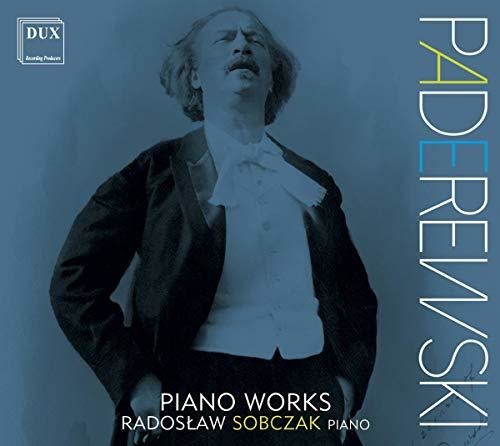
Paderewski: Piano Works / Sobczak
The 100th anniversary of regaining independence is a great opportunity to familiarize music lovers with works by Ignacy Jan Paderewski. This talented composer and world-famous pianist, thanks to many patriotic initiatives, often drew attention to the importance of independent Poland for Europe. This release from Radoslaw Sobaczak, who won a honorable mention at the International Fryderyk Chopin Piano Competition in 2000, is entirely devoted to the profile of the Polish artist. The album’s programme consists of a series of small pieces including the famous Minuet, Op. 14 No. 1, and the monumental three-movement Piano Sonata in E flat minor, Op. 21. Only a few artists can boast of recording this extremely difficult composition, and Sobaczak does it with aplomb.
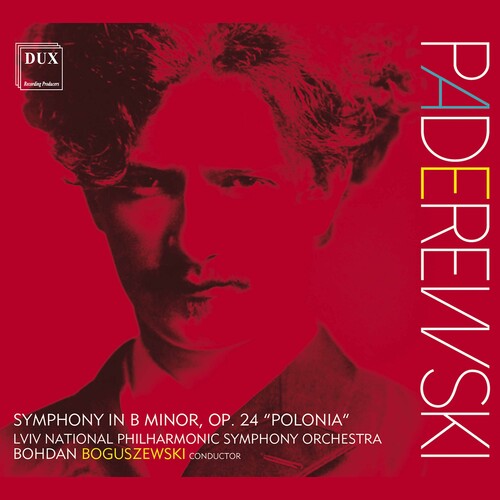
Paderewski : Symphony Op. 24 "Polonia" / Boguszewski, Lviv National Philharmonic Symphony
Monumental Symphony in B minor, one of the most outstanding works of Ignacy Jan Paderewski - not only a genius pianist, but also (which not all experts wanted to remember) a high-class composer - after the successes of his first performances on the stages of Boston, London, Paris, Lviv and Warsaw, for many years it was almost completely forgotten. It was only at the end of the 20th century that he slowly began to return to concert halls and appear in catalogs of record companies. This recording, related to the interesting history of Bohdan Boguszewski's cooperation with the Lviv National Philharmonic Symphony Orchestra, is one of the very few full recordings - those where the entire instrumental composition provided for in the score was used, with double bass sarusophones and percussion tonitruon. The original sound of the orchestra in the noble acoustics of the Lviv Philharmonic, where the symphony had its Polish premiere, allows the listener to get closer to the emotions of the times and people who created Polish culture in the difficult years of the early 20th century.