Isang Yun
9 products
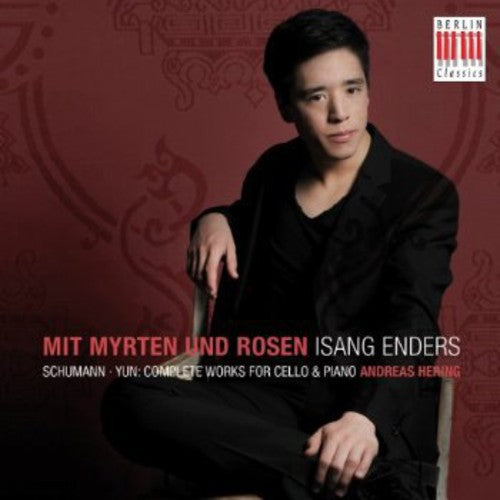
Mit Myrten und Rosen (Complete Works for Cello and Piano)
YUN: Piece concertante / String Quartet No. 5 / Pezzo fantas
Yun: Concertino - Duo for viola and accordion - Intermezzo -
Shakespeare Looking East
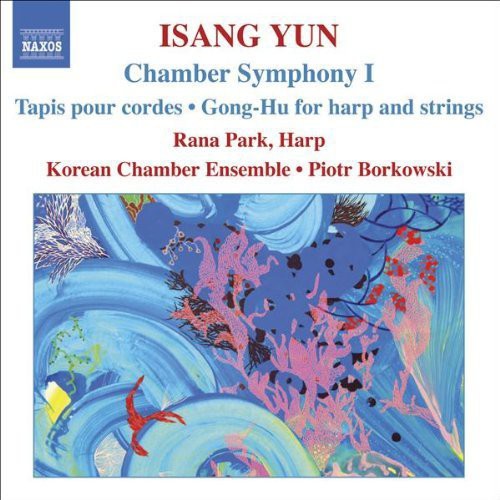
YUN: Chamber Symphony I / Tapis / Gong-Hu
Isang Yun: Chamber Music
-----
REVIEW:
Yun radically cut sections from his 1991 Sonata for violin and piano shortly before its premiere, ostensibly to reinforce the transparency of the violin part. In Walter-Wolfgang Sparrer’s view this was a mistake, and here Egidius Streiff and Kaya Han deliver a majestic performance of the original version in what is its first recording. By Yun’s standards the opening is rather conventional, with the expressive violin singing over the piano’s chordal, punctuating accompaniment but this soon develops more unpredictably, with a rapid piano episode echoed by the violin in lively, almost neo-classical vein. Essentially the first part of the work is mercurial and turbulent, at times almost Bartokian. But the second part is slow and, reflective. There is a magical passage at 15:00 which is prayer-like in its simplicity, whereby Streiff’s violin almost seems to speak. The sonata’s conclusion is profoundly affecting as the work evaporates into nothingness.
It is largely down to CPO, ECM and Capriccio (three German labels) that Isang Yun’s legacy is primarily being maintained and reinforced. Connoisseurs of the finest modern music have much to thank them for.
– MusicWeb International
Isang Yun: Three Late Works / Park, Vänskä, Seoul Philharmonic
At the end of a career spent between his native Korea and Germany, during which he produced works that span the musical traditions of both countries, Isang Yun expressed a wish to limit himself ‘to what is substantial, in order to transmit more peace, more goodness, more purity and warmth into this world’.
With Silla (1992) the composer pays tribute to the origins of Korean culture and philosophy, to the court music introduced from China, and to the period when Korea’s political unity was established (676–935 AD). Describing its mood, Yun provided such keywords as ‘nocturnal, festive…mirthful but also melancholy’. From the same year, Violin Concerto III was composed after a stay in hospital, and Yun once described it as a birthday present to himself. At the age of 75 he no longer felt the need to take contemporary currents, aesthetic trends or technical restraints into consideration. The work holds in store a wealth of musical occurrences that could perhaps be deciphered in the context of its composers own life, and is here performed by the young South Korean violinist Sueye Park. Closing the disc is Chamber Symphony No. 1 from 1987, a work in one movement but with three distinct sections. In it, Yun combines instruments that forge changing musical alliances while engaging in rivalry or complementing each other. The mood is evocative of an, at times, animated conversation.
REVIEW:
This is a superb disc of wonderfully expressive, thoroughly accessible music, and is immensely welcome for several reasons. Firstly, for turning a spotlight on the music of the composer’s last decade, which includes some of his most powerfully communicative compositions. Secondly, it is heartwarming to hear the late flowering of a composer of utterly assured compositional expertise, writing the music that flowed spontaneously out of him from a situation of creative and personal freedom – not complacency, but with nothing to prove, no particular school or doctrine to follow – after a lifetime of personal and musical turmoil and searching re-invention...The final race to the finish [of the Chamber Symphony] is as exciting and robust as anything in the Romantic literature.
-- Records International
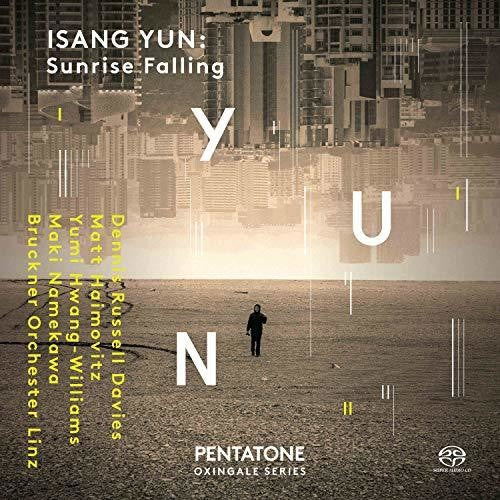
Isang Yun: Sunrise Falling / Davies, Linz Bruckner Orchestra
-----
REVIEWS:
Matt Haimovitz is the superb soloist in the fiercely confrontational, single-movement Cello Concerto from 1976, surely one of the finest works for cello and orchestra of the last 50 years, while Yumi Hwang-Williams is equally accomplished in the more lyrical solo writing of the first of Yun’s three concertos for violin.
– Guardian (UK)
Excellent new recordings of two of Yun’s most gripping major scores - the Cello Concerto and the Violin Concerto No. 1. The powerful Cello Concerto (1976) was a watershed. The western concerto structure and harmonic relationships lend themselves to confrontational dialog, while subtle evocations of the timbres, melodic contours, and microtonal inflections of Korean traditional music leave one in no doubt of the arena in which the drama is being played out. The larger — 40 minute — Violin Concerto is even more firmly based in the western tradition, with some wonderfully opulent orchestral tutti that even distantly evoke Richard Strauss.
– Records International
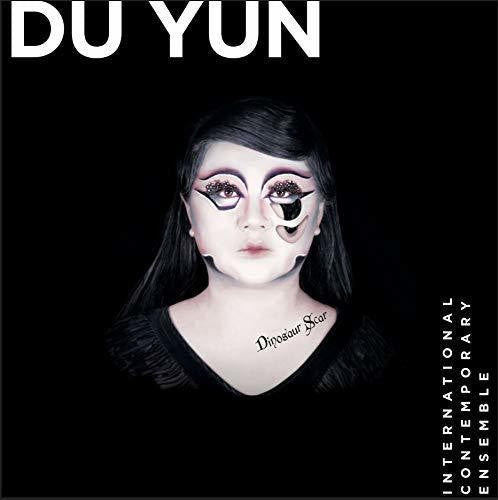
Du Yun: Dinosaur Scar / International Contemporary Ensemble
Pulitzer Prize winner Du Yun's collaboration with the International Contemporary Ensemble traces back to the group's formation at Oberlin Conservatory and the composer's budding early years. This new release on ICE's Tundra imprint chronicles that fruitful relationship with dynamic ensemble works, solos with and without electronics, and improvisations. Dinosaur Scar captures the synergy that can only come as a result of musicians who have absorbed a composer's language over many years, and a composer writing specifically with specific performers in mind. Du Yun writes: “It feels as though I grew up with the International Contemporary Ensemble. It has been 20 years that I have known many of them individually, half of my lifetime. Friendship ebbs and flows like the river. It washes and takes you over. Perhaps more than that, it transfigures and defines you in a subtle, intense and poignant way. There are so many metaphors about water as the method of being reborn in life. For me, ICE and I are like that flowing river, from the streaming start, the dramatic gorges, and to the currents that flood into the ocean. And this album is, precisely, a testament to that.”