Joachim Raff
48 products
-
Raff: Complete Piano Suites, Vol. 1
$19.99CDGrand Piano
Oct 10, 2025GP957 -
-
-
-
-
-
-
-
-
-
-
-
-
-
-
-
-
-
-
-
-
-
-
-
-
-
Raff: Complete Piano Suites, Vol. 1
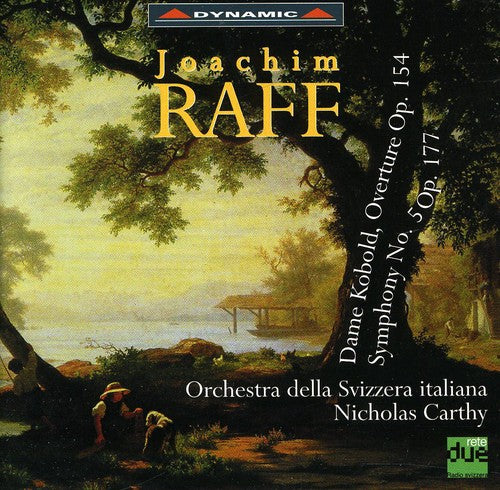
Raff, J.: Symphony No. 5, "Lenore" / Dame Kobold: Overture
Sextet, Op. 178
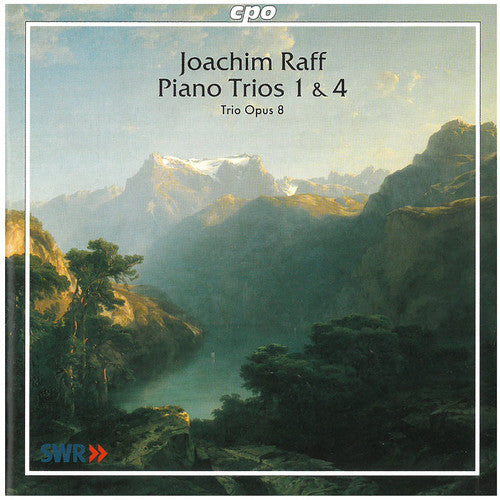
Raff: Piano Trios No 1 & 4 / Trio Opus 8
Trio No. 4 (1870) launches in a challengingly fast 12/8 meter, creating an effect not unlike Schubert's Trout Quintet. Most interesting however is the Andante quasi larghetto, with its mournful Venetian Gondola Song first heard on the solo cello. From this opening Raff builds an Elegy of considerable expressive power before closing with a reprise of the plaintive melody. After this exquisite movement, the material of the robust finale seems rather prosaic, and it takes all the energy, imagination, and commitment Trio Opus 8 can muster to hold your interest. That they do is testament to the superlative talent of these three fine musicians, who shine in the remaining movements of both trios as well. As before, CPO's recording is close in perspective but manages to capture more bass information this time around. Both discs in this series are excellent, but this one is the top choice.
--Victor Carr Jr., ClassicsToday.com
Raff: Symphony No 5 "Lenore" / Jarvi, Suisse Romande
– Jonathan Woolf, MusicWeb International
A year on from the opener, this is a very generously filled second volume of Chandos's promising Raff symphony cycle. There are two previous recordings of the composer's eleven highly idiomatic, imaginative symphonies, long unjustly neglected by programmers and critics alike. The Bamberg Symphony Orchestra under Hans Stadlmair, recently released by Tudor in handy boxed set form (review, with further discographical information) is probably the critics' favourite, although it comes neither cheap nor without flaws. The forerunner was an early-Nineties series on Marco Polo with different orchestras, mainly from the Czech Republic and Slovakia, all but one under Urs Schneider: these are currently available from Naxos as mp3 downloads only (9.40248). In 2001 Naxos had the good idea of reissuing the Marco Polo recordings as physical discs under their own brand, but only two appeared (8.555411, 8.555491) and then the label either had a change of heart, or forgot.
Raff's programmatic 'Lenore' Symphony has three further modern recordings. One comes from a local rival to Järvi's ensemble, the Orchestra della Svizzera Italiana, conducted by Nicholas Carthy. A satisfactory, rather than compelling recording, it was brought out by Italian label Dynamic (CDS 283) well over a decade ago, and there has been no sign of any kind of follow-up since. Another version is Yondani Butt's with the Philharmonia Orchestra on ASV (DCA 1000), one performance in a long line by this determinedly uncontroversial conductor of almost clinical neutrality.
Finally there is Matthias Bamert and the Berlin Radio Symphony Orchestra on Koch Schwann, re-released as 367932, but dogged by poor sound. As for Chandos, despite the fact its audio quality was not as good as the SACD/24-bit/96kHz tags – abetted by one or two prominent reviews – implied, the first release immediately became the new standard for the Second Symphony. This is above all for the fact that Järvi is such a fine all-round conductor and the Suisse Romande a pedigree orchestra with a definite aptitude for Raff-era music. Back at the same Swiss location, that slight lossy edge to the audio is still there on this latest disc, yet the Chandos sound is still much superior to all its predecessors', and despite the imperfections constitutes a further plus-point for Järvi's cycle.
On the other hand, no further incentive should be required when the offering is one of Raff's most memorable works, the tune-packed, masterfully orchestrated Fifth Symphony. He chooses to focus – and then expatiate - on the nervous drama of Gottfried Bürger's famous but second-rate poem 'Lenore', rather than on its cold-blooded religious mania. The story is similar to Dvo?ák's later cantata Svatební Košile, known in English as The Spectre's Bride, which was based on a similar-themed ballad by Karol Jaromír Erben. This is doubly pertinent: Raff shares Dvo?ák's intuitive feel for lyrical drama. In Bürger, the eponymous Lenore is duped and then effectively buried alive for thinking herself in a state of despair neglected by God, but Raff's final-movement 'ride into hell' is jauntily mesmeric and ends with an uplifting chorale – moving, but certainly diverging from the implications of Bürger's chilling poem.
It is worth noting here that Järvi's account is a full ten minutes faster than Stadlmair, Carthy and Schneider. This is interesting enough in itself, but these three were already seven or eight minutes quicker than Bernard Herrmann's pioneering recording with the London Symphony Orchestra in 1970 — (most recently available on Unicorn UKCD 2031, but originally funded by Herrmann himself. Järvi is taking Raff at his word with his astonishingly fast metronome markings, but those who have had their opinions as to how this work should sound coloured by more leisurely approaches will likely need time to get used to these tempos, and those many long in thrall to Herrmann's account may possibly never accept them. The third movement Marsch-Tempo in particular will raise many eyebrows: Raff asks for, and Järvi gives – where no one else seemingly dares - 160 beats per minute, a good 50% more than what would normally be expected from a march. Yet odd as it initially sounds, the speed is still well within the bounds of a military double march.
Järvi's programme is amplified by a selection of overtures from Raff's operas, plus one of his own transcriptions – his only such, in fact - the 'Abends' Rhapsody. One or two of these are take-them-or-leave-them works by comparison with the symphony, though their Rossini-meets-Beethoven idiom is undeniably attractive, and their realisation here by the ever-dependable Swiss Romandes elegantly winning. Best of the four extras is the most substantial, the 'King Alfred' overture. Scored for large orchestra, it is a dramatic tone poem in all but name. The notes describe it as "grandiose in design, comparable in sweep and scope to Wagner's recent overture to Tannhäuser". The Rhapsody itself is a lovely, moodily crepuscular work, over all too quickly.
As for the CD booklet, Chandos continue apace with their shrinking-font policy, their texts tiny islands of ink in blank paper seas, legibility further hampered by the greyish ink. Still, the notes themselves are usually excellent, as indeed those here by Avrohom Leichtling are - detailed, informative, enthusiastic, trilingual. Bürger's poem might usefully have been included, if only to make use of some of that blank space.
– Byzantion, MusicWeb International
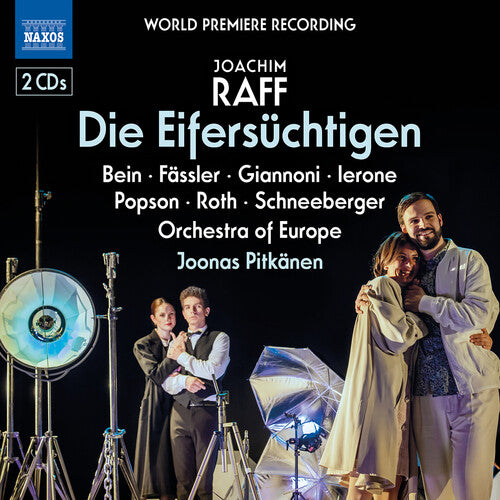
Raff: Die Eifersüchtigen / Pitkänen, Orchestra of Europe
WORKS FOR CHOIR, PIANO AND ORC
Raff: Piano Works, Vol. 1
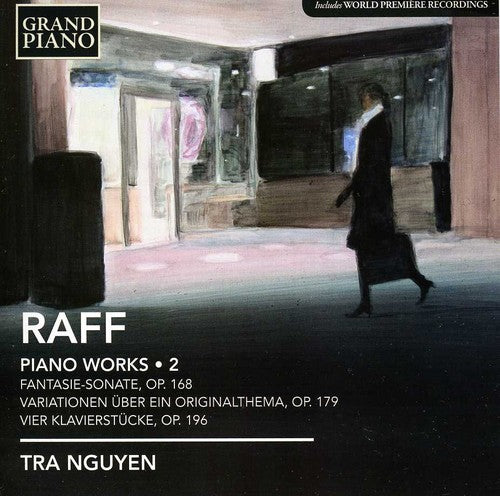
Raff: Piano Works, Vol. 2
Raff: Lieder
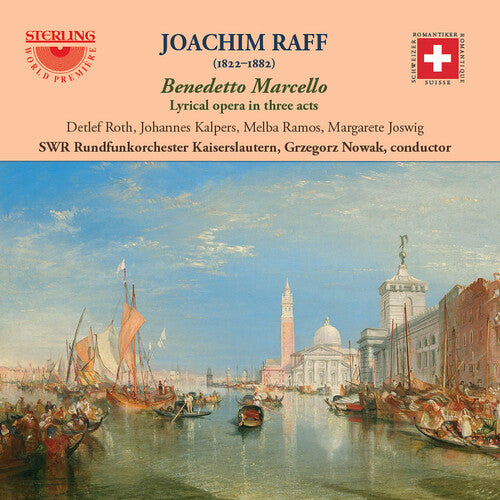
Raff: Benedetto Marcello / Nowak, Southwest German Radio Orchestra
This new release features a recording from the world premiere performance of the opera in Metzingen Stadthalle, Bad Urach, Germany, October 4th, 2002. The opera is set in Venice in 1727. In the house of Marcello, a musician and poet, two of his pupils Rosana and Faustina wait for their teacher who is late for their singing lesson. Marcello at last arrives, apologizes, and announces that instead of their lessons he wants them to sing for a guest of his, the famous composer Adolph Hasse, from Germany. Rosana sings first: a sad song about unrequited love. Hasse praises her warmly for singing from the heart, whereas Marcello is just puzzled by her sudden ability to find the correct tone. Faustina immediately recognizes that Rosana is singing about her love for Marcello and is irritated that he cannot see it himself. She then sings a joyful song about a nightingale, which leaves both Hasse and Marcello captivated. Hasse expresses his profound admiration for Marcello and she invites him to accompany her to a party that evening. Faustina is preparing for the evening and her thoughts turn to Hasse, and she realizes that she loves him. Hasse has quietly arrived and, overhearing her soliloquy, immediately tells Faustina that he has fallen in love with her too. Marcello, masked, arrives and stands outside Faustina’s rooms, consumed with love for her and intending to sing her a serenade. He hears the gondola bearing Faustina and Hasse approaching, and jealously listens to their loving conversation. Hiding while they enter her apartment, he vows revenge on Hasse. Marcello wants to pick a quarrel and both men draw their swords. Faustina, who has heard the commotion outside, opens her balcony window, sees the events below and collapses with a scream. Hasse leaves, telling Marcello that he may keep his life as a pledge of their friendship…
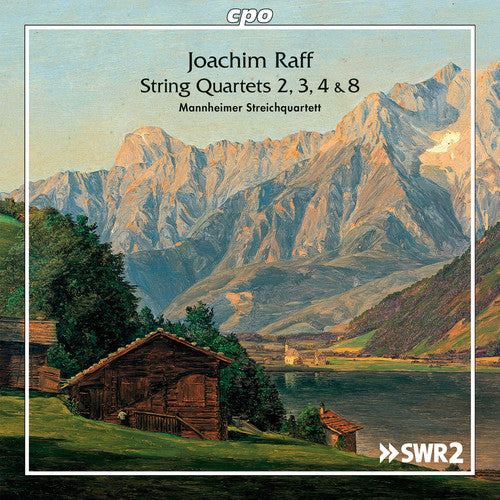
Raff: String Quartets Nos. 2, 3, 4 & 8 / Mannheim String Quartet
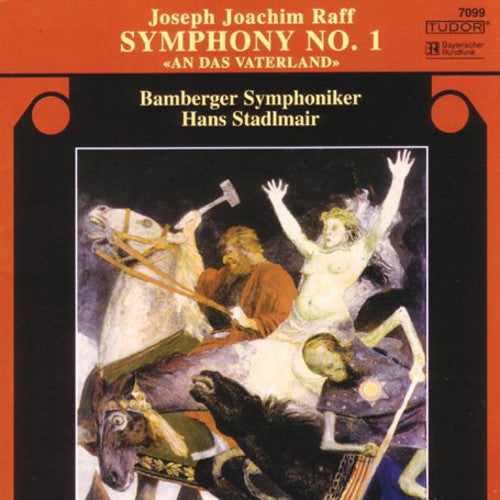
SYMPHONY NO. 1 'AN DAS VATERLA
SYMPHONY NO. 4, OUVERTURES 'BE
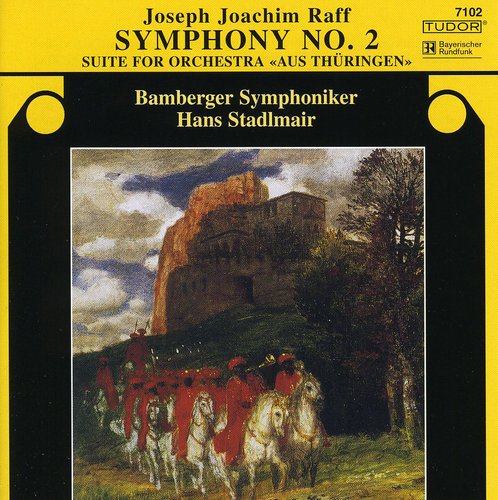
SYMPHONY NO. 2, SUITE FOR ORCH
SYMPHONY NO. 7 'IN DEN ALPEN',
RAFF: Aus Thuringen / Italian Suite
Raff: Symphonies 3 & 10 / Schneider, Cssr State Po
Raff: Symphonies Nos. 8 & 9
Raff: Symphony No 6, Etc / Schneider, Slovak State Po
Raff: Complete Violin Sonatas, Vol. 1
RAFF: Symphonies Nos. 3 and 10
Raff: Piano Works, Vol. 3