Johann Gottlieb Graun
20 products
-
Wind Chamber Music
$9.99CDMusicaphon
Jul 25, 2025M36842 -
-
-
-
-
-
-
-
-
-
-
-
-
-
-
-
-
-
-
-
-
-
Wind Chamber Music
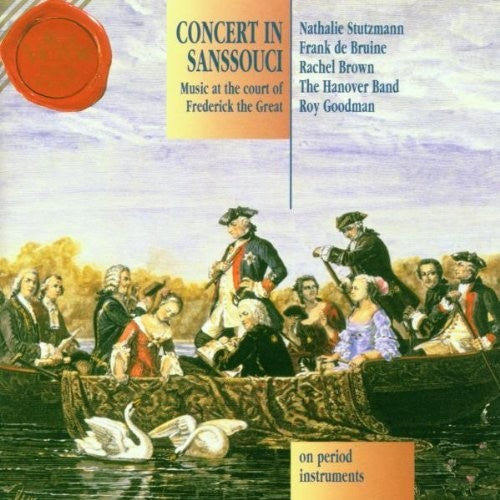
Concert In Sanssouci / Roy Goodman, The Hanover Band
Natalie Stutzmann sings these with a voice to cause a fair degree of souci among the chandeliers. Her deep contralto has a full-bodied resonance, sumptuous in quality and proficient in the trill. The concertos have admirable soloists, the period instruments bringing both delicacy and strength. Roy Goodman’s Hanover Band convey a sense of enjoyment in their playing and are keenly alert to the rhythmic liveliness of their music.
-- Gramophone [11/1997]
Graun: Der Tod Jesu
J. G. Graun: Concertos / Wiener Akademie
Includes concerto(s) by Johann Gottlieb Graun. Ensemble: Vienna Academy. Conductor: Martin Haselböck. Soloists: Ilja Korol, Daniel Sepec, Vittorio Ghielmi.
Graun: Te Deum, Motets / Fritz Näf
Recordings of programs like this, competent and fundamentally satisfying as they are, only serve to confirm the difference between composers such as Bach, Mozart, and Haydn and those like Carl Heinrich Graun, whose life and career fell roughly in the middle of those three giants, but whose inventive capacity was more functional and skillful than transcendent or ingenious. The Te Deum is appropriately grand (written to honor the Prussian defeat of the Austrians in 1757) and contains a lively orchestral introduction, followed by a suitably emphatic, melodically catchy choral affirmation of the work's theme of praise. Throughout the piece the orchestral accompaniment is distinguished by varied strokes of color (especially effective use of horns and winds) and nifty string figures that not only fill out the texture but enhance and even illuminate the choral commentary. There are many solos, lots of fine fugal sections, and strongly written choruses; there's also a beautiful duet for alto and tenor ("Te ergo quaesumus").
But the basic problem here for listeners is that Graun's music is not consummately interesting or structurally inventive enough to warrant the 45 minutes he devotes to the explication of this familiar if somewhat lengthy text. The weakest material comes in the longer solos--surprising due to the fact that Graun was best known in his time as an opera composer. The three motets are very well-crafted, the second one especially--Lasset uns freuen und fröhlich sein--with its Bach-like contrasts both between voice-parts and from section to section, ending with a lovely fugue. The choral singing is very solid, the soloists generally engaging and technically sure, and the orchestra under Fritz Näf provides attentive support and polished sound. While this is not the greatest music of its time, it nevertheless reflects the very high standard of court sacred music in Berlin in the mid-18th century and stands as a reference for the work of a composer whom Bach himself was known to have admired. CPO completes the package with vibrant, clear sound, well-balanced among and between chorus, soloists, and orchestra.
--David Vernier, ClassicsToday.com
A Gift for your Garden
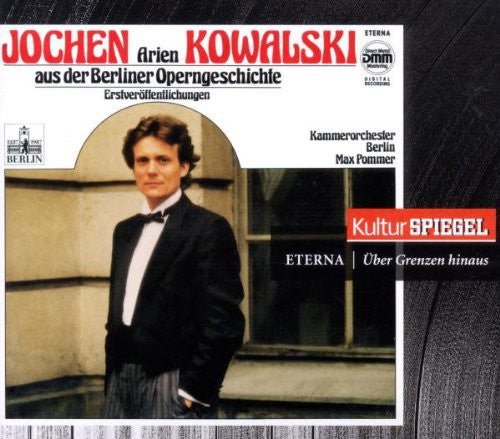
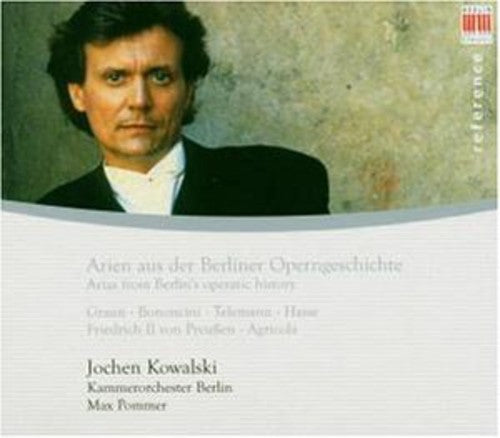
Arias from Berlin's Operatic History
Johann Gottlieb Graun, Carl Heinrich Graun: Concerti
The name Graun is not as well known in musical circles as it should be, nor even as it once was. It was the surname of three talented brothers, all born in Wahrenbrück in east-central Germany and all flourishing in the period between Bach and Beethoven. A church fire destroyed all record of their birth, hence the imprecise dates. The oldest, August Friedrich (1698/9 – 1765) achieved only local distinction, rising to the position of Kantor and organist at the cathedral school of nearby Merseberg, a position he held for the last 36 years of his life.
His two younger brothers, represented on this disc, achieved much broader fame. Johann Gottlieb, a year or so older than his brother, was engaged in 1726-27 to teach J.S. Bach’s oldest son Wilhelm Friedemann to play the violin. In 1732 he earned a position in the orchestra of the then Prussian Crown Prince Frederick, and rose to the position of director after the prince was crowned King Frederick II in 1740.
Frederick the Great built the strongest musical centre in all Europe, and the Graun brothers helped him do it. The youngest, Carl Heinrich, a professional singer in the town choir at age 10, was soon writing operas and sacred music. He studied at the University of Leipzig and became a good cellist without ever studying the instrument. But it was as a singer and opera composer that he too caught the ear of Frederick the Great. Graun wrote, and starred in, operas, sometimes to librettos written by the King.
History has not been kind to the Grauns, as most of their music seems to have been destroyed. Even what’s left is contentious: The manuscript for the third piece on this disc has only the attribution “di Grau..” leading scholars to think it more likely that Christoph Graupner (1683–1770) wrote it. All the works on this disc represent some of the best of the orchestral High Baroque, but that is not what Carl Heinrich Graun was best known for. Besides his operas, he wrote sacred music, notably Der Tod Jesu, a passion oratorio that received annual performances in Germany for 75 years until Mendelssohn conducted Bach’s St. Matthew Passion in 1829. C. H. Graun’s best known composition was supplanted forever.
I like the variety of selections on this disc. It begins with a Symphony, as tuneful and brief as the symphonies of English contemporary William Boyce. Then follow four concertos for different combinations of instruments all reminiscent of contemporary Telemann. All five pieces have a fast-slow-fast pattern, all feature the gritty sound of baroque strings, and one can hear in each of the slow movements the background of a basso continuo (mislabelled in the notes as a ‘bassoon continuo’).
The five pieces here are as close as one is likely to get to what was heard at the court of Frederick the Great. The performers are all from the leading Baroque orchestras in and around Germany, notably the Freiburg Baroque Orchestra, Camerata Köln, and Concentus Musicus Wien, and they all teach at the Institute of Historical Interpretation Practice at the College of Music and the Performing Arts in Frankfurt am Main. The work of Karl Kaiser on transverse flute is especially outstanding. The 17 musicians came together in 2006 and have made three recordings. I hope they introduce us to more of the Grauns’ music.
-- Paul Kennedy, MusicWeb International
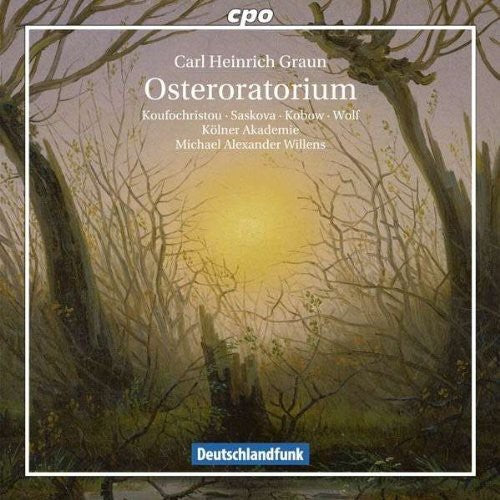
Graun: Easter Oratorio / Willens, Kobow, Wolf, Saskova, Koufochristou
As with much of the oeuvre of Carl Heinrich Graun (1704–59), the date of composition of his Easter Oratorio is unknown. Based on stylistic grounds, it probably belongs among his earlier works composed in Dresden or Braunschweig (Brunswick), before he moved to Prussia in 1735 and ultimately became Kapellmeister to Frederick II. It survives in a single manuscript copy by an unknown hand from the later 18th century, and the librettist is not named. It is divided into four sections, for performance respectively on Easter Sunday, Easter Monday, Easter Tuesday, and the First Sunday after Easter in the liturgical calendar. Except for two brief verses taken from the Bible, the text consists of poetic meditations on Christ, his resurrection, and the import of those for the true believer.
Today, Graun remains remembered almost solely for his Passiontide oratorio Der Tod Jesu , which was performed every Good Friday by the Berlin Singakademie for a span of almost 130 years (see my review of the Pál Németh recording on Hungaroton in 34:1). The redoubtable CPO label is primarily responsible for what little more knowledge most of us have of the composer’s music, having previously issued recordings of the Christmas Oratorio , the Grosse Passion , the opera Montezuma , and single discs of sacred motets and instrumental concerti. The Harmonia Mundi label also issued a recording of the opera Cleopatra e Cesare conducted by René Jacobs. Reactions to these additional works by the Fanfare critics who have reviewed them—Bertil van Boer, Michael Carter, Henry Fogel, Ronald E. Grames, David Johnson, and David L. Kirk—have expressed sharply divided views on their merits. Some have found Graun to be a dull Kapellmeister and routine note-spinner, whereas others have expressed pleasure at the restoration of a skilled if second-rank composer to living memory.
In this instance, at least, my vote joins those in the second camp. This is a lovely and delightful work, which astonishes by its remarkable stylistic similarities to Handel in its harmonic and melodic contours. Indeed, had someone played selected parts of it for me and told me it was a recently rediscovered work by Handel from a German source, I would have believed it. The orchestration is somewhat more brilliant than Handel employs in e.g., Messiah ; the 24 members of the instrumental ensemble include pairs of flutes, oboes, bassoons, and horns, plus three trumpets, timpani, organ, and strings. The superb quartet of vocal soloists—a veritable model for recordings of such repertoire, even if tenor Jan Kobow is not quite as suave of voice as his colleagues—also serves as the chorus when needed. The Kölner Akademie is likewise beyond praise, and conductor Michael Alexander Willens exploits every bar of the score to fullest expressive effect. CPO provides its usual copious booklet notes and stellar recorded sound in addition to a complete German-English text. (Very oddly, in the English texts there are a number of words printed with random single space gaps dividing them into two parts.) For anyone looking to go beyond Bach and Handel for worthy exemplars of late-Baroque sacred music, this recording should be a prime choice; highly recommended.
FANFARE: James A. Altena
Graun: Torna Vincitor / Forsythe, Contadin, Opera Prima Ensemble
Of all the composers who wrote for the gamba during his times, Johann Gottlieb Graun must have been the most diligent one, even though he was not a virtuoso on this instrument. The twenty-seven works by him that are known to us represent significant contributions to the repertoire of the concerto, cantata, and sonata. All three of the works presented here contain grand solo parts for the viola da gamba that prove to be of the highest virtuosity. Graun evidently was interested in putting a virtuoso to the test. And the Italian gambist Cristiano Contadin, the founder of the Opera Prima ensemble, lives up to his reputation (as certified by the Musica magazine and other sources) as a first-class artist whose delightful delineation of tone and flawless style reveal a complete command of his instrument. The two sacred cantatas were composed in the Italian style on the basis of texts by Pietro Metastasio, the most famous librettist and poet of his times. They are sung by the American soprano Amanda Forsythe, who has won admiration especially for her interpretations of Baroque music – and is known from our cpo albums with the Boston Early Music Festival.
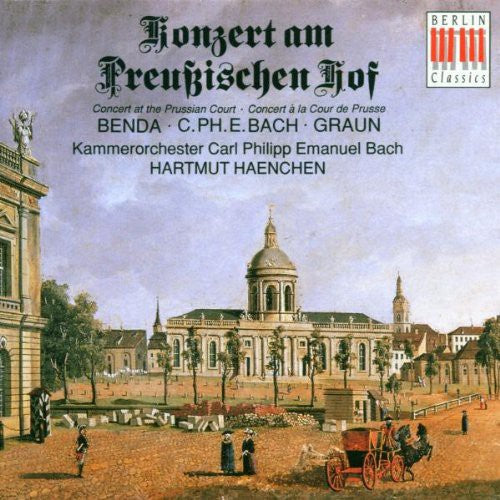
KONZERT AM PREUßISCHEN HOF
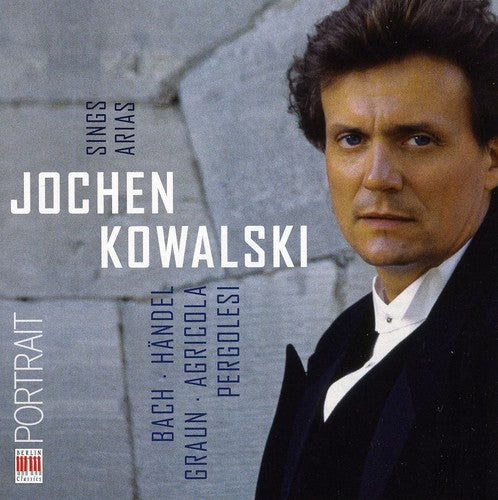
Opera Arias (Counter-Tenor): Kowalski, Jochen - GRAUN, C.H.
Orchestral Music (German) - Graun, J.G. / Bach, W.F. / Bach,
Jochen Kowalski Sings Arias
Graun: Montezuma
Graun: Polydorus / Hochman, Barockwerk Hamburg
The opera Polydorus penned 289 years ago last found a place in the performance program of the Gänsemarkt Opera in Hamburg in 1735. The libretto by Johann Samuel Müller depicts exchanges of identity, avaricious kings, queens bent on bloodthirsty revenge, and princes who despise their progenitors. The result is a retelling of the Polydorus legend combining Greek mythology and Shakespearean dramatic suspense. Carl Heinrich Graun, one of the best-known opera composers of the eighteenth century, wrote the emotionally moving music. The first performance in modern times by the barockwerk hamburg and the album recording of this opera rarity now being released have once again uncovered this genuinely original work and following the ensemble’s successes in recent years once again guarantee you a very special listening experience.
Johann Gottlieb Graun, Carl Heinrich Graun: Trios For Violin Or Viola & Clavier
GRAUN Trios for Violin/Viola and Clavier: in A, GrWV C:XV:90 ; in B?, GrWV A:XV:16 ; in A, GrWV A:XV:13 ; in b, GrWV C:XV:92 • Les Amis de Philippe • CPO 777 633 (68:24)
One will probably notice in the title that I have not been specific as to which of the prolific Graun brother, Carl Heinrich or Johann Gottlieb, wrote these pieces. To make matters more complex, these works are part of a collection of chamber works found in a Dresden manuscript that has “trios” in the title, but these four works are in reality duo sonatas for either violin or viola and obbligato keyboard, here performed by conductor Ludger Rémy on the fortepiano. In untangling this Gordian knot, one should note that these works were originally trios (hence the retention of the designation), since what one presumes was their original form exists in other sources. As to who wrote them, the situation is even murkier (although there are of course only two possibilities, with a 50-50 chance of being correct), as the styles in these works are reflective of both men. My personal choice would be Johann Gottlieb Graun, based simply upon the fact that he favored the violin and viola in both concertante and solo works, but this is only the most cursory of guesses on my part based upon my own bias, and the third work, the second one in A Major, opens with a long keyboard introduction and a rather more virtuoso violin part that is quite reminiscent of Johann Quantz, and so I might be tempted to assign this one to Carl Heinrich.
Be all of this as it may, there is no doubt that the music represents solid compositional technique. For the most part, the bulk of the harmony is carried by the keyboard, while the violin (and viola) rarely traverse their ranges with the usual virtuoso leaps and bounds. The composer keeps his violin/viola in a solid middle range, opting for contrast and depth rather than display. Three of the four works are arranged in an old-fashioned order, with a slow movement followed by two faster ones, the last usually some sort of dance tempo derivative. There are emotional depths to be plumbed here, especially in the haunting fragmented theme of the second A-Major Trio, or the long, lyrical lines of the first movement of the B?-Trio. The composer can also be strict, as in the second movement fugue of the B-Minor Trio, which contrasts in its severity with the mysterious lament of the opening movement. There is more than a bit of C. P. E. Bach in the figuration of the third movement of the first A-Major Trio, with its neat vacillation between duplets and triplets in both parts. Both instruments in each trio are used as equal partners, and in the second movement of the first A-Major Trio, as well as the nice parallel thirds in sequence in the second trio in the same key, the sonorities are calculated to match, rather than being contrasting. These are the types of works that any reputable chamber musician of the time would find a delight to play, as players must cooperate intimately to make them work, and at the same time would be pleasing to the ears of their knowledgeable audiences.
Les amis de Philippe is conductor Ludger Rémy’s group of people whom he gathers around himself to perform such chamber works. Here, he uses violinist Anne Schumann and violist Eva Salonen, both of whom use a similar tone that is fairly rich and dark. This blends nicely with the softer sounds of the fortepiano, a choice made by Rémy that lends these works a slightly more modern (read, Classical era) interpretation. One might suggest that a harpsichord might have been more “authentic,” but I find that the textures speak better with the fortepiano. The original sources, of course, are generic, and there is nothing that would argue against Rémy’s choice. The only bobble I can detect is when Schumann’s violin enters into some of the upper registers; here there is an occasional scratch and squeal, which would probably be unremarkable had not Graun chosen to set most of the music for the violin/viola in the lower and middle portions of their range.
In short these trio arrangements function quite well on their own, and indeed demonstrate that whichever of the brothers wrote them was quite cognizant of how the music could unfold. These performances too render this disc a good addition to any collection of 18th-century chamber music. The playing is excellent and the musicality of the works shows that they are not just museum reference pieces, but real flesh and blood contributions to the sensitive style of the period. Recommended.
FANFARE: Bertil van Boer
Graun: Grosse Passion / Max, Winter, Andersen, Schafer, Abele, Et Al
GRAUN Grosse Passion • Hermann Max, cond; Veronika Winter (sop); Hilke Andersen (mez); Markus Schäfer (ten); Ekkehard Abele (bbar); Das Kleine Konzert; Rheinische Kantorei (period instruments) • cpo 777 452 (2 CDs: 122:28 Text and Translation) Live: Dusseldorf 9/2008
This is my third exposure to Carl Henrich Graun’s music, the other two being his operas Montezuma (libretto by Friedrich II, King of Prussia) and Cleopatra and Cesare (libretto by Giovanni Gualberto Bottarelli). He is best known for his passion oratorio Der Tod Jesu (1755), which was so popular it rivaled Messiah . Graun wrote two other passions: Ein Lämmlein geht und träght die Schuld and this Grosse Passion that is often referred to by its opening lyric “Kommt her und schaut” (Come here and see). It is a large-scale work: 66 numbers, with some alternatives available, calling for a large chorus and orchestra with the usual quartet of soprano, alto, tenor, bass. Supplementing the recitative-aria combinations are 10 choral numbers, five duets, and one quartet.
The libretto is somewhat of a rambling affair. Unlike Messiah , there are only a few Biblical quotes; instead, the narrative flow is often interrupted by reflections and even some lyrics that are redundant of previously expressed sentiments. Much of the libretto is over-written doggerel, especially in the early pages. The music, however, is a different matter.
Graun was in his mid-twenties when he composed this Grand Passion . It is a surprisingly mature work, full of subtle gems. When first listening to this two-CD album, I wrote: “The music is very pleasant. Although it is quite tuneful, little of it is memorable and at two hours tends to wear out its welcome. There is almost a monotonous similarity of one number to the next. It needs something rousing like the ‘Hallelujah’ chorus.” Repeated hearings of this album have increased my appreciation considerably. Even Handel liked this Passion , and quoted some of its music in his own works.
Graun establishes a musical mood and varies little from it. The music in the Grosse Passion is not as flamboyant as Graun’s operatic work, but careful listening to the Passion reveals a wealth of interesting details, especially in the orchestrations. The textures are very clean and transparent and occasionally command more of the listener’s attention than do the vocal lines. One number (CD 1, track 22, Choral: “Die Lust des Fleisches dämpf in mir”) sounds like a distant cousin to the familiar Doxology, Praise God from whom all blessings flow . Instead of the virtuoso showpieces found in Graun’s operas, the Grosse Passion is very reflective and subdued.
Conductor Hermann Max and his musical forces deliver a sincere and beautifully sung and played performance. The soloists have attractive voices and pay devout attention to the musical details. If you like this musical genre, you’re likely to find this a lovely recording, performed with sensitivity and expression.
FANFARE: David L. Kirk
Graun: Christmas Oratorio / Max, Schmithüsen, Et Al
Includes work(s) by Carl Heinrich Graun. Ensembles: Rheinische Kantorei, Das Kleine Konzert. Conductor: Hermann Max. Soloists: Ingrid Schmithüsen, Lena Susanne Norin, Klaus Mertens, Markus Schäfer.
Graun: Weihnachtsoratorium / Gropper
A work caught the attention of musicians during the late 1990s - a Christmas Oratorio by Graun. The only known copy of it was being housed in the Library of Congress in Washington, D.C. But it has so far been impossible to determine either the name of the manuscript copyist or an exact dating of the work and copy. There are many indications that this is a work from the composer's phase prior to his years in Berlin. After The Death of Jesus, Thomas Gropper and his Arcis Vocalists now proudly present the second oratorio of Graun as a recorded production for OehmsClassics. Since their foundation by their chorus director Thomas Gropper in 2005, the Arcis-Vocalists have taken a firm place among the well-known semi-professional choirs of the city in the high-class and diverse Munich music scene due to their sound quality and the special program design. The project choir consists of about 80 committed singers, who mostly have a sound vocal education. Depending on the work it is flexibly occupied and can count between 30 and 80 members.