BRAHMS Violin Concerto. Serenade No. 2 in A • Ernest Bour, cond; Zino Francescatti (vn); SWR SO Baden-Baden and Freiburg • HÄNSSLER 94.219 (72:07)
Readers should be aware that when multiple reviews of the same release appear back-to-back in the magazine, copies of those recordings are sent to the contributing reviewers blind. This means we don’t know when or if a colleague might be submitting an opposing opinion and, if so, who that colleague might be. In this case, however, I think I can make a pretty good guess that this release also went out to Robert Maxham and, based on our usually differing views about violinists and violin playing, plus what he’s said about Zino Francescatti in past reviews, I can almost guarantee the reader two quite different takes on this performance of the Brahms Violin Concerto.
First, let me say that of Francescatti’s recordings I’ve heard—admittedly not that many—there’s only one I really liked and would have recommended, had I been reviewing for Fanfare back then. That was his 1959 recording of the Brahms “Double” Concerto with cellist Pierre Fournier and Bruno Walter leading the Columbia Symphony Orchestra. Among my disliked Francescatti recordings was his Paganini First Concerto with Mitropoulos and the New York Philharmonic, coupled with a Saint-Saëns Third Concerto with Ormandy leading the Philadelphia Orchestra.
It’s hard to say exactly what turned me off Francescatti’s playing early on. It was at a time in the late 1950s, shortly after I first started learning the violin and listening to recordings that my ideas of what constituted ideal violin playing were being formed. Francescatti was touted as a virtuoso extraordinaire, a technician of such redoubtable accomplishment that he was compared favorably to Heifetz. Yet what I heard when I listened to Francescatti was a rich, silken tone that often turned hard and abrasive in technically challenging passages. More disturbing, though I couldn’t have verbalized it at the time, was what I now regard as a laissez-faire approach to rapid passagework—a sort of “close enough for government work” attitude, in which harmonics were missed, runs were uneven, and notes were often sloughed off. To my ear, Francescatti lacked the self-discipline of Heifetz and Milstein and the discretion of Oistrakh in knowing when to resist risk-taking that exceeded one’s limits.
Second, all of this may be of little relevance because—though Francescatti’s discography is probably more extensive than current listings would suggest—Columbia Records, the label for which Francescatti mainly recorded, decided that Isaac Stern was the more saleable violinist, thus curtailing Francescatti’s exposure on record, at least to American audiences.
Counting this current Hänssler release, to the best of my knowledge, there are five Francescatti versions of the Brahms concerto on record, all of them commercially available on CD. Compared to Oistrakh’s 15 recordings, documented in a 28:4 review, five seems like a modest number, but as suggested above, Francescatti may have been captured live in more performances of the work than are in general circulation; I don’t know. Of the five, however, this studio recording made in 1974 is the latest. The other four versions are Ormandy/Philadelphia, 1956 (mono); Mitropolous/Vienna Philharmonic, 1958 (mono); Bernstein/New York Philharmonic, 1961; and Leinsdorf/ORTF National Orchestra, 1969.
Francescatti was 72 when he joined Ernest Bour and SWR Symphony Orchestra of Baden-Baden and Freiburg for this venture. It shouldn’t come as too much of a surprise that his previously full-bodied tone has thinned a bit, and there seems to be a very slight but detectable right-hand tremor on sustained notes; listen carefully, for example, to the high A at bar 140. Also, some of the minor technical issues noted in his earlier recordings have now become real liabilities. The passage in chords beginning in bar 164, for instance, is choppily articulated and sounds a bit desperate in its grasping for the notes. Nonetheless, the violinist has lost none of his fearlessness in the face of danger. For a 28:4 review of Arabella Steinbacher’s Brahms, I plugged 24 versions of the concerto into a spreadsheet and then sorted them by timings. If I were to add this Francescatti performance to the mix, it wouldn’t be the fastest—at 36:03, that distinction still goes to Milstein with Fistoulari and the Philharmonia in a 1961 recording for EMI—but at 38:15, it ties Grumiaux’s 1958 recording with van Beinum and the Concertgebouw for seventh place on the list, still 15 seconds faster than Heifetz’s classic 1955 Reiner/Chicago account.
I hope I haven’t made this Francescatti Brahms sound worse than it is. If you’re willing to overlook a slip here, a mishap there, and a rough patch every now and then—all technical flaws which I believe were always present in Francescatti’s playing on earlier recordings—there are some nice things to be said of the performance as well. Conductor Bour and Francescatti share a rapturous vision of the score, bringing to it many moments of an almost ecstatic magnanimity. The lofty, angelic purity of Francescatti’s tone in the first movement’s post-cadenza measures (he plays the familiar Joachim cadenza, by the way) is absolutely transfixing.
So, even though I’ve expressed personal reservations about Francescatti’s playing in general, I acknowledge that he’s justly recognized as one of the 20th century’s great violinists, and I recommend this CD not just to Francescatti fans. Those who cherish Brahms’s Violin Concerto will also want this memento of what is probably the violinist’s last recorded performance of the work.
Brahms’s rustic, amiable A-Major Serenade is a generous addition to this already desirable disc, and considering it’s almost as long as the concerto, it would be ungenerous to call it filler. Ernest Bour is not a conductor I’ve had occasion to review before, but based on his contribution in the concerto and his reading of the serenade, I’d have to say that he has a real flair for Brahms. Unfortunately, Bour died in 2001, so we’re not likely to hear any more from him. But this is a glowing performance by a conductor and an orchestra on top form.
Sonically, both the concerto and the serenade are quite good, but the serenade, recorded four years later in 1978, is marginally better. It’s more open and has more air around it, which lends the serenade an appropriate outdoorsy atmosphere. Strongly recommended.
FANFARE: Jerry Dubins
{# optional: put hover video/second image here positioned absolute; inset:0 #}
SWR
Zino Francescatti Plays Brahms
BRAHMS Violin Concerto. Serenade No. 2 in A • Ernest Bour, cond; Zino Francescatti (vn); SWR SO Baden-Baden and Freiburg • HÄNSSLER...
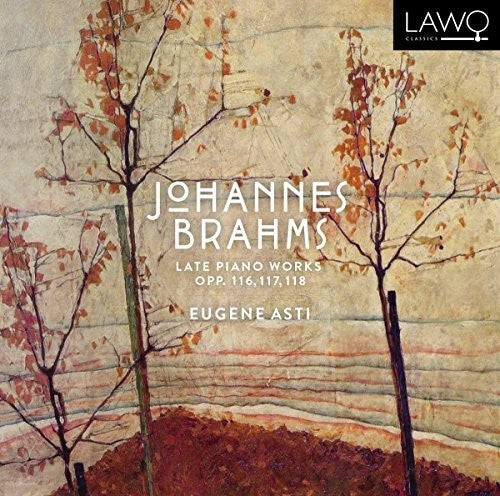
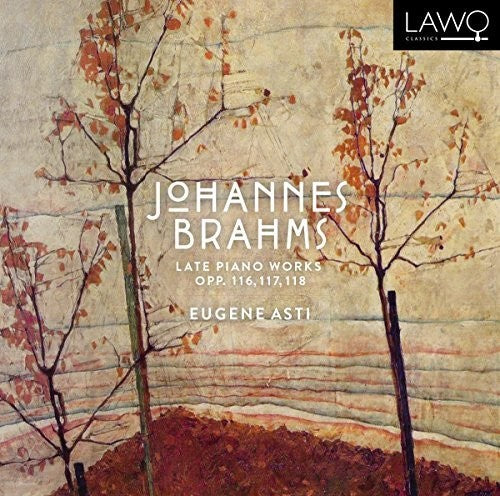
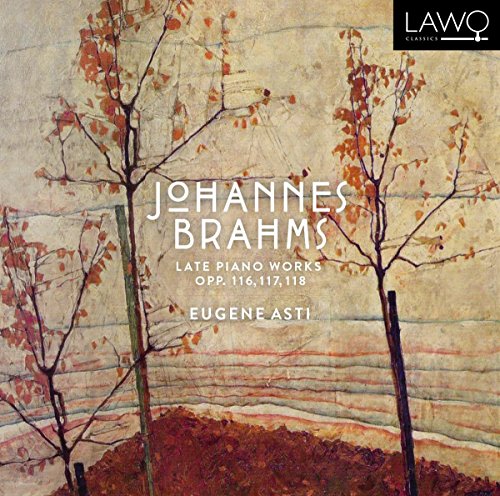
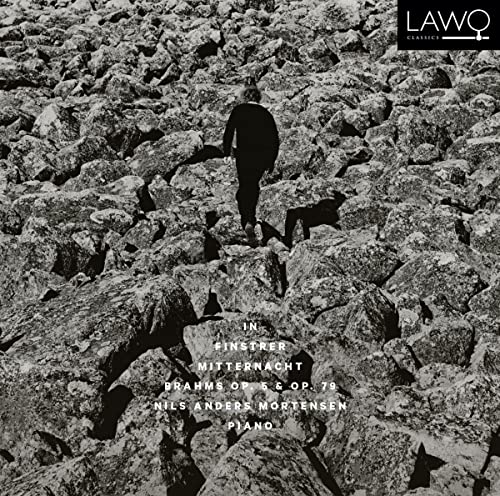
Eugene Asti writes of this new release: "When I was trying to decide which solo pieces to record, I felt drawn to the late piano works as they seemed in some way related to his songs. Brahms's Lieder are some of his most intimate and personal compositions, and although small in scale, there is a wealth of emotional depth and poetic sensibility to be explored in them. The exact same thing can be said of the late piano works, which are likewise small in dimension and certainly not composed as virtuosic showpieces. They are also among the most beautiful and profound of all his works, possessing a truly vocal quality with which, as a song pianist, I can immediately identify (some could almost be called 'songs without words'). In the making of this recording, I was very fortunate that LAWO chose a wonderful reconditioned Steinway D dating from 1893, which is just a year after the composition of these late piano pieces." Eugene Asti is one of the foremost accompanists of his generation, and regularly tours and records as a solo musician. His many recordings have garnered him widespread critical acclaim.
{# optional: put hover video/second image here positioned absolute; inset:0 #}
LAWO Classics
Brahms: Late Piano Works
Eugene Asti writes of this new release: "When I was trying to decide which solo pieces to record, I felt drawn to...
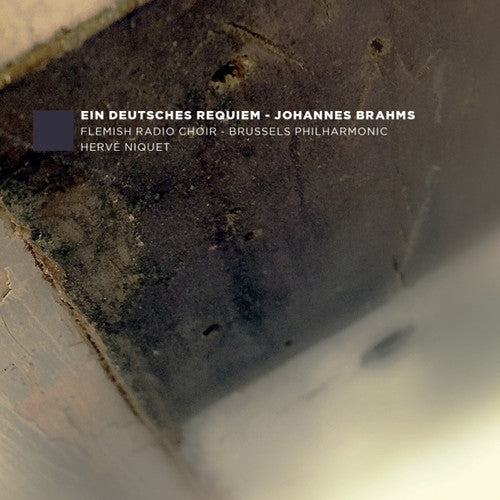
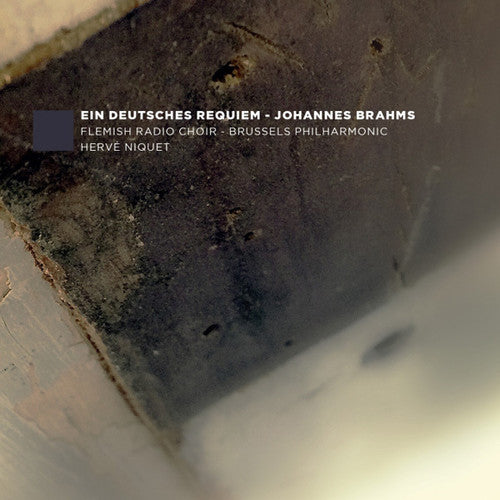
On this recording, acclaimed conductor Herv� Niquet fuses his Flemish Radio Choir and Brussels Philharmonic in a concentrated and intense performance, bringing out the expressive essence of Brahms' music which is at once grand and intimate.
{# optional: put hover video/second image here positioned absolute; inset:0 #}
Evil Penguin
EIN DEUTSCHES REQUIEM
On this recording, acclaimed conductor Herv� Niquet fuses his Flemish Radio Choir and Brussels Philharmonic in a concentrated and intense performance, bringing...
On this CD, alongside the well-known late Brahms piano masterworks opera 117, 118 and 119 - famous for their musical balance and quasi Zen-like distillation of the composer's life experiences - are the quite different small pieces from Brahms' early years: The Album blatt in A Minor, discovered in 2012 and a brief canon from 1864 shows the young composer's early mastery, while the Sarabande and Gavotte of 1855 were to be included in a planned suite. - Sophie-Mayuko Vetter is a regular guest on many international stages, performing an extensive repertoire ranging from early baroque to avantgarde.
{# optional: put hover video/second image here positioned absolute; inset:0 #}
On Sale
Haenssler Classic
Brahms: Piano Works
On this CD, alongside the well-known late Brahms piano masterworks opera 117, 118 and 119 - famous for their musical balance and...
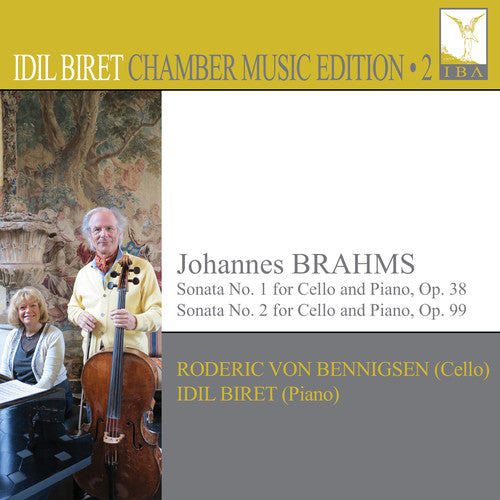
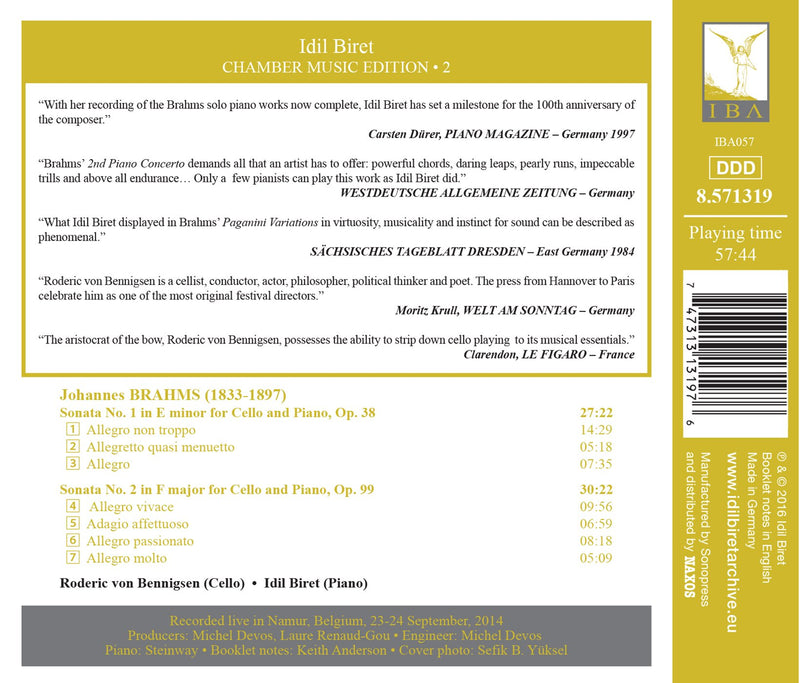
With her recording of the Brahms solo piano works now complete, Idil Biret has set a milestone for the 100th anniversary of the composer - Carsten Durer, Piano Magazine 1997. "Brahms' 2nd Piano Concerto demands all that an artist has to offer: powerful chords, daring leaps, pearly runs, impeccable trills and above all endurance... Only a few pianists can play this work as Idil Biret did." - Westdeutsche Allgemeine Zeitung. "The aristocrat of the bow, Roderic von Bennigsen, possess the ability to strip down cello playing to it's musical essentials." - Claredon, Le Figaro
{# optional: put hover video/second image here positioned absolute; inset:0 #}
On Sale
Idil Biret Archive
Idil Biret Chamber Music Edition, Vol. 2
With her recording of the Brahms solo piano works now complete, Idil Biret has set a milestone for the 100th anniversary of...
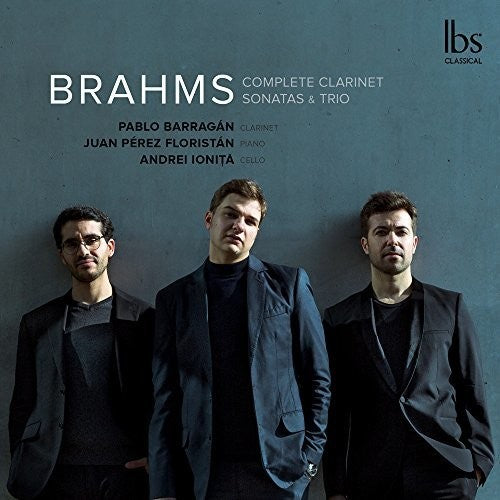
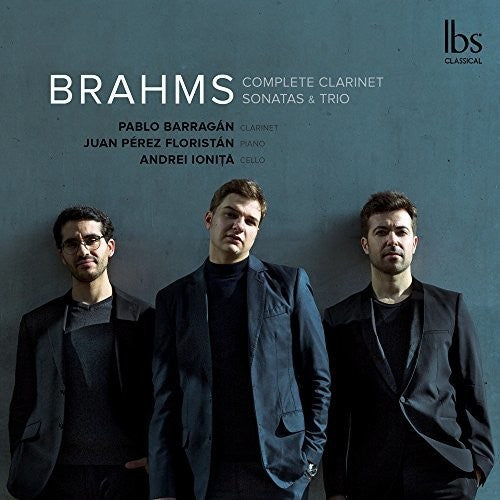
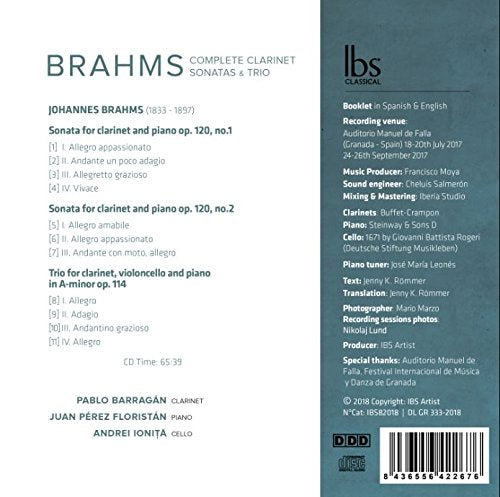
It is clear and undisputed that the Sonatas belong to the outstanding clarinet music-literature. Brahms succeeds in his two “Sister Sonatas” to show the full sonority of the woodwind instrument while treating the piano as an accompaniment, but equal chamber music partner. Clarinet and piano always stay together – in support and in dialogue. The composition in all of these works can be experienced as a contribution to any understanding of expression and inter-musical relationships: this becomes clear on an inter-musical level of the composition and on an inter-humane level of the interpreters. It is especially this aspect which makes Brahms still experienceable in performance and interpretable today. In this ‘performativity’, the works experience their raison d’être; and in their performance, the intimate dialogue of friendship becomes reality. It is hard to find such a well-balanced and creative union between three artists, whose solo careers speak for themselves, but whose collaboration evoke the true essence of music-making. The most notable element perhaps, which brings Pablo Barragan, Juan P. Floristan, and Andrei Ionita together is their common vision of the communicational power of chamber music, its capacity to inspire and transform and its importance for their professional and personal development.
{# optional: put hover video/second image here positioned absolute; inset:0 #}
IBS Classical
Brahms: Complete Clarinet Sonatas & Trio
It is clear and undisputed that the Sonatas belong to the outstanding clarinet music-literature. Brahms succeeds in his two “Sister Sonatas” to...
The most unknown of the 19th century's great song cycles is a gripping adventure, and even more so when it is brought to life by the brilliant duo of baritone Nikolay Borchev and pianist Boris Kusnezow. From the very first notes of their Genuin debut release, the two artists captivate our imagination, and hearing the young, internationally-acclaimed singer, it's no surprise that he has been repeatedly engaged by institutions like the Bavarian and Vienna state operas. His clear diction, flowing musical lines, and great vocal beauty are ideally suited to Brahms's tale of Romantic chivalry. Pure listening pleasure!
{# optional: put hover video/second image here positioned absolute; inset:0 #}
Genuin
Die schöne Magelone
The most unknown of the 19th century's great song cycles is a gripping adventure, and even more so when it is brought...


 {# optional: put hover video/second image here positioned absolute; inset:0 #}
SWR
{# optional: put hover video/second image here positioned absolute; inset:0 #}
SWR {# optional: put hover video/second image here positioned absolute; inset:0 #}
 {# optional: put hover video/second image here positioned absolute; inset:0 #}
LAWO Classics
{# optional: put hover video/second image here positioned absolute; inset:0 #}
LAWO Classics {# optional: put hover video/second image here positioned absolute; inset:0 #}
 {# optional: put hover video/second image here positioned absolute; inset:0 #}
Evil Penguin
{# optional: put hover video/second image here positioned absolute; inset:0 #}
Evil Penguin {# optional: put hover video/second image here positioned absolute; inset:0 #}
 {# optional: put hover video/second image here positioned absolute; inset:0 #}
 {# optional: put hover video/second image here positioned absolute; inset:0 #}
On SaleHaenssler Classic
{# optional: put hover video/second image here positioned absolute; inset:0 #}
On SaleHaenssler Classic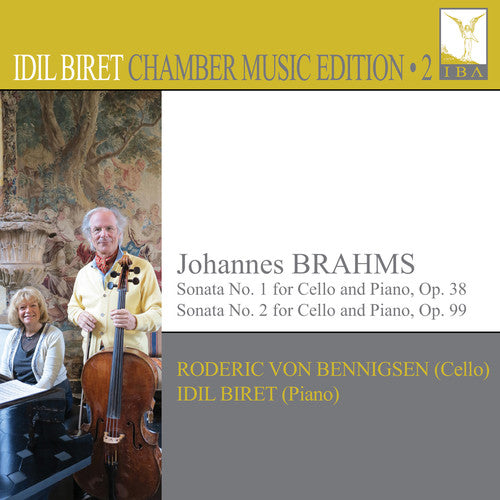 {# optional: put hover video/second image here positioned absolute; inset:0 #}
On SaleIdil Biret Archive
{# optional: put hover video/second image here positioned absolute; inset:0 #}
On SaleIdil Biret Archive {# optional: put hover video/second image here positioned absolute; inset:0 #}
 {# optional: put hover video/second image here positioned absolute; inset:0 #}
 {# optional: put hover video/second image here positioned absolute; inset:0 #}
 {# optional: put hover video/second image here positioned absolute; inset:0 #}
IBS Classical
{# optional: put hover video/second image here positioned absolute; inset:0 #}
IBS Classical {# optional: put hover video/second image here positioned absolute; inset:0 #}
Genuin
{# optional: put hover video/second image here positioned absolute; inset:0 #}
Genuin {# optional: put hover video/second image here positioned absolute; inset:0 #}


 {# optional: put hover video/second image here positioned absolute; inset:0 #}


 {# optional: put hover video/second image here positioned absolute; inset:0 #}


 {# optional: put hover video/second image here positioned absolute; inset:0 #}


 {# optional: put hover video/second image here positioned absolute; inset:0 #}


 {# optional: put hover video/second image here positioned absolute; inset:0 #}


 {# optional: put hover video/second image here positioned absolute; inset:0 #}


 {# optional: put hover video/second image here positioned absolute; inset:0 #}


 {# optional: put hover video/second image here positioned absolute; inset:0 #}


 {# optional: put hover video/second image here positioned absolute; inset:0 #}


 {# optional: put hover video/second image here positioned absolute; inset:0 #}

 {# optional: put hover video/second image here positioned absolute; inset:0 #}

 {# optional: put hover video/second image here positioned absolute; inset:0 #}


 {# optional: put hover video/second image here positioned absolute; inset:0 #}


 {# optional: put hover video/second image here positioned absolute; inset:0 #}


 {# optional: put hover video/second image here positioned absolute; inset:0 #}