Haydn’s career coincided with changes in the standard keyboard as the fortepiano, and then the pianoforte, replaced the harpsichord and clavichord. This album reflects these changes. Haydn probably wrote the charming 5 Variationen in D major for the harpsichord around the mid-1759s while the Fantasia in C major, with abundant hand crossings and effects, was intended to exploit the particular sonority of the fortepiano. In 1792 he wrote new dances for a Viennese masked ball and the Empress herself asked for keyboard arrangements which Haydn provided in the shape of the sparkling Deutsche Tanze and Menuetti. Hungarian pianist Jeno Jando has won a number of piano competitions in Hungary and abroad, including first prize at the 1973 Hungarian Piano Concours and a First Prize in the chamber music category at the Sydney International Piano Competition in 1977. He has recorded for Naxos all the piano concertos and sonatas of Mozart. Other recordings for the Naxos label include the concertos of Grieg and Schumann as well as Rachmaninov’s Second Concerto and Paganini Rhapsody and the complete piano sonatas of Haydn and Beethoven.
{# optional: put hover video/second image here positioned absolute; inset:0 #}
Naxos
Haydn: Works for Piano / Jando
Haydn’s career coincided with changes in the standard keyboard as the fortepiano, and then the pianoforte, replaced the harpsichord and clavichord. This...
Haydn: The Last 4 Piano Trios / Levin, Beths, Bylsma
Sony Masterworks
$11.98
$7.99
June 01, 1993
Without doubt, Haydn’s piano trios contain some of the most visionary keyboard writing of the late 18th century. Nearly 30 trios were composed between 1785 and 1797 alone; and yet this treasure-house of music dating from Haydn’s richest years remains all but unknown. The neglect is due largely to historical accident: to a certain extent, Haydn continued to cultivate the outmoded form of the accompanied keyboard sonata, with the two stringed instruments fulfilling subordinate roles. Nevertheless, their very presence seems to have inspired him to new heights. There is little in his output for solo piano that can compare in freedom and inventiveness with these astonishing works.
This disc contains the last four trios, written two years before his oratorio The Creation. All but one of them were dedicated to Theresa Jansen – a Clementi pupil who must have been an outstanding pianist. The pianist here, Robert Levin, apparently improvised his discreet embellishments during the recording sessions, and there is a welcome feeling of spontaneity about the playing generally, with the repeats sounding creatively different.
At times I could have wished for a more relaxed approach, as well as less literal reliance on the textual sources where such matters as phrasing and articulation are concerned (the inconsistency with regard to appoggiaturas in the slow movement of No. 44 is a case in point). A stimulating issue all the same, it deserves to have successors.
-- Misha Donat, BBC Music Magazine
{# optional: put hover video/second image here positioned absolute; inset:0 #}
On Sale
Sony Masterworks
Haydn: The Last 4 Piano Trios / Levin, Beths, Bylsma
Without doubt, Haydn’s piano trios contain some of the most visionary keyboard writing of the late 18th century. Nearly 30 trios were...
Fritz Reiner Collection - Haydn: Symphonies 88 & 95, 101
RCA
$17.99
March 25, 2008
Reiner's 1960 recording of Haydn's symphonies remains astonishingly fresh and vigorous.
Haydn’s Symphony No. 88, with its balance of elegance and rustic charm, is an exhilarating work and Reiner’s 1960 recording of it remains astonishingly fresh and vigorous. His performances of Symphonies Nos. 95 and 101, recorded only two months before he died, are no less exciting. The tragic mood of the C minor Symphony (No. 95) is well caught and there is great intensity in the quieter music. The sound is generally spacious and well-balanced.
-- Nicholas Rast, BBC Music Magazine
{# optional: put hover video/second image here positioned absolute; inset:0 #}
RCA
Fritz Reiner Collection - Haydn: Symphonies 88 & 95, 101
Reiner's 1960 recording of Haydn's symphonies remains astonishingly fresh and vigorous. Haydn’s Symphony No. 88, with its balance of elegance and rustic...
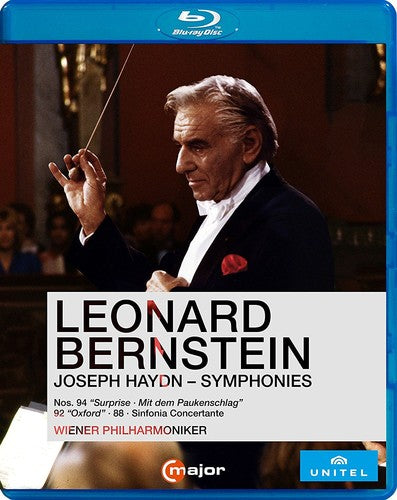
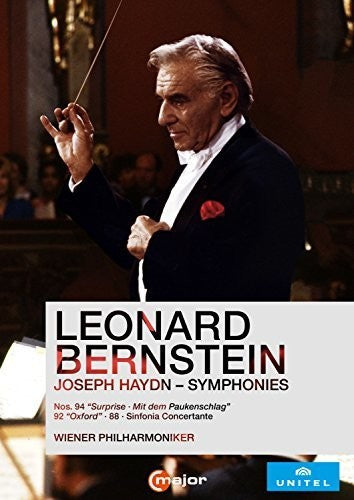
Haydn is generally seen as one of the main originators of the “Viennese sound”, the inimitable style of playing which is still very much alive today and is particularly cultivated by the Vienna Philharmonic Orchestra. This orchestra has Haydn’s music in its blood, and its interpretation of his symphonies demonstrates a supreme confidence, musical sophistication and lightness of touch. As a noted American music critic remarked following a performance of the Oxford Symphony conducted by Leonard Bernstein: “Let’s have no further argument: the Vienna Philharmonic is the world’s greatest orchestra. Bernstein’s interpretations of the symphonies have consistently met with unreserved critical acclaim. He, of all conductors, possessed precisely the qualities which Haydn’s music requires: grace, charm and a generous measure of wit.” The present recording was recorded at Grosser Musikvereinssaal Wien in 1984 and 1985. This is truly documentation of a master at work.
-----
DETAILS:
Booklet: English, German, French Run time: 111 minutes Disc Format: DVD 9 Picture: NTSC 4:3 Audio: PCM Stereo Region Code: 0 (worldwide)
{# optional: put hover video/second image here positioned absolute; inset:0 #}
The two extended visits in London, in 1791 and 1794, were the greatest triumph in the career of Joseph Haydn. By that time he had already composed 92 symphonies, 12 more came into being while he was in London. The English were stunned by his new masterpieces, which Haydn directed personally. They knew that they were in the presence of the greatest composer in the world. Mozart was already dead and Beethoven not yet known. In September 2009 during the Europäisches Musikfest the SWR Radio-Sinfonieorchester Stuttgart and Sir Roger Norrington celebrated the memory of Joseph Haydn by performing and recording live all 12 London symphonies. They focused – with regards on orchestra size, seating, tempo, phrasing, articulation and sound – on historical performing style, their aim being to render the majesty, the folk-like simplicity, the infectious sense of dance, the surprises, and the humor characteristic to the Father of the symphony.
{# optional: put hover video/second image here positioned absolute; inset:0 #}
How can a great oratorio such as "The Creation" be reduced to a few instruments in order to enjoy it in a small, domestic setting? How should the arias, choirs and recitatives be presented, and how can the biblical text be conveyed? Joseph Haydn delegated this apparent challenge to the then well known composer Anton Wranitzky, who arranged the music for string quintet. He left open questions about the text, so the Pandolfis Consort, playing on historical instruments, embarked on the great adventure of integrating spoken recitatives as well as passages of the libretto to illustrate the history of divine action. The role of the narrator took over Fritz von Friedl, one of the most famous Austrian speakers and actors. The result is this highly impressive and moving recording of the chamber music version of this monumental work, which had been wrongly forgotten.
{# optional: put hover video/second image here positioned absolute; inset:0 #}
Haydn: The Complete Symphonies / Gallois, Ward, Et Al
Naxos
$192.99
November 18, 2008
This is the greatest prize in a rich harvest of releases marking the Haydn bicentenary -- from the early works to the mature masterpieces, Haydn's music is arguably more consistently inventive and inspired than Mozart's.-- David Threasher, Gramophone [1/2009]
I’ve spent the better part of four weeks listening to these performances – and other recordings of the works – and, despite my few niggles, I can heartily recommend this set for anyone interested in this great composer, who does seem to languish in Mozart’s shadow more than he should. With such good sound, in general, at the price this constitutes a considerable bargain. -- Bob Briggs, MusicWeb International
This mammoth survey of the complete Symphonies by the man who really got things going symphonically, started in 1988 and finished as recently as July last year. It takes in venues all over eastern and western Europe as well as Canada.
Before playing a disk I was happy to note that we weren’t reliant on one set of performers – as was Decca with its set of the Symphonies with Antal Doráti and the Philharmonia Hungarica – and as these re–issues retain their original couplings you can’t hear the works chronologically without changing disks often. But this makes for more interesting programming – rather like the lovely recordings of Leslie Jones and his Little Orchestra of London’s recordings for Pye which mixed early, middle and late Symphonies together on one LP.
So after those thoughts, and listing the details of the recordings and performers to accompany this review, my next task was to decide where to begin. Much as I love Haydn’s music I cannot claim to know every Symphony intimately, so it seemed best to start with a work which is a particular favourite. The 48th Symphony, nick–named Maria Theresia, has long been of one my favourites, ever since I heard the Max Goberman recording which contains the most sensational horn playing I’ve ever heard. I was very pleased to hear Barry Wordsworth grab the bull by the horns, or perhaps the horns by the baton, and start in a most thrilling way, the horns singing out and the textures clear and direct. Unfortunately, this direct approach doesn’t last. These so–called Sturm und Drang Symphonies are dramatic in their intent and are full of incident, passion and fire. The 44th and 45th Symphonies are given light–weight, in fact far too light–weight, performances which suit the middle movements but lack sufficient bite for the turmoil of the outer movements and thus the drama of the music is lost in favour of a more charming approach. The same is true for the first two movements of No.88, but then, suddenly, in the minuet of No.88 everything takes off with a spritely and very dynamic gait. This performance has purpose and the finale is simply sparkling – if a trifle on the slow side. After this, their other three disks are wholly successful. Each of the Symphonies is given a sparkling performance, with well judged tempi, plenty of light and shade and the humour, there’s a lot of humour in Haydn, is very well pointed. The smallish orchestra is well focused in the recording, if perhaps with a little too much reverberation, and the sound is good if a bit too bright; too much top and not enough bottom. But I mustn’t be churlish for there is much to enjoy in these performances.
I find it fascinating at the distribution of the music, for instance, there’s only one disk by the Swedish Chamber Orchestra, but there’s six by the Northern Chamber Orchestra and eight each by the Cologne Chamber Orchestra and the Nicolaus Esterházy Sinfonia. I mention this because the Swedish disk is marvellous, comprising three Symphonies from the middle of the canon – Nos. 50, 51 and 52 – in performances which are suave and perfectly paced. These are an excellent example of how to perform music of this period – nothing is hurried, everything falls perfectly into place and there is a fine sense of style. No.50 is a real winner. Here is Haydn, having emerged from the troubles of the Sturm und Drang period, in a more mature guise than we have so far heard him, indulging in jokes and jests and generally having an high old time. The real highlight of this disk is the adagio of No.51 which contains some exhilarating horn playing. Throughout this is most satisfying and pleasurable listening. Certainly this is one of the very best disks in the set, and it makes me wish that the orchestra had had another disk or two. Good though the Wordsworth performances are, these knock them into the shade for their style. The recording is better too, being clear but without the glassiness.
The Sinfonia Finlandia is allocated three disks and two of them comprise nine of the first 12 Symphonies so, with no disrespect to Haydn, it doesn’t have the best material to work with. That said, it plays these early pieces with a style and verve which I wouldn’t have expected. There is a virility to much of the playing as well as the most affecting tenderness, as in the slow movement of the No.3. If, perhaps, things get a little carried away and the conductor starts to drive the music this is a small problem for the fast finales can stand a bit of pushing, and, strangely, this approach makes the music seem bigger than it actually is. My favoured recording for these early works, and I am no lover or supporter of original instruments performance, has long been the two boxed sets by L’estro armonico and Derek Solomons but these Finnish performances are equally enjoyable and give Solomon and his band a real run for their money. The recordings are very close and the harpsichord is only sporadically Noticeable, not really a flaw but it would have been nice to feel its presence in the ensemble, after all, it was necessary at the time and these performances are trying to have the right feel to them. Their other CD is a diverse mix and it makes for an attractive programme. No.22 has a small cadenza for the harpsichord between the slow introduction and the main allegro and after that the instrument is silent. These are lively performances, slightly hard driven in the fast movements but entertaining and pleasing. What a fine chamber orchestra the Sinfonia Finlandia is, and their contribution to this set is made all the more significant by their strong advocacy of the very early works.
I’d never heard of the Toronto Camerata before receiving this set. It’s a good small band with bright strings and brilliant winds and brass. Kevin Mallon is a good conductor and directs unfussy performances of, mainly, early Symphonies. He certainly understands the challenges this music sets – it’s new, in a fledgling form and is still feeling its way forwards and as there’s no deep emotion with which to impress your audience, you don’t make big production numbers out of them. These three disks are very good indeed except the harpsichord is seldom audible – which turns out to be the norm throughout the set – and, for some reason there’s an harpsichord in the performance of the 62nd Symphony; surely, by now, Haydn wouldn’t have been using a continuo instrument. No.20 is especially thrilling in its use of trumpets and drums. The two operatic Overtures make fine stable-mates for the Symphonies.
The six CDs by the Northern Chamber Orchestra cover the canon from the earliest (Nos 6, 7 and 8) to No.79. Highlights include a splendid account of No.22, with fabulous horns and cor anglais, the right tone is hit from the start and this, sometimes, dour work – it is quite dark – comes out fresh and sparkling. This is very impressive. There’s also some fine solo string playing in the three early works. There is a real swagger to the outer movements of No.35, and a suavity to the slow movement. No.49 starts with a slow movement filled with heartbreaking pathos, the two fast movements are full of the stresses and strains found in these Sturm und Drang works, and both are fast paced manic performances. No.60 isn’t really a Symphony, it’s six movements cobbled together from incidental music Haydn wrote for a theatre production and includes some of his best jokes. The 2nd, slow, movement is interrupted by a jaunty march and the finale includes a short section where the violins have to retune. In this performance the jokes are well placed and Not overdone, making the performance a real joy. The last disk contains three mature Symphonies – Nos. 77, 78 and 79 – which are given light performances and here I would have preferred more heft for these are big works and need an heavier hand at the helm and a bigger band. That said, these are very fine performances, well thought out and executed, and I do enjoy Ward’s often relaxed way with the music – the opening movement of No.79 is particularly delightful with its main theme which reminds one of Ernest Tomlinson’s lovely Little Serenade! There’s an harpsichord in there, somewhere, in the early works, and it occasionally surfaces, but it’s too often lost in the texture, mainly through a backward balance.
The final two orchestras – the Cologne Chamber Orchestra and the Nicolaus Esterházy Sinfonia – each have eight disks, encompassing nearly half the canon. To look at the Cologne performances first – the first movement of No.13 is sparkling but the sound is tubby and much detail is lost; there is also an huge rallentando over the final chords which sounds grotesque. The slow movement, with its eloquent solo cello part, is lovely, if rather rich in sound; it is recorded very closely which robs the music of its intimacy. The finale, with its fugue theme identical to Mozart’s in K551, comes off quite well, except for the rallentando at the end. No.36 fares better, as does the Sinfonia Concertante, but the constant braking at cadence points had, by the cadenza in the first movement of the Sinfonia, started to really annoy me as a self conscious mannerism. Their second disk, of Nos. 32, 33 and 34 is much better. Müller–Brühl seems more contented here, and the recording is much clearer, but the Symphonies have too much in common to make a really interesting, and varied, programme. Disk 14 starts with a marvellously paced No.37 but Müller–Brühl’s interpretations only really get going with the arrival of a minor key work – No.39. This is splendidly performed, full of angst and worry, which makes the brightness of No.40 all the more welcome and enjoyable. These three CDs suffer from backwardly placed brass, winds and drums. The first chord of No.41, on CD 15, is perfectly balanced by the engineer and the sound is wonderfully clear with a real bite to it, and this suits the performance which is straight forward and brisk in a very forthright manner. I enjoyed this performance greatly! No.58 brought an even greater revelation – the first fully audible harpsichord I’d heard so far! And what a joy it is to hear its contribution. No.59 is simply more of the same with a very bright performance. As for the rest of the performances by the Cologne Chamber Orchestra, highlights include a tremendous performance of the finale of No.54, and a gorgeous slow movement in No.57, full of poise and restraint. No.75 is as good as it gets in these Cologne performances, spritely outer movements, a delightful slow movement and a minuet which nicely dances along, and the japes of No.80 are truly side splitting! In general these Cologne performances are a bit of a mixed bag, with some really exciting and fine performances but the strange balance in their first three CDs doesn’t help their cause. But it must be emphasized that when the performances take off then there is much to enjoy, but beware Müller–Brühl’s putting in the brakes at the ends of some movements for it does become irritating.
And so to the eight CDs by Nicolaus Esterházy Sinfonia under the direction of Béla Drahos. Things get off to a bright start with a sparkling No.27, and the Hornsignal is quite marvellous, with forthright horns, sounding much more romantic and Schumannesque than Haydnesque but making the most of their exhilarating writing. There is a disturbing edginess to parts of the first movement of No.53 – one of the first works after the Sturm und Drang period – so Drahos is quite right to point the hangover effect of the earlier pieces. Other highlights of the Drahos CDs are the slow movement of No.68, which displays a rapt attention to detail, the 1st movement of No.73 which has lots of mystery and excitement and the first movement of No.93 which, if a trifle hard driven, has exactly the right spirit for the music. However, I do question the validity of the use of harpsichord continuo in No.72 – by 1781 Haydn would undoubtedly have stopped using a keyboard continuo in his works.
I’ve kept the best until last. The Laudon Symphony (No. 69) must be sampled for this is simply the best interpretation of the set – it has everything and is exactly how later Haydn should be presented to the public.
I’ve spent the better part of four weeks listening to these performances – and other recordings of the works – and, despite my few niggles, I can heartily recommend this set for anyone interested in this great composer, who does seem to languish in Mozart’s shadow more than he should. With such good sound, in general, at the price this constitutes a considerable bargain.
I might mention that for comparison purposes I used the various Leslie Jones/Little Orchestra of London recordings on Pye Golden Guinea and Nonesuch LPs (various Symphonies), Antonio Janigro and the Symphony Orchestra of Radio Zagreb in their 1963 set of the Sturm und Drang works (Nos. 44 – 49) originally on Philips LPs and now on Vanguard W 51184 (2 CDs), Derek Solomons and L’estro armonico in various works (SAGA HAYDN 1 and 2 – LP only) Beecham’s idiosyncratic, but always revealing and interesting, set of the London Symphonies on EMI 367 8932 (5 disks) and the very special Max Goberman recordings, with the Vienna State Opera Orchestra (had Goberman lived he would have made the first complete recordings of these works and what a set that would have been!) which were available on the Haydn Society and CBS LPs and now reissued in splendid sound from Haydn House (11CDs).
In a perfect world one would have all of these recordings, and more, but if your pocket doesn’t run to that expense you won’t be disappointed with this set. Happy listening.
Bob Briggs, MusicWeb International
{# optional: put hover video/second image here positioned absolute; inset:0 #}
Naxos
Haydn: The Complete Symphonies / Gallois, Ward, Et Al
This is the greatest prize in a rich harvest of releases marking the Haydn bicentenary -- from the early works to the...
Whether it's a confident swagger or a balletic grace, a beguiling folk-melody or a quicksilver rondo, there is always something new to discover in the endlessly inventive symphonies of Haydn, especially in these firm favorites played by the Oregon Symphony under Carlos Kalmar in this new release. While Haydn wrote only one "surprise" symphony, there are surprises to be enjoyed aplenty here. From the bewildering Largo in Symphony No. 64 with its unexpected turns and derailments, to the ceremonial elegance and ear-tickling melodies of Symphony No. 53 or the mock-heroics and propulsive rhythms of Symphony No. 96, Haydn's irrepressible and dazzling ingenuity constantly delights and astonishes. "There is no one who can do it all," wrote Mozart, "to joke and to terrify, to evoke laughter and profound sentiment - and all equally well, except Joseph Haydn." This is Carlos Kalmar's fourth album for Pentatone with the Oregon Symphony. Their album Music for a Time of War, earned two Grammy nominations and was widely praised by music critics. Gramophone said of their album This England "Kalmar's Oregon performance certainly pulls no punches...a total success, gripping in mood and hot on specific instrumental detail," adding, "sound-wise, you couldn't ask fo rmore; nor could anyone expect finer recording from Pentatone." And in 2016, their critically acclaimed album of 20th century American orchestral works The Spirit of the American Range earned a Grammy nomination for Best Orchestral Performance. Carlos Kalmar, a Uruguayan national, is in his fourteenth season as Music Director of the Oregon Symphony. He is also the artistic director and principal conductor of the Grant Park Music Festival in Chicago. His Carnegie Hall debut in May, 2011 with the Oregon Symphony, was noted by New York critic Alex Ross as "one of the most gripping events of the current season".
{# optional: put hover video/second image here positioned absolute; inset:0 #}
Haydn: Symphony No. 100; Nelson Mass / Christophers, Handel and Haydn Society
Coro
$20.99
$10.49
November 06, 2020
Experience two grand classics, alive with all the excitement and verve of their very first performances. Thrill to one of Haydn’s masterful ‘London’ symphonies that wowed England’s capital – the smash hit ‘Military’, so-called for intense depictions of the clash of arms and ferocious roar of war. In the epic Nelson Mass Handel and Haydn Society's magnificent chorus and soloists join the orchestra in this homage to the heroic admiral who helped to vanquish Napoleon. Of conductor Harry Christophers, BBC Radio 3 Record Review wrote: “What Harry is particularly good at is nurturing the natural beauty of the instruments and voices and, indeed, acoustic that are in front of him. It’s very handsome.”
{# optional: put hover video/second image here positioned absolute; inset:0 #}
On Sale
Coro
Haydn: Symphony No. 100; Nelson Mass / Christophers, Handel and Haydn Society
Experience two grand classics, alive with all the excitement and verve of their very first performances. Thrill to one of Haydn’s masterful...
Haydn: Organ Concertos / Quinn, Gent, Cohen, Arcangelo
Chandos
$21.99
October 04, 2019
Iain Quinn is joined by Arcangelo and Jonathan Cohen in this recording of organ concertos by Haydn, recorded on the Grant, Degens and Bradbeer organ of St Mary’s, Woodford. Born in Cardiff, Wales, Dr. Iain Quinn is an award-winning organist, musicologist, and composer with over ninety publications across multiple disciplines. He is Associate Professor of Organ and Coordinator of Sacred Music at Florida State University. He has received a Fellowship from the Winston Churchill Memorial Trust and grants from Musica Britannica, Society for American Music, The Prince's Trust, and the Music & Letters Trust. He has been a Visiting Fellow at Harvard University and a Visiting Composer at Gonville and Caius College, Cambridge. As a composer he has received commissions from churches across the USA and UK and from the American Guild of Organists. In 2017, he was a Fulbright Scholar teaching at The Rimsky-Korsakov St. Petersburg State Conservatory, Russia and in 2018 he was the Rudolph Ganz Fellow at The Newberry Library, Chicago.
{# optional: put hover video/second image here positioned absolute; inset:0 #}
Chandos
Haydn: Organ Concertos / Quinn, Gent, Cohen, Arcangelo
Iain Quinn is joined by Arcangelo and Jonathan Cohen in this recording of organ concertos by Haydn, recorded on the Grant, Degens...
Haydn: London Symphonies 103 & 104 /Kuijken, La Petite Bande
Deutsche Harmonia Mundi
$17.99
January 18, 2008
In No. 104 . . . [Kuijken] leaves you in no doubt that the central minore section (from 3'33'') is the most awesome, physically powerful music in any eighteenth-century symphonic slow movement. . . . I like, too, Kuijken’s grave, steady tread in the C minor-major theme and variations of No. 103 . . . the swaggering grandeur he brings to the final C major variation (8'21'') and the tenderness with which he shapes the quiet string phrases that usher in the coda – a sudden and magical change of atmosphere (9'20''). . . . Kuijken’s interpretations, vividly realized by his 35-strong orchestra (particularly delectable work from first flute and first oboe), can be recommended to anyone seeking these symphonies in period performances that do ample justice to the music’s boldness and imaginative reach. -- Richard Wigmore, Gramophone
{# optional: put hover video/second image here positioned absolute; inset:0 #}
Deutsche Harmonia Mundi
Haydn: London Symphonies 103 & 104 /Kuijken, La Petite Bande
In No. 104 . . . [Kuijken] leaves you in no doubt that the central minore section (from 3'33'') is the most...
Haydn: L'isola disabitata / Forck, Akademie für Alte Musik Berlin
PENTATONE
$21.99
August 06, 2021
The Akademie für Alte Musik Berlin returns to PENTATONE with Joseph Haydn’s opera L’isola disabitata (The Desert Island), together with an excellent quartet of vocalists.
Officially called an azione teatrale, L’isola is a serious opera about love, loss and misunderstanding with a happy ending, set on an exotic deserted island. Special about this opera is that Haydn chose orchestral accompaniment for the entire work, with colourful and dramatic accompagnato recitatives. In Haydn’s printed score, many of the elaborate instrumental sections were deliberately cut, because he feared that they demanded too much from the players, and that some audiences may not have been cultured enough to fully appreciate them. Special about this recording is that these parts have all been reinstated, using a recent edition by Thomas Busse.
The seasoned players of the Akademie für Alte Musik Berlin, led by Bernhard Forck, play this lavish score with fervour and swing, while Anett Fritsch (Costanza), Sunhae Im (Silvia), Krystian Adam (Gernando) and André Morsch (Enrico) offer an equally virtuosic vocal delivery.
The Akademie für Alte Musik Berlin is generally seen as one of the best period-instruments ensembles of today, and has a substantial PENTATONE discography.
REVIEW:
Haydn's opera L'isola disabitata ("The Uninhabited Island") was premiered in 1779. In one act, it was termed an azione per musica, suggesting a more compact work than an opera seria, and it has just four voice parts. The quartet of singers is fine, led with pleasant lightness by mezzo-soprano Sunhae Im in the lead role of the abandoned Costanza. The main attraction, though, is the work of the venerable Akademie für alte Musik, which has kept itself vibrant and relevant since its days behind the Iron Curtain. With Bernhard Forck leading the group from the first violinist's chair, they completely avoid the mechanical quality that often infests Baroque groups that move into Classical repertory; they grasp the essential forward-moving trajectory of the music and don't linger too much on the serviceable but ordinary arias. A totally satisfying Haydn opera release.
-- AllMusic.com (James Manheim)
{# optional: put hover video/second image here positioned absolute; inset:0 #}
PENTATONE
Haydn: L'isola disabitata / Forck, Akademie für Alte Musik Berlin
The Akademie für Alte Musik Berlin returns to PENTATONE with Joseph Haydn’s opera L’isola disabitata (The Desert Island), together with an excellent quartet...
REVIEWS: BBC Music (4/98, p.73) - Performance: 5 (out of 5), Sound: 5 (out of 5) - "...Haydn's usual playfulness and inventive wit...are expertly realised in the clear sounds and open textures of the players' period instruments on this elegant and enjoyable recording."
{# optional: put hover video/second image here positioned absolute; inset:0 #}
Haydn: Die Schöpfung / Mehta, Orchestra del Maggio Musicale Fiorentino, Coro del Maggio Musicale Fiorentino
Dynamic
$18.99
August 20, 2021
Inspired by hearing performances of Handel’s oratorios during his visits to London, Haydn composed Die Schöpfung (‘The Creation’) in 1798. Through a series of accompanied recitatives, arias, duets and choruses, the music depicts the creation of the universe and the carefree existence of Adam and Eve. Haydn drew on the full complement of his symphonic and vocal prowess which reach peaks of almost operatic intensity. With rich harmonies and sonic magnificence in abundance, Die Schöpfung represents the apex of the Viennese oratorio tradition.
{# optional: put hover video/second image here positioned absolute; inset:0 #}
Dynamic
Haydn: Die Schöpfung / Mehta, Orchestra del Maggio Musicale Fiorentino, Coro del Maggio Musicale Fiorentino
Inspired by hearing performances of Handel’s oratorios during his visits to London, Haydn composed Die Schöpfung (‘The Creation’) in 1798. Through a...


 {# optional: put hover video/second image here positioned absolute; inset:0 #}
Naxos
{# optional: put hover video/second image here positioned absolute; inset:0 #}
Naxos {# optional: put hover video/second image here positioned absolute; inset:0 #}
On SaleSony Masterworks
{# optional: put hover video/second image here positioned absolute; inset:0 #}
On SaleSony Masterworks {# optional: put hover video/second image here positioned absolute; inset:0 #}
RCA
{# optional: put hover video/second image here positioned absolute; inset:0 #}
RCA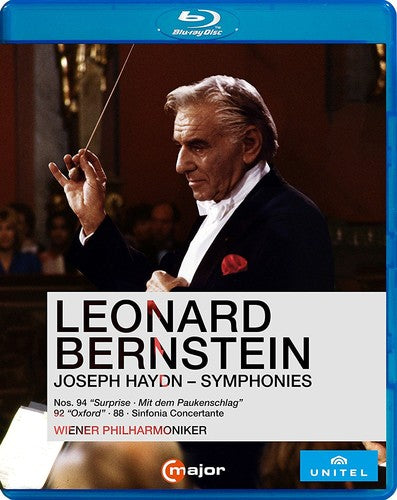 {# optional: put hover video/second image here positioned absolute; inset:0 #}
On SaleC Major Entertainment
{# optional: put hover video/second image here positioned absolute; inset:0 #}
On SaleC Major Entertainment {# optional: put hover video/second image here positioned absolute; inset:0 #}
SWR
{# optional: put hover video/second image here positioned absolute; inset:0 #}
SWR {# optional: put hover video/second image here positioned absolute; inset:0 #}
Gramola Records
{# optional: put hover video/second image here positioned absolute; inset:0 #}
Gramola Records {# optional: put hover video/second image here positioned absolute; inset:0 #}
 {# optional: put hover video/second image here positioned absolute; inset:0 #}
Naxos
{# optional: put hover video/second image here positioned absolute; inset:0 #}
Naxos {# optional: put hover video/second image here positioned absolute; inset:0 #}
PENTATONE
{# optional: put hover video/second image here positioned absolute; inset:0 #}
PENTATONE {# optional: put hover video/second image here positioned absolute; inset:0 #}
On SaleCoro
{# optional: put hover video/second image here positioned absolute; inset:0 #}
On SaleCoro {# optional: put hover video/second image here positioned absolute; inset:0 #}
Chandos
{# optional: put hover video/second image here positioned absolute; inset:0 #}
Chandos {# optional: put hover video/second image here positioned absolute; inset:0 #}
Deutsche Harmonia Mundi
{# optional: put hover video/second image here positioned absolute; inset:0 #}
Deutsche Harmonia Mundi {# optional: put hover video/second image here positioned absolute; inset:0 #}
PENTATONE
{# optional: put hover video/second image here positioned absolute; inset:0 #}
PENTATONE {# optional: put hover video/second image here positioned absolute; inset:0 #}
Sony Masterworks
{# optional: put hover video/second image here positioned absolute; inset:0 #}
Sony Masterworks {# optional: put hover video/second image here positioned absolute; inset:0 #}
Dynamic
{# optional: put hover video/second image here positioned absolute; inset:0 #}
Dynamic
 {# optional: put hover video/second image here positioned absolute; inset:0 #}

 {# optional: put hover video/second image here positioned absolute; inset:0 #}

 {# optional: put hover video/second image here positioned absolute; inset:0 #}


 {# optional: put hover video/second image here positioned absolute; inset:0 #}


 {# optional: put hover video/second image here positioned absolute; inset:0 #}


 {# optional: put hover video/second image here positioned absolute; inset:0 #}

 {# optional: put hover video/second image here positioned absolute; inset:0 #}


 {# optional: put hover video/second image here positioned absolute; inset:0 #}

 {# optional: put hover video/second image here positioned absolute; inset:0 #}


 {# optional: put hover video/second image here positioned absolute; inset:0 #}


 {# optional: put hover video/second image here positioned absolute; inset:0 #}

 {# optional: put hover video/second image here positioned absolute; inset:0 #}


 {# optional: put hover video/second image here positioned absolute; inset:0 #}

 {# optional: put hover video/second image here positioned absolute; inset:0 #}


 {# optional: put hover video/second image here positioned absolute; inset:0 #}