Lou Harrison
17 products
Harrison: Double Concerto, Trio / King, Jensen, Et Al
'[The Trio is...]...superbly performed...recommendable...to those interested in contemporary American music...' - David Hurwitz in Fanfare
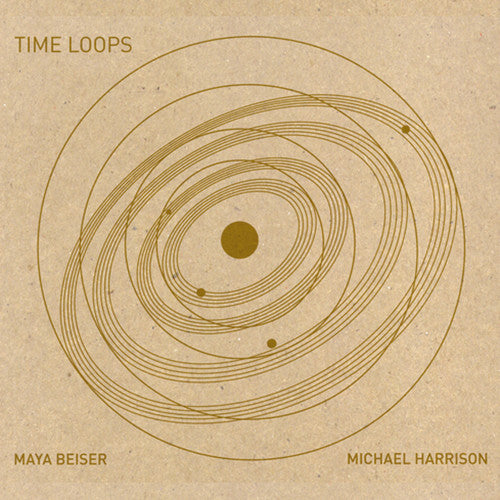
Time Loops - Harrison, Gounod, Part / Beiser, Nunez
Composer/pianist Michael Harrison's Time Loops is the follow up to Revelation, a critically acclaimed Cantaloupe recording from 2007, and features "cello goddess", Maya Beiser and one track with the Young People's Chorus of New York City. Michael Harrison is known for developing one of the most distinctive musical styles in recent years; utilizing innovative tuning relationships to further develop Just Intonation - an ancient tuning system where the distances between notes are based upon whole number ratios.
Harrison: Works 1939-2000
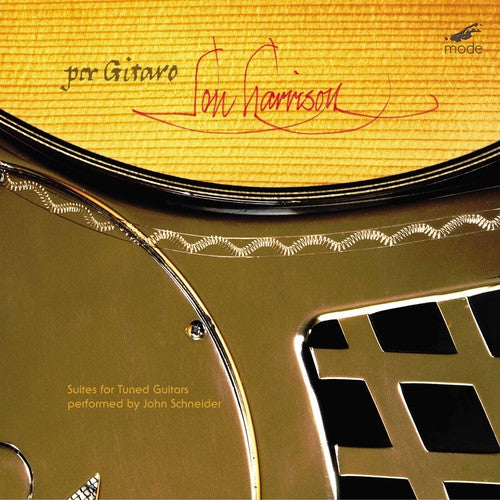
Harrison: Suites for Tuned Guitars
Harrison, S.: Taking Flight
Sintering
LAND TIDES
Cold Stability / Christopher Whyte
Percussionist Christopher Whyte releases Cold Stability, a collection of works for different percussion instruments that explores paths to quietude through sound. Featuring works by Toshio Hosokawa, Sarah Hennies, Lou Harrison, and Whyte himself, the album travels through a variety of timbres, most of which inhabit a space which subverts the expectation for a bombastic percussion recording.
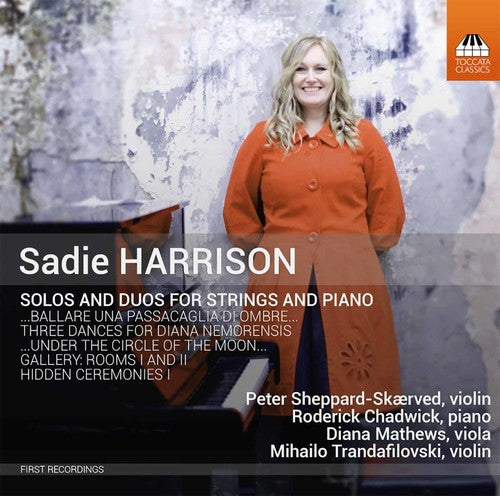
Harrison: Solos & Duos For Strings & Piano
The Australian-British Sadie Harrison is no ordinary composer: she is also an archaeologist and a professional gardener. So it is hardly surprising that a fascination with historical artifacts and biological processes filters into her music. The instrumental miniatures on this recording are both slow and brutal, some of them mirroring ancient worlds and natural phenomena and others taking their starting point in the paintings of Brian Graham and Peter Sheppard Skærved, expressing visual and textural ideas in sound. All are first recordings.
REVIEW:
Australian-born and UK-based, Sadie Harrison took some time out from composition to work as an archaeologist and professional gardener, activities which nourish these new works, mostly written in the past four years. Her fascination with fragments, minutiae and painted miniatures has resulted in five groups of tiny pieces each lasting around three minutes or less. The shortest is 24 seconds! Gallery (Rooms I and II) for solo violin—19 musical glimpses to be played in any order—takes the paintings of the versatile violinist Peter Sheppard-Skaerved as a starting point. Hidden Ceremonies, for piano, explores prehistory as depicted through paintings by Brian Graham. Musical echoes, from Vaughan Williams to Stravinsky to Aghanistan and beyond, are woven into Harrison’s works, each glittering in their intensity.
-- The Guardian
Homage To Lou Harrison Vol 4 / Facchin, Támmittam Percussion
Includes work(s) by Lou Harrison. Ensemble: Tammittam Percussion Ensemble. Conductor: Guido Facchin.
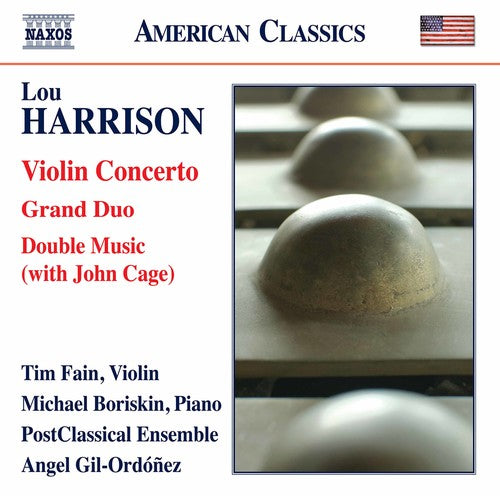
Harrison: Violin Concerto, Grand Duo & Double Music / Fain, Boriskin, Gil-Ordonez, PostClassical Ensemble
Lou Harrison was a composer far ahead of his time. A protean innovator, he epoused "world music" before it had a name, and this recording documents his pioneering roles as a composer for percussion and as an integrator of Western and Indonesian idioms. The Concerto for Violin and Percussion, both intimate and vigorous, demonstrates his experimental enthusiasm in the use of non-pitched percussion. The Grand Duo for Violin and Piano is a remarkable example of gamelan-infused chamber music while Double Music, co-composed with Harrison's friend John Cage, is a well-known product of their celebrated San Francisco percussion concerts.
Harrison: Music For Orchestra, Ensemble & Gamelan / Davies, Brooklyn Philharmonic
Lou Harrison was born in Portland, Oregon in 1917. His musical style was shaped by the San Francisco of the 1930s. There he studied composition with Henry Cowell, and staged high profile percussion concerts with John Cage. He spent the year 1942-43 in Los Angeles where he studied with Arnold Schoenberg. In 1946, Harrison conducted the premiere of Ives's Third Symphony which he had edited from the manuscript score. The following year Ives was awarded the Pulitzer Prize for this work which he shared with Harrison.
During trips to Japan, Korea and Taiwan in 1961-62, he studied native instruments including the cheng and the p'iri. Back in California he enthusiastically presented concerts and lectures on Korean and Chinese music and experimented in his own works with hybrid instrumental ensembles. In 1975, Harrison began an intensive study of traditional Javanese gamelan techniques. He soon began to explore ideas of cross fertilization, adapting the concerto principle to the Indonesian orchestra by composing works for Western soloists accompanied by gamelan. Harrison died in Lafayette, Indiana, 2003, from a heart attack while on his way to a festival of his music at Ohio State University.
This 4 CD set brings together all the works recorded in the USA for the MusicMasters label during the early 1990s.
REVIEW:
Fans will be ecstatic that these recordings return to the catalogue; newcomers will find a lot of attractive low-density music that always sounds beguiling and is easy to live with.
-- Gramophone
Birtwistle: The Minotaur / Tomlinson, Reuter, Pappano [Blu-ray]
Harrison Birtwistle
THE MINOTAUR
(Blu-ray Disc Version)
The Minotaur – John Tomlinson
Theseus – Johan Reuter
Ariadne – Christine Rice
Snake Priestess – Andrew Watts
Hiereus – Philip Langridge
Ker – Amanda Echalaz
The Royal Opera Chorus
The Orchestra of the Royal Opera House
Antonio Pappano, conductor
Stephen Langridge, stage director
Recorded live at the Royal Opera House, Covent Garden on 25, 30 April and 3 May 2008.
Bonus:
- Documentary: Myth is Universal
- Illustrated synopsis and cast gallery
Picture format: 1080i High Definition
Sound format: PCM Stereo 2.0 and 5.0
Region code: 0 (All Regions)
Menu languages: English
Subtitles: English, German, French, Spanish, Italian
Running time: 175 mins
No. of Discs: 1 (BD 50)
Birtwistle: The Minotaur / Tomlinson, Reuter, Pappano
BIRTWISTLE The Minotaur • Antonio Pappano, cond; John Tomlinson ( Minotaur ); Christine Rice ( Ariadne ); Johan Reuter ( Theseus ); Andrew Watts ( Snake Priestess ); Philip Langridge ( Hiereus ); Amanda Echalaz ( Ker ); Royal Op House Covent Garden O & Ch • BBC/OPUS ARTE 1000 (2 DVDs: 140:17) Live: London 4/25,30 & 5/3/2008
& Documentary: Myth is Universal ; illustrated synopsis; cast gallery
This is a brilliantly gripping piece of theater: what else would we expect from the composer/librettist team that gave us the stunning Gawain and the composer who spent so much of his creative life perfecting the incredibly complex but deeply stirring Mask of Orpheus ? To be sure, the work of Harrison Birtwistle, who has written for the lyric stage for over 40 years, is challenging. But since the Mask of Orpheus , one sees a consolidation: a greater focus on the storytelling itself. Gone, at least for now, are the multiple layerings of story lines and variant characters that make the Orpheus story difficult to comprehend fully. Gone even are the more moderate temporal ambiguities of Gawain and the puzzling character potpourri of The Second Mrs. Kong . The presentation of the myth of Ariadne, Theseus, and Asterion, the half-man, half beast in the labyrinth, is told in classic linearity. The impact of the slaughter, rape, and treachery, stylized though the depiction of the first two may be, is visceral and unmitigated by any intellectual distancing.
David Harsent’s libretto, although in language rather archaic and ritualized, is a modern psychological telling of the myth, with the motives of the protagonists much less pure than the classic stories would have countenanced. Ariadne and Theseus distrust each other, lie to each other, and eventually betray each other to achieve their escape from present circumstances. Ironically, of the three major players, only the monster is innocent. When the Minotaur first appears to us as the beast, he is taunted for his brutality and inarticulateness by a sadistic perversion of a Greek chorus. Only after the rape and murder of the first of the Athenian youths do we see the man inside, tortured by his uncontrollable bestiality and violence and wounded by the hatred and fear that surround him. Able to speak—and thereby show his humanity—only when dreaming, he is revealed as a complex and sympathetic character, used by those around him and powerless to save himself. “The beast is vile; the man must go unloved.” The man within the beast dreams of loss, foresees his end, and hopes for forgiveness. It is a brilliant conception, brought to life with great poignancy by veteran bass John Tomlinson, and aided by brilliant costume design that lights the face inside the mask when the man-half is revealed.
Birtwistle’s highly expressive atonal style uses core melodic elements from which he derives, through repetition and variation, all other material. Flashes of recognition provide a sense of unity throughout the work. This, too, has been moderated over time. Expected are the massive layered outbursts of sound that complement the more violent episodes in the story. Less anticipated, though they should have been, are the extended periods of great translucency and emotional subtlety, the superb support of the voices and the use of unusual instruments to heighten emotion—the cimbalom—or to comment upon a character—the alto saxophone for Ariadne’s duplicity. The result is a mesmerizing score. The vocal lines, admitted by some of the principals to be difficult to learn, apparently sit well on the voices, once learned. Certainly, the part of the Minotaur, written specifically for the strengths and limitations of Tomlinson’s current vocal estate, shows the stentorian but expressive bass at his considerable best. Mezzo-soprano Christine Rice, with her soulfully expressive face and opulent voice, is a wonderfully perfidious Ariadne, the main character if measured by time onstage. Theseus is animated by Danish bass-baritone Johan Reuter with a forceful stage presence and a solid voice throughout his sizeable range. Countertenor Andrew Watts is a delightfully fey Snake Priestess and tenor Philip Langridge proves again that there are no small parts for great performers. Among the secondary roles, all of them well sung and acted, special mention needs to be made of soprano Amanda Echalaz’s chilling Ker, the leader of a hideous band of soul-eating harpies. She’s a young spinto, acclaimed in roles like Tosca and Cio-Cio-San, whom I look forward to hearing in more congenial circumstances.
Stephen Langridge’s production, designed by Alison Chitty, is beautiful, and stark in its simplicity. An open stage—with a baleful sun, a wan moon looming in the sky, and illuminated blue lines and a trough of sand representing the sea and beach—provides the exterior area. The labyrinth is represented by a bloodstained interior arena, encircled by the elevated masked chorus, entrapping victims and monster alike. Pappano and his superb orchestra provide luminous support for the singers, performing the work, to quote the composer, “as if it were Verdi.” The video production is just what I prefer for live opera: a judicious balance of long and medium shots to give a clear idea of the interactions and settings, and moderate close-ups during solo sections to satisfy the needs of the smaller screen. The sound is superb and the DVD extras minimal but informative. Unless you know you are allergic to any opera post-Puccini, I recommend this DVD release most emphatically.
FANFARE: Ronald E. Grames
--------------------------------------
The Minotaur – John Tomlinson
Theseus – Johan Reuter
Ariadne – Christine Rice
Snake Priestess – Andrew Watts
Hiereus – Philip Langridge
Ker – Amanda Echalaz
Stephen Langridge, stage director
Recorded live at the Royal Opera House, Covent Garden on 25, 30 April and 3 May 2008.
Bonus:
- Documentary: Myth is Universal
- Illustrated synopsis and cast gallery
Picture format: NTSC 16:9 Anamorphic
Sound format: LPCM Stereo / DTS 5.0
Region code: 0 (All Regions)
Menu languages: English, German, French, Spanish, Italian
Subtitles: English, German, French, Spanish, Italian
Running time: 175 mins
No. of DVDs: 2
Harrison: Seven Sacred Names
Created by pianist and composer Michael Harrison, Seven Sacred Names is meant as a companion album to the book Nature’s Hidden Dimension by author, astrophysicist and modern Sufi mystic W.H.S. Gebel. The Seven Sacred Names, according to the mystical cosmology of Sufism, tell the story of "...an awakening primal Self," as Gebel writes in the album's liner notes. Taken together, Harrison's seven pieces (with the prologue and epilogue of "Kalim" comprising two distinct movements) foster a listening environment that is ethereal, meditative and at times almost tentative, but also rife with the anticipation and promise of glimpsing hidden truths about ourselves. Featuring a diverse range of artists that includes the Grammy-winning vocal ensemble Roomful of Teeth, vocalist Ina Filip, cellist Ashley Bathgate, violinists Tim Fain and Caleb Burhans, tabla percussionist Ritvik Yaparpalvi and Harrison himself on piano, the recording moves hypnotically through a subtle but ever-changing suite of tranquil moods and colors — with each stage defining a sacred or exalted state meant to inspire awareness, self-knowledge and self-expression.
Harrison Birtwistle: The Moth Requiem
As 2014 heralds the composer's 80th year, Harrison Birtwistle remains one of the most popular voices in contemporary composition in the UK and beyond. This new collection of premiere recordings draws together recent commissions with older works to mark the occasion, with characteristically flawless performances from the BBC Singers under Nicholas Kok. They are joined on this disc by the Nash Ensemble and baritone Roderick Williams. This is the fourth in Signums ongoing series of composer-led releases with the BBC Singers, with past discs featuring the works by Judith Bingham, Richard Rodney Bennett, and most recently Edward Cowie.
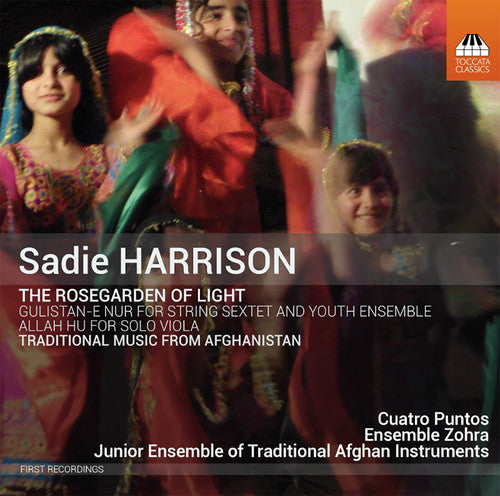
Harrison: The Rosegarden of Light
This release is a joint project between American string sextet Cuatro Puntos and student ensembles from Afghanistan National Institute of Music (ANIM), opened in Kabul in 2010 after a period of Taliban rule in which instruments were destroyed and musicians were outlawed. The special goal of ANIM is on supporting the most disadvantaged members of Afghan society, many students are orphans and street vendors. Cuatro Puntos is based in Hartford, Connecticut. The ensemble is a non-profit organization centered around global peace and cooperation achieved through the writing, teaching and performance of music across the world. The title work is by composer Sadie Harrison; in recognition of her unique integration of modern composition and traditional Afghan folk music, she was given the honor of being named a Visiting Fellow at Goldsmiths, London. This album is the result of her time there. The Rosegarden of Light alternates between interludes performed by the Ensemble Zohra, the ANIM all-girls ensemble and fantasies on their material performed by Cuatro Puntos. "At a time when we are bombarded every day by images of the world in crisis, The Rosegarden of Light is a joyful celebration of musicians who share a fundamental right to express themselves through the universal language of music." - Blackmore Vale Magazine
REVIEW:
Music can mean many things to different people and to some it can mean everything. Music can represent religious beliefs, create political conversations, and preserve the cultural aspects of a civilization. Now imagine living in a place where music has been heavily censored since the 1970s, a ban on instrumental music wasn’t lifted until 2001, and the first performance of a decades old children’s book moved people to tears because they thought the songs were lost. This is Afghanistan. This is the importance of the “Rosegarden of Light” release.
The liner notes tell of books about Afghan music and its history and a website to view videos of performers. The performances are lively and solid, mostly a mix of Indian, Persian, and Pashtun, with some strongly influenced by western music. The music isn’t the most difficult, but simply having groups like the ANIM Junior Ensemble of Traditional Afghan Instruments playing folk songs and the all-female Ensemble Zohra existing at all is a major accomplishment. The US string sextet Cuantro Puntos does the heavy lifting on the culturally mixed pieces, and the collaborative works turn an already important musical release into something even greater.
-- Fanfare