Luciano Berio
21 products
-
#50 - Berio: Coro; Zuraj: Automatones
$19.99CDBR Klassik
Nov 07, 2025BRK900650 -
Un - Canaja Brass Quintet
$16.99CDStradivarius
May 30, 2025STR37311 -
Berio, Gentilucci, Putignano & Siano: Labirinti
$16.99CDTactus
May 02, 2025TC930003 -
-
-
-
-
-
-
-
-
-
-
-
Within the Waves - Sanna Vaarni
#50 - Berio: Coro; Zuraj: Automatones
Un - Canaja Brass Quintet
Berio, Gentilucci, Putignano & Siano: Labirinti
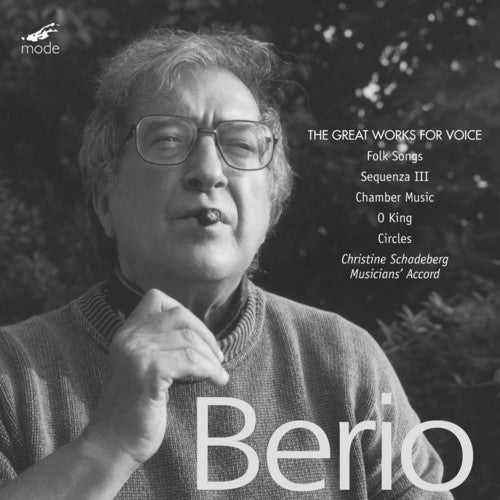
Berio: The Great Works for Voice
Berio & Rens: Folk Songs
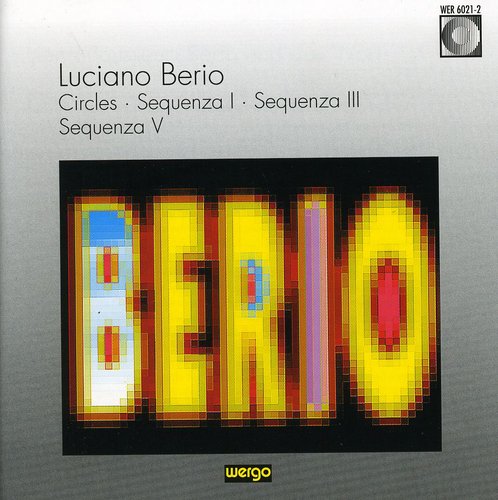
CIRCLES SEQUENZA I, III, V
SCHUBERT EPILOG
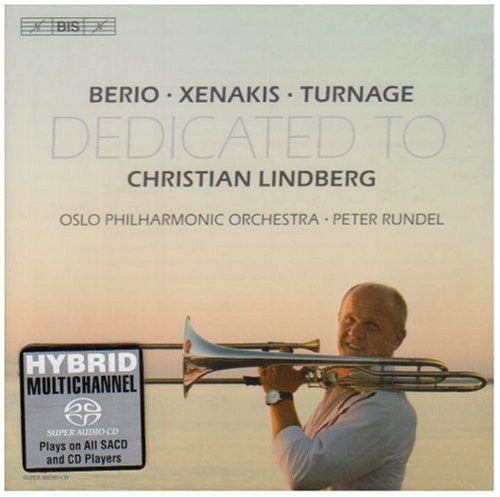
Berio / Xenakis / Turnage: Trombone Concertos Dedicated To C
Xenakis: Dox-Orkh / Mira Fornes: Desde Tan Tien
Virtuoso Trombone / Christian Lindberg, Roland Pöntinen
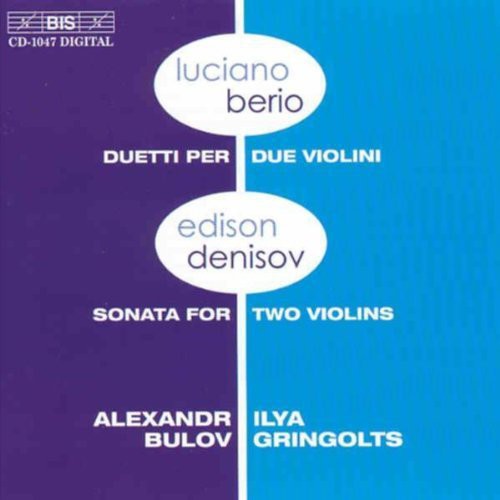
Berio: Duets For 2 Violins / Denisov: Sonata For 2 Violins
Berio: Coro
Epifanie, Coro
Berio, Bucchi, Donatoni & Gentilucci: Al telaio del tempo
A solo album for clarinet inevitably becomes a test on the clarinet, on its expressive power andon the musician’s mastery in playing it. Especially if the musician plays a contemporary repertoirethat is made up of works that follow two different visions. One pays an obsessive attention to the peculiar features of the instrument, the other is apparently more indifferent to the technical limits of execution of the musical score. With his album Gian Maria Matteucci aims to unify the two visions trying to perform the score pointing out the clarinet related features. Adopting this approach of playing highlighting the role of the clarinet, in der Partitur, is for the listener an unusual and moving journey up to the spiral staircase of what the essence of the clarinet is. Let’s analyse in detail all the different stages of the experience we go through listening to Matteucci’s album “Al telaio del tempo”, where the game of implicit and explicit time, of qualitative and quantitative time, of subjective and objective time produces a large amount of moments that make it everlasting.
Liszt, Wolf, Mozart, Brahms et al: Love & Let Die - Songs / Ruckgaber, Schulze
Katharina Ruckgaber writes: “In the UK, sales of crime novels exceed those of romantic, fantasy or science fiction titles… It seems the eagerness to hunt the killer side-by-side with the detectives and a sort of collective desire to sit rigid with fear on our sofas and be subjected to all manner of horrors has taken hold of society. However, the fascination with the depths to which human beings can descend goes back much further; indeed it is part of our “cultural heritage”, so to speak… This is happening amid – or despite – the daily menu of dramatic events served up on news programs, the barbarous events taking place around the world, events of such stark reality that they surely leave crime thriller plots in the shade. Does that mean that anyone could become a murderer? Forensic psychiatrists have been investigating this question for years and have repeatedly reached the conclusion that no one is immune to committing an act of madness when fate has dealt them a dreadful blow. That is what happens to the female narrator on my new lieder album.
"Killing one’s rival, a variation on the crime of passion committed in a conflict situation as a result of overwhelming jealousy, by losing control over one’s negative character traits shines a light on a dark power that causes her to get carried away in a highly tense moment. And now she must live with what she has done, a crime that she is unable to reconcile with her conscience, a deed that makes her feel as if an alien part of her committed it…”
Crazy Girl Crazy / Hannigan, Ludwig Orchestra
Whether singing, conducting, dancing or acting, the Canadian soprano Barbara Hannigan is a source of fascination. Alpha Classics is proud to enter her world today and to present in 2017 her very first album as singer and conductor: with the Amsterdambased orchestra Ludwig, of which she is associate artist, Barbara Hannigan has devised a programme including Berg’s Lulu Suite and Gershwin’s Girl Crazy in a Suite newly arranged by the multiaward-winning American composer Bill Elliott. To complement these two pieces, she has recorded Berio’s spectacular Sequenza III for solo voice. An outstanding soprano, a distinguished interpreter of the music of the twentieth and twenty-first centuries, an all-round artist who creates a sensation on concert platforms and in opera houses throughout the world, Barbara Hannigan has enriched her palette over the past few years by devoting a portion of her activities to conducting. This album in the form of a musical portrait of the artist, is completed by a film made by Mathieu Amalric during the rehearsals and recording sessions. It plunges into the heart of the orchestra with a very personal look at the exchanges between conductor and musicians. Over the next few years, Alpha will accompany Barbara Hannigan in a number of projects from very varied horizons . . .
Berio: Sequenzas I - XIV
It might be helpful to describe some of the ways in which the DG and Naxos performances differ. In Sequenza XII for Bassoon, Pascal Gallois' rapid leaps and piercing multiphonics convey a sharper impact through DG's close microphone placement. By contrast, Naxos' more distantly miked Ken Munday sounds relatively less incisive yet fuller bodied in longer, sustained passages. DG's violist Christophe Desjardins plays Sequenza VI's cyclonic opening chordal section with lacerating intensity, whereas Naxos' Steven Dunn's slightly slower tempo allows the pitches and cross rhythms a little more room to breathe.
Naxos' Jaspar Wood does a fine job with Sequenza VIII, but DG's Jeanne-Marie Conquer's double stops boast more variety and tonal differentiation. Regarding Sequenza II, it's a toss-up between Frédérique Cambreling's pronounced dynamic contrasts (DG) and Erica Goodman's greater clarity in the scurrying, ethereal passages (Naxos). While Naxos' Tony Arnold's playful soprano makes the most of Sequenza III's madcap mood shifts, DG's Luisa Castellani's suppler voice employs wider register extremes (she was Berio's preferred singer in later years).
Had pianist Boris Berman's extraordinary marksmanship in Sequenza IV been captured in more colorful sonic splendor, his interpretation easily would hold its own next to Florent Boffard's elegant insouciance. In Sequenza X for C Trumpet Berio uses piano resonance to create continuity between phrases. On DG, Gabriele Cassone's fat, flügelhorn-like sonority and immaculate repeated-note technique have no peer, yet I like the jazziness with which Naxos' Guy Few leans into the beginnings of certain phrases. In all, this release stands as a viable alternative to the DG set, if not necessarily a replacement as we await Mode's forthcoming Sequenza cycle.
--Jed Distler, ClassicsToday.com
Berio: Piano Music / Andrea Lucchesini
Includes work(s) for piano by Luciano Berio. Soloist: Andrea Lucchesini.
Berio: Canticum Novissimi Testamenti, Etc / Rundel, Et Al
Berio: Coro & Cries of London / Pedersen, Norwegian Radio Orchestra & Soloists Choir
-----
REVIEW:
Luciano Berio is quite rightly viewed as one of the most interesting and adventurous composers of his time. More so than many of his works from the 1960s, Coro struck me as being closer in style and spirit to some of the work of György Ligeti, particularly Ligeti at his best. It is the massed choral sound — and the astonishingly brash, almost metallic sound of the instrumental ensemble — that strikes one the most and stays in the mind. Needless to say, this is exactly the sort of work for which Bis’s SACD sonics are ideal.
– Art Music Lounge (Lynn René Bayley)