

Léo Delibes
19 products
-

La Divina - The Best of Maria Callas
$35.56CDWARNER CLASSICS
Mar 29, 2024WCL766491.2 -
![]()

-
![]()

-
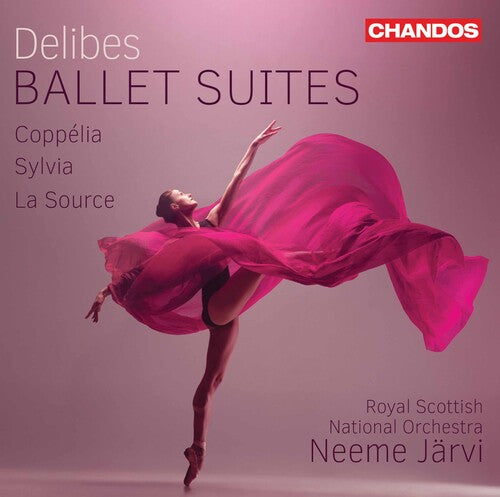
Delibes: Ballet Suites / Jarvi, Royal Scottish National Orchestra
$21.99SACDChandos
Nov 06, 2020CHSA 5257 -
![]()

-
![]()

-

Delibes: Lakme
$24.99CDOpera Australia
Apr 24, 2012OPOZ56022CD -
![]()

-
![]()

-
![Delibes: Coppelia / The Royal Ballet [blu-ray]](//arkivmusic.com/cdn/shop/files/3856957-2602111.jpg?v=1765561905&width=800) On Sale
On SaleDelibes: Coppelia / The Royal Ballet [blu-ray]
Blu-Ray$39.99$29.99Opus Arte
Oct 23, 2020OA BD7275D -
![]()

-
![]()

-
![]()

-
![]()

-
 On Sale
Delibes: Lakme / Pichon, Pygmalion
Available as Blu-Ray or DVD$34.99$26.99Naxos AudioVisual
Oct 13, 20232110765 -
![]()

-
![]()

-
![]()

-
![]()

-
 On Sale
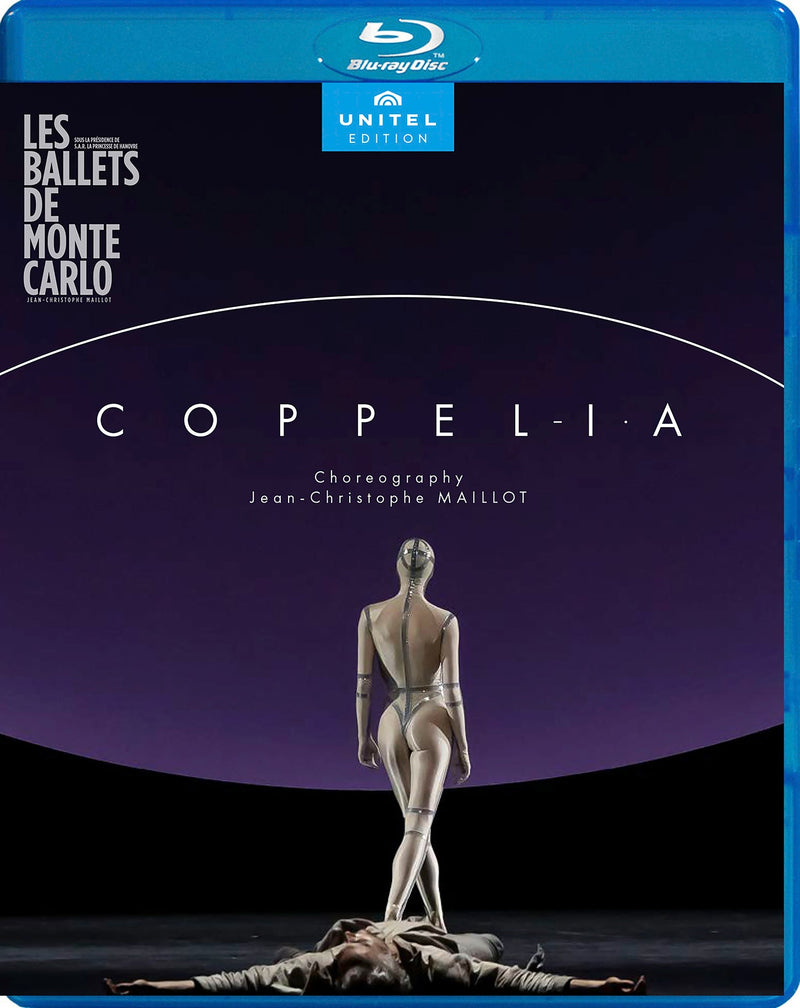
Delibes & Maillot: COPPEL-I.A / Les Ballets de Monte Carlo
Available as DVD or Blu-Ray$32.99$16.49UNITEL Edition
Jul 28, 2023808708 -
![]()

-
![]()

-
Les Nuits de Paris - Dance Music from Folies Bergère to Opéra / Roth, Les Siècles
$20.99CDBru Zane
Jan 27, 2023BZ2005 -
 On Sale
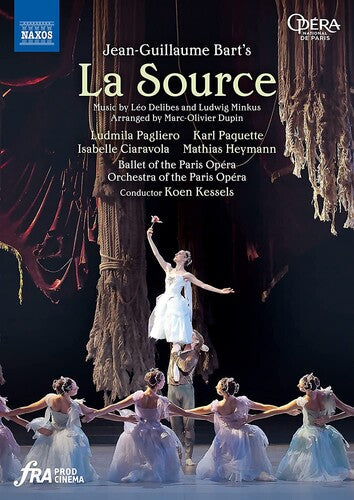
Delibes - Minkus: La source, ou Naïla
DVD$30.99$15.49Naxos AudioVisual
Apr 08, 20222.110724 -

Delibes: Sylvia; Saint-saéns: Henry Viii / Mogrelia, Et Al
$29.99CDNaxos
Jan 17, 19968553338-39 -
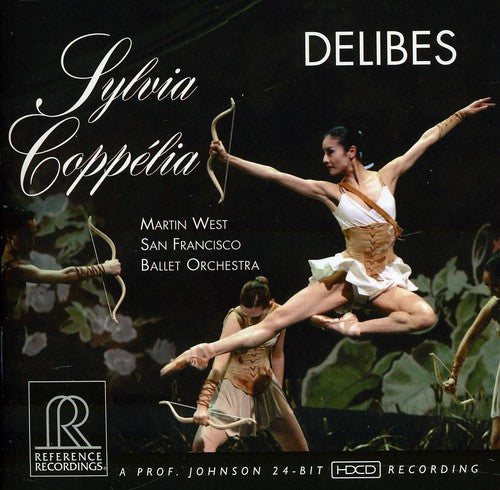
Delibes: Sylvia, Coppelia / Martin West, San Francisco Ballet Orchestra
$18.99CDReference Recordings
Mar 13, 2012RR-125 -
![]()

-
![]()

-
 On Sale
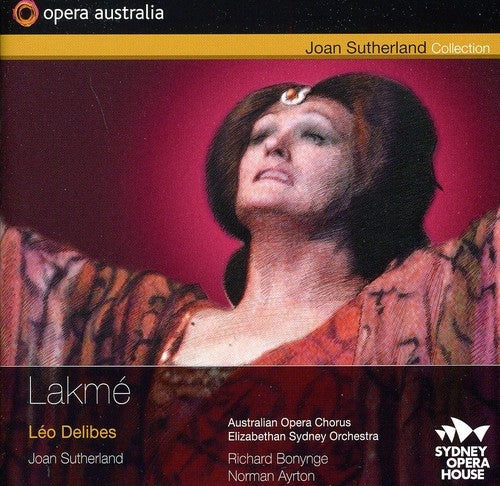
Delibes: Lakme / Bonynge, Sutherland, Tourangeau, Raisbeck, Pringle
CD$24.99$18.99Opera Australia
Jul 12, 2011OPOZ56012CD -

Delibes: Coppélia, La Source / Mogrelia, Slovak Rso
$29.99CDNaxos
Dec 13, 19958553356-57 -
 On Sale
Delibes & Minkus: La Source / Kessels, Paris National Opera Ballet & Orchestra
Blu-Ray$34.99$17.49Naxos AudioVisual
Apr 08, 2022NBD0145V -

Delibes: Coppélia / Royal Ballet, Covent Garden
$34.99DVDOpus Arte
Nov 01, 2001OA 0824 D -
![Prokofiev, Mahler: The Art of Roberto Bolle / Bolle, The Royal Ballet [Blu-Ray]](//arkivmusic.com/cdn/shop/products/0398645_the-arte-of-roberto-bolle-br.jpg?v=1656564836&width=800)
Prokofiev, Mahler: The Art of Roberto Bolle / Bolle, The Royal Ballet [Blu-Ray]
$58.99Opus Arte
Jun 25, 2021OA BD7224BD -
![Prokofiev, Mahler: The Art of Roberto Bolle / Bolle, The Royal Ballet [DVD]](//arkivmusic.com/cdn/shop/products/0398643_the-arte-of-roberto-bolle.jpg?v=1656564741&width=800)
Prokofiev, Mahler: The Art of Roberto Bolle / Bolle, The Royal Ballet [DVD]
$39.99Opus Arte
Jun 25, 2021OA 1233BD -
![]()

-
![]()

-

Delibes: Coppelia / Paris Opera Ballet
$34.99DVDOpus Arte
Nov 15, 2011OA 1061D -
![]()

-
![]()

-
 On Sale
Delibes: Sylvia / Royal Ballet
DVD$34.99$26.99Opus Arte
Jan 29, 2008OA 0986D -
![]()

-
![]()

-

Chopin: Les Sylphides; Delibes, Tchaikovsky / Ormandy
$17.99CDSony Masterworks
Jun 29, 2007SONY46550

La Divina - The Best of Maria Callas


Delibes: Ballet Suites / Jarvi, Royal Scottish National Orchestra
Neeme Järvi returns to the Royal Scottish National Orchestra for a dazzling album of suites from the ballets Sylvia, La Source, and Coppélia by Delibes. Born into a musical family, Delibes enrolled at the Paris Conservatoire aged twelve, studying under several professors including Adolphe Adam. He spent the 1850s and early 1860s composing light operettas and working as a church organist, before achieving public recognition for his music for the ballet La Source in 1866. His later ballets Coppélia and Sylvia were key works in the development of modern ballet, giving the music much greater importance than was previously the case. Typical of the period, the plots for these ballets are obscure, convoluted, and complex, but it’s certainly Delibes’s talent for lyrical melody and musical expression of a mood or feeling that elevates all three of these scores above their contemporaries – indeed Coppélia went on to become the most frequently performed ballet at the Paris Opéra. Delibes was at the forefront of creating orchestral suites from his ballet music (much to the envy of Tchaikovsky, among others), and thus were indeed envisaged to be performed without staging or dancers. On this album Neeme Järvi adds several additional movements to expand upon the suites which appeared in Delibes’s lifetime.


Delibes: Lakme


Delibes: Coppelia / The Royal Ballet [blu-ray]
Also available on standard DVD
Toy maker Dr. Coppelius (Gary Avis) seems to have a beautiful young woman in his house: Coppelia (Ashley Dean), who sits and reads on his balcony. Franz (Vadim Muntagirov) and his vellow young villagers are curious about her and how she ignores them all. Franz’s fiancée Swanilda (Marianela Nunez) is not pleased by Franz’s interest in another woman, but equally curious. When Dr. Coppelius goes to the local tavern, the young villagers slip into his house to introduce themselves to the strangely silent young woman but are met with a house full of mechanical dolls and, seemingly, magic… A classic returns to The Royal Ballet repertory with Ninette de Valois’ charming and funny Coppelia- a story of love, mischief and mechanical dolls. The intricate choreography is set to Delibes’ delightful score and shows off the technical precision and comedic timing of the whole Company. Osbert Lancaster’s designs bring a colorful storybook world to life in this Christmas treat for the whole family.
![Delibes: Coppelia / The Royal Ballet [blu-ray]](http://arkivmusic.com/cdn/shop/files/3856957-2602111.jpg?v=1765561905&width=800)


Delibes: Lakme / Pichon, Pygmalion
Premiered in 1883, 'Lakmé' remains one of the most popular of all French operas. Reflecting contemporary tastes, the original source material presented a tragic liaison between a French officer and a Tahitian woman on a Pacific island, but Delibes moved the location to British-ruled India where the two central characters are torn between passion and loyalty, and assailed by a fanatical religious leader. For this opera Delibes wrote music of indelible beauty, including the much-loved ‘Flower Duet’ and ‘Bell Song’.


Delibes & Maillot: COPPEL-I.A / Les Ballets de Monte Carlo
While love is breaking into the lives of two young people, an artificial being will challenge what they believed they knew about it…
Revisiting this classic of the Romantic repertoire, Jean-Christophe Maillot gives us, with an original musical score, a reflection on the search for the ideal partner in a technologically advanced society. Is it still the flesh and blood being with which we are familiar or a different being, making us question our allegiance to the human race?


Les Nuits de Paris - Dance Music from Folies Bergère to Opéra / Roth, Les Siècles
The dance permeated every layer of Romantic society. From popular dance halls to courtly salons, people showed their public face, enjoyed themselves and met one another in waltz time or to the rhythms of the quadrille or the polka. At the same time, ballet gained unprecedented fame on the stage of the Paris Opéra. The music that accompanied this frantic round in France has long been neglected, whereas the Viennese have never ceased to celebrate their waltzes. Under the expert baton of François-Xavier Roth, the orchestra Les Siècles has set out to rediscover this French repertory using historical instruments. Their album explores the output of both established composers – Camille Saint-Saëns, Ambroise Thomas, Charles Gounod, Jules Massenet – and their colleagues who specialized in Terpsichorean entertainment, including Philippe Musard, Isaac Strauss, Émile Waldteufel and Hervé.
REVIEWS:
Beautifully recorded and with Bru Zane’s customary excellent booklet notes, this is a disc to delight Francophiles, especially sweet-toothed ones like myself.
-- Gramophone
There is a blowsy joie de vivre in these performances by Roth’s French Orchestra Les Siecles that is hard to resist.
-- The Sunday Times (UK)
It’s all very French, and presented with great flair and warmth by Roth and his orchestra.
-- The Guardian (UK)

Delibes - Minkus: La source, ou Naïla

Delibes: Sylvia; Saint-saéns: Henry Viii / Mogrelia, Et Al


Delibes: Sylvia, Coppelia / Martin West, San Francisco Ballet Orchestra
DELIBES Sylvia: Suite. Coppélia: Suite • Martin West, cond; San Francisco Ballet O • REFERENCE RECORDINGS 125 (73: 06)
Reference Recordings has always been a company with impeccable audiophile credentials. It is therefore hardly surprising that it has rerecorded a substantial number of Mercury’s most famous sonic showpieces (including Ottorino Respighi’s Church Windows, Aaron Copland’s Third Symphony, and H. Owen Reed’s La Fiesta Mexicana ). Now, Keith Johnson and the excellent Reference Recordings team are entering the world of ballet with an ambitious recording of extended suites from Léo Delibes’s Sylvia and Coppélia . With recordings led by Antal Doráti, who was arguably the greatest ballet specialist ever, Mercury had a formidable reputation in this area. Doráti’s complete Tchaikovsky ballets are justly legendary in the recording and ballet fields. Unfortunately, only his second version of The Nutcracker is available in stereo. Mercury’s complete Sylvia (conducted by Anatole Fistoulari with the London Symphony Orchestra) and Coppélia (with Doráti conducting the Minneapolis Symphony Orchestra) are equally good from a sonic and performance standpoint. So, aside from the fact that the Mercurys are complete and these are extended suites, Doráti and Fistoulari establish the performance standard that Martin West and the San Francisco Ballet Orchestra must meet.
The difference in the performances is immediately apparent from the beginning of Sylvia ’s prelude. Fistoulari is more expansive and West is decidedly smaller in scale. The fact that the imposing Sylvia prelude is almost immediately followed by the popular and exciting “Les Chassereuses” with its flamboyant horn calls is a definite weakness in the structure of the suite, as opposed to the complete ballet. Again, Fistoulari is more explosively exuberant. West does hold his own in the massive final apotheosis, aided by the always-formidable Reference Recordings bass drum. West is uniformly excellent in Coppélia , but Doráti’s rhythmic precision and intensity with very fast tempos produce an electrifying musical experience that is not likely to be matched. In comparison, West (and everyone else) sounds relatively sedate, almost flaccid. On the other hand, no one could probably dance to some of Doráti’s tempos, and the San Francisco Ballet Orchestra sounds more polished than the Minneapolis Symphony Orchestra (especially the coarse brass). That is not the case with the London Symphony Orchestra in Sylvia. West is not as exciting as Doráti and Fistoulari, but there is plenty of beautiful music-making here. Doráti and Fistoulari are more symphonic as they push tempos to the extreme, and West is more suitable for the dance. That makes it your call in an audio CD with no dancers. I prefer the Mercurys.
From a purely sonic standpoint, the Reference Recordings and Mercury CDs are both excellent, but qualitatively very different. The Mercurys are much hotter on the high end (some would call them inappropriately bright). Johnson tilts the sonic spectrum to the low midrange and bass. The Reference Recordings bass drum has massive impact, but some (not me) will probably say that it is too prominent in relation to the rest of the orchestra. The Reference strings are silky sweet, and I have never heard a triangle reproduced with such clarity and focus. The famous saxophone solo in the “Barcarole” must be heard to be believed. The instrumental texture is amazing as the soloist is shamelessly spotlighted in contrast to the Mercury player, who clearly blends with the rest of the orchestra. Both recordings have plenty of fine inner detail. This CD was recorded at Skywalker Sound.
Ultimately, your choice may come down to whether you prefer the suites or the complete ballets. These suites are very good, but they do omit a lot of excellent music. The complete ballets as conducted by Doráti and Fistoulari make it very clear why even Tchaikovsky was intimidated by these scores. Still, you are not likely to hear a better-recorded performance of these extended suites. The best solution for lovers of this music will probably be to get this recording and the Mercury complete ballets.
FANFARE: Arthur Lintgen


Delibes: Lakme / Bonynge, Sutherland, Tourangeau, Raisbeck, Pringle
DELIBES Lakmé • Richard Bonynge, cond; Joan Sutherland ( Lakmé ); Isobel Buchanan ( Ellen ); Jennifer Berminghan ( Rose ); Huguette Tourangeau ( Mallika ); Rosina Raisbeck ( Miss Bentson ); Henri Wilden ( Gérald ); Graeme Ewer ( Hadji ); John Pringle ( Frédérick ); Clifford Grant ( Nilakantha ); Australian Op Ch; Elizabethan Sydney O • OPERA AUSTRALIA OPOZ56012 (2 CDs: 149:05) Live: Sydney 8/18/1976
In 1976, Australian Opera (now known as Opera Australia), with the help of the Australian Broadcasting Company, began filming operas and concerts for broadcast on television and radio. Many of these productions were eventually released for home video. It was believed that three productions featuring Joan Sutherland, Lakmé, Lucrezia Borgia , and Norma , were lost. They were eventually found after a six-year search but, according to the accompanying CD booklet, were in terrible shape because of poor storage. The booklet recounts the difficult process of preserving and restoring these tapes.
Had Opera Australia not recounted the history of this recording, I would not have known that there ever was a problem of any kind. The sound is excellent for a live recording, though somewhat boxy, lacking in atmosphere. The notes refer to “blank gaps resulting from countless audio drop-outs” for which matching material had to be found and spliced in. The restoration, as far as I am concerned, is completely successful.
The question then arises, was all that effort worthwhile? If we lacked a recorded memorial of Sutherland’s Lakmé, or if we had only an inferior recording of Sutherland in the role, then this recording would be an invaluable addition to the catalog.
Opera Australia’s production is generally a very good one. It has two outstanding portrayals. Sutherland is very good as Lakmé, coping easily with the difficult Bell Song in act II, as one would expect. It must be admitted, however, that she neither sounds nor looks (as the booklet picture shows) like a girl of the age she is portraying. Clifford Grant is excellent as Nilakantha, his dark, steady voice making a perfect fit for the role. Henri Wilden is an ardent and believable Gérald, although his voice lacks the elegance and ease of his recorded competition. John Pringle is a sympathetic, steady Frédérick, and the minor roles are taken adequately (Rosina Raisbeck) or better (everyone else).
Sutherland recorded Lakmé for Decca in 1967. She was in steadier voice at the time of the Decca recording than she was nine years later for Opera Australia, though the difference is not substantial and much of it could be the difference between studio and live recordings. In almost every other role, I prefer the Decca cast to the Opera Australia one. Alain Vanzo sings with great beauty of tone and fervor in a totally successful portrayal of Gérald. I prefer Jane Berbié (Decca) as Mallika, where she sounds more youthful and fresher of voice than Opera Australia’s Huguette Tourangeau, familiar from many Sutherland recordings. Honors are evenly split between Gabriel Bacquier (Decca) and Clifford Grant as Nilakantha and between Claud Calès (Decca) and John Pringle as Frédérick. Monica Sinclair is a definite improvement over Rosina Raisbeck as Miss Bentson.
There is little evidence that Richard Bonynge’s conception of the opera had changed over the nine years between recordings, although he does seem a bit surer in his handling of the orchestra in the Opera Australia performance. Orchestra and chorus perform very well. The sonic balance of the present recording places the orchestra front and center though in no way overpowering the singers, while the Decca recording has a more-balanced perspective.
In both recordings, Bonynge uses an edition of the score in which some dialogue is set as recitative. Joel Kasow discussed a similar edition used by Michel Plasson in his recording ( Fanfare 22:4). The live recording contains some cuts; perhaps these are the result of damage to the original tape that could not be restored. The audience is generally quiet except for applause at all the expected places.
In a bit of sloppy editing, the CD booklet omits the track list and timings for act III. There is no libretto, just track list and timings for the first two acts, along with a synopsis of the action and an article on the restoration process in English, French, and German.
This is unlikely to be anyone’s first choice for a recording of Lakmé . However, for those who enjoy live-performance recordings, this set can be a valuable supplement to one of the studio recordings.
FANFARE: Ron Salemi

Delibes: Coppélia, La Source / Mogrelia, Slovak Rso


Delibes & Minkus: La Source / Kessels, Paris National Opera Ballet & Orchestra
Review:
At last! While we have plenty of filmed productions of Coppélia to watch and enjoy – whether vintage, bang up to date or downright wacky – and a very good one of Sylvia, this new release finally brings the first of Delibes’s three ballets, La source, to a wide audience via Blu-ray and DVD.
The usual explanation for La source’s historical neglect has been that the contribution of Delibes’s co-composer Ludwig Minkus diminished the overall quality of the score. But that suggestion isn’t an adequate one – or even necessarily accurate. In the first place, we need to be clear that “co-composers” doesn’t mean that each of the score’s individual numbers was a sort of high-quality-Delibes-watered-down-by-workmanlike-Minkus hybrid. In fact, the way in which the collaborative process worked was a very practical one – even if we have no idea why it was adopted – with each man allocated responsibility for different parts of the score. Minkus was entrusted with Act 1 and the second scene of Act 3, while Delibes was responsible for Act 2 and Act 3’s first scene. That turned out, in practice, to be a pretty even split, for Minkus ended up providing about 45 minutes worth of music and Delibes penned about 44[.]
It is certainly true that there are differences between the two men’s scores. To some extent, those derive from the mundanely practical point that each composer was writing music for very different sections of the story. Minkus’s focus in Act 1 was on establishing the ballet’s various characters and generally setting the scene, while the finale to Act 3 offered few opportunities as it gave him only six minutes to wrap up the whole drama. Delibes, on the other hand, was tasked with creating the music underpinning the more glamorous jollifications at the khan’s court, which allowed him to concentrate on writing livelier material that was characterised by far more colour, glitter and exotic sensuality.
There is, however, a second and somewhat more fundamental explanation for the perceived contrasts between the two composers’ scores, for Minkus and Delibes had rather different conceptions of what writing music for the ballet actually meant. The former was a composer of the old school who, as Ivor Guest wrote in his booklet essay for the aforementioned Bonynge CD, “specialised in composing music for the ballet, a field not highly regarded in musical circles but which nonetheless demanded a special gift to satisfy the ballet-master’s requirements – to produce melodious numbers for the dances and suitably descriptive passages for the action, and above all to deliver to a deadline”. That has led some critics to perceive Minkus as little more than a hack journeyman who churned out unmemorable material on demand, even though audiences who have come to appreciate the manner in which his skilfully-wrought scores underpin such popular ballets as Don Quixote and La bayadère might beg to differ. In reality, his music was in no way “inferior” to that of the next generation of ballet composers: it simply aimed to achieve a very different - but certainly no less legitimate – musical and dramatic purpose. The first embodiment of that subsequent generation, Delibes himself, was, on the other hand, a composer whose conception of ballet was developing into something rather more ambitious. No less a figure than Tchaikovsky, the originator of the modern “symphonic” style of ballet score, regarded Sylvia as “the first ballet in which the music constitutes not just the main, but the sole interest. What charm, what grace, what melodic, rhythmic and harmonic richness. I was ashamed. If I had known this music earlier, then of course I would not have written Swan Lake”.
It is far too easy, in fact, to assert glibly that any contrasts between the two composers’ contributions are necessarily qualitative in nature. Indeed, when listened to blind and without foreknowledge of who actually composed what, the score of La source – skilfully edited and occasionally augmented here by Marc-Olivier Dupin - actually emerges as a pretty seamless whole.
In reality, there were two other much more significant causes of the ballet’s failure to maintain a long-term place in the repertoire. In the first case, its plot was undeniably involved, and it is notable that the production under consideration omits several of its complicating plotlines. Moreover, the fact that there are no less than three central female figures and that easily confused names were selected for some of the central characters (Naïla/Nouredda, Djémil/Dadjé) does not help. The inconsistency of some of the participants’ on-stage motivations can also be puzzling from time to time – though, in the absence of any other modern production with which to compare it, that may be a feature unique to this particular one.
The second legitimate reason for La source’s relatively rapid descent into obscurity is simply accidental. It successfully maintained its place in the repertoire for a decade and there is no reason to doubt that regular revivals might subsequently have been mounted. However, a disastrous fire in 1873 destroyed the drawings, models and plans on which the original production had been based and, rather than recreate them from scratch, it no doubt seemed easier to ballet impresarios at the time to move on to different projects.
This new Blu-ray/DVD release preserves a new production of the ballet dating from almost 150 years after its premiere. Conservatively choreographed by Jean-Guillaume Bart for the Paris Opera Ballet, it follows the original story’s broad outlines and uses much of the Minkus/Delibes score. Booklet notes author Laure Guilbert is nevertheless at pains to stress that this production is in no way a “reconstruction” of the original but instead has a character and identity of its own. Those last words might be enough to strike fear in the heart of traditionalist ballet fans, but in reality the French choreographer (gushingly described by Ms. Guilbert as a man who “fervently cultivates his attachment to the classical universe… a lover of dance who has transformed [it] into an odyssey throughout the near- and far-flung realms of the art”) is owed a real debt of gratitude for his achievement in returning La source to the stage. There are, it’s true, a few significant problem areas that would have benefited from attention. In the case of the plot, Nouredda’s motivation and reactions as she experiences her character’s trials and tribulations can be somewhat opaque or even downright puzzling. In addition, the stage production itself is visually rather disconcerting. There is, to my own eyes at least, a jarring mismatch between Christian Lacroix’s detailed and often gorgeously elaborate costumes and Éric Ruf’s essentially impressionistic set designs. The latter are highly imaginative and attractive in their own right (especially a set of prominent and exquisitely lit ropes, lowered over the stage from the flies, that represent trees) but they are clearly not intended as any sort of realistic depiction of the settings and that doesn’t gel with the detailed, elaborate and convincingly “realistic” clothing sported by the dancers. Neither element can be described as wrong in itself, but another producer might have chosen to integrate them more effectively.
The quality of the dancing, meanwhile, is generally high, with the women, in particular, demonstrating confident assurance in their own technical skills. Ludmila Pagliero as Naïla performs with delicacy and an appropriate sense of otherworldliness; she presumably impressed not only the theatre audience but the company’s management, too, as within a year of this performance she had been promoted to the top rank of danseuse étoile. Meanwhile, the nature of her role as the princess Nouredda means that the other leading female dancer, Isabelle Ciaravola, tends to spend a disproportionate amount of time on stage looking depressed and generally mopey – although there are also moments, as already noted, when she looks bizarrely happy even though her circumstances are at their worst. If her acting is somewhat questionable, the same cannot be said, however, of Ms. Ciaravola’s dancing which is, invariably, both sensitively and often rather beautifully delivered. Of the men, Karl Paquette combines sheer energy with attention to detail in a winning performance that suffers only from an uncharacteristically drab and featureless costume, little suited, in my opinion, to the hero of a classical ballet. The role of Nouredda’s brother Mozdock, concerned about her only as far as she serves his own political ambitions, is taken by Christophe Duquenne who delivers an effectively villainous turn while leading his energetic and well-drilled soldiers in several lively numbers. Dancing as the elf Zaël, Mathias Heymann is the audience’s favourite as he leaps his way enthusiastically and repeatedly across the stage, creating a genuine character out of his role. The dancer portraying the libidinous khan, Alexis Renaud, makes the most of his opportunities but does not create as much of an impression as the other men. The rest of the company make a very positive contribution, to the extent that I thought that the numbers in which the primary focus was on the corps de ballet were among the most effectively delivered in the whole performance.
On the technical side, I was particularly impressed by the effectively realised stage lighting which has been very well captured on film. The sound, as relayed on this recording, is also more than merely acceptable and allows us to appreciate plenty of felicitous detail from the orchestra, led on this occasion by Koen Kessels who will be known to many as music director of the Royal Ballet. Meanwhile, the experienced François Roussillon’s film direction focuses our attention to everything that we need to see while not distracting us unnecessarily or drawing undue attention to itself.
This is an important release for balletomanes. It is, I think, unlikely that there will be an alternative version of La source any time soon...I repeat, therefore, my original reaction to the release of this new and well-produced Blu-ray disc – at last!
Rob Maynard


Delibes: Coppélia / Royal Ballet, Covent Garden
Extra features include
• Historic 10-minute film ‘The Ballet Moves’
• Illustrated biography of Sir Osbert Lancaster (1908-86)
• Introduction to the original broadcast by Deborah Bull
R E V I E W S:
‘Now we have this sparkling Ballet on DVD, beautifully filmed and with first class orchestral sound, richly played under Nicolae Moldoveanu. Luke Heydon’s Doctor Coppelius and Leana Palmer’s Coppelia could not be bettered. This DVD is a practical tribute to Madam.’ -- Musical Opinion
‘Fabulously entertaining... Buoyant performances.’ -- San Francisco Chronicle
‘Excellence in technical television production quality…drawing the viewer into the story and recreating the emotional intensity of the theatrical experience.’ -- IMZ Dance Screen 2000
‘DVD benefits the art of the dance as well. When I have watched ballet on television the music is a distant and faint accompaniment. Here we actually hear the delights of Delibes’ ever-popular score. It’s a feast for the eye too, with the magical story of the enchanted doll, and Osbert Lancaster’s witty and colourful designs, benefiting from DVD’s clarity.’ -- Birmingham Evening Mail
WINNER of the IMZ Dance Screen 2000 Award for Stage/Studio recording
WINNER - Penguin Guide Rosette

![Prokofiev, Mahler: The Art of Roberto Bolle / Bolle, The Royal Ballet [Blu-Ray]](http://arkivmusic.com/cdn/shop/products/0398645_the-arte-of-roberto-bolle-br.jpg?v=1656564836&width=1200)
Prokofiev, Mahler: The Art of Roberto Bolle / Bolle, The Royal Ballet [Blu-Ray]
This set of three films provides an outstanding showcase for the artistry of dancer Roberto Bolle, a ballet star of our own time. For the 75th anniversary celebrations of The Royal Ballet, Frederick Ashton’s Sylvia was restored to the splendor of its elegant and opulent three-act form. Casting Bolle as Aminta alongside Darcey Bussell in the title role, this is a wonderful showcase for virtuosity, invention and classical beauty. By contrast Roland Petit’s Notre-Dame de Paris exudes modernity, with its cool choreography and chic costumes by Yves Saint-Laurent. Here Bolle’s tragic Quasimodo, by turns fierce and tender, dances opposite Natalia Osipova as Esmeralda. In a second production from La Scala, the Ballet Corp’s traditional Grand Gala aligns with Milan’s tenure as host city of EXPO 2015, and Roberto Bolle, as one of La Scala’s étoiles, plays a central role in the stunning programme of excerpts. He performs the pas de deux from yet another Petit masterwork, dancing Don José to Polina Semionova’s Carmen, along with the mesmerizing contemporary solo Prototype.
![Prokofiev, Mahler: The Art of Roberto Bolle / Bolle, The Royal Ballet [Blu-Ray]](http://arkivmusic.com/cdn/shop/products/0398645_the-arte-of-roberto-bolle-br.jpg?v=1656564836&width=800)
![Prokofiev, Mahler: The Art of Roberto Bolle / Bolle, The Royal Ballet [DVD]](http://arkivmusic.com/cdn/shop/products/0398643_the-arte-of-roberto-bolle.jpg?v=1656564741&width=1200)
Prokofiev, Mahler: The Art of Roberto Bolle / Bolle, The Royal Ballet [DVD]
This set of three films provides an outstanding showcase for the artistry of dancer Roberto Bolle, a ballet star of our own time. For the 75th anniversary celebrations of The Royal Ballet, Frederick Ashton’s Sylvia was restored to the splendor of its elegant and opulent three-act form. Casting Bolle as Aminta alongside Darcey Bussell in the title role, this is a wonderful showcase for virtuosity, invention and classical beauty. By contrast Roland Petit’s Notre-Dame de Paris exudes modernity, with its cool choreography and chic costumes by Yves Saint-Laurent. Here Bolle’s tragic Quasimodo, by turns fierce and tender, dances opposite Natalia Osipova as Esmeralda. In a second production from La Scala, the Ballet Corp’s traditional Grand Gala aligns with Milan’s tenure as host city of EXPO 2015, and Roberto Bolle, as one of La Scala’s étoiles, plays a central role in the stunning programme of excerpts. He performs the pas de deux from yet another Petit masterwork, dancing Don José to Polina Semionova’s Carmen, along with the mesmerizing contemporary solo Prototype.
![Prokofiev, Mahler: The Art of Roberto Bolle / Bolle, The Royal Ballet [DVD]](http://arkivmusic.com/cdn/shop/products/0398643_the-arte-of-roberto-bolle.jpg?v=1656564741&width=800)


Delibes: Coppelia / Paris Opera Ballet
Swanilda – Dorothée Gilbert
Frantz – Mathias Heymann
Coppélius – José Martinez
Spalanzani – Fabrice Bourgeois
Paris National Opera Ballet
Orchestre Colonne
Koen Kessels, conductor
Patrice Bart, choreographer (after Arthur Saint-Léon)
Ezio Toffolutti, set and costume design
Yves Bernard, lighting design
Recorded live from the Palais Garnier, March 2011
Bonus:
- Cast Gallery
- Documentary – The Mystery of Coppélia
Picture format: NTSC 16:9 anamorphic
Sound format: LPCM Stereo 2.0 / DTS 5.1
Region code: 0 (worldwide)
Subtitles (bonus): English, French, German, Spanish
Running time: 83 mins (ballet) + 30 mins (bonus)
No. of DVDs: 1 (DVD 9)
R E V I E W:
To me Delibes’ Coppélia, like Tchaikovsky’s Nutcracker, stands amongst the very best ballets for children’s entertainment at Christmas. The world of make-believe weaves a simple yet logical plot with magical overtones, memorable music and colourful characters placed within vibrant settings.
On this DVD, excellent performances are provided by the quartet of principal dancers. The corps de ballet contributes delightfully in well-lit pools of light. Their routines are traditional and much as we would expect. Upstage in comparative gloom are incidental villagers going about their daily business to add a nice air of authenticity. The costumes are elegant and I liked the Dr Caligari style presentation of Coppélius. Kessels sets a traditional pace much more in keeping with the spirit of the work rather than the majestic yet deliberately ponderous pace set by Mark Elder in his Covent Garden recording.
This said, the French choreographer, Bart has decided to consider the psychological undertones of Coppélius and assemble a darker side to the illusionist to provide a love triangle between Swanilda, Frantz and Coppélius rather than the traditional development of the ballet. We have no doll sitting in an upstairs window that maddens Swanilda and whose jealousy provides a humorous situation to feed the development of plot. Instead Coppélius, very much in evidence in Act I for no apparent reason, provides Frantz with a book in which the beautiful doll is displayed. Later, in his house a large book is opened containing a life-size Swanilda/Coppelia.
In Bart’s production the dancing is delightful and the performance has pace yet Delibes’ orchestral picture does not match the plot and does not always fit. To complement the ballet’s dark mood, a sombre street-scene at dusk is provided throughout an Act I which is atmospheric with distorted rising perspectives reminiscent of a 1920s German expressionism setting. The impeding gloom is an improvement over the flat appearance of Osbert Lancaster’s Covent Garden setting in 2000. Here, an opportunity has been lost in not providing a visual contrast between the village scene and the mysterious interior of Coppélius’s house. To dance the cheery and colourful mazurka without a warmer mood of lighting is disappointing. We are told that Bart introduces some orchestral sections from Lakmé and The King has Spoken to help carry the darker atmosphere. Although the additional music does not detract it does seem unnecessary.
The television production supports our interest with well-chosen camera angles and clear focus on the action. It must be said that the production’s visual story was not always easy to follow even when you know the traditional plot.
The DVD in addition to provision of the usual Chapters includes an interesting documentary with interviews of the key dancers, director and choreographer who explain their interpretations. Subtitles are available in English, German and Spanish.
-- Raymond J Walker, MusicWeb International


Delibes: Sylvia / Royal Ballet
Sylvia was first produced at the Palais Garnier, Paris on 14 June 1876, four years after Delibes other big success, Coppélia. Of Delibes’s Sylvia music, Tchaikovsky, who saw the ballet in Vienna in 1877, enthused, “It is the first ballet in which the music constitutes not just the main but the only interest. What charm and elegance, what riches in the melody, the rhythm, the harmony. I was ashamed. If I had known this music before, I would not have written Swan Lake.”. Praise indeed, but Tchaikovsky is being very hard on the other elements of this charming ballet based on classical mythology.
Frederick Ashton choreographed the production, featured on this DVD, first performed at the Royal Opera House, Covent Garden on 3 September 1952. Ashton was not completely satisfied with it, however, and it was put aside. The production languished for forty years or so; and by now Ashton had died. The realization and staging of this 2005 production is the work of Christopher Newton who had danced under the direction of Ashton and was aware of the sort of refinements the great choreographer had in mind. Newton is interviewed about all this in the interviews before Act III of the ballet.
The sets and lighting are sumptuous and atmospheric, the costumes gorgeous and colourful. Delibes’ music is full of melody, one memorable tune succeeding another right through the ballet. Darcey Bussell enchants as the warrior nymph, Sylvia; arrogant in her taunting of the statue of the god Eros who repays her by shooting her with an arrow of love so that she falls for the enamored, shepherd, Aminta (Roberto Bolle). She is gracefully athletic especially in her dances with her two male leads: Bolle and Thiago Soares as the evil Orion who lusts after Sylvia and kidnaps the nymph, carrying her off to his island lair. Here, in Act II Darcey has to dance seductively to divert the attentions of Orion, to make him drunk so that she might escape - an escape made possible by a disguised Eros. Arguably Bussell does not have the figure for seductive dancing, she is also too graceful and stately, so the dance is sinuous rather than seductive. The two male leads are strong and acrobatic, displaying tremendous leaps. The corps de ballet impress throughout with beautiful ensemble dancing and the speciality dancers – the orientals in Act II and the goats in Act III - are quite charming.
The DVD includes interviews with Christopher Newton and Peter Farmer who added his special design talents to the original sets of Robin and Christopher Ironside. Before each act Darcy Bussell comments on the ballet and we see her and others in rehearsal and behind the scenes and between acts during the performance. Illustrated synopses of the action in each of the ballet’s three acts are also enclosed.
David Nice’s erudite note details Delibes music as applied to the dances and shows how the composer was influenced by Berlioz and Wagner. Elgar, as a young man, Nice reminds us, played the violin in a Birmingham performance of the Sylvia Suite and later conducted it himself. Moreover, Nice claims, Delibes’s broad ‘Bacchus’ theme, influenced Elgar’s First Pomp and Circumstance March.
A beautiful production of this charming ballet with a wonderfully melodic score by Delibes.
-- Ian Lace, MusicWeb International
Leo DELIBES (1836-1891)
Sylvia - ballet in three acts with choreography by Frederick Ashton (1876)
Sylvia … Darcey Bussell
Aminta … Roberto Bolle
Orion … Thiago Soares
Eros … Martin Harvey
Diana … Mara Galeazzi
The Royal Ballet
Orchestra of the Royal Opera House/Graham Bond
Rec. The Royal Opera House, Covent Garden, London, 1, 5 December 2005
FORMAT: All Formats
REGIONS: All Regions
PICTURE FORMAT: 16:9
LENGTH: 117 Mins
SOUND: DTS SURROUND 5.1 / LPCM STEREO
SUBTITLES: EN/FR/DE/ES/IT
NO OF DISCS: 1


