

Michael Gordon
43 products
-
![]()

-
![]()

-

Jacob: Chamber Music with Recorder
$19.99CDNaxos
Sep 28, 20108572364 -

Purnima - Music of Bang on a Can & Others / Rakhi Singh
$21.99CDCantaloupe Music
Nov 10, 2023CA21193 -
![]()

-
![]()

-

Gordon: Van Gogh / Alarm Will Sound
$18.99CDCantaloupe Music
Feb 12, 2008CA21044 -

Gordon: Trance / Icebreaker
$18.99CDCantaloupe Music
Jan 01, 2004CA21018 -
![]()

-
![]()

-

Gordon: Dystopia
$18.99CDCantaloupe Music
Feb 24, 2015CA21105 -

God's Trombones / Gloriae Dei Cantores
$18.99CDGloriae Dei Cantores
Feb 02, 2018GDCD132 -
![]()

-
![]()

-

Getty: Usher House / Foster, Gulbenkian Orchestra
$21.99SACDPENTATONE
Jun 25, 2013PTC5186451 -
![]()

-
![]()

-

Getty: The White Election / Delan, Steinegger
$21.99SACDPENTATONE
Apr 28, 2009PTC5186054 -
![]()

-
![]()

-

Getty: Piano Pieces / Conrad Tao
$21.99SACDPENTATONE
Feb 26, 2013PTC5186505 -
![]()

-
![]()

-

Crosse: Works for Orchestra & Violin / BBC Symphony Orchestra, Melos Ensemble, Budapest Symphony
$16.99CDLyrita
Jun 02, 2017REAM1133 -
![]()

-
![]()

-

Michael Gordon: 8 / Cello Octet Amsterdam
$21.99CDCantaloupe Music
Apr 16, 2021CA21159 -
![]()

-
![]()

-

Gordon: Acquanetta / Candillari, Bang on a Can
$21.99CDCantaloupe Music
Jul 19, 2019CA21150 -
![]()

-
![]()

-

Getty: The Canterville Ghost / Foremny, Oper Leipzig
$21.99SACDPENTATONE
Jun 16, 2017PTC5186541 -
![]()

-
![]()

-
 On Sale
Gordon: Anonymous Man / Nally, The Crossing
CD$21.99$16.99Cantaloupe Music
Mar 20, 2020CA21154A -
![]()

-
![]()

-
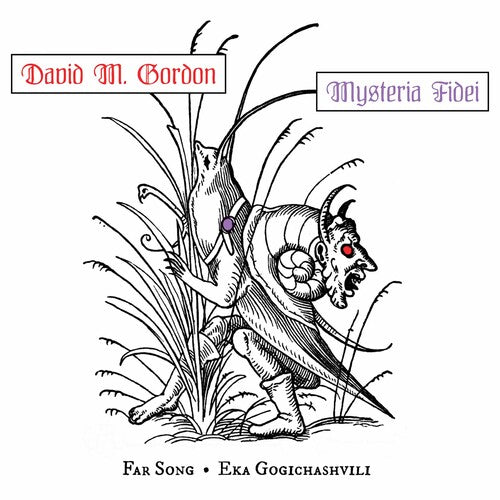
Gordon: Mysteria Fidei / Gogichashvili, Far Song
$16.99CDInnova Recordings
Nov 13, 2020INN049 -
![]()

-
![]()

-

Gordon: Clouded Yellow / Kronos Quartet
$18.99CDCantaloupe Music
May 04, 2018CA21140 -
![]()

-
![]()

-
 On Sale
Cello Libris / Moldrup, Copenhagen Philharmonic, Mogens Dahl Chamber Choir
CD$21.99$10.99BIS
Apr 03, 2020BIS-2330 -
![]()

-
![]()

-

Getty: Beauty Come Dancing / Gaffigan, Netherlands Radio Philharmonic & Choir
$21.99SACDPENTATONE
Aug 17, 2018PTC5186621


Jacob: Chamber Music with Recorder


Purnima - Music of Bang on a Can & Others / Rakhi Singh
Rakhi Singh is a violinist, music director, curator and composer based in the UK. In 2016 she co-founded Manchester Collective, a progressive group that the BBC describes as "transforming all our perceptions of what a classical music group can be."
"Sabkha" is the first single from Singh's full-length debut album Purnima (coming October 27) — a stirring stream-of-consciousness foray into signal processing and multi-tracking for violin, with Singh's own wordless vocals adding to the hypnotic mood. Purnima, which translates literally from the Sanskrit as "she who is the full moon,” is not only Singh's middle name — it's also a source of spiritual inspiration that has guided her own musical journey on her chosen instrument. Interpreting works by composers Alex Groves ("Trace I"), Emily Hall ("Outshifts"), Julia Wolfe ("LAD") and Michael Gordon ("Light Is Calling"), and augmenting them with unearthly electronic and electro-acoustic textures, Singh creates a haunting dreamworld of melody and sound that doesn't quite emit a completely "classical" aura — but instead suggests an altogether new one.


Gordon: Van Gogh / Alarm Will Sound
All of which leads on neatly to Gordon's latest release, a portrait opera of sorts, drawn using texts taken from proto-expressionist painter Vincent van Gogh's letters to his brother Theo. Gordon's predilection for suspending sustained vocal lines above pulsing, often visceral loops and patterns is certainly reminiscent of the Dutch minimalist, while his emphasis on developing two- or three-part textures from single lines evokes Frederic Rzewski.
But the most striking feature of this dark, desolate and often disturbing work is its manifold use of repetition as a means of evoking the kind of madness which so plagued van Gogh's life Like the Dutch artist's fragile mental condition, Gordon's music often appears to be on the edge of chaos but never quite looses control. Indeed, compared with earlier works (such as the wonderfully insane Sunshine ofyour Love) Gordon treats this harrowing subject with more than a modicum of restraint. One is often reminded in the music of van Gogh's arresting description, set towards the end of the work, of "a vague figure fighting like the devil in the midst of the heat".
-- Gramophone [6/2008]


Gordon: Trance / Icebreaker
Michael Gordon, co-founder of Bang on a Can and also featured on Nonesuch (Light Is Calling, Weather) and Cantaloupe (Decasia), wrote the 52 minute 'Trance' for Icebreaker in 1995. Called 'a minimalist classic' by The New York Times, 'Trance' is a kaleidoscope of pan-pipe melodies and provocative rhythms, and features Icrebreaker's aggressively virtuosic sound.


Gordon: Dystopia
Combining two of Michael Gordon’s most daring large-scale orchestral works, Dystopia documents the composer’s dream of not only stretching the capabilities of the modern symphony, but in his words, of “exploring the gray areas between harmony and dissonance.”On its own, the music of Dystopia paints a picture of one city’s future — in this case, the city of Los Angeles — that is frenzied, chaotic, dazzling, electric, and ultimately...loud.Gordon had discovered similar sensibilities in composing ‘Rewriting Beethoven’s Seventh Symphony’.Using one element from each of the original movements as a starting point, Gordon crafts a post-modern take on the master’s classical forms that managed both to mesmerize and scandalize the audience at Beethovenfest Bonn, who commissioned the work for its 2006 premiere.Taken together, both works re-imagine the 21st c. symphony as equally reverent of the past (if not also a bit irreverent), while envisioning, as an L.A. Times review of the Dystopia premiere put it, “a drunken fugue of the future.”


God's Trombones / Gloriae Dei Cantores
"My long-standing love affair with James Weldon Johnson's classic God's Trombones was sparked anew by this splendid 78 minute cantata and the tonally sumptuous recording the Gloria Dei forces have made of it. ... it is a major triumph for the Paraclete operation to have secured his (Gordon Myers) participation in this venture."
—John L. Hooker, Journal of the Association of Anglican Musicians
"Gloriae Dei Cantores again show their incredible versatility in moving easily from sections resembling Britten or Vaughan Williams to others resembling African-American spirituals."
—Mark Sedio, Cross Accent
The singing is top notch and the performances bloom with drama and gravity. Myers' voice is potent and exact and the choir inspired. This is a piece of music that deserves to be heard and preserved.
—C. Michael Bailey, All About Jazz


Getty: Usher House / Foster, Gulbenkian Orchestra
GETTY Usher House • Lawrence Foster, cond; Christian Elsner ( Poe ); Etienne Dupuis ( Roderick Usher ); Philip Ens ( Dr. Primus ); Lisa Delan ( Madeline Usher ); Gulbenkian O • PENTATONE 5186451(SACD: 67:05 Text and Translation)
I wanted to review this CD because I am enough of a Gordon Getty fan that I like to hear everything he has written, and I knew that this Poe story was famous for its atmosphere and that even Debussy was setting it to music when he died.
Imagine my surprise, then, to open the booklet and discover that Getty rewrote Poe’s story. The unnamed narrator/protagonist who visits Roderick Usher is now Poe himself. Roderick’s painful reaction to light and noise is downplayed. Madeline, who only appears in the hallway as a semi-ghostly apparition in the story, is now an “agent of redemption,” though she only moans and groans and doesn’t have any lines. The evil agent is now Dr. Primus, a character only spoken of (not by name) but never seen or heard in the Poe story.
Just so I could get a handle on this new adaptation, I went online and read Poe’s original story, which I had not seen before. As Getty points out, it is mostly mood: the first five of its 12 pages describe the bleakness and desolation of Usher house, its servants and inhabitants, before anything much ever happens. The original story’s plot is as follows:
The unnamed narrator rides on horseback to visit his old childhood friend Roderick Usher (no trains come near the place). Roderick is emaciated and nervous. Light of any kind annoys him, as well as sounds, with the sole exception of his own guitar playing, to which he accompanies himself with rotten old poems sung to his own made-up melodies. Apparently the House of Usher is somewhat but not entirely inbred, and both Roddy and his sister Madeline (fraternal twins) are the sole surviving heirs. Maddy, too, suffers from the nervous disorder, but not being as strong as Roddy her end seems a bit closer. The narrator only sees Maddy once, walking through the hallway. A few days later, and Roddy announces her demise. He has her placed in a coffin in the basement but doesn’t want to embalm or bury her right away, as he feels the family quack might be able to perform an autopsy and discover the cause of the nervous condition. A few days later, a dark and terrible storm engulfs the house. The narrator/Poe tries to calm Roddy down by reading him a story about a knight named Ethelred who barges into the domain of an old hermit, who appears to be protected by a dragon on his doorstep. Every noise mentioned in the story—the clang of sword on breastplate and the death throes of the dragon—seems to be heard by him from somewhere inside the house. Eventually Roddy tells the narrator that they had accidentally buried Maddy alive, that he has heard her trying to get out of the basement for a few days but that he didn’t have the nerve to go down and let her out. She finally appears at the doorway, bloody and emaciated, and falls on her brother before expiring. The shock makes Roddy expire too. Bye-bye to the House of Usher.
Aside from the plot changes, Usher House is now more than just a place where dusty old people read dusty old books. It has now become a repository of learning, a place where the family has “brought together tracts, monographs, manuscripts of the greatest interest and rarity,” with pride of place belonging “to our mediaeval archives….The whole house is designed for learning.” This is, indeed, a major change from the original story.
Unlike Plump Jack, Getty’s music here can stand on its own as a listening experience without the need to see the action. It is tonal but not “obviously” melodic; as the late Moondog (Louis Hardin) might have said, “I am considered avant-garde in rhythm but old-fashioned in harmony,” but Getty uses neighboring tonalities in a very creative manner, whereas Moondog did not. Moreover, the music morphs and develops in interesting ways.
Elsner, the tenor singing Poe, has a nice timbre but a persistent wobble, and his diction is only intermittently clear. Dupuis, our Usher, has a more solid voice but only slightly clearer diction. Both, however, present their characters well and they are fine musicians. There is a certain strophic character about the sung lines in the first scene, and the orchestration is exceedingly clever, supporting the voices or commenting on the drama in turn. When Roderick suggests having a ball, for instance, the rhythm changes to 3/4 time and a quirky waltz melody arises; when he talks of the landscape around the house as being desolate, the orchestra reflects this in both its melodic and timbral treatment. This sort of thing continues throughout the opera, the sign of an assured composer who understands his art and knows exactly how to morph and change the music, not only in such a way that it supports or echoes the drama but also to keep the listener on the edge of the seat. This is first-class music.
Then comes the first of several major deviations from Poe: Roderick refers to a book called Exon Domesday which is not in the original story. In this book, King Edward the Confessor ordered that Usher House be destroyed “stone from stone, and the stones cast in Usher Tarn.” Roderick’s father bought back the land, drained it, exhumed the stones, and brought them over to America to rebuild the house. (This does, however, seem like a lot of work when you could buy limestone cheaper over here. I doubt if there was any intuitive “learning” in the original stones.) Nevertheless, Getty’s ability to set text to music is indeed remarkable. Absolutely none of the libretto is written in what one would call musical meters, no rhyming or other poetic devices are consciously used, yet the music has a wonderful lilt to it that carries the words with perfect equanimity.
The mood changes of the orchestra continue as Madeline is introduced: a lighter, headier sound, created by a few high percussion instruments such as a glockenspiel. Dr. Primus insists that Madeleine take her medicine, as “She is getting so much better.” Shades of Dr. Miracle from Les Contes d’Hoffmann ! Poe then sings a song that he recalls Roddy having written and Maddy having sung when they were children at school. The song has exactly the kind of odd, quirky sound that one might expect a modern composer to use to re-imagine Renaissance music. (This song is recorded with the tenor at a bit of a distance and in an echo chamber; not too surprisingly, the wobble dissipates somewhat at a distance, and Elsner sings a lovely pianissimo high G that floats beautifully.)
And here is where Getty ties in his fictional doctor with Usher’s fictional “medical archives:” Roderick firmly believes that these ancient books will help the doctor cure her of her illness. (Apparently, no one ever told him how pathetic and ignorant the medical profession was back in the bad old alchemy days.) Yet almost immediately after saying this, he begs Poe to leave the next morning and take Maddy with him to put into a clinic, surrounded by “the best doctors,” which Roddy will pay for. Suddenly, the attendant (a speaking role) introduces the “guests” for the ball, Roderick’s relatives and ancestors. When Maddy enters, the guests shrink from her presence as “vampires from a crucifix.” The music then rises to a loud and rather grotesque dance rhythm for a short bit before settling back into a minuet. This minuet then becomes grotesque as Madeline dances, dazed, and then falls. Dr. Primus indicates that she is dead; Roddy collapses in grief, and Poe comforts him.
The next scene, then, represents a clean break in time and mood from the previous portion of the opera. Maddy is being buried in the family crypt; the coffin is sealed as the mourners leave. Dr. Primus suggests that since the line of Ushers seems to be coming to an end, Poe might wish to join them in the observatory (non-existent in the original story) the following night to discuss who might take the valuable collection of knowledge in the house. Oddly enough, by this point in the recording, Elsner’s voice has become firmer and less wobbly—probably a different day of recording.
The next scene is in the observatory. Philip Ens, the singer performing Dr. Primus, is a well-known bass specializing in modern music who has performed at the Metropolitan Opera (Tiresias in Stravinsky’s Oedipus Rex, among other roles), but his voice has picked up a loose vibrato by the time of this recording. Dr. Primus tells Poe that much of the knowledge housed by the Ushers was real knowledge of the kind opposed by Roman law and then by the Catholic Church, that Madeline refused to learn it, but that he (Primus) wishes to pass it on lest it be lost forever. The suggestion is, then, very strong, that Poe is the one to continue the knowledge of Usher House. Primus suggests that they meet again in three nights, when the “haze of miasma that rises from the tarn and enfolds this house” will be lifted at that time by an “illumination” that will come with a storm.
Poe and Roderick are in the latter’s apartments three nights later. Poe confesses to Roddy that Primus wants to make him heir to the Usher knowledge. Roderick says that he expected as much, but warns him to beware of Primus. Poe tells Roderick what Primus told him, of the storm and the illumination. Roderick mentions that this is All-Hallows’ Eve (again, a detail different from the original story). Roderick suggests that “Dr. Primus” is an ancient ancestor of his, who must find a vessel to continue “the covenant with the Elders” made 14 centuries earlier. And Roderick also suggests that there is another dread, something frightful, that he fears, and has obsessed him for hours, but he cannot put it all into words. Poe offers to withdraw, but Roddy begs him to stay, to see it through and help him if he can. And, yes, Poe reads the “Mad Tryst” of Sir Launcelot Channing and his knight Ethelred, as in the original story. The sounds described elsewhere are heard, and intrude on their mood, but Roderick has a different explanation for them. In this version, Primus has confronted Madeline in the armory below, but the sister—who, as in the original story, was not yet dead—has thrown him aside “like an empty sack,” thus destroying the evil of Primus and the elders. (At long last, the voice of Madeline is heard, singing a wordless line or two from far away.) Eventually, Madeline appears at the doorway of the parlor, runs to Roderick, embraces him, and they both fall dead. According to the libretto’s instructions, “The house is heard more than seen to collapse … in the darkness except for quick flashes of light.” Poe then returns to the role of narrator, saying that he “fled aghast” from that chamber and the mansion. Usher House is done with.
While Getty’s rewriting of this fictional story for dramatic purposes is imaginative and creative, my personal feeling is that an already somewhat incredulous tale has been taken to the level of Gothic fiction, of undead ancestors and “forces of evil” that border on vampire and ghoul stories. Yet the opera is highly entertaining, and I was entranced by Getty’s spectacular ability to create such a wonderful atmosphere and sustain it for 67 minutes. This is a real tour de force, certainly the best and most sustained musical creation of his I have heard, and as such I recommend your listening to it.
FANFARE: Lynn René Bayley


Getty: The White Election / Delan, Steinegger
This is a hybrid Super Audio CD playable on both regular and Super Audio CD players.


Getty: Piano Pieces / Conrad Tao
Performed by 2012 Avery Fisher Career Grant recipient Conrad Tao, who was also included on Forbes' 30 Under 30: The Youngest Stars In The Music Business list (the only classical musician on the list!), this album comprises of works for piano solo composed by internationally acclaimed American composer Gordon Getty.


Crosse: Works for Orchestra & Violin / BBC Symphony Orchestra, Melos Ensemble, Budapest Symphony
‘If [a composer] has “something to say”, it can be said only through his technique; he has no control over “inspiration”. The surest way of writing dull music is to sit down with one’s head full of “Beauty” or “Socialism” instead of crotchets and quavers’. This no-nonsense approach to his craft has served Gordon Crosse well during his long career as a creative artist. Crosse was born in Bury, Lancashire on 1 December 1937. He won a place at Oxford University, where he studied with Egon Wellesz and Bernard Rose between 1958 and 1963. In the spring of 1962, following the advice of Peter Maxwell Davies, he studied for three months with Goffredo Petrassi in Rome. From 1964 onwards he combined composition with various teaching appointments at the Universities of Birmingham, Essex and King’s College Cambridge. After growing disenchantment with his profession, he gave up composition altogether between 1990 and 2007. The five works presented here all date from the 1960s. It was a period of great success and acclaim – in 1966 he was granted the Vaughan Williams Composer of the Year Award for his ‘outstanding contribution to British music’ and in the same year an article in The Times devoted to his output began with a quote referring to him as ‘the most exciting composer to have appeared in Britain since Richard Rodney Bennett’.


Michael Gordon: 8 / Cello Octet Amsterdam
8 is part of a series of works by Michael Gordon that started with Timber for six percussionists, and includes Rushes for seven bassoonists and Amplified for four electric guitarists. Each of these works is meant to induce a quasi-meditative, almost ecstatic state, in the listener as well as the performer. In essence, the recording of 8 also explores the dimensional quality of sound. The eight cellists are positioned in a circle, and the passages they play travel around the circle in both directions, call-and-response style. If you're in the middle of the circle, you can hear the dimensionality and perspective of the sound clearly. When listening closely to the recording, you can hear the bass notes traveling in space independently of the melody line. Each cellist plays both the melody and the bass, switching back and forth in a choreography of musical roles.


Gordon: Acquanetta / Candillari, Bang on a Can
An homage to the campy and spine-chilling horror films of the 1940s, the stage version of Acquanetta combines theater, opera and film to explore the world of a real-life B-movie star with a mysterious past. Known for her exotic beauty, Acquanetta—aka Mildred Davenport—was the star of such cult films as Captive Wild Woman, Jungle Woman, The Sword of Monte Cristo, and Tarzan and the Leopard Woman, before she disappeared from public life. Michael Gordon's soaring and often comic score, with text by librettist Deborah Artman, is a vivid metaphor for the ways in which the movie camera manipulates how we see and are seen. The cast of characters, featuring Mikaela Bennett (Acquanetta), Amelia Watkins (Brainy Woman), Eliza Bagg (Ape), Matt Boehler (Director) and Timur (Doctor), reveals inner longings and emotional shadows in a spooky meditation on identity, transformation, stereotypes and typecasting, set in the heyday of Hollywood glamor.
-----
REVIEW:
This piece of music theater, about a B-movie star of the 1940s, was smartly staged as a film within an opera at the Prototype festival in 2018. It works nearly as well audio-only, thanks to a strong cast, Deborah Artman’s crafty libretto and Mr. Gordon’s pummeling yet melodious brand of post-Minimalism.
– New York Times (Seth Colter Walls)


Getty: The Canterville Ghost / Foremny, Oper Leipzig
-----
REVIEW:
Getty has a fine sense of the contrast between Old World and New World that lies at the heart of the tale. He casts Virginia (Alexandra Hutton) in a rather more heroic mode than is strictly necessary, and as a result the ghost (Matthew Treviño) is somewhat less the center of attention than he is in Wilde’s tale. In operatic terms, this certainly works, and the two characters’ voices are particularly well contrasted. The PentaTone recording is very fine, and opera lovers looking for something new will find The Canterville Ghost an involving experience.
– Infodad.com


Gordon: Anonymous Man / Nally, The Crossing
-----
REVIEW:
Michael Gordon's Anonymous Man is a major work from a major composer in the so-called Minimalist camp. It is a personal reflection on home and homelessness, life and death, and being with and without. It has to do with living in his NYC neighborhood from the time it was a largely abandoned industrial zone through to its gentrification. It is about several homeless men who lived across from him there.
It has pulsating sections and others that gently overlap themselves within themselves. The mood is thoughtful. Time passes and backtracks. There is the inexorable, somehow.
The Crossing are the ideal group to make of this music something special. And they do. It is not music that is self-evident or predictable, even if you know Michael Gordon’s music well. It is the opposite of banal, yet it expresses an experience of things filled with a sameness. It is filled with a ruminative facticity that perhaps fits perfectly the mood of current locked-down stasis within a jarring turn of things to pass.
– Gapplegate Classical-Modern Music Review


Gordon: Mysteria Fidei / Gogichashvili, Far Song


Gordon: Clouded Yellow / Kronos Quartet
Clouded Yellow uses a certain amount of electronic manipulation of the quartet sound, from the bird-like falling sounds in the opening and some textural effects later on, but the strings are distinctive enough. The ‘flying’ feel in the music relates to a title that refers to a species of butterfly that migrates to England.
Potassium takes some of its ‘blown-out’ sound from an earlier work, Industry for cello and electronics. The strings are sent though distortion filters in the opening, their downward and upward glissandi a heightened sequence of cadences that hold both angst and a counterbalancing sense of logical inevitability. At the halfway point a related but new energy starts up, with violin glissandi now fast and punchy over ostinato notes from viola and cello. This takes on a magical tonal aspect, out of which the opening glissando ‘theme’ emerges with new meaning. Too much beauty cannot be allowed to survive for long however, and the previous energy bursts in to deliver a spectacular coda, the final gesture of which is a kind of musical reaching for the skies.
The Sad Park is a legacy of the tragic events of 11th September 2001 when the World Trade Centre towers in New York were destroyed in that infamous terrorist attack. A recording is used of children’s voices from pre-school children who lived in the shadow of the towers, recounting what they had seen and experienced. In the first of four movements the voice is stretched into a haunting whale-song over which the quartet weaves chords in an ostinato rhythm. The second movement is partly fragmented, but its repetitions inspire a lyrical keening from the strings. The voice is given a momentary clarity on which the strings comment with related material out of which voices return with a rhythmic character that takes us into the third movement. The voices here are stretched beyond recognition, to my ears developing an introvert but everlasting cry. The final movement throws in extra effects for the quartet, an octave pedal adding extra bass and distortion turning the music into something akin to a weighty rock-band. The association with voices and string quartet takes us instantly to Different Trains by Steve Reich, and the one probably wouldn’t exist without the other, but Michael Gordon’s treatment is disturbing and personal – a highly effective expression of new life in the midst of horror and death.
Exalted for string quartet and choir is performed here with the Young People’s Chorus of New York City, on whose website we are told that the text used is “the English translation of the first word of the Mourner’s Kaddish, one of the most important and central prayers in the Jewish liturgy written 2500 years ago in Aramaic, the language spoken at that time. The text of Exalted, a lament in memory of Mr. Gordon’s father, consists entirely of the Kaddish’s first four words–Yi-ga-dal, v’yis ka-dash, sh’may, and ra-bo.” This connects to each of the other pieces here for one reason or another, but in particular to The Sad Park as “it very much draws a line to the people who died in the towers.” This is a passionate lament, filled with a drive and energy that only lets up in the final dissolution into descending clusters in the voices.
This is a thought provoking release, but one that sees the Kronos Quartet still on top form, and Michael Gordon’s creativity very much an unstoppable force. Poetic, powerful and moving by turns, this is a release no self-respecting contemporary music fan should be without.
– MusicWeb International (Dominy Clements)


Cello Libris / Moldrup, Copenhagen Philharmonic, Mogens Dahl Chamber Choir
Dividing his time between the United States and the United Kingdom, the composer Geoffrey Gordon writes music that has been described as ‘darkly seductive’ (New York Times), ‘richly satisfying’ (BBC Music Magazine) and ‘iridescent and fierce’ (The Chicago Tribune). The present album brings together three of his recent works, all composed between 2013 and 2018 for the soloist recording them here, the Danish cellist Toke Møldrup. In several of his works, Gordon takes his inspiration from other art forms – sculptures by Giacometti, a self portrait by Warhol, a children’s picture book by Maurice Sendak. The works gathered here are inspired by or reactions to three literary masterworks. The ‘creative blueprint’ for the opening work, the Cello Concerto, is the novel Doktor Faustus by Thomas Mann. Organized into a Prologue and Seven Episodes, the work traces the progress of Mann’s protagonist Adrian Leverkühn from innocence to madness, with the cello both embodying and (occasionally) commenting on the proceedings. For this recording, Møldrup receives the support of the Copenhagen Phil and conductor Lan Shui. In the score of Fathoms, Gordon’s sonata for cello and piano, each of the five movements is headed with a quotation from Shakespeare’s The Tempest which sets the scene for the musical impression that follows. Here Møldrup is joined by the American pianist Steven Beck. The amply-filled album closes with Ode to a Nightingale, with the words of John Keat’s immortal poem heard from the Mogens Dahl Chamber Choir, and given emphasis by Toke Møldrup’s obbligato cello.


Getty: Beauty Come Dancing / Gaffigan, Netherlands Radio Philharmonic & Choir
Discover poetry in motion with Beauty Come Dancing, composer Gordon Getty’s new album of choral works. Love and dance permeate this collection of new music, paying homage to the romantic and elegant traditions abounding in the latter half of the 19th century. Here, Getty finds inspiration in the poetry of John Keats, Lord Byron, John Masefield, Sara Teasdale, Edwin Arlington Robinson, and Ernest Christopher Dowson. These settings sit alongside choral treatments of three of Getty’s original poems, plus his arrangement of traditional favorite “Shenandoah.” Rising-star conductor James Gaffigan leads the Netherlands Radio Choir and Radio Philharmonic Orchestra in PENTATONE’s beautiful recording. The music of the American composer Gordon Getty has been performed in such prestigious venues as New York’s Carnegie Hall and Lincoln Center, London’s Royal Festival Hall, Vienna’s Brahmssaal, and Moscow’s Tchaikovsky Hall and Bolshoi Theatre, as well as at the Aspen, Spoleto, and Bad Kissingen Festivals. Getty has enjoyed a fruitful relationship with the Pentatone label. In addition to his three operas and Joan and the Bells, Pentatone has released an album devoted to six of his orchestral pieces, with Sir Neville Marriner conducting the Academy of St. Martin in the Fields; two albums of his choral works, Young America and The Little Match Girl; an album of his solo piano works played by Conrad Tao; and The White Election, a much-performed song cycle on poems by Emily Dickinson.
