Michael Haydn
6 products
-
Duos for Violin and Viola
$16.99CDMusicaphon
Jan 30, 2026M56992 -
Michael Haydn: Requiem Pro defuncto Archiepiscopo Sigismundo
$20.99CDLinn Records
Oct 03, 2025CKD771 -
-
-
-
-
-
Duos for Violin and Viola
Michael Haydn: Requiem Pro defuncto Archiepiscopo Sigismundo
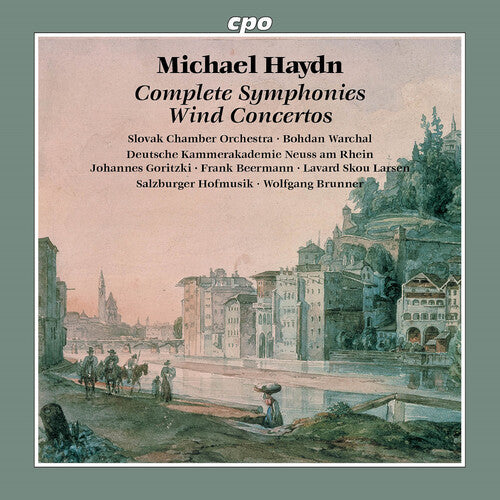
Complete Symphonies; Wind Concertos
M. Haydn: Six String Quartets / Constanze Quartet
J. & M. Haydn: Concerti for Violin, Viola & Harpsichord / Terakado, Amano, Pearls in Baroque
This disc couples the last Violin Concerto (1769) by Joseph Haydn with the Double Concerto for Viola and Harpsichord (1762) by his brother Michael: two rarely recorded early Classical gems. This is the debut recording of Pearls in Baroque Chamber Orchestra, composed by some of the best Baroque music players in the Netherlands. The artistic and performance direction is entrusted to two experienced musicians like Ryo Terakado and Noriko Amano.
L. & W.A. Mozart, M. Haydn: Salzburg Relations / Wiegräbe, Capricornus Consort
In the short period between strict Baroque counterpoint and mature Viennese Classicism, we find delightful and entertaining compositions of unprecedented elegance. Numerous playful and lighthearted serenades and divertimenti were often performed in open-air venues. In particular, the parks of the Mirabell and Hellbrunn palaces in Salzburg offered a suitable setting for such open-air concerts. These often featured wind and brass instruments and provided occasions for the musicians of the Salzburg Hofkapelle to display their virtuosity. Their reputation continued at least as late as 1806, when Christian Daniel Schubart wrote "Die Salzburger glänzen sonderlich in blasenden Instrumenten".[1] One of these soloists was trombonist Thomas Gschlatt (1723-1806), for whom Michael Haydn wrote the Larghetto for trombone and orchestra presented here. From 1753 to 1771 Salzburg was ruled by a great patron of the arts, Archbishop Sigismund III Count Schrattbach. As a generous donor he often supported his musicians with his private "casket funds". Today, he is best known as financier of the Mozart family's travels. Except for Leopold Mozart's trio, which probably originated around 1750, all compositions recorded here come from his Salzburg regency.