Mieczysław Karłowicz
9 products
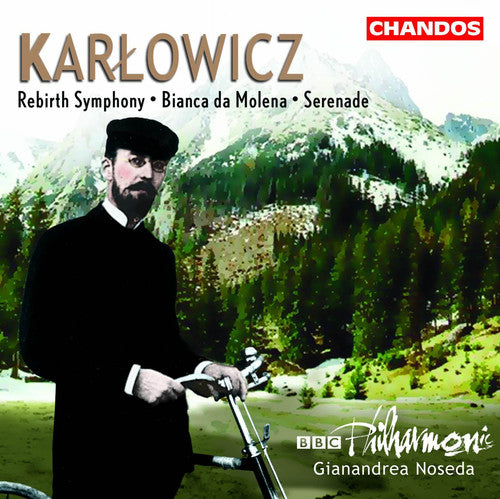
KARLOWICZ: Serenade / Rebirth Symphony / Bianca da Molena
Chandos
Available as
CD
KARLOWICZ: Serenade / Rebirth Symphony / Bianca da Molena
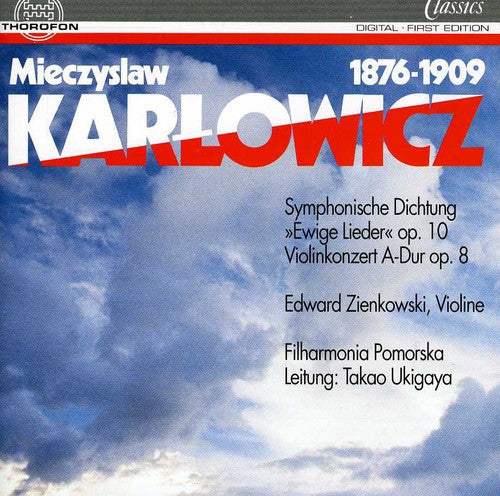
Karlowicz, M.: Violin Concerto, Op. 8 / Eternal Songs, Op. 1
Thorofon
Available as
CD
$24.99
Nov 01, 1993
Classical Music
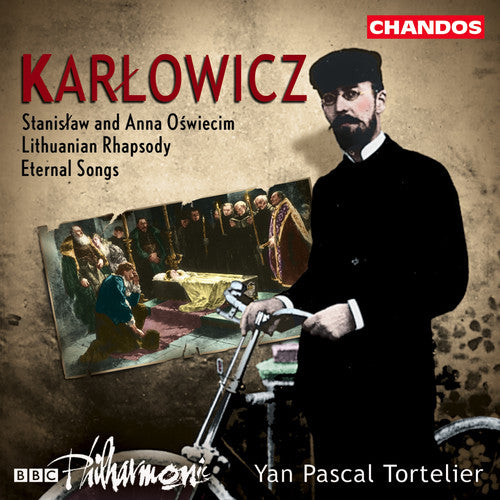
Karlowicz: Lithuanian Rhapsody, Etc / Tortelier, Bbc Po
Chandos
Available as
CD
Avoiding the tendency toward nationalist spirit that motivated his Polish colleagues, Mieczyslaw Karlowicz's music cleaves to the lush late-Romantic orchestral sound world and heavy-handed philosophical references essayed by Strauss and others. Bruckner, Wagner, Tchaikovsky, and Scriabin also ostensibly influenced Karlowicz (1876-1909), as his preferences for sweeping extended themes, massive climactic brass pronouncements, and swirling chromaticism are the dominant characteristics of these sprawling works.
The three-movement Eternal Songs substitutes Schopenhauer for Nietzsche as the inspiration for this Zarathustra-like tone poem. Peppered with "meaning of life" motives and headings but with no explicit program, Eternal Songs is anchored by powerful low brass climaxes (perfect intervals that mark the so-called "Eternity" theme) in both the first and final movement (the latter a giant self-contained Bruckner coda) and will remind listeners not only of Strauss' famous work but also of Scriabin's Poem of Ecstasy. The central movement comprises the inevitable twin themes of Love and Death, and, befitting the lofty subjects embodied in this work, they are sumptuous and overwrought, replete with tam-tam and cymbal crashes, soaring horns, and trumpet flourishes.
Described as a "travesty" of Romeo and Juliet, the next work deals with the incestuous and ultimately forbidden love of siblings Stanislaw and Anna Oswiecim. Again, Strauss is the model (an unlikely mix of Don Juan, Der Rosenkavalier, and Symphonia Domestica), featuring a yielding, limpid melody ("Anna") juxtaposed with a more forceful high-spirited theme denoting Stanislaw. The music becomes more turbulent and tumultuous (their unrequited love?) only to culminate in the couple's ineluctable death, the clear highlight of the work. At 13:44, the music changes dramatically with the ominous entry of the bass clarinet, builds slowly into an impressive funeral march, and finally explodes into an awesome orchestral tutti at 18:42 that would do Siegfried justice. Chandos captures the BBC Philharmonic in all its glory (the brass section is really on its game) and thus provides a fitting farewell to Yan Pascal Tortelier as the orchestra's principal conductor.
After all this orchestral bombast, the gentler Lithuanian Rhapsody seems an odd way to end the disc. Remarkable only for the fact that it is the one tone poem by Karlowicz to be based on folksong, this coloristic work simply plods along, suffering from a dull main theme that can barely support its 17-minute length. Nonetheless, the rest of the music, however indebted it may be to other better-known composers, is thrilling, involving, and well-crafted. Complementing a two-disc complete set of tone poems from Dux (issued October, 2000) this disc is a highly worthwhile and sonically spectacular remnant of the late Romantic age from an unlikely source.
--Michael Liebowitz, ClassicsToday.com
The three-movement Eternal Songs substitutes Schopenhauer for Nietzsche as the inspiration for this Zarathustra-like tone poem. Peppered with "meaning of life" motives and headings but with no explicit program, Eternal Songs is anchored by powerful low brass climaxes (perfect intervals that mark the so-called "Eternity" theme) in both the first and final movement (the latter a giant self-contained Bruckner coda) and will remind listeners not only of Strauss' famous work but also of Scriabin's Poem of Ecstasy. The central movement comprises the inevitable twin themes of Love and Death, and, befitting the lofty subjects embodied in this work, they are sumptuous and overwrought, replete with tam-tam and cymbal crashes, soaring horns, and trumpet flourishes.
Described as a "travesty" of Romeo and Juliet, the next work deals with the incestuous and ultimately forbidden love of siblings Stanislaw and Anna Oswiecim. Again, Strauss is the model (an unlikely mix of Don Juan, Der Rosenkavalier, and Symphonia Domestica), featuring a yielding, limpid melody ("Anna") juxtaposed with a more forceful high-spirited theme denoting Stanislaw. The music becomes more turbulent and tumultuous (their unrequited love?) only to culminate in the couple's ineluctable death, the clear highlight of the work. At 13:44, the music changes dramatically with the ominous entry of the bass clarinet, builds slowly into an impressive funeral march, and finally explodes into an awesome orchestral tutti at 18:42 that would do Siegfried justice. Chandos captures the BBC Philharmonic in all its glory (the brass section is really on its game) and thus provides a fitting farewell to Yan Pascal Tortelier as the orchestra's principal conductor.
After all this orchestral bombast, the gentler Lithuanian Rhapsody seems an odd way to end the disc. Remarkable only for the fact that it is the one tone poem by Karlowicz to be based on folksong, this coloristic work simply plods along, suffering from a dull main theme that can barely support its 17-minute length. Nonetheless, the rest of the music, however indebted it may be to other better-known composers, is thrilling, involving, and well-crafted. Complementing a two-disc complete set of tone poems from Dux (issued October, 2000) this disc is a highly worthwhile and sonically spectacular remnant of the late Romantic age from an unlikely source.
--Michael Liebowitz, ClassicsToday.com
Karlowicz: Symphony in E minor, "Rebirth", Op. 7
DUX
Available as
CD
$21.99
Feb 24, 2009
Karlowicz: Symphony in E minor, "Rebirth", Op. 7
Karlowicz: Symphony in E Minor, Op. 7 "Odrodzenie"
DUX
Available as
SACD
$21.99
Jan 04, 2019
The Mieczyslaw Karlowicz Philharmonic Symphony Orchestra began it's 2018 anniversary season by releasing an album featuring the only classical symphony of it's patron. The event is all the more interesting because this high-tech recording is the first one which, together with the Szczecin Philharmonic, was conducted by maestro Rune Bergmann, who was fascinated by the work of Karlowicz, the artistic director of this institution. The choice of Rebirth at the beginning of the jubilee is not accidental, as this composition, perfectly illustrating the whole spectrum of emotions and states of mind accompanying us in key moments of life, in a specific way is also reflected in the rich history of the orchestra and it's city. The programme and emotional ambiguity of the symphony causes it's correct performance to have a radically different character. Hence it is particularly worth getting acquainted with the latest interpretation of Rune Bergmann, who, known for his energy, spontaneity, and unconventional approach to work, is mentioned among the most outstanding conductors of the Scandinavian countries.
KARLOWICZ • COMPLETE WORKS FOR PIANO • BANASIK
DUX
Available as
CD
$21.99
Sep 20, 2019
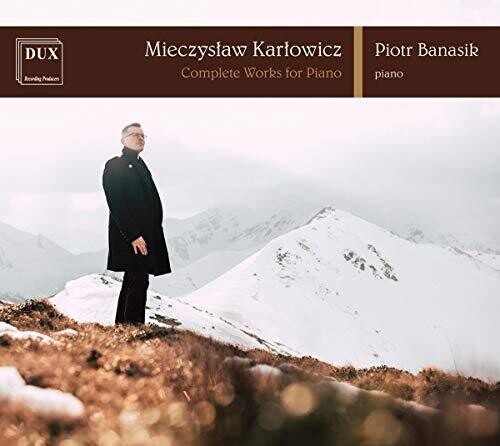
DUX presents Piotr Banasik, an outstanding pianist who is fascinating in his interpretations, in this new album featuring the complete piano works of Mieczyslaw Karlowicz. The piano pieces featured here constitute a very interesting part of the Polish neo-romanticism movement. The album by Piotr Banasik distinctly reminds us that Karlowicz is an excellent composer, not only in his works for strings, but also in the field of piano music. Piotr Banasik is a musician who willingly and often propagates the work of Polish composers. When in 2005 he took part in the 15th International Chopin Piano Competition, many commentators were surprised that despite his great performances, he was not qualified for the final interrogations. His balanced, supported by refined technique interpretations (incl. The Etude in G-flat major, Op. 10 No. 5 and Bolero, Op. 19) turned out to be one of the most outstanding in the first stage of the event's edition.
Karlowicz: Symphonic Poems Vol 2 / Wit, New Zealand So
Naxos
Available as
CD
Mieczyslaw Karlowicz was a significant talent, and his early death in 1909 (at age 33) was a serious loss to 20th century Polish music. His symphonic poems are typically refulgent late-Romantic works, full of ambition and, to be frank, pretension. Consider the three parts of Op. 10 (Eternal Songs): Song of Everlasting Yearning; Song of Love and Death; Song of Eternal Being. Heavy-duty stuff, and there's no point in pretending that Karlowicz, talented as he was, did full justice to the program, but the point is that he tried, tried hard, and produced gobs of richly entertaining music in the process.
Antoni Wit's first disc of tone poems was exceptional, and this one is excellent as well, if a hair less outstanding than previously. What problems there are stem from having the New Zealand orchestra rather than Wit's own Warsaw forces. Of course the New Zealanders play very well, and are well recorded, but their string section lacks the luxuriance that the music ideally requires, and while some listeners may prefer a leaner basic sonority, what Karlowicz really asks for is Strauss on steroids (i.e. Korngold and that crowd). Still, you won't find better performances of this music than Naxos' edition, and you can purchase this second volume with complete confidence.
--David Hurwitz, ClassicsToday.com
Antoni Wit's first disc of tone poems was exceptional, and this one is excellent as well, if a hair less outstanding than previously. What problems there are stem from having the New Zealand orchestra rather than Wit's own Warsaw forces. Of course the New Zealanders play very well, and are well recorded, but their string section lacks the luxuriance that the music ideally requires, and while some listeners may prefer a leaner basic sonority, what Karlowicz really asks for is Strauss on steroids (i.e. Korngold and that crowd). Still, you won't find better performances of this music than Naxos' edition, and you can purchase this second volume with complete confidence.
--David Hurwitz, ClassicsToday.com
Karlowicz: Rebirth Symphony, Bianca Da Molena / Wit, Warsaw Philharmonic
Naxos
Available as
CD
Best known today for his sumptuously Romantic symphonic poems, Mieczysław Karłowicz completed his most ambitious work, the ‘Rebirth’ Symphony, in 1903. Like Mahler’s ‘Resurrection’ Symphony which was premièred the following year, it evokes the soul’s spiritual struggle against fate from tragedy to triumph. The resplendent Prologue from Karłowicz’s music for the play The White Dove leads to a serene Intermezzo. Polish conductor Antoni Wit brings out the brooding, portentous and lyrical characteristics of his compatriot’s richly orchestrated yet seldom-heard scores.
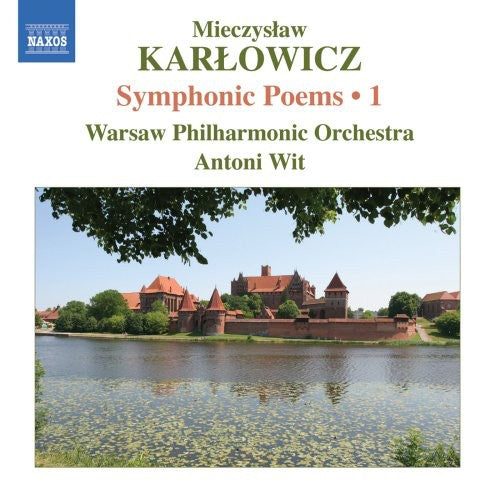
Karlowicz: Symphonic Poems Vol 1 / Wit, Warsaw Po
Naxos
Available as
CD

Mieczyslaw Karlowicz's six symphonic poems feature gobs of Straussian sonority in loosely organized forms, and while Antoni Wit's performances are actually a touch slower than the competition on Chandos, the playing of the Warsaw Philharmonic is so much more atmospheric, richly textured, and knowing than that of the BBC Philharmonic under Gianandrea Noseda that the music is transformed. In classic Romantic fashion, the programmatic basis of all of this music is darkly tragic (for example, Stanislaw and Anna have an incestuous love affair and the story naturally ends in death). Wit clearly understands the idiom and milks the music for all it's worth. Thus, the celebratory sequences in Episode at a Masquerade have an extra degree of feverish brilliance, and the repetitious opening of Lithuanian Rhapsody is spellbinding rather than merely monotonous--in short, these forces make the best possible case for Karlowicz.
This is a young man's music--he was only in his early 30s when he died in 1909--full of self-indulgent excess; but it's also brimming with promising talent. This sumptuously engineered production reminds us of just what a loss his early death represented for 20th-century Polish music, while allowing us to savor his all too meager legacy.
--David Hurwitz, ClassicsToday.com