Mieczysław Weinberg
48 products
Weinberg & Dutilleux: Cello Concertos / Moreau, Poga, WDR Sinfonieorchester
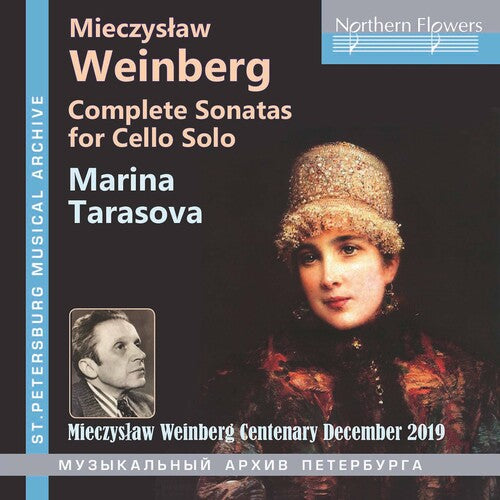
Mieczyslaw Weinberg: Complete Sonatas for Cello Solo
Mieczyslaw Weinberg: Chamber Music For Woodwinds
The wait for the music of a particular composer to be recorded when they have been ill-served in the past is sometimes a long one. In the case of Weinberg it seems as if his time has finally come and new discs of his music are arriving fairly regularly. This is the fourth CD of his music that I’ve reviewed. I know they’ve been others recently, and Amazon now lists over 60. It is great news and if, like me you’ve also found his music to be to your liking then, again like me, you’ll welcome this addition as much as I do. What has emerged as the CDs arrive is what an amazingly rounded composer he was with compositions in almost every genre. Weinberg composed 26 symphonies, seven concertos, 17 string quartets, 28 sonatas for various instruments, seven operas, several ballets, incidental music for 65 films, and many other works, including a Requiem. When Shostakovich received the score of his First Symphony in the post asking him to look at it, he was so impressed he immediately arranged for Weinberg to come to Moscow from Tashkent where he had gone to escape the invading Nazi armies. The two composers became fast friends. While there is no doubt that Weinberg was influenced by Shostakovich, the same was also true the other way round, with each acknowledging the debt to the other. The music on this disc confirms Weinberg’s enormous creative talent and often unique musical view.
One of the biggest difficulties I find in writing reviews is how to describe music I enjoy in different ways. This disc is a case in point as what’s on offer here is so thoroughly impressive and it’s all too easy to find that I’m repeating myself while I struggle to find words to express how marvellous I find the music. With this firmly in mind I’ll do my best to try because this music deserves no less. Right from the very first note you know you’re in for something special. The mellifluous tone of the beautifully played clarinet wafts in as if on a breeze while waiting for its piano accompaniment. It’s not long before you can hear why people refer to Shostakovich when writing about the music of Weinberg. Indeed the booklet notes the considerable influence the older composer had on the younger man who wrote both the clarinet sonata and the twelve miniatures in 1945, just two years after arriving in Moscow at Shostakovich’s behest. The second and third movements may also remind one of Shostakovich. That is mainly because the Jewish folk tunes Weinberg based much of the material on are sources that Shostakovich also drew on, sources that he used, with Weinberg’s help, in his From Jewish Folk Poetry (1948). The writing is witty and satirical. Weinberg’s scoring for clarinet reflects its use in much of the klezmer music that had been written since the nineteenth century in which the clarinet was steadily replacing the violin. Music like this was in Weinberg’s very bones since his father was a composer and violinist in a travelling Jewish theatre. There should be no surprise that it should feature so recognisably in his music. It is hard to imagine how he could write such happy sounding music when only four years earlier, before fleeing first to Minsk then to Tashkent, the Nazis had burned alive his entire family. This is not to say that the music does not have a dark side too. The end of the sonata is tinged with sadness but it is optimism that I see as winning through.
The Twelve Miniatures for Flute and Piano Op.29 opens with a tune that not only doesn’t sound like Weinberg, but sounds French to me rather than Russian which only shows this composer cannot be pigeonholed. The second has him back firmly where you expect with a wistful little waltz, marked Arietta, while the third is a merry Burlesque, followed by a comic Capriccio. Various other moods are represented but the main feature throughout is the brilliance of these little character pieces that charm and delight in equal measure and conclude with a really lovely Pastorale. Weinberg’s sonata for solo bassoon shows his continued search for expression in music and his willingness to write for less usual instruments: his Op.108 is for solo double bass. There are very few composers that have tackled any music for solo bassoon and those that have such as Willson Osborne, Malcolm Arnold, Gordon Jacob and Karl-Heinz Stockhausen - whose piece In Freundschaft was originally written for bass clarinet and has been adapted for various other instruments - kept their works fairly short. Weinberg’s composition is a substantial one of four movements and a total length of over 21 minutes. Incidentally readers would no doubt enjoy a YouTube presentation of Stephanie Patterson playing the Stockhausen work dressed as a teddy bear which is Stockhausen’s wish fulfilled at last! Weinberg’s Bassoon Sonata from 1981 really tests the prowess of the soloist and the writing reveals an instrument capable of great beauty rescuing it from the denizens of the woodwind section where its abilities are usually confined to helping provide a background. Matthias Baier’s playing is simply superb and the piece could find no greater performer to emphasise its wonderfully melodious nature. The final work on this disc is the Trio for Flute, Viola and Harp which dates from 1979 and is yet another surprise that recalls Debussy’s late work for the same three instruments. This begins with a meditative theme on flute and viola before the harp joins in to weave its version into the fabric already established. The second movement is slow to begin with but its warm viola introduction is disturbed by trilling from the flute mirrored in the harp though calm is soon restored. The three share a lovely melody between them for a short while before a more intensive and insistent mood is created. This leads into the final movement which, though short, is more anxious in tone and powerful in execution. It ends in a final eruption from all three.
While it is self-evident that the more often any music is heard the more one gets from it there is an immediate appeal in the music on this disc. That’s something I’ve found with all of this composer’s works that I’ve heard so far. It’s a facility that should help in establishing his reputation still further and secure his place as, what many musicologists declare, the third great composer of the Soviet era after Shostakovich and Prokofiev. Weinberg often wrote music that contained satire and wit but that lacked the sardonic even mordant nature of much of Shostakovich’s works. Here was a man who, despite the terrifying experiences in his life that included spending some months in prison under Stalin, still managed to reflect hope and optimism in his music.
This disc is another fitting tribute to a composer whose works are finally emerging to enrapture new and wider audiences. The musicians on this disc have made a significant contribution to the process, all of them turning in performances of beauty and great skill. Elisaveta Blumina deserves special plaudits for her pioneering work on behalf of Weinberg; her disc of his Piano Works on CPO 777 517-2 is another great example. More please!
-- Steve Arloff , MusicWeb International
Weinberg: Violin Concertino Op. 42; Symphony No. 10; Rhapsody on Moldavian Themes
Weinberg: Complete Sonatas for Violin & Piano / Kalinovsky, Goncharova
-----
REVIEW:
Weinberg has his own way of moving between moods, is often serious, and can be suave, gruff or playful. He is estimably served by the thoughtful and responsive Russian violinist Grigory Kalinovsky, who brings clarity and variety of tone to the music, and is in turn strongly supported by Tatiana Goncharova. Together they form a terrific partnership able to project this repertoire with unstinting verve and delicacy.
– Classical Ear (Ivor Solomons)
Weinberg: Complete Piano Music, Vol. 1
Weinberg: Complete Piano Works, Vol. 2
Russian Piano Music Series, Vol. 9 - Weinberg
Weinberg: Chamber Symphonies No 3 & 4 / Svedlund, Helsinborg
The ongoing, critically acclaimed Chandos series of orchestral works by Mieczyslaw Weinberg (1919–96) now explores some of the composer’s lesser-known late works. This disc features the last two Chamber Symphonies, which indeed reflect a largely hidden yet still prolific period of his life. The highly experienced and versatile Thord Svedlund conducts the Helsingborg Symphony Orchestra, here recording with Chandos for the first time. Not only is Chamber Symphony No. 4 the penultimate work that Weinberg completed, but it can also be read as a summation of his entire life and oeuvre. The elegiac mood shaping the piece echoes his last decade – of infirmity, loss and gradual decline in public and professional interest in his work. Apart from the sad, wistful last movement (Andantino) heralding No. 4, Chamber Symphony No. 3 is closely linked to his Fifth String Quartet, op. 27 through its recitative-like melody. At the same time, it perfectly justifies both the term ‘Chamber Symphony’ and the orchestra here playing it: the Helsingborg Symphony, one of Sweden’s oldest, was founded in 1912 originally as a chamber orchestra.
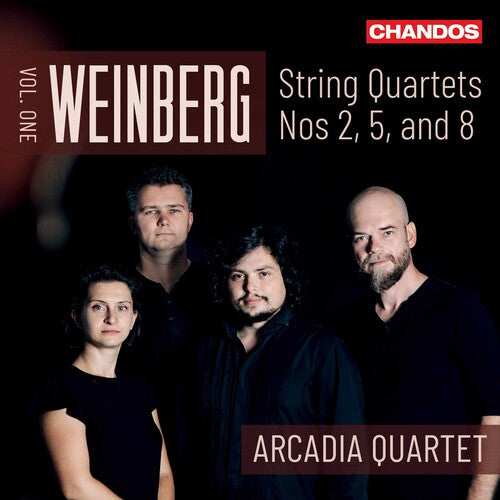
Weinberg: String Quartets Nos. 2, 5 & 8, Vol. 1 / Arcadia Quartet
The seventeen string quartets of Weinberg span nearly half a century, from his student days in Warsaw to the end of his career in Moscow, and show his development as a composer more clearly than his work in any other genre. The Second Quartet, composed in 1939 – 40 whilst studying in Minsk, was dedicated to his mother and sister, who he would later learn had not survived the German invasion of Poland. Quartet No. 5, of 1945, was the first in which he added titles to each movement, and reflects the influence of Shostakovich over the young composer. The final quartet in this programme – No. 8 – was written in 1959 and dedicated to the Borodin Quartet. For many years the best-known of Weinberg’s quartets in the west, this single-movement work is divided into three sections with a coda. The Arcadia Quartet is a passionate advocate for these quartets, writing: ‘[Weinberg’s] music is like a glow of light surrounded by the darkness of the unknown, and it quickly became a goal of ours to attempt to dilute these shadows. With every recording and every live performance of his music, we intend to shine some light on this wide-ranging, profound phenomenon, which has remained overlooked for so long, and we hope that, with time, Mieczys?aw Weinberg will take his rightful place in the history of music.’
REVIEW:
The Arcadia’s evident enthusiasm for the music is perfectly conveyed here with playing that maximises the emotional range explored in each work, as well as exploiting to the full the music’s tonal and textural varieties and its underlying sense of unease. These contrasts are placed in sharp relief when comparing the relentless Bartókian ferocity they achieve in the rhythmically dynamic Scherzo from the Fifth Quartet with the easygoing geniality that is projected in the opening movement of the Second, or the austere solemnity that characterises the slow sections of the Eighth.
–BBC Music Magazine
WEINBERG / SONATAS, FUDALA, ROT
Weinberg: Chamber Symphonies & Flute Concerto
WEINBERG • CHAMBER MUSIC • AMADEUS, DUCZMAL-MRÓZ
Weinberg: Symphonies Nos. 2 & 7 / Duczmal-Mroz, Amadeus Chamber Orchestra of Polish Radio
In recent years, Mieczyslaw Weinberg has become one of the most recognizable Polish composers of the 20th century, which was significantly influenced by the hundredth anniversary of the composer’s birth in December 2019. The project of the Amadeus Chamber Orchestra of Polish Radio devoted exclusively to works by Mieczyslaw Weinberg perfectly reflects the peculiar revival related to the interest in the artist in Poland and in the world. This album is another proposal from the Amadeus Orchestra series, this time dedicated to selected symphonies of the Polish artist.
Wajnberg: Flute Concertos Nos. 1 & 2 & Symphony No. 7 / Kabara, Dlugosz, Silesian Chamber Orchestra
The music of Mieczyslaw Weinberg (1919 - 1996) is among some of the 20th century's greatest hidden treasures. Born in Poland, Weinberg emigrated to Russia in perilous circumstances, where he was to live out the rest of his days half-way between deserved fame and unjustified neglect. Often seen in the shadow of his close friend Dimitry Shostakovich, by whom he was regarded as one of the most outstanding composers of the day, Weinberg is slowly being rediscovered as a 20th century genius, a figure of immense significance in the landscape of post-modern classical music. Weinberg's musical idiom stylistically mixes traditional and contemporary forms, combining a freely tonal, individual language inspired by Shostakovich with ethnic (Jewish, Polish, Moldovian) influences and a unique sense of form, harmony and color. His prolific output includes no less than 17 string quartets, over 20 large-scale symphonies, numerous sonatas for solo stringed instruments and piano as well as operas and film-scores. With the constant stream of recordings, score publications and concerts over the last decade, many of these gems have been unearthed to finally receive the critical praise and attention they deserve. The present release showcases his flute concertos, performed by The Silesian Chamber Orchestra with flutist Lukasz Dlugosz.
Violin Sonatas
Weinberg: Works for Violin and Piano
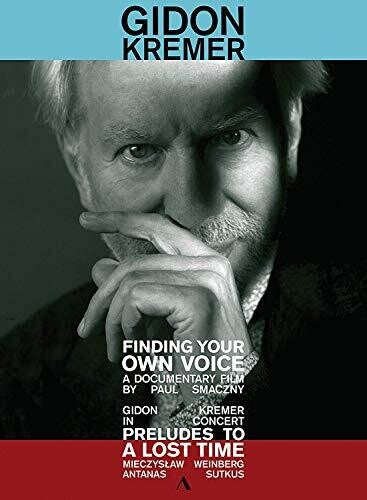
Gidon Kremer: Finding Your Own Voice - Preludes to a Lost Ti
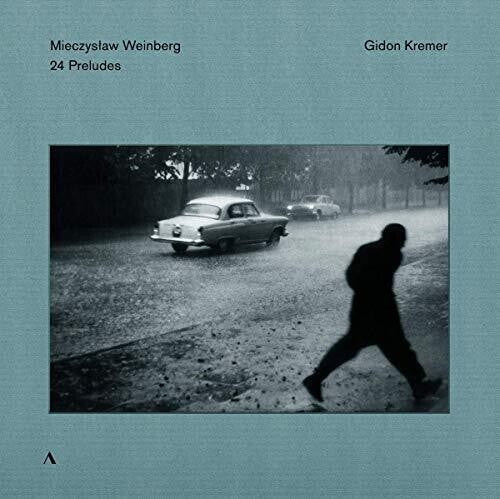
Weinberg: 24 Preludes for violin solo
Moisey Vaynberg [Mieczyslaw Weinberg]: Cello Sonatas
M. WEINBERG Cello Sonatas: No. 1 in C; No. 2 in g. Solo Cello Sonata No. 1 in C • Alexander Chaushian (vc); Yevgeny Sudbin (pn) • BIS 1648 (55:45)
After a decade’s hiatus—the British label Olympia embarked on a project back in the 1990s to record anew and/or remaster from earlier Melodiya LPs much of the composer’s output—there seems to be a resurgence of interest in the music of Polish-born Mieczys?aw Weinberg, (aka Moisey Samuilovich Vaynberg) 1919–1996. That this interest now extends to a mainstream label such as BIS is encouraging, for Weinberg is considered by many to be the most important Soviet era composer to follow in the musical footsteps of Shostakovich. Though Weinberg never formally studied with him, the elder Shostakovich befriended the young man, encouraged him to move to Moscow in 1943 after the Jewish Weinberg had lost almost his entire family in the Holocaust, and interceded on his behalf when Weinberg was arrested and detained as part of Stalin’s anti-Semitic dragnets.
Despite the friendship that bonded the two men, Weinberg’s music nods respectfully at Shostakovich’s, but does not unconditionally embrace it. His catalog of works is extensive—22 symphonies, 17 string quartets, large quantities of chamber works for various combinations of instruments, solo piano pieces, and seven operas. With due gratitude to Olympia for its efforts on Weinberg’s behalf, the label’s titles seem to have disappeared from the current listings; thus, this major composer’s works are ripe for new recordings. Chandos, for one, appears to have heeded the call with new recordings of the symphonies.
Even though the connections are at times tenuous, I can say that if you appreciate Shostakovich you will respond positively to Weinberg. Not all assessments of Weinberg’s music though, have been positive. Cellist Alexander Ivashkin, for whom Schnittke wrote a number of works, has been most critical, arguing that composers such as Weinberg damaged not only their own reputations, but also that of Shostakovich himself, stating that “these works only served to kill off Shostakovich’s music, to cover it over with a scab of numerous and bad copies.”
I disagree. Clearly, the life experiences of both composers led them to dark and devastating places in their music, and often to programmatic content of mindless violence and the terrible human suffering it produced. But where Shostakovich mocks and satirizes the ugliness and deformities by painting them with a twisted, defaced mask of cheap, tawdry face-rouge, Weinberg seems to have less of a taste for the sarcastic and the sardonic. Lyudmilla Nikitina in Grove finds influences in Weinberg’s music of Bartók, Myaskovsky, Prokofiev, and even Mahler, and emphasizes the “neo-classical, rationalist clarity and proportion of his works.” Then too, ethnic influences of Jewish, Polish, Armenian, Moldavian, and klezmer music are also part of the picture.
The recording of Cello Sonata No. 1 appears to be, at this time, the only one available of this work. Happily, it’s a superb one. [The other two can be found separately on Hanssler and Albany.] Cellist Alexander Chaushian distinguishes himself in all three, but really shines in the technically daunting solo sonata, a work that manages to satisfy and reward as both a virtuosic display piece and a profoundly moving piece of music. Pianist Yevgeny Sudbin has been making a splash of late with his recent recordings of Scriabin, Medtner, and Tchaikovsky. It’s easy to hear why from his playing here. He has fingers of steel guided by the caressing touch of an angel.
An outstanding release and a must-add to your collection. Incidentally, due to the number of disparate transliterations and spellings of Weinberg’s name, you will find him listed at arkivmusic.com as Moisey Samuil Vaynberg. It would be helpful if record producers and annotators came up with a consensus spelling.
FANFARE: Jerry Dubins
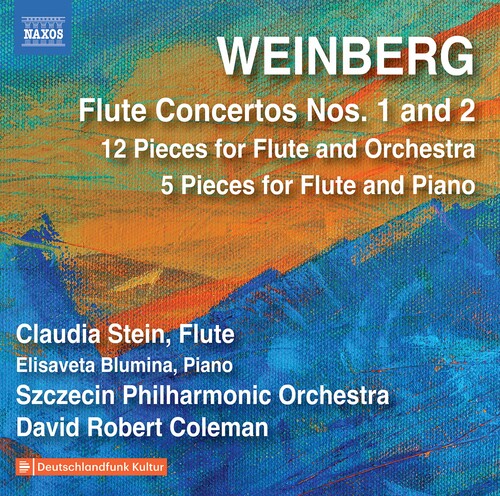
Weinberg: Flute Concertos Nos. 1 & 2 - 12 Miniatures - 5 Pie
Weinberg: Chamber Symphonies Nos. 1 & 3
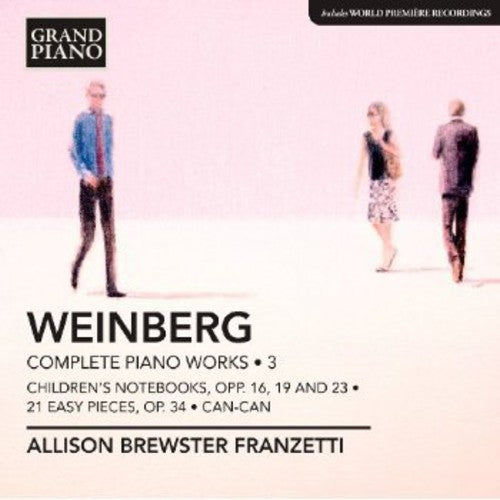
Weinberg: Complete Piano Works, Vol. 3
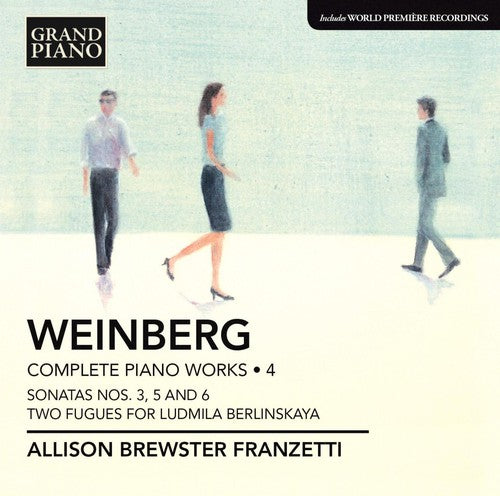
Weinberg: Complete Piano Works, Vol. 4
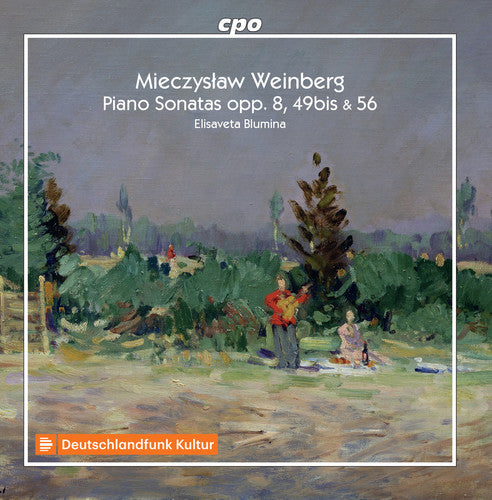
Weinberg: Piano Sonatas Opp. 8, 49bis & 56 / Blumina
The Echo Klassik prizewinner Elisaveta Blumina numbers among the outstanding female musicians of the younger generation who pursue their own paths, unaffected by any sort of “star cult.” Along with the classical piano repertoire, Elisaveta Blumina occupies herself very intensively with the music of the twentieth and twenty-first centuries. Her internationally highly regarded recordings of the Soviet Jewish composer Mieczyslaw Weinberg, to whose rediscovery she is tirelessly committed, are among the projects documenting this involvement. For cpo she has now recorded three sonatas by Weinberg. The clear proportions and modest length of the Sonatina op. 49 led Weinberg to rework it in 1978 in order to expand its structure, lengthen it into the Sonata op. 49, and to readjust its balance. In this sonata of classical design Weinberg further developed the spectrum of musical expression and increased the technical demands when compared to his Sonata No. 2 and the Sonatina. The Sonata op. 49 numbers among the few productions for the concert hall from this creative phase, which was reserved for intensive occupation with film music – and in particular for animated films. Emil Gilels recorded the Sonata No. 4 in 1960. Unlike the version by this dedicatee, which maintains a swift tempo, Elisaveta Blumina’s slower, more intensive playing lends greater expression to the work’s drama and grief.