Pierre de la Rue
5 products
Requiem, 5 Motets
Missa l'Homme Arm'e
LA RUE: Mass of the Seven Sorrows of the Blessed Virgin / M
La Rue: Masses / Beauty Farm
Beauty Farm is a 2014 founded vocal group focused on the Franco-Flemish polyphony of the renaissance. The international ensemble is based in the Carthusian Monastery at Mauerbach (Austria). The singers are members of well known ensembles like Capilla flamenca, Huelgas Ensemble, Vox Luminis, Collegium Vocale Gent and Graindelavoix. On this extensive release, the ever-acclaimed vocal quartet presents four masses of Pierre de la Rue, all composed during the composer's last creative period. Pierre de la Rue is one of the most fascinating and yet most elusive members of the talented generation of composers from around 1500. On the works recorded here he demonstrates his complete polyphonic skills and thus gives the melancholy an intellectual, complex nuance. The necessary lightness is provided by the voices of Bart Uvyn, Hans Jörg Mammel, Hannes Wagner and Joachim Höchbauer.
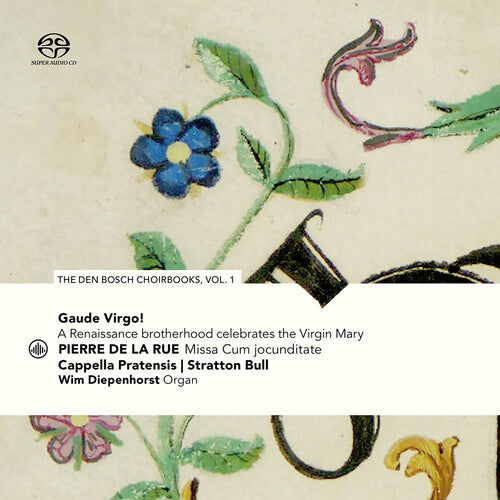
Den Bosch Choirbooks, Vol. 1 / Pratensis
Music clearly fascinated the great Dutch artist Hieronymus Bosch (c.1450-1516); his sketches and paintings are peppered with closely observed depictions of music-making and musical instruments. Bosch, a native of ’s-Hertogenbosch in the Duchy of Brabant, was a life-long brother of the city’s Brotherhood of Our Illustrious Lady, a large and prestigious organization for which sacred music was an essential and highly-valued part of its devotional life. Every Wednesday Bosch could gather with his Confraternity brothers in their opulent chapel in the church of St. John the Evangelist to celebrate a votive Mass in honor of the Blessed Virgin. This recording aims to capture a sense of the devotional soundscape that Bosch experienced throughout his life as a member of this music-loving Marian brotherhood. Instead of the frightening cacophony conjured by the artist’s vision of Hell, we encounter here the joy and serenity of the weekly Marian votive Mass liturgy. We have chosen the Missa Cum jocunditate by Pierre de la Rue(c.1452-1518), who was not only the most renowned composer of the Habsburg-Burgundian court but also an external member of the brotherhood from the early 1490s until his death in 1518. Indeed, La Rue may well have had occasion to meet Bosch during these years. Cappella Pratensis sings from the original notation, reading from scale copies of the confraternity’s manuscripts of plainsong and polyphony, and adopts the Brabant pronunciation of Latin those singers surely employed. They also read together from one large music book, like the men portrayed in the Singers in the Egg sketch attributed to Bosch.