Samuel Coleridge-Taylor
8 products
-
Samuel Coleridge-Taylor: Orchestral Works
$20.99CDSOMM Recordings
Nov 21, 2025SOMMCD 0713 -
Samuel Coleridge-Taylor
$19.99CDAvie Records
Aug 01, 2025AV2763 -
-
-
-
-
-
-
-
-
-
Samuel Coleridge-Taylor: Orchestral Works
Samuel Coleridge-Taylor
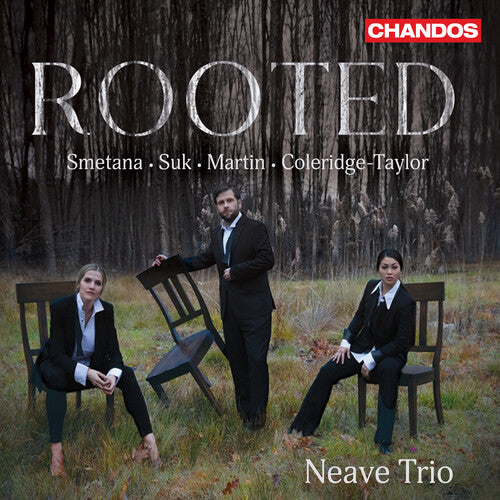
Rooted — Music of Smetana, Suk, Martin, and Coleridge-Taylor / Neave Trio
The Neave Trio's program Rooted features a range of works based on folk music. Smetana's distinctive nationalistic style was largely based on the inclusion of bohemian rhythmic and melodic elements, and he was acclaimed in his native Bohemia as the father of Czech music. His Trio in G minor was composed in 1855 as a response to the death of his four-year old daughter and shows the influence of Liszt. Josef Suk was a favorite pupil of Dvorak's, and his early Piano Trio, whilst shorter in length and less intense than Smetana's, is embedded in that Czech tradition. Also deeply influenced by Dvorak, Samuel Coleridge-Taylor was inspired by his African heritage, as well, and his Twenty-Four Negro Melodies for Piano was a prime example of his research. He subsequently arranged five of these pieces into the suite for piano trio that we hear on this album. The program concludes with Frank Martin's Trio from 1925, which is based on traditional Irish melodies.
REVIEWS:
These four chamber works explore music of a definitive national identity. The members of the ensemble brandish their considerable skills in the service of otherwise neglected composers and scores, with astonishing brilliance in their recorded sound.
— Audiophile Audition
The program's characteristically eclectic mix of works nurtures the Trio's well-upholstered warmth, attention to detail, and compelling rapport.
— BBC Music Magazine
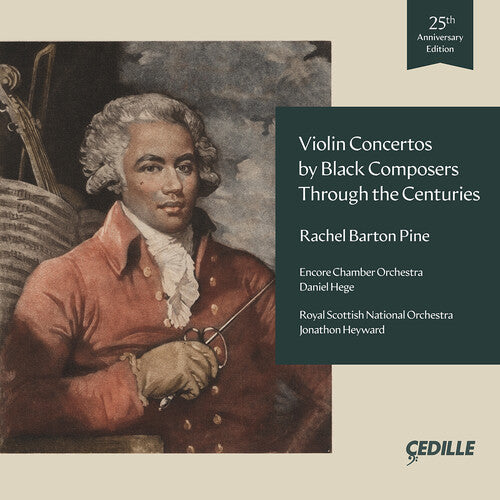
Violin Concertos by Black Composers - 25th Anniversary / Rachel Barton Pine
American violinist Rachel Barton Pine marks the 25th anniversary of her 1997 recording of violin concertos by Black composers of the 18th and 19th centuries with Violin Concertos by Black Composers Through the Centuries. This special-edition reissue updates and expands the original program into the 20th century with Pine’s recent recording of Florence Price’s Violin Concerto No. 2, composed in 1952. The 1997 release established the violinist’s reputation as a passionate advocate for composers of African descent. Pine recorded Price’s Second Violin Concerto with the Royal Scottish National Orchestra, conducted by rising young American conductor Jonathon Heyward, who has held conducting and guest conducting positions with prominent European and American orchestras. The violinist reprises her previous recordings of masterworks by Joseph Bologne, Chevalier de Saint-Georges (1775), José White Lafitte (1864), and Samuel Coleridge-Taylor (1899), all with Chicago’s Encore Chamber Orchestra, conducted by Daniel Hege. The New York Times declared: “Rachel Barton [Pine] handles the concertos’ varied demands with unaffected aplomb, performing this music lovingly.”
REVIEW:
This is more than an anniversary reissue. Cedille updates the release by including a new recording. When Rachel Barton Pine recorded these works in 1997, she was an explorer. The works—and even the names—of Black composers were virtually unknown. Barton’s committed and electrifying performances brought these works to light.
This reissue includes Price’s Second Violin Concerto. Price wrote it shortly before her death in 1952. It had never been performed and was considered lost. The concerto was part of the cache of Price manuscripts rediscovered in 2009. It’s a compact concerto—less than 15 minutes long—but it packs a punch. Barton’s performance crackles with good-natured energy. And the Royal Scottish National Orchestra, directed by Jonathon Heyward, is right there with her.
With the addition of this work, Barton’s survey of Black composers runs from the 1790s through the 1950s. To me, the reissue is a more comprehensive survey, and a more satisfying listen.
--WTJU
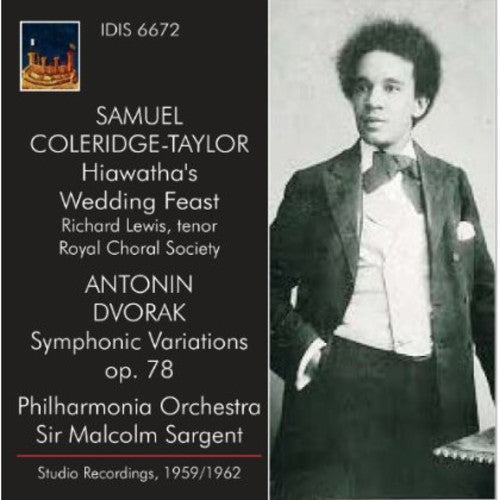
Sir Malcolm Sargent Conducts Coleridge-taylor
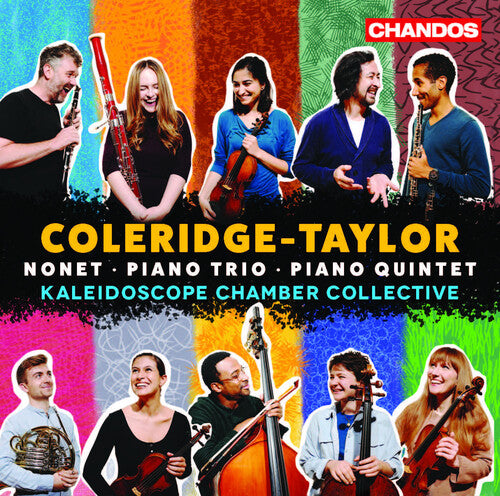
Coleridge-Taylor: Nonet, Piano Trio, Piano Quintet / Kaleidoscope Chamber Collective
Samuel Coleridge-Taylor is best known for his cantata Hiawatha’s Wedding Feast, which brought him international success as well as propelling his career at home in the UK – success which was remarkable in stuffy late-Victorian England because of his mixed race and humble origins. Born out of wedlock to Daniel Taylor, a medical student from Sierra Leone, and Alice Holmans, Samuel was brought up by his mother and step-father, George Evans, a railway worker, in Croydon, south London. The three pieces recorded here were all composed during his time as a student at the Royal College of Music. They were destined to remain unpublished during his lifetime, and indeed for some ninety years following his untimely death from pneumonia at the age of only thirty-seven. Performing editions were eventually prepared from the surviving manuscripts – which had remained in the RCM’s archive – in the early 2000s, offering modern performers and audiences the chance for the first time to savour exactly how precocious the creative talents of the teenage Coleridge-Taylor had been. The Kaleidoscope Chamber Collective has consulted the manuscripts and corrected numerous inaccuracies in these editions. Described by The Arts Desk as ‘a sparky, shape-shifting ensemble of starry young musicians’, the Collective has been thrilling audiences with its charismatic programming and outstanding musicianship.
REVIEWS:
This disc is a delight from first to last… For anyone interested in rare British chamber music this is warmly recommended.
-- MusicWeb International
What a glorious disc this is! From beginning to end the music just flows in an unending stream of pleasure. There is such skill and maturity in every aspect of the writing…These works could not hope for better performances[.]
-- British Music Society
The music’s youthful joie de vivre is matched by the Kaleidoscope Chamber Collective’s warmth, enthusiasm and finesse … Elena Urioste is an ever-eloquent first violin, Tom Poster’s silvery pianism glistens and flows as if effortless, and all of their colleagues match them with a spontaneous, collegial and well-balanced playing, making the whole more than the sun of its already excellent parts.
-- BBC Music Magazine
[The] Piano Quintet and Nonet in particular are assured, determinedly structured and richly scored statements, abundant in melody and a gutsy inner harmonic strength…The Kaleidoscope Chamber Collective…clearly love performing this music [and] take the listener on joyful and impassioned journey – great players cherishing special music for a new generation to discover[.]
-- International Piano
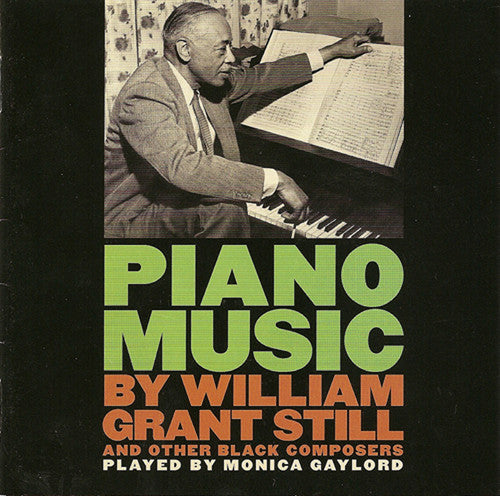
Piano Music by Still & Other Black Composers / Monica Gaylord
Howard Swanson's The Cuckoo is a light, gay scherzo and trio, with the bird cuckooing away in one hand while the other flies all over the keyboard. Robert Nathaniel Dett (1882-1943) studied with Nadia Boulanger, earned degrees from Oberlin and Eastman, conducted choral societies, performed before presidents, and was awarded honorary doctorates from Harvard and Oberlin. His In the Bottoms depicts “black man's slave camps at the river's edge.“ The five pieces go from somber contemplation to a gay dance. Ulysses Kay's three Inventions are brief, formal pieces. John Wesley Work, Jr., studied at Columbia and Yale and became chairman of the music department at Fisk University. His Big Bunch of Roses starts with a Negro folk tune and develops in a colorful and relaxed way. Oscar Peterson's The Gentle Waltz is languorous and jazzy and sweet, Duke Ellington's Come Sunday is a soft, flowing hymn with a touch of the blues; both pieces are played in arrangements by jazz pianist Denny McErlain.
Samuel Coleridge-Taylor was another master composer; every work of his I have heard is at least worthy, often inspired. His suite of three waltzes—Allegro molto, Andante, Allegro assai— stands out even among all this lovely music. It has warmth, individuality, melodic charm, and a sturdy, upright dignity without a hint of pomposity that is his own special character. Monica Gaylord studied at Juilliard and Eastman and has played throughout the United States and Canada. She has a beautiful touch for these winning works, and when it comes to Coleridge-Taylor's heroic final coda, she peals forth bronze thunder; if this were a live recital, it would bring down the house. The pianist also writes the notes, in which she shows herself to be a knowledgeable historian and a fine writer. A fine recording rounds out the assets of this lovely disc.
-- James H. North, FANFARE [3/1993]
-------
This winsome collection of 20th-century music was warmly welcomed by James H. North on its original release in 1992 (Fanfare 16:4), and I can only second his endorsement. He called it "nostalgic," and I guess he's right—although to my mind, that's not so much because of the age of the composers (as he pointed out, their "average birthdate" is 1900), but rather because they all aim (at least, in the works here) for a soft-edged accessibility that went increasingly out of fashion as the century wore on. Indeed, even Dett's musical evocation of slave camps abstains from brutality. Fortunately, Monica Gaylord has the subtlety of touch this predominantly gentle recital requires. While she's perfectly capable of ringing out the splashy final numbers of the Coleridge-Taylor and Dett sets, she's at her most impressive extracting the delicate impressionistic colors from Still's Traceries or coaxing out the rhythms of Ellington's meditative Come Sunday. Fine sound and erudite notes by the pianist only add to the attractions. A first-rate reissue.
-- Peter J. Rabinowitz, FANFARE [3/1999]