Tomaso Albinoni
29 products
-
-
-
Favourite Melodies
$16.99CDMusicaphon
Jan 30, 2026M56989 -
Folio - Lessons from the Master
$20.99CDTyxart
Aug 15, 2025TXA24191 -
Bach, Telemann & Albinoni: Concerti
$20.99CDAlpha
Aug 29, 2025ALPHA1140 -
Italiana!
$21.99SACDSUPREME CLASSICS
May 02, 2025SMGG001 -
-
-
-
-
-
-
-
-
-
-
-
-
-
-
-
-
-
-
-
-
-
Arcadian Dreams / Hannah De Priest, Les Délices
Favourite Melodies
Folio - Lessons from the Master
Bach, Telemann & Albinoni: Concerti
Italiana!
Italian Baroque Trumpet Concertos / Reiner, Interpreti Veneziani
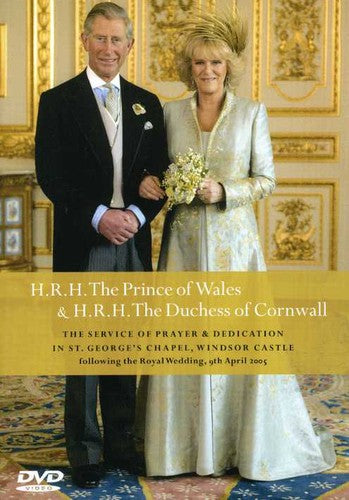
SERVICE OF PRAYER AND DEDICATION (The) (NTSC)
Albinoni: 8 Concertos / Petri, Scimone, I Solisti Veneti
Albinoni: Poiché al vago seren
Albinoni: Sonate da chiesa
ALBINONI: OBOE CONCERTOS
Albinoni, Legrenzi, Muffat & Telemann: A Cinque - String Sonatas PURGATORY
The five-part writing for strings has its period of greatest development in the 16th and 17th centuries, only to fall into a progressive obsolescence. The most commonly used instrumental ensemble included two violins, alto and tenor viola da braccio, cello and basso continuo. Of this quintet, the instrument that undergoes a progressive dismissal is the viola tenore, which in this recording we propose in its original late seventeenth century mounting.
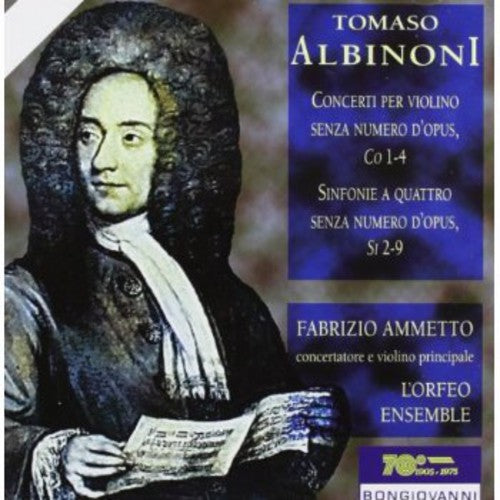
Albinoni: Concerto per violino & Sinfonie a 4
Albinoni: Complete Oboe & 2 Oboes Concerts
Baroque Music - Handel, G.F. / Corrette, M. / Lalande, M.-R.
Albinoni: Opera V
Albinoni: Opera V
Albinoni: Trio Sonatas Op 1 / Parnassi Musici
The ever-reliable German original instrument ensemble Parnassi Musici (whose recording of Dominico Gallo's trio sonatas for CPO was one of last year's great surprises) performs these minor masterpieces beautifully. CPO's sound is exemplary and the set includes informative historical notes. Albinoni fans will need no encouragement; others looking for a collection of Italian Baroque trio sonatas that rank with the best would do well to consider this offering.
--John Greene, ClassicsToday.com
Albinoni: Double Oboe & String Concertos Vol 1 / Standage
Recorded in: All Saints' Church, East Finchley, London 6, 8 & 9 January 1996 Producer(s) Nicholas Anderson Sound Engineer(s) Ben Connellan Jonathan Cooper (Assistant) Richard Smoker (Assistant)
Albinoni - Homage To A Spanish Grandee: Concertos From Op 10 / Standage, Collegium Musicum 90
In this latest recording of works by Albinoni, Simon Standage directs Collegium Musicum 90 showcasing the rarely performed and recorded Op. 10 Concertos. As late as 1961, academics were unaware of Albinoni's last set of concertos. All this changed when two small private collections were found to contain the print. Since then, the existence of Op.10 has been known to scholars, but awareness of it and curiosity about it has not really penetrated. Most of the Op.10 concertos have not been published in a modern edition, and the set has been recorded only twice before. The dedicatee of Op. 10 was the Marquis of Castelar, Don Luca Fernando Patiño, who had come to Italy from Spain as a military commander. As a result, the Op.10 concertos are highly individual. If one looks at the melodic lines in isolation, they look full modern for the 1730s, but if one looks at the bass line they go right back to the time of Albinoni's Op.2 and Op.5. Albinoni alludes to the dedicatee in the music itself: the first movement of Concerto 11 is a vivid evocation of flamenco style, with all itsfierce percussiveness. Note writer Michael Talbot describes the concertos as 'undoubtedly 'odd' in the fact that they are wildly different from what one expects from any composer working in the 1730s, but they are also beautiful in a way absolutely peculiar to their composer and in a way a logical conclusion of his art.' Simon Standage performs regularly with Collegium Musicum 90 and other groups and is a very well respected performer in the early-music field.
Ludwig Güttler: Die Jubiläums-Edition
Elevazione - The Magic Of The Oboe / Gordon Hunt
Includes work(s) for ob and org by various composers. Ensemble: Norrköping Symphony Orchestra. Conductor: Gordon Hunt. Soloists: Gordon Hunt, Leslie Pearson.
Trio Sonatas in 18th-Century Italy / London Baroque
Tomaso Albinoni: 6 Sonate Dai Trattenimenti Armonici Op. 6
Albinoni: Six Sonatas for Flute & Continuo, Op. 6 / Folena
Therefore today he is mainly known for his instrumental music. His concertos with parts for one or two oboes are quite popular and are regularly played at concerts and recorded. He also wrote a considerable number of sonatas for one or two violins and bc. Several of his collections of sonatas have been recorded. One of these comprises twelve for violin and basso continuo which were printed as his op. 6 in Amsterdam around 1712. The title is Trattenimenti armonici per camera. The word trattenimento means 'entertainment' and indicates that these sonatas were intended for the growing market of amateur performers. The addition da camera suggests that these sonatas follow the model of the Corellian sonata da camera. It may then come as a surprise that the movements bear not the titles of dances, as was common in sonate da camera, but rather indications such as adagio or allegro as was usual in the sonata da chiesa. However, these are dances in disguise: many fast movements are in fact allemandes, courantes or gigues.
The title of this disc suggests that we have here six flute sonatas, but that is not quite correct. Albinoni didn't give any indication that his sonatas could be played on the transverse flute. That doesn't mean that he didn't approve of adapting these sonatas for other instruments. This was common practice and composers expected performers to adapt their sonatas for their own use, depending on the instruments that were at hand. In his liner-notes Mario Folena mentions that several sets of such adaptations are known from Albinoni's time. In this recording he didn't make use of any of these editions. Rather he constructed his own arrangements. Such arrangements sometimes require transpositions to another key. In this recording all but one sonata are played in the original keys. The exception is the Sonata No. 2 which is in G minor, but originally in D major. I am a bit surprised by that, since there was apparently no need to transpose the Sonata No. 7 which is also in D major.
Obviously some of the effects Albinoni included in his sonatas are lost in these arrangements. That particularly concerns Albinoni's use of double-stopping. That is, for instance, the case in the fast movements from the Sonata No. 9. In his liner-notes to The Locatelli Trio's recording of the complete set (Hyperion, 1992) Michael Talbot writes about the Sonata No. 8: "[The] rasping violin chords in its second movement convey a mood of desperate urgency." That can't be conveyed in a performance with transverse flute. The passages of a contrapuntal character remain fully intact, though.
However, in these new clothes, as it were, these sonatas make a very good impression as well. Some of the features of the original scoring may have gone lost, the natural sensitivity and differentiation in colour and dynamics of the transverse flute fit them very well. Mario Folena is an excellent performer who plays with intelligence and stylistic awareness. He is supported by a strong basso continuo group which shows a good sense of the rhythmic pulse of these sonatas. The first allegro from the Sonata No. 6 is a particularly good example.
Even if you have a performance with violin in your collection, for instance the recording by The Locatelli Trio, this disc has much to offer and will give you a new and different look at these beautiful sonatas.
– MusicWeb International (Johan van Veen)