Conductor: Elizabeth C. Patterson
15 products
Keeping Christmas: Beloved Carols & The Christmas Story / Patterson, Gloriae Dei Cantores
Each year at Christmas, Gloriæ Dei Cantores celebrates the "dawn of redeeming grace" with a traditional candlelit Service of Readings and Carols, retelling the stories of Christ's birth that stir us with memories and hopes for peace and love. Just for a time as you listen to these carols and stories, let your heart fill with gratitude for our many blessings, and with goodwill toward others. Gloriæ Dei Cantores offers this recording with a prayer that the joy of the season brings you renewed hope and a fresh sense of wonder!
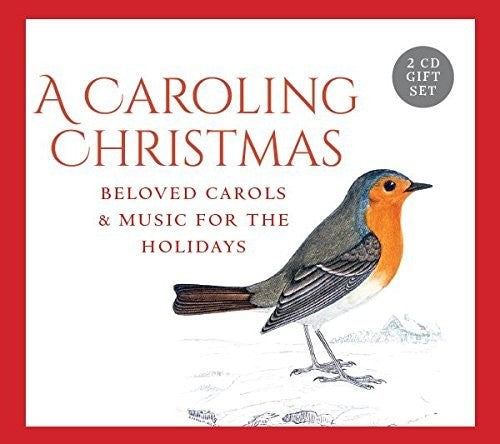
A Caroling Christmas / Gloriae Dei Cantores
"What a refreshing musical gift this is! Those familiar with the Gloriae Dei Cantores singers know what a sterling ensemble they are; they deliver all the goods here. Seagull Seven's jazzy arrangement of "Deck the Hall" really rocks! In these and all else, the singers exude joy and cheer through artful, infectious performances that are immaculate and engaging. The rich warmth of tone is balanced by vibrancy and energy. This is musical merriment that will bring great cheer at Christmas time–or any time!"
—James Hildreth, The American Organist
"Here's a joyful and beautifully sung album of seasonal specialties ......this ensemble can claim many choral strengths, but their most remarkable attribute is their spiritual intensity and sincerity. Sound quality is beyond reproach; notes and texts are laid out in a colorful and festive booklet."
—Lindsay Koob, American Record Guide
"The choral artistry for which Gloriae Dei Cantores has become known can be heard in each selection. The ageless and profound wonder of Christmas comes alive with the singing of each word and the playing of each note."
—Wallace Cheatham, Christianity and the Arts
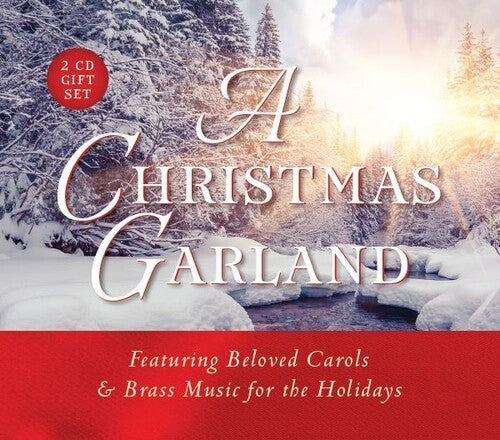
A Christmas Garland
“I adore well-executed choral music for the holidays, and Gloriae Dei Cantores certainly fills the bill. Sing Noel is an outstanding. . . moving release of intensely lovely seasonal music.”
—Christmasreviews.com
“One of the finest crafted, best blended, and innately musical ensembles with which I have had the pleasure to work.”
— Keith Lockhart, Conductor, Boston Pops
Sacred Songs of Russia / Patterson, Gloriae Dei Cantores
The best compilation of standard Russian choral music I have ever heard.
—American Record Guide
"Under the direction of Elizabeth Patterson, Gloriae Dei Cantores deserves high praise for undertaking the exquisite repertoire included on this compact disc. The ensemble's choral sound has the depth and richness required by the material... The Russian Orthodox chant provides the moving highlight of the recording and features excellent singing by bass soloist Andre Papkov and the men of the choir."
—Sharon David Grasto, Choral Journal
"This necessary recording , made during Gloriae Dei Cantores' tour of Russia in 1990 and released the same year, features early post-Glasnost performances of modern Russian sacred composition in Russia's churches and halls. The haunting beauty and emotional power of many of the selections stems both from conductor Elizabeth Patterson's muscular and heartfelt direction, as well as from the strong faith of the singers..."
—Amy Friedman, Chorale
Sacred Songs of France, Vol. 1: 1198-1609 / Gloriae Dei Cantores
On their recording Sacred Songs of France, the first disc in a three-volume French choral pilgrimage, the acclaimed American choir Gloriae Dei Cantores takes listeners on a journey from the earliest days of organum in the Middle Ages to the delights of seventeenth century polyphony. This fascinating collection samples the musical genius and spiritual art of celebrated composers such as Josquin des Prez, and their lesser-known compatriots including Dulot, Goudimel and Mouton. Scholars will appreciate this disc for the generous survey it provides, while choral fans will love the grace, beauty and remarkable clarity of this glorious music.
Sing Noel / Patterson, Gloriae Dei Cantores
Sing Noel with Gloriæ Dei Cantores is a Christmas treat from beginning to end! The album opens with Sing Noel - a colorful set of carols moving seamlessly from one to another. From Caroling, Caroling to My Dancing Day and The Holly and the Ivy - this recording brings the listener a traditional Christmas experience that will brighten Christmas cheer and warm hearts.
"Exudes professionalism and emotion from every pore."
—Carol Swanson, Christmasreviews.com
". . . And so I listened – The First Noel came and went as did I Wonder as I Wander. . .lush, rich and – well, was it my imagination or did I see the ghost of Jimmy Stewart, eyes twinkling. . . "
—Jonathan Woolf, Musicweb.uk
"The choral artistry for which Gloriae Dei Cantores has become known can be heard in each selection. The ageless and profound wonder of Christmas comes alive with the singing of each word and the playing of each note."
—Wallace Cheatham, Christianity and the Arts
Masters of the Renaissance / Gloriae dei Cantores
Ms. Patterson is a true choral alchemist, and never fails to draw truly golden sound and beautifully nuanced singing from her hard-working musicians. Sacred illumination is their mission, and they achieve it with spiritual sincerity and power."
—Lindsay Koob, American Record Guide
"Is it possible for a mixed choir of 44 voices to sing late Renaissance and early Baroque Flemish, Italian, German, and French anticopolyphony in an artistic, historically informed manner? Probably not very often – that is, unless the mixed choir in question is the Gloriae Dei Cantores. For them, the answer is an emphatic affirmative. This group sings with the clarity and control of a carefully drilled chamber ensemble a fifth their size. Phrasing, intonation, articulation, blend, and color are precisely thought out and perfectly executed."
—The American Organist
"This is quite an astonishing competitor to such celebrated ensembles as The Sixteen . . . This disc will greatly enlarge most collections of Renaissance motets with rare pieces of outstanding worth, sung with skill and devotion."
—J.F. Weber, Fanfare
He Has Heard My Voice / Patterson, Gloriae Dei Cantores
Includes psalm(s) by various composers. Ensemble: Gloriae Dei cantores. Conductor: Elizabeth C. Patterson.
Rheinberger: Motets, Masses & Hymns / Patterson, Gloriae dei Cantores
RHEINBERGER 3 Motets, op. 133. Mass in F for Male Choir and Organ, op. 190. Hymn, op. 140. Mass in g for Female Choir and Organ, op. 187. Mass in E?, “Cantus Missae,” op. 109 • Elizabeth C. Patterson, cond; David Chalmers (org); Gloriæ Dei Cantores • GLORIÆ DEI CANTORES 121 (74:05 Text and Translation)
This is a retread. Recorded in 1994, it was previously reviewed by John Bauman in 2000 in Fanfare 23:6. What I can’t be sure of is whether or not the original has been remastered, for in Bauman’s headnote it carried a label number of 108 and in its current reincarnation Gloriæ Dei Cantores has renumbered it 121. The discrepancy is significant inasmuch as Bauman complained in his review of engineering that damaged the music, noting a distant perspective that lacked full bass. Since I don’t have the earlier release to compare with the one at hand and, indeed, never heard it, I can only comment on the disc before me. Having listened to it, I’ll venture that nothing has been done to correct or compensate for Bauman’s impression of the recorded sound, for the singers do in fact come at the ear as if from some distant aural space. The effect is compounded, in my opinion, by a kind of churchy acoustic, which is strange, given that the recording was not made in a church but in the splendid acoustic venue of Mechanics Hall in Worcester, Massachusetts.
Besides panning the recording, Bauman expressed little love or patience for Rheinberger’s music, dismissing these works in a few pithy, if amusing, words worth quoting: “Perhaps Rheinberger’s writing reflects the late-19th-century calm of the Catholic Mass that favors the lack of big, almost explosive outbursts. It makes one want to throw the whole of his sacred writing out. Even with the organ, the Masses just seem to go on forever. They last just over 20 minutes, which is really a very short time compared to the Masses of Haydn, Mozart, and Schubert. All of these three Masses are thus afflicted, as well as the short motets and hymns. In short this is well-crafted music that ultimately brings about a big ho-hum. The performances seem to be good but one—at least this listener—just doesn’t care.”
I tend to be more charitable toward Rheinberger, allowing for the fact that even in his own lifetime (1839–1901) he was probably more sought-after as a prominent professor of organ and composition than he was recognized as a great composer. His roll call of students at the conservatory in Munich was long and impressive; it included Humperdinck, Wolf-Ferrari, Horatio Parker, George Chadwick, Henry Holden Huss, and Wilhelm Furtwängler, among others. And though his methods were stern and pedantic, apparently he was beloved by all who came under his wing.
From an entry in the February 1902 issue of Etude Magazine , we get some insight into Rheinberger’s MO from a J. W. Nicholl who had studied organ under him. “At a technical blunder the professor would frown, and if later in the lesson the same mistake occurred he would expostulate. Once, from nervousness or perhaps lack of sufficient preparation, a student made the same mistake three times during the playing of a Rheinberger sonata, the result was that the lesson came to a violent stop, and the unfortunate student left the Conservatorium in a very unenviable state of mind.” Lest you think this shows an impatient and ill-tempered tutor, I think it shows quite the opposite. I’ve known teachers who wouldn’t suffer a student the same mistake twice, let alone three times.
As the opus numbers in the headnote indicate, Rheinberger was nothing if not prolific, churning out a large volume of organ music, as well as numerous Masses, motets, and other sacred vocal works. But he also produced many secular songs and ballads, some chamber music, at least two symphonies I know of, and two or three operas. I can’t say I’ve ever heard an opera by Rheinberger, but I do have a recording of his Symphony No. 2 in F Major with Alun Francis leading the Northwest German Philharmonic on the Carus label, and a two-disc set on MDG of his complete piano trios with the Parnassus Trio, and I find them quite to my liking.
Rheinberger’s style tends to confound expectations for a German-Romantic composer who was almost exactly contemporaneous with Brahms and who couldn’t have escaped the lingering malodor that hung over Munich following the real-life opera starring Wagner, Cosima, von Bülow, Liszt, and King Ludwig.
The works on this disc have very little in common with Brahms’s sacred motets. Rheinberger’s music is not nearly as contrapuntal—the voices move mainly together in harmonic, chorale-style blocks—and it’s regular in its progressions, consonant, and sweet. One writer has suggested that rather than regarding Rheinberger as a lesser Brahms, we should think of him as a “South German Fauré.” That analogy may apply to Rheinberger’s chamber music—there’s definitely a bit of a French accent in his piano trios—but I don’t think it holds up in these Masses. When I think of Fauré and sacred vocal music, I think of his Requiem, and these pieces are nothing like that. They’re of a much more staid and devotional character. If I had to compare them to anything, I’d say they’re a bit reminiscent of some of the sacred vocal works by Bruckner.
Bottom line: I’m not bothered, as Bauman was, by the distant perspective and churchy acoustic. In fact, for me, it tends to enhance the ethereal quality of the music. I can see how one might become bored by more than an hour’s worth of this stuff, which pretty much all sounds alike, but I find it calming, comforting, consoling, and peaceful, much in the way I find a good deal of 16th-century Renaissance vocal polyphony to be. So, on that note, I’m going to recommend this disc with the stipulation that I’ve described the music to you and told you what you can expect.
FANFARE: Jerry Dubins
Psalms of Salvation & Mercy / Patterson, Gloriae Dei Cantores
Anglican chant--a harmonized form of liturgical chanting, primarily of psalms--isn't like anything else in music. Although it's closer in style to speech than traditional monodic Gregorian chant, the harmonizations--and thus the requirement for a particular type of singing ensemble--removes it from the impersonal and functional to the realm of a more artistic, performance-conscious purpose. To sing Anglican chant--and especially to sing it properly--you need a choir of mixed voices who have mastered the myriad aspects and subtleties of phrasing, inflection, articulation, tonal balances, dynamics, and the often debatable rules of pointing, not to mention the necessities of coordinating with the supporting--and sometimes ornamented--organ accompaniment. Outside of British record shops or cathedral gift stores, you rarely see a recording of real live Anglican chant--certainly not on this side of the Atlantic--so it's refreshing to discover that the very fine Massachusetts-based Gloriae Dei Cantores, known for its many Gregorian chant recordings (among many other choral-music projects), has undertaken a three-volume series to explore, and hopefully expose new listeners to, this exceptional, unique, and affecting body of liturgical music.
There are 22 psalm settings covered here, by a wide range of composers writing in predominantly traditional styles--in other words, this volume doesn't contain any of the more recently-composed or harmonically "adventurous" settings some listeners will be familiar with. What we do get is the essence of Anglican chant sound and style--and thanks to the superb efforts of this very sensitive, responsive choir, its knowing director, and a pair of first-rate organists, we experience something of the uniquely expressive power inherent in this manner of psalm-singing, which in its most accomplished form allows phrases to flow and important individual words their full presence and meaning.
I was happy to hear several of my favorite settings--especially the Wesley for Psalms 42 and 43, the Goss for Psalm 11, and Aylward for Psalm 138--as well as many beautiful unfamiliar ones. I only wish that the choir and organ were recorded in a more favorable--that is, less noisy--acoustic. Perhaps a bit more distance, or a slight dampening or reconfiguring of the live, resonant space would help. At any rate, it's a treat to hear this music so well realized and enthusiastically sung (supported by some very nice organ work). I'm looking forward to volume 2!
--David Vernier, ClassicsToday.com
Mendelssohn & Brahms: Sacred Motets / Gloriae Dei Cantores
"The Gloriae Dei Cantores recording is similarly excellent. I've had the pleasure of listening to and reviewing several of this group's discs, and found the performances uniformly superb, technically and artistically. This one is no exception. Indeed, Brahms and Mendelssohn's motets are ideally suited to the size and color of the ensemble. I doubt, for instance, that Brahms himself...could have imagined a more perfect performance of his wonderful set of choral variations of the chorale, O Heiland reiss. Balance, ensemble, and intonation are perfect as one has come to expect of the Cantores. Enough with superlatives; add this disc to your collection."
—John Ogasapian, The American Organist
"This well-filled disc of Romantic music...focuses on less familiar pieces. The singing is generally on a high level and the organ of Mechanics Hall in Worcester is impressive in the accompaniments...As a broad overview of the music of this era, the disc provides a generous sampling."
—J. F. Weber, Fanfare
"The Gloriae Dei Cantores...sing with excellent intonation, particularly in Brahms' chromatic passages. Their rich legato style, combined with fine choral blend and ensemble, is very appealing for music of this period....This is very fine work, a tribute to American choral singing."
—Paul Althouse, American Record Guide
Howells: A Sequence for St. Michael, Requiem & Take Him, Earth for Cherishing
HOWELLS Behold, O God Our Defender. A Sequence for St Michael. 1 Magnificat and Nunc Dimittis (Chichester Service). Take Him, Earth, for Cherishing. Requiem. 2 Te Deum • Elizabeth Patterson, cond; James Jordan Jr. (org); 1,2 Richard Clegg (ten); 2 Kathy Schuman (sop); 2 Phoenix Marcella Catlin (alt); 2 G. Luke Norman (bar); Gloriae Dei Cantores • GLORIAE DEI CANTORES GDCD 053 (68:18 Text and Translation)
The boomlet of recordings of the choral music of Herbert Howells continues, which should be a cause for great rejoicing. While it is somewhat frustrating that each new Howells CD seems to bring only one or two new works into the recorded realm in tandem with some tried-and-true standards, instead of an entire disc of premiere performances, I am grateful for each new piece that sees the light of day (and the laser beam of my CD player).
I am especially gratified when the recordings are of the high caliber of this release. Gloriae Dei Cantores has had its praises hymned in these pages oft before and with good reason. This is, so to speak, an unabashedly American ensemble—lady sopranos and altos instead of cathedral boys’ choirs, with an ample, robust sound. Not that they ever turn cloudy in the blend of their ranks, or muddy in their diction. Instead, under Elizabeth Patterson’s able direction, they produce a big, thrilling sound that sweeps the listener up in an exhilarating cascade of vocal glory, abetted here by the excellent organ playing of James Jordan and SACD recording technology. Texts are included, and special note should be taken of the unusually elaborate work on the booklet, which is exceptionally intricate and beautiful in its mixture of pictures and typefaces.
The two familiar works on this disc are the Requiem, written in 1935 in response to the death of Howells’s son Michael from polio but suppressed by him until 1980, and Take Him, Earth, for Cherishing , Howells’s contribution in 1963 to memorials for assassinated U.S. President John F. Kennedy. Despite entering the repertoire only three decades ago, the Requiem (which Howells also adapted into his large-scale choral masterwork, the Hymnus Paradisi, which he reluctantly released to the public in 1950) has become a staple of many choirs, being one of his easier pieces to perform. After the oft-recorded Carol Anthems, these two works have more recordings than any others by the composer, a fact also reflected by the number of reviews in the Fanfare Archive. Only recently, in 35:6, I reviewed a recording of it by the Choir of St. Thomas, Fifth Avenue, of New York, which I said was “the equal or superior of any other version available.” I am now pleased to place this version beside it, even possibly slightly ahead of it due to its superior soloists. Similarly, Take Him, Earth receives a ravishing, heartfelt performance that can hold its own with any other in the catalog.
Behold, O God Our Defender was composed by Howells for the coronation of Queen Elizabeth II in 1952, and is suitably grand and celebratory in atmosphere. Comparing it to the recording with the St. Paul’s Cathedral Choir on Hyperion (there are several others as well, all but one also by English choirs) is almost like listening to two different pieces of music. Both are excellent, and your preference between American and British choirs will likely determine which you like more; in this case I plump for the home team on the west side of the Atlantic.
In Fanfare 34:1 I reviewed another fine disc of Howells choral music, with the Choir of St. John’s College, Cambridge, under Andrew Nethsinga. That disc contained a performance of A Sequence for St. Michael , my initial acquaintance with that work. There I called it one of Howells’s more “challenging” works and remarked that “the choral writing in both is laden with thorny, unresolved dissonances.” The present performance smooths those out to some degree by the large wash of sound; I find that quite agreeable and consequently prefer this new recording, but those who like Howells on the spicier side will want the Chandos version instead.
To my knowledge the only previous recording of the Magnificat and Nunc Dimittis for Chichester Cathedral, composed in 1967, was in Volume 2 of the complete series of Howells’s canticles for morning and evening services issued on the Priory label. I have not heard that disc, but this version is certainly an excellent one. I have not been able to ascertain for certain if the Te Deum recorded here is a premiere issue or not, but I believe it is. It is not the same Te Deum that has been recorded previously by several other ensembles, which was written for the Church of St. Mary’s Redcliffe, Bristol. Commissioned by the Washington National Cathedral in 1983, it was originally believed that Howells was unable to do any substantive work on it before his final illness. However, in 1988 John Buttrey discovered the nearly completed sketches for the work in Howells’s manuscripts in the Royal College of Music Library and edited them for publication. In any case, it makes a valuable and welcome addition to the composer’s discography, and to the collection of any Howells aficionado, as does the entire disc.
FANFARE: James A. Altena
Hovhaness: From the Ends of the Earth / Patterson, Gloriae Dei Cantores
HOVHANESS Cantata Domino. Immortality. Unto Thee, O God. Triptych: Ave Maria. Simple Mass. From the End of the Earth. 3 Motets. Psalm 143 . I Will Rejoice in the Lord. Why Hast Thou Cast Us Off? The God of Glory Thundereth. O Lord God of Hosts • Elizabeth C. Patterson, dir; Gloriæ Dei Cantores; David Chalmers, James E. Jordan, Jr. (org); Kathy Schuman (sop); Phoenix Marcela Catlin (alt); Richard Cragg (ten); G. Luke Norman (bs); Lydia Ingwersen, Stephen Velie (ob); Marianne Wierzbinski, Daniel Pfeiffer (hn) • GLORIÆ DEI CANTORES 52 (75:33 Text and Translation)
This CD of religious music by Alan Hovhaness is of such a high quality in performance that it virtually transcends the form of his pieces. In other words, the performers are all so completely wrapped up in this music, and it is sufficiently interesting to maintain one’s attention even if one is not inclined toward religiosity in music, that it commands and holds your attention from first note to last.
A great deal of the credit for this high quality goes to Elizabeth Patterson and her choir, Gloriæ Dei Cantores, the resident choir of the Church of the Transfiguration in Cape Cod. Their blend is clear and well tuned but not creamy-smooth and perfect, and for that I am highly grateful. I’ve had my fill of choirs that sound like their tone was produced on an organ pipe. I like to hear humanity in my choruses, and Gloriæ Dei Cantores fulfills that expectation. (I should also point out that clarity of lines in the chorus also translates, especially here, to clarity of diction, which I also appreciate.) Neither of the two organists on this recording is identified with any specific piece of music, so I cannot tell you who is playing what (there also appear to be unidentified brass players on O Lord God of Hosts ), but the organ-playing as a whole is on a very high level.
Hovhaness’s music employs a number of dissonances and chromatics, yet is never purposely abrasive in a way that shuns the understanding of an average listener. Of course, what audiences of the 1940s wanted and expected to hear and what Hovhaness gave them was not always the same thing, and as the liner notes point out, he faced harsh public judgment of some of his most cherished pieces. Happily, as time went on even the most astringent passages in a Hovhaness piece came to sound almost romantic by comparison. Perhaps one reason for the disparity in acceptance between the 1940–50s and today is at least partially explained by the changes that took place in jazz during the late 1950s and early ’60s. Jazz at that time moved away from strictly tonal chord patterns (and, sometimes, chord patterns in general) and toward modes, stacked chords, and atonality in a highly diverse and sometimes “unpopular” style. Public acceptance and acclaim for such highly developed musicians as John Coltrane, Dave Brubeck, Miles Davis, Ornette Coleman, and Bill Evans helped to make listening to Hovhaness an enjoyable and accessible public experience.
Certainly, most of the Simple Mass is very tonal and highly expressive and the Three Motets, sung by a cappella choir, even more so. Here, the music almost floats above the ground, an effect Hovhaness creates through his use of higher chord positions that almost never include the root tonic or heavy low notes for the basses (these chord positions also allow him to move either chromatically or modally within chords). Sister Phoenix Marcela Catlin’s alto solo in the second motet is beautifully phrased. I should also give special recognition to the excellent soprano of Kathy Schuman in Immortality and the Simple Mass. Another unaccompanied chorus, I Will Rejoice in the Lord, contains modes and harmonies that sound almost Hebraic.
These appear to be the only available recordings of these works. Whether or not they are first recordings, I cannot say. But if you are inclined toward religious music in general, and/or Hovhaness in particular, you cannot fail to be moved by this disc. It is, quite simply, terrific.
FANFARE: Lynn René Bayley
His Love Endures Forever - Psalms Of Thankfulness And Praise
Paraclete Press, rooted as it is within liturgical renewal and reform, has provided us with wonderful resources for personal reflection and congregational renewal. "
—The Very Rev. Dr. Donald P. Richmond, Obl.OSB., Forward in Christ
"The singing of Gloriae Dei Cantores and the playing of the Skinner organ at [the] Church of the Transfiguration, Orleans, Mass., enhance the rich text of 20 psalms...Especially helpful is the accompanying booklet that explains Anglican psalmody and includes brief meditations that place each psalm in historical context. An accurate, balanced, pleasing musical aid to meditation on God's love and faithfulness to all generations."
—The Living Church
God's Trombones / Gloriae Dei Cantores
"My long-standing love affair with James Weldon Johnson's classic God's Trombones was sparked anew by this splendid 78 minute cantata and the tonally sumptuous recording the Gloria Dei forces have made of it. ... it is a major triumph for the Paraclete operation to have secured his (Gordon Myers) participation in this venture."
—John L. Hooker, Journal of the Association of Anglican Musicians
"Gloriae Dei Cantores again show their incredible versatility in moving easily from sections resembling Britten or Vaughan Williams to others resembling African-American spirituals."
—Mark Sedio, Cross Accent
The singing is top notch and the performances bloom with drama and gravity. Myers' voice is potent and exact and the choir inspired. This is a piece of music that deserves to be heard and preserved.
—C. Michael Bailey, All About Jazz