

Conductor: Giancarlo Guerrero
11 products
-
![]()

-
![]()

-
 On Sale
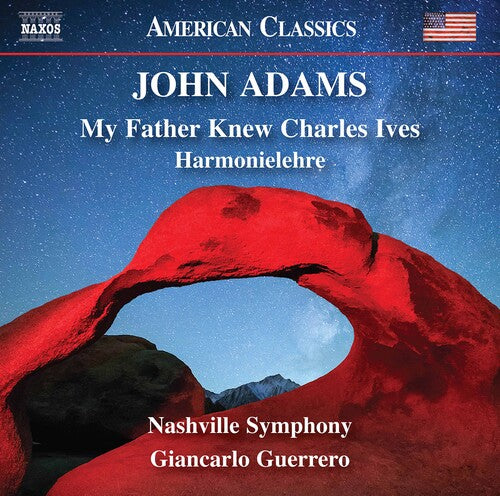
Adams: My Father Knew Charles Ives; Harmonielehre / Guerrero, Nashville Symphony
CD$19.99$9.99Naxos
Jan 15, 20218559854 -
![]()

-
![]()

-
 On Sale
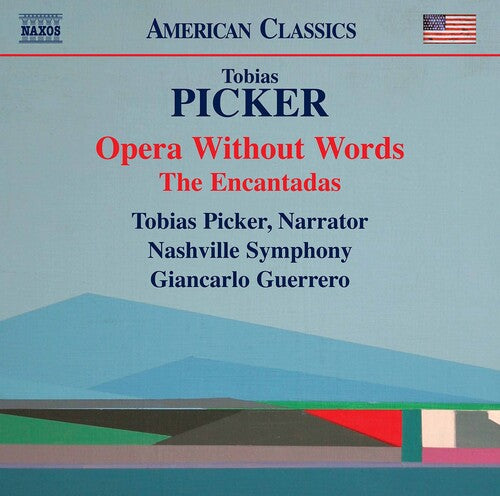
Picker: Opera Without Words; The Encantadas / Guerrero, Nashville Symphony
CD$19.99$9.99Naxos
Aug 28, 20208559853 -
![]()

-
![]()

-
 On Sale
Tower: Violin Concerto… / Lin, Guerrero, Nashville Symphony
CD$19.99$9.99Naxos
May 26, 20158559775 -
![]()

-
![]()

-
 On Sale
Riley: Palmian Chord Ryddle, Royal Majestic / Guerrero, Nashville Symphony
CD$19.99$9.99Naxos
Nov 10, 20178559739 -
![]()

-
![]()

-
 On Sale
Schwantner: Chasing Light / Guerrero, Nashville Symphony Orchestra
CD$19.99$9.99Naxos
Jun 28, 20118559678 -
![]()

-
![]()

-

Harbison: Requiem / Guerrero, Nashville Symphony
$19.99CDNaxos
Oct 12, 20188559841 -
![]()

-
![]()

-
 On Sale
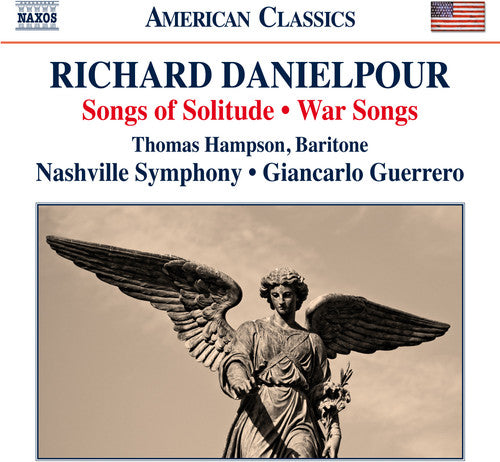
Danielpour: Songs of Solitude & War Songs / Hampson, Guerrero, Nashville Symphony
CD$19.99$9.99Naxos
Oct 14, 20168559792 -
![]()

-
![]()

-
 On Sale
Danielpour: Darkness in the Ancient Valley / Guerrero, Nashville Symphony
CD$19.99$9.99Naxos
Sep 24, 20138559707 -
![]()

-
![]()

-

Paulus: Three Places of Enlightenment; Veil of Tears; Grand Concerto for Organ and Orchestra
$19.99CDNaxos
Oct 14, 20148559740 -

Wind Concertos / Guerrero, Nashville Symphony
$19.99CDNaxos
Feb 09, 20188559818 -
![]()

-
![]()

-
 On Sale
The Best of Giancarlo Guerrero & the Nashville Symphony
CD$12.99$9.99Naxos
Aug 14, 2015950141


Adams: My Father Knew Charles Ives; Harmonielehre / Guerrero, Nashville Symphony
A 2021 GRAMMY Nominee for Best Orchestral Performance!
Pulitzer and Erasmus Prize-winning composer John Adams occupies a unique position in the world of American music. His works stand out among contemporary classical compositions for their depth of expression, brilliance of sound, and the profoundly humanist nature of their themes. Adams describes My Father Knew Charles Ives as “an homage and encomium to a composer whose influence on me has been huge.” Harmonielehre was a deliberate move by Adams to expand his musical language beyond Minimalism, keeping its energetic pulse but embracing the rich tonal resources of the past to create a work that has accrued an aura of timelessness. Six-time GRAMMY Award-winning conductor Giancarlo Guerrerois music director of the Nashville Symphony and the NFM Wroc?aw Philharmonic in Poland, as well as principal guest conductor of the Gulbenkian Orchestra in Lisbon, Portugal. He has championed contemporary American music through numerous commissions, recordings and performances with the Nashville Symphony, presenting eleven world premieres of works by Michael Daugherty, Terry Riley, and others. As part of this commitment, he helped guide the creation of Nashville Symphony’s Composer Lab & Workshop initiative.
REVIEWS:
In point of fact, John Adams’ father did not know Charles Ives, but imagined that they had a good deal in common, and that was a springboard to a work that is unlike any other among Adams’ output. It’s not at all clear why My Father Knew Charles Ives has been so neglected. The work gets a detailed, sympathetic treatment here from Giancarlo Guerrero and the Nashville Symphony Orchestra. Guerrero and the Nashvillians have done a major service by reviving My Father Knew Charles Ives.
– AllMusicGuide.com (James Manheim)
Given the difference in ambiance and style between the two works, these brilliantly played and recorded performances might just make an ideal point of entry for those new to the composer.
– MusicWeb International


Picker: Opera Without Words; The Encantadas / Guerrero, Nashville Symphony
Tobias Picker, hailed as “a genuine creator” by The New Yorker, has written extensively for the stage and for symphonic forces, and these two approaches are represented in this album. The Encantadas (an older name for the Galapagos Islands) derives from a novella by Herman Melville. Picker has set it as a melodrama, exploring the enchanted isles in all their quietly menacing and spectacular beauty. In a radical new form, Picker’s Opera Without Words is set to a libretto by Irene Dische that has now been removed, allowing the music alone to bear the expressive richness and intensity of this “secret opera.” Tobias Picker has been commissioned to write numerous works in other genres, including operas, three symphonies, concertos for violin, viola, cello and oboe, four piano concertos and chamber music. His many honors include the 2020 GRAMMY Award for Best Opera Recording (Fantastic Mr. Fox). Picker is a lifetime member of the American Academy of Arts and Letters and is artistic director of the Tulsa Opera, a post he has held since 2016.
REVIEW:
The title for The Encantadas (1983) comes from the early name for the Galapagos Islands. In six sections it relates the journey made there by Herman Melville. The work was conceived for narrator and a standard sized orchestra, and, on this recording, the composer is the very articulate voice that relates Melville’s discoveries he made there.
The more recent score, Opera Without Words, was completed five years ago, and had a strange birth. He had hired a librettist, Irene Dische, to conceive the story, and, after many discussions, all was completed, even down to the stage actions and directions for the producer. But in the end Picker deciding to dispense with words. It receives its World Premiere Recording by one of the commissioning orchestras, the Nashville Symphony. They, and their conductor Giancarlo Guerrero, provide a very colourful score, both works instantly enjoyable in pure tonality. The booklet includes the words narrated in The Encantadas and I hope there is more Picker coming from Naxos.
-- David's Review Corner (David Denton)
This new release from Naxos brings together the two poles of Tobias Picker’s output: symphonic music and opera. He brilliantly straddles both worlds, drawing upon each to bring something new to the other.
…The music on this disc is impassioned and adventurous, providing the curious listener a great introduction to Tobias Picker’s output. The recorded sound is excellent, and the Nashville Symphony is in top form. Recommended.
-- Fanfare


Tower: Violin Concerto… / Lin, Guerrero, Nashville Symphony
Review:
In the Violin Concerto the ear is caught by the constantly changing colours of the soloists interaction with different orchestral players. Violinist Cho-Liang Lin is lyrical and muscular as required, and his slender tone is well balanced with the excellent Nashville Symphony. The orchestra impresses also in two more recent pieces by Tower, and bears further witness to Tower's imaginative handling of instrumental coloring.
– BBC Music Magazine


Riley: Palmian Chord Ryddle, Royal Majestic / Guerrero, Nashville Symphony
Terry Riley’s name will always be associated with his breakthrough work In C, but his influence on modern music has stretched far beyond minimalism. Both of the works on this recording reveal Riley’s spirit of exploration and his close collaboration with remarkable musicians. Commissioned by the Nashville Symphony, The Palmian Chord Ryddle is a kind of musical autobiography in which electric violin pioneer Tracy Silverman’s “one-man string quartet” sets the pace for the sparse, translucent orchestration. At The Royal Majestic is another recent example of Riley’s work with a symphony orchestra and a virtuosic soloist, in this case organist Todd Wilson. Its title refers to “the mighty Wurlitzer housed in grand movie palaces,” and the music draws on a wide variety of genres including gospel, ragtime, Baroque chorales, and boogie.
REVIEW:
The late career of Terry Riley has received less attention than that of Philip Glass or even Steve Reich. The resurgent Nashville Symphony under Giancarlo Guerrero makes a good case here that such neglect is misguided. The Palmian Chord Ryddle (2011) is an eclectic, playful eight-movement work for electric violin and orchestra, but steering mostly clear of highly extended techniques. Even stronger is At The Royal Majestic, an homage to the golden age of the theater organ. Engineering kudos for clarity in an extremely diverse set of materials. Highly recommended.
– All Music Guide (James Manheim)


Schwantner: Chasing Light / Guerrero, Nashville Symphony Orchestra
SCHWANTNER Percussion Concerto 1. Morning’s Embrace. Chasing Light • Giancarlo Guerrero, cond; 1 Christopher Lamb, perc; Nashville SO • NAXOS 8.559678 (68:00)
Bottom line first: If you know and love the music of American composer Joseph Schwantner, you will find this brilliantly performed and vividly recorded disc irresistible. You need read no further. Those who are unfamiliar with the music of this magnificently gifted composer are urged to read on.
Schwantner long ago established himself as one of the preeminent composers of our time. Born in Chicago in 1943 and educated at Northwestern University, Schwantner has been the recipient of numerous awards including the 1970 Charles Ives Scholarship and the 1979 Pulitzer Prize, as well as commissions from the New York Philharmonic, the Boston Symphony, the Saint Louis Symphony, the National Symphony, and many other world-class ensembles and artists. His style is immediately accessible and very eclectic, incorporating elements of French Impressionism, jazz-influenced harmonies, African drumming, and Minimalism. Schwantner often finds inspiration in poetry, the verbal imagery of which frequently becomes the basis for his titles—… and the mountains rising nowhere, Aftertones of Infinity, Chasing Light (included on this disc), etc. Early on he developed his own unique sound, distinguished by mildly dissonant harmonies scored in an open manner, often presented in glittering pyramid and cascade effects. He is also a master orchestral colorist. Schwantner’s early works were somewhat episodic and fragmented, relying almost entirely on successions of independent and seemingly unrelated sonic tapestries, held together by a recurring, structurally binding chord. More recently, his works have been more forward-moving and thematically based (though I would hesitate to describe them as melodic in the traditional sense), while still retaining the composer’s unique sound and compositional fingerprints.
My friend and Fanfare colleague Walter Simmons very accurately described Schwantner’s 1994 Percussion Concerto as “a tremendously exciting showpiece, involving the featured instruments in lots of activity, well organized into a coherent statement” ( Fanfare 21:6). The emotional and musical heart of the work is the second movement, “In Memoriam,” a moving elegy to American composer Stephen Albert, a close friend of Schwantner, whose life was cut short in a car accident at age 51. The binding element of the movement is the bass drum, which plays a repeated rhythm representing the beating of a human heart. The emotional effect is overwhelming as the heartbeat fades and slows to silence. The two outer movements are more overtly flashy, though no less musically substantial, displaying the virtuoso potential of a virtual arsenal of percussion instruments. The work was commissioned by the New York Philharmonic for its principal percussionist, Christopher Lamb, who performs it on this disc and whose insightful, texturally clear, and colorful interpretation makes a wonderful companion to the more overtly virtuosic premiere recording by Evelyn Glennie and the National Symphony Orchestra, conducted by Leonard Slatkin (RCA 68692). I would not want to be without either recording.
Two recent works, both of which were inspired by the sunrise at Schwantner’s home in rural New Hampshire, complete the disc. The composer’s own wonderfully informative program notes, upon which I could not improve, provide eloquent and accurate descriptions of these works. Schwantner tells us that his Morning’s Embrace , composed in 2005, “draws its spirit and energy from the intensely vibrant early-morning sunrises I experience living in rural New Hampshire. The powerful kaleidoscope of hue and color piercing the morning mist and trees provided potent imagery for my musical imagination.” The work is a dazzling procession of orchestral color from dark to light, the effect of which is quite breathtaking.
Chasing Light from 2008, a similarly inspired work, concludes the disc. Again in the composer’s words, “One of the special pleasures of living in rural New Hampshire is experiencing the often brilliant and intense early-morning sunrises, reminding one of Thoreau’s words, ‘Morning is when I am awake and there is a dawn in me.’” He further states, “ Chasing Light , like my earlier work Morning’s Embrace , also draws inspiration from the celebration of vibrant colors and light that penetrate the morning mist as it wafts through the trees in the high New England hills.” Like its companion piece, this four-movement orchestral tour de force is a feast for the ears.
The Nashville Symphony, conducted by its music director, Giancarlo Guerreo, plays the music as if it owns it, stepping up to give performances befitting the greatest orchestras in the world. The recording is rich and lucidly detailed, though I would have preferred a bit more orchestral presence in the concerto. Highly recommended and a Want List no-brainer.
FANFARE: Merlin Patterson


Harbison: Requiem / Guerrero, Nashville Symphony
-----
REVIEW:
The Requiem is original and striking, but in a relatively traditional mold, with gorgeous solo lines—the thread of melody that runs through the piece unifies and humanises it—choral and vocal counterpoint that dates to the Baroque but in modern tonal harmonies, and a richness of emotional depth and harmonic and textural intricacy that make it a more than worthy addition to the distinguished tradition of concert requiems.
– Records International


Danielpour: Songs of Solitude & War Songs / Hampson, Guerrero, Nashville Symphony
A 60th Annual Grammy Award Nominee
Acclaimed as one of America’s leading contemporary composers, Richard Danielpour wrote Songs of Solitude as a response to the events of 9/11. Drawing on the poems of W.B. Yeats, the work enshrines a sense of economy and sparseness, formed of a set of six powerful orchestral songs. The motivating force for War Songs was a series of photographs of the young men and women killed in the Iraq War. The song cycle, with its texts by Walt Whitman, was written for the Nashville Symphony to commemorate the 150th anniversary of the end of the Civil War. Toward the Splendid City is a portrait of New York City driven by Danielpour’s love-hate relationship with his hometown.
------
REVIEWS:
Performances are exceptionally well-wrought, detailed and strong. The sound is excellent. The music unforgettable. Very much recommended.
– Gapplegate Classical-Modern Music Review
Thomas Hampson…performs the music with just the right blend of evenness and emotional intensity, and the effect of the final and longest song, Come Up from the Fields Father, which lasts half the length of the whole cycle, is especially affecting here. The accompaniment by the Nashville Symphony under Giancarlo Guerrero is nuanced and subtle throughout, fitting the music very well indeed. Hampson and Guerrero are also well-teamed for Songs of Solitude.
– Infodad.com (October 2016)


Danielpour: Darkness in the Ancient Valley / Guerrero, Nashville Symphony
-----
REVIEW:
The program closes with A Woman’s Life (2007), based on a cycle of poems on that topic by Maya Angelou, who read the cycle, apparently unforgettably, to Danielpour and his wife in 2006. These songs are pitch perfect and memorably touching. I was enthralled from the start—a childhood poem of devastating innocence cloaked with an aura usually reserved for the likes of Barber—and if you love his music and American song repertoire in general you must hear this cycle. The finale is unspeakably beautiful. Ms Brown sings with loving understanding. The Nashville players sound great, as is usual these days.
–American Record Guide


Paulus: Three Places of Enlightenment; Veil of Tears; Grand Concerto for Organ and Orchestra
So we have two concertos of very similar profile and dimensions, flanking a short piece for string orchestra. The first three tracks contain the Concerto for String Quartet and Orchestra, a work written at the behest of the leader of the Cleveland Quartet, William Preucil. It’s interesting that the middle movement is by far the longest – longer in fact than the other two put together – and also that the Grand Concerto on tracks 5-7 has very much the same profile.
What of the music’s style and content? Firstly, I’d recommend listening to the CD before you read too much of the ‘blurb’, some of which is a little off-putting and pompous. I found this an enormously rewarding and enjoyable listen; Paulus is not a progressive composer, nor is he a ‘minimalist’. As you listen, you are more likely to relate his style to music of the second half of the twentieth century – Shostakovich, perhaps, in the nervous rhythms of the Concerto for String Quartet’s thrusting first movement, and maybe even Tippett in the rather beautiful but uneasy slow movement that follows. That is not to say that Paulus is derivative; I only cite these composers to give a stylistic reference point.
The concerto is sub-titled Three Places of Enlightenment, and each movement has a title too; the first is From Within, the second From Afar and the lively third is From All Around and Radiating Ever Outward. Make of that what you will, but the simple fact is that this is entertaining music, superbly conceived for the forces involved.
Veil of Tears is an interlude from Paulus’ holocaust-inspired oratorio To Be Certain of the Dawn. It is a searching, desolate piece — again Shostakovich comes to mind — which could and should find its way into the established string orchestra repertoire. Once more, the composer shows what a wonderful ear he has for texture, and creates music which, while not incredibly hard to play, still manages to use to the full the resources available to him.
The programme on this disc is well constructed, because the Grand Concerto for Organ and Orchestra begins in darkness, following on from the mood of Veil of Tears. This first movement soon opens out into an eventful quicker section, contrasting the solo organ and the various sections of the orchestra in highly effective ways. The recording is excellently balanced – organ concertos are notoriously tricky in this respect – and the alert, characterful playing of the Nashville orchestra under Guerrero comes over with total clarity.
Another refreshing characteristic of Paulus is that he is not afraid of melody. The middle movement of the Grand Concerto begins with a fine example, a winding descending line that ends with the quiet entry of woodwind and strings. The textures here are wonderful, the high-pitched reed tones of the organ blending and mixing with the upper woodwind. Neither is he afraid of a climax, as the colossal build-up at the centre of this magnificent movement (sub-titled Austere: Foreboding) attests. Out of this emerges a long climbing melody in the violins that seems the antithesis of the despondent falling phrase of the opening. The movement ends very quietly. Incidentally, in his note on this movement, the composer mentions his reference to a hymn-tune Come, come ye saints, set to an English folk-melody All is Well. It’s heard softly in the organ near the end.
Busy strings and percussion usher in the finale, Jubilant. It certainly is, and witty too, as it seems to re-create the celebratory mood of the good old Widor Toccata. The energy is vast, and over the organ’s frenzied activity, Paulus introduces the tune O Waly Waly high in the violins. Not sure why, but that doesn’t matter – it’s an exhilarating ride.
All in all, a wonderful CD, and one I would passionately commend to anyone searching for a modern composer who is neither bamboozlingly obscure nor patronisingly accessible.
– MusicWeb International (Gwyn Parry-Jones)


Wind Concertos / Guerrero, Nashville Symphony
-----
REVIEW:
As 21st-century wind concertos go, this is as entertaining as it gets. On the evidence of these straightforward yet superbly constructed pieces I definitely want to hear more. The Nashville Symphony Orchestra and Giancarlo Guerrero accompany the featured soloists with real conviction in the fine acoustic of Laura Turner Concert Hall. Terrific sound from Gary Call and Tim Handley. Highly recommended.
– Gramophone


The Best of Giancarlo Guerrero & the Nashville Symphony
Since its own beginnings in 1946, the GRAMMY®-winning Nashville Symphony has been at the very heart of that Nashville sound. For decades, the players in the orchestra have been the same pros adding sparkle and polish to the country and pop records being cut in the studios along Music Row. And in a town that has always prided itself on being the creative hub for a uniquely American art form, the Nashville Symphony has maintained an abiding commitment to performing, commissioning and recording the music of American composers.
The orchestra’s earliest seasons included music from Barber, Copland and Persichetti—at a time when their work was fresh and new — along with homegrown works like Charles Faulkner Bryan’s Bell Witch Cantata. The same holds true in the 21st century, as the orchestra, now under the leadership of Giancarlo Guerrero, continues to champion the work of this country’s most distinctive musical voices, including Michael Daugherty, Richard Danielpour and Roberto Sierra (all of whom are included on this recording) along with hometown heroes like Edgar Meyer, Béla Fleck and Ben Folds.
This “Best of” collection, drawn from seven years’ worth of commissioning and recording projects, captures the full breadth of the American experience. Michael Daugherty taps into popular culture with his Superman-themed Metropolis Symphony, while Stephen Paulus’ Grand Organ Concerto draws inspiration from hymns and folk tunes. The music of Richard Danielpour and Roberto Sierra reminds us that we live in a nation of immigrants, with thematic elements that draw on each composer’s respective roots in Persian and Latin culture. The music of Astor Piazzolla, meanwhile, expands the scope of American music to include the composer’s beloved Argentinean tango.
Recorded in concert at Schermerhorn Symphony Center, Live From Music City also captures this world-class venue’s crystalline acoustics and the palpable sense of excitement you can feel every time the Nashville Symphony takes the stage. Warmth, reverberation, clarity — it’s all here, delivered by an orchestra that’s truly in tune with its place and time.
-- Jonathan Marx, V.P. of Communications, Nashville Symphony
