HARMONIA MUNDI
106 products
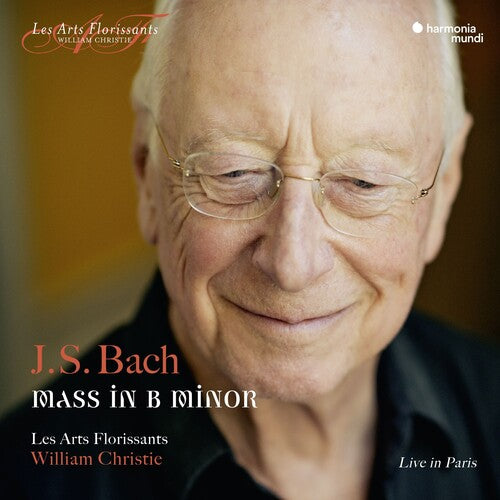
Bach: Mass in B Minor / Christie, Les Arts Florissants
A MusicWeb International Recording of the Month!
This is a marvellous new B Minor Mass and it is, without a doubt, the most French-sounding version of the piece to have yet come my way.
That might sound like a lazy stereotype. After all, it’s performed by that most renowned Francophile among musicians, William Christie, who has dedicated his life to rehabilitating the French Baroque and whose efforts have meant that names such as Lully, Rameau, Charpentier and Marais have been not only rescued from their specialist niche but have been given an uncontested place among the concert programmes of the Anglo-Saxons. With his ensemble Les Arts Florissants he has become one of the greatest champions of that music, so it’s hardly surprising that some of the interpretative dust of the French Baroque should rub off onto his Bach.
It’s not just a trope to describe his Bach as Gallic, however. It’s there right from the start. The opening Kyrie is the most mellifluous and honeyed I have heard since the advent of historical performance practice. The two great fugues proceed with cultured smoothness that sounds as though they have one eyebrow perpetually raised. It’s a sound of which, I suspect, Lutheran Bach would have profoundly disapproved. I rather liked it, however, and as a change from what has become the norm of period practice I found it very effective.
That’s only one example of one of the performance’s wider traits. Throughout, it has an elegance, an élan, a nonchalance, almost, that would make them seem entirely at home if performed in the court of ancien regime Versailles. The solos with their instrumental obligatti, for example, sound refined and polished in a manner that is a hundred miles away from the church and more from the realm of the theatre. There’s nothing wrong with that, though, and it’s in keeping with Christie’s vision. My favourites included Katherine Watson in the Laudamus te, with a wonderfully dusky violin, and André Morsch’s playful combat with the horn in the Quoniam. Tim Mead’s lovely countertenor is a repeated highlight, be it slotting into Watson’s soprano in the Christe or sustaining a blisterinly poignant Agnus Dei at the end.
Not only are the orchestral and instrumental playing super throughout, but the choral singing is top notch, too. That, however, will come as no surprise to those how know and love the work of Les Arts Florissants, and it’s great to hear them tackling one of the central works of the German repertoire. It’s a Teutonic world that they can’t be too practised in, but they bring something remarkably distinctive to it.
The main reason for the performance’s success, however, is Christie himself. Bringing his lifetime’s experience to the B Minor Mass must, surely, have been a labour of love rather than an expectation, and the results are wonderful. There is majesty aplenty in the Gloria, whose opening casts off the mellifluousness of the preceding Kyrie as though emerging into a new light, producing rumbustious, gloriously winning tone that brought a broad grin to my face, as did the outer bookends of the Credo. The Sanctus is taken at a rapid pace, with brilliantly detailed violin inflections to enliven the texture, and the final Dona nobis pacem is brilliantly paced.
Perhaps the highlight of the work is the Easter sequence, however, and, in particular, the Crucifixus. Here you get the unmistakeable whiff of the Opéra, because Christie slows down the pace and stresses the beat with what comes close to string (and voice) sforzandi in a way that surely mimics the nails being repeatedly battered into Christ’s suffering body. It’s this movement that will tell you whether this performance is for you. Some might find it vulgar or too overtly theatrical. I thought it wonderful, an example of the conductor using his experience in the theatre to enlighten and deepen his vision of Bach.
Choose for yourself, but I thought this the most memorable B Minor Mass to have come my way since the (entirely different) performance from John Butt and the Dunedin Consort. Explore it and be surprised.
– MusicWeb International (Simon Thompson)
BEETHOVEN: CELLO SONATAS OP.102
Debussy: La Mer & Premiere Suite D'orchestre
FOLIES PARISIENNES
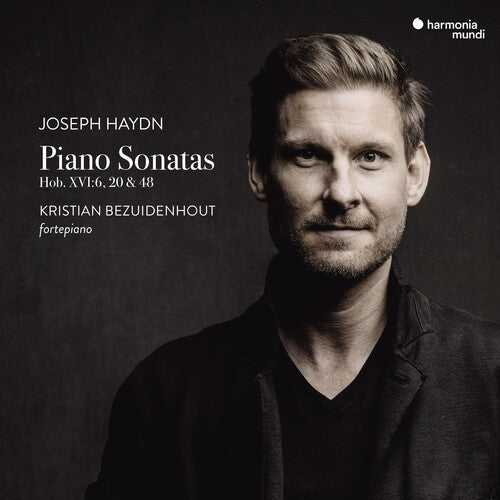
Haydn: Piano Sonatas / Bezuidenhout

A few years after a complete recording of Mozart’s solo piano works that has gradually come to be regarded as a benchmark, Kristian Bezuidenhout has taken all the time he needed to tackle Haydn, the other towering figure of the Viennese Classical keyboard repertory: “Preparing for this recording has been a vivid reminder that it is remarkably difficult to play Haydn’s music well, but that with enough care, and attention to detail, his music has the potential to come jumping from the page. It would be hubris to suggest that I am even close to unlocking any of its secrets, but I am so humbled by the sheer beauty, humanity, wit and delightful irony of this music, that the desire to continue is irresistible.”
-----
REVIEW:
The listener is drawn in by the myriad subtleties of Bezuidenhout’s playing and by the glorious sounds he draws from his instrument. Soon you’re hanging on every note of this sequence that seems to travel from darkness to darkness. Most important, though, is Bezuidenhout’s playing itself. Technique is obviously not an issue. Decoration, too, is sparing rather than trowelled on. This is the very opposite of ‘look-at me’ pianism.
– Gramophone
Rachmaninoff: Piano Trios / Trio Wanderer
The pieces by Suk and Grieg add a further touch of character to the picture, which is painted with an exceptionally rich palette: the artistry of the phenomenal Trio Wanderer.
-----
REVIEWS:
The Rachmaninov Trios share not only a sombre soundworld but a clarity of line that’s captured engagingly in these lyrical yet unsentimental performances by the Trio Wanderer. The Wanderers’ performance, a notch faster than many, has an urgency that is highly persuasive. Grieg’s dark and impassioned Andante con moto fits right in after all this, and the disc is rounded off with a sweetly understated Elegie by Suk. – BBC Music Magazine
The Trio Wanderer’s new disc, centred around Rachmaninov’s youthful trios, has all the finesse and subtlety that we’ve long associated with this French ensemble. From the start, though, one thing struck me – how curiously un-Russian these pieces sound in their hands. It’s partly due to their emphasis on clarity of texture, together with a certain Classical restraint.
– Gramophone
SONATAS FOR VIOLA DA GAMBA
Bach: Sonatas and Partitas, BWV 1001-1003
Shostakovich: Piano Concertos - Sonata for violin & piano op
Bach: Motets / Raphael Pichon, Pygmalion
LONDON 1720
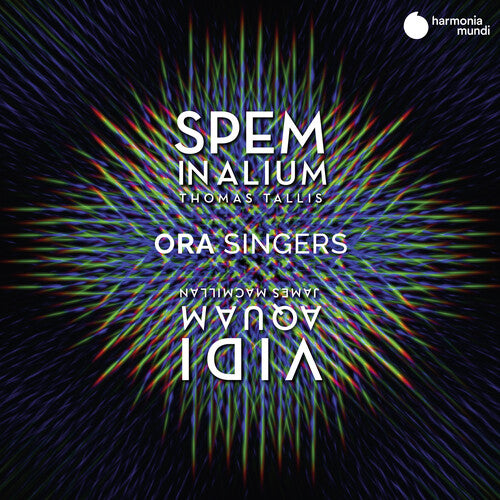
Tallis: Spem in Alium - MacMillan: Vidi Aquam / Digby, Ora Singers
A musical banquet from the Golden Age. This programme brings together a true choral landmark from the sixteenth century, with its present-day reflection, a commission by Sir James MacMillan. These two monumental, large-scale pieces bookend a ‘tasting menu’ of Renaissance works by Byrd, Tallis and many other composers. Common to them all is a link to Nonsuch Palace, arguably the location of the first performance of Spem in alium, and the centre of a rich vein of Tudor musical patronage.
-----
REVIEW:
Standing at either end of this programme are the forty-part motets. Spem in alium is very familiar and is widely acknowledged as a masterpiece of Tudor polyphony. Suzi Digby directs a performance that is simply magnificent. She had at her disposal a group of expert singers who were positioned in a circle with the conductor at the apex. The combined skills of the musician and the engineers means that, even in “vanilla” stereo the listener gets a very clear sense of the eight separate choirs – goodness knows what the performance would sound like in surround sound! There’s a truly thrilling sound at the points where the full ensemble sings flat-out, but just as impressive are the more subdued passages, which are delivered with admirable subtlety.
It can’t be an easy task to compose a homage to Spem but few composers are better equipped than Sir James MacMillan who has shown a deep understanding of and respect for the music of the Renaissance – notably that of Robert Carver – in some of his previous scores. In the booklet he comments that he “used the Tallis original as an inspiration in the way I utilised the eight five-voiced choirs, and how I moved the music from choir to choir, gradually building the sound up from one to forty voices.” He doesn’t quote from Spem in his score but he has used the structure of Tallis’s masterpiece as an inspiration. For his text, MacMillan used the text ‘Vidi aquam’ from the prophecy of Ezekiel.
As a homage to the great Tudor masterpiece, I’d say that Vidi aquam is an unqualified success. More than that, though, I’d say the work is a masterpiece in its own right. It is a wonderful response to the chosen text. In addition, it challenges both performers and listeners, yet it never leaves the listener behind because it exercises a huge sensory appeal.
The camera work and sound on the DVD is excellent. As for the CD, producer Nick Parker and engineer Mike Hatch have made a fantastic job of the recording. All the smaller pieces benefit from clarity and intimacy of sound. The two big pieces have been captured with great success. You can hear an abundance of detail and when the full ensemble sings out at full volume, the sound is magnificent. John Milsom’s notes are first-rate.
This is a simply terrific disc. I’ve admired all of the previous ORA Singers releases but, considering both the expert performances of the smaller works and the thrilling forty-part performances, I’m inclined to think this is their finest achievement to date.
– MusicWeb International (John Quinn)
Rachmaninov: Vespers
SCHUMANN: COMPLETE SYMPHONIES
BEETHOVEN: COMPLETE PIANO TRIOS & TRIPLE CONCERTO
Mein Traum - Schubert, Weber, Schumann
RAVEL: CONCERTOS POUR PIANO - MELODIES
TELEMANN - BACH - BRITTEN - SHAW
MOZART: GRAN PARTITA
SCHUBERT: GLAUBE HOFFNUNG LIEBE LIEDER
GYORGY KURTAG: KAFKA-FRAGMENTE
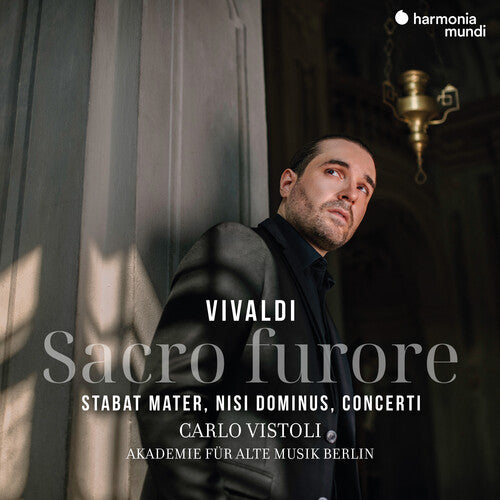
Vivaldi: Sacro Furore / Carlo Vistoli
Harmonia mundi is proud to welcome the exceptional countertenor Carlo Vistoli as a new exclusive artist. Here he joins the Akademie für Alte Musik Berlin to explore some of Vivaldi's finest sacred music. Alongside the famous Nisi Dominus and Stabat Mater, the quasi-operatic motet, In furore, shows the extravert, theatrical side of Vivaldi's genius, for the purposes of edification, to be sure, but also for our greater delight.
Mozart: Serenata / Onofri, Munich Chamber Orchestra
Continuing an old tradition of outdoor music, Mozart raised the serenade genre to an outstanding level of accomplishment. Harmonia mundi's first collaboration with Enrico Onofri and the Münchener Kammerorchester couples Mozart's most famous contributions to the form: Eine kleine Nachtmusik, the "Posthorn" Serenade (with it's picturesque solo for the eponymous instrument) and the majestic "Haffner" Serenade, with Isabelle Faust as guest star.
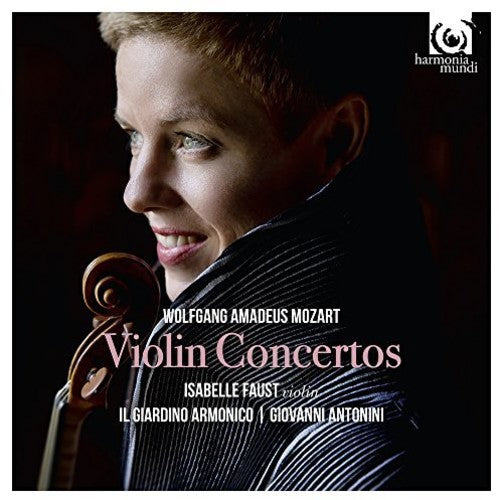
Mozart: Violin Concertos
Bach: Sonatas for Violin & Harpsichord / Faust, Bezuidenhout

Bach’s six violin sonatas are remarkable not only because of their musical richness, but also due to their innovative scoring. Based on the Baroque trio sonata form, they transcend its conventions, representing a prototype for the violin-piano sonata form of the Classical and Romantic periods. These sonatas collectively explore the many possibilities of what was then a unique instrumental combination. They present a nuanced and vibrant dialog between the performers – attributes that are conveyed perfectly by the stellar combination of violinist Isabelle Faust and harpsichordist Kristian Bezuidenhout.
-----
REVIEW:
Faust and Bezuidenhout played these sonatas a lot in concert before taking them into the studio and it shows – both in the detail and the trust that allows for real risk-taking. Can I find fault with this set? No, I cannot. It’s an eloquent and beautifully recorded homage to the composer and demands to be in the collection of all Bach lovers post-haste.
– Gramophone