Praulinš: The Nightingale & Music By Bortz, Bruun, Rasmussen / Petri, Layton, Danish National Vocal Ensemble
OUR Recordings
$18.99
November 15, 2011
THE NIGHTINGALE • Michaela Petri (rcr); Stephen Layton, cond; Danish Nat’l Vocal Ens • OUR RECORDINGS 6.220605 (59:22)
PRAULINS The Nightingale. BÖRTZ Nemesis Divina. RASMUSSEN I. BRUUN 2 Scenes with Skylark
Would that all “concept albums,” particularly those of new music, came out as well as this. Recorder player Michaela Petri, a veteran of at least two decades’ worth of performances around the globe, was absolutely thrilled with the 2007 world premiere of Daniel Börtz’s Nemesis Divina in Stockholm, so much so that she began to think of doing an album of modern music including the recorder with a vocal choir. A year later, composer Ugis Praulins was asked to write a similar piece, and he chose Hans Christian Andersen’s famous tale, The Nightingale. When they told conductor Stephen Layton of their plans, he surprisingly suggested not his own group, Polyphony, but the newly established Danish National Vocal Ensemble. Serendipitously, the ensemble’s director, Ivar Munk, told them that he had been thinking of working with Petri for some time, and so gave his full support to the project.
This disc is the result, and I don’t think it is going too far to say that more than half of the record’s success is due to Layton’s greatness as a choral director. Those who have read my few reviews of his group know that I am a huge fan of Polyphony and, by inference, of Layton. He really knows how to get the best out of a choir, not only the usual things like good blend and phrasing but also the unusual things like rhythmic acuity, flawless diction, and a deep knowledge of how to get the most and best out of all of his singers.
Praulins, a Latvian composer, is one of those whose developing years were spent listening to as much rock as classical music, particularly King Crimson and Gentle Giant. He also formed his own rock band, Vec?s M?jas. According to the notes, the surge of Latvian cultural nationalism that arose from the collapse of the Soviet Union in 1991 led him to delve into the music and traditions of pre-Christian Latvia, which deeply influence his work. While rejecting formalism, Praulins nevertheless seeks to join folk songs, Renaissance polyphony, and “a confident theatricality to create music that entertains and uplifts.” The Nightingale is both an unusual piece and an appealing one, using the chorus in a highly virtuosic manner, ranging from the bass low D to soprano D above high C. Of course, Petri’s recorder is the nightingale, and her “voice” is heard signaling the most important events and changes in the story.
Börtz is known for his film scores for Ingmar Bergman, and like the filmmaker he uses an intuitive and modern approach to matters of structure and form. As a result of working with Bergman, Börtz has also absorbed what the notes call “the metaphysical darkness” of Bergman, which he then processes through his music. His earlier works were strongly influenced by the Polish avant-garde, composers like Penderecki, but beginning in the 1980s he changed to a more melodic and linear style. This led to his operas Bacchanterna and Marie Antoinette, and oratorio And His Name Was Orestes. Nemesis Divina is based on two texts by 18th-century botanist-physician Carl Linnaeus, Respiratio Diaetetica (The Dietitics of Respiration) and Nemesis Divina, a lengthy treatise on theodicy, written to help his son. The composer describes the setting of Linneaus’s words as largely episodic, with the recorder working as an auditory form of “theatrical lighting.” To this end, Petri moves step-by-step from the dark sound of the tenor recorder to the piercing sound of the sopranino. I find Börtz’s choral writing absolutely fascinating, breaking the sound into little shards of color by using neutral syllables. The rather enigmatic nature of Linnaeus’s text, questioning the existence of God because it cannot be seen or touched yet can be intuited like the ego itself, lends itself perfectly to Börtz’s musical panorama. The choir continues to divide itself until it is in eight parts, singing the words in a rhythmically complicated, hocket-like style. The music becomes chromatic, spiked with tritones, gradually emerging as a sequence of three chords. (The notes say this, but so do my ears.)
Sunleif Rasmussen’s I is the musical setting of Danish modernist poet Inger Christensen’s self-reflective response to Wallace Stevens’s Thirteen Ways of Looking at a Blackbird. Rasmussen uses Christensen’s verse as a reflection on the human condition, intimacy, freedom, and creativity. The music starts with Petri playing mournfully on a bass recorder before the chorus enters, singing “A man and a woman are one” (and here, as unfortunately elsewhere, the Danish choristers’ inability to properly enunciate English comes to grief). I won’t quote more of the poem in detail here, but suffice it to say that Rasmussen’s music matches it in mood and structure. All through the piece, Rasmussen puts the sopranos opposite the rest of the choir, sometimes in call-and-response patterns but more often in imitative passages while the recorder never really stops, but continues to play an unfolding and developing melody. As in Börtz’s work, Petri keeps moving up through different ranges of the recorder, eventually sounding a shrill note in the section “Grasping the bird’s speech / Calling am I woman.” I find the composer’s masterly use of glisses through the chromatic scale particularly arresting in that they often obscure the actual pulse of the music.
The album concludes with Danish composer Peter Bruun’s Two Scenes with Skylark, based on the poetry of Gerard Manley Hopkins. The first, “The Sea and the Skylark,” opens with overlapping melodies that create a rich yet turgid texture reminiscent of the ocean. Petri gives us the rhapsodic song of the skylark through rippling arpeggios that provide gentle dissonance with the chorus. As Hopkins’s poetry turns to humanity’s inability to truly appreciate nature’s beauty, Bruun make the music even more dissonant. In the second part, “The Caged Skylark,” stuttering rhythms and fragmented textures depict the plight of the caged bird, which is compared to the plight of the soul.
Much of this music, but especially the Börtz piece and parts of The Nightingale, puts me in mind of P?teris Vasks’s Plainscapes, broadcast on St. Paul Sunday in 2005 by the Seattle Chamber Players with a wordless choir, but has still never been commercially recorded (according to ArkivMusic, anyway). I was mesmerized by Plainscapes, and I am similarly mesmerized by much of the music on this CD as well. Highly recommended.
FANFARE: Lynn René Bayley
{# optional: put hover video/second image here positioned absolute; inset:0 #}
OUR Recordings
Praulinš: The Nightingale & Music By Bortz, Bruun, Rasmussen / Petri, Layton, Danish National Vocal Ensemble
THE NIGHTINGALE • Michaela Petri (rcr); Stephen Layton, cond; Danish Nat’l Vocal Ens • OUR RECORDINGS 6.220605 (59:22) PRAULINS The Nightingale. BÖRTZ...
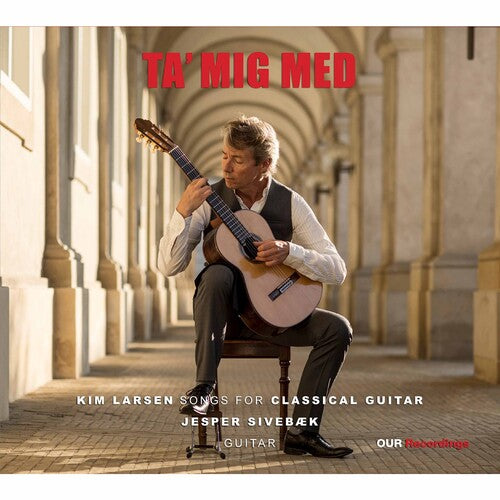
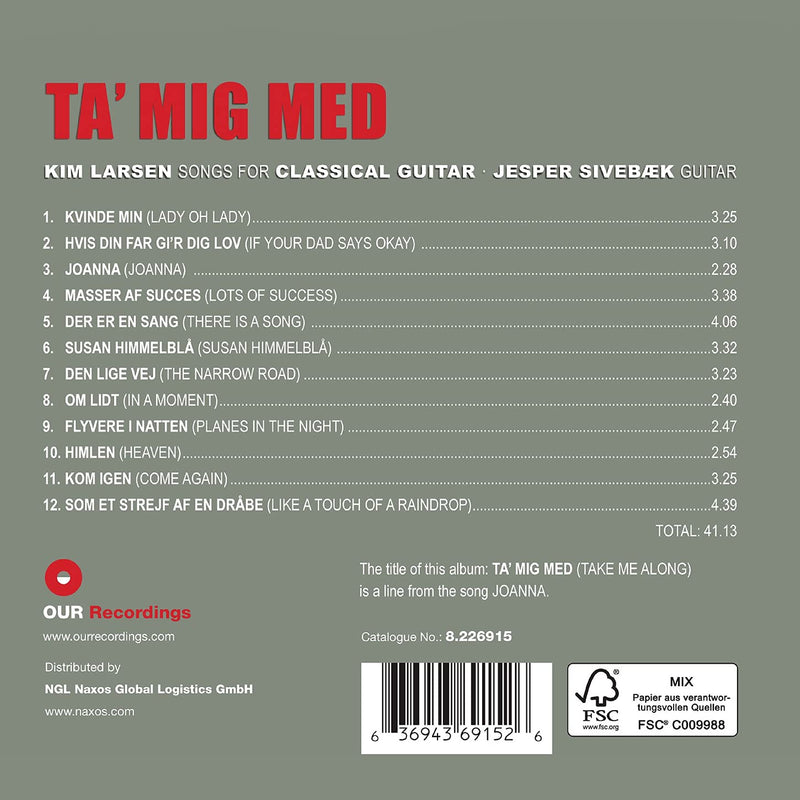
A journey into the heart of the Danish soul. Kim Larsen (1945-2018)-the much-loved Danish rock musician and multifaceted artist-captures in music and words the Danish soul. With his 500 recorded songs and 40 albums he is known by all Danes of all ages. Guitarist, and head of guitar department at The Royal Academy of Music in Copenhagen, Jesper Sivebæk, had 2 heroes in his youth: Andrés Segovia and Kim Larsen and they have followed him ever since. For more than 10 years Jesper Sivebæk has worked on the pieces on this album. With his great experience he uses the possibilities of the guitar to the utmost, and follows the classical tradition of making instrumental versions of folk songs as in Miguel Llobets arrangements of Catalan folksongs, Benjamin Brittens English and Chinese folksongs arrangements, and Bela Bartoks Hungarian folk songs. Sivebæk is true both to the beauty and the simplicity of Kim Larsens songs, and to his instrument the classical Spanish guitar. In these arrangements classical guitar players around the globe now have 12 new pieces to discover and put on their concert programs.
{# optional: put hover video/second image here positioned absolute; inset:0 #}
OUR Recordings
Larsen: Ta' Mig Med / Sivebæk
A journey into the heart of the Danish soul. Kim Larsen (1945-2018)-the much-loved Danish rock musician and multifaceted artist-captures in music and...
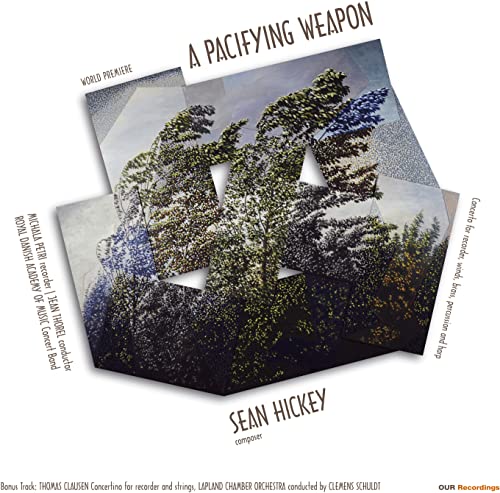
Hickey: A Pacifying Weapon / Petri, Thorel, Royal Danish Academy Concert Band
OUR Recordings
$32.99
May 12, 2017
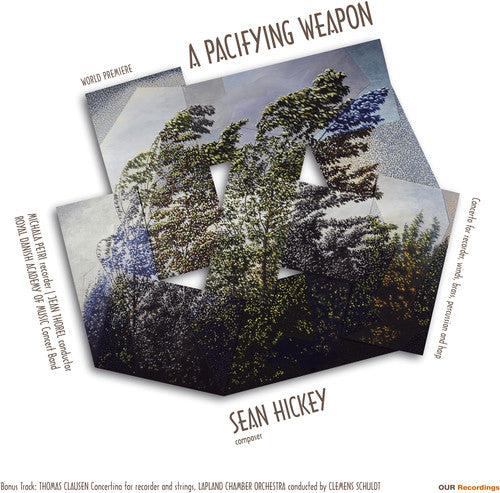
The featured work on this vinyl maiden voyage is American composer Sean Hickey's three-movement concerto for recorders, winds, brass and percussion, "A Pacifying Weapon". Composed as a resposne to recent, turbulent events, Hickey sought to convey the idea of a "tool or instrument that was capable of providing an instant and irreversible peace." In turning to the recorder, "an ancient instrument passed down unchanged through the years", Hickey invoked many aspects of the ancient instrument's personality, from the bucolic, the melancholic and even the militant. An extensive percussion battery enjoys second-billing in Hicikey's score, adding both drama and providing an effective foil for the recorder's solo displays. Sharing honors with both the composer and the soloist are the phenomenally talented ensemble of young musicians from 11 nations, attending the Royal Danish Conservatory of Music, who appear for their very first professional recording under the direction of Jean Thorel. Filling out the program is Thomas Clausen's charming Neo-Baroque Concertino for recorder and strings, originally released on Nordic Sound - Tribute to Axel Borup-Jørgensen.
{# optional: put hover video/second image here positioned absolute; inset:0 #}
OUR Recordings
Hickey: A Pacifying Weapon / Petri, Thorel, Royal Danish Academy Concert Band
The featured work on this vinyl maiden voyage is American composer Sean Hickey's three-movement concerto for recorders, winds, brass and percussion, "A...
This is a hybrid Super Audio CD playable on both regular and Super Audio CD players.
3263690.zz5_DIALOGUE_EAST_MEETS_WEST.html
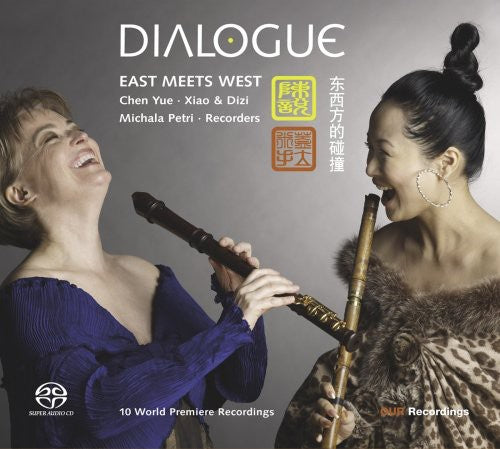
DIALOGUE—EAST MEETS WEST • Michala Petri (rec); Chen Yue (xiao, dizi) • OUR RECORDINGS 6.220600 (Hybrid multichannel SACD: 67: 46)
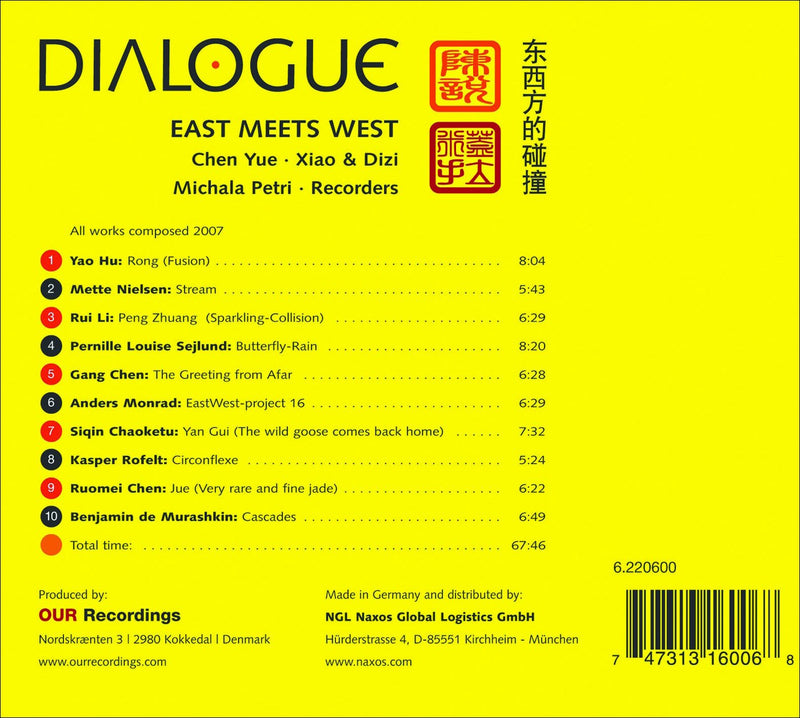
YAO HU Rong (Fusion). M. NIELSEN Stream. RUI LI Peng Zhuang (Sparkling-Collision). SEJLUND Butterfly-Rain. GANG CHEN The Greeting from Afar. MONRAD EastWest-project 16. SIQIN CHAOKETU Yan Gui (The wild goose comes back home). ROFELT Circonflexe. RUOMEI CHEN Jue (Very rare and fine jade). MURASHKIN Cascades
Contemporary Chinese pieces alternate with works by young Danes on this recording that teams the European recorder family with its Chinese analogs, the xiao and dizi. All of these pieces were written, mostly by composers under 30, in 2007 especially for this project spearheaded by the two performers. Most of the Chinese pieces sound distinctly Chinese, through the composers’ choice of scales and use of note-bending and other Asian playing techniques. A couple of them quote Chinese melodies, but none of this is travelogue music. Peng Zhuang, for instance, sounds like an extract from Orff’s Schulwerk. The Danish pieces, I suppose, are also typical of their culture, yet the greatest interest here is not hearing who uses a pentatonic scale and who does not, but how the various composers cause the two wind instruments to interact. Rong, for example, has Michala Petri and Chen Yue engage in independent but parallel play, whereas Stream establishes a closer, more interdependent relationship between the two lines. The Greeting from Afar by Gang Chen (not the composer by the same name responsible for the “Butterfly Lovers” Violin Concerto) is a playful piece calling for the highest instruments from the dizi and recorder families, while Circonflexe requires the players to switch among the full range of their instruments. Some of the pieces, like Cascades, are lovely, rippling, and fluid, while others are a bit more thorny. This is certainly not New Age meditation music, but neither is it strenuously avant-garde. Both artists play superbly, and the audio quality is notable for what it lacks—there’s no high-frequency distortion, no extraneous noise, no strange coloration, nothing but the natural sounds of the instruments recorded in the flattering acoustics of a Danish church.
FANFARE: James Reel
{# optional: put hover video/second image here positioned absolute; inset:0 #}
On Sale
OUR Recordings
Dialogue - East Meets West / Petri, Yue
This is a hybrid Super Audio CD playable on both regular and Super Audio CD players. 3263690.zz5_DIALOGUE_EAST_MEETS_WEST.html DIALOGUE—EAST MEETS WEST • Michala...
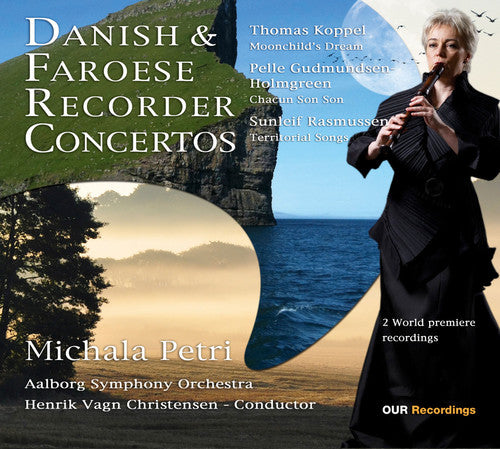
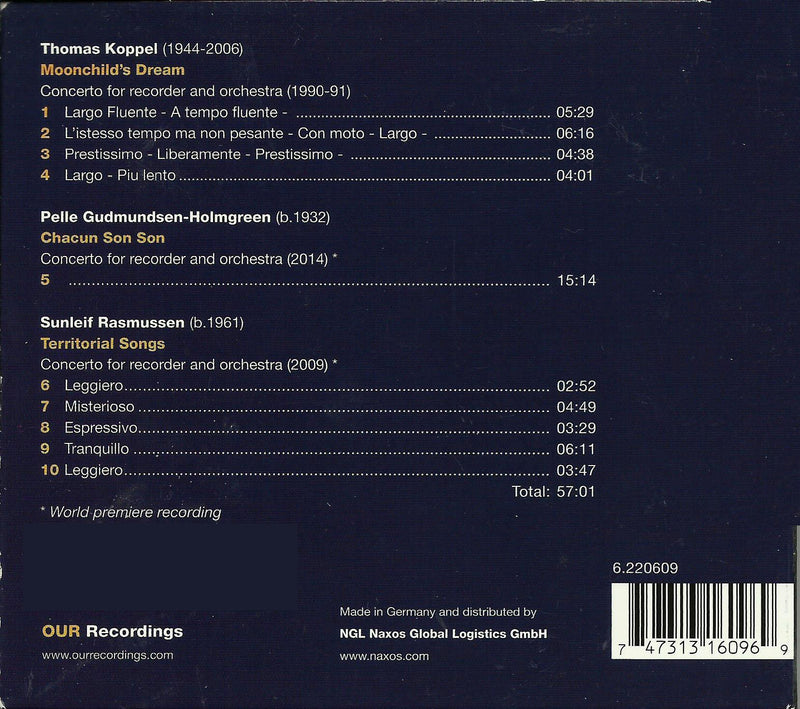
Throughout her extraordinary career, Michala Petri has embraced the entirety of the recorder’s repertoire, from the Baroque to the 21st c. Danish and Faroese Recorder Concertos is the latest installment in Michala’s ongoing “Concerto Project”, (previous releases include Chinese Recorder Concertos (6.220603), English Recorder Concertos (6.220606) and the Grammy®-nominated Movements (6.220531)), presenting new works composed especially for her, from an international roster of some of the greatest contemporary composers. The three works featured here provide just a sample of the rich and colorful diversity of Danish and Faroese contemporary music; from the late Thomas Koppel’s tender, tonally-centered Moonchild’s Dream, to Pelle Gudmundsen-Holmgreen, the dean of Danish composers, and his darkly humorous Chacun Son Son, to the vigorous and atmospheric 20-minute bird-cadenza for recorder and orchestra, Territorial Songs, by the internationally acclaimed Faroese composer Sunleif Rasmussen. A disc that NO fan of contemporary music or Michala Petri will want to be without!
{# optional: put hover video/second image here positioned absolute; inset:0 #}
OUR Recordings
Danish & Faroese Recorder Concertos
Throughout her extraordinary career, Michala Petri has embraced the entirety of the recorder’s repertoire, from the Baroque to the 21st c. Danish...
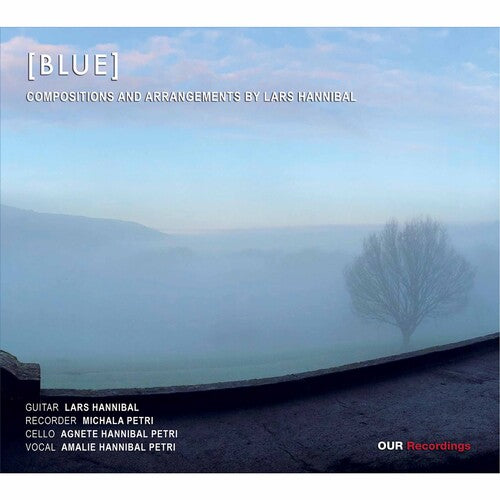
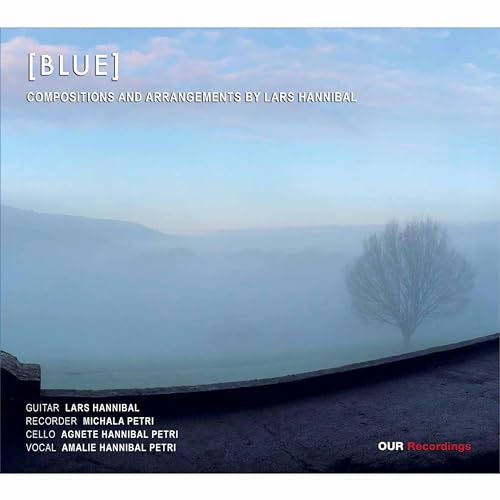
In releasing an album entirely of his own music, Guitarist, Lutenist and composer Lars Hannibal reflected upon an extraordinary – and somewhat unorthodox musical career. While studying classical guitar and lute with the great masters of the art, Hannibal lived a rich double life playing in a variety of bands and creative ensembles in artistic foment of ‘60s and ‘70s Counter Cultural Århus. It was during this time that Hannibal began finding his own creative voice, exploring the exciting intersections between Baroque and Classical form, the direct earnest expression of Danish folk music, the ear-pleasing appeal of popular song and the expressive possibilities of modal jazz. Hannibal has also found great joy in arranging music for the different ensembles he’s performed with, resulting in hundreds of arrangements for various instrumental combinations with guitar. Finally, as one of the most active musicians in Denmark, Hannibal has been a champion of living composer, including many of Denmark’s finest, including Jørgen Jersild, Palle Mikkelborg, Herman D. Koppel, Thomas Koppel and Vagn Holmboe. When assembling this program, it was only natural that Hannibal would draw on both his original works and his arrangements of Danish song. As a special treat, Hannibal, ever the mutli-faceted musician, the Neo-Classic composer, the pop songsmith, the faithful arranger of Danish folk song also takes pride in being Hannibal the Poppa, with his daughters, Agnete and Amalie and his life-long musical companion, his former wife Michala Petri joining him on his musical journey!
{# optional: put hover video/second image here positioned absolute; inset:0 #}
OUR Recordings
[BLUE] / Lars Hannibal
In releasing an album entirely of his own music, Guitarist, Lutenist and composer Lars Hannibal reflected upon an extraordinary – and somewhat...
Kodály & Ligeti: Lux Aeterna - Choral Works / Soelberg, Andersen, Nordtorp, Riis, Creed, DR VokalEnsemblet
OUR Recordings
$21.99
March 04, 2022
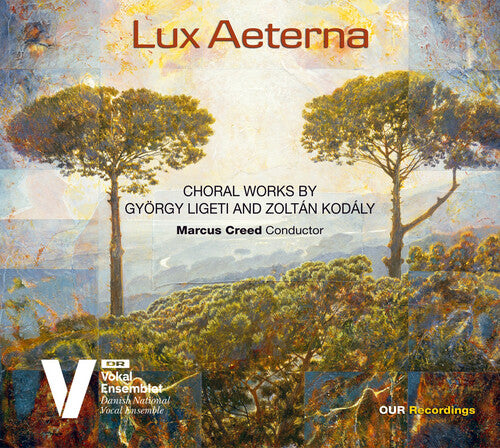
For most of the 20th century, the two giants of Hungarian music were Bartok and Kodaly. Following his explosion on the international scene in the mid-60s, Gyorgi Ligeti, a student of Kodaly, was added to that list. Kodaly was one of the most significant early figures in the field of ethnomusicology. He also composed prolifically for choirs. All of the Kodaly works on this program were influenced by folk music and chart the composer’s development from the world of late romanticism to the mini-cantata Matrai kepek (Matra pictures), including a shimmering performance of Esti Dal (Evening Song), his most beloved choral work. Most of music that Ligeti composed for a cappella choir was written in the mid-50s while still in Budapest. Alongside numerous folk song arrangements, like Mátraszentimrei Dalok, were pieces like Éjszaka – Reggel (Night – Morning) which were already pushing the sonic boundaries with clusters and onomatopoeic sounds. Ligeti’s mature style can be heard in the shimmering and justifiably famous Lux Aeterna while the late Drei Phantasien (on texts by Friedrich Holderlin) described by Ligeti himself as “emotional, “onomatopoetic,” overwrought, 16-voiced pieces (not micropolyphonic!)” is an example of his late Post-Modernist style. For this very special and demanding repertoire, both teacher and student are in good hands with the Danish National Vocal Ensemble and conductor Marcus Creed. Audiophiles will also be richly rewarded with the vivid imaging and “as real as it gets” sonic presence thanks to producer Michael Emery and technician Mikkel Nymand. A Dolby Atmos release is being planned.
{# optional: put hover video/second image here positioned absolute; inset:0 #}
OUR Recordings
Kodály & Ligeti: Lux Aeterna - Choral Works / Soelberg, Andersen, Nordtorp, Riis, Creed, DR VokalEnsemblet
For most of the 20th century, the two giants of Hungarian music were Bartok and Kodaly. Following his explosion on the international...


 {# optional: put hover video/second image here positioned absolute; inset:0 #}
OUR Recordings
{# optional: put hover video/second image here positioned absolute; inset:0 #}
OUR Recordings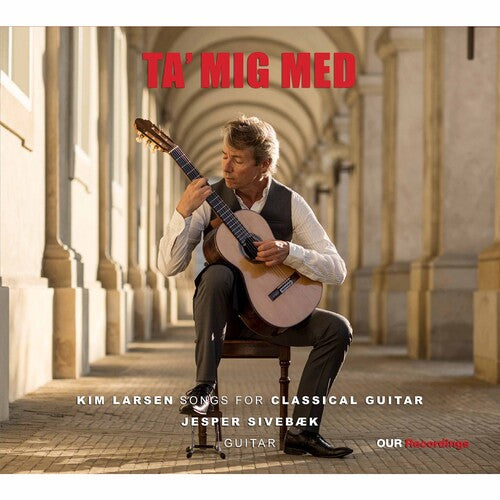 {# optional: put hover video/second image here positioned absolute; inset:0 #}
OUR Recordings
{# optional: put hover video/second image here positioned absolute; inset:0 #}
OUR Recordings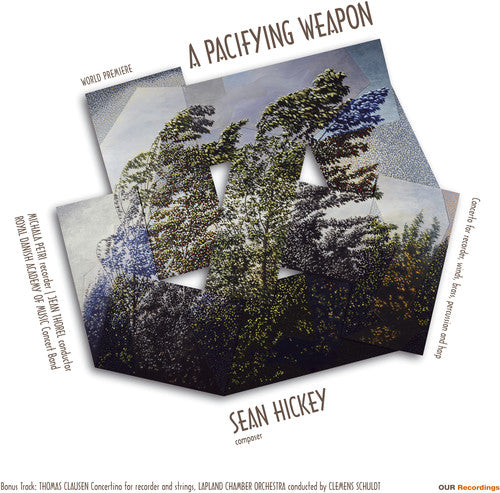 {# optional: put hover video/second image here positioned absolute; inset:0 #}
OUR Recordings
{# optional: put hover video/second image here positioned absolute; inset:0 #}
OUR Recordings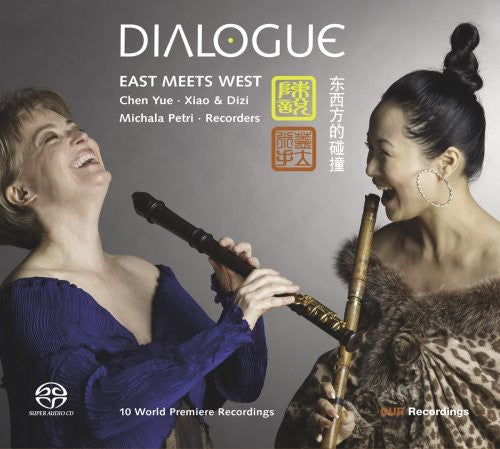 {# optional: put hover video/second image here positioned absolute; inset:0 #}
On SaleOUR Recordings
{# optional: put hover video/second image here positioned absolute; inset:0 #}
On SaleOUR Recordings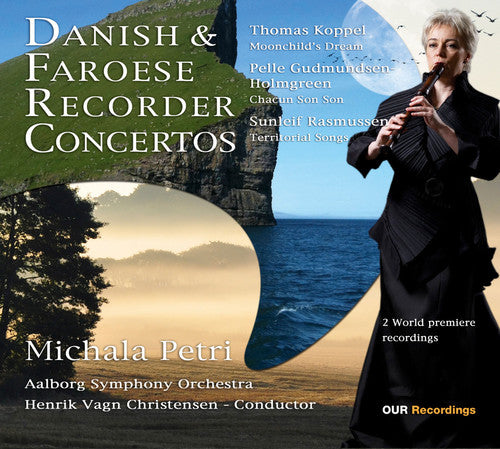 {# optional: put hover video/second image here positioned absolute; inset:0 #}
OUR Recordings
{# optional: put hover video/second image here positioned absolute; inset:0 #}
OUR Recordings![[BLUE] / Lars Hannibal](//arkivmusic.com/cdn/shop/files/3856781-3142498.jpg?v=1749308590&width=800) {# optional: put hover video/second image here positioned absolute; inset:0 #}
OUR Recordings
{# optional: put hover video/second image here positioned absolute; inset:0 #}
OUR Recordings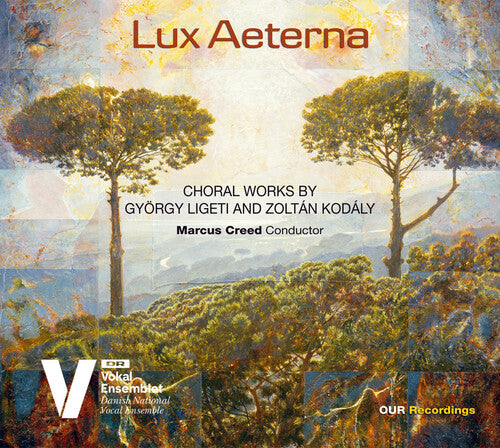 {# optional: put hover video/second image here positioned absolute; inset:0 #}
OUR Recordings
{# optional: put hover video/second image here positioned absolute; inset:0 #}
OUR Recordings


 {# optional: put hover video/second image here positioned absolute; inset:0 #}


 {# optional: put hover video/second image here positioned absolute; inset:0 #}


 {# optional: put hover video/second image here positioned absolute; inset:0 #}


 {# optional: put hover video/second image here positioned absolute; inset:0 #}


 {# optional: put hover video/second image here positioned absolute; inset:0 #}


![[BLUE] / Lars Hannibal](http://arkivmusic.com/cdn/shop/files/3856781-3142498.jpg?v=1749308590&width=800) {# optional: put hover video/second image here positioned absolute; inset:0 #}
{# optional: put hover video/second image here positioned absolute; inset:0 #}


 {# optional: put hover video/second image here positioned absolute; inset:0 #}