The composer's Russia Adrift is becoming something of a classic outside his native homeland. I was delighted to come across this recording of an arrangement for mezzo-soprano and orchestra; it's just as powerful as the original version. In addition, we have a beautiful three-movement 'small cantata' to words by Pasternak, Smeg idyot, from 1965, in which the choir's show their mettle, and from Music for Small Orchestra, from a year earlier, a work that undoubtedly has its own strength of character. This is an important addition to the ever-increasing Sviridov discography.
– Gramophone
{# optional: put hover video/second image here positioned absolute; inset:0 #}
On Sale
Naxos
Sviridov: Music for Chamber Orchestra / Serov, St. Petersburg State Symphony
Listen to the Naxos Podcast to learn more about this release The composer's Russia Adrift is becoming something of a classic outside...
Sissle & Blake's Shuffle Along of 1950: Rare Archival Recordings
Harbinger Records
$19.99
$9.99
October 19, 2018
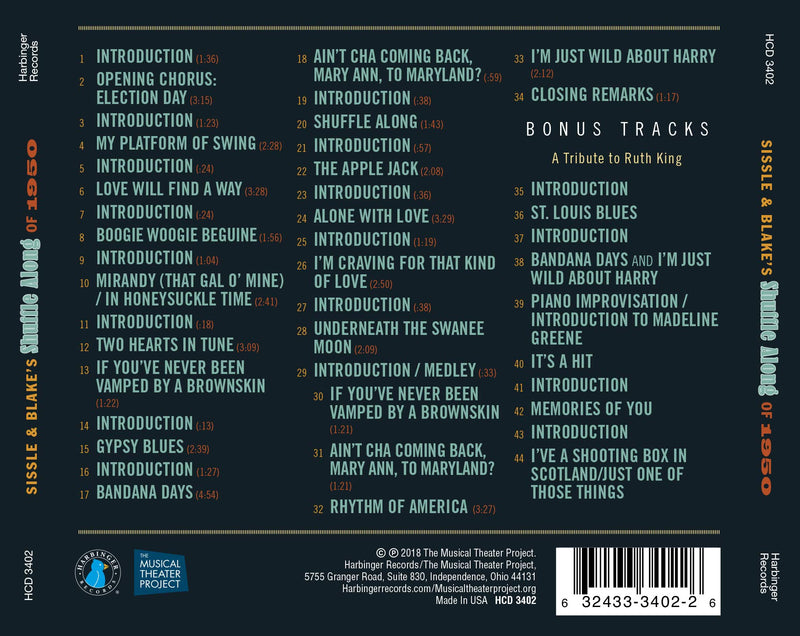
Continuing with Harbinger Records’ acclaimed series of albums devoted to jazz pianist, composer, Broadway songwriter, and black music pioneer Eubie Blake, we proudly present the original demo to the proposed Broadway musical ‘Shuffle Along of 1950.’ Harbinger’s recording of Sissle and Blake singing the score to the original production of ‘Shuffle Along’ won the Grammy Award for its brilliant liner notes by Richard Carlin and Ken Bloom, authors of an upcoming biography of Eubie Blake to be published by Oxford University Press. They are repeating their assignment for this recording. Also included is a bonus track featuring remastering of the only surviving acetate of a historical “Salute to Ruth King.” Ruth King was a famous Cleveland DJ who celebrated black musicians. And such notables as Sissle and Blake and the legendary WC Handy, composer of St. Louis Blues, play for Ms. King. Several songs from the original ‘Shuffle Along’ are included as are new songs written especially for this production. Later, other musicians augmented the score, and these songs are also included in this rare recording.
{# optional: put hover video/second image here positioned absolute; inset:0 #}
On Sale
Harbinger Records
Sissle & Blake's Shuffle Along of 1950: Rare Archival Recordings
Continuing with Harbinger Records’ acclaimed series of albums devoted to jazz pianist, composer, Broadway songwriter, and black music pioneer Eubie Blake, we...
Silver Voice / Bryan, Tovey, Orchestra of Opera North
Chandos
$21.99
$10.99
November 03, 2017
With her first Chandos recording, the scintillating flautist Katherine Bryan explores the relationship between her instrument and the human voice by providing a new take on some of the world’s most famous opera arias, from Mozart’s Le nozze di Figaro and Puccini’s Madama Butterfly to Gershwin’s Porgy and Bess. Recorded in surround sound, her rich and colorful interpretations are conducted by Bramwell Tovey, winner of Grammy and Juno awards, and accompanied by the Orchestra of Opera North, the leading opera company in the north of England, and therefore a perfect fit to the repertoire. In her own words: “My concept behind the [album] is to show how close to the human voice the flute can be, and how, through the sound, I can convey the character and sentiments of the arias, pushing the boundaries of what the flute can do as a solo instrument.”
{# optional: put hover video/second image here positioned absolute; inset:0 #}
On Sale
Chandos
Silver Voice / Bryan, Tovey, Orchestra of Opera North
With her first Chandos recording, the scintillating flautist Katherine Bryan explores the relationship between her instrument and the human voice by providing...
Shostakovich: Symphony No 4 / Boreyko, Southwest German Rso
SWR
$20.99
$10.49
February 15, 2007
Shostakovich’s Fourth presents the elements that were to burst upon the Soviet scene in his next symphony, but without the Fifth’s tidier, simpler form, emotional unity, and morally uplifting finale to act as a buffer between the composer and the Composer’s Union. The enormous first movement alone, lasting nearly a half-an-hour in performance, offers both delicately spectral and crudely overblown waltzes, lyrical recitatives of intense beauty, parodies of ceremonial marches and polkas, learned counterpoint, violently dissonant climaxes, gentle solos, and brass riding the percussion like the Czar’s galloping army carving down a field of peaceful protestors without mercy. This is Shostakovich come into his own full, focused symphonic power for the first time, and reveling in it.
To complaints of sectionalism, both in the first and final movements, Boreyko’s reply might well be, “Your point?” He doesn’t downplay any of it. Instead, he uses its often dissociative blocks of content to deliberately create juxtapositions that shock, moments of quiet melancholy followed by instrumental screams or taunts. It’s as if he were shouting (with Shostakovich) at the audience to pay closer attention, to consider each panel in the triptych of brutality, mockery, and sullenness that he’s placed upon display. When the time is right, nothing is held back, and this becomes among the most uninhibited of available Fourths. At other moments, Boreyko reminds me occasionally of Jansons (Avie 2096) in the silken beauty he coaxes from the Stuttgart strings. But where Jansons makes that sound an end in itself, this conductor uses it to better conjure those points of relative emotional stability that Shostakovich repeatedly creates, and quickly destroys.
If I have a criticism, it is that the Scherzo is too deadpan. The coarse sarcasm of the winds and brass are taken straight, and the dissonances in the subsequent string fugue are slightly downplayed. The conductor builds an impressive climax to the movement, but he clearly views it as an emotional intermission between two lengthy, harrowing events. While sympathetic to the need to interject some ray of hope into the proceedings, I don’t find that this treatment works especially well. In the coda to the third movement, certainly; and Boreyko makes something powerful out of the side glance Shostakovich takes there at Mahler’s Resurrection Symphony. But the Scherzo requires something darker and more incisive, in my opinion.
The rest of the album is given over to a short three-movement orchestral suite drawn from the composer’s Lady Macbeth of Mtsensk. It is described on the jewel box cover as the world premiere recording of the original version, but nowhere inside is this discussed; and it’s the same suite present on Deutsche Grammophon 650702, issued last year. I find these three tiny excerpts tell us far less about the work than the lengthier conductor-arranged suites of Conlon and Runnicles. Still, as filler goes, they make light-hearted listening. Boreyko makes more of the score’s spikiness than Thomas Sanderling, and the Stuttgart RSO runs rings around the Russian PO.
Despite my expressed reservations, Boreyko’s Fourth moves in among my favorites. There it joins Kondrashin/Moscow PO, Rozhdestvensky/Bolshoi Theater Orchestra, and Sinaisky/BBC PO, all currently out of print. I find it slightly superior to Gergiev/Kirov Orchestra (Philips 470 842), where momentum trumps detail, but these are matters of personal taste. Both treatments are in excellent sound, and either will do for the modern Shostakovich collector looking for a first-rate performance of this fascinating work.
-- Barry Brenesal, FANFARE [11/2007]
{# optional: put hover video/second image here positioned absolute; inset:0 #}
On Sale
SWR
Shostakovich: Symphony No 4 / Boreyko, Southwest German Rso
Shostakovich’s Fourth presents the elements that were to burst upon the Soviet scene in his next symphony, but without the Fifth’s tidier,...
Schumann: Scenes from Goethe's Faust / Wit, Warsaw Philharmonic
Naxos
$29.99
$14.99
February 22, 2011
Goethe’s Faust exerted a powerful influence on Romantic composers, offering Robert Schumann a number of unforgettable scenes drawn mainly from the mystical second part of the epic poem which he incorporated into this immensely moving large-scale cantata. Opening with the first love scene between Gretchen and Faust and concluding with the climactic scene of Faust’s redemption, Schumann created a sweeping panorama of dramatic episodes with Mephistopheles’ trickery ultimately overcome as legions of celestial beings bear Faust’s soul to heaven.
{# optional: put hover video/second image here positioned absolute; inset:0 #}
On Sale
Naxos
Schumann: Scenes from Goethe's Faust / Wit, Warsaw Philharmonic
Goethe’s Faust exerted a powerful influence on Romantic composers, offering Robert Schumann a number of unforgettable scenes drawn mainly from the mystical...
This release is the final installment of the Schubert Complete String Quartet cycle. The entire series has proved to be an outstanding achievement by the German Diogenes Quartet. A centerstone of this album is the G major quartet, which was Schubert’s final quartet, and one of the finest ever written. The Diogenes Quartet was founded in 1998, when four musicians came together to dedicate themselves to chamber music. The ensemble is consistently praised for their commitment and interpretive playing.
{# optional: put hover video/second image here positioned absolute; inset:0 #}
Samuel Jones: Symphony No 3, Tuba Concerto / Olka, Schwarz
Naxos
$19.99
$9.99
February 24, 2009
Samuel Jones is a sensitive musician with great imagination, and he is a real craftsman. These works should be part of the core of the great American repertoire. Of his Symphony No. 3, Jones writes: "I wanted to capture in music that magical moment."
{# optional: put hover video/second image here positioned absolute; inset:0 #}
On Sale
Naxos
Samuel Jones: Symphony No 3, Tuba Concerto / Olka, Schwarz
Samuel Jones is a sensitive musician with great imagination, and he is a real craftsman. These works should be part of the...
Pianist Jorge Federico Osorio, praised by The New York Times for “the sweep and freshness of his readings,” offers a richly pictorial recital on his first-ever recording of Russian masterworks for solo piano. Mussorgsky’s original piano setting of his popular Pictures at an Exhibition anchors a program that includes Prokofiev’s Sixth Sonata and Romeo and Juliet Before Parting, plus Shostakovich’s Prelude and Fugue No. 24 in D minor. ‘Russian Recital’, the pianist’s sixth Cedille Records album, joins a distinguished discography that includes releases on several different labels.
REVIEW:
Jorge Federico Osorio is a fine artist and he deserves the opportunity to venture outside the Spanish and Latin American repertoire on which he has built his reputation on disc. This Russian recital is well-planned, and by and large quite successful. In Prokofiev’s Sixth Sonata, you won’t hear the fleetness and steel that Matti Raekallio (Ondine) brings to the piece, or Richter’s heightened textural definition between right hand and left, particularly in the daredevil finale, but taken on its own this is an intelligent and affecting performance in which the work stands out all the more for not being lumped in with the other “War” sonatas.
Romeo and Juliet Before Parting, in its piano arrangement, almost never fails to please, and it doesn’t here. The last and grandest of Shostakovich’s 24 Preludes and Fugues, the D minor, also benefits from being heard as a stand-alone work. At nearly twelve minutes in this by-no-means unusually slow performance, the piece is as long as several Scriabin sonatas and other independent piano pieces, and its stature shows under the inexorable tread of Osorio’s fingers.
Osorio’s promenade though Mussorgsky’s Pictures at an Exhibition is remarkable for its naturalness and coherence. Much of its success arises through effective pacing, particularly in the concluding Great Gate of Kiev, with its massive chordal writing perfectly laid out to achieve the grandest possible effect. Prior to that Osorio achieves plenty of the necessary lightness (and virtuosity) in Tuileries, the Ballet of the Chicks in their Shells, and Limoges. Bydlo, the oxcart, lumbers along but never drags. Ultimately perhaps the best thing that can be said about this version is that it always sounds like real piano music, and not a piano reduction of an orchestral work.
The only issue I can see with this very well-engineered production is that there are now so many recordings of all of this music available that it’s difficult to offer an unqualified recommendation to collectors, many of whom will already have multiple versions. As is so often the case with Cedille’s productions, the programming is thoughtful and different enough from everything else out there to make this release distinctive. On the other hand, and especially when it comes to Pictures, there are many, many versions available that are equally fine (or perhaps more imaginative in one respect or another), starting with Richter’s Sofia recital and continuing with (more recently) Bronfman (Sony), Osborne (Hyperion), and if you want something really different, Pogorelich (DG). None of this, however, diminishes Osorio’s genuinely enjoyable achievement here. So if you’ve got room, feel free to give it a shot.
-- David Hurwitz, ClassicsToday.com
{# optional: put hover video/second image here positioned absolute; inset:0 #}
On Sale
Cedille
Russian Recital / Jorge Federico Osorio
Pianist Jorge Federico Osorio, praised by The New York Times for “the sweep and freshness of his readings,” offers a richly pictorial...
Tres piezas españolas (Three Spanish Pieces), dedicated to Andrés Segovia, were composed in 1954, the same year as Rodrigo’s second guitar concerto, Fantasía para un gentilhombre (Fantasia for a Gentleman). Fandango, with its ‘wrong note’ beginning, contains fine moments of lyricism accompanied by colourful chords, as well as many brilliant passages of triplets in which the player’s dexterity is exploited to the full. The composer wrote about this piece:
The fandango was a very popular dance in the eighteenth century; it was the dance both of the nobility and the masses...The fandango is a slow dance and sometimes includes ballads which are sung. Its origin is uncertain though many experts claim the fandango is of Arabian descent. Except in the trio of this central section, this Fandango does not employ popular themes, but it is inspired by the sevillanas, an extremely intricate folk-dance. The melodic style reflects the gallantry and pomp of the eighteenth century in Spain and especially in Madrid.
The second movement, Passacaglia, more introspective in character, reveals how resonant a single line can be on the guitar, especially on the bass strings. Gradually the figurations over the repeated ground become more complex through succeeding sections until a chordal rasgueado (strumming) takes us into the atmosphere of the indigenous guitar of Spain, but with slightly altered chords from what might be expected. The harp-like brilliance of the following section precedes a fugato coda in fandango rhythm. The transition from the pensive opening to the vigorous finale is a masterly piece of composing requiring a fine judge of pace and shading from the performer. Zapateado is a virtuoso demonstration of the rhythms of the flamenco dance famed for its skilful footwork. Its perpetual motion, inventive modulation and subtle rhythms create not only picturesque images of vigorous choreography but also provide a dramatic climax to the triptych.
Sonata giocosa, Rodrigo’s first sonata for the guitar, was composed in 1958 and dedicated to Renata Tarragó, an earlier editor of the Concierto de Aranjuez. The work is naturally good-humoured, following concepts of the ‘sonatina’ rather than the weightier precedents implied by ‘sonata’. The opening Allegro moderato contains several echoes and associations from other works, such as the ‘wrong note’ and dissonant chord concepts of Fandango from Tres piezas españolas, the downward triple runs reminiscent of the Concierto de Aranjuez, and rapid scale passages in quasi-flamenco mode. The slow movement, Andante moderato, relies on a lightly dotted rhythm interspersed with firm chords, the key of E minor here contrasting with the A major of the outer sections. A composer can hardly be giocoso (Italian for ‘jocose, playful, jesting’) at a more leisurely tempo but this Andante moderato has charm and elegance and the thematic implications of its opening bars are fully explored. The Spanish writer, Sergio Fernández Bravo, described the piece as ‘like a pavana, lento, solemn, full of reveries and references to a past steeped in history’. The final Allegro is a vigorous zapateado dance in six/eight time, with strummed chords, and a strong flamenco flavour, reinforcing the predominant mood of wit and gaiety.
Por los campos de España (In the Spanish Countryside) is a group of impressionistic pieces written over several years. The first of these, En los trigales (In the Wheatfields) was composed during a short summer visit to northern Spain in 1938 after Rodrigo had spent several years abroad. It can be viewed both as a stimulating portrait of the Spanish landscape and as a song of joyous homecoming after long absence.
Junto al Generalife (Close by the Generalife) (c.1955), was dedicated to the eminent German guitarist, Siegfried Behrend. The Generalife was the pleasure palace, with beautiful gardens, of the former kings of Granada, its name derived from the Arabic, Gennat-Alarif – ‘the gardens of the architect’. Situated on the slopes of the Cerro del Sol, the Generalife overlooks the city. The composition is in two parts. The introduction is a gentle lento e cantabile, with fast scale passages in quasi-improvisatory style punctuated by full chords. An Allegro follows, reminiscent of the malagueña. The middle section consists of the melodic tremolo recalling the themes of the granadinas, the flamenco form originating among the gypsies of Granada. The final pages present the recapitulation and a coda which includes passages of fiery descending triplets.
Bajando de la meseta (Coming Down from the Plateau) was completed in 1954, and dedicated to Nicolás Alfonso, Professor of Guitar at the Brussels Conservatoire. Rodrigo explained the background to the work:
The plateau (meseta) referred to is the one that forms the region of Castilla la Nueva; coming down from this plateau we reach Andalusia and in this imaginary and musical journey we are suddenly confronted by loud singing that echoes out to the wide horizon and then changes into a quick, trembling dance. It is the real, bewitching Andalusia, with its pulsing rhythms, which rewards the traveller after the long journey.
En tierras de Jerez (In the Lands of Jerez), written for the famous Austrian guitarist, Luise Walker, was published originally in Antologia per Chitarra (Ricordi, 1973), along with compositions such as Poulenc’s Sarabande (his only work for guitar) and Petrassi’s Suoni notturni. Jerez is the sherry producing area of Spain around Jerez de la Frontera, some sixty kilometres from Seville on the way to Cádiz. Sherry was first exported to England from there in the reign of Henry VII. Originally the town was the Roman settlement called Asido Caesaris, so the word ‘sherry’ may distantly evoke the name of Caesar. Later Jerez became a Moorish settlement until recaptured in 1264 by Alfonso X. The composition offers a variety of moods and some exquisite melodic moments. The quiet opening, in six/eight time, deploys once again the single line concept culminating in tersely rhythmic chords. The theme returns (after the chords), stated an octave higher, ending in a rapid scale run. An intriguing section with strummed six-string chords follows, conjuring up images of the Andalusian guitar glimpsed from afar. After a melody in the bass accompanied by treble chords, an intricate arpeggio episode (broken into by further chords) is introduced. This part also ends with a virtuosic scale across the length of the fingerboard. The climax consists of strummed chords, a repeat of the bass melody section, and a further hearing of the original theme.
Entre olivares (Among Olive Groves), dedicated to Manuel López Ramos, was first published by Ediciones Musicales Madrid (1958) in company with En los trigales (edited by Narciso Yepes). It begins with discordant triplet chords (such as a chord of G major set against an augmented fourth, the C sharp). The energy of the piece, a rapid allegro, suggests that Entre olivares is less a serene amble through twisted little trees on Spanish hillsides than a boisterous peasant dance. The middle section presents a characteristic device of Rodrigo – a melodic line articulated on the bass strings contrasted against allegro gracioso quaver passages featuring the use of alternating pedal notes and rapid movement on the treble strings. The opening theme returns, with a frenetic coda, the last bars marked accelerando and siempre accelerando.
In 1960 Rodrigo composed Tonadilla for two guitars, a work which demonstrates the composer’s mastery of guitar idioms. Dedicated to the esteemed Presti-Lagoya Duo, the perfect appropriateness of the duo writing, the high level of virtuosity demanded, and the breadth of the sonata-like structure, reveal Rodrigo at full creative stretch. Rodrigo, in a short note, observed how the tonadilla is related to the Italian intermezzo, a musical interlude played between acts of a theatrical presentation, whether burlesque or tragedy, and thus a flexible form capable of expressing many diverse moods. Tonadilla is made up of brief themes developing in the style of a sonata as the three movements conjure up individual scenes according to the listener’s imagination. The language of Tonadilla is lucid and logical, inspired by the music of Scarlatti but absorbing within the first movement bitonal passages representative of both the twentieth-century and the traditional influence of Scarlatti’s harmonic writing.
Fandango del ventorrillo (Fandango of the Little Tavern) was originally a piano piece written in 1938, dedicated to Emile Trépard, a Parisian friend of the composer, and included in the suite Cuatro piezas para piano (Four Pieces for Piano). Emilio Pujol, guitarist and scholar, arranged this for two guitars and it was first published in Paris by Max Eschig in 1965. A subsequent arrangement by Pepe Romero was published by Ediciones Joaquín Rodrigo, Madrid, in 1993.
The pianists, Gregory Allen and Linton Powell, described this as ‘another of Rodrigo’s masterly exercises in two-part counterpoint...full of unexpected quirks such as off-beat accents, overlapping phrases, vehement interruptions, mercurial harmonic twists – and a diabolical little drumroll’. The piece certainly displays considerable indebtedness to the late Baroque, exploring harpsichord figurations with implications of the toccata style in dexterity and lightness of mood. Moreover, the repeated notes of the opening theme have various similarities with the melodic vitality of En los trigales, composed the same year. The transferring of Fandango del ventorrillo from pianoforte to plucked strings seems entirely natural, enhancing the piece by bringing it closer to the timbres and spirit of the eighteenth-century keyboard.
Graham Wade
{# optional: put hover video/second image here positioned absolute; inset:0 #}
On Sale
Naxos
Rodrigo: Guitar Music, Vol 1 / Jouve, Perroy
Tres piezas españolas (Three Spanish Pieces), dedicated to Andrés Segovia, were composed in 1954, the same year as Rodrigo’s second guitar concerto,...
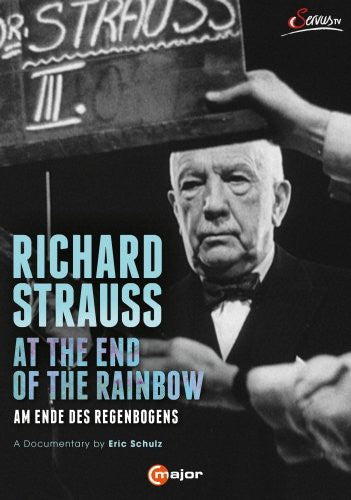
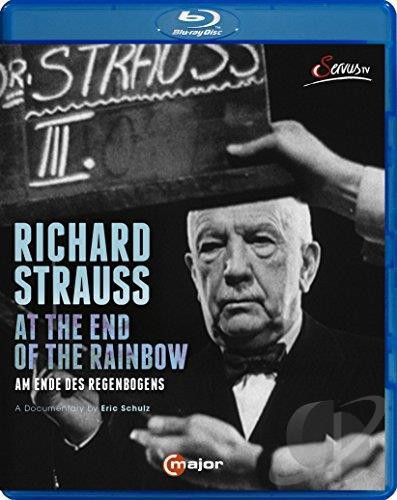
This documentary shows a new perspective on the personality and oeuvre of Richard Strauss, who saw himself as the last great composer at the end of an era, “at the end of the rainbow.” This carefully researched production presents spectacular hitherto unreleased pictures of Richard Strauss. Among others: a live recording of the premiere of the “Olympic Anthem” at the Berlin Olympic stadium in 1936. The very first performance of this piece ever to be heard, performed by the Berlin Philharmonic and a choir of 1000 singers conducted by Richard Strauss himself. These spectacular rare pictures are embedded in interviews with relatives, famous musicians and Strauss experts, such as Christian Strauss, Stefan Mickisch, and Brigitte Fassbaender. Director Eric Schulz is an acclaimed documentary film maker whos first two films, Carlos Kleiber Traces to Nowhere and Herbert von Karajan - The Second Life both attracted worldwide attention and were rewarded with various prizes, including the ECHO Klassik and the Gramophone Award.
Picture format: NTSC 16:9 Sound format: PCM Stereo / DTS 5.1 Region code: 0 (worldwide) Audio Language: German Subtitles: English, French, Spanish, Chinese Booklet notes: English, German, French Running time: 97 mins No. of DVDs: 1 (DVD 9)
{# optional: put hover video/second image here positioned absolute; inset:0 #}
On Sale
C Major Entertainment
Richard Strauss - At the End of the Rainbow
Also available on Blu-ray RICHARD STRAUSS – At the End of the Rainbow A documentary by Eric Schulz This documentary shows a...
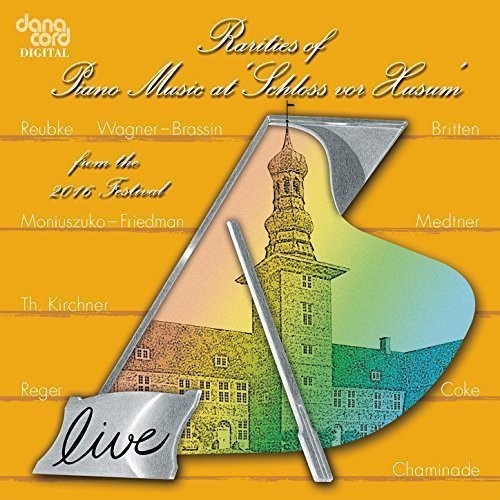
Founded in 1987 the annual Rarities of Piano Music Festival in the North German town of Husum is a major event. Danacord is proud to release the recording from the special 30th Anniversary Festival in 2016 featuring again rare piano music played by some of the leading pianists of today. Lovers of all Romantic piano music will appreciate this live recording featuring Johann Blanchard, Severin von Eckardstein, Ziata Chochieva, Martin Jones, Hubert Rukowski, Florian Noack, Joseph Moog, and more, including world-famous piano duos. As an additional note- Dacord releases live recordings of this spectacular festival each year, and all previous recordings are available as well.
{# optional: put hover video/second image here positioned absolute; inset:0 #}
On Sale
Danacord
Rarities Of Piano Music 2016
Founded in 1987 the annual Rarities of Piano Music Festival in the North German town of Husum is a major event. Danacord...
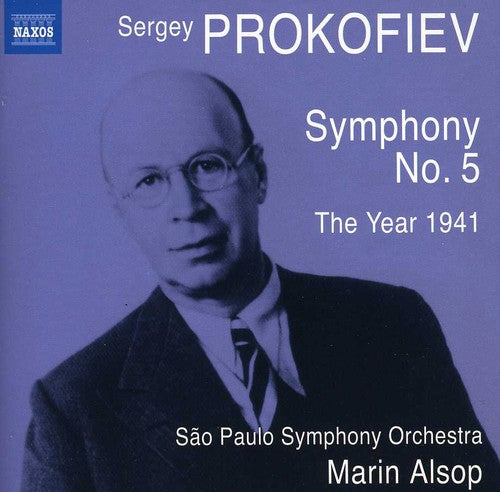
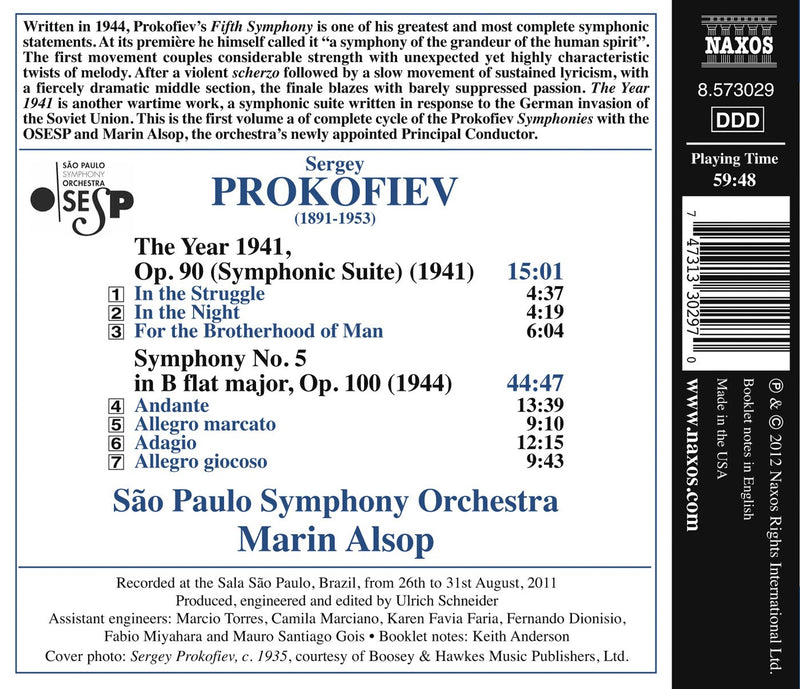
Prokofiev: Symphony No 5, The Year 1941 / Alsop, Sao Paulo Symphony
Naxos
$19.99
$9.99
June 26, 2012
Written in 1944, Prokofiev’s Fifth Symphony is one of his greatest and most complete symphonic statements. At its première he himself called it “a symphony of the grandeur of the human spirit”. The first movement couples considerable strength with unexpected yet highly characteristic twists of melody. After a violent scherzo followed by a slow movement of sustained lyricism, with a fiercely dramatic middle section, the finale blazes with barely suppressed passion. The Year 1941 is another wartime work, a symphonic suite written in response to the German invasion of the Soviet Union. This is the first volume a of complete cycle of the Prokofiev Symphonies with the OSESP and Marin Alsop, the orchestra’s newly appointed principal conductor.
REVIEW:
Alsop is evidently a sympathetic interpreter of Prokofiev, because the tempo and pacing always feel spot-on, and the character of the music rings true. Naxos offers exceptional reproduction of the vivid instrumental colors with appropriately resonant acoustics, so this series starts off brilliantly, with worthy performances that sound terrific.
– AllMusicGuide.com
{# optional: put hover video/second image here positioned absolute; inset:0 #}
On Sale
Naxos
Prokofiev: Symphony No 5, The Year 1941 / Alsop, Sao Paulo Symphony
Written in 1944, Prokofiev’s Fifth Symphony is one of his greatest and most complete symphonic statements. At its première he himself called...
Jacques Offenbach’s La Belle Hélène (1864) has always been one of its composer’s most successful works.
• Its first, slightly scandalizing performance in Paris was quickly followed by productions in Vienna, Berlin, London, Milan and New York.
• A satire of middle-class values, this opéra bouffe – told through the story of Paris and Helen, and her abduction by the Trojan prince disguised as a shepherd – pillories narrow-mindedness in society.
• Adopting a pro-active stance, director Renaud Doucet and designer André Barbe treat the piece as a “great show” with numerous choreographic elements, relocating the action of Offenbach's classical spoof and setting it on a cruise ship in the 1960s, when Flower Power, love and drugs were all the rage.
• “La Belle Hélène is a firework display for ears and eyes...” (Hamburger Morgenpost), “opulent and amusing” (Bild), and, in the title role, Jennifer Larmore convinces with her “fantastic vocal performance.” (Das Opernglas)
Subtitles: French (orig.), English, German, Spanish, Chinese Korean Booklet: English, German, French No. of Discs: 1 Run time: 117 minutes Picture Format: NTSC, 16:9 Audio Format: PCM Stereo, PCM 5.1 Region Code: 0 (worldwide)
{# optional: put hover video/second image here positioned absolute; inset:0 #}
On Sale
C Major Entertainment
Offenbach: La Belle Helene / Priessnitz, Larmore, Han, Galliard, Rud
Also available on Blu-ray Jacques Offenbach’s La Belle Hélène (1864) has always been one of its composer’s most successful works. • Its...


 {# optional: put hover video/second image here positioned absolute; inset:0 #}
On Sale
{# optional: put hover video/second image here positioned absolute; inset:0 #}
On Sale {# optional: put hover video/second image here positioned absolute; inset:0 #}
On SaleNaxos
{# optional: put hover video/second image here positioned absolute; inset:0 #}
On SaleNaxos {# optional: put hover video/second image here positioned absolute; inset:0 #}
On SaleHarbinger Records
{# optional: put hover video/second image here positioned absolute; inset:0 #}
On SaleHarbinger Records {# optional: put hover video/second image here positioned absolute; inset:0 #}
On SaleChandos
{# optional: put hover video/second image here positioned absolute; inset:0 #}
On SaleChandos {# optional: put hover video/second image here positioned absolute; inset:0 #}
On SaleSWR
{# optional: put hover video/second image here positioned absolute; inset:0 #}
On SaleSWR {# optional: put hover video/second image here positioned absolute; inset:0 #}
On SaleNaxos
{# optional: put hover video/second image here positioned absolute; inset:0 #}
On SaleNaxos {# optional: put hover video/second image here positioned absolute; inset:0 #}
On SaleBrilliant Classics
{# optional: put hover video/second image here positioned absolute; inset:0 #}
On SaleBrilliant Classics {# optional: put hover video/second image here positioned absolute; inset:0 #}
On SaleNaxos
{# optional: put hover video/second image here positioned absolute; inset:0 #}
On SaleNaxos {# optional: put hover video/second image here positioned absolute; inset:0 #}
On SaleCedille
{# optional: put hover video/second image here positioned absolute; inset:0 #}
On SaleCedille {# optional: put hover video/second image here positioned absolute; inset:0 #}
On SaleNaxos
{# optional: put hover video/second image here positioned absolute; inset:0 #}
On SaleNaxos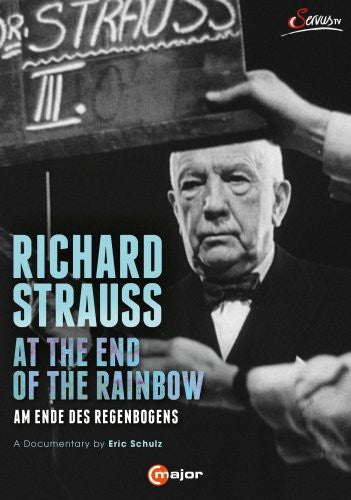 {# optional: put hover video/second image here positioned absolute; inset:0 #}
On SaleC Major Entertainment
{# optional: put hover video/second image here positioned absolute; inset:0 #}
On SaleC Major Entertainment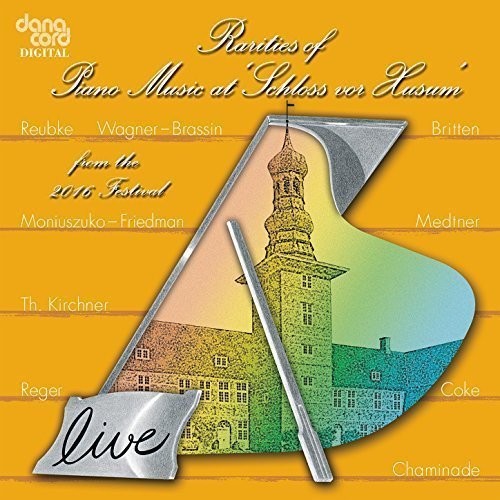 {# optional: put hover video/second image here positioned absolute; inset:0 #}
On SaleDanacord
{# optional: put hover video/second image here positioned absolute; inset:0 #}
On SaleDanacord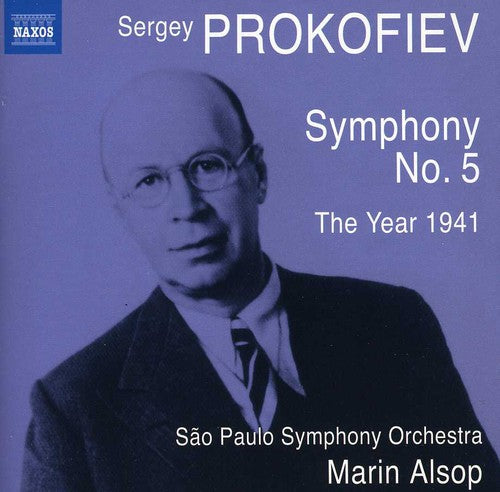 {# optional: put hover video/second image here positioned absolute; inset:0 #}
On SaleNaxos
{# optional: put hover video/second image here positioned absolute; inset:0 #}
On SaleNaxos {# optional: put hover video/second image here positioned absolute; inset:0 #}
On SaleC Major Entertainment
{# optional: put hover video/second image here positioned absolute; inset:0 #}
On SaleC Major Entertainment {# optional: put hover video/second image here positioned absolute; inset:0 #}
On SaleAltissimo
{# optional: put hover video/second image here positioned absolute; inset:0 #}
On SaleAltissimo


 {# optional: put hover video/second image here positioned absolute; inset:0 #}


 {# optional: put hover video/second image here positioned absolute; inset:0 #}



 {# optional: put hover video/second image here positioned absolute; inset:0 #}


 {# optional: put hover video/second image here positioned absolute; inset:0 #}


 {# optional: put hover video/second image here positioned absolute; inset:0 #}


 {# optional: put hover video/second image here positioned absolute; inset:0 #}


 {# optional: put hover video/second image here positioned absolute; inset:0 #}


 {# optional: put hover video/second image here positioned absolute; inset:0 #}


 {# optional: put hover video/second image here positioned absolute; inset:0 #}


 {# optional: put hover video/second image here positioned absolute; inset:0 #}


 {# optional: put hover video/second image here positioned absolute; inset:0 #}
 {# optional: put hover video/second image here positioned absolute; inset:0 #}


 {# optional: put hover video/second image here positioned absolute; inset:0 #}


 {# optional: put hover video/second image here positioned absolute; inset:0 #}

 {# optional: put hover video/second image here positioned absolute; inset:0 #}